




- Beauty & Personal Care
- Organic Hair Care Market
Organic Hair Care Market Size, Share, and Growth Forecast, 2026 - 2033
Organic hair care market by Product Type (Shampoo, Conditioner, Others), Nature (Normal, Dry, Oily), Distribution Channel (Hypermarket/Supermarket), and Regional Analysis for 2026 – 2033

Organic Hair Care Market Size and Trends Analysis
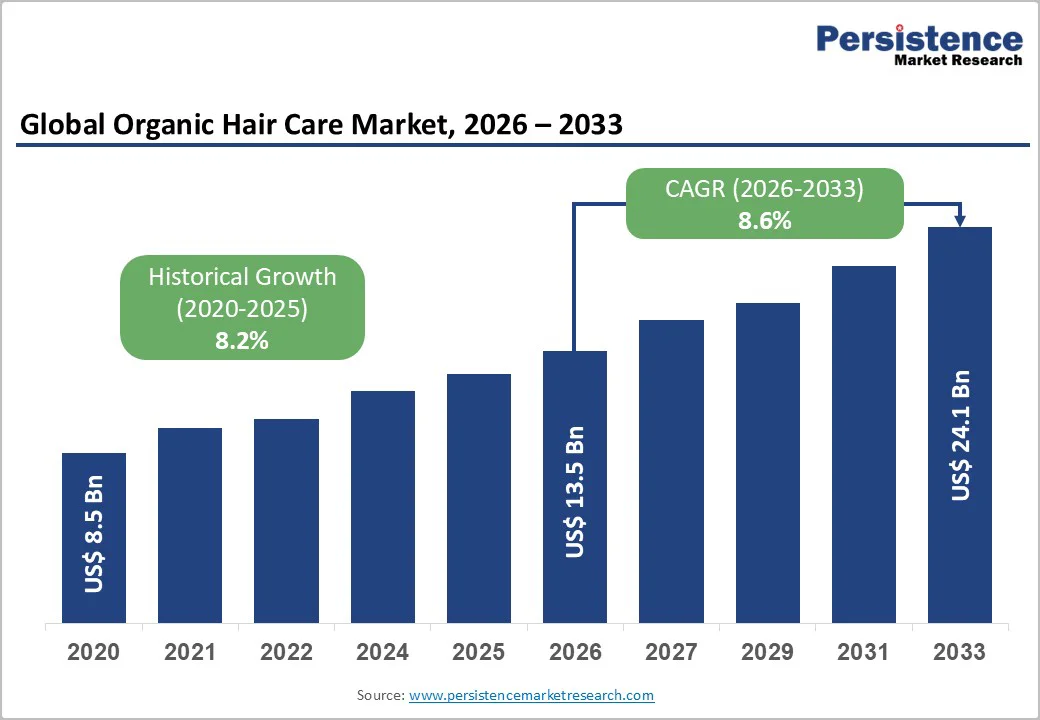
The global organic hair care market size is likely to be valued at US$13.5 billion in 2026, expected to reach US$24.1 billion by 2033, growing at a CAGR of 8.6% during the forecast period from 2026 to 2033, driven by the increasing prevalence of chemical-free beauty preferences, rising demand for natural shampoos and conditioners for dry and oily hair types, and advancements in plant-based formulations. The rising demand for gentle, nourishing solutions, especially for hair loss treatment and styling, is driving strong adoption of organic hair care. Innovations in safer, sustainable hair colorants and perms further support market growth. Increasing awareness of scalp health and the expanding reach of online and specialty stores are also accelerating the popularity of organic hair care products.
Key Industry Highlights:
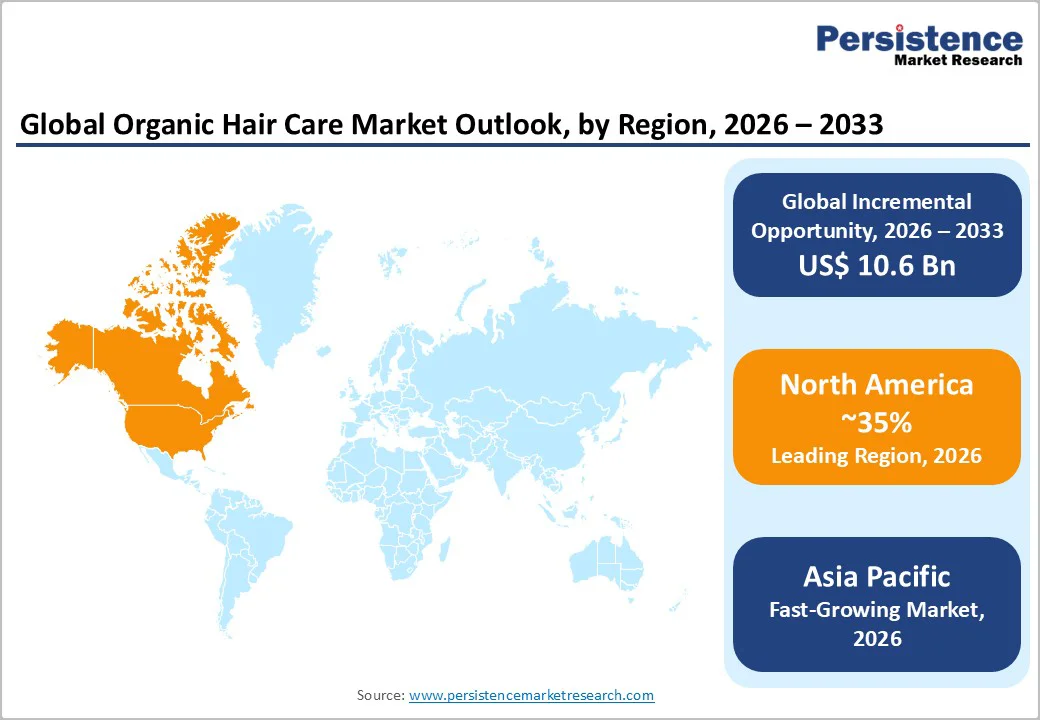
- Leading Region: North America is expected to account for 35% market share in 2026, driven by high consumer awareness of natural ingredients, strong prevalence of premium organic lines, and robust e-commerce penetration in the U.S.
- Fastest-growing Region: Asia Pacific is fueled by rising urbanization, increasing disposable incomes, and growing investments in clean beauty brands in China and India.
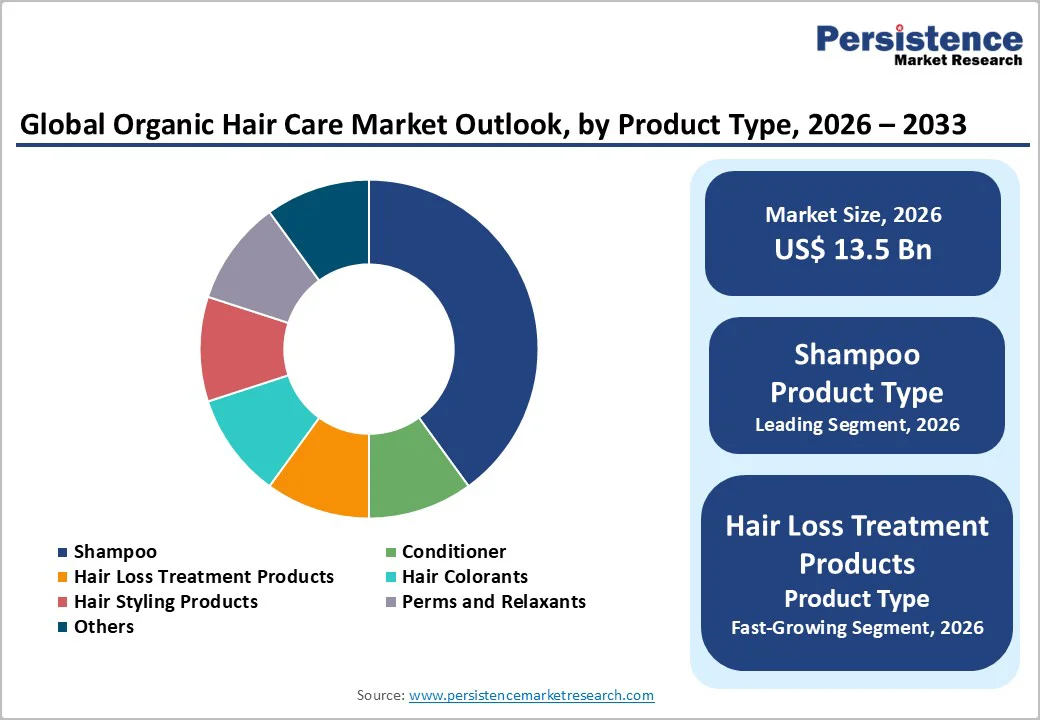
- Dominant Product Type: Shampoo, to hold approximately 40% of the market share in 2026, due to its daily essential status.
- Leading Hair Type: Dry, to account for over 35% of the market revenue, driven by moisturizing needs.
- Leading Distribution Channel: Online Stores, to contribute nearly 30% of the market revenue in 2026, due to convenience and variety.
| Key Insights | Details |
|---|---|
| Organic Hair Care Market Size (2026E) | US$13.5 Bn |
| Market Value Forecast (2033F) | US$24.1 Bn |
| Projected Growth (CAGR 2026 to 2033) | 8.6% |
| Historical Market Growth (CAGR 2020 to 2025) | 8.2% |
Market Factors – Growth, Barriers, and Opportunity Analysis
Growing Shift toward Chemical-Free Hair Care
The rising prevalence of chemical-free beauty preferences is significantly transforming the organic hair care market, driven by growing consumer awareness of the long-term effects of synthetic chemicals such as sulfates, parabens, silicones, and artificial fragrances. More consumers are shifting toward clean, non-toxic formulations that support scalp health, reduce irritation, and preserve hair’s natural structure. This shift is especially strong among millennials and Gen Z, who prioritize ingredient transparency and holistic wellness.
Demand for natural shampoos and conditioners is accelerating as these products incorporate plant-based ingredients such as aloe vera, coconut oil, shea butter, and botanical extracts, offering gentle cleansing and nourishment without compromising performance. Consumers increasingly associate natural formulations with safer, eco-friendly lifestyles, boosting their adoption across both premium and mass-market segments. Brands are responding by reformulating products, expanding sulfate-free and silicone-free lines, and highlighting claims such as “100% natural,” “organic-certified,” and “clean beauty compliant.” Advancements in green chemistry are improving the effectiveness of natural surfactants and conditioners, making chemical-free alternatives more competitive with traditional products.
High Development and Sourcing Costs
High development and sourcing costs are significant challenges in the organic hair care market, impacting both large corporations and smaller niche brands. Developing effective organic formulations requires extensive research and development to identify natural ingredients that deliver desired benefits such as hydration, hair strengthening, frizz control, or scalp nourishment. Unlike synthetic chemicals, natural ingredients can vary in potency, stability, and availability, necessitating rigorous testing, formulation adjustments, and quality control, all of which increase development expenses.
Sourcing high-quality organic raw materials further adds to costs. Many botanicals, essential oils, and plant extracts are obtained from specialized farms or regions, often under sustainable or certified organic practices. Limited supply, seasonal variations, and strict certification requirements can drive up prices, particularly for rare or premium ingredients. Ensuring supply chain traceability and compliance with environmental and ethical standards requires additional investment, including audits, certifications, and vendor partnerships. These high development and sourcing costs also extend to packaging, which increasingly relies on recyclable, biodegradable, or refillable materials to meet consumer expectations for sustainability.
Advancements in Multifunctional and Sustainable Hair Care Formulations
Advancements in multifunctional and sustainable hair care formulations are reshaping the organic hair care market by meeting growing consumer demand for products that are effective, convenient, and environmentally responsible. Multifunctional formulations combine multiple benefits such as hydration, frizz control, scalp nourishment, and color protection into a single product, reducing the need for multiple steps in a hair care routine. This innovation appeals to time-conscious consumers seeking simplified yet effective solutions. Ingredients such as plant-based proteins, peptides, essential oils, and botanical extracts are increasingly being incorporated to enhance performance while maintaining natural and organic standards.
Sustainability is another critical driver in formulation development. Brands are focusing on eco-friendly ingredients, biodegradable surfactants, and cruelty-free testing methods, while minimizing synthetic chemicals that can harm the environment. Packaging innovations, such as recyclable bottles, refill systems, and reduced plastic usage, further support environmentally conscious practices. These advancements are also guided by technological innovations in the extraction, stabilization, and delivery of active ingredients, ensuring consistent efficacy and longer shelf life. For example, multifunctional shampoos and conditioners that provide hydration, repair, and UV protection simultaneously are becoming more common.
Category-wise Analysis
Product Type Insights
Shampoo is anticipated to dominate the market, accounting for approximately 40% of the share in 2026, driven by its daily use, effective cleansing properties, and versatility for different hair types. Consumers favor shampoos for their convenience, ease of use, and ability to maintain both scalp and hair health. Rising awareness of hair care routines, coupled with the availability of specialized formulations for hydration, damage repair, color protection, and scalp care, further supports market growth. For example, Estée Lauder Companies Inc.’s Gentle Hair Care Shampoo delivers a soft lather while nourishing the scalp and hair, illustrating how performance, formulation, and user experience reinforce shampoo’s leading position in the organic hair care market.
Hair loss treatment products represent the fastest-growing segment, fueled by the rising prevalence of alopecia and the growing consumer focus on hair wellness. These products deliver targeted nourishment, strengthen follicles, and help reduce hair thinning, appealing to health-conscious users. Innovations in active ingredients, particularly peptides, are driving adoption, especially in regions such as Asia Pacific and Europe, where demand for effective hair restoration solutions is increasing. For example, Kérastase’s Aura Botanica line, formulated with naturally derived oils such as argan and coconut, offers gentle cleansing and nourishment while remaining free from sulfates, silicones, and parabens, further supporting the shift toward clean, organic hair care, arresting hair loss.
Nature Insights
The dry leads the market, holding approximately 35% of the share in 2026, driven by strong consumer demand for hydration and nourishment. Products targeting dry hair focus on restoring moisture, reducing frizz, and improving overall hair texture, addressing common hair concerns. Rising awareness of hair health, coupled with the popularity of specialized shampoos, conditioners, and treatment masks, further fuels growth. Brands increasingly develop formulations enriched with natural oils, vitamins, and proteins to meet consumer expectations for smoother, healthier, and more manageable hair. For example, Kao Corporation’s Essential Hair Care Moisturizing Shampoo provides deep hydration and smoothness, illustrating how targeted formulations for dry hair are meeting consumer needs and driving sustained market growth in this segment.
The oily segment is the fastest-growing segment, driven by increasing demand for products that control excess sebum and maintain scalp health, particularly in urban populations. Consumers, especially young adults and working professionals, seek shampoos, conditioners, and treatments that offer oil regulation, mattifying effects, and freshness throughout the day. Growing awareness of hair hygiene, combined with the availability of specialized formulations enriched with botanical extracts and clarifying ingredients, is fueling adoption. For example, Aveda’s Scalp Solutions Balancing Shampoo helps regulate excess oil while keeping hair clean and fresh, demonstrating how specialized formulations are accelerating adoption and meeting the specific needs of consumers with oily hair types.
Distribution Channel Insights
Online stores dominate the market, contributing nearly 30% of revenue in 2026, driven by the widespread adoption of e-commerce and increasing consumer reliance on online reviews. These platforms provide a wide variety of organic hair care products, making it easy for consumers to discover new brands and formulations. Convenience, accessibility, and the ability to compare products and prices enhance their appeal. Online stores are increasingly preferred for product exploration, informed decision-making, and access to niche or premium hair care solutions. For example, Amazon’s online marketplace offers a vast selection of organic shampoos and conditioners, complete with user reviews and ratings, helping consumers make informed choices.
Specialty stores are the fastest-growing segment, driven by consumers seeking expert guidance, personalized recommendations, and premium hair care solutions. Curated product selections and one-on-one consultations enhance the shopping experience, build trust, and encourage adoption of high-quality organic hair care products. This personalized approach differentiates specialty stores from mass-market retail, accelerating market growth. For example, The Body Shop and Lush offer specialized hair care consultations and curated organic product ranges in-store, providing tailored recommendations and expert advice to help customers choose the best solutions for their hair type and needs.
Regional Insights
North America Organic Hair Care Market Trends
North America is projected to lead, accounting for nearly 35% of the market in 2026, driven by rising consumer awareness of the benefits of natural and chemical-free hair products. Increasing concerns about hair and scalp health, coupled with a growing preference for eco-friendly and sustainable personal care options, are motivating consumers to choose organic shampoos, conditioners, oils, and styling products. Urban lifestyles, exposure to pollution, and stress-related hair issues are further encouraging the adoption of products that are gentle, nourishing, and free from harmful additives.
Innovation is a key factor shaping the market, with brands focusing on multifunctional formulations that address hair fall, frizz control, scalp care, and hydration, while incorporating ingredients such as botanical extracts, essential oils, and vitamins. E-commerce and digital channels are fueling market expansion, enabling consumers to access a wide range of products and compare offerings easily. Social media influence, product reviews, and endorsements by beauty influencers further enhance brand visibility and consumer trust. Sustainability is another critical trend, with brands adopting recyclable packaging, cruelty-free testing, and environmentally responsible sourcing practices.
Europe Organic Hair Care Market Trends
Market growth in Europe is fueled by strong consumer demand for natural, eco-friendly, and sustainable personal care products. European consumers are increasingly health-conscious and environmentally aware, seeking hair care solutions free from harmful chemicals, sulfates, and parabens. This has led to a surge in the demand for organic shampoos, conditioners, hair oils, and styling products that promote hair health while aligning with sustainable practices.
Regulatory frameworks in Europe, such as stringent cosmetic safety standards and certifications for organic and natural products, further support market growth by ensuring product quality and authenticity. Innovation is a key driver, with brands developing multifunctional formulations that address concerns such as hair fall, scalp care, color protection, and hydration, while using ethically sourced plant-based ingredients. Sustainability is central to the market, with packaging made from recyclable materials, cruelty-free testing, and carbon footprint reduction becoming standard practices. Digital marketing, e-commerce platforms, and social media engagement allow brands to connect with conscious consumers, share product benefits, and highlight natural ingredient sourcing.
Asia Pacific Organic Hair Care Market Trends
Asia Pacific is the fastest-growing market for organic hair care, driven by increasing consumer awareness of natural and chemical-free products, rising disposable incomes, and a growing middle-class population. Urbanization and lifestyle changes have led to greater demand for personal care products that are perceived as safer, environmentally friendly, and effective for hair health. Consumers are increasingly seeking herbal shampoos, conditioners, oils, and styling products that use organic ingredients such as aloe vera, argan oil, and essential plant extracts.
E-commerce and digital marketing play a crucial role in market expansion, enabling brands to reach a wider audience, especially in emerging economies such as India, China, and Southeast Asia. Social media influence, beauty influencers, and online reviews also shape purchasing decisions, increasing the adoption of organic hair care products. Innovation in product formulation is another key trend, with companies focusing on multifunctional products that provide nourishment, anti-hair fall benefits, and scalp care, while maintaining sustainable and cruelty-free practices. Regional brands are capitalizing on locally sourced natural ingredients and traditional hair care knowledge to appeal to consumer preferences.
Competitive Landscape
The global organic hair care market is highly competitive, characterized by a mix of established beauty giants and emerging niche brands. In developed regions such as North America and Europe, major players such as Aveda Corporation and The Colgate-Palmolive Company dominate the market through extensive research and development, well-established distribution networks, and strong brand recognition. These companies leverage advanced formulation techniques, natural ingredients, and strategic marketing to maintain a competitive edge and cater to a growing consumer base seeking organic and sustainable hair care solutions.
In the Asia Pacific region, companies such as Bio Veda Action Research Pvt. Ltd. are gaining traction by offering locally tailored products that meet regional preferences and cultural demands. These brands focus on sourcing natural ingredients, promoting eco-friendly practices, and creating products suitable for diverse hair types, appealing to a wide demographic. Innovation in natural formulations, plant-based actives, and organic certifications is increasingly shaping market leadership. Strategic partnerships, acquisitions, and investments in sustainable technologies are intensifying competition.
Key Industry Developments
- In April 2025, Sky Organics, the U.S. #1 Castor Oil brand and a leading provider of natural, certified organic personal care products, launched two new certified organic hair care products. Made with pure, potent ingredients, these offerings promote healthier hair while supporting sustainability, reflecting the brand’s commitment to empowering consumers with textured hair to embrace and enhance their natural curls.
- In 2025, L’Oréal signed a partnership with Khadi Natural to co-develop a line of organic hair-care products blending Khadi’s Ayurvedic formulations with L’Oréal’s global distribution and R&D capabilities.
Companies Covered in Organic Hair Care Market
- Kao Corporation
- Aveda Corporation
- The Colgate-Palmolive Company
- The Hain Celestial Group, Inc.
- Avalon Natural Products, Inc.
- stée Lauder Companies Inc.
- Bentley Labs
- Nesta Hair Care
- Bio Veda Action Research Pvt. Ltd.
- LAKMÉ COSMETICS S.L.
- Unilever
- Giovanni Cosmetics, Inc.
Frequently Asked Questions
The global organic hair care market is projected to reach US$13.5 billion in 2026.
The rising prevalence of chemical-free beauty preferences and demand for natural shampoos and conditioners are key drivers.
The organic hair care market is poised to witness a CAGR of 8.6% from 2026 to 2033.
Advancements in multifunctional and sustainable hair care formulations are key opportunities.
Kao Corporation, Aveda Corporation, The Colgate-Palmolive Company, The Hain Celestial Group, Inc., and Avalon Natural Products, Inc. are the key players.


