




- Processed Food
- Meat Substitutes Market
Meat Substitutes Market Size, Share, Trends, Growth, and Regional Forecast, 2026 - 2033
Meat Substitutes Market by Product Type (Tofu, Tempeh, Seitan, Jackfruit, TVP, Others), by Source (Soy, Wheat, Pea Protein, Others), by Category (Refrigerated, Shelf-stable, Frozen), by Distribution Channel (Mass Merchandizers, Specialty Stores, Other Retail Channels), and Regional Analysis from 2026 - 2033

Meat Substitutes Market Share and Trends Analysis
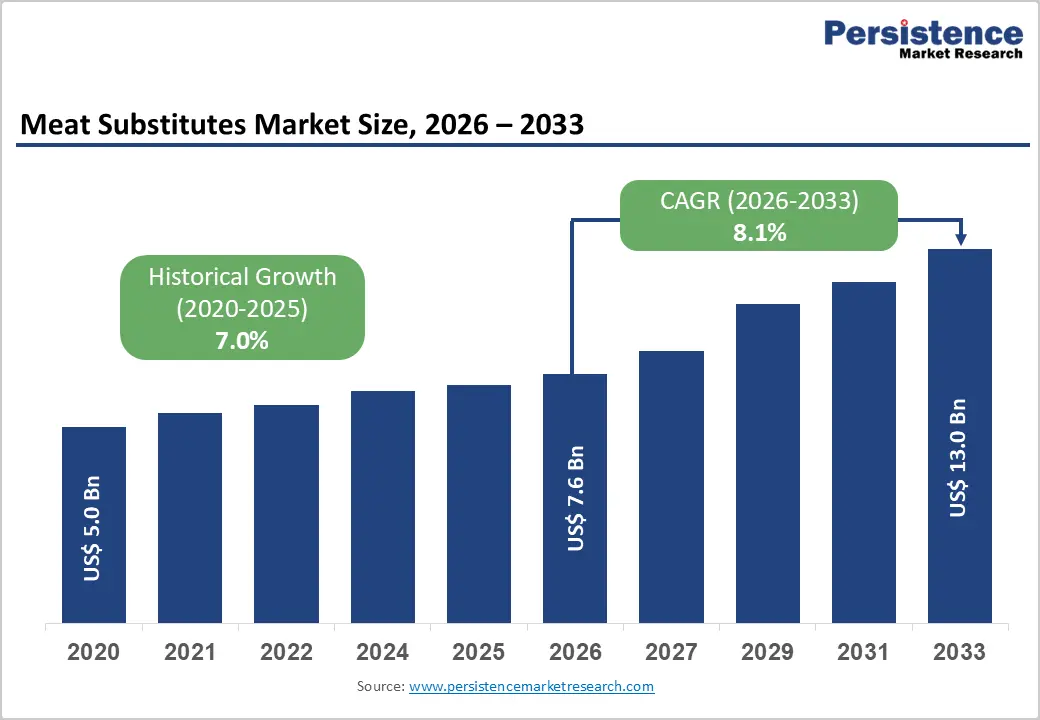
The global meat substitutes market size is expected to be valued at US$ 7.6 billion in 2026 and projected to reach US$ 13.0 billion by 2033, growing at a CAGR of 8.1% during the forecast period from 2026 to 2033. The market has evolved rapidly in recent years, supported by rising awareness around health, sustainability, and ethical food choices. Modern meat alternatives are developed using diverse sources such as plant proteins, cultured cells, and novel ingredients to closely replicate the taste, texture, and nutritional profile of conventional meat. Rise in consumer interest in balanced diets, reduced cholesterol intake, and functional nutrition has encouraged wider adoption of these products.
In addition, meat substitutes are increasingly viewed as environmentally responsible options, as their production generally requires fewer natural resources and generates lower greenhouse gas emissions than traditional livestock farming. Ethical concerns related to animal welfare further strengthen demand, particularly among flexitarians and younger consumers. Continuous innovation in formulation and processing technologies has improved product quality and acceptance, enabling meat substitutes to move beyond niche positioning and become a regular part of everyday meals across global markets.
Key Industry Highlights:
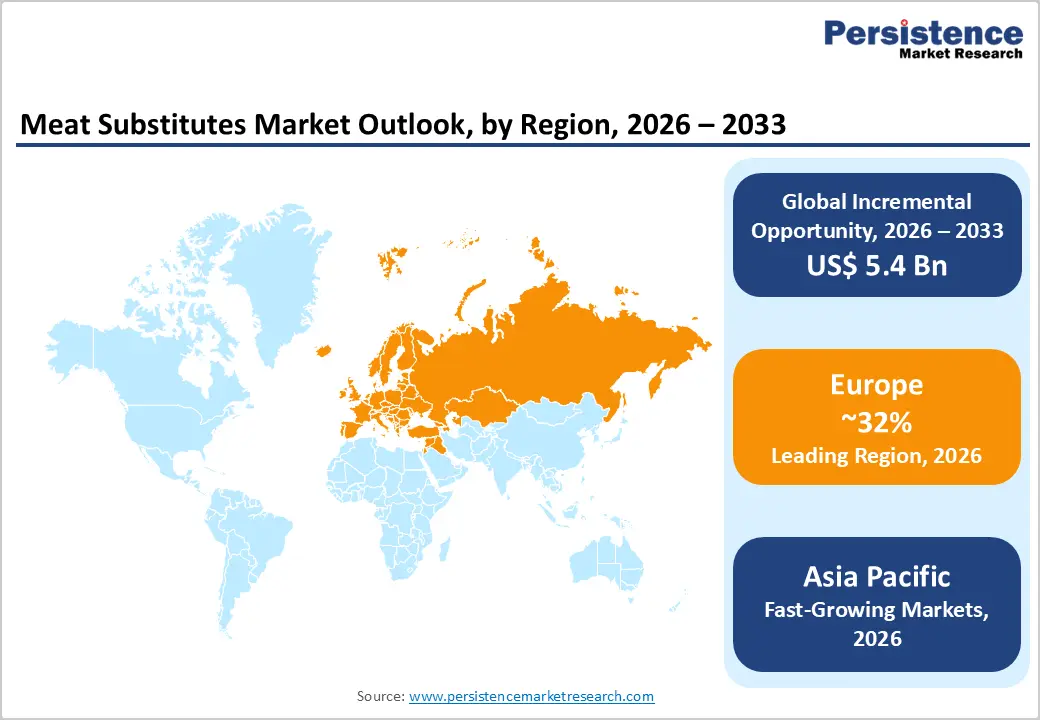
- Leading Region: Europe dominates the global meat substitutes market, supported by high adoption of plant-based diets, strong flexitarian populations, favorable regulatory frameworks, and widespread availability across retail and foodservice channels.
- Fastest Growing Region: Asia Pacific is the fastest-growing region, driven by urbanization, rising disposable incomes, expanding flexitarian populations, and increasing acceptance of plant-based proteins in China, India, and Southeast Asia.
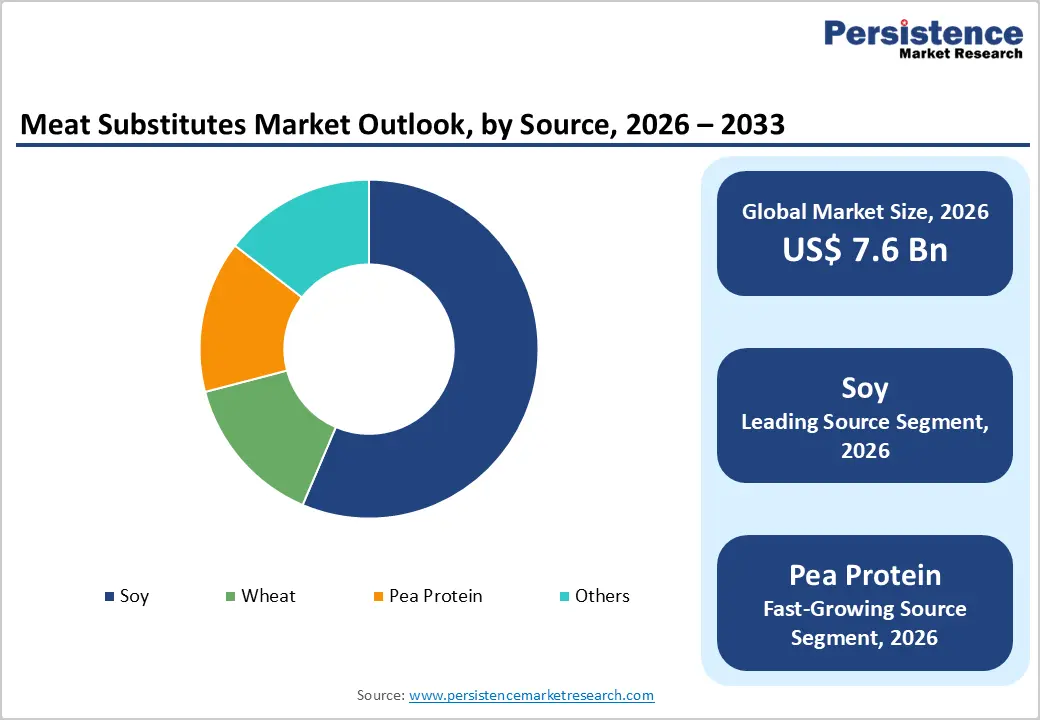
- Dominant Segment: Soy-based meat substitutes dominate the market due to their high protein content, functional versatility, established supply chains, and widespread use across tofu, tempeh, TVP, and soy-based meat analogs.
- Market Expansion: The meat substitutes market in developing countries (India) is expected to continue its growth trajectory, driven by a shift in consumer preferences towards healthier and more sustainable alternatives to traditional meat products.
| Key Insights | Details |
|---|---|
|
Meat Substitutes Market Size (2026E) |
US$ 7.6 billion |
|
Market Value Forecast (2033F) |
US$ 13.0 billion |
|
Projected Growth CAGR (2026-2033) |
8.1% |
|
Historical Market Growth (2020-2025) |
7.0% |
Market Dynamics
Driver - Health, Sustainability, and Flexitarian Diets
Growing consumer awareness around the long-term health implications of excessive meat consumption is a key driver accelerating the adoption of meat substitutes. Medical and nutritional studies have increasingly associated high intake of red and processed meat with lifestyle diseases such as cardiovascular disorders, obesity, and certain cancers. As a result, consumers are actively seeking alternative protein sources that offer lower saturated fat content, zero cholesterol, and improved nutritional balance. Plant-based meat substitutes derived from soy, pea protein, wheat, and other legumes are perceived as healthier options, aligning well with evolving dietary preferences focused on preventive health and wellness.
Alongside health motivations, sustainability concerns play a central role in shaping demand. Livestock farming is widely recognized as resource-intensive, contributing significantly to greenhouse gas emissions, deforestation, and water consumption. Governments, environmental organizations, and global agencies increasingly emphasize the need to diversify protein sources to ensure food security while reducing environmental impact. These concerns have contributed to the rapid rise of flexitarian diets, where consumers intentionally reduce meat intake without fully eliminating it. This growing flexitarian population represents a substantial and expanding consumer base, supporting sustained demand for meat substitutes across retail and foodservice channels.
Restraints - Sensory Perception and Ingredient Acceptance
Despite strong market momentum, sensory limitations and ingredient perception remain notable restraints for the meat substitutes market. While product formulations have advanced significantly, some consumers continue to perceive plant-based meat alternatives as inferior to conventional meat in terms of taste, texture, mouthfeel, and overall eating experience. Achieving the complex juiciness, fibrous structure, and flavor release of animal meat remains challenging, particularly for whole-cut and minimally processed formats. Negative first-time experiences can discourage repeat purchases, slowing long-term adoption among mainstream consumers.
Ingredient transparency and processing concerns further constrain market growth. Many meat substitutes rely on multiple functional ingredients, stabilizers, flavor enhancers, and binding agents, resulting in long ingredient lists that conflict with growing consumer demand for clean-label and minimally processed foods. Additionally, skepticism around genetically modified soy, allergens such as wheat gluten, and highly processed protein isolates creates hesitation among health-conscious shoppers. These perceptions can limit acceptance, especially among consumers who prioritize natural foods. Addressing these challenges through cleaner formulations, improved sensory performance, and transparent labelling remains critical for sustained market expansion.
Opportunity - Pea Protein and Next-Generation Plant Sources
The rising preference for non-soy protein sources presents a significant growth opportunity within the meat substitutes market, particularly for pea protein. Pea protein has emerged as one of the fastest-growing ingredients due to its favorable nutritional profile, hypoallergenic nature, and non-GMO positioning. It appeals strongly to consumers seeking alternatives free from soy and gluten, while still delivering high protein content and functional versatility. These attributes make pea protein well suited for a wide range of meat substitute formats, including burgers, mince, sausages, and deli slices.
Ongoing investments in processing and fractionation technologies are further enhancing the commercial potential of pea protein. Advances aimed at improving solubility, reducing off-flavors, and enhancing texturization are enabling manufacturers to deliver products with better bite, juiciness, and sensory appeal. Beyond pea protein, next-generation plant sources such as fava bean, chickpea, lentil, and mycoprotein are gaining traction as manufacturers seek ingredient diversification and improved sustainability credentials. These emerging proteins allow brands to differentiate their offerings, reduce reliance on conventional crops, and align with long-term environmental and supply chain resilience goals, creating substantial opportunities for innovation-driven growth.
Category-wise Analysis
Product Type Insights
Tofu stands out as the most widely consumed product type in the meat substitutes market, supported by its long culinary history and broad consumer acceptance. Originating from Asian diets, tofu has successfully transitioned into Western food culture as a flexible and affordable protein alternative. Its mild taste allows it to absorb seasonings effectively, making it suitable for multiple cooking applications such as stir-frying, grilling, baking, and incorporation into ready-to-eat meals. Foodservice operators favor tofu for its consistency, ease of preparation, and adaptability across vegetarian, vegan, and flexitarian menus. In retail, the expansion of flavored, smoked, marinated, and pre-cut tofu formats has improved convenience and enhanced consumer appeal. Compared with newer meat substitute formats, tofu benefits from established supply chains, predictable pricing, and strong familiarity, enabling it to maintain a leading position as both a staple protein and a base ingredient for plant-forward dishes.
Source Insights
Soy remains the most widely used source in the meat substitutes market due to its strong nutritional and functional characteristics. Soybeans offer a complete amino acid profile, making them highly suitable for developing protein-rich alternatives that meet consumer expectations for satiety and nutrition. Soy-derived ingredients such as textured vegetable protein, concentrates, and isolates are widely utilized for their ability to create firm textures, retain moisture, and support extrusion processes that replicate meat-like structures. The versatility of soy enables its use across a wide range of applications, including tofu, tempeh, burgers, sausages, and minced products. Established global cultivation, processing infrastructure, and cost efficiency further support its continued adoption. At the same time, evolving consumer preferences for allergen-free and clean-label products are encouraging manufacturers to explore complementary protein sources, gradually broadening the raw material base for meat substitute formulations.
Region-wise Insights
Europe Meat Substitutes Market Trends
Europe is the leading regional market, accounting for about 32% of global meat substitutes sales in 2025, underpinned by high levels of flexitarianism and strong environmental awareness. Surveys by initiatives such as the Smart Protein Project report that flexitarians, vegetarians, and pescatarians together comprise around 40% of the European population, with 57% aiming to reduce meat consumption over time, creating robust demand for alternatives. Countries like Germany, the U.K., France, and the Netherlands demonstrate particularly strong uptake, and retailers across the region have aggressively expanded plant-based ranges, often with private-label products that compete directly with established brands.
The European Union’s regulatory framework supports transparency in ingredient and nutrition labelling and is increasingly focused on sustainability metrics, encouraging producers to quantify environmental benefits of plant-based meat. Governments and NGOs promote plant-forward diets in public institutions and dietary guidelines, while HORECA (hotel/restaurant/café) channels devote dedicated menu sections to “meat-free” dishes. Ongoing innovation in pea, fava bean, and rapeseed-based proteins and investments in specialized manufacturing plants further reinforce Europe’s leadership in meat substitutes.
North America Meat Substitutes Market Trends
North America is a key market for meat substitutes, supported by strong consumer interest in plant-based diets, high per-capita meat consumption, and a vibrant innovation ecosystem. Surveys indicate that many U.S. and Canadian consumers are motivated by health, environmental, and animal-welfare concerns to reduce meat intake, with plant-based meat positioned as a convenient, familiar format to do so. Major retailers and restaurant chains have incorporated plant-based burgers, sausages, and breakfast items into their offerings, often in collaboration with brands such as Beyond Meat and Impossible Foods Inc., increasing mainstream exposure.
Regulatory agencies such as the U.S. Food and Drug Administration (FDA) and USDA oversee labelling and safety, while state-level debates about terms like “burger” or “sausage” for plant-based products have prompted clear labelling practices. Investment activity in North American alternative protein start-ups remains robust, spanning plant-based, fermentation-derived, and cultivated meat, which in turn drives R&D and category expansion. The region’s strong cold-chain infrastructure and developed refrigerated and frozen aisles further facilitate the distribution of meat substitutes through mass merchandisers and club stores.
Asia Pacific Meat Substitutes Market Trends
Asia Pacific is expected to be the fastest-growing region for meat substitutes, driven by demographic growth, urbanization, and rising awareness of health and sustainability issues. Markets such as China, Japan, South Korea, India, and Australia are seeing rapid expansion of plant-based meat offerings in both retail and foodservice, aided by governmental interest in food security and sustainable protein strategies. China, for example, holds more than 22% share of the regional meat substitutes market and benefits from supportive policies aimed at reducing meat consumption and promoting alternative proteins.
Traditional plant-based proteins like tofu and tempeh have long roots in Asian cuisines, providing a cultural foundation for newer products based on pea and wheat proteins. International and domestic companies are localizing products, developing pork-style mince, dumplings, and spicy skewers to align with regional tastes. Asia Pacific’s plant-based meat market is estimated to be growing at CAGRs close to or above 13%, underscoring the region’s central role in future global meat substitute expansion.
Competitive Landscape
The competition landscape in the meat substitutes market is quite dynamic, with several key players and factors influencing its growth. Companies in the meat substitute market are employing a variety of strategies to enhance their market presence and cater to the growing demand for plant-based alternatives. Companies are focusing on product innovation to meet consumer preferences for taste, texture, and nutrition. For instance, there’s an increasing number of soy-based food producers in India who are expanding their selection of soy protein products.
Brands form strategic alliances and partnerships to leverage each other’s strengths in terms of technology, distribution, and marketing. M&A are common as companies aim to expand their product portfolios and enter new markets.
Companies are expanding geographically to tap into new markets and consumer bases. There is a significant focus on optimizing distribution channels, with a particular emphasis on online retail to improve customer purchasing experiences. With the rising market trend towards environmentally responsible diets, companies are also investing in sustainability initiatives to appeal to eco-conscious consumers.
Key Industry Developments:
- In April 2025, UK-based vegan meat brand THIS announced the launch of a new product line made from nutritious, plant-based ingredients, responding to rising demand for more natural alternatives. The Super Superfoods range includes Super Block and Marinated Pieces, both formulated using whole-food ingredients.
- In April 2024, Nasoya, a leader in plant-based foods, entered the plant-based meat segment with the launch of Plantspired Plant-Based Chick’n, introduced in Bee-Free Honey and Kung-Pao flavors.
- In July 2023, Beyond Meat expanded its product portfolio in Germany by launching plant-based chicken-style products, including Beyond Nuggets and Beyond Tenders.
Companies Covered in Meat Substitutes Market
- Beyond Meat
- Impossible Foods Inc.
- Quorn Foods
- Kellogg Co.
- Unilever, Meatless B.V.
- VBites Foods Ltd.
- SunFed
- Tyson Foods, Inc.
- The Tofurky Company,
- Maple Leaf Foods Inc.
- Amy’s Kitchen
- Topas GmbH
- Others
Frequently Asked Questions
The global meat substitutes market is projected to be valued at US$ 7.6 Bn in 2026.
Health awareness amongst consumers regarding benefits associated with plant-based diets, including reduced cholesterol and lower risk of certain diseases.
The global meat substitutes market is poised to witness a CAGR of 8.1% between 2026 and 2033.
Scientific advancements do pave the way for innovative meat alternative proteins, such as mock meat and mycoprotein, which is expected to reshape the meat industry.
Major players in the meat substitute market are Kellogg’s Company, Beyond Meat Inc., The Tofurky Company, Maple Leaf Foods Inc., and Topas GmbH.


