




- Food Ingredients & Additives
- Chickpeas Market
Chickpeas Market Size, Share, and Growth Forecast, 2026 - 2033
Chickpeas Market by Product Type (Kabuli Chickpeas, Desi Chickpeas), Form (Dried/Raw, Flour & Powder, Ready-to-Eat Products), Application (Food & Beverages, Others), End-user (Food Processors & Manufacturers, Others), and Regional Analysis for 2026 - 2033

Chickpeas Market Size and Trends Analysis
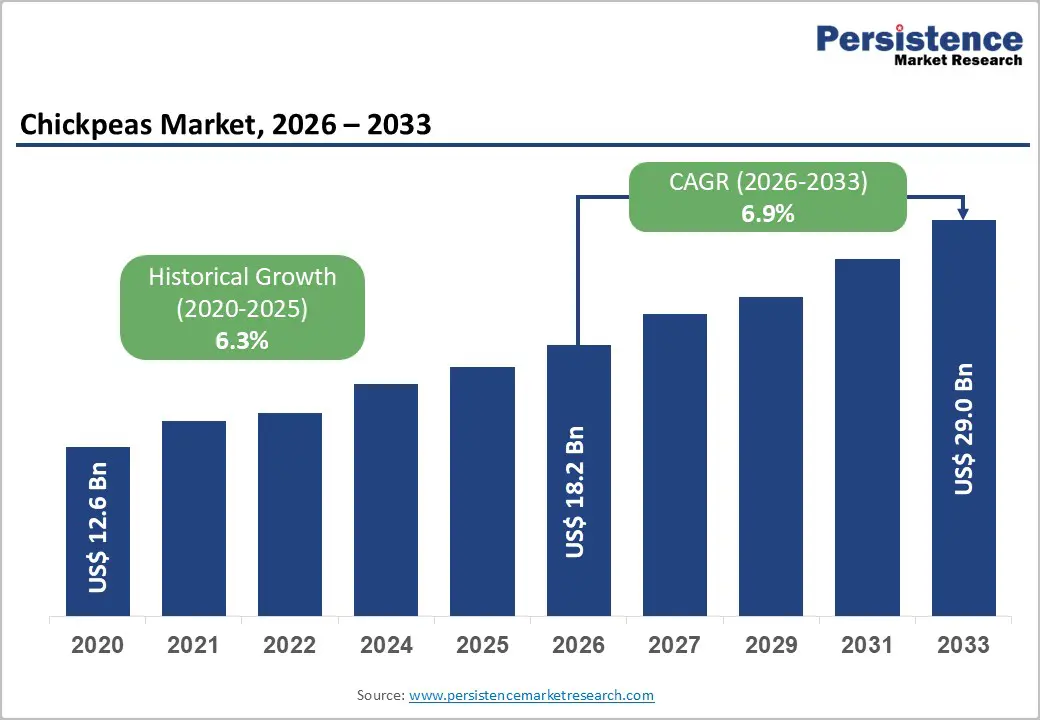
The global chickpeas market size is likely to be valued at US$18.2 billion in 2026, and is expected to reach US$29.0 billion by 2033, growing at a CAGR of 6.9% during the forecast period from 2026 to 2033, driven by rising demand for plant-based protein, increasing use in healthy snacks and ready-to-eat products, and growing popularity of chickpeas in vegetarian and vegan diets. Increasing consumer preference for nutrient-dense, gluten-free, and sustainable food ingredients remains a major driver of chickpeas market growth.
Key Industry Highlights:
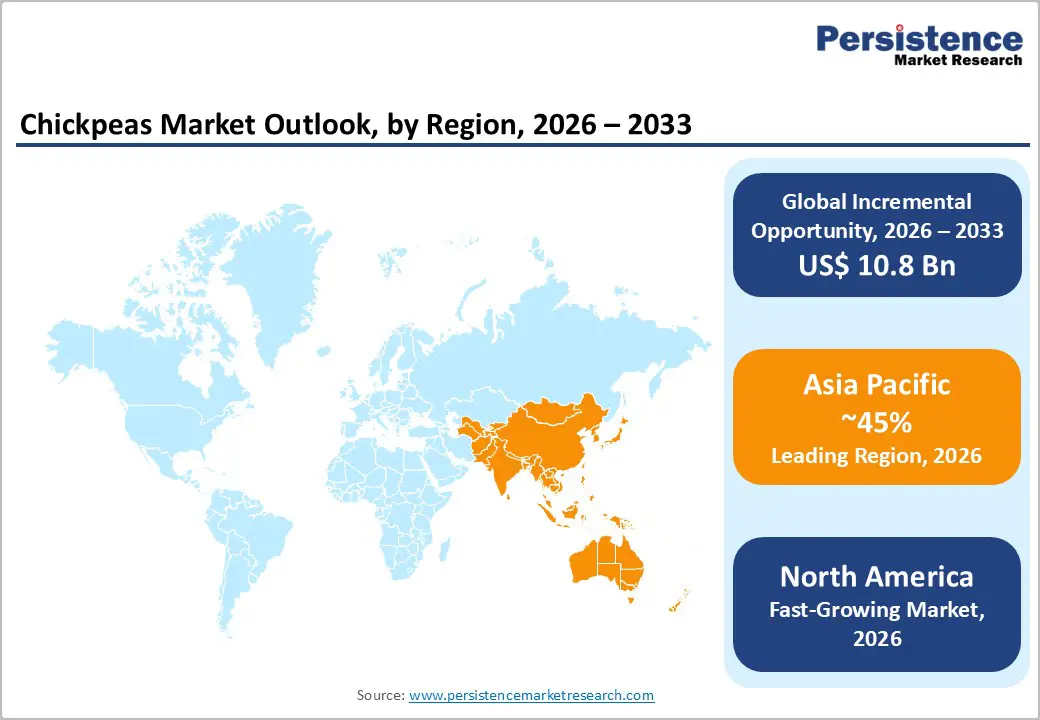
- Leading Region: Asia Pacific is set to lead with 45% revenue in 2026, driven by high chickpea consumption, plant-based diets, and rising demand for convenient, ready-to-eat products.
- Fastest-growing Region: North America, fueled by rising demand for plant-based protein and healthy snacks in the U.S.
- Dominant Product Type: Kabuli chickpeas are expected to lead with 65% share in 2026, favored for their size, texture, and versatility in premium and processed foods.
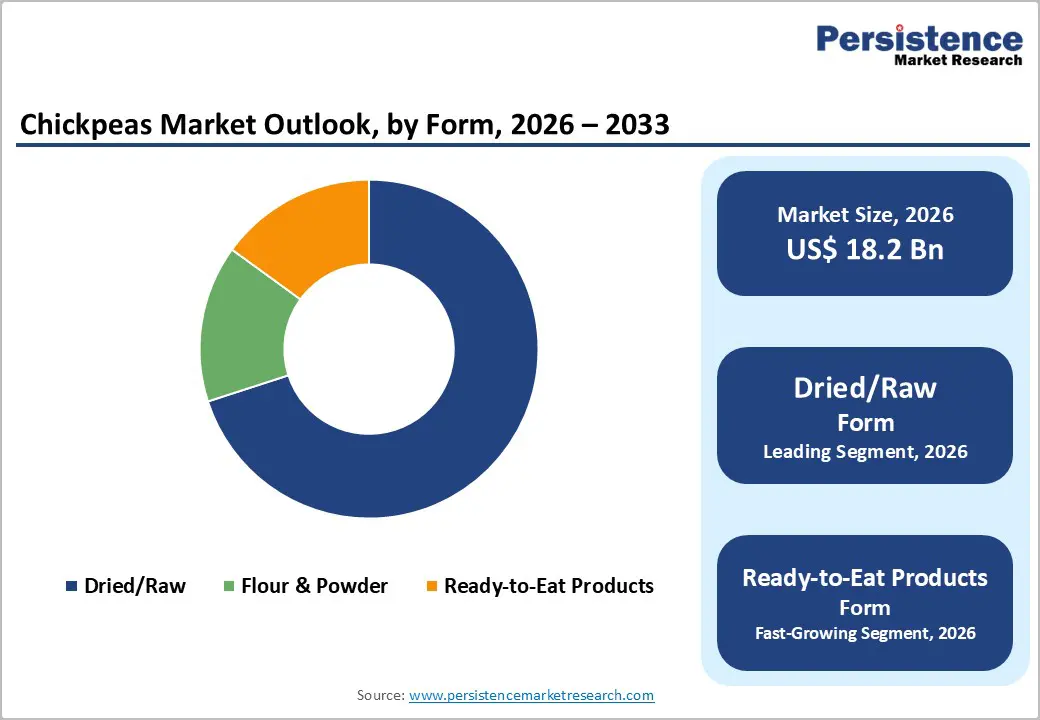
- Leading Form: Dried/raw chickpeas are set to dominate with 70% share in 2026, valued for their versatility, long shelf life, and wide use in households and food processing.
| Key Insights | Details |
|---|---|
| Chickpeas Market Size (2026E) | US$18.2 Bn |
| Market Value Forecast (2033F) | US$29.0 Bn |
| Projected Growth CAGR (2026 - 2033) | 6.9% |
| Historical Market Growth (2020 - 2025) | 6.3% |
DRO Analysis
Driver - Rising Demand for Plant-Based Protein
The increasing shift toward plant-based diets is reshaping the global food landscape, with consumers actively seeking alternatives to animal-derived proteins. Chickpeas, being naturally rich in protein, fiber, and essential nutrients, have emerged as a versatile and accessible option for this growing demographic. Their adaptability in various cuisines, from traditional curries and stews to modern snacks, protein bars, and flours, makes them an appealing choice for both home cooks and food manufacturers. The environmental and ethical concerns associated with animal farming are motivating many individuals to reduce meat consumption, further driving interest in plant-based protein sources such as chickpeas.
Athletes, fitness enthusiasts, and health-conscious consumers also contribute to this trend, as they seek high-quality, plant-derived proteins for muscle development, weight management, and overall wellness. Innovations in product formats, such as chickpea-based pasta, chips, and meat analogues, enhance convenience while maintaining nutritional value, making it easier for consumers to incorporate them into daily diets.
Health and Nutritional Awareness
Consumers today are increasingly conscious about the impact of their food choices on overall well-being, driving a focus on nutrient-rich and naturally healthy ingredients. Chickpeas stand out as a highly nutritious option, packed with protein, dietary fiber, vitamins, and minerals such as iron, magnesium, and folate. Their high fiber content supports digestive health, while complex carbohydrates provide sustained energy, making them a preferred choice for individuals aiming to manage weight or maintain balanced blood sugar levels.
Beyond general wellness, chickpeas offer heart-healthy benefits by helping reduce cholesterol levels and supporting cardiovascular function. Their low-fat profile, coupled with a rich micronutrient composition, aligns with diets designed for disease prevention and longevity. Moreover, chickpeas are suitable for a variety of dietary preferences, including vegetarian, vegan, gluten-free, and diabetic-friendly diets, which broadens their appeal across multiple consumer segments. Growing awareness about the connection between diet and chronic conditions such as obesity, diabetes, and heart disease has also contributed to the adoption of chickpeas as a staple ingredient in everyday meals.
Restraint - Price Volatility of Raw Chickpeas
The prices of raw chickpeas are highly susceptible to fluctuations due to factors such as seasonal variations, climatic conditions, and inconsistent yields. Being an agricultural commodity, chickpea production is heavily dependent on rainfall patterns, temperature, and soil quality, making output unpredictable from year to year. A poor harvest caused by droughts, excessive rainfall, or pest infestations can significantly reduce supply, driving up prices in domestic and international markets.
Transportation costs, storage limitations, and market demand shifts contribute to price instability. Since chickpeas are a staple in many regions, sudden changes in consumer demand or export policies can further amplify volatility. Small-scale farmers, who often lack advanced storage and risk management systems, are particularly affected by these fluctuations, which can lead to income instability.
Lack of Advanced Agricultural Infrastructure
Many chickpea-producing regions face challenges due to inadequate agricultural infrastructure, which limits efficiency and productivity. Insufficient irrigation systems, outdated farming equipment, and limited access to modern storage facilities make it difficult for farmers to optimize yields and reduce post-harvest losses. Without proper cold storage or grain silos, harvested chickpeas are vulnerable to spoilage, pests, and moisture damage, directly affecting both quality and marketable volume.
Poor transportation networks in rural areas hinder timely delivery to processing units and markets, increasing costs and reducing competitiveness. Limited access to mechanized planting and harvesting tools also means that labor-intensive practices dominate, leading to higher production costs and slower turnaround times.
Opportunity - Expansion of Ready-to-Eat and Convenience Products
The demand for ready-to-eat and convenience food products has been steadily increasing as consumers lead busier lifestyles and seek quick, nutritious meal options. Chickpeas have become a popular ingredient in this segment due to their versatility, high protein content, and ability to be incorporated into a wide range of products. From canned chickpeas and pre-cooked pulses to snacks such as roasted chickpeas, chips, and chickpea-based protein bars, these offerings provide convenient ways for consumers to enjoy nutritious foods without extensive preparation.
Meal solutions that include chickpeas, such as salads, hummus, soups, and wraps, cater to the growing segment of health-conscious individuals looking for balanced meals on the go. The ease of cooking and long shelf life of processed chickpeas also make them suitable for packaged and frozen products, allowing retailers and manufacturers to meet consumer demand efficiently. The rise of urbanization and dual-income households has amplified the need for time-saving food options. Chickpea-based convenience products not only deliver nutritional value but also align with plant-based, gluten-free, and functional food trends.
Rising Popularity of Ethnic and Global Cuisines
Global culinary trends have increasingly embraced diverse ethnic cuisines, creating a strong demand for ingredients that are central to traditional dishes. Chickpeas, a staple in Mediterranean, Middle Eastern, and Indian cooking, have benefited from this trend as consumers seek authentic flavors and healthy, protein-rich foods. The versatility of chickpeas allows them to be used in a wide variety of dishes, including hummus, falafel, curries, stews, salads, and snacks, making them an accessible entry point for individuals exploring global flavors.
Social media and food culture platforms have played a significant role in popularizing ethnic cuisines, inspiring home cooks and chefs to experiment with ingredients such as chickpeas. Cooking shows, recipe blogs, and online tutorials have made it easier for consumers to prepare traditional dishes at home, further driving demand. Restaurants and ready-to-eat product manufacturers have also capitalized on this trend, incorporating chickpeas into menus and packaged foods to cater to adventurous eaters and health-conscious consumers alike. Growing awareness of the nutritional benefits of chickpeas, with high protein, fiber, and essential micronutrients, enhances their appeal in global cuisines that emphasize plant-based diets.
Category-wise Analysis
Product Type Insights
Kabuli chickpeas are anticipated to dominate, holding 65% share in 2026, driven by their larger size, smooth texture, and mild flavor, making them highly suitable for premium food applications such as hummus, salads, and canned products. Their versatility allows them to be easily incorporated into a variety of cuisines, both traditional and modern, enhancing their demand among health-conscious and urban consumers. Compared to Desi chickpeas, Kabuli varieties are preferred for processed and ready-to-eat products, further driving market growth. FitTree International LLP, which specifically markets premium Kabuli chickpeas (large, creamy-beige beans) as ideal for hummus production and gourmet applications due to their texture and size.
Desi chickpeas represent the fastest-growing segment, with widespread use in traditional dishes, especially in South Asian and Middle Eastern cuisines. Smaller and darker than Kabuli varieties, Desi chickpeas have a robust, nutty flavor and firm texture, making them ideal for curries, stews, and snacks such as chana masala and roasted chickpeas. Their lower cost compared to Kabuli chickpeas also makes them attractive to price-sensitive consumers, particularly in developing regions. The Good Bean has developed a range of roasted chickpea snacks using smaller, brown Desi-type chickpeas. These beans are prized for their firm texture and rich, nutty flavor, making them ideal for snack products and demonstrating the growing popularity of Desi chickpeas beyond traditional culinary markets.
Form Insights
Dried/raw is projected to dominate, with over 70% share in 2026, fueled by their versatility and long shelf life, making them a staple in households and food processing industries. They are widely used in traditional recipes, curries, soups, and stews, as well as in processed products such as canned chickpeas, flours, and ready-to-eat meals. Their ability to be stored for extended periods without losing quality ensures a consistent supply for both domestic and commercial applications. Marsan Gida San. ve Tic. A.S. sources bulk dried chickpeas as a primary ingredient for its packaged pulse mixes, soups, and ready-to-cook products under the Bizim Mutfak brand. By using large quantities of unprocessed chickpeas, the company ensures consistent quality and texture in its offerings, highlighting the widespread use of dried/raw chickpeas as a key component in commercial food production, beyond just home cooking.
Ready-to-eat products represent the fastest-growing form, with rapid growth as consumers increasingly seek convenient, nutritious, and on-the-go snack options. These products, including roasted chickpeas, hummus cups, chickpea chips, and protein bars, provide a healthy alternative to traditional snacks while requiring minimal preparation. Their high protein, fiber, and micronutrient content appeal to health-conscious individuals, fitness enthusiasts, and busy professionals. Example, ready-to-eat chickpea products are The Good Bean Crunchy Chickpeas Variety Pack. The Good Bean offers roasted chickpea snacks made from whole chickpeas, providing plant-based, high-protein alternatives to conventional chips and crunchy snacks. This format caters to consumers seeking convenient, nutritious, and on-the-go snack options.
Regional Insights
North America Chickpeas Market Trends
North America is likely to be the fastest-growing, driven by changing dietary habits and increasing consumer awareness of plant-based nutrition. Rising interest in vegetarian and vegan diets has made chickpeas a popular source of protein, fiber, and essential nutrients, appealing to health-conscious consumers. The versatility of chickpeas allows them to be incorporated into a variety of food products, including hummus, roasted snacks, soups, salads, and pasta alternatives, catering to both traditional and modern culinary preferences.
Convenience is another key factor shaping market trends. Ready-to-eat and processed chickpea products, such as canned chickpeas and snack packs, are gaining popularity among busy urban populations seeking quick, nutritious meals and snacks. The influence of ethnic and international cuisines, particularly Mediterranean and Middle Eastern, has further boosted chickpea consumption, as consumers explore new flavors and healthy eating options. Sustainability and environmental concerns are also influencing trends in North America. Chickpeas, being a low-water and nitrogen-fixing crop, align with consumer preferences for eco-friendly and responsibly sourced foods. Combined with growth in online grocery retailing, these factors are enabling broader access to chickpeas and chickpea-based products across the region, supporting continued market expansion.
Europe Chickpeas Market Trends
The Europe market is witnessing growth driven by increasing demand for plant-based and protein-rich foods. Consumers are becoming more health-conscious, seeking nutritious alternatives to meat and dairy, and chickpeas offer a high-protein, fiber-rich option that fits vegetarian, vegan, and gluten-free diets. Their versatility allows incorporation into a wide range of products, including hummus, soups, salads, flours, snacks, and ready-to-eat meals, making them appealing for both home cooking and commercial food production.
Culinary trends are also influencing market dynamics. Mediterranean and Middle Eastern cuisines, which heavily feature chickpeas, are gaining popularity across Europe, inspiring consumers to experiment with new flavors and traditional recipes. Ready-to-eat chickpea products, such as roasted chickpea snacks and hummus packs, are particularly favored in urban areas where convenience and on-the-go consumption are prioritized. Sustainability concerns are shaping purchasing decisions as well. Chickpeas are drought-tolerant and require less water than many other crops, aligning with growing consumer interest in environmentally responsible food choices. The expansion of e-commerce and online grocery platforms has improved accessibility to chickpea products, enabling broader market penetration.
Asia Pacific Chickpeas Market Trends
Asia Pacific is projected to dominate, capturing the 45% of revenue in 2026, powered by rising awareness of nutritious, plant-based foods and changing dietary preferences. Chickpeas are valued for their high protein, fiber, and micronutrient content, making them a preferred choice among health-conscious consumers, vegetarians, and vegans. In countries such as India, chickpeas are a staple in traditional dishes such as curries, snacks, and dals, which drives consistent domestic consumption. Urban populations are increasingly adopting ready-to-eat and processed chickpea products, such as roasted snacks, canned chickpeas, and protein bars, reflecting the growing demand for convenient, on-the-go nutrition.
The popularity of international cuisines, particularly Mediterranean and Middle Eastern dishes, is also influencing market trends. Restaurants and packaged food manufacturers are incorporating chickpeas into salads, hummus, wraps, and other products to cater to adventurous and health-focused consumers. Sustainability is another key driver, as chickpeas require less water and are environmentally friendly, aligning with consumer interest in eco-conscious food choices. The rise of e-commerce and online grocery platforms has made chickpeas and chickpea-based products more accessible across the region, expanding market reach beyond urban centers. These factors, traditional consumption, health consciousness, convenience, and sustainability, are collectively fueling robust growth in the Asia Pacific chickpeas market.
Competitive Landscape
The global chickpeas market is highly competitive, with leading players emphasizing strategies such as supply chain optimization, product innovation, and expansion into value-added segments such as ready-to-eat snacks, chickpea flours, and packaged foods. Companies differentiate themselves through product quality, sustainable sourcing, and robust distribution networks to maintain a competitive edge. Key market participants, including ADM, Agrocorp Processing Australia, AGT Food & Ingredients Inc., Ardent Mills, Avena Foods, and Bean Growers Australia, actively pursue vertical integration to streamline operations from cultivation to processing, ensuring consistent supply and quality control.
These companies are also investing in research and development to introduce innovative chickpea-based products that cater to evolving consumer preferences, such as plant-based protein snacks, gluten-free flours, and ready-to-eat meals. Expansion into high-growth regions is supported through partnerships, acquisitions, and capacity enhancements, enabling wider market penetration.
Key Industry Developments:
- In April 2026, Banza launched high-protein wheat and chickpea pasta in the US, offering 22g protein and 7g fiber per serving. Its Wheat Protein Mac & Cheese provided 16g protein and 4g fiber. The launch expanded Banza’s portfolio beyond gluten-free products, keeping the taste and texture of traditional pasta. The products were initially sold via TikTok Shop and later through major US retailers, highlighting rising consumer demand for convenient, protein-rich foods.
- In November 2023, ChickP launched chickpea protein isolate prototypes at Fi Europe, featuring 90% protein content for cereals and energy bars. The prototypes combined nuts, seeds, oats, and green buckwheat, naturally sweetened with honey and agave. Using a patented process, ChickP removed bitterness and ensured a neutral taste and fine texture, making the isolate suitable for plant-based, high-protein snacks targeting active consumers.
Companies Covered in Chickpeas Market
- ADM
- Agrocorp Processing Australia
- AGT Food & Ingredients Inc.
- Ardent Mills
- Avena Foods
- Bean Growers Australia
- Diefenbaker Spice & Pulse (DSP)
- ETG Group
- Grain Processing Corporation (GPC)
- Ingredion Incorporated
- MT Royal
- Nutriati Inc.
- Superior Pulses
Frequently Asked Questions
The global chickpeas market is projected to reach US$18.2 billion in 2026.
The chickpeas market is primarily driven by rising consumer preference for plant-based protein and healthy, gluten-free foods.
The chickpeas market is poised to witness a CAGR of 6.9% from 2026 to 2033.
The rising demand for convenient, nutritious foods has boosted chickpeas’ use in ready-to-eat products such as canned pulses, roasted snacks, and protein bars.
Key players in the chickpeas market include ADM, AGT Food & Ingredients Inc., Ingredion Incorporated, and Ardent Mills.


