




- Food Ingredients & Additives
- Fruit Preparation Market
Fruit Preparation Market Size, Share, Growth, and Regional Forecast, 2026 - 2033
Fruit Preparation Market by Product Type (Purees & Pulp, Concentrates, Others), by End-user (Bakery & Confectionery, Dairy, Beverages, Others), by Service, by Distribution Channel, and Regional Analysis from 2026 - 2033

Fruit Preparation Market Share and Trends Analysis
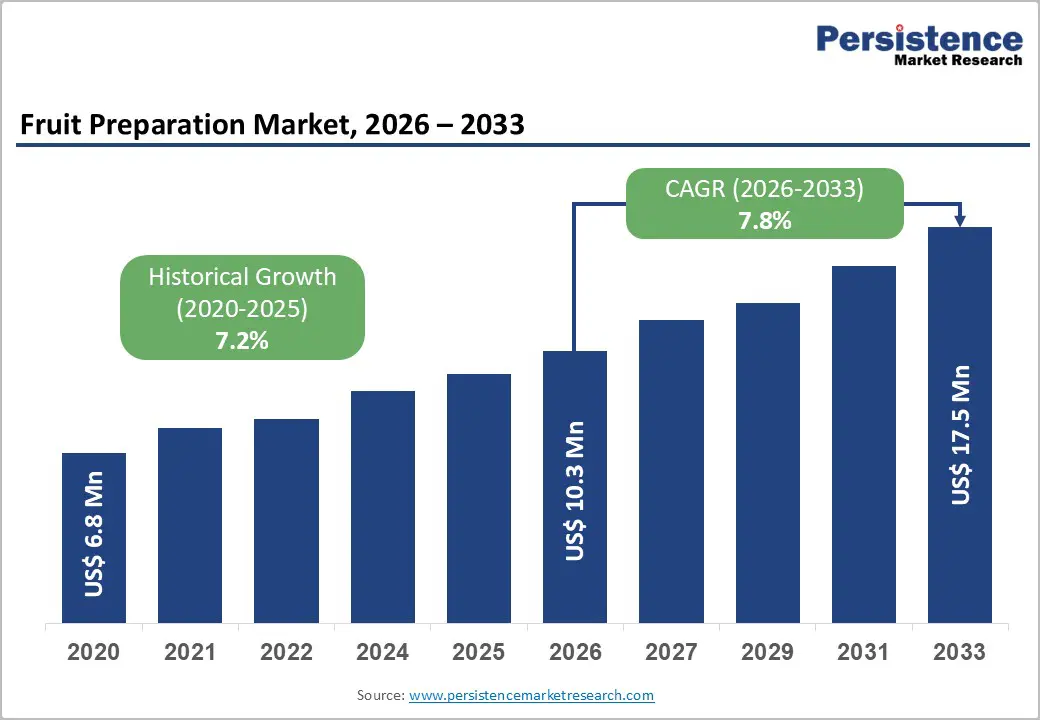
The global fruit preparation market size is likely to be valued at US$10.3 billion in 2026 to US$17.5 billion by 2033. The market is projected to record a CAGR of 7.8% during the forecast period from 2026 to 2033.
The global market is witnessing a steady growth, driven by rising consumer demand for convenient, ready-to-use fruit products in the bakery, dairy, and beverage industries. Innovations in fruit purees, concentrates, and fillings, along with enhanced shelf-life and natural flavor retention, are shaping market trends. Health-conscious consumers are increasingly favoring fruit-based ingredients over synthetic additives, boosting adoption across processed foods. Expanding organized retail, online grocery platforms, and foodservice channels further accelerate market penetration.
Key Industry Highlights:
- Increasing use of fruit purees and fillings in bakery, yogurt, and dessert products drives market growth.
- Growing preference for natural, additive-free, and fruit-enriched products boosts demand for fruit preparations globally.
- Launch of high-fiber, low-sugar, and exotic fruit blends enhances market appeal and diversification.
- Ready-to-use fruit purees, concentrates, and fillings cater to fast-paced lifestyles and foodservice industries.
- E-commerce growth enables wider distribution and direct-to-consumer sales of fruit preparations.
| Key Insights | Details |
|---|---|
|
Fruit Preparation Market Size (2026E) |
US$10.3 Bn |
|
Market Value Forecast (2033F) |
US$17.5 Bn |
|
Projected Growth (CAGR 2026 to 2033) |
7.8% |
|
Historical Market Growth (CAGR 2020 to 2025) |
7.2% |
Market Dynamics
Driver - Increasing Demand in Dairy Applications
The demand for fruit preparations in dairy applications has been steadily increasing, driven by evolving consumer preferences and the growing popularity of health-oriented, flavorful, and convenient dairy products. Yogurts, ice creams, and desserts are no longer just basic offerings; consumers now seek enhanced sensory experiences, combining taste, texture, and nutritional benefits. Fruit purees, fillings, and concentrates provide an ideal way to meet this demand, offering natural sweetness, vibrant color, and added vitamins and antioxidants, which align with clean-label and functional food trends. Dairy manufacturers are innovating by incorporating exotic and tropical fruits, such as mango, passion fruit, and berries, into yogurts and frozen desserts, creating premium products that appeal to both adults and children.
Additionally, the rise of plant-based and fortified dairy alternatives has further boosted the need for versatile fruit preparations, as they enhance flavor and nutritional profiles without relying on artificial ingredients. The growing penetration of organized retail and e-commerce platforms ensures that fruit-enriched dairy products reach wider consumer segments efficiently, while rising disposable incomes encourage experimentation with premium and innovative offerings. Furthermore, fruit preparations allow dairy producers to differentiate their products, extend shelf-life, and reduce dependency on added sugars or artificial flavorings, making them an essential ingredient in modern dairy production. Overall, the integration of fruit preparations in dairy applications is shaping a dynamic market, where taste, health, and convenience drive sustained growth and innovation.
Restraints - Perishability of Fresh Fruits and the Need for Efficient Cold-Chain Logistics
One of the significant challenges in the fruit preparation market is the highly perishable nature of fresh fruits. Fruits are living commodities that continue to ripen after harvesting, making them extremely sensitive to temperature, humidity, and handling conditions. Any delay or improper storage during transportation can lead to spoilage, discoloration, and loss of nutritional value, directly impacting the quality of fruit preparations such as purees, pulps, and fillings. This perishability necessitates the adoption of highly efficient cold-chain logistics, including refrigerated storage, temperature-controlled transport, and advanced monitoring systems. Maintaining these conditions across the supply chain is particularly challenging in regions with limited infrastructure or extreme climatic conditions.
Additionally, fluctuations in supply due to seasonal variations further complicate consistent sourcing. Producers often face increased operational costs due to refrigeration, specialized packaging, and rapid distribution requirements. These challenges not only affect product availability but can also influence pricing, limiting accessibility in certain markets. To mitigate losses, companies are increasingly investing in cold storage facilities, optimized transport networks, and technology-driven supply chain management, ensuring that fresh fruits retain their quality, flavor, and nutritional content until they reach processing units and, ultimately, end consumers.
Opportunity - Ready-to-Use Frozen Fruit Mixes
Ready-to-use frozen fruit mixes have emerged as a significant opportunity in the Fruit Preparation Market, offering convenience, versatility, and consistent quality to a wide range of users. These mixes combine carefully selected fruits, pre-washed, peeled, and cut, then frozen to lock in freshness, flavor, and nutrients. For bakeries, frozen fruit mixes save preparation time, reduce wastage, and ensure uniform taste in pastries, tarts, and cakes. Restaurants and cafes benefit from the ability to quickly create desserts, smoothies, sauces, and garnishes without relying on seasonal fruit availability. Even home chefs are increasingly adopting frozen fruit mixes for easy meal preparation, from breakfast bowls to desserts, enabling consistent quality regardless of location or season. Advances in freezing technology have enhanced the texture, color, and flavor retention of fruits, making them almost indistinguishable from fresh produce.
Additionally, ready-to-use frozen fruit mixes support operational efficiency, reduce storage costs, and enable portion control, appealing to both commercial and retail segments. With growing consumer demand for convenience, coupled with health-conscious eating habits, frozen fruit mixes are positioned as a versatile, time-saving, and nutritious solution. Companies can capitalize on this trend by offering single-serve, multi-fruit blends, or value-added preparations targeting bakery chains, foodservice providers, and online retail consumers.
Category-wise Analysis
By Product Type, Purees and pulp Segment is leading in the Market
Purees and pulp dominate the global fruit preparation market due to their versatility, convenience, and broad application across multiple food and beverage segments. These products serve as the foundational ingredient for bakery items, dairy products like yogurts and ice creams, beverages such as smoothies and juices, and a variety of ready-to-eat processed foods. Unlike concentrates, which require dilution and additional processing, purees and pulp offer ready-to-use solutions, saving time and reducing operational complexity for manufacturers. Additionally, advances in processing technology allow producers to maintain the natural flavor, color, and nutrient content of fruits, making purees and pulp highly appealing to health-conscious consumers.
Their ability to provide consistent taste and texture across products further strengthens their adoption by commercial kitchens, foodservice providers, and large-scale bakeries. Moreover, the growing consumer preference for natural, minimally processed, and additive-free products aligns well with pulp and puree applications. Seasonal fluctuations in fruit availability are mitigated through frozen and packaged pulp/preparations, ensuring year-round supply. Collectively, these factors make purees and pulp the most dominant and widely utilized product type in the fruit preparation market.
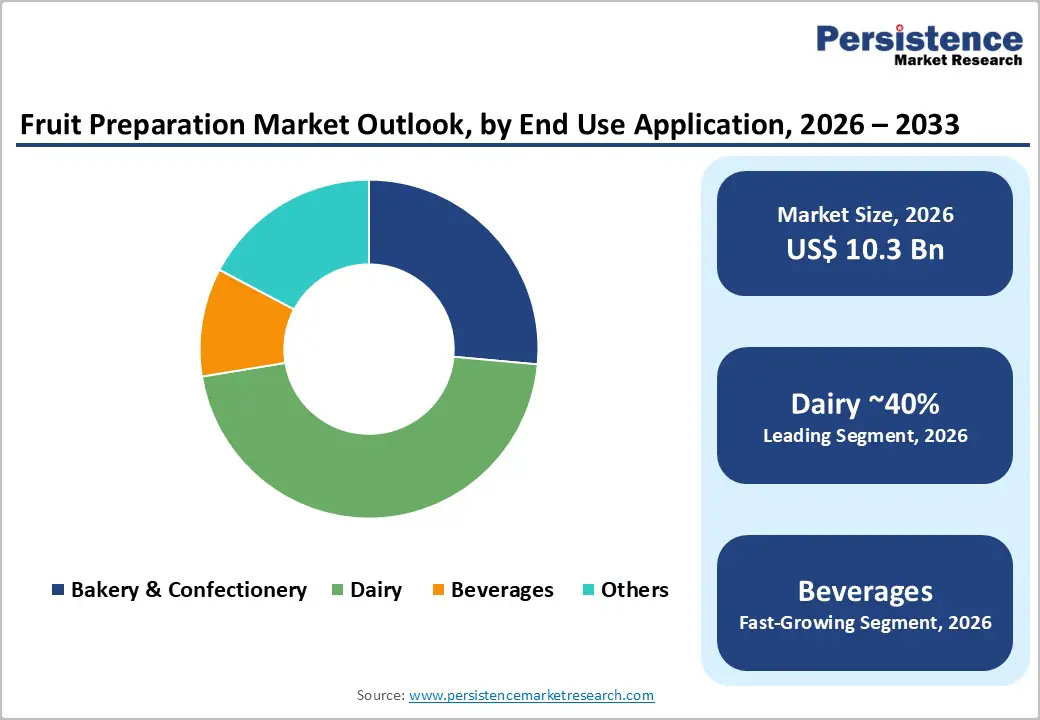
By End-user, Dairy Segment Leads the Market
The dairy segment dominates the fruit preparation market because fruit inclusions significantly enhance both the taste and nutritional value of dairy products, making them more appealing to consumers. Yogurts, flavored milk, ice creams, and dairy-based desserts increasingly incorporate fruit purees, pulps, and concentrates to offer natural sweetness, color, and texture, creating an improved sensory experience. The rising health-consciousness among consumers drives demand for fruit-enriched dairy products, which are perceived as wholesome and nutritious compared to artificially flavored alternatives. Additionally, dairy manufacturers benefit from the versatility of fruit preparations, which allow consistent quality and flavor across batches, reduce preparation time, and simplify product formulation. Seasonal fluctuations in fruit availability are mitigated by using frozen or processed fruit preparations, enabling year-round production. Moreover, the expanding organized retail sector and growing penetration of ready-to-eat dairy products globally have fueled the adoption of fruit preparations in this segment. Combined with consumer preference for natural, additive-free, and functional foods, these factors ensure that dairy remains the largest and most consistent end-use segment for fruit preparations worldwide.
Regional Insights
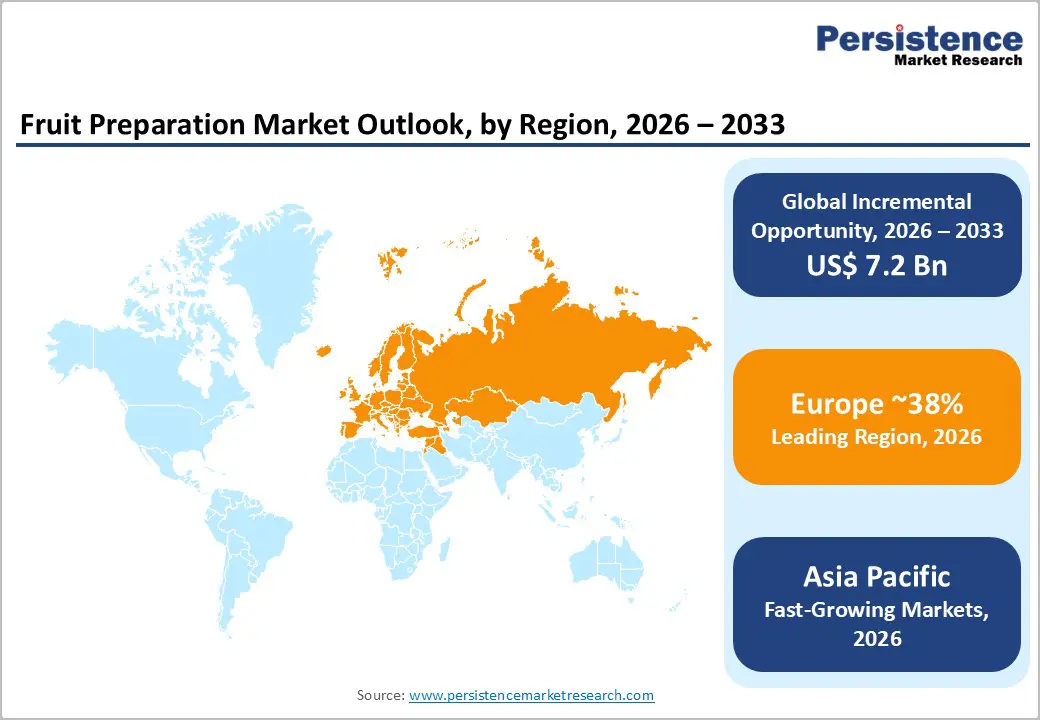
Europe Fruit Preparation Market Trends
Europe remains the leading region in the fruit preparation market, driven by strong consumer demand, advanced food processing infrastructure, and a long-standing tradition of fruit-based culinary products. European manufacturers prioritize high-quality, natural, and clean-label fruit preparations, aligning with growing consumer preferences for healthy and minimally processed foods. Yogurts, ice creams, bakery items, and beverages increasingly incorporate fruit purees and pulps, reflecting trends toward indulgent yet nutritious options. Innovation in exotic fruit blends, organic offerings, and functional ingredients such as fiber and probiotics further distinguishes European products in both domestic and export markets.
The region benefits from well-established cold-chain logistics and technological advancements that preserve flavor, color, and nutrients in fruit preparations, ensuring year-round availability. Additionally, strict food safety and quality standards drive consistency, boosting consumer confidence. Retail expansion, online grocery adoption, and the rise of artisanal and premium products further enhance market growth. Collectively, Europe’s focus on innovation, quality, and health-conscious offerings cements its position as the leading region in the global fruit preparation market.
Asia Pacific Fruit Preparation Market Trends
Asia Pacific is emerging as one of the fastest-growing markets for fruit preparations, driven by rapid urbanization, rising disposable incomes, and shifting consumer preferences toward convenient and nutritious foods. Increasing demand for flavored dairy products, bakery items, and fruit-based beverages is fueling adoption of purees, pulps, and concentrates across both retail and foodservice sectors. Countries like China, India, Japan, and Australia are witnessing a surge in ready-to-use and clean-label fruit preparations, catering to health-conscious and time-sensitive consumers. Technological advancements in cold-chain logistics and processing methods ensure year-round fruit availability, while manufacturers focus on exotic fruit blends and functional ingredients to differentiate their offerings. The rise of modern retail formats, e-commerce platforms, and organized foodservice channels further accelerates market penetration. Combined with growing awareness of natural, minimally processed, and additive-free products, the Asia Pacific presents significant growth opportunities, making it a key emerging hub for fruit preparation consumption globally.
Competitive Landscape
The global fruit preparation market is moderately fragmented, with competition driven by product quality, innovation, and application-specific solutions. Market players focus on developing customized fruit preparations tailored for dairy, bakery, and beverage applications to strengthen customer relationships. Clean-label formulations, reduced sugar content, and use of natural ingredients are key competitive differentiators. Companies also compete on supply reliability, leveraging strong sourcing networks and advanced processing technologies to ensure consistent quality year-round. Investments in cold-chain logistics, sustainable sourcing, and eco-friendly packaging further shape competitive positioning.
Key Industry Developments:
- In November 2025, Nexture, the Milan-headquartered value-added food ingredients group backed by Investindustrial, announced the acquisition of Frulact, a leading global manufacturer of fruit- and vegetable-based specialty ingredients. The deal marked a significant milestone in Nexture’s buy-and-build strategy, strengthening its fruit preparation capabilities and expanding its presence across North America and Africa.
Companies Covered in Fruit Preparation Market
- Bakels India
- DSM N.V.
- Döhler GmbH
- Orkla Food Ingredients
- Kiril Mischeff
- Ingredion Incorporated
- Symrise AG
- Shimlahills
- Exotic Fruits Pvt. Ltd
- David Berryman Ltd
- Batory Foods
- Iprona SpA
- DMH Ingredients
- Others
Frequently Asked Questions
The global fruit preparation market is projected to be valued at US$10.3 Bn in 2026.
Increased consumption of ready-to-eat, ready-to-use, and processed foods boosts demand for fruit preparations.
The global market is poised to witness a CAGR of 7.8% between 2026 and 2033.
Growing adoption by bakeries, restaurants, and home consumers seeking convenience and consistency.
Bakels India, DSM N.V., Döhler GmbH, Orkla Food Ingredients, Ingredion Incorporated, and others


