




- Nutraceuticals & Functional Foods
- Fish Protein Isolate Market
Fish Protein Isolate Market Size, Share, and Growth Forecast 2026 - 2033
Fish Protein Isolate Market by Form (Powder, Liquid), Application (Dietary Supplements, Functional Foods, Beverages, Clinical Nutrition, Animal Feed), by Distribution Channel (Online, Supermarkets / Hypermarkets, Specialty Stores, Pharmacies), and Regional Analysis, 2026 - 2033

Fish Protein Isolate Market Share and Trends Analysis
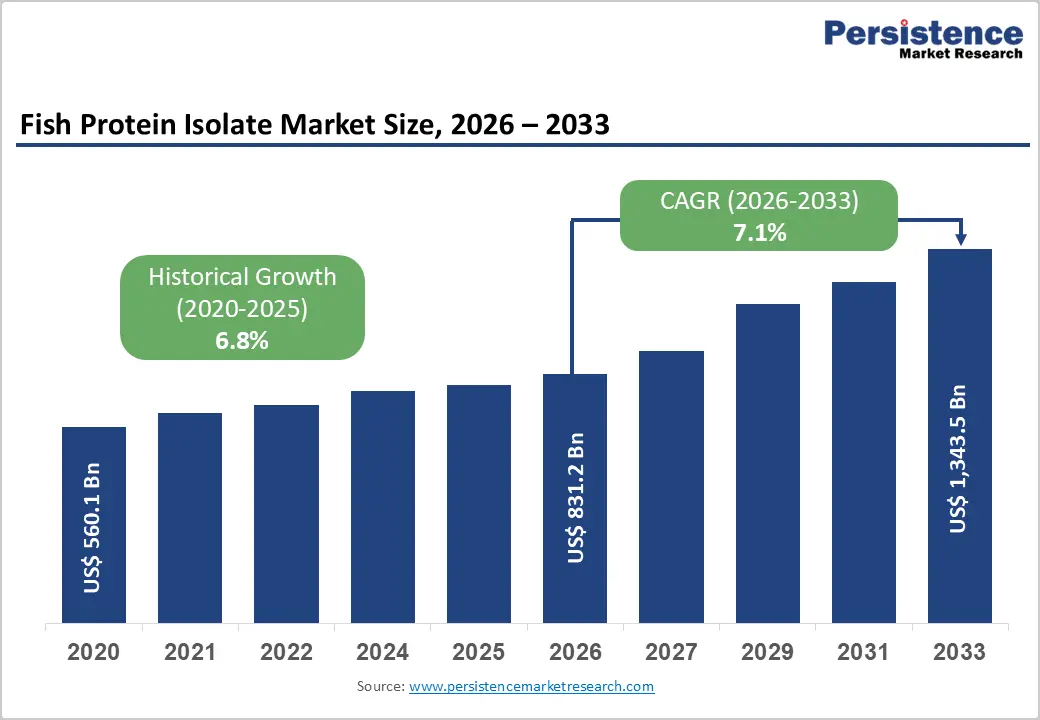
The global fish protein isolate market size is expected to be valued at US$ 831.2 billion in 2026 and projected to reach US$ 1,343.5 billion by 2033, growing at a CAGR of 7.1% between 2026 and 2033. This robust expansion is underpinned by accelerating demand for high-quality marine proteins in functional foods, dietary supplements, clinical nutrition, and premium animal feeds, alongside rising concerns over protein security and sustainability.
Rapid growth in global fisheries and aquaculture production, which reached a record 223.2 million tonnes of aquatic animals and algae in 2022, is increasing the availability of raw material streams for value-added fish protein isolates. At the same time, advances in enzymatic hydrolysis and fractionation technologies are enabling the production of highly purified, bioactive fish protein ingredients with improved taste and solubility, opening new applications across beverages, sports nutrition, and medical foods.
Key Industry Highlights:
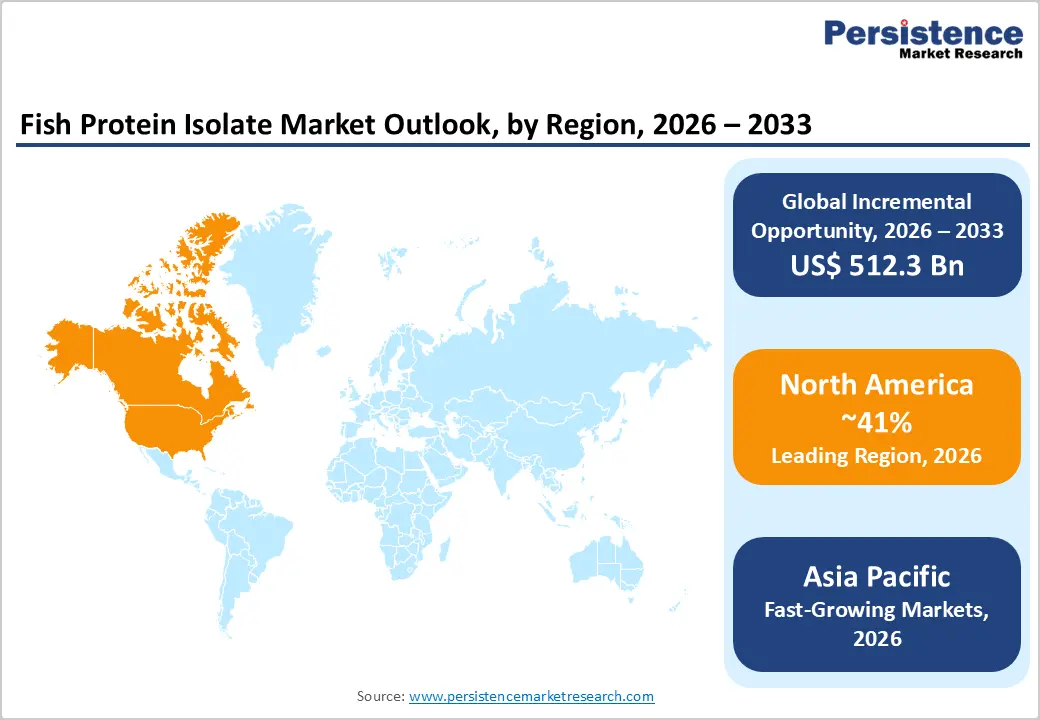
- North America remains the leading regional market for fish protein isolates, benefiting from strong supplement, sports nutrition, and pet food industries, established FDA regulatory pathways, and sustained investments in marine-ingredient innovation and upcycled seafood by-product utilization.
- The Asia Pacific region is projected to be the fastest-growing market, as rapid aquaculture expansion in China, India, Vietnam, and ASEAN countries increases raw material availability and rising middle-class consumers drive demand for marine-based functional foods, beverages, and nutricosmetics.
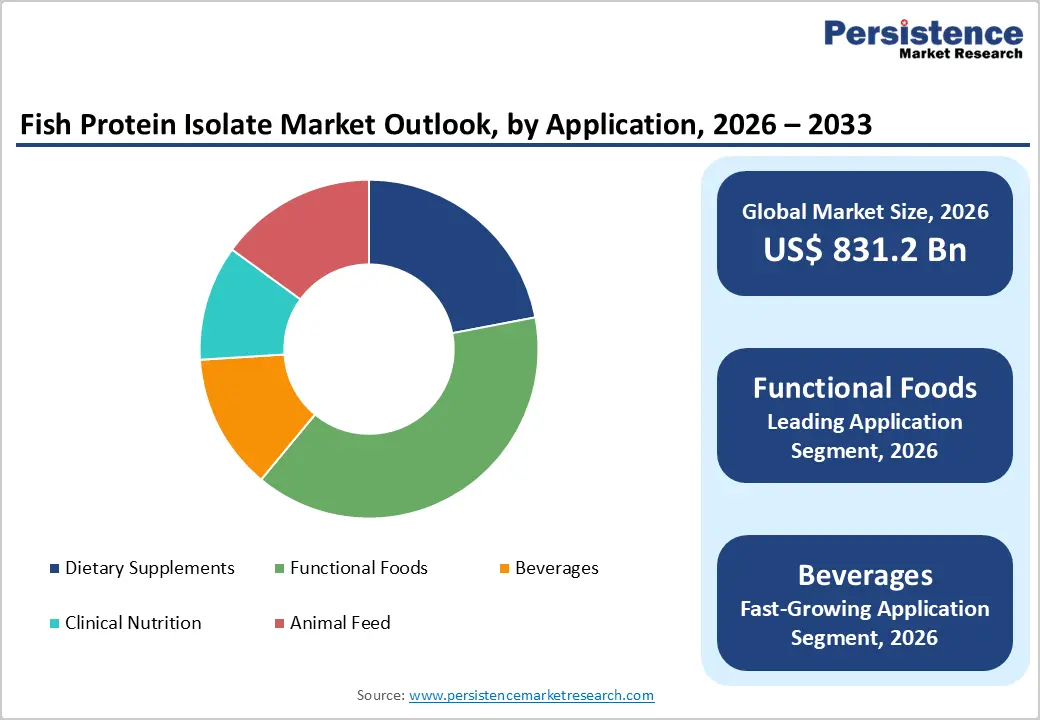
- Within applications, functional foods form the dominant segment, representing about 39% of fish protein isolate demand in 2025, as manufacturers fortify bakery, cereal, snack, and ready-meal products with bioactive marine proteins to support heart health, satiety, muscle maintenance, and healthy ageing.
- Beverages are emerging as the fastest-growing application segment, with studies showing high consumer acceptance of fish protein hydrolysate-based drinks and brands increasingly launching ready-to-drink marine protein shots, recovery beverages, and cardiovascular-health formulations through retail and online channels.
- A major opportunity lies in clinical and medical nutrition, where evidence on the safety and efficacy of fish protein hydrolysates in malnourished children, dysphagia patients, and individuals with hypertension supports the development of high-protein oral supplements, texture-modified meals and condition-specific functional products for ageing populations.
| Key Insights | Details |
|---|---|
| Fish Protein Isolate Market Size (2026E) | US$ 831.2 billion |
| Market Value Forecast (2033F) | US$ 1,343.5 billion |
| Projected Growth CAGR (2026 - 2033) | 7.1% |
| Historical Market Growth (2020 - 2025) | 6.8% |
Market Dynamics
Drivers - Rising demand for bioactive marine proteins in health and wellness nutrition
A key growth driver is the strong shift toward science-backed, marine-derived proteins in dietary supplements, functional foods, and clinical nutrition. Global aquatic food production hit 185.4 million tonnes of aquatic animals in 2022, reflecting the central role of seafood in healthy diets and creating abundant by-products for high-value protein fractionation. Multiple clinical and preclinical studies show that fish protein hydrolysates deliver antihypertensive, antioxidant and anti-inflammatory peptides, supporting cardiovascular and metabolic health. For example, an 8-week randomized, double-blind trial in 144 adults with mild to moderate hypertension found that shrimp protein hydrolysate supplementation significantly reduced daytime ambulatory systolic blood pressure compared with placebo. These efficacy data, combined with growing consumer preference for natural, easily digestible proteins, are pushing manufacturers of sports nutrition, medical foods, and senior nutrition products to incorporate fish protein isolates into powders, ready-to-drink beverages and clinical formulations.
Sustainability and Circular Bio-economy Valorizing Fish Processing By-products
Another powerful driver is the global transition toward circular use of marine resources. The Food and Agriculture Organization (FAO) estimates that up to 35% of global fishery and aquaculture production has historically been lost or wasted each year, largely during processing and distribution. Fish frames, heads, skins, and viscera can contain protein levels exceeding 10-20%, and modern enzymatic hydrolysis processes enable their conversion into functional protein hydrolysates and isolates suitable for human nutrition and high-performance feed. The FAO’s Blue Transformation agenda calls for more efficient and sustainable aquatic food systems, including better utilization of by-products, which directly aligns with the business models of fish protein isolate producers. As aquaculture production alone reached about 94.4 million tonnes of aquatic animals in 2022, surpassing capture fisheries for the first time, the volume of raw materials available for valorization into high-purity proteins is expanding rapidly, structurally supporting market growth.
Restraints - Sensory Challenges, Cost Intensity, and Formulation Constraints
Fish protein hydrolysates and isolates often contain hydrophobic peptides that impart pronounced bitterness and marine odours, which can limit their inclusion levels in beverages and mainstream foods. Scientific reviews note that while enzymatic hydrolysis improves digestibility and bioactivity, it can also generate off-flavours that require additional purification or microencapsulation, raising processing complexity and cost. Enzymatic hydrolysis plants demand specialized reactors, separation equipment, and strict process control, creating significant capital expenditure particularly burdensome in regions with limited access to affordable finance. Furthermore, formulating clear beverages and highly soluble powders with fish-derived proteins is technically challenging due to solubility and stability issues, which can discourage brand owners from adopting fish protein isolates in high-visibility consumer products where flavour and mouthfeel are critical purchase drivers.
Opportunities - Clinical and medical nutrition applications for ageing and vulnerable populations
Fish protein isolates present compelling opportunities in clinical nutrition, geriatric care, and therapeutic foods. Studies in malnourished children show that salmon-derived protein hydrolysates can be safely administered at 3-6 g/day over several months without adverse effects, supporting normal growth, body mass index, and biochemical parameters. Recent work on texture-modified salmon products enriched with fish protein hydrolysate for dysphagia patients demonstrates that such formulations can increase protein density while maintaining safe swallowing characteristics, directly addressing the nutritional needs of older adults with swallowing disorders. In parallel, clinical trials with marine protein hydrolysates and shrimp-derived peptides have reported significant reductions in ambulatory blood pressure and favourable modulation of the renin-angiotensin system, highlighting their potential as adjuncts in cardiovascular risk management. As health systems in North America, Europe, and the Asia Pacific focus on home-based, high-protein medical nutrition solutions for ageing populations, demand for clinically substantiated fish protein isolates in oral nutritional supplements, tube-feeding formulas, and fortified purees is poised to accelerate.
Fast-growing Demand in Functional Beverages, Sports Nutrition, and Premium Animal Nutrition
Another high-impact opportunity lies in rapidly expanding functional beverage, sports nutrition, and specialty pet and aquafeed segments. Prototype electrolyte drinks and protein beverages formulated with tilapia skin-derived fish protein hydrolysate have shown high consumer acceptance, with more than 85% of panellists rating products as acceptable and overall liking scores approaching 90%, while delivering protein contents above 80% in the hydrolysate ingredient. Reviews of fish-derived bioactive peptides emphasize their antioxidant and antihypertensive activity, supporting positioning in performance recovery drinks, cardiovascular-health beverages, and “beauty-from-within” marine protein shots. On the animal side, fish protein hydrolysate-based concentrates are already used in hatchery feeds and premium pet food to improve growth performance and immunity, with commercial ranges of fish protein isolates containing 55-95% protein aimed at both human and companion animal nutrition. As functional beverages become the fastest-growing application segment and online channels expand the reach of niche sports and pet nutrition brands, suppliers of highly soluble, neutral-tasting fish protein isolates are well placed to capture outsized growth.
Category-wise Analysis
Form Insights
Powder is expected to remain the leading form segment in the fish protein isolate market by 2033. Dry powders offer superior shelf life, easier handling, lower transportation cost per unit of protein, and better compatibility with dry-blend manufacturing for bars, capsules, and powdered drink mixes. Industrial studies on fish protein hydrolysates consistently show that spray-dried powders can deliver protein contents above 80-90% with good solubility, enabling high inclusion levels in functional foods without excessive viscosity. Moreover, bio-based marine ingredients suppliers market premium fish protein isolates with around 95% protein and only 0.5% fat, specifically optimized for human nutrition applications such as ready-to-mix supplements, bakery fortification, and high-protein snacks. In contrast, liquid formats are more constrained by cold-chain requirements and microbial stability, making them better suited to intermediate concentrates or ready-to-drink beverages rather than broad B2B distribution.
Application Insights
Within applications, functional foods account for a leading share of fish protein isolate demand, representing about 39% of the market in 2025. This dominance reflects the strong uptake of marine proteins in high-protein bakery items, cereals, nutrition bars and fortified snacks positioned around muscle maintenance, satiety and metabolic health. Scientific reviews indicate that fish-derived bioactive peptides provide antioxidant, antihypertensive and anti-inflammatory benefits, making them ideal ingredients for health-positioned functional foods that go beyond basic nutrition. At the same time, major food systems reports from the Organisation for Economic Co-operation and Development (OECD) and FAO project steady increases in global fish and seafood consumption per capita over the coming decade, reinforcing consumer familiarity with marine-derived ingredients in everyday diets. As manufacturers reformulate to reduce sugar and saturated fat while maintaining palatability and protein density, fish protein isolates offer a label-friendly way to boost nutritional value in cereals, baked goods, and savoury products.
Distribution Channel Insights
Supermarkets and hypermarkets are expected to remain the leading distribution channel for finished products containing fish protein isolates, especially in developed markets where consumers purchase marine-based supplements, functional snacks, and ready-to-drink beverages alongside routine groceries. High footfall, established cold-chain infrastructure, and expanding health-and-wellness aisles in large-format retail stores support strong on-shelf visibility for marine protein products. However, online channels are growing fastest, driven by rapid uptake of e-commerce for dietary supplements, sports nutrition and specialty pet foods. The rise of subscription models for high-protein powders, personalized nutrition packs, and veterinary-recommended pet diets creates natural pull for fish protein isolate-based formulations that emphasize digestibility, hypoallergenicity and sustainability. As digital-native brands leverage detailed storytelling around traceable fisheries and upcycled by-products, online platforms are becoming an increasingly important route to market for innovative fish protein isolate offerings.
Regional Insights
North America Fish Protein Isolate Market Trends and Insights
North America commands a leading position in the global fish protein isolate market, accounting for an estimated 41% share in 2025. The region combines high per-capita income, strong consumer awareness of omega-3 and marine protein benefits, and a sophisticated dietary supplement and sports nutrition industry. The United States, in particular, has a well-developed ecosystem of functional food brands and clinical nutrition companies that incorporate marine proteins into powders, bars, and medical-grade formulations. Regulatory clarity around protein hydrolysates, reflected in FDA GRAS notices for enzymes and protein hydrolysates used as processing aids and protein sources, provides a pathway for compliant commercialization of fish-derived isolates in multiple food categories.
Innovation in North America is reinforced by a dense network of ingredient suppliers and research-driven marine nutrition companies developing high-purity fish protein concentrates and isolates for both human and animal nutrition. Clinical evidence on the antihypertensive and functional benefits of marine peptides further supports premium positioning in cardiovascular health and healthy ageing products. At the same time, growing emphasis on upcycling seafood by-products and alignment with corporate sustainability goals is encouraging large fisheries and rendering groups to expand their portfolio of fish protein ingredients for aquafeed, pet food and regenerative agriculture inputs. This combination of scientific validation, regulatory infrastructure and innovation capacity underpins North America’s continued market leadership.
Asia Pacific Fish Protein Isolate Market Trends and Insights
The Asia Pacific fish protein isolate market is emerging as a high-growth region due to rising health awareness, increasing disposable incomes, and expanding demand for protein-rich diets. Countries such as China, India, Japan, and Australia are witnessing strong growth in functional foods, dietary supplements, and sports nutrition products. Rapid urbanization and changing lifestyles are encouraging consumers to shift toward convenient, high-protein fortified foods and beverages. The region also benefits from abundant marine resources and a well-established seafood processing industry, supporting raw material availability for fish protein isolates. Additionally, increasing investments in nutraceutical manufacturing and growing awareness about clean-label and sustainable protein sources are boosting product adoption. Expanding e-commerce platforms and improved retail distribution networks further accelerate market penetration across developing economies in Southeast Asia.
Competitive Landscape
The competitive landscape of the fish protein isolate market is characterized by moderate consolidation with a focus on product innovation, quality, and sustainability. Key players are enhancing their portfolios through process improvements that increase protein purity and functional properties, catering to diverse applications such as nutrition, functional foods, and animal feed. Strategic partnerships and capacity expansions are common as companies seek to strengthen regional footprints, especially in high-growth markets. Emphasis on traceability, eco-friendly sourcing, and regulatory compliance also differentiates competitors.
Key Developments:
- In September 2025, the government launched a Tk 43.5 crore five-year project to develop vaccines aimed at reducing mass mortality in freshwater fish caused by bacterial and viral infections. It was implemented by the Bangladesh Fisheries Research Institute to cut fish losses by up to 80 % and support large-scale indigenous fish farming. The programme focused on identifying pathogens and developing oral vaccines for key species such as koi, tilapia, carp, and pabda.
Companies Covered in Fish Protein Isolate Market
- Omega Protein Corporation
- Hofseth BioCare ASA
- Bio-Marine Ingredients Ireland Ltd.
- Bio-Oregon Protein Inc.
- Copalis Sea Solutions
- Colpex International
- Symrise AG
- Scanbio Marine Group
- Titan Biotech Limited
- TripleNine Group A/S
- Aroma NZ
- Alaska Protein Recovery
- SOPROPECHE, Diana Pet Food
- TC Union Agro-Tech
- Green Earth Industries LLC
Frequently Asked Questions
The global fish protein isolate market is expected to reach a value of around US$ 831.2 billion in 2026.
Key demand drivers include growing consumer focus on cardiometabolic health, evidence-backed bioactive peptides from fish protein hydrolysates with antihypertensive and antioxidant effects, and rising use of marine proteins in sports nutrition, healthy ageing products and clinical nutrition, alongside the need to valorize fish processing by-products in circular bioeconomy models.
North America is the leading regional market, with an estimated 41% share in 2025, driven by a mature dietary supplement and sports nutrition industry, advanced pet food and aquafeed sectors, strong FDA regulatory frameworks and active innovation by marine-ingredient suppliers leveraging sustainable seafood by-products.
A major opportunity lies in clinical and medical nutrition, where fish protein hydrolysates and isolates can be used to formulate high-protein oral supplements, texture-modified meals for dysphagia, and condition-specific products for hypertension and malnutrition, all supported by emerging clinical evidence on safety, tolerance and functional benefits in vulnerable populations.
Prominent market participants include Omega Protein Corporation, Hofseth BioCare ASA, Bio-Marine Ingredients Ireland Ltd., and Bio-Oregon Protein Inc.


