




- Food Ingredients & Additives
- Fish Protein Concentrate Market
Fish Protein Concentrate Market Size, Share, and Growth Forecast, 2026 - 2033
Fish Protein Concentrate Market by Source (Tuna, Salmon, Cod, Anchovy, Others), Form (Powder, Liquid), Application (Food & Beverages, Animal Feed, Dietary Supplements, Pharmaceuticals, Others), and Regional Analysis for 2026 - 2033

Fish Protein Concentrate Market Size and Trends Analysis
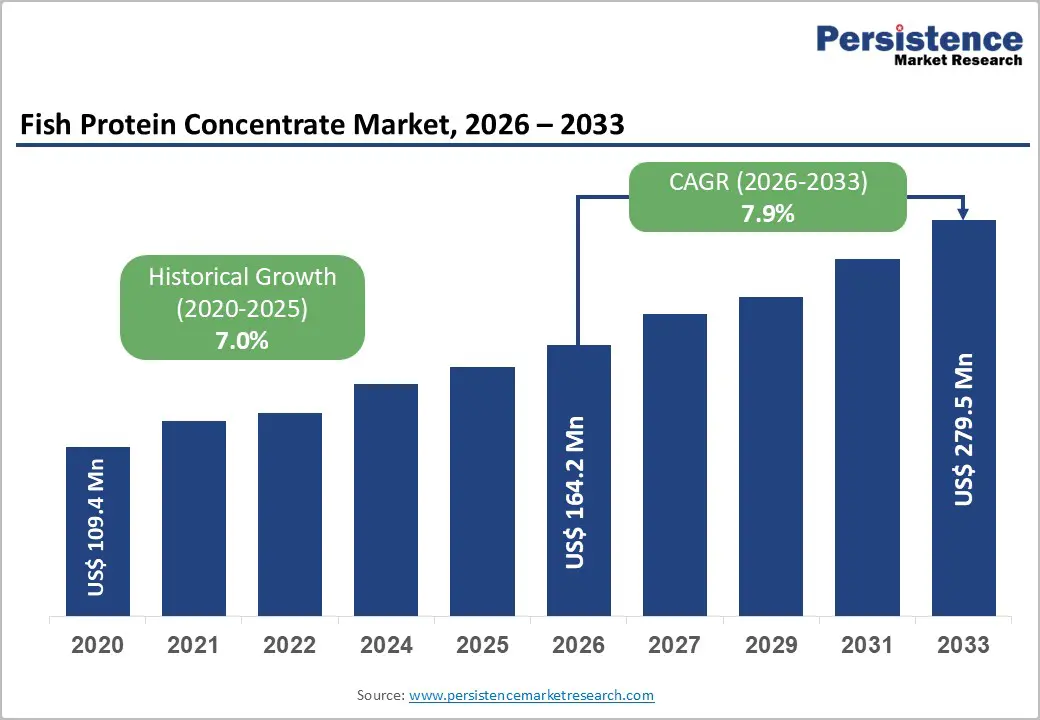
The global fish protein concentrate market size is likely to be valued at US$164.2 million in 2026, and is expected to reach US$279.5 million by 2033, growing at a CAGR of 7.9% during the forecast period from 2026 to 2033, driven by rising demand for high-quality animal protein, increasing use in functional foods, and growing applications in animal feed and nutraceuticals.
Increasing consumer preference for sustainable, nutrient-dense protein sources remains a major driver of fish protein concentrate market growth.
Key Industry Highlights:
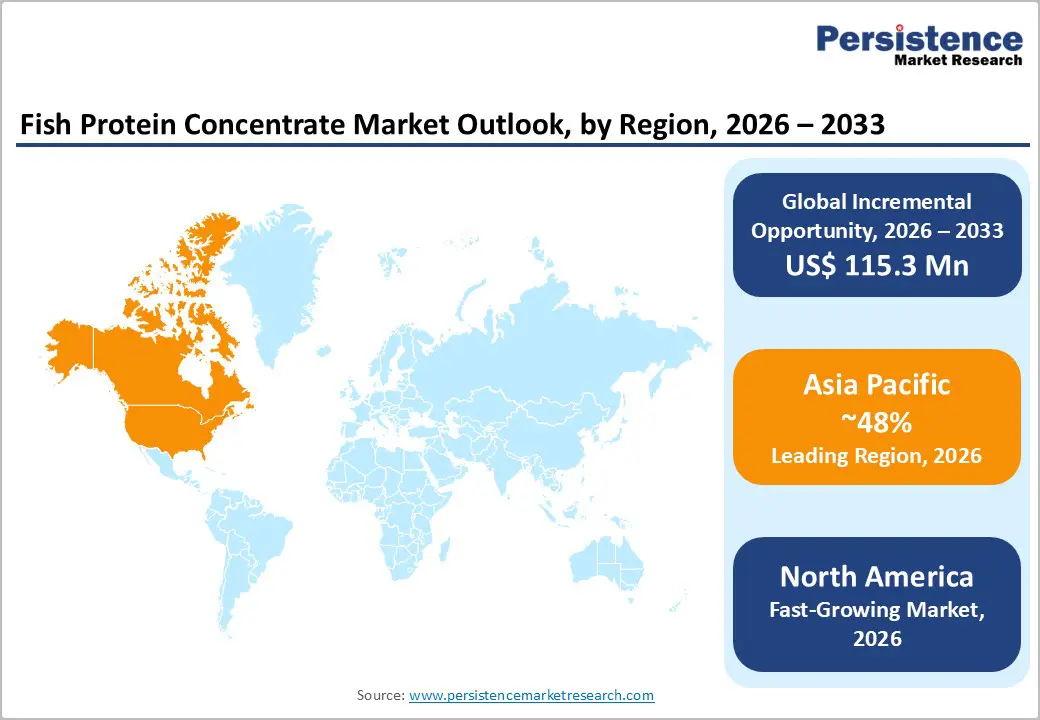
- Leading Region: Asia Pacific, anticipated to account for a 48% market share in 2026, driven by rising protein demand, growing health awareness, and expanding aquaculture and nutrition applications.
- Fastest-growing Region: North America is the fastest-growing region, driven by rising health awareness, high-protein diets, and increasing demand for functional foods and supplements rich in marine-based nutrients.
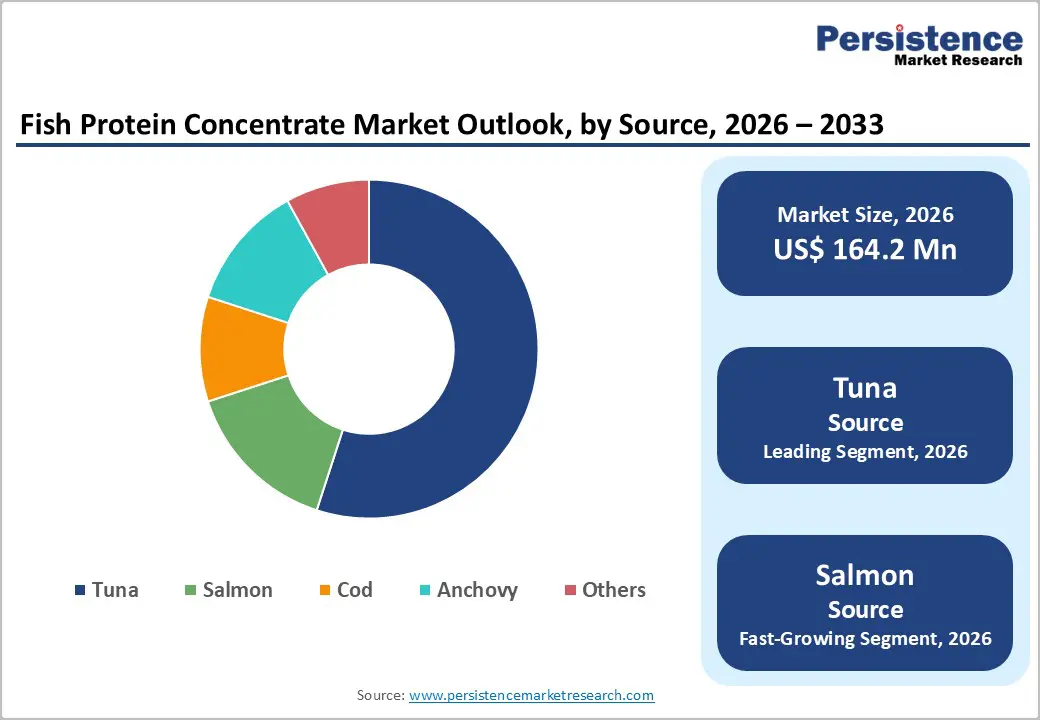
- Dominant Source: Tuna is expected to dominate the fish protein concentrate market with a 55% share in 2026, driven by its high protein content, abundant processing by-products, and cost-effective suitability for food, supplement, and aquafeed applications.
- Leading Form: The powder segment is projected to dominate with a 65% share in 2026, driven by its versatility, long shelf life, easy storage, and wide application across foods, supplements, and feed without significantly affecting taste or texture.
| Key Insights | Details |
|---|---|
| Fish Protein Concentrate Market Size (2026E) | US$164.2 Mn |
| Market Value Forecast (2033F) | US$279.5 Mn |
| Projected Growth CAGR (2026 - 2033) | 7.9% |
| Historical Market Growth (2020 - 2025) | 7.0% |
DRO Analysis
Driver - Rising Global Demand for High-Quality Protein Sources
The rising global demand for high-quality protein sources is a major factor driving the Fish Protein Concentrate (FPC) market. With growing awareness of the role of protein in supporting muscle development, immunity, and overall health, consumers are increasingly prioritizing protein-rich diets. This trend is evident across various demographics, including fitness enthusiasts, aging populations, and individuals seeking balanced nutrition.
FPC is gaining attention as a superior protein source due to its high digestibility and rich composition of essential amino acids. Unlike some plant-based proteins, it provides a complete amino acid profile, making it highly effective for nutritional applications in foods, beverages, and supplements. Its marine origin also adds value, as it often contains bioactive peptides that support additional health benefits. In developing regions, rising incomes and urbanization are encouraging dietary shifts toward nutrient-dense foods, further boosting protein demand. in developed markets, there is a growing preference for functional and clean-label products, where high-quality protein ingredients play a key role.
Expansion of Aquaculture & Animal Nutrition Sectors
Rapid growth in aquaculture and animal nutrition industries is significantly boosting demand for Fish Protein Concentrate (FPC). As global seafood consumption rises, aquaculture producers are focusing on improving feed efficiency, growth rates, and disease resistance in fish and shrimp. FPC serves as a highly digestible, protein-rich ingredient that enhances feed quality and supports optimal development in aquatic species. Its balanced amino acid profile and bioactive compounds make it particularly valuable in high-performance aquafeed formulations.
In the livestock and pet food sectors, there is increasing emphasis on nutrient-dense and functional ingredients to improve animal health and productivity. FPC is being incorporated into poultry, swine, and premium pet food products due to its superior digestibility and palatability. This is especially important for young animals, where efficient nutrient absorption is critical for growth. Feed manufacturers are seeking sustainable alternatives to traditional fishmeal, and FPC derived from fish by-products offers a more resource-efficient solution.
Restraint - Fluctuating Raw Material Availability and Prices
Fluctuating raw material availability and prices present a significant challenge for the Fish Protein Concentrate (FPC) market. The primary raw materials for FPC are derived from fish catches and processing by-products, which are highly dependent on seasonal fishing patterns, climatic conditions, and marine ecosystem health. Variations in ocean temperatures, overfishing concerns, and regulatory quotas can limit fish supply, leading to inconsistent availability of raw materials.
In addition, geopolitical factors and supply chain disruptions can further impact sourcing and pricing stability. When fish supply declines, the cost of raw materials rises, directly increasing production costs for FPC manufacturers. This volatility makes it difficult for companies to maintain consistent pricing and profit margins.
Competition from Alternative Protein Sources
Competition from alternative protein sources is a key restraint for the Fish Protein Concentrate (FPC) market. Plant-based proteins such as soy, pea, and wheat are widely available, cost-effective, and increasingly popular among consumers seeking vegetarian or vegan options. These proteins benefit from strong supply chains, established processing technologies, and broad acceptance in food and beverage applications. Dairy-based proteins like whey and casein are well-established in sports nutrition and functional foods, offering high protein content and familiar taste profiles.
The growing trend toward plant-based diets, driven by environmental and ethical concerns, further intensifies this competition. Many food manufacturers prefer plant proteins due to their neutral flavor and ease of formulation compared to fish-derived ingredients.
Opportunity - Expansion in Functional & Fortified Food Products
The expansion of functional and fortified food products is creating significant growth opportunities for the Fish Protein Concentrate (FPC) market. Consumers are increasingly seeking foods that offer added health benefits beyond basic nutrition, such as improved immunity, muscle strength, and overall wellness. This shift is driving the incorporation of high-quality protein ingredients like FPC into everyday food products.
FPC is widely used in protein-enriched snacks, bakery items, dairy alternatives, soups, sauces, and ready-to-eat meals, as it enhances nutritional value without significantly altering taste or texture when properly processed. Its rich amino acid profile and high digestibility make it particularly suitable for fortified foods aimed at children, athletes, and aging populations. There is a rising demand for convenient and on-the-go nutrition, especially in urban areas. Manufacturers are developing innovative products such as protein bars, fortified beverages, and meal replacements that incorporate FPC to meet this demand. Advances in processing technologies, including odor and flavor masking, have further improved its suitability for food applications.
Growth in Nutraceuticals & Dietary Supplements
The growth of nutraceuticals and dietary supplements is a major driver for the fish protein concentrate market, fueled by rising consumer awareness of preventive healthcare and overall wellness. Consumers are increasingly shifting toward protein-rich supplements to support muscle health, immunity, weight management, and active lifestyles. FPC, being a high-quality marine protein source rich in essential amino acids and bioactive peptides, is gaining traction as a key ingredient in protein powders, capsules, and ready-to-drink formulations.
A significant trend is the preference for natural and clean-label supplements, where FPC stands out due to its minimal processing and marine origin. Additionally, the aging population is contributing to demand for easily digestible proteins that support muscle maintenance and recovery, further boosting FPC adoption in specialized nutrition products. Sports nutrition is another important segment, where athletes and fitness enthusiasts seek high-performance protein sources with fast absorption and high bioavailability. Innovation in flavor masking and odor reduction technologies has made FPC more suitable for mainstream supplement applications, improving consumer acceptance.
Category-wise Analysis
Source Insights
Tuna is anticipated to dominate, holding 55% share in 2026, propelled by its high protein content and the large volume of by-products generated during processing. These by-products, such as heads, frames, and viscera, are efficiently converted into FPC, making tuna an economically attractive raw material for both human nutrition and animal feed applications. Its protein-rich profile, combined with widespread availability, allows manufacturers to produce high-quality concentrates suitable for functional foods, supplements, and aquafeed. Symrise Aqua Feed’s Nutri™ Tuna Soluble Extract is a liquid fish protein concentrate made from tuna by-products, offering highly digestible protein and amino acids that boost nutrition and feed acceptance in fish and shrimp diets, improving overall aquaculture performance.
Salmon represents the fastest-growing source, with its premium nutritional profile, including high levels of essential amino acids, omega-3 fatty acids, and bioactive peptides. Its protein-rich by-products from filleting and processing are increasingly utilized to produce high-quality FPC suitable for functional foods, dietary supplements, and aquaculture feeds. The growing consumer preference for health-focused and premium nutrition products, combined with technological advancements that preserve flavor and enhance solubility, is boosting salmon-derived FPC adoption. Hofseth BioCare (Norway) manufactures ProGo® Salmon Protein Hydrolysate, a high-quality marine protein derived from salmon processing side-streams. It delivers over 97% easily digestible protein and is widely utilized in sports nutrition, functional foods, and dietary supplements due to its superior bioavailability and rich amino acid composition.
Form Insights
Powder is projected to dominate, accounting for 65% of the market share in 2026, fueled by its versatility, ease of storage, long shelf life, and ability to be incorporated into a wide range of applications. It can be seamlessly added to functional foods, protein shakes, dietary supplements, fortified snacks, and animal or aquaculture feed without altering taste or texture significantly. Colpex International Inc. (Peru) manufactures Fish Protein Concentrate (FPC) in powder form containing approximately 70% protein, sourced from Peruvian anchovies. This high-protein powder is specifically formulated for direct incorporation into food products to enhance their nutritional profile. Its stable nature and easy blendability make it ideal for use in fortified foods, dietary supplements, and health-focused products, allowing manufacturers to enrich protein content without affecting taste or texture.
Liquid is the fastest-growing form, with its convenience and suitability for ready-to-use applications in both the food and feed industries. Liquid FPC can be directly incorporated into beverages, sauces, soups, and animal or aquaculture feeds without additional reconstitution, saving time and processing costs. Its high solubility ensures uniform distribution in formulations, while advanced preservation techniques extend shelf life. Pelagia Marine’s H-pro® Salmon Protein Concentrate is a liquid marine protein designed to enhance both nutrition and palatability in animal and aquaculture feeds. Derived from sustainably sourced salmon, it is rich in soluble peptides and free amino acids, which improve digestibility and increase feed acceptance, particularly in extruded feed formulations.
Regional Insights
North America Fish Protein Concentrate Market Trends
North America is likely to be the fastest-growing region, fueled by increasing consumer focus on health, nutrition, and functional foods. High-protein diets, fitness trends, and growing interest in dietary supplements are driving demand for FPC in human nutrition, particularly in protein powders, meal replacements, and fortified snacks. Consumers are also showing heightened awareness of the benefits of marine-derived proteins, such as essential amino acids, peptides, and omega-3 fatty acids, which promote heart, muscle, and overall wellness.
The region’s aquaculture and animal feed industries are significant contributors, as FPC provides a highly digestible and nutrient-dense protein source for fish, poultry, and livestock feeds. Manufacturers are focusing on advanced processing techniques, including enzymatic hydrolysis and odor reduction, to produce flavor-neutral, soluble FPC suitable for diverse applications in food and feed. Sustainability and environmental responsibility are becoming increasingly important, with companies emphasizing the use of fish by-products and responsible sourcing practices to reduce waste and comply with regional regulations. Innovation in clean-label formulations and specialty products, such as hypoallergenic or high-performance protein concentrates, is creating new growth opportunities. Rising urbanization, higher disposable incomes, and consumer preference for convenient, nutrient-dense products are further supporting market expansion.
Europe Fish Protein Concentrate Market Trends
Europe market is experiencing rising consumer demand for high-protein, nutritious, and sustainable food products. Increasing awareness of health and wellness, particularly the benefits of marine-based proteins rich in essential amino acids and omega-3 fatty acids, is encouraging the incorporation of FPC into functional foods, dietary supplements, and specialized nutritional products. Consumers are increasingly seeking natural and clean-label ingredients, which positions FPC, derived from sustainable fish sources and by-products, as an attractive option in the European market.
Sustainability is a key focus in Europe, with strict regulations and environmental concerns pushing manufacturers to adopt responsible sourcing and production practices. Companies are leveraging fish by-products to reduce waste, minimize ecological impact, and meet consumer expectations for environmentally conscious products. Technological advancements, including odor-reduction, enzymatic hydrolysis, and enhanced solubility techniques, are enabling broader application of FPC in food and beverage formulations without compromising taste or texture. Europe’s strong aquaculture and animal feed sectors are driving demand for high-quality protein concentrates in fish and livestock feeds.
Asia Pacific Fish Protein Concentrate Market Trends
Asia Pacific is projected to dominate, capturing the 48% of revenue in 2026, powered by increasing demand for high-quality protein sources, rising health awareness, and expanding aquaculture industries. Consumers in countries like China, India, Thailand, and Vietnam are increasingly adopting protein-rich diets to support wellness and fitness goals, fueling demand for FPC in food, nutraceutical, and functional beverage applications. The region’s growing aquaculture sector is also a major contributor, as FPC serves as a high-protein, digestible ingredient in fish and shrimp feed, improving growth rates and feed efficiency.
Technological advancements in FPC production, such as enzymatic hydrolysis and odor-neutralization techniques, are enabling manufacturers to produce flavor-neutral, soluble concentrates suitable for a wide range of food applications, including fortified snacks, meal replacements, and dietary supplements. Sustainability is another key trend, with companies focusing on utilizing fish by-products to minimize waste and reduce environmental impact, aligning with both consumer preferences and regulatory expectations. Urbanization and rising disposable incomes are further encouraging the adoption of convenient, nutrient-dense food products.
Competitive Landscape
The global Fish Protein Concentrate market is moderately competitive, with key players strategically focusing on quality, sustainability, and innovation to strengthen their market position. Companies are leveraging advanced processing technologies, including enzymatic hydrolysis and spray-drying, to enhance protein purity, improve solubility, and reduce the characteristic fishy odor, making FPC more versatile for food, nutraceutical, and animal feed applications.
Leading industry participants, such as Colpex International Inc., Omega Protein Corporation, BioOregon Protein Inc., Scanbio Marine Group AS, and Advance International Inc., are emphasizing sustainable sourcing of raw materials to address environmental concerns and regulatory requirements. In addition, these players are expanding their product portfolios to cater to diverse consumer demands in functional foods, dietary supplements, and aquaculture feed. Strengthening distribution networks and entering high-growth regions, particularly in Asia-Pacific and Latin America, is a key focus area to capture emerging demand.
Key Industry Developments:
- In 2025, Omega Protein Corporation expanded its fish protein concentrate production capacity with improved odor-neutralization technology.
- In 2024, Scanbio Marine Group AS launched a new premium-grade fish protein concentrate for nutraceutical applications.
Companies Covered in Fish Protein Concentrate Market
- Vinh Hoan
- Hung Vuong Corporation
- Bien Dong Seafood
- GODACO Seafood
- Nam Viet Corp
- Hoang Long Group
- Dai Thanh Seafoods
- AGIFISH Co.
- Truong Giang Fishery Holdings Corp.
- Aquatex Ben Tre
- NTSF SEAFOODS
Frequently Asked Questions
The global fish protein concentrate market is projected to reach US$164.2 million in 2026.
The fish protein concentrate market is primarily driven by rising consumer demand for sustainable, nutrient-dense protein sources and increasing use in functional foods and animal feed.
The fish protein concentrate market is poised to witness a CAGR of 7.9% from 2026 to 2033.
Key opportunities in the fish protein concentrate market include the development of odorless and highly soluble powders, expansion into premium dietary supplements, and growth in animal feed and pet food segments in emerging markets.
Key players in the fish protein concentrate market include Omega Protein Corporation, Scanbio Marine Group AS, BioOregon Protein Inc., and Advance International Inc.


