




- Beauty & Personal Care
- Hot and Cold Packs Market
Hot and Cold Packs Market Size, Share, and Growth Forecast 2026 - 2033
Hot and Cold Packs Market by Product Type (Reusable Packs, Instant Packs, Gel Packs, Chemical Packs, Others), by Application (Pain Management, Injury Treatment, Post-Surgical Recovery, Sports Medicine, Others), by End-User (Hospitals & Clinics, Sports & Fitness Centers, Home Care, Others), by Distribution Channel (Pharmacies, Online Stores, Supermarkets/Hypermarkets, Others), by Regional Analysis, 2026-2033

Hot and Cold Packs Market Size and Trend Analysis
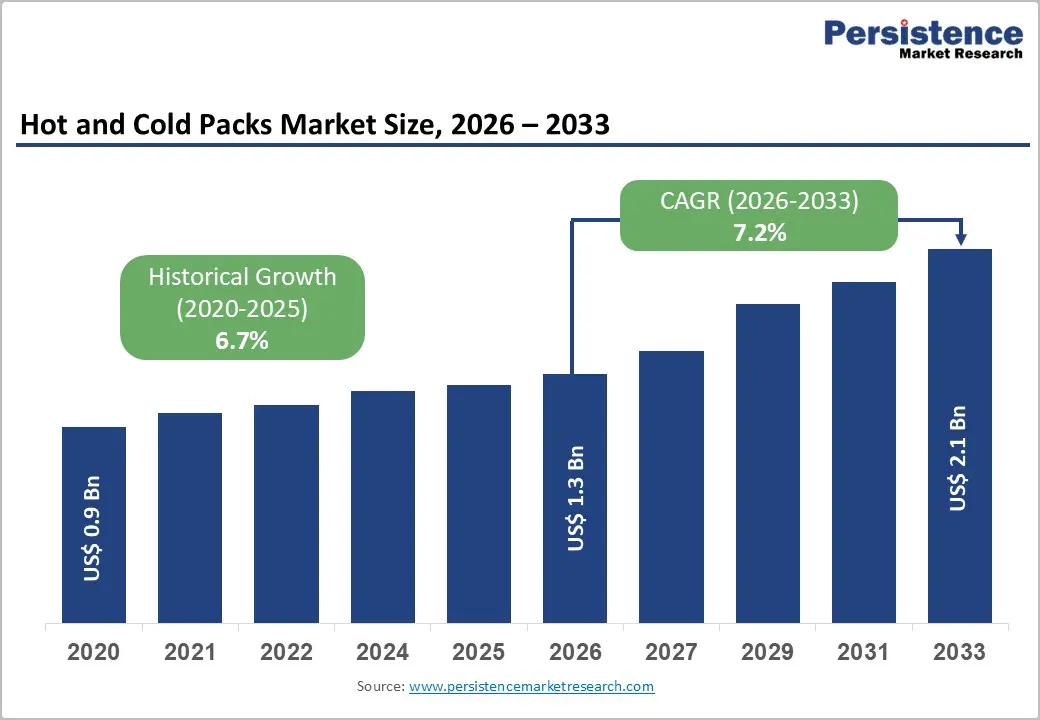
The global Hot and Cold Packs market size is expected to be valued at US$ 1.3 billion in 2026 and projected to reach US$ 2.1 billion by 2033, growing at a CAGR of 7.2% between 2026 and 2033. Market growth is driven by the rising prevalence of musculoskeletal disorders, sports injuries, and post-operative pain, which are increasing demand for effective, non-invasive pain relief solutions. An expanding aging population further contributes to market adoption, as chronic conditions such as arthritis and joint stiffness become more common in home care settings. Moreover, growing sports participation and rehabilitation needs, combined with advancements in reusable, gel-based, and ergonomic pack designs, continue to support sustained market expansion globally.
Key Market Highlights
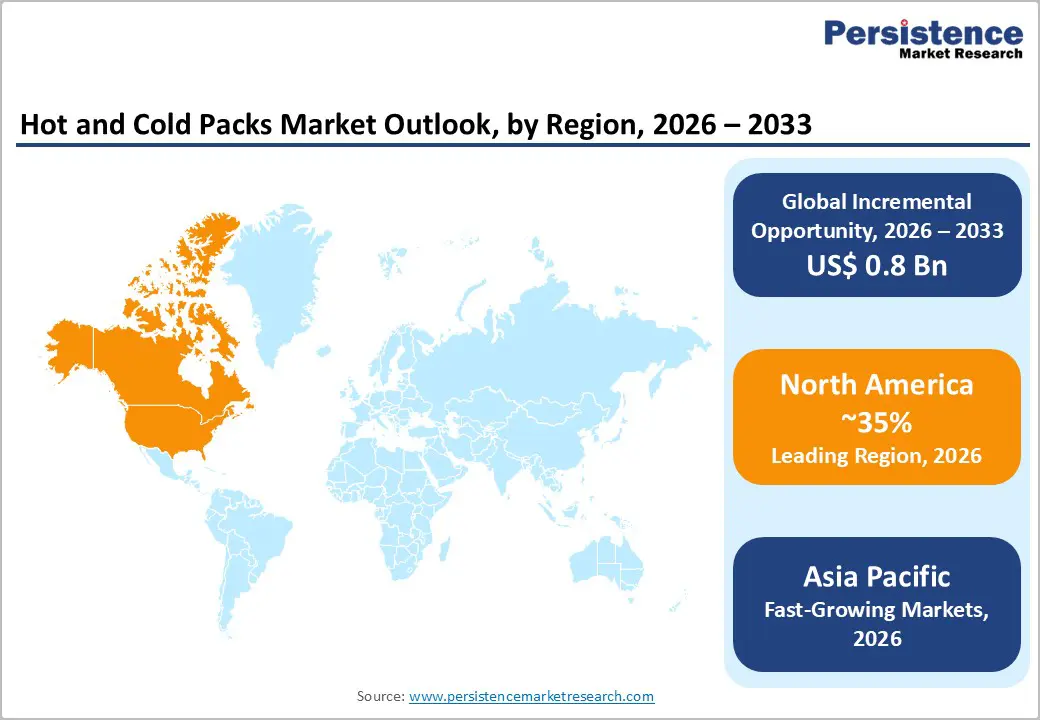
- Leading Region: North America leads the Hot and Cold Packs market with ~35% share, driven by high sports injury incidence and advanced healthcare infrastructure.
- Fastest-Growing Region: Asia Pacific is the fastest-growing region, holding ~32% share, supported by urbanization and aging populations in China and India.
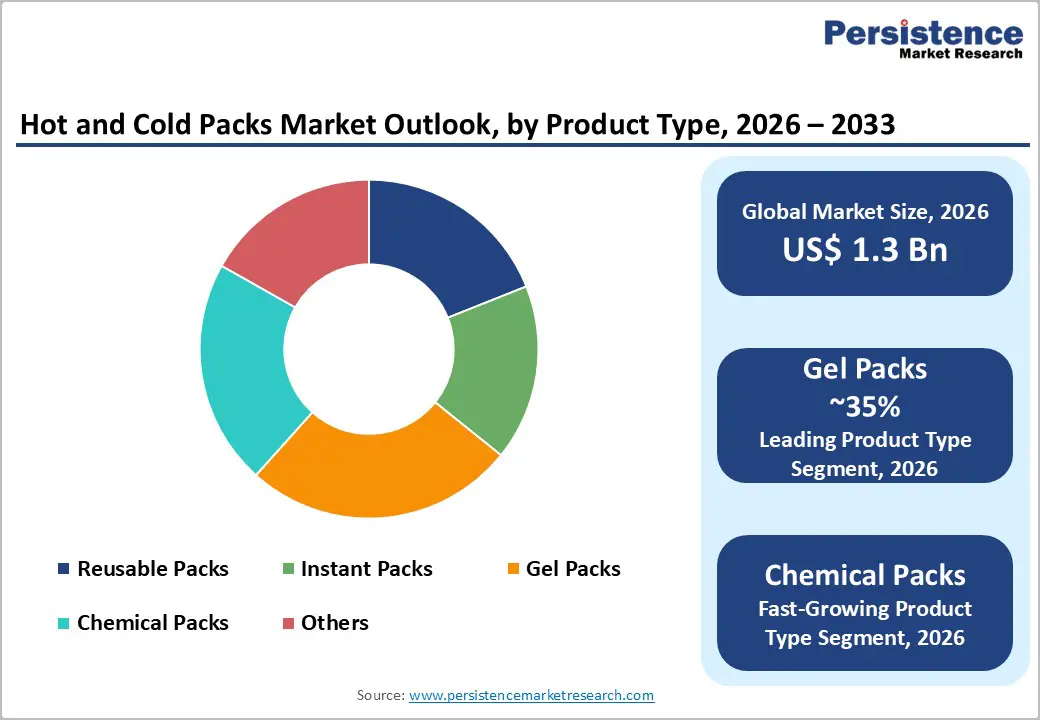
- Leading Category: Gel Packs dominate the product type segment with ~35% share, owing to superior reusability, durability, and temperature retention.
- Fastest-Growing Region: Home Care accounts for ~38% share and is the fastest-growing end-user segment, fueled by rising self-care adoption post-pandemic.
- Key Market Opportunity: Advancements in reusable gel technologies present a key growth opportunity, supporting sustainable, long-term home therapy applications.
| Key Insights | Details |
|---|---|
|
Hot and Cold Packs Size (2026E) |
US$ 1.3 billion |
|
Market Value Forecast (2033F) |
US$ 2.1 billion |
|
Projected Growth CAGR(2026-2033) |
7.2% |
|
Historical Market Growth (2020-2025) |
6.7% |
Market Dynamics
Market Drivers
Rising Prevalence of Musculoskeletal Disorders and Chronic Pain Conditions
The increasing burden of musculoskeletal disorders such as arthritis, lower back pain, and joint stiffness is a major driver for the Hot and Cold Packs market. Globally, a large share of the population suffers from chronic pain linked to sedentary lifestyles, occupational strain, and age-related degeneration. These conditions require frequent, long-term pain management, encouraging adoption of non-invasive, easy-to-use therapy solutions.
An aging population further intensifies this demand, as older individuals are more prone to chronic inflammation and mobility issues. Hot and cold packs provide a drug-free, cost-effective option for routine pain relief, inflammation control, and muscle relaxation. Their suitability for both home care and clinical environments strengthens regular usage, supporting consistent market growth across developed and emerging regions.
Growing Participation in Sports, Fitness, and Physical Activities
Rising engagement in sports, fitness, and recreational physical activities significantly boosts demand for hot and cold therapy packs. Increased awareness of physical wellness, combined with higher participation in running, gym workouts, and organized sports, has led to a parallel rise in sports-related injuries such as sprains, strains, and muscle fatigue requiring immediate care.
Hot and cold packs are widely used for injury prevention, rapid recovery, and post-exercise muscle relaxation, making them essential in sports medicine. The expansion of home fitness routines and amateur sports participation further accelerates adoption, as individuals seek convenient recovery tools to minimize downtime, manage soreness, and maintain consistent physical performance.
Market Restraints
Stringent Regulatory Compliance and Product Safety Requirements
Strict regulatory frameworks governing product safety, chemical composition, and labeling pose notable challenges for the Hot and Cold Packs market. Regulatory bodies require extensive testing to ensure packs do not cause skin burns, allergic reactions, or chemical leakage. These approval processes often extend product development timelines and increase compliance-related expenses for manufacturers.
In addition, differing regulatory standards across regions create complexity for global distribution. Variations in material safety rules and chemical usage restrictions complicate exports and certifications. Smaller manufacturers, in particular, face difficulties absorbing higher compliance costs, which can slow innovation, limit product variety, and restrict market penetration in price-sensitive or emerging regions.
Rising Competition from Alternative Pain Management Therapies
The market faces strong competition from alternative pain management solutions, including pharmaceutical painkillers and advanced therapeutic devices. Over-the-counter analgesics remain widely preferred due to their rapid action, ease of access, and low upfront cost. This preference limits the adoption of hot and cold packs, especially for immediate pain relief needs.
Physical therapy techniques, electrical stimulation devices, and other advanced modalities offer targeted and technology-driven pain management. In sports medicine and rehabilitation settings, these solutions often receive higher clinical preference. Price sensitivity in lower-income regions further favors pharmaceutical options, constraining broader adoption of therapy packs despite their non-invasive advantages.
Market Opportunities
Advancements in Reusable Gel-Based and Sustainable Pack Technologies
Technological innovation in reusable gel-based hot and cold packs presents strong growth opportunities for the market. Improved gel formulations now offer better heat and cold retention, enhanced flexibility, and longer usable life cycles, making them more effective and durable than conventional alternatives. These advancements increase user comfort and therapeutic effectiveness across medical, sports, and home care applications.
The growing emphasis on sustainability further supports the adoption of reusable packs, as they reduce waste compared to disposable options. Microwaveable and eco-conscious designs align with global environmental policies and consumer preferences for sustainable healthcare products. This shift is particularly evident in-home care settings, where long-lasting, easy-to-use solutions are increasingly favored for routine pain management.
Expanding Home Care Demand and Integration with Telehealth Services
The rapid growth of home healthcare and telehealth services creates significant opportunities for the Hot and Cold Packs market. As remote consultations and self-managed care models gain acceptance, patients increasingly rely on simple, non-invasive tools to support recovery and pain relief outside clinical environments. Hot and cold packs fit seamlessly into these care pathways.
An aging global population and rising preference for at-home treatment further accelerate demand. Integration with digital platforms, such as guided therapy applications and personalized recovery programs, enhances product value. Combined with expanding e-commerce channels, this trend enables manufacturers to reach consumers directly with customized, home-focused therapy solutions.
Category-wise Insights
Product Type Analysis
Gel packs dominated the Hot and Cold Packs market in 2025, accounting for approximately 35% share due to their versatility, durability, and superior temperature retention. Their ability to conform to body contours enhances therapeutic effectiveness, making them widely preferred in sports medicine, home care, and clinical settings. Reusability and reduced waste further strengthen adoption among environmentally conscious consumers and healthcare providers.
The fastest-growing product type is instant and advanced hybrid packs, driven by demand for quick relief and portability. These products are increasingly used in emergency care, outdoor sports, and travel settings where immediate therapy is required. Ongoing innovation in materials and safer chemical formulations continues to expand their acceptance across both consumer and professional segments.
Application Analysis
Pain management emerged as the leading application segment in 2025, holding around 40% market share. High prevalence of chronic conditions such as arthritis, back pain, and joint disorders drives consistent demand. Hot and cold packs are widely recommended as non-pharmacological solutions for daily pain relief, inflammation control, and muscle relaxation across both acute and chronic care scenarios.
Post-surgical recovery and sports injury treatment represent the fastest-growing application areas. Rising surgical procedures, orthopedic interventions, and fitness-related injuries are increasing the need for effective recovery aids. Hot and cold packs are increasingly integrated into rehabilitation protocols, as they help reduce swelling, improve mobility, and shorten recovery time without medication dependence.
End-User Analysis
Home care led the market by end user in 2025, capturing approximately 38% share due to the growing shift toward self-managed healthcare. Consumers increasingly prefer convenient, cost-effective pain relief solutions that can be used without clinical supervision. Hot and cold packs are widely adopted for routine pain, muscle soreness, and injury management, especially among aging populations.
Physiotherapy and rehabilitation centers represent the fastest-growing end-user segment. Rising awareness of structured rehabilitation, increasing sports injuries, and demand for non-invasive recovery therapies are driving adoption. These facilities increasingly use hot and cold packs as complementary tools alongside exercise and manual therapy, boosting professional demand and repeat usage.
Distribution Channel Analysis
Pharmacies dominated the distribution landscape in 2025 with roughly 42% market share, supported by strong consumer trust and easy accessibility. Both retail and hospital pharmacies play a key role in dispensing hot and cold packs for injury care, post-surgical recovery, and chronic pain management. Over-the-counter availability further reinforces pharmacy preference.
Online channels are the fastest-growing distribution segment, driven by expanding e-commerce adoption and direct-to-consumer healthcare sales. Consumers increasingly purchase therapy packs online due to wider product variety, home delivery, and bundled wellness offerings. Digital platforms also enable brands to target home care users more effectively, accelerating growth in this channel.
Regional Insights
North America Hot and Cold Packs Market Trends
North America led the global Hot and Cold Packs market in 2025 with approximately 35% market share, supported by advanced healthcare infrastructure and strong awareness of non-invasive pain management. High incidence of sports injuries, occupational strain, and post-surgical care needs drives consistent demand across clinical and home care settings. The U.S. remains the primary contributor due to widespread adoption in sports medicine.
The region also benefits from rapid product innovation and regulatory clarity, enabling faster commercialization of advanced gel and smart therapy packs. Growing home care usage among aging populations and strong reimbursement support for rehabilitation therapies further reinforce demand, sustaining North America’s leadership position.
Europe Hot and Cold Packs Market Trends
Europe represents a mature and steadily expanding market, supported by strong public healthcare systems and high prevalence of musculoskeletal disorders. Countries such as Germany, the U.K., and France contribute significantly, driven by aging populations and increasing preference for non-pharmacological pain relief solutions. Harmonized medical device regulations across the region ensure consistent product quality and safety.
Europe is expected to grow at a CAGR of around 7.1% during the forecast period, driven by preventive healthcare initiatives and rising awareness campaigns. Increased emphasis on rehabilitation, physiotherapy, and home-based care continues to expand adoption across both institutional and consumer segments.
Asia Pacific Hot and Cold Packs Market Trends
Asia Pacific accounted for approximately 32% market share in 2025 and represents the fastest-expanding regional market. Rapid urbanization, increasing sports participation, and rising incidence of lifestyle-related musculoskeletal conditions are driving demand across China, India, and Southeast Asia. Expanding healthcare access and growing middle-class populations further support adoption.
The region’s growth is reinforced by strong manufacturing capabilities, cost advantages, and government healthcare initiatives improving affordability. Aging populations in countries such as Japan, combined with increasing acceptance of home care and telehealth-supported recovery, are accelerating demand for reusable gel-based and dual-function hot and cold packs.
Competitive Landscape
The Hot and Cold Packs market is moderately fragmented, with leading participants, alongside a large presence of regional and local manufacturers. Competition is shaped by product differentiation, pricing, and distribution reach, with established players focusing on innovation in reusable, durable, and environmentally friendly pack designs to strengthen market positioning.
Strategic emphasis is increasingly placed on expanding digital and direct-to-consumer channels. Manufacturers are adopting e-commerce models, private labeling, and bundled therapy kits to enhance customer retention. Customization, ergonomic designs, and value-added features such as improved temperature retention are key competitive factors influencing purchasing decisions across healthcare and home care segments.
Key Market Developments
- In June 2025, Essentra plc launched an advanced gel-based hot and cold pack line designed for sports recovery, featuring improved heat retention and flexibility. The launch targeted athletes and physiotherapy users, strengthening the company’s portfolio in reusable, performance-oriented therapy solutions.
- In March 2024, Beurer GmbH introduced app-connected reusable hot and cold packs integrated with digital health platforms. These products enable guided therapy and usage tracking, supporting telehealth-driven home care models and enhancing user engagement among aging and self-care-focused consumers.
- In November 2025, 3M expanded its chemical hot and cold pack manufacturing capacity in Asia to meet rising demand for injury treatment solutions. The expansion aimed to improve regional supply efficiency, support sports and emergency care applications, and strengthen its presence in high-growth markets.
Companies Covered in Hot and Cold Packs Market
- Motorola Solutions, Inc.
- Nokia Corporation
- Ericsson AB
- AT&T Inc.
- Verizon Communications Inc.
- Samsung Electronics Co., Ltd.
- Huawei Technologies Co., Ltd.
- Cisco Systems, Inc.
- General Dynamics Mission Systems
- Airbus Defence and Space
- L3Harris Technologies
- Qualcomm Technologies, Inc.
- Hytera Communications
- Sierra Wireless
- Sepura PLC
Frequently Asked Questions
The global Hot and Cold Packs market is expected to reach US$ 1.3 billion in 2026.
Rising musculoskeletal disorders, affecting over 1.71 billion people per WHO, drive demand for non-invasive pain relief.
North America leads with ~35% market share, supported by high sports injury incidence and strong healthcare infrastructure.
Advancements in reusable gel packs support sustainability and expand home care adoption.
Key players include Essentra plc, 3M, Beurer GmbH, Breg Inc., and Cardinal Health Inc.


