




- Healthcare Services
- Health Caregiving Market
Health Caregiving Market Size, Share, Growth, and Regional Forecast, 2026 to 2033
Health Caregiving Market by Care Type (Daily Essential Activities, Health and Safety Awareness, Care Coordination, Social Well-Being, Institutional / Nursing Care, Others), End-user (Geriatric Population, Disabled Population, Neonatal and Pediatric Population, Others), and Regional Analysis from 2026 to 2033

Health Caregiving Market Share and Trends Analysis
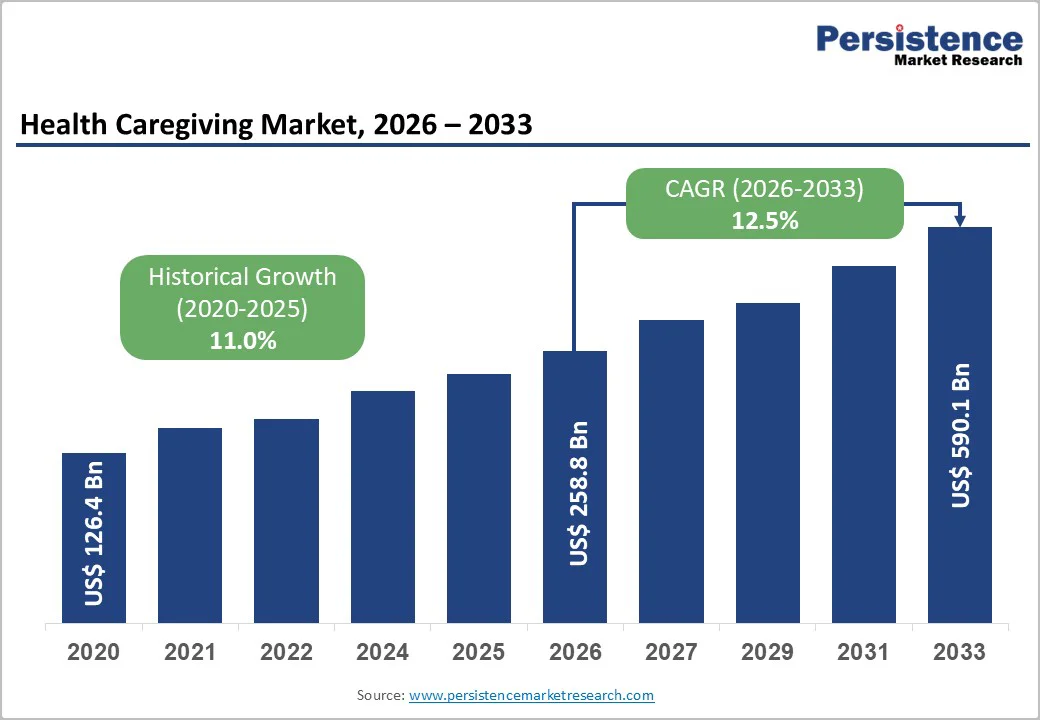
The global health caregiving market size is estimated to be valued at US$ 258.8 Bn in 2026 to US$ 590.1 Bn by 2033. The market is projected to record a CAGR of 12.5% during the forecast period from 2026 to 2033.
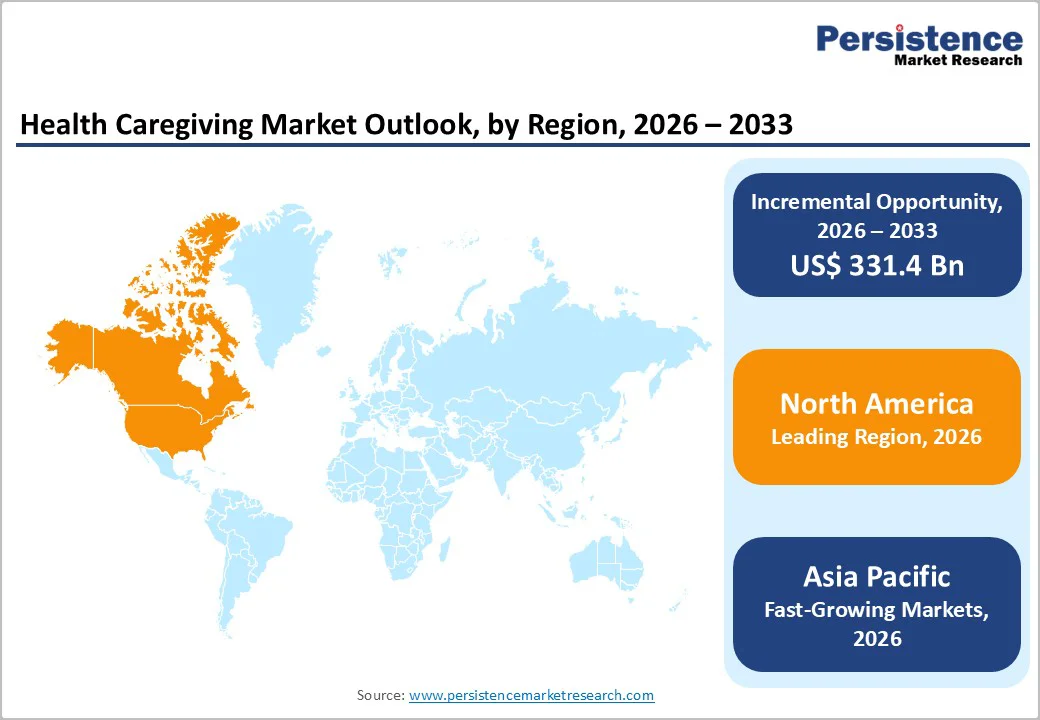
The health caregiving market is growing steadily, driven by rising demand for home-based care, aging populations, and increasing chronic disease prevalence. North America leads due to mature infrastructure and supportive healthcare systems, while Asia-Pacific is the fastest-growing region, fueled by rising elderly populations, expanding home and institutional care services, and greater adoption of professional caregiving solutions.
Key Industry Highlights:
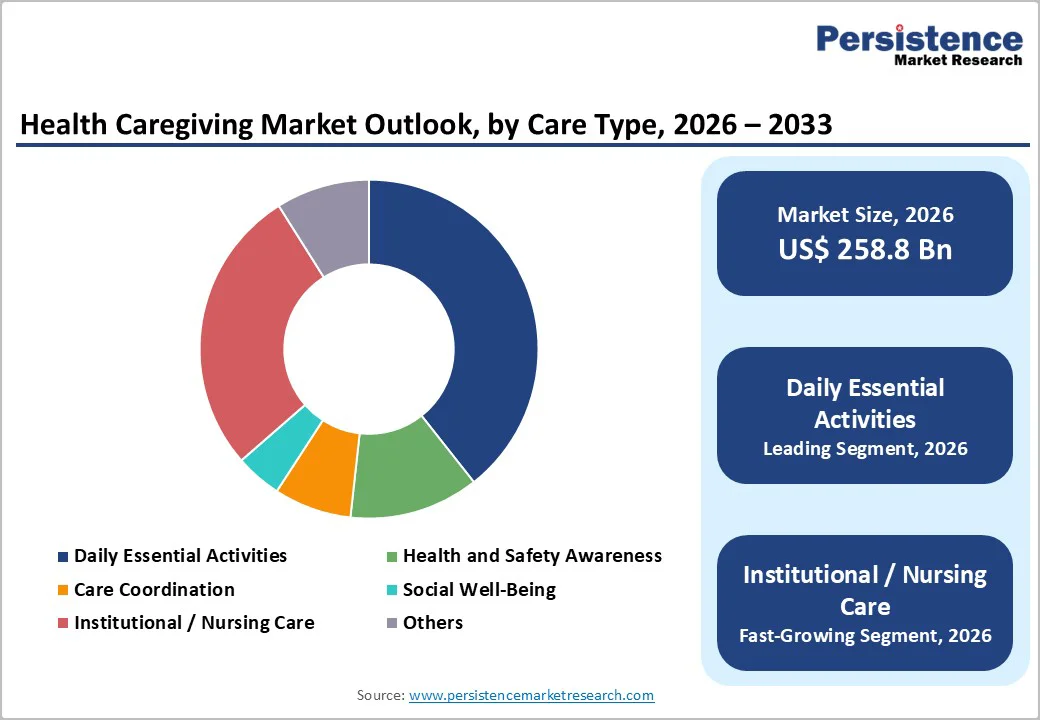
- Dominant Segment: Daily Essential Activities lead the Health Caregiving Market with 39.4% share in 2025, driven by rising demand for assistance with meals, personal hygiene, mobility, and home management, supported by growing elderly populations, increasing chronic disease prevalence, and broad adoption of professional caregivers to ensure safe and consistent day-to-day support.
- Dominant Region: North America remains dominant due to mature home- and institutional-care infrastructure, high elderly population, and supportive healthcare systems, while Asia-Pacific is the fastest-growing region, fueled by rapid hospital expansion, increasing elderly population, and rising adoption of professional caregiving services.
- Market Drivers: Growth is fueled by aging populations, rising prevalence of chronic diseases, increasing demand for home-based care, supportive government policies, and growing awareness of senior and disabled care needs.
- Market Opportunity: Key opportunities include technology-enabled caregiving (telehealth, remote monitoring), expansion in emerging markets, integration of AI and digital care coordination, growth in institutional and assisted-living services, and development of specialized caregiver training programs.
| Global Market Attribute | Key Insights |
|---|---|
| Global Health Caregiving Market Size (2026E) | US$ 258.8 Bn |
| Market Value Forecast (2033F) | US$ 590.1 Bn |
| Projected Growth (CAGR 2026 to 2033) | 12.5% |
| Historical Market Growth (CAGR 2020 to 2025) | 11.0% |
Market Dynamics
Driver - Shift Toward Home-Based Care
In many countries, a growing share of older adults now receive care at home rather than in institutions which underpins the shift to home-based care. This trend reflects a preference for “aging in place” and growing reliance on home-based care. Employment in home and community-based care services surpassed that in institutional care, highlighting the expanding scale of services delivered at home. Rising awareness of personalized care, convenience, and comfort has encouraged seniors and their families to prefer home-based solutions over long-term institutional stays, driving demand for professional caregivers and supportive services.
This shift creates strong growth opportunities for the broader Health Caregiving Market, as home-based care can scale more flexibly and often costs less than institutional care. Increasing numbers of seniors and patients with chronic conditions are relying on home-care services, which pushes up demand for caregiving agencies, remote-care technologies, and trained personnel. The expansion of home-based care is therefore a key driver, shaping market strategies, fostering innovation, and accelerating adoption of comprehensive caregiving solutions globally.
Restraints - Skilled Caregiver Shortage
In many regions, demand for home health and long-term care is rising sharply but the supply of trained, professional caregivers is not keeping pace. In the US, for example, nearly 59% of home-care agencies in 2025 reported workforce shortages, indicating they are operating with insufficient staff. Meanwhile, among home health and personal care aides (the backbone of home-based caregiving), employment demand is projected to grow 17% from 2024 to 2034, much faster than average occupations. This mismatch between growing demand vs limited caregiver supply creates a structural constraint on the market: services may be delayed, quality might suffer, or some care needs may go unmet.
Moreover, attrition and turnover exacerbate the shortage. Reports estimate caregiver turnover in home-care settings reaching 40-60% annually, which makes retention difficult and reduces continuity of care. In institutional settings, many nursing homes and long-term care facilities continue to struggle to fill vacancies: many facilities report open jobs across nursing, aides, and support staff even after pay increases. That means even where demand is highest (aging population, chronic illnesses), lack of skilled and stable caregiving workforce can throttle expansion of caregiving services, limit capacity, and reduce overall access.
Opportunity - Integrated Care Solutions
Integrated care solutions combining medical care, nursing, personal care, social support, and community services help meet the complex needs of a growing elderly and chronically ill population in a more efficient, patient-centric way. In the United States, for example, home-health care services are provided by more than 11,400 home health agencies, and in 2020, roughly 3.0 million people received home-health care at some point in the year. A significant portion of home-health patients are seniors aged 65 or older, many with chronic conditions that require ongoing monitoring, therapy, or nursing care. By delivering an integrated bundle of services nursing care, therapy, personal care, home modifications, and social support, caregiver organizations can reduce hospitalizations, improve continuity of care, and better address functional limitations among the elderly.
What makes integrated care especially promising is that demand for home and community-based services is growing strongly. Among older adults in many countries, a significant share expresses a preference to remain in their homes and communities rather than move to institutional long-term care home-based and community-based services (personal care, home health, home-modifications, social support) offer precisely that. Given that many elderly or disabled individuals have multi-dimensional needs (medical + functional + social), integrating services under one umbrella increases convenience, lowers care fragmentation, and can improve cost-effectiveness. For providers and investors, this translates into a growing market opportunity, especially as populations age and chronic diseases rise globally, making integrated care solutions a high-potential growth area within the caregiving market.
Category-wise Analysis
By Care Type, Daily Essential Activities Dominates the Health Caregiving Market
Daily Essential Activities dominates with 39.4% share of the global market in 2025, because most caregivers devote time to the everyday needs of care-recipients basic hygiene, mobility, meals, shopping, housework and so on.
For example, a recent survey found that about 65% of family caregivers assist with at least one Activity of Daily Living (ADL) such as bathing, dressing, toileting, feeding, or mobility. all caregivers help with Instrumental Activities of Daily Living (IADLs), and 84% assist with three or more IADLs (meal preparation, shopping, transportation, housework, etc.). Because ADLs and IADLs are frequent and recurring needs, they absorb a large share of caregiver time and resources, which explains why “daily essential activities” form the bulk of demand in the caregiving market.
By End-user Insights
The geriatric population dominates the health caregiving market because aging significantly increases the need for assistance with daily tasks. Nearly half of adults aged 65 and above report difficulty or receive help with self-care, mobility, or household activities. Around 34% of those 65+ have at least one disability, including mobility, vision, hearing, or self-care limitations. For adults aged 85 and older, approximately 20-21% require help with personal care, a rate much higher than that of younger age groups. As the older population grows and faces more functional limitations, their dependence on caregivers rises sharply. This makes seniors the primary end-users of caregiving services, driving demand for both formal and informal care.
Regional Insights
North America Health Caregiving Market Trends
North America dominates the health caregiving market with 38.6% share in 2025, due to a combination of a large aging population, high prevalence of chronic diseases, and a strong reliance on home-based care. In the United States, about 24% of all adults, roughly 63 million people, serve as family caregivers for adults or children with chronic illness or disability. Around 38 million Americans, approximately 14% of the population aged 15 and above, provide unpaid eldercare, primarily for family members aged 65 or older. The region’s cultural preference for keeping seniors at home rather than institutional care increases demand for daily essential and long-term caregiving services. Coupled with advanced healthcare infrastructure and awareness of eldercare needs, these factors make North America the largest market for health caregiving globally.
Europe Health Caregiving Market Trends
Europe is an important region in the health caregiving market due to its rapidly aging population, high life expectancy, and well-established healthcare systems. In the European Union, approximately 20% of the population is aged 65 or older, and this is expected to rise to nearly 30% by 2050. Among older adults, about 35% report difficulties with daily activities such as bathing, dressing, or mobility, increasing the need for both formal and informal caregiving. Countries like Germany, France, and Italy have strong homecare and long-term care programs, with millions of family members providing daily support alongside professional caregivers. Combined with growing chronic disease prevalence and government support for eldercare services, Europe remains a critical and expanding market for health caregiving services.
Asia Pacific Health Caregiving Market Trends
Asia Pacific is the fastest-growing market for health caregiving due to its rapidly aging population and increasing demand for long-term care. Between 1990 and 2024, the number of people aged 65 and above in the region nearly tripled, from 168 million to 503 million. Currently, older persons (60+) make up about 10.5% of the total population, and this is expected to rise to 19.3% by 2050, exceeding 1.3 billion elderly individuals. Rising life expectancy, declining fertility rates, and increasing prevalence of chronic diseases and disabilities among seniors are driving demand for both formal and informal caregiving services. These demographic shifts, combined with growing awareness and adoption of home care solutions, position the Asia Pacific as the fastest-growing health caregiving market globally.
Competitive Landscape
Leading pressure guidewire companies invest in R&D, clinical trials, and staff training, collaborating with hospitals and cath labs. By focusing on accuracy, safety, and expanding adoption, they meet rising demand for physiology-guided PCI, drive innovation, enhance clinical outcomes, and accelerate global growth in interventional cardiology and pressure-sensor guidewire usage.
Key Industry Developments:
- In December 2025, Encompass Health opened a new rehabilitation hospital in Lake Worth, Florida, expanding its network of post-acute care facilities. The hospital offers specialized rehabilitation services for patients recovering from injuries, surgeries, and chronic conditions, providing advanced therapy programs and personalized care.
- In February 2025, Trustmark partnered with Cariloop, a leading caregiver platform, to support its customers navigating long-term care challenges. Through this collaboration, Trustmark aimed to provide enhanced resources, guidance, and care coordination for individuals and families managing chronic illnesses, disabilities, or aging-related needs.
- In April 2024, Cariloop, a company providing caregiving solutions, completed a $20 million Series C funding round led by ABS Capital. The investment will allow Cariloop to expand its platform, enhance services for patients and caregivers, and scale operations.
Companies Covered in Health Caregiving Market
- Cariloop
- Encompass Health
- Comfort Keepers
- Honor Technology
- Bayada Home Health Care
- Room2Care
- Addus HomeCare
- Knight Health Holdings
- Brookdale Senior Living
- AccentCare
- HomeTeam
- LHC Group
- Right at Home
- Amedisys
- Lively
- Care.com
- Kindred Healthcare
- Others
Frequently Asked Questions
The global health caregiving market is projected to be valued at US$ 258.8 Bn in 2026.
Aging populations, rising chronic diseases, increasing elderly care demand, awareness of homecare, and supportive healthcare infrastructure drive the caregiving market.
The global health caregiving market is poised to witness a CAGR of 12.5% between 2026 and 2033.
Expanding homecare services, digital caregiving solutions, specialized elder care, training programs, and rising awareness of long-term care needs present key market opportunities.
Cariloop, Encompass Health, Comfort Keepers, Honor Technology, Bayada Home Health Care, Room2Care.


