




- Food Ingredients & Additives
- Wheat Germ Flour Market
Wheat Germ Flour Market Size, Share, Growth, and Regional Forecast, 2026 to 2033
Wheat Germ Flour Market by Product Type (Organic Wheat Germ Flour and Conventional Wheat Germ Flour), Form (Raw Wheat Germ Flour, Stabilized Wheat Germ Flour, and Defatted Wheat Germ Flour), Application (Bakery Products Breakfast Cereals & Snacks, Functional Foods, Nutritional Supplements, Animal Feed, and Others) Distribution Channel (Hypermarkets, Convenience Stores, Independent Departmental Stores, Online Retail, and Wholesalers & Distributors), and Regional Analysis from 2026 to 2033

Wheat Germ Flour Market Share and Trend Analysis
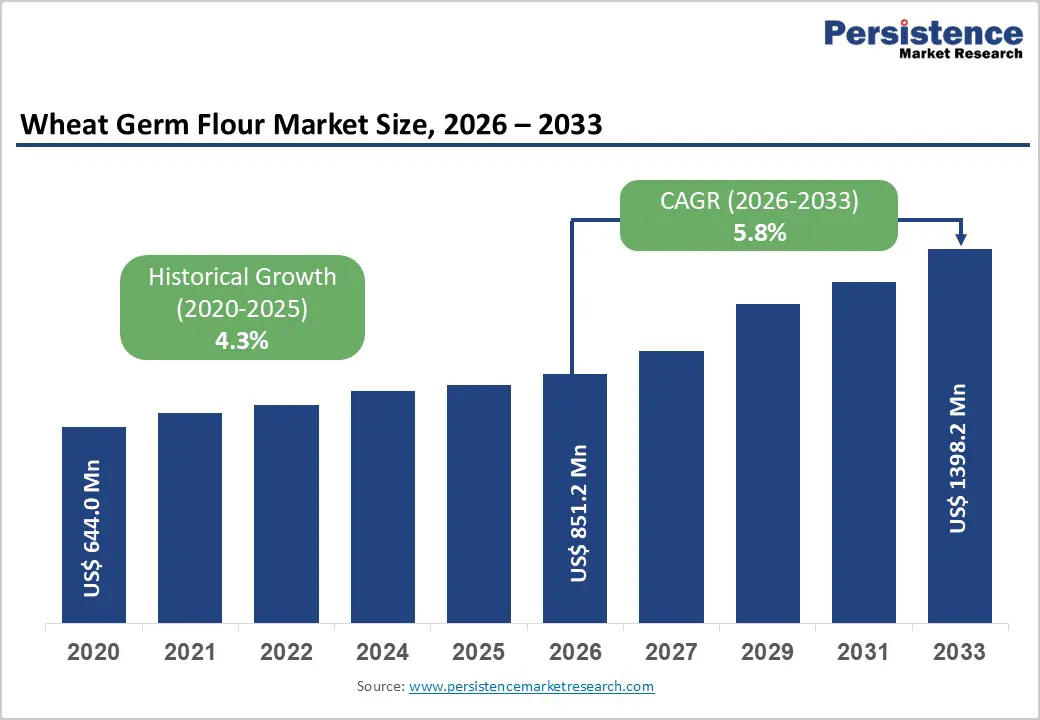
The global wheat germ flour market size is estimated to grow from US$ 851.2 million in 2026 to US$ 1398.2 million by 2033. The market is projected to record a CAGR of 5.8% during the forecast period from 2026 to 2033.
Global demand for wheat germ flour is growing steadily, driven by rising consumer focus on nutritional enrichment, digestive wellness, and the incorporation of functional foods. Health-conscious consumers are increasingly incorporating wheat germ flour into bakery products, cereals, and snacks to boost protein, fiber, and micronutrient intake while maintaining taste and texture. Expanding retail availability across supermarkets, specialty stores, online platforms, and modern foodservice outlets is supporting broader adoption.
Awareness of high-fiber diets, increasing interest in fortified and clean-label foods, and demand for convenient, ready-to-use flour products are further driving uptake. Innovations in stabilization, flavor enhancement, organic formulations, and nutrient retention are improving product appeal, usability, and repeat consumption. Additionally, growing interest in plant-based diets, functional bakery ingredients, and lifestyle-oriented nutrition is reinforcing sustained market expansion.
Key Industry Highlights
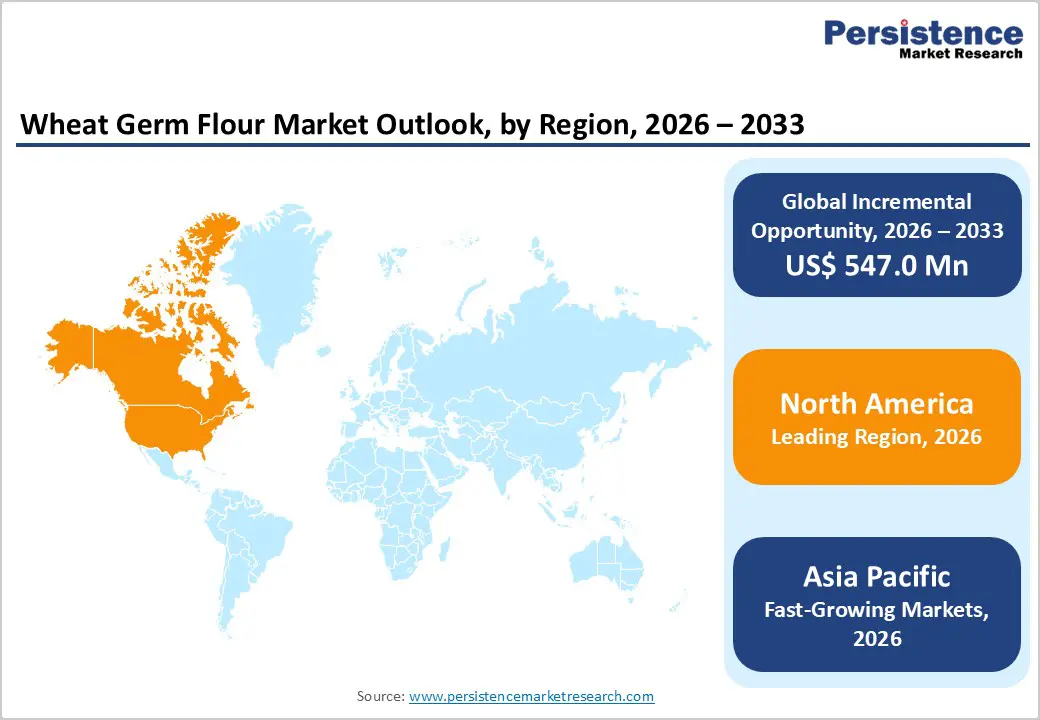
- Leading Region: North America holds a 46.7% share, supported by high health awareness, strong adoption of functional foods, mature retail and e-commerce channels, and established bakery consumption habits.
- Fastest-Growing Region: Asia Pacific is expanding fastest at a 7.9% CAGR, driven by urbanization, rising disposable incomes, evolving dietary patterns, and increasing availability through modern retail and online platforms.
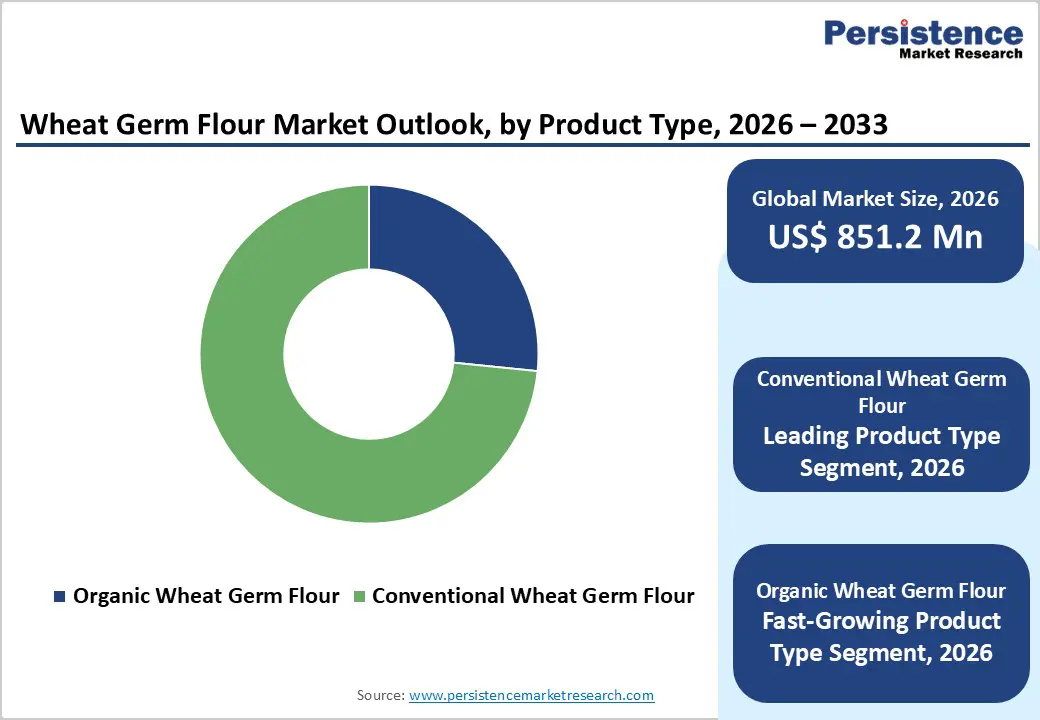
- Leading Product Type Segment: Conventional wheat germ flour dominates due to its familiar taste, smooth texture, and strong consumer acceptance in everyday applications.
- Fastest-Growing Product Type Segment: Organic wheat germ flour is rapidly expanding with rising demand for vegan, clean-label, and minimally processed options.
- Leading Form Segment: Raw wheat germ flour remains dominant, valued for natural flavor, nutritional integrity, and broad consumer appeal.
- Fastest-Growing Form Segment: Defatted wheat germ flour is growing rapidly as brands develop high-protein, low-fat blends suitable for functional bakery and snack products.
| Key Insights | Details |
|---|---|
| Wheat Germ Flour Market Size (2026E) | US$ 851.2 Mn |
| Market Value Forecast (2033F) | US$ 1398.2 Mn |
| Projected Growth (CAGR 2026 to 2033) | 5.8 % |
| Historical Market Growth (CAGR 2020 to 2025) | 4.3 % |
Market Dynamics
Driver - Rising Health Awareness and Nutritional Enrichment Demand
Consumers are increasingly seeking foods that provide functional benefits beyond basic nutrition, driving a surge in demand for wheat germ flour. Its natural richness in protein, fiber, vitamins, and antioxidants positions it as an essential ingredient for bakery products, cereals, and snack formulations for health-conscious consumers. Urban consumers, particularly millennials and Gen Z, are incorporating nutrient-dense ingredients into daily meals to support digestion, immunity, and overall wellness. The trend toward clean-label and minimally processed foods further strengthens wheat germ flour adoption, as it aligns with preferences for natural, additive-free ingredients.
Manufacturers are responding by offering organic, fortified, and high-protein blends that integrate seamlessly into existing food products. Expanded retail availability, e-commerce penetration, and educational initiatives highlighting wheat germ’s role in supporting digestive health and metabolism have also improved accessibility and awareness. Increasing demand from the functional foods sector, coupled with lifestyle-driven consumption patterns, ensures wheat germ flour continues to gain traction as a core ingredient in health-focused diets and fortified bakery innovations globally.
Restraints - Processing Challenges, Taste Considerations, and Market Familiarity
The high oil content in raw wheat germ can lead to rapid rancidity if not properly stabilized, making shelf-life management a technical challenge. Balancing flavor and texture is another hurdle; wheat germ’s naturally nutty and slightly bitter taste can affect consumer acceptance in bakery, cereals, and snack products. Manufacturers must optimize processing methods to retain nutritional value while ensuring smooth mouthfeel and compatibility with other ingredients.
Limited consumer familiarity in emerging regions also hinders uptake, as many households remain unaware of wheat germ’s health benefits and practical applications. Pricing can be higher than conventional flours due to organic sourcing or nutrient enrichment, which may limit penetration among price-sensitive buyers. Regulatory variations across countries concerning nutrient claims, labeling, and fortification further complicate market entry for global players. These factors collectively demand continuous investment in product formulation, education campaigns, and supply chain optimization to build trust, improve sensory appeal, and expand market adoption.
Opportunity - Product Innovation, Functional Integration, and Market Expansion
The wheat germ flour market offers significant growth potential through formulation innovation and expanding usage across multiple food segments. Manufacturers are increasingly integrating wheat germ into protein-rich bakery items, breakfast cereals, snack bars, and fortified meal replacements to cater to consumers seeking convenient, nutrient-dense options. Flavor optimization, low-fat blends, and pre-stabilized variants allow producers to appeal to both traditional and health-focused consumers without compromising taste.
Emerging regions, particularly in Asia Pacific, offer strong growth prospects driven by rising disposable incomes, urbanization, and growing awareness of functional nutrition. Direct-to-consumer sales channels and online platforms facilitate education, subscription offerings, and targeted promotions, boosting adoption and repeat purchases. Combining wheat germ with complementary ingredients, such as plant proteins, fiber blends, or micronutrient fortification, enables product differentiation in a competitive landscape. Sustainability-focused packaging, clean-label transparency, and organic certification resonate with environmentally conscious and younger demographics. As wellness-oriented diets become part of everyday lifestyle choices, wheat germ flour is well-positioned to benefit from continuous innovation, diversified applications, and strategic market expansion, thereby ensuring long-term demand growth.
Category-wise Analysis
By Product Type Insights
The organic wheat germ flour segment is projected to dominate the global market in 2026, capturing a 26.6% revenue share. Its prominence stems from consumers’ trust in established products and familiarity with nutrient-rich, digestible formulations. Organic variants offer improved flavor profiles and maintain natural texture, making them preferable in fortified bakery and functional food applications. These products often incorporate nutrient-dense wheat germ with minimal processing to preserve its vitamin, mineral, and fiber content. The segment benefits from strong retail penetration, consistent quality, and alignment with health-conscious trends in North America and Europe. Manufacturers favor organic wheat germ for its ability to integrate into breads, cereals, and snacks while retaining functional and sensory benefits. Additionally, the rising preference for clean-label, plant-based, and additive-free formulations supports the segment’s leadership. Continuous innovation in low-fat, high-fiber, and protein-enriched organic blends ensures sustained market dominance globally.
By Application Insights
The bakery products segment is expected to account for 38.6% of revenue in 2026, leading the wheat germ flour market. Its appeal lies in ease of use, extended shelf life, and adaptability across bread, cookies, muffins, and snack formulations. Packaging formats, particularly resealable and portion-controlled packs, help preserve freshness and nutrient integrity. For manufacturers, bakery applications offer flexibility for branding, labeling, and communicating functional benefits such as fiber enrichment and protein enhancement. Glass packaging supports premium positioning, while PET and paper-based packaging facilitate cost-effective, mass-market distribution. The segment benefits from compatibility with cold storage, automated production lines, and modern retail display standards. As consumers increasingly seek functional foods integrated into daily routines, bakery products offer a convenient, nutritious, and trusted way to incorporate wheat germ flour. Strong repeat-purchase patterns and broad adoption across urban and suburban markets reinforce its leading status.
By Distribution Channel Insights
Hypermarkets are projected to capture a 32.5% revenue share in 2026, making them the most significant distribution channel. Dominance is driven by extensive shelf space, high footfall, and the opportunity for consumers to compare multiple wheat germ flour brands and product variants in one visit. Hypermarkets facilitate trial purchases and offer bundled promotions, product sampling, and in-store educational campaigns on nutritional benefits. For manufacturers, these outlets offer scale advantages, consistent volume sales, and the ability to reach diverse consumer demographics. While e-commerce is expanding rapidly, hypermarkets remain vital for impulse buying and routine grocery shopping. They enable stocking both premium and mass-market formulations, ensuring broad exposure. Marketing efforts, including in-store displays, promotions, and strategic shelf placement, amplify product visibility. This channel continues to play a central role in bridging manufacturers with both health-focused and mainstream consumers, thereby sustaining its position as the primary global distribution hub.
Regional Insights
North America Wheat Germ Flour Market Trends
North America is anticipated to hold a 46.7% value share in 2026, with the U.S. leading the regional market. Growth is fueled by consumers’ awareness of digestive health, high demand for protein and fiber, and the adoption of functional foods as alternatives to conventional baked goods and snacks. Consumers actively seek nutrient-enriched, clean-label, and minimally processed wheat germ products. Leading market players leverage advanced R&D capabilities, cold-chain logistics, and strong retail presence to ensure rapid product availability and premium pricing for high-quality formulations. E-commerce platforms and subscription services complement physical retail, expanding accessibility.
Regulatory clarity around fortification standards and labeling supports consumer confidence. Preventive health trends, dietary supplementation, and functional snacking habits further enhance adoption. Manufacturers continue to innovate with high-fiber, fortified blends and organic variants, offering solutions aligned with lifestyle-focused consumers. The combination of mature supply chains, health-driven demand, and willingness to pay for premium functional products cements North America’s long-term market leadership.
Europe Wheat Germ Flour Market Trends
Europe’s wheat germ flour market is projected to expand steadily in 2026, supported by strong demand for natural, nutrient-rich, and sustainably sourced products. Key countries, including Germany, the U.K., France, Italy, and the Nordic region, integrate functional wheat germ flour into daily bakery, cereal, and snack consumption. Consumers demonstrate high interest in digestive wellness, fiber enrichment, and clean-label solutions as healthier alternatives to traditional baked goods.
Stringent regulatory frameworks around ingredient transparency, health claims, and fortification ensure high-quality formulations and build trust. Sustainability is central, with recyclable packaging and responsibly sourced wheat germ gaining preference. Retail channels such as specialty stores, supermarkets, and online platforms provide accessibility, while cafés and wellness-focused outlets enhance brand visibility. Innovation in organic, high-fiber, and reduced-fat blends aligns with regional dietary habits. Continuous consumer education, coupled with rising demand for functional snacks, sustains Europe’s steady and consistent market growth.
Asia Pacific Wheat Germ Flour Market Trends
The Asia Pacific wheat germ flour market is projected to achieve a 7.9% CAGR from 2026 to 2033, with China, India, Japan, and South Korea as major contributors. Urbanization, rising disposable incomes, and evolving dietary habits are shaping consumption patterns for functional foods. Awareness of digestive health, protein enrichment, and fiber intake is increasing among younger, urban consumers. Traditional diets rich in fermented and gut-friendly foods provide a cultural foundation for the adoption of wheat germ in bakery, cereal, and snack applications.
Expansion of modern retail formats, convenience stores, and e-commerce platforms improves product accessibility, while global brands are entering the region through partnerships and localized production. Social media, digital marketing campaigns, and nutrition education accelerate consumer adoption. Government support for food innovation and improved supply chain infrastructure further strengthens market growth. These factors position Asia Pacific as the fastest-growing regional market, offering strong opportunities for fortified and functional wheat germ flour products.
Competitive Landscape
The global wheat germ flour market is highly competitive, with strong participation from American International Foods, Inc., Ardent Mills, Bühler, Siemer Milling Company, and Sahuwala Group. These players leverage extensive retail and e-commerce distribution networks, strong brand recognition, and continuous innovation in wheat germ selection, stabilization, nutrient retention, flavor optimization, and shelf-life enhancement to meet growing consumer demand for functional foods and nutritional enrichment.
Rising health consciousness, increasing protein and fiber awareness, and preference for clean-label ingredients are driving innovation. Manufacturers focus on fortified blends, organic variants, high-protein formulations, and value-added bakery and snack applications, while expanding online presence and investing in R&D for premium, functional offerings.
Key Developments:
- In December 2025, National Milling Company of Guyana, owned by Seaboard Corporation, announced a major GYD $10 billion investment to boost local flour production. The funds will support a new state-of-the-art processing mill, expanded wheat storage, and an upgraded wharf to meet domestic and export demand, reinforcing the company’s commitment to Guyana’s agri-industrial growth and regional food security.
- In October 2025, Arabian Mills for Food Products Co. continued to strengthen its market position through a robust expansion plan, with the Riyadh facility serving as a key growth driver, aimed at increasing production capacity to meet rising domestic and regional demand.
Companies Covered in Wheat Germ Flour Market
- American International Foods, Inc.
- Ardent Mills.
- Bühler
- Siemer Milling Company
- Sahuwala Group.
- First Milling Company
- Prairie Flour Mills Ltd.
- STAR OF THE WEST
- Bob’s Red Mill Natural Foods
- Arva Flour Mill
- Shipton Mill Lt
- Flora Appliances
- Laxmi
- Mahavir group
- Others
Frequently Asked Questions
The global wheat germ flour market is projected to be valued at US$ 851.2 Mn in 2026.
Rising consumer focus on gut health and functional beverages, coupled with clean‑label and natural ingredient demand.
The global wheat germ flour market is poised to witness a CAGR of 5.8%between 2026 and 2033.
Expansion in emerging markets like Asia‑Pacific and Latin America is driven by increasing health awareness and disposable incomes.
American International Foods, Inc., Ardent Mills., Bühler, Siemer Milling Company, and Sahuwala Group are some of the key players in the wheat germ flour market.


