




- Medical Devices
- North America Medical Hygiene Devices Market
North America Medical Hygiene Devices Market Size, Share, Growth, and Country Forecast, 2025 to 2032
North America Medical Hygiene Devices Market by Product (Bathtubs, Bathroom Lifts, Shower Trolleys, Lift Chairs, Shower Chairs, Human Waste Management), End-user, and Country Analysis from 2025 to 2032

North America Medical Hygiene Devices Market Share and Trends Analysis
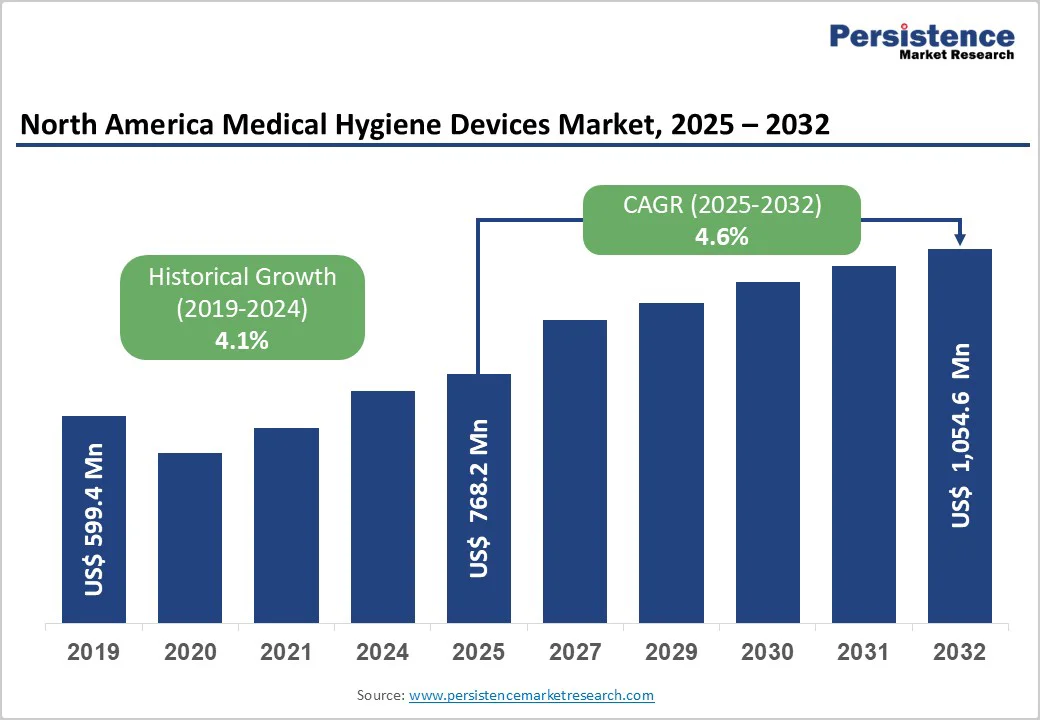
The North America medical hygiene devices market size is valued at US$768.2 million in 2025 and projected to reach US$1,054.6 million at a CAGR of 4.6% during the forecast period from 2025 to 2032.
The industry growth is driven by rising awareness of infection control, an aging population, and increasing demand for assistive hygiene equipment. Hospitals, clinics, and home care settings are adopting advanced devices such as automated shower trolleys, lift chairs, and smart hand hygiene solutions.
Technological innovations, improved healthcare infrastructure, and supportive regulatory frameworks in the U.S. and Canada further boost market expansion. Growing patient focus on safety and convenience, combined with rising investments in healthcare facilities, is expected to sustain the region’s market growth over the coming years.
Key Industry Highlights:
- Increased awareness of hospital-acquired infections and community hygiene has fueled the adoption of medical hygiene devices.
- Expansion of home healthcare services has increased demand for portable and easy-to-use hygiene devices.
- North America’s advanced hospital infrastructure and ongoing facility expansions drive robust demand for medical hygiene devices.
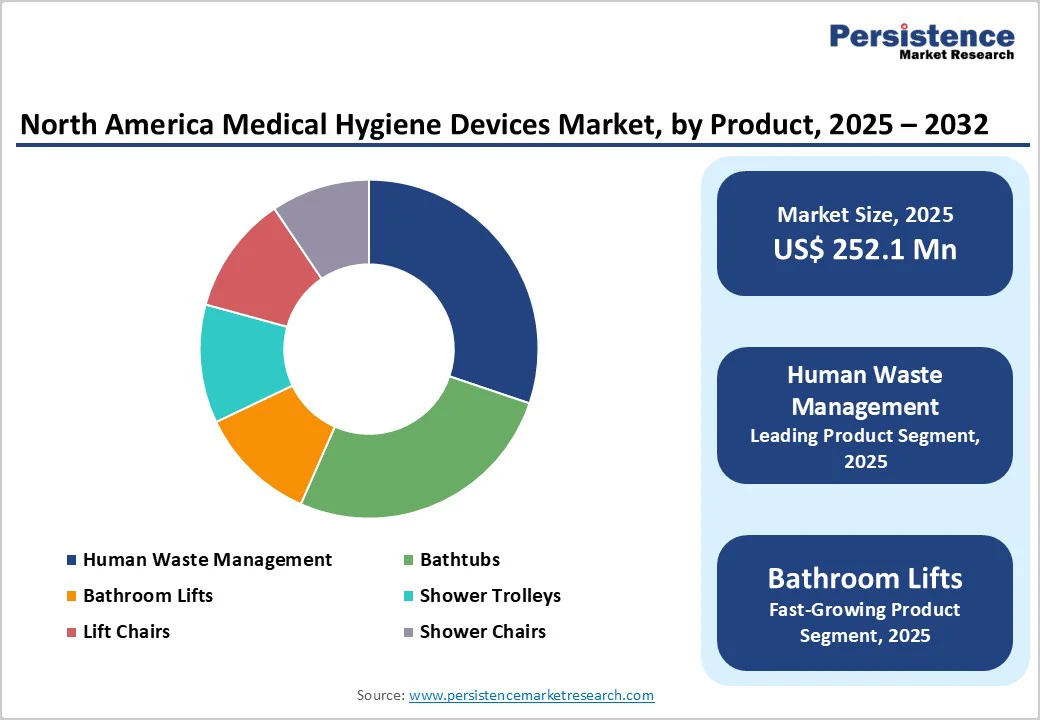
- Human Waste Management segment leads the North America medical hygiene devices market due to devices like bedpan washers, macerators, and human waste disposal systems, which are critical in hospitals, nursing homes, and long-term care facilities.
| Key Insights | Details |
|---|---|
| North America Medical Hygiene Devices Market Size (2025E) | US$768.2 Mn |
| Market Value Forecast (2032F) | US$ 1,054.6 Mn |
| Projected Growth (CAGR 2025 to 2032) | 4.6% |
| Historical Market Growth (CAGR 2019 to 2024) | 4.1% |
Market Dynamics
Driver - Growth in Chronic & Long-Term Care
The growth of chronic and long-term care in North America is a significant driver for the medical hygiene devices market. Patients in nursing homes, assisted living facilities, and rehabilitation centers often have limited mobility or chronic health conditions that necessitate continuous hygiene support. Devices such as shower chairs, lift chairs, bathtubs, and human waste management systems play a crucial role in maintaining cleanliness, safety, and dignity for these patients.
The rising prevalence of age-related diseases, post-surgical care, and long-term disabilities has intensified demand. Healthcare providers and caregivers increasingly rely on advanced, durable hygiene devices to ensure effective daily care, improving patient outcomes and operational efficiency.
Restraints - Maintenance and Operational Challenges
Automated and mechanical medical hygiene devices, such as shower trolleys, lift chairs, and bedpan macerators, require regular maintenance and operational oversight to ensure safety and efficiency. Routine servicing, part replacements, and technical troubleshooting add recurring costs, which can be burdensome for smaller clinics, home-care providers, and decentralized healthcare facilities.
Additionally, untrained caregivers may face difficulties operating or maintaining these devices correctly, increasing the risk of malfunction or hygiene lapses. These factors often discourage adoption in non-hospital settings, as the financial and operational commitment may outweigh perceived benefits. Consequently, maintenance and operational complexity remain a key barrier to widespread market penetration.
Opportunity - Emergence of AI?/Automation?Powered Hygiene Devices
The integration of artificial intelligence (AI) and automation into medical hygiene devices presents a significant growth opportunity in North America. Advanced systems, such as automated disinfection robots, AI-enabled sterilizers, and smart hand-hygiene dispensers, can optimize cleaning protocols, reduce human error, and ensure consistent compliance with hygiene standards.
These devices reliably reduce the manual workload of healthcare staff and enhance patient safety by minimizing infection risks. Real-time monitoring and data analytics enable hospitals and long-term care facilities to track hygiene practices, identify gaps, and implement targeted improvements, ultimately enhancing operational efficiency and care quality.
Category-wise Analysis
By Product, Human Waste Management is Leading
The human waste management segment leads the North America medical hygiene devices market due to its critical role in patient care and infection control. Hospitals, long-term care facilities, and home-care settings rely on bedpan washers, macerators, and waste disposal systems to safely handle human waste, minimizing contamination risks.
Daily usage ensures consistent demand, while regulatory mandates in the U.S. and Canada require certified, high-quality devices. Additionally, the growing elderly population and patients with limited mobility increase reliance on these systems. Combined with technological advancements in automated and efficient waste management solutions, this segment consistently outperforms other hygiene devices in market share.
By End-user, Long-Term Care (LTC) Centers Form is Leading
Long-term care (LTC) Centers account for a high share of the North American medical hygiene devices market due to their large population of elderly and mobility-impaired residents who require continuous assistance with personal hygiene. Devices such as lift chairs, shower trolleys, bathtubs, and human waste management systems are essential for daily care, ensuring safety, comfort, and infection control.
Unlike acute care centers, residents in LTC facilities have prolonged stays, creating consistent demand for hygiene devices. Regulatory standards for patient safety and caregiver efficiency further drive adoption, making LTC centers the largest end-user segment in the region.
Country-wise Insights
U.S. Medical Hygiene Devices Market Trends and Analysis
The U.S. Medical Hygiene Devices market is being propelled by rising concerns over infection control, especially in post-operative settings.COVID care, driving demand for automated hygiene tools. A growing geriatric population and the expansion of long-term care centers are driving the adoption of assistive devices such as lift chairs and macerators.
Technological innovation, such as AI-enabled, touchless systems, enhances patient comfort and caregiver efficiency. Meanwhile, tight regulatory standards and reimbursement constraints are shaping buying behavior. Also, escalating demand for eco-friendly, reusable solutions is gaining ground amid sustainability trends.
Competitive Landscape
The North American medical hygiene devices market is highly competitive, with numerous players vying across product categories. Companies focus on product innovation, such as automated shower trolleys, lift chairs, and advanced human waste management systems, to enhance efficiency and patient safety.
Competition is also driven by cost optimization, strategic partnerships, and mergers or acquisitions to expand market reach. Market players invest in research and development to meet evolving regulatory standards and the growing demand for home-care and long-term care solutions.
Key Industry Developments:
- In April 2025, Arjo launched Maxi Move 5®, the latest generation of one of the company’s best-selling products. The new top-of-the-line mobile patient floor lift features several innovative technical solutions designed to help reduce caregiver injuries and optimize care efficiency.
Companies Covered in North America Medical Hygiene Devices Market
- Arjo
- AT-OS
- Invacare Corporation
- BEKA Hospitec
- DEKOMED (KWC DEKO)
- DeVilbiss Healthcare
- DGM Pharma
- GF HEALTH PRODUCTS, INC.
- K Care Healthcare Equipment
- KEN HYGIENE SYSTEMS A/S
- MATACHANA Group
- MEIKO Maschinenbau GmbH & Co. KG
- Miele (Steelco S.p.A.)
- Sunrise Medical (US) LLC.
- Others
Frequently Asked Questions
The North America medical hygiene devices market is projected to be valued at US$768.2 Mn in 2025.
More patients are receiving care outside acute hospitals, creating consistent demand for portable and automated hygiene solutions.
The market is poised to witness a CAGR of 4.6% between 2025 and 2032.
Development of automated, touchless, and smart hygiene systems offers opportunities for differentiation and premium product adoption.
Arjo, AT-OS, Invacare Corporation, BEKA Hospitec, and others.


