




- Medical Devices
- Cosmetic Lasers Market
Cosmetic Lasers Market Size, Share, and Growth Forecast, 2026 - 2033
Cosmetic Lasers Market by Product Type (Ablative, Non-Ablative), Modality (Pulsed Dye Laser (PDL), YAG Laser, Others), Application (Hair Removal, Skin Resurfacing, Others), End-user (Hospitals, Skin Care Clinics, Others), and Regional Analysis for 2026 - 2033

Cosmetic Lasers Market Size and Trends Analysis
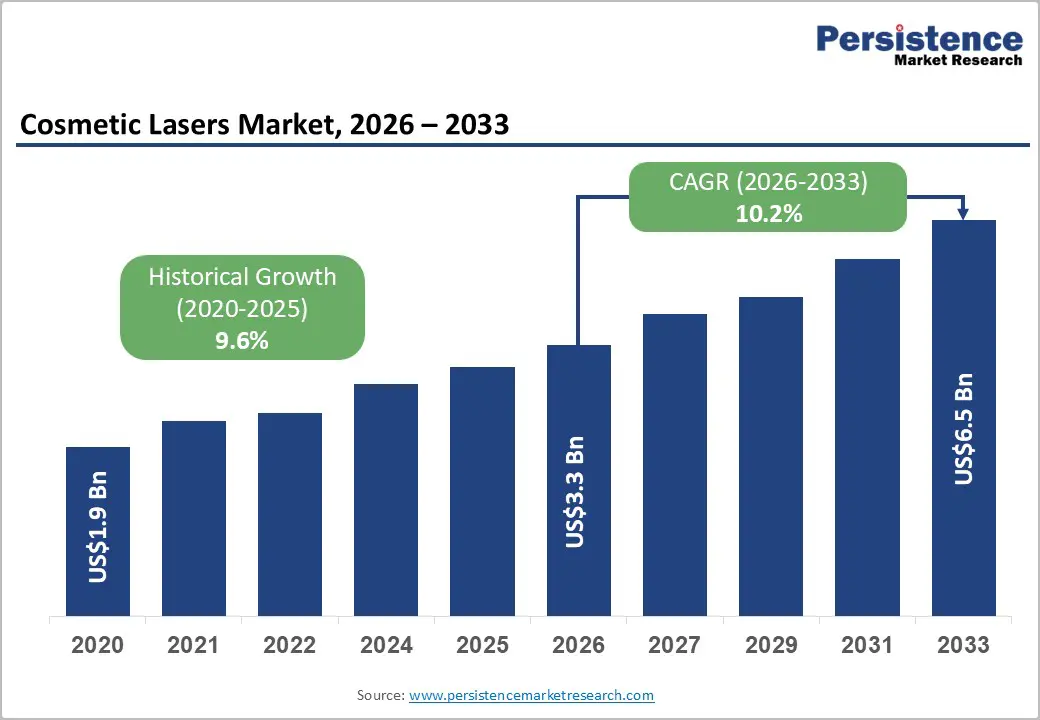
The global cosmetic lasers market size is likely to be valued at US$3.3 billion in 2026, and is expected to reach US$6.5 billion by 2033, growing at a CAGR of 10.2% during the forecast period from 2026 to 2033, driven by rising aesthetic consciousness, increasing demand for non-invasive skin rejuvenation and hair removal procedures, growing disposable income in emerging economies, expanding medical tourism for cosmetic dermatology, and continuous technological advancements in laser platforms offering minimal downtime and superior outcomes.
Growing demand for non-ablative cosmetic lasers, particularly IPL and diode-based systems for hair removal and skin resurfacing, is accelerating adoption across skin care clinics and cosmetic surgical centers. Increasing recognition of cosmetic lasers as safe, effective solutions for pigmentation, vascular lesions, scars, acne, and body contouring in emerging aesthetic and anti-aging markets remains a major driver of market growth.
Key Industry Highlights:
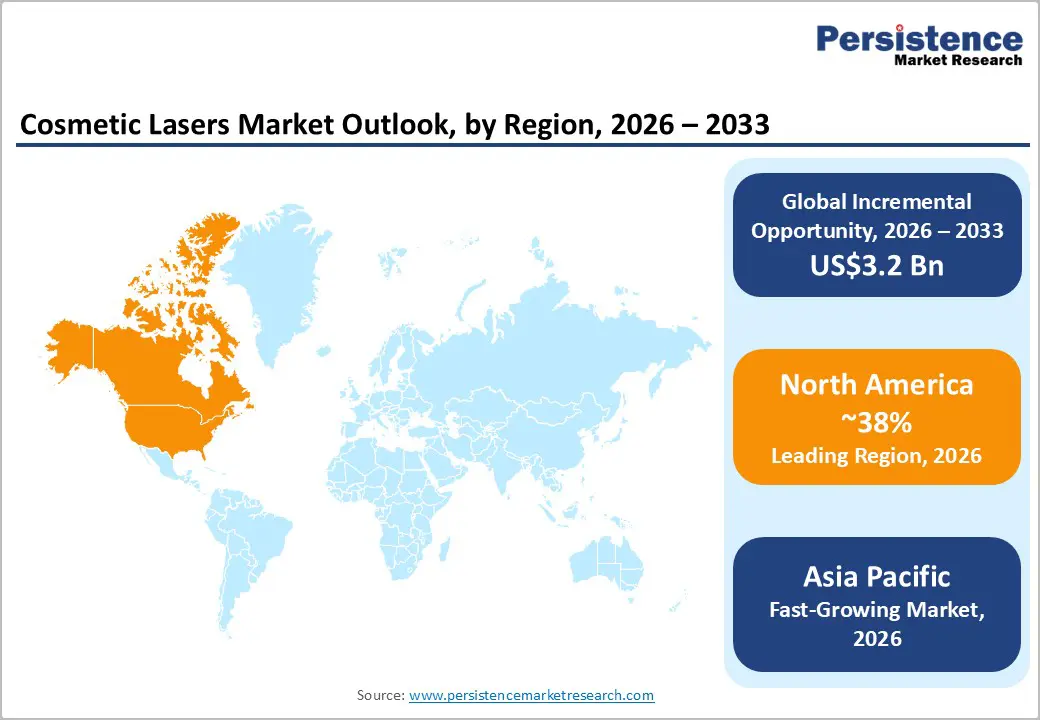
- Leading Region: North America, anticipated to account for a 38% market share in 2026, driven by high aesthetic procedure volumes, advanced technology adoption, and strong demand in the U.S.
- Fastest-growing Region: Asia Pacific, fueled by rising middle-class aesthetic spending, increasing medical tourism, and rapid clinic expansion in South Korea, India, and China.
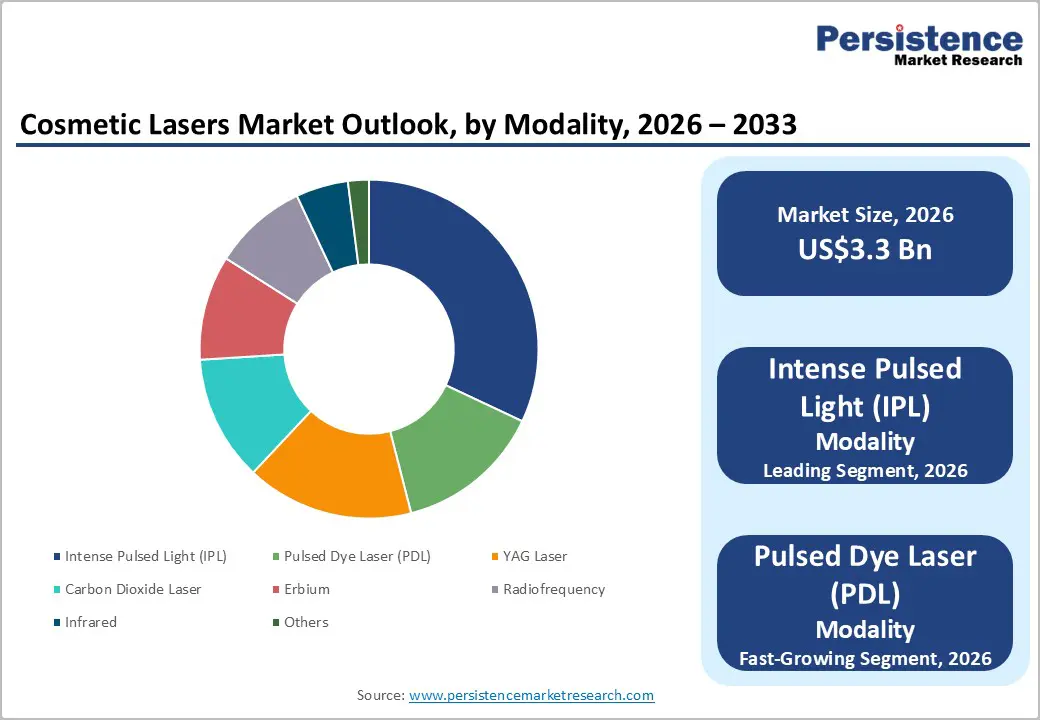
- Leading Modality: Intense Pulsed Light (IPL), contributing nearly 32% of the market revenue, due to multi-indication versatility and cost-effectiveness.
- Leading Application: Hair Removal, accounting for over 35% of the market revenue, due to the highest treatment frequency and consumer demand.
| Key Insights | Details |
|---|---|
| Cosmetic Lasers Market Size (2026E) | US$3.3 Bn |
| Market Value Forecast (2033F) | US$6.5 Bn |
| Projected Growth CAGR (2026 - 2033) | 10.2% |
| Historical Market Growth (2020 - 2025) | 9.6% |
Market Factors - Growth, Barriers, and Opportunity Analysis
Growth Analysis - Rising Aesthetic Consciousness and Non-Invasive Procedure Preference
Public health trends illustrate that aesthetic treatments continue to evolve alongside patient preferences for safety and convenience. According to the U.S. Centers for Disease Control and Prevention (CDC) and related health surveillance literature, there has been ongoing documentation of cosmetic procedures and associated care outcomes, including safety reporting and trends in elective enhancements. While the CDC does not publish comprehensive annual totals by procedure type, its data on adverse outcomes and procedural context highlight that millions of Americans undergo cosmetic interventions each year as part of elective health behavior and medical tourism patterns, indicating the scale and normalization of such care. Specifically, CDC surveillance notes rising engagement with cosmetic surgical procedures among U.S. residents traveling abroad, with an increase in related adverse events over recent years, reflecting broader participation in aesthetic services.
The American Society of Plastic Surgeons (ASPS) Procedural Statistics Report, while not a government agency itself, compiles data from certified physicians that are widely used by federal health analysts to understand procedure trends. The 2023 report showed a 7% increase in minimally invasive procedures compared with the previous year, demonstrating a clear shift toward less invasive options in clinical practice. Growth in these procedures implies stronger patient demand for treatments that typically involve shorter recovery times and lower clinical risk compared with traditional surgery.
Expanding Medical Tourism and Male Aesthetic Procedures
Global medical tourism continues to expand as patients increasingly travel across borders for high-quality, affordable aesthetic and other elective procedures, and this trend supports growth in the cosmetic services sector. According to India’s Ministry of Tourism, official statistics show that millions of foreign tourists visit the country for medical purposes each year, with medical tourism becoming a significant component of inbound travel. India has emerged as a key destination within this space, attracting a rising number of international patients seeking cost-effective cosmetic and reconstructive care compared with Western markets. Government data also indicates the broader scale of medical tourism in the country, reflecting its growing reputation as a global hub for diverse healthcare services that include elective aesthetic treatments.
Alongside geographic shifts in where patients seek care, male participation in aesthetic procedures is rising as social attitudes evolve. Data compiled by the International Society of Aesthetic Plastic Surgery (ISAPS) and analyzed in academic sources shows that the share of cosmetic surgical procedures performed on men increased from about 13.5% in 2018 to roughly 14.3% in 2023, signaling a gradual growth in male demand for cosmetic enhancements. In the U.S., government-reported statistics from the American Society of Plastic Surgeons reveal that hundreds of thousands of aesthetic surgical and non-surgical procedures were undertaken by men in 2020, underscoring expanding male interest in aesthetic care. This combination of rising international patient flows and growing male engagement in cosmetic services highlights how both medical tourism and gender diversification are driving the aesthetic procedures market forward.
Barrier Analysis - Risk of Side Effects and Complications
Risk of side effects and complications remains a meaningful restraint for the cosmetic lasers market as outcomes depend on skin type, device settings, and operator skill. Adverse events reported in clinical practice include epidermal burns, post-inflammatory hyperpigmentation, hypopigmentation, blistering, infection, and scarring, with a higher risk in darker phototypes and in patients with active dermatitis or recent tanning. Downtime from erythema and edema can disrupt daily routines, which lowers willingness to proceed for first-time users.
Variable aftercare adherence also influences outcomes, leading to uneven results and dissatisfaction. Clinics face medicolegal exposure and reputational damage when complications occur, which increases insurance and compliance costs. Regulatory oversight by agencies such as the U.S. Food and Drug Administration and the Central Drugs Standard Control Organization sets safety expectations, yet real-world practice varies across providers. These factors raise perceived risk for patients and operational risk for clinics, tempering adoption despite demand for aesthetic improvement.
Patient Awareness and Acceptance
Patient awareness and acceptance shape uptake of cosmetic laser treatments, with perceptions of safety, outcomes, and downtime guiding decisions. Many potential users lack clear, medically grounded information on candidacy, expected results, and post-procedure care, which creates hesitation. Misinformation circulating online can amplify fears about pain, burns, pigmentation changes, or prolonged recovery, even when risks are manageable in clinical settings. Cultural norms and stigma around aesthetic procedures also influence acceptance, especially among first-time users and male patients.
Trust in providers matters; inconsistent counseling and uneven consent practices reduce confidence. Public health communication from regulators such as the U.S. Food and Drug Administration and the Central Drugs Standard Control Organization focuses on device safety, yet patient-facing guidance on realistic expectations remains fragmented. Limited access to certified clinics in semi-urban areas further narrows exposure. These gaps slow conversion from interest to treatment, restraining market expansion despite growing aesthetic demand.
Opportunity Analysis - Growth in Picosecond Lasers and Combination Therapies
The adoption of picosecond laser technologies and combination laser therapies stands out as a notable opportunity for the cosmetic laser market, supported by government regulatory activity and procedural trends. The U.S. Food and Drug Administration (FDA) has cleared multiple picosecond laser systems for aesthetic uses, such as tattoo removal, pigmented lesion treatment, acne scarring, and wrinkle reduction, reflecting expanded device capabilities and broader clinical acceptance. One FDA 510(k) clearance explicitly lists a picosecond Nd: YAG laser intended for tattoo removal and other aesthetic indications across all skin types (Fitzpatrick I-VI), underscoring regulatory confidence in these advanced systems’ safety and versatility. Such technological approvals help clinicians offer more precise and effective treatments compared with older nanosecond lasers and serve as a basis for service differentiation.
Simultaneously, government-linked procedural statistics reveal strong growth in laser-based skin treatments and combined laser modalities as part of minimally invasive cosmetic care. According to the 2023 U.S. Plastic Surgery Statistics, combined laser procedures such as hair removal, tattoo removal, IPL, and leg vein treatments accounted for over 3.1 million sessions, showing a measurable upward trend over prior years. This volume highlights rising patient demand for multifaceted treatment plans that often integrate lasers with other modalities to improve outcomes for textural, pigmentation, and hair concerns. Clinics that expand offerings around picosecond lasers and strategic combination therapies can thus appeal to a broader patient base and differentiate in a competitive market environment.
Teledermatology and Virtual Consultations
Teledermatology and virtual consultations create a clear growth opportunity for the cosmetic lasers market by widening access, improving patient readiness, and streamlining clinic workflows. Remote triage allows dermatologists to screen candidates, assess contraindications, and set expectations before in-clinic laser sessions, which lifts conversion rates and reduces no-shows. Government-backed digital health frameworks have accelerated telemedicine adoption in dermatology, setting standards for privacy, consent, and clinical documentation through bodies such as the U.S. Food and Drug Administration and the Central Drugs Standard Control Organization for device safety, alongside national telehealth guidance. Virtual follow-ups support wound checks, pigment monitoring, and aftercare coaching, lowering travel burden and supporting better adherence to post-laser protocols that improve outcomes and satisfaction.
For clinics, teledermatology expands catchment areas beyond city centers, unlocking demand in semi-urban markets where specialist access remains limited. Digital intake forms and photo triage help prioritize cases suited for laser therapy, such as acne scars, pigmentary concerns, and vascular lesions, improving chair utilization and scheduling efficiency. Pre-procedure education delivered online reduces chair time per visit and supports bundled treatment plans that combine lasers with adjunct therapies. These workflow gains raise throughput, enhance patient trust, and make cosmetic laser services more scalable across clinic networks.
Category-wise Analysis
Modality Insights
Intense pulsed light (IPL) is expected to dominate the market, contributing nearly 32% of revenue in 2026, due to clinics favoring platforms that treat multiple concerns with one system. IPL devices address hair reduction, pigmentation, vascular lesions, and photo rejuvenation, which increases utilization per device and shortens payback periods for providers. Broad spot sizes and adjustable filters support faster treatment of large areas such as legs and back, improving patient throughput. Lower acquisition and maintenance costs compared with many laser platforms widen adoption among small and mid-sized clinics.
Lumenis Ltd. M22 platform, which combines intense pulsed light (IPL) with other laser modules in one multi-application device. The IPL module of the M22 system is cleared through multiple 510(k) filings with the U.S. Food and Drug Administration (FDA) for aesthetic indications such as removal of unwanted hair and treatment of benign pigmented and vascular lesions across diverse skin types.
Pulsed dye laser (PDL) represents the fastest-growing modality, and demand rises for targeted treatment of vascular and inflammatory skin conditions with minimal downtime. PDL is widely used for port-wine stains, rosacea-related erythema, telangiectasia, and post-acne redness, which broadens its patient base beyond purely cosmetic use. Selective absorption by oxyhemoglobin enables precise vessel targeting with lower risk to surrounding tissue, improving safety across skin types when protocols are followed.
Candela Corporation’s Vbeam 595 nm Pulsed Dye Laser is a widely used PDL platform in dermatology and aesthetics. The U.S. Food and Drug Administration (FDA) has cleared the Vbeam 595 nm system for treating a variety of vascular and dermatologic conditions, including rosacea, spider and leg veins, port-wine stains, and benign pigmented lesions, reflecting regulatory support for its clinical use in aesthetic settings.
Application Insights
Hair removal is expected to dominate the market, contributing nearly 35% of revenue in 2026, fueled by its ability to deliver repeatable demand and high clinic throughput. Patients require multiple sessions to achieve sustained reduction, which creates predictable visit cycles and steady utilization of devices. Large treatment areas, such as legs, back, and arms, support efficient scheduling and higher daily procedure volumes. Broad patient eligibility across age groups and genders widens the addressable base, while social norms around grooming sustain year-round demand.
Sisram Medical Ltd’s Soprano ICE Platinum laser platform, which has received clearance from the U.S. Food and Drug Administration for professional laser hair removal. The Soprano ICE Platinum system integrates multiple wavelengths (755 nm, 810 nm, 1064 nm) in one handpiece to target hair follicles at varying depths, enhancing efficacy and safety across different skin types.
Skin resurfacing represents the fastest-growing application, propelled by patients seeking visible texture and tone improvement with manageable downtime. Fractional ablative and non-ablative protocols address acne scars, fine lines, photoaging, and enlarged pores in fewer sessions, which improves perceived value. Rising demand for combination regimens pairs resurfacing with adjunct therapies to enhance collagen remodeling and durability of results. Shorter recovery windows and refined cooling systems reduce barriers to first-time users.
Lumenis Ltd.’s ResurFX fractional non-ablative laser, which has received 510(k) clearance from the U.S. Food and Drug Administration (FDA) for skin resurfacing and treatment of acne and surgical scars, periorbital wrinkles, and stretch marks. The patented fractional technology delivers controlled microscopic coagulation zones that stimulate collagen remodeling while sparing surrounding tissue, helping improve texture and overall skin quality with reduced downtime.
Regional Insights
North America Cosmetic Lasers Market Trends
North America is projected to dominate, accounting for nearly 38% of the market share in 2026, driven by the region’s high aesthetic procedure volumes, advanced technology adoption, and high public awareness of non-invasive benefits. Distribution systems in the U.S. and Canada provide extensive support for cosmetic laser programs, ensuring wide accessibility across non-ablative, IPL, and skin care clinic populations. Increasing demand for fast-acting, convenient, and easy-to-perform forms is further accelerating adoption, as these formats improve skin appearance and reduce barriers associated with invasive surgery.
Innovation in cosmetic laser technology, including stable picosecond, improved combination delivery, and targeted male enhancement, is attracting significant investment from both public and private sectors. Government initiatives and AAD campaigns continue to promote use against aging risks, safety concerns, and emerging aesthetic threats, creating sustained market demand. The growing focus on male grades and specialty uses, particularly for hair removal and others, is expanding the target applications for cosmetic lasers.
Europe Cosmetic Lasers Market Trends
Europe's growth is supported by increasing awareness of non-invasive benefits, strong regulatory systems, and government-led aesthetic medicine programs. Countries such as Germany, the U.K., France, and Italy have well-established dermatology frameworks that support routine cosmetic laser use and encourage the adoption of innovative non-ablative delivery methods. These high-safety formulations are particularly appealing for hair removal populations, regulation-conscious clinics, and skin care users, improving outcomes and coverage rates.
Technological advancements in cosmetic laser development, such as enhanced fractional systems, application-targeted delivery, and improved PDL grades, are further boosting market potential. European authorities are increasingly supporting research and trials for lasers against both routine and specialized needs, strengthening market confidence. The growing emphasis on convenient, low-risk options is aligned with the region’s focus on preventive aging and patient safety. Public awareness campaigns and promotion drives are expanding reach in both skin care clinics and cosmetic surgical centers, while suppliers are investing in advanced modalities and novel variants to increase efficacy.
Asia Pacific Cosmetic Lasers Market Trends
Asia Pacific is likely to be the fastest-growing market for cosmetic lasers in 2026, driven by rising aesthetic awareness, increasing government initiatives, and expanding application programs across the region. Countries such as South Korea, China, India, and Thailand are actively promoting laser campaigns to address beauty growth and emerging medical tourism needs. Cosmetic lasers are particularly attractive in these regions due to their scalable administration, ease of adoption, and suitability for large-scale hair removal and skin care clinic drives in both urban and semi-urban populations.
Technological advancements are supporting the development of stable, effective, and easy-to-use cosmetic lasers, which can withstand challenging skin types and minimize downtime dependence. These innovations are critical for reaching domestic clinics and improving overall aesthetic coverage. Growing demand for non-ablative, IPL, and hair removal applications is contributing to market expansion. Public-private partnerships, increased aesthetic expenditure, and rising investment in laser research and clinic capacity are further accelerating growth. The convenience of laser delivery, combined with improved results and reduced risk of complications, positions it as a preferred choice.
Competitive Landscape
The global cosmetic lasers market is shaped by intense competition between established aesthetic device leaders and fast-moving technology innovators. In North America and Europe, companies such as Candela Corporation and Cynosure maintain leadership through sustained R&D investment, dense clinic partnerships, and strong brand relationships with dermatology and med-spa networks. Their portfolios emphasize non-ablative platforms and IPL programs that improve patient comfort, reduce downtime risk, and support high-throughput clinic workflows, which accelerate network-wide adoption.
In Asia Pacific, regional manufacturers advance cost-competitive systems that broaden access and speed penetration across tier-2 and tier-3 cities, expanding the installed base. Strategic partnerships, co-development deals, and selective acquisitions blend engineering depth with market reach, shorten commercialization cycles, and diversify application portfolios. The rise of picosecond platforms strengthens outcomes in pigment correction and rejuvenation, enabling premium service lines and deeper penetration in advanced aesthetic segments while sustaining competitive differentiation.
Key Industry Developments
- In May 2025, The Laser Lounge Spa in Sarasota introduced medical-grade aesthetic treatments, including advanced laser services such as Laser Hair Removal and Intense Pulsed Light (IPL) Therapy. The spa focuses on non-surgical, personalized skincare solutions, offering treatments for aging, hair removal, and skin tone, performed by licensed professionals.
- In April 2025, Candela Corporation, a global leader in energy-based medical aesthetics, announced the launch of the Vbeam Pro platform at the Annual Meeting of the American Society for Laser Medicine and Surgery held in Orlando, Florida. The company presented the device as the most significant advancement in its four decades of clinical leadership in pulsed dye laser technology. The Vbeam Pro platform set a new market standard for the treatment of vascular and dermatologic conditions by delivering improved precision, enhanced energy control, and expanded clinical versatility.
- In March 2024, Lumenis Be, Ltd. announced that its Facial Muscle Stimulation treatment expanded from the U.S. to Canada after Health Canada granted a Medical Device License for triLift, the company’s Dynamic Muscle Stimulation technology. The company introduced triLift to the Canadian market following strong adoption in the U.S., positioning the platform to serve clinics seeking non-surgical facial lifting and contouring solutions.
Companies Covered in Cosmetic Lasers Market
- Aerolase Corporation
- Candela Corporation (Syneron Medical Ltd.)
- Cutera
- Cynosure
- El.En. S.p.A.
- Lumenis Ltd.
- Sciton Inc.
- Shanghai Fosun Pharmaceutical (Group) Co., Ltd.
- SharpLight Technologies Inc.
- Solta Medical Inc. (Bausch Health Companies Inc.)
Frequently Asked Questions
The global cosmetic lasers market is projected to reach US$3.3 billion in 2026.
Wider availability of certified training programs reduces outcome variability, builds patient trust, and lifts adoption across tier-2 cities and franchise clinic networks.
The cosmetic lasers market is poised to witness a CAGR of 10.2% from 2026 to 2033.
Multi-location chains can standardize device fleets and protocols, unlocking bulk procurement, faster scaling, and consistent patient experience across regions.
Candela Corporation, Cynosure, Lumenis Ltd., Cutera, and Sciton Inc. are the key players.


