




- Processed Food
- Coconut Cream Market
Coconut Cream Market Size, Share, and Growth Forecast, 2026 - 2033
Coconut Cream Market by Nature Type (Conventional, Organic), Application (Food & Beverages, Personal Care & Cosmetics, Pharmaceuticals, Others), Distribution Channel (Supermarkets & Hypermarkets, Convenience Stores, Online Retail, Specialty Stores), and Regional Analysis for 2026 - 2033

Coconut Cream Market Share and Trends Analysis
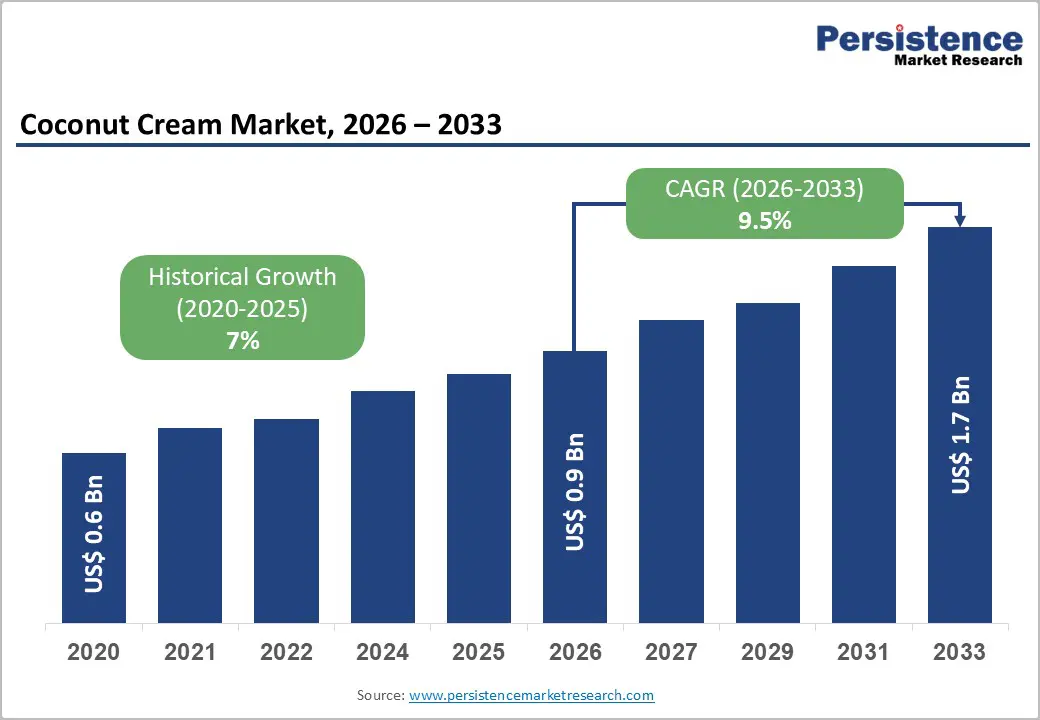
The global coconut cream market size is likely to be valued at US$ 0.9 billion in 2026, and is projected to reach US$ 1.7 billion by 2033, growing at a CAGR of 9.5% during the forecast period 2026−2033. This growth has been underpinned by rising global demand for plant-based and dairy-free alternatives, as consumer preferences have shifted toward functional and natural food ingredients that align with health and wellness trends. The increasing prevalence of lactose intolerance and the adoption of vegan diets have driven broader use of coconut cream in food and beverage formulations, while its expansion into personal care and pharmaceutical applications has diversified the end-use landscape significantly. Enhanced supply chain infrastructures and deeper online retail penetration have expanded the geographic reach of coconut cream products, making them accessible to a wider consumer base across both developed and emerging markets.
Regulatory support for clean-label and organic products has further stimulated demand, as manufacturers have responded by offering certified formulations that meet evolving quality and transparency standards. These factors have positioned the coconut cream market for sustained expansion, with opportunities emerging across multiple sectors as consumer awareness of health benefits and sustainable sourcing continues to rise.
Key Industry Highlights
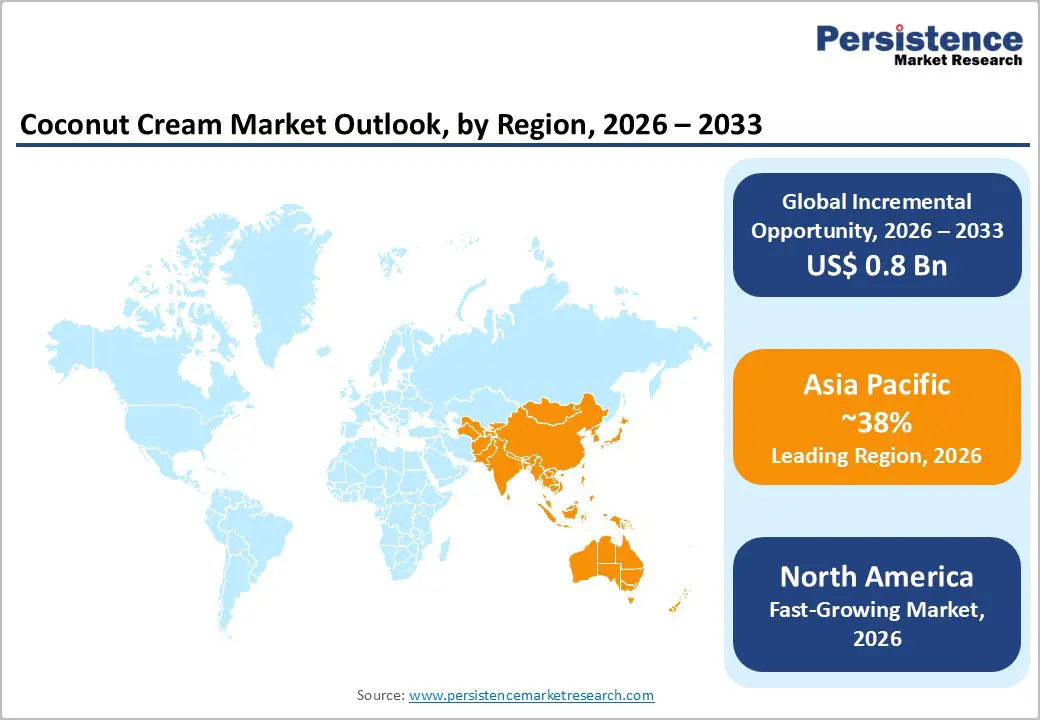
- Dominant Region: Asia Pacific is expected to hold a 42% market share in 2026, driven by high domestic coconut production and a well-established processing infrastructure.
- Fastest-growing Regional Market: North America is forecasted to be the fastest-growing market from 2026 to 2033, powered by a rising demand for plant-based, dairy-free, and clean-label food products.
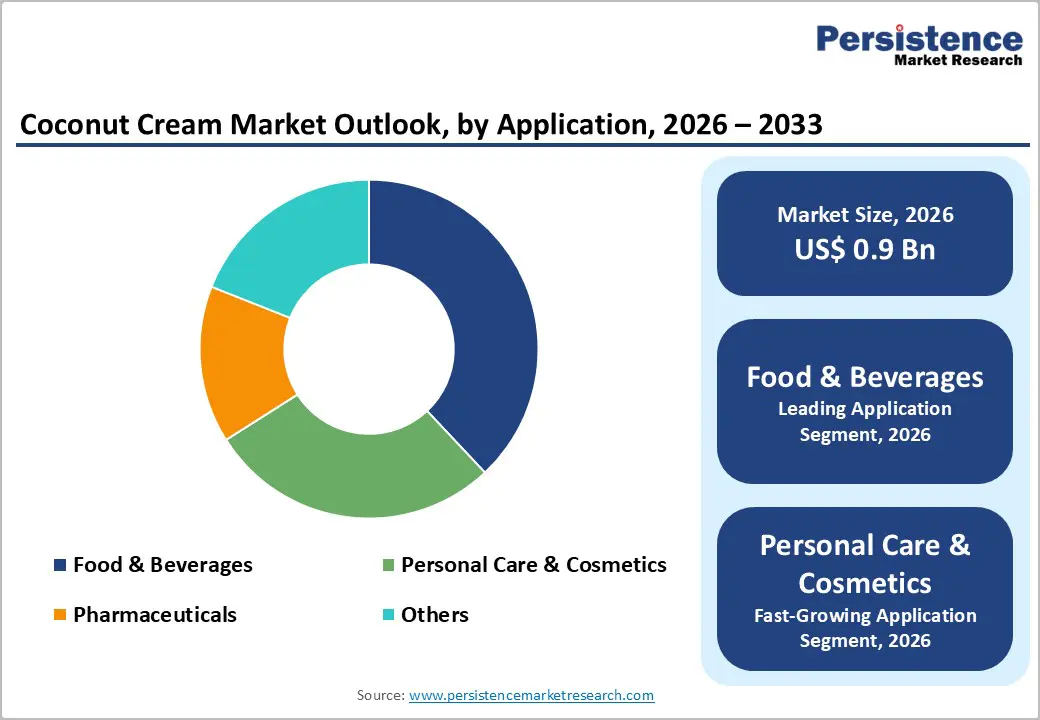
- Leading Application: The food & beverages segment is likely to lead with about 38% market share in 2026 due to the extensive use of coconut products across in culinary, bakery, confectionery, and beverage applications worldwide.
- Fastest-growing Application: The personal care and cosmetics segment is slated to grow the fastest through 2033, on account of the shifting consumer preference for clean-label and ethically sourced formulations.
| Key Insights | Details |
|---|---|
|
Coconut Cream Market Size (2026E) |
US$ 0.9 Bn |
|
Market Value Forecast (2033F) |
US$ 1.7 Bn |
|
Projected Growth (CAGR 2026 to 2033) |
9.5% |
|
Historical Market Growth (CAGR 2020 to 2025) |
7% |
Market Factors - Growth, Barriers, and Opportunity Analysis
Expansion in Personal Care and Cosmetics Sector
The expansion of the personal care and cosmetics sector is driving strong demand for coconut cream due to its natural skin and hair benefits. Its high content of fatty acids and vitamins makes it an ideal ingredient for moisturizers, conditioners, and anti-aging formulations. Rising consumer preference for plant-based and sustainable products has prompted brands to integrate coconut cream into premium and organic lines. The ingredient’s ability to nourish, hydrate, and enhance product efficacy positions it as a strategic choice for companies aiming to differentiate in a competitive market. Growth in wellness-focused beauty products has increased emphasis on ingredient transparency and functional benefits, which aligns with the properties of coconut cream.
Brands are investing in product innovation to leverage the appeal of natural ingredients, expanding their offerings in skincare, haircare, and body care segments. The shift toward holistic wellness and chemical-free formulations elevated coconut cream from a specialized additive to a core ingredient in modern personal care products. Manufacturers are focusing on high-quality sourcing and formulation techniques to meet consumer expectations for performance, purity, and sustainability, reflecting a trend where botanical ingredients are increasingly integrated across a wide range of personal care applications.
Supply Chain Volatility and Raw Application Price Fluctuations
Supply chain volatility and raw Application price fluctuations act as significant restraints due to the dependence on consistent sourcing of high-quality coconuts. Weather disruptions, seasonal variations, and geopolitical issues can impact coconut harvests, leading to inconsistent supply. Transportation challenges, port congestion, and rising fuel costs further affect the timely delivery of raw Applications. These disruptions increase operational complexity for manufacturers, requiring careful planning to maintain production schedules and meet market demand. Variations in coconut availability also influence procurement strategies, forcing companies to manage inventory levels carefully and negotiate contracts under uncertain conditions, which can increase overall production costs.
Price volatility in raw materials directly affects profit margins and pricing strategies. Sudden increases in coconut prices or logistical expenses can limit the ability of manufacturers to maintain competitive pricing while preserving product quality. Companies may face difficulties in forecasting costs and aligning them with fluctuating market demand. Risk management strategies such as diversified sourcing, long-term supplier agreements, and buffer inventory help mitigate these challenges while navigating the unpredictability in supply and pricing.
Innovation in Product Formulations and E-Commerce
Innovation in product formulations is driving new applications for coconut cream across skincare, haircare, and food-related segments. Brands are exploring blends with other natural ingredients to enhance functionality, improve texture, and deliver targeted benefits such as hydration, anti-aging, and nourishment. For instance, Nari'yal, an Indian skincare brand built around coconut-based formulations, uses Thai Nam Hom coconuts to offer gentle, eco-friendly products such as face wash, body oil serum, and body lotion. Customized formulations tailored to specific consumer needs, including vegan, organic, and chemical-free options, increase product appeal and expand market reach. Advances in formulation technology also allow for longer shelf life, better stability, and improved sensory experience, making coconut cream a versatile ingredient for premium and mass-market products alike.
The rise of e-commerce offers a direct channel for reaching a broader consumer base and testing innovative products rapidly. Online platforms enable brands to collect real-time feedback, analyze purchasing trends, and adapt offerings accordingly. Subscription services, targeted marketing, and digital campaigns support product visibility while reducing reliance on traditional retail distribution. The combination of formulation innovation and digital accessibility allows manufacturers to experiment with different variants, introduce limited editions, and respond to consumer preferences efficiently.
Category-wise Analysis
Nature Type Insights
The conventional segment is projected to capture approximately 65% of the coconut cream market revenue share by 2026. This leadership is sustained by its widespread availability, cost-effective production methods, and robust distribution networks that ensure broad market penetration. Retailers continue to prioritize conventional coconut cream products because they offer strong consumer appeal and competitive pricing, especially in regions where affordability is a key factor. Manufacturers benefit from economies of scale, efficient supply chains, and long-standing sourcing relationships, which enable them to maintain a dominant position and respond quickly to shifting market demands.
Organic coconut cream is expected to experience the fastest growth from 2026 to 2033, driven by rising consumer interest in natural, non-synthetic, and certified products. Health-conscious buyers are increasingly seeking organic alternatives, and this trend is supported by premium pricing that allows manufacturers to achieve higher profit margins. The segment’s expansion is further accelerated by greater availability through specialized health stores and online platforms, making it more accessible to a wider audience. As awareness of health and sustainability continues to grow, the organic segment is positioned to become a significant contributor to the overall market landscape in the coming years.
Application Insights
The food and beverages segment is set to maintain its leading position, with a projected market share of 38% in 2026. This dominance is fueled by the ingredient’s widespread use in culinary dishes, bakery products, confectionery, and beverage formulations across the globe. The creamy texture, versatile flavor, and plant-based nature of coconut cream make it compatible with both traditional and contemporary food innovations. Manufacturers capitalize on its adaptability to enhance the taste, texture, and nutritional profile of a wide range of products, while strong demand is sustained through mainstream retail and food service channels worldwide.
The personal care and cosmetics segment is anticipated to be the fastest-growing segment from 2026 to 2033, driven by the increasing integration of coconut cream in natural skincare, hair care, and wellness products. Consumers are showing a growing preference for clean-label, botanical, and ethically sourced formulations, which supports demand for premium offerings. Growth is further accelerated by expanded distribution through specialty stores, online retail platforms, and wellness-focused channels. Manufacturers are innovating with functional blends to meet the evolving needs of health-conscious and beauty-conscious consumers around the world.
Distribution Channel Insights
Supermarkets and hypermarkets are anticipated to account for around 52% of the total market revenue in 2026, as these facilities offer high product visibility, frequent promotional activities, and extensive geographic coverage that together have strengthened shopper engagement and confidence. These outlets have served as primary channels for both conventional and organic coconut cream products in urban areas, where retailers have been using strategic shelf placement, in-store promotions, and collaborative brand partnerships to drive volume growth. Well-established logistics networks and supply chain systems have ensured consistent on-shelf availability, which has reinforced consumer trust and supported deep market penetration across diverse urban and suburban regions worldwide.
Online retail has been forecasted to remain the fastest-growing channel from 2026 to 2033, as consumers are increasingly preferring digital shopping avenues for its convenience, home delivery options, and access to a broader product assortment. E-commerce platforms have enabled niche and specialty coconut cream variants to reach audiences beyond traditional physical stores, thereby opening opportunities in new demographic and regional segments. Retailers have been using targeted marketing campaigns, personalized product recommendations, and subscription-based purchasing models to improve customer retention and lifetime value, and these strategies are likely to have further strengthened shopper loyalty by the end of the forecast period.
Regional Insights
North America Coconut Cream Market Trends
North America is forecasted to be the fastest-growing regional market for coconut cream between 2026 and 2033, stimulated by rising demand for plant-based, dairy-free, and clean-label food products across the region. Consumers in the United States and Canada are increasingly adopting vegan, flexitarian, and health-conscious diets, driving the replacement of conventional dairy ingredients with coconut-based alternatives. Coconut cream is widely valued for its rich consistency and versatility, making it suitable for cooking, baking, beverages, and ready-to-eat foods. The growing popularity of international cuisines, particularly Asian and Caribbean dishes, has further accelerated household and foodservice consumption.
Innovation and premiumization are playing a critical role in strengthening the position of North America in the coconut cream market. Food manufacturers are incorporating coconut cream into desserts, plant-based beverages, sauces, and coffee creamers to meet evolving consumer preferences. The cosmetics and personal care industry is also contributing to demand by utilizing coconut derived ingredients for natural and moisturizing properties. Consumers in North America demonstrate strong interest in products that highlight organic certification, sustainability, and ethical sourcing, encouraging brands to invest in higher quality offerings.
Europe Coconut Cream Market Trends
Europe is predicted to hold a significant position in the market through 2033, due to the increasing adoption of plant-based diets, growing lactose intolerance awareness, and rising demand for clean label and natural food products. Consumers across countries such as Germany, the United Kingdom, France, and the Netherlands are actively shifting toward dairy alternatives for health, ethical, and environmental reasons. Coconut cream is gaining strong acceptance as a functional and versatile ingredient in home cooking, bakery, desserts, and ready meals. The popularity of international cuisines, particularly Asian and Middle Eastern foods, has supported steady consumption across both household and foodservice segments.
Regulatory support for transparent labeling, organic certification, and sustainable sourcing plays an important role in reinforcing market growth in Europe. Food manufacturers are increasingly investing in product innovation, offering organic, low fat, and additive free coconut cream variants to meet strict consumer and regulatory expectations. The foodservice industry, including cafes and restaurants, is also incorporating coconut cream into plant-based beverages, desserts, and sauces to address evolving dietary trends. Growing environmental awareness and preference for responsibly sourced ingredients continue to influence purchasing decisions across the region.
Asia Pacific Coconut Cream Market Trends
Asia Pacific is expected to dominate with an estimated 42% of the coconut cream market share in 2026, supported by high domestic production, well-established processing infrastructure, and deep-rooted culinary consumption patterns across key countries. This dominance is reinforced by its position as the largest coconut producer globally, with countries such as the Philippines, Indonesia, and India supplying a substantial portion of global raw material. Local production ensures stable supply, cost competitiveness, and minimal import dependency. Advanced processing facilities allow production of both conventional and organic coconut cream at scale, meeting diverse product formats in culinary, bakery, beverage, and ready-to-use applications. Well-integrated supply chains, from farm cooperatives to distribution networks, reduce wastage, maintain consistent quality, and ensure availability across urban and semi-urban areas, supporting strong retail and foodservice demand.
A key factor driving market leadership is deep-rooted culinary integration, where coconut cream is a staple ingredient in traditional dishes, beverages, and desserts. This creates sustained baseline demand, which supports both mainstream and premium products. Increased awareness of plant-based, natural, and fortified foods stimulates growth in value-added formats, including organic and functional variants. Government support through agricultural incentives, export facilitation, and food safety regulations strengthens production efficiency and export competitiveness. Strategic collaborations between manufacturers and global brands enable technology transfer, innovation, and broader market access.
Competitive Landscape
The global coconut cream market structure remains moderately fragmented, with key players such as Celebes Coconut Corporation, The Vita Coco Company, Inc., McCormick & Company, Sambu Group, and Danone accounting for a substantial share of overall revenue. Competition in the market is primarily driven by product quality, sourcing reliability, brand recognition, and the ability to cater to diverse applications across food and beverage, foodservice, and personal care sectors. Leading companies focus on clean label formulations, organic certification, and consistent texture and flavor profiles to meet evolving consumer expectations.
Barriers to entry in the market are moderate, influenced by factors such as dependence on agricultural raw materials, fluctuations in coconut supply, and the need for quality control and food safety compliance. New entrants must address challenges related to sourcing consistency, processing standards, shelf stability, and regulatory requirements for food labeling and exports. Certification requirements, including organic and sustainability standards, can also extend time to market. Strategic partnerships with coconut growers, investments in processing infrastructure, and collaborations with regional distributors are commonly adopted strategies to enhance market presence.
Key Industry Developments
- In September 2025, the International Coconut Community highlighted supply-side strategies and reinforced regional cooperation at the World Coconut Congress in Manila to address production challenges and support sustainable growth in the global coconut industry.
- In August 2025, HOCCO Ice Cream introduced a limited-edition Modak-shaped ice cream made with coconut cream and coated in white and milk chocolate to celebrate Ganesh Chaturthi and appeal to festive consumers.
- In March 2025, Califia Farms launched a new range of fruity, dairy-free coconut cream-based drinks in four flavors that offer reduced sugar content and expanded plant-based options for mindful consumers.
Companies Covered in Coconut Cream Market
- Celebes Coconut Corporation.
- The Vita Coco Company, Inc.
- McCormick & Company
- Sambu Group
- Danone
- Thaicoconut.
- Axelum Resources Corp.
- Pulau Sambu Singapore Pte Ltd.
- Kentaste
- HVA Ceylon LLC
Frequently Asked Questions
The global coconut cream market is projected to reach US$ 0.9 billion in 2026.
The market is driven by increasing consumer preference for plant-based and dairy-free products, rising health awareness, and growing demand in food, beverage, and personal care applications.
The market is poised to witness a CAGR of 9.5% from 2026 to 2033.
Key market opportunities include rising demand for plant-based and dairy-free products, growing health consciousness, expansion in foodservice and personal care applications, and increasing adoption of sustainable and premium coconut cream variants.
Some of the key market players include Celebes Coconut Corporation, The Vita Coco Company, Inc., McCormick & Company, Sambu Group, and Danone.


