




- Food Ingredients & Additives
- Clean Label Enzymes Market
Clean Label Enzymes Market Size, Trends, Share, Growth, and Regional Forecast, 2026 - 2033
Clean Label Enzymes Market by Enzyme Type (Carbohydrase, Protease, Lipase, Other), by Source (Microbial, Plant, Animal), End-user (Bakery & Baked Goods, Dairy & Cheese Processing, Beverages, Others), and Regional Analysis from 2026 - 2033

Clean Label Enzymes Market Share and Trends Analysis
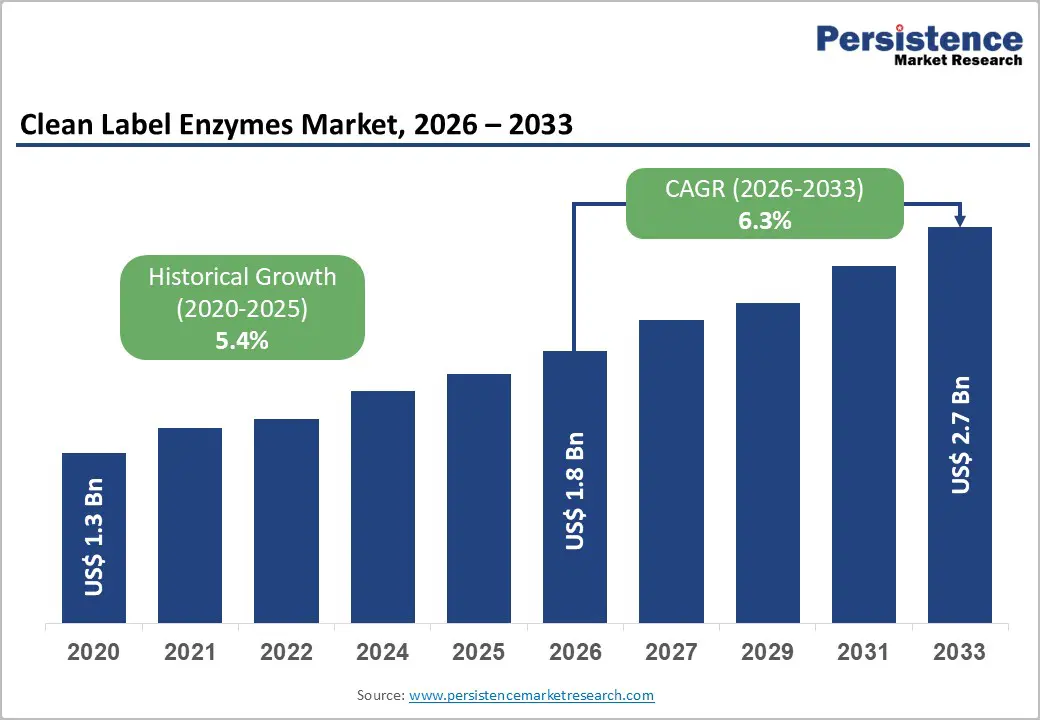
The global clean label enzymes market size is likely to be valued at US$ 1.8 billion in 2026 and US$2.7 billion by 2033. The market is projected to grow at a CAGR of 6.3% from 2026 to 2033.
Clean-label enzymes are redefining food manufacturing, enabling plant-based, protein-fortified, and dairy-alternative products to achieve superior texture, processing efficiency, and shelf-life stability. Manufacturers are leveraging multifunctional enzymes to meet growing consumer expectations for transparency, sustainability, and clean-label positioning, driving innovation across bakery, dairy, beverage, and protein-based food sectors globally.
Key Industry Highlights:
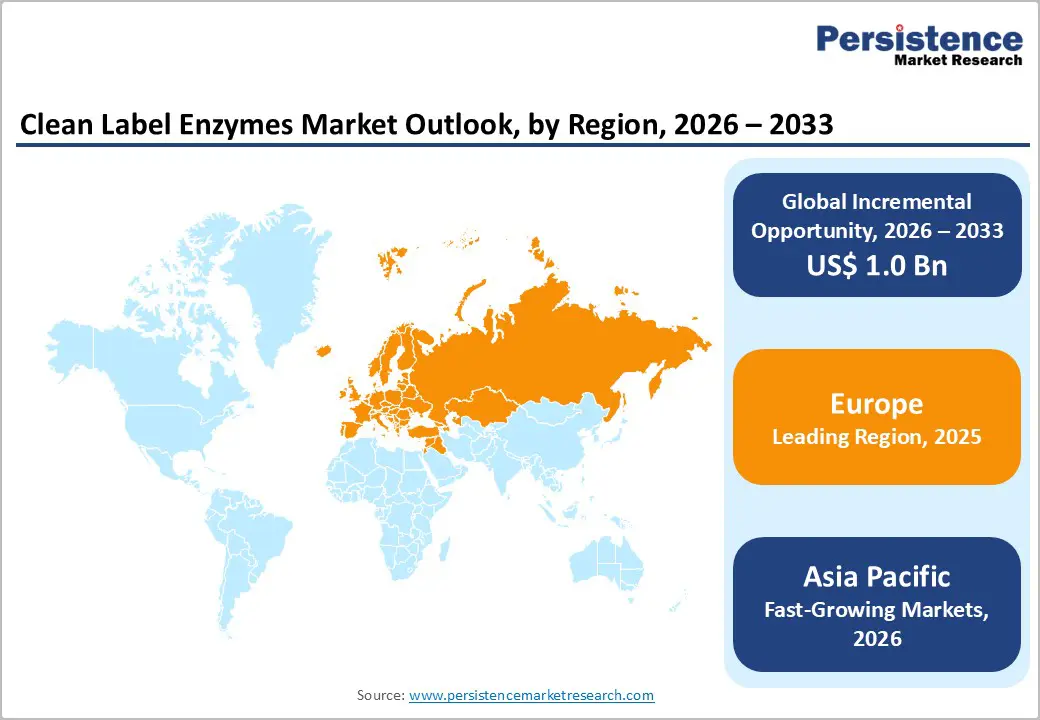
- Leading Region: Europe, holding 39% market share, driven by demand for minimally processed foods, transparency, and multifunctional enzyme solutions.
- Fastest-Growing Region: Asia Pacific, fueled by rising processed and convenience food consumption, adoption of plant-based and protein-enriched products, and regional production expansion.
- Fastest-Growing Segment: Plant-based enzymes, driven by sustainability, allergen-friendly formulations, and multifunctional applications in bakery, dairy alternatives, and snacks.
- Market Drivers: Rising demand for plant-based, protein-fortified, and dairy-alternative foods that require texture and processing support drives enzyme adoption.
- Opportunities: Commercializing fermentation-derived and certified non-GMO enzymes for premium clean-label positioning and application-specific solutions.
- Key Developments: In October 2025, BASF and IFF announced a strategic collaboration on next-generation enzyme innovation; in March 2025, AB Enzymes unveiled a refreshed corporate design; in November 2024, Biocatalysts Ltd launched PlantPro™ for plant-based applications.
| Key Insights | Details |
|---|---|
|
Clean Label Enzymes Market Size (2026E) |
US$ 1.8 Bn |
|
Market Value Forecast (2033F) |
US$ 2.7 Bn |
|
Projected Growth (CAGR 2026 to 2033) |
6.3% |
|
Historical Market Growth (CAGR 2020 to 2025) |
5.4% |
Market Dynamics
Driver - Rising demand for plant-based, protein-fortified, and dairy-alternative foods requires texture and process support
The surge in plant-based and protein-fortified foods is reshaping ingredient priorities, positioning clean-label enzymes as essential functional allies. Consumers increasingly seek dairy alternatives, meat substitutes, and fortified snacks that deliver familiar texture, mouthfeel, and stability, creating structural demand for enzymatic solutions. These enzymes help modify protein networks, improve emulsification, and enhance gelation, ensuring consistent product quality across high-volume production lines while supporting clean-label declarations.
Food manufacturers are leveraging enzymes to overcome formulation challenges in plant-protein matrices, where inherent variability can compromise texture and processing performance. By optimizing viscosity, water retention, and structural integrity, clean-label enzymes facilitate smooth scale-up and reliable shelf life, making them indispensable for next-generation, sustainable, and health-conscious food innovations worldwide.
Restraints - Regulatory complexity around enzyme use and labeling
Navigating the regulatory landscape for enzymes poses a significant challenge for manufacturers, as rules on use, labeling, and safety assessments vary widely across regions. Food processors must ensure compliance with diverse standards that dictate permissible enzyme types, concentrations, and claims, adding layers of complexity to product development. This regulatory patchwork can delay new launches and limit flexibility in formulation choices.
Labeling requirements further complicate adoption, as consumers and authorities increasingly scrutinize ingredient transparency. Enzymes must be disclosed appropriately without creating consumer confusion, particularly in clean-label and allergen-sensitive products. Compliance costs, extended approval timelines, and the need for thorough documentation collectively restrain growth, creating cautious investment and slower market expansion for clean-label enzymes globally.
Opportunity - Commercializing fermentation-derived enzymes with certified non-GMO and organic credentials for premium clean-label positioning
Fermentation-derived enzymes with certified non-GMO and organic credentials are becoming a cornerstone for brands seeking premium clean-label positioning. Consumers increasingly associate such enzymes with sustainability, transparency, and higher product quality, making them highly attractive in bakery, dairy, plant-based, and beverage applications. These enzymes offer functional benefits such as improved texture, stability, and processing efficiency while meeting stringent consumer expectations for natural, responsibly sourced ingredients.
For key players and startups, this trend creates opportunities to differentiate through product innovation, origin storytelling, and certifications that reinforce trust. Developing versatile enzyme portfolios that cater to both traditional and emerging food formats allows companies to capture high-value segments, expand market reach, and strengthen partnerships with health-conscious and environmentally aware manufacturers globally.
Category-wise Analysis
By End-user, Bakery & Baked Goods dominate the global clean-label enzymes market
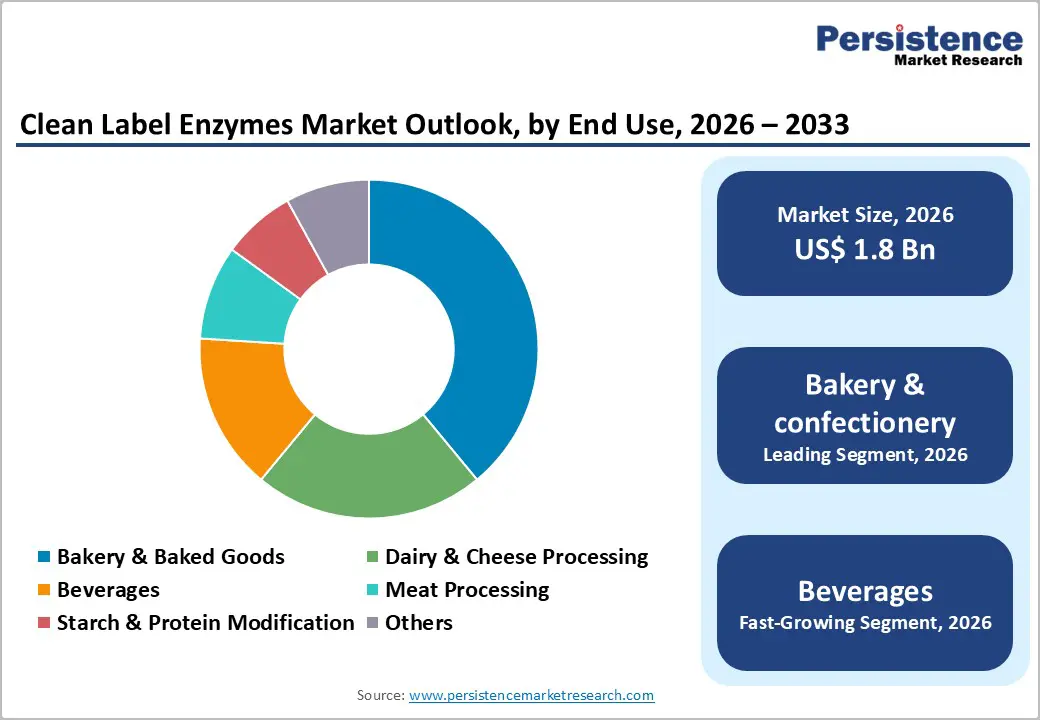
Bakery & Baked Goods holds approx. 39% market share as of 2025, reflecting the sector’s reliance on enzymes for dough conditioning, texture improvement, and shelf-life extension. Enzymes optimize crumb structure, moisture retention, and volume consistency, enabling large-scale production while meeting consumer expectations for fresh, high-quality baked products.
Dairy & Cheese Processing benefits from enzymes that enhance curd formation, flavor development, and milk protein functionality. Beverages leverage enzymes for starch conversion, clarification, and flavor optimization. Meat Processing utilizes enzymatic tenderization and preservation, while Starch & Protein Modification depends on enzymes to improve solubility, viscosity, and functional performance across multiple food formulations. The multifunctional role of enzymes secures their centrality in food manufacturing efficiency.
By Source, plant-based clean-label enzymes are anticipated to register strong growth during the forecast period
Plant-based Clean Label Enzymes are projected to grow at a CAGR of 7.6% during the forecast period in the global Clean Label Enzymes market, driven by increasing consumer preference for sustainable and allergen-friendly ingredients. These enzymes, derived from sources such as corn, soy, and other legumes, offer functional benefits comparable to those of microbial or animal-based enzymes, including improved texture, stability, and process efficiency.
Food manufacturers are adopting plant-based enzymes to align with clean-label initiatives, especially in bakery, dairy alternatives, and plant-based protein products. Their natural origin supports allergen-conscious and environmentally responsible positioning, while startups and established players can leverage innovation in extraction and formulation to capture high-growth segments and differentiate products in competitive markets.
Region-wise Insights
Europe Clean Label Enzymes Market Trends
Europe holds approximately 39% market share in the global clean label enzymes market, driven by high consumer demand for transparency, minimally processed foods, and sustainable ingredients. In Germany, enzyme applications are expanding in bakery and dairy, with a focus on improving texture and shelf life while supporting clean-label claims. The UK is witnessing growth in plant-based and protein-enriched products, where enzymes enhance consistency and sensory quality.
France, Spain, and Italy are emphasizing artisanal and premium foods, integrating enzymes for dough conditioning, cheese ripening, and beverage clarification. Manufacturers are also exploring multifunctional enzyme blends that combine processing efficiency with natural labeling, reflecting the European emphasis on traceability, regulatory compliance, and consumer-driven innovation in food manufacturing.
Asia Pacific Clean Label Enzymes Market Trends
Asia Pacific clean label enzymes market is expected to grow at a CAGR of 9.5%, fueled by the region’s rising processed and convenience food consumption. In India, the bakery and dairy sectors are adopting plant-based enzymes to enhance texture, improve nutritional profiles, and support clean-label positioning. China is leveraging enzymes in confectionery, beverages, and dairy alternatives to optimize processing efficiency and sensory quality.
Japan and South Korea are focusing on premium snacks and health-oriented foods, integrating multifunctional enzymes to improve shelf life and maintain natural labeling standards. Thailand’s growing ready-to-eat and frozen food markets are driving the adoption of enzymes to ensure consistent product quality. Regional investment in manufacturing capacity, formulation innovation, and sustainable sourcing is strengthening the Asia Pacific market’s long-term growth potential.
Competitive Landscape
The global clean label enzymes market is moderately fragmented, with a mix of established multinational suppliers and agile startups driving innovation. Leading companies are focusing on developing multifunctional enzymes derived from plant and fermentation sources to improve texture, processing efficiency, and clean-label positioning across bakery, dairy, beverages, and protein-based foods. Startups are exploring niche applications, offering tailored enzyme solutions for emerging plant-based and functional foods. Sustainability initiatives are central, with investments in energy-efficient production, responsible sourcing, and biodegradable packaging gaining momentum. Collaborations between enzyme manufacturers and food producers are accelerating product innovation and enabling access to new export markets.
Production expansion is underway across Asia, Europe, and North America to meet growing global demand. Compliance with evolving government regulations on labeling, additive use, and food safety is shaping R&D, while companies emphasize transparency, traceability, and functional reliability to strengthen market presence and consumer trust.
Key Developments:
- In October 2025, BASF and IFF announced a strategic collaboration aimed at accelerating next-generation enzyme and polymer innovation, strengthening capabilities in advanced materials and sustainable ingredient solutions.
- In March 2025, AB Enzymes unveiled a new corporate design that reflects its heritage while signaling continued growth and innovation, reinforcing its brand positioning across global enzyme markets.
- In November 2024, Biocatalysts Ltd introduced PlantPro™, an innovative enzyme range designed to address key formulation and processing challenges faced by plant-based food manufacturers, supporting improved texture, flavor, and processing efficiency.
Companies Covered in Clean Label Enzymes Market
- Koninklijke DSM N.V.
- IFF
- Novozymes A/S
- ABF
- Kerry Group plc
- DSM-Firmenich
- Biocatalysts Ltd.
- Amano Enzymes Inc
- Codexis, Inc.
- Advanced Enzymes Technologies Ltd.
- SternEnzym GmbH & Co. KG
- BASF
- Others
Frequently Asked Questions
The global clean label enzymes market size is projected to be valued at US$ 1.8 Bn in 2026.
The increasing popularity of plant-based, protein-enriched, and dairy-alternative products is boosting demand for enzymes that enhance texture, stability, and processing performance, propelling market expansion.
The global Clean Label Enzymes market is poised to witness a CAGR of 6.3% between 2026 and 2033.
The development and commercialization of fermentation-derived enzymes with certified non-GMO and organic credentials offer a significant opportunity for brands to achieve premium clean-label positioning and meet rising consumer expectations.
Major players in the global Clean Label Enzymes market include Koninklijke DSM N.V., IFF, Novozymes A/S, ABF, Kerry Group plc, DSM-Firmenich, Biocatalysts Ltd., BASF, and others.


