




- Nutraceuticals & Functional Foods
- Bone Broth Market
Bone Broth Market Size, Share, and Growth Forecast, 2025 - 2032
Bone Broth Market By Source (Poultry, Beef, Turkey, Blend), Nature (Organic, Conventional), End Use (Food and Beverages, Pharmaceuticals and Nutraceuticals, Animal Feed), Distribution Channel (Offline Sales, Online Sales), and Regional Analysis for 2025 - 2032

Bone Broth Market Size and Trends Analysis
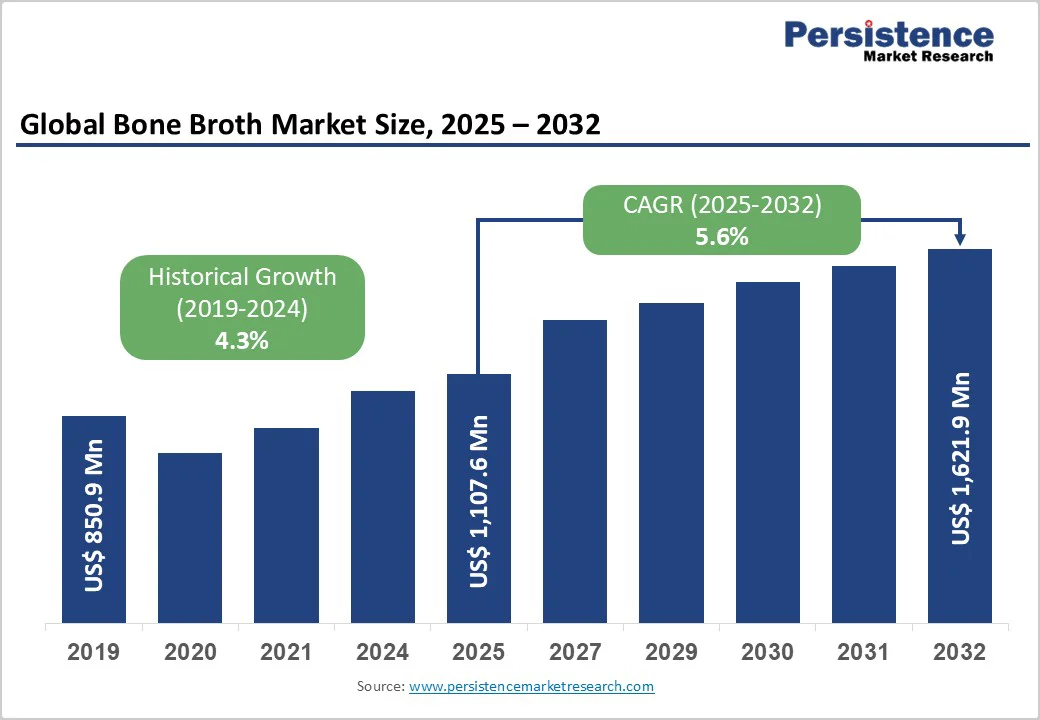
The global bone broth market is expected to reach US$1,107.6 million in 2025. It is expected to reach US$1,621.9 Million by 2032, growing at a CAGR of 5.6% from 2025 to 2032, driven by rising consumer interest in natural, high-protein, and functional foods that support gut, joint, and overall wellness. Surging demand for premium and artisanal bone broths is transforming the broth category, as consumers increasingly seek products that deliver superior quality, ethical sourcing, and enhanced nutritional value.
Key Industry Highlights
- Leading Region: North America, commanding 38% market share, driven by rising demand for functional, clean-label, and high-protein foods that align with paleo, keto, and intermittent fasting lifestyles.
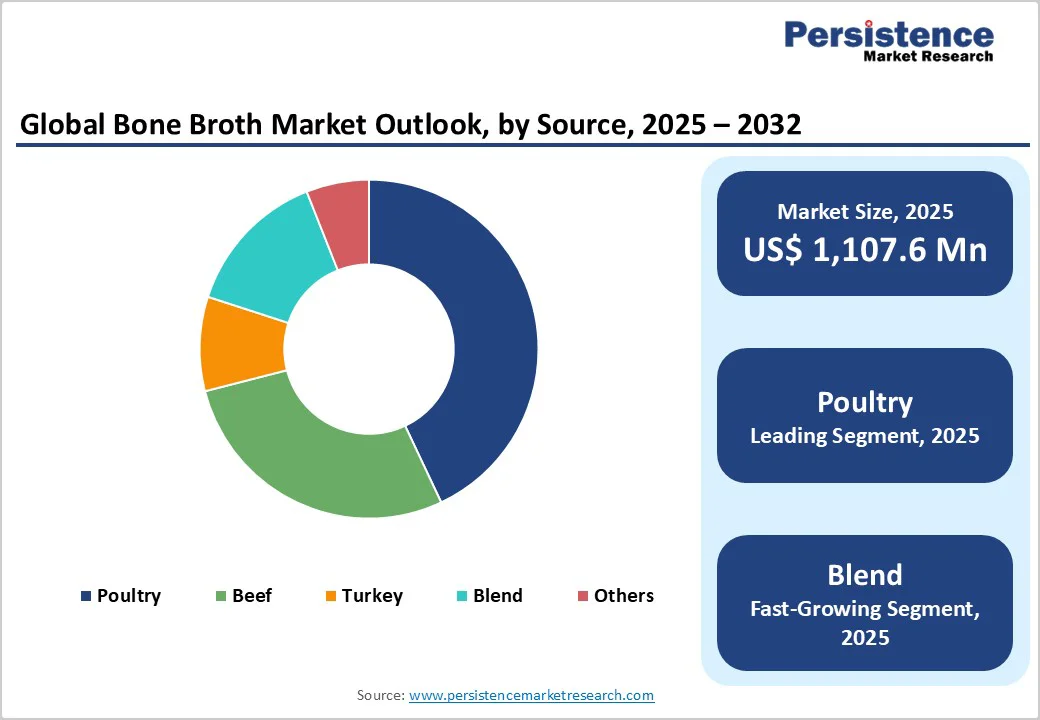
- Dominant Source Segment: Poultry broths, holding approximately 43% market share in 2024, due to lighter flavor, affordability, collagen inclusion, and suitability for everyday consumption.
- Fastest-Growing Segment by Nature: Organic bone broth, projected to grow at a CAGR of 7.8% through 2032, as consumers seek traceable, clean-label, and ethically produced nutrition.
- Market Driver: Rising consumer demand for premium, artisanal bone broths made from organic, grass-fed, and free-range sources emphasizing quality, transparency, and nutritional integrity.
- Market Restraint: Short shelf life of fresh bone broths complicates cold-chain logistics and limits scalability across regions lacking refrigeration infrastructure.
- Market Opportunity: Expansion of e-commerce and subscription-based delivery models enables direct consumer engagement, global reach, and recurring sales growth for premium broth brands.
- Key Developments: In August 2025, Pooch & Mutt launched wellness-oriented Bone Broths for dogs across major U.K. retailers. In February 2025, Kettle & Fire introduced wild-harvested Venison Bone Broth in partnership with Maui Nui. In January 2025, Freja Foods expanded its retail footprint by having Tesco stock its Chicken, Beef, and Vegan broths.
| Key Insights | Details |
|---|---|
|
Bone Broth Market Size (2025E) |
US$1,107.6 Mn |
|
Market Value Forecast (2032F) |
US$1,621.9 Mn |
|
Projected Growth (CAGR 2025 to 2032) |
5.6% |
|
Historical Market Growth (CAGR 2019 to 2024) |
4.3% |
Market Factors - Growth, Barriers, and Opportunity Analysis
Surging Demand for Premium and Artisanal Bone Broths
The surging demand for premium and artisanal bone broths is reshaping the broth category, driven by consumers’ growing appetite for quality, ethics, and nutritional depth. Made in small batches from organic, free-range, and grass-fed animal bones, these broths are not only considered gourmet but also aligned with health and sustainability values. Shoppers are increasingly scrutinizing ingredient origin and production methods, fueling demand for transparent, ethically sourced options.
According to data from the USDA, consumer spending on organic food surged over 12% in 2023, reaching over US$60 billion, reflecting a broader shift toward premium, clean-label offerings. Artisanal bone broth brands are capitalizing on this by positioning their products not just as nourishing but also as responsibly made. This trend appeals to eco-conscious and wellness-focused demographics willing to pay a premium for authenticity, traceability, and elevated taste experiences.
Short Shelf Life of Broths May Lead to Storage Issues
The short shelf life of conventional and fresh bone broths, particularly unpasteurized varieties, presents a significant barrier to broader market penetration. These broths require refrigeration or freezing to retain their nutritional value and freshness, which complicates storage, transportation, and distribution. In regions with limited access to cold-chain infrastructure or in households seeking pantry-stable, on-the-go nutrition, this becomes a major inconvenience. Consumers increasingly demand convenience without sacrificing quality, but fresh bone broths challenge this expectation due to perishability.
Online retail faces logistical hurdles, as temperature-controlled shipping inflates costs and risks spoilage. This constraint hampers growth opportunities, particularly in emerging or rural markets. Until innovations in shelf-stabilization or preservation methods become more widespread, the limited shelf life of bone broth remains a tangible restraint on scalability and consumer accessibility.
E-commerce and subscription services to create fresh prospects
The expanding e-commerce landscape is unlocking significant opportunities for bone broth brands to scale beyond regional borders and cater to health-conscious consumers globally. Online shoppers are actively seeking functional wellness products, and bone broths—known for their benefits to gut health, joint support, and immunity — are gaining traction as premium pantry staples. This shift is being accelerated by the rise of DTC (direct-to-consumer) models and subscription services, which enhance consumer convenience and brand loyalty. Companies such as Brodo, the U.S.-based broth brand, have successfully implemented subscription models, allowing customers to receive ready-to-sip bone broth regularly. This not only streamlines consumer access but also generates a steady revenue stream. As consumers increasingly favor specialized, health-driven products, online platforms and recurring delivery models will become vital growth channels for broth brands, aiming to build long-term customer relationships.
Category-wise Analysis
Source Insights
Poultry broths hold a significant 43% share of the bone broth market as of 2024, thanks to their lighter flavor, shorter cooking time, and broader consumer appeal. Chicken and turkey broths are considered more digestible and suitable for everyday use, especially among health-conscious consumers seeking collagen-rich, low-fat options for gut health, immunity, and recovery.
Poultry bones are also more accessible and cost-effective, attracting both manufacturers and budget-conscious buyers. Their flexibility in soups, cooking bases, and beverages further boosts their dominance in retail and foodservice sectors. Additionally, beef bone broths, while rich in nutrients, gelatin, and minerals, typically appeal to those seeking deeper flavors and higher protein content. Blended broths that combine poultry, beef, and even fish are becoming more popular, offering layered nutritional profiles and attracting more adventurous or wellness-focused consumers.
Nature Insights
Organic bone broth is expected to grow at a projected CAGR of 7.8% during the forecast period from 2025 to 2032, fueled by surging consumer demand for traceable, clean-label nutrition. With growing concerns over antibiotic use, animal welfare, and food safety, health-conscious consumers are actively seeking bone broths made from certified organic, grass-fed, or free-range animals.
Organic certification offers transparency and trust, aligning with clean eating, paleo, and Whole30 lifestyles. As sustainability becomes a key purchase driver, organic bone broth produced without synthetic pesticides or hormones resonates strongly with eco-aware shoppers. Premium positioning also allows brands to target high-value consumers via e-commerce and natural food retail. Conventional bone broth remains price-competitive and widely available but is increasingly scrutinized for lack of transparency in sourcing, particularly in mass-market segments where quality differentiation is limited.
Regional Insights
North America Bone Broth Market Trends
North America dominates the bone broth market with a 38% market share as of 2024, driven by strong consumer demand in the U.S. for functional, health-forward foods. The surge in organic food preferences, clean-label consumption, and transparency around certified ingredients is transforming how bone broth is positioned on retail and D2C platforms. In the U.S., rising disposable incomes and increased spending on premium food brands have fueled interest in small-batch, slow-simmered broths made from grass-fed or free-range sources. The popularity of keto, paleo, and intermittent fasting diets further propels demand for high-protein, gut-friendly, ready-to-consume products.
In Canada, the bone broth market is supported by favorable food labeling regulations and growing consumer emphasis on traceability and sustainability. A burgeoning D2C model in both countries, supported by e-commerce growth, is helping smaller brands scale faster, while catering to niche health-conscious and ethically driven consumers.
Europe Bone Broth Market Trends
Europe accounted for approximately 28% of the global bone broth market in 2024, driven by growing demand for functional foods that emphasize digestion, immunity, and overall wellness. In the U.K., Germany, Spain, and Russia, consumers are increasingly adopting bone stock as a clean-label, gut-healing supplement aligned with popular wellness trends. According to Eurostat, over 20% of European households purchased food online in 2023, indicating strong e-commerce traction for ready-to-consume broths.
In the U.K., premium bone broths made with organic, grass-fed sources are gaining traction, especially among health-conscious shoppers. Germany and Spain show rising interest in nutrient-dense functional foods, positioning bone broth as a preferred daily supplement. In Russia, increasing urban income levels and interest in traditional broths are contributing to niche market growth. Bone broth’s sustainability credentials, utilizing animal bones that would otherwise be discarded, further resonate with European consumers seeking both health and environmental impact.

Competitive Landscape
The global bone broth market is highly competitive, with both established food and beverage manufacturers and emerging health-focused startups. Companies are intensifying innovation around clean-label, organic, and functional formulations to meet rising consumer expectations. The market sees strong differentiation through source-specific broths (beef, poultry & fish), value-added ingredients such as collagen, turmeric, and MCT oil, and product formats such as frozen, shelf-stable, and ready-to-drink.
Direct-to-consumer (D2C) models and subscription-based services are increasingly being leveraged to build brand loyalty and drive repeat purchases. Sustainability, traceability, and transparent ingredient sourcing remain key battlegrounds. Private-label offerings by major retailers are adding pricing pressure, forcing premium brands to justify value through certifications, functional claims, and eco-friendly packaging.
Key Industry Developments:
- In August 2025, Pooch & Mutt introduced a new range of Bone Broths formulated to support hydration, digestion, calmness, and overall wellness in dogs. The Bone Broths are now available through major U.K. retailers, including Tesco, Sainsbury’s, Ocado, Amazon, and the company’s official website.
- In August 2025, Encore launched its new Bone Broth Toppers for dogs, targeting hydration support and enhanced mealtime appeal. Made with high-quality, natural ingredients, the innovation aligns with rising consumer demand for transparent and functional pet nutrition.
- In February 2025, Kettle & Fire partnered with sustainable harvesting leader Maui Nui to launch the first-ever wild-harvested Venison Bone Broth. Made from Maui’s Axis Deer and slow-simmered for over 18 hours, the product offers 20g of protein per serving and marks Kettle & Fire’s entry into venison-based offerings.
- In January 2025, Freja Foods announced that Tesco had begun stocking its award-winning Classic Liquid Bone Broths in Chicken and Beef varieties, as well as its Vegan Broth. This expansion strengthened Freja’s retail presence and reflected growing consumer demand for premium, ready-to-drink broth options.
Companies Covered in Bone Broth Market
- Campbell Soup Company
- Del Monte Foods, Inc. (College Inn)
- Bonafide Provisions
- Brodo
- Ossa Organic
- Australian Bone Broth Co.
- Bare Bones
- Ancient Nutrition
- NOW Foods
- Kettle & Fire
- Organixx
- Nutra Organics Pty Ltd
- Peak Performance
- Goofy Tails
- Freja Foods
Frequently Asked Questions
The bone broth market is projected to be valued at US$1,107.6 Million in 2025.
Surging demand for premium and artisanal bone broths is driving interest in bone broth.
The bone broth market is poised to witness a CAGR of 5.6% between 2025 and 2032.
E-commerce and subscription services are creating new growth opportunities for the market.
Major players in the global bone broth market include Campbell Soup Company, Del Monte Foods, Inc. (College Inn), Bonafid Provisions, Brodo, Ossa Organic, and Australian Bone Broth Co.


