




- Medical Devices
- Bone Growth Stimulator Market
Bone Growth Stimulator Market Size, Share, Trends, Growth, and Regional Forecast, 2026 to 2033
Bone Growth Stimulator Market by Product (Bone Growth Stimulation Devices, Bone Morphogenetic Proteins (BMP), Platelet-Rich Plasma (PRP)), by Application (Spinal fusion surgeries, Delayed union & nonunion bone fractures, Orthopedic trauma surgeries, Others), End-user, and Regional Analysis, from 2026 to 2033

Bone Growth Stimulator Market Share and Trends Analysis
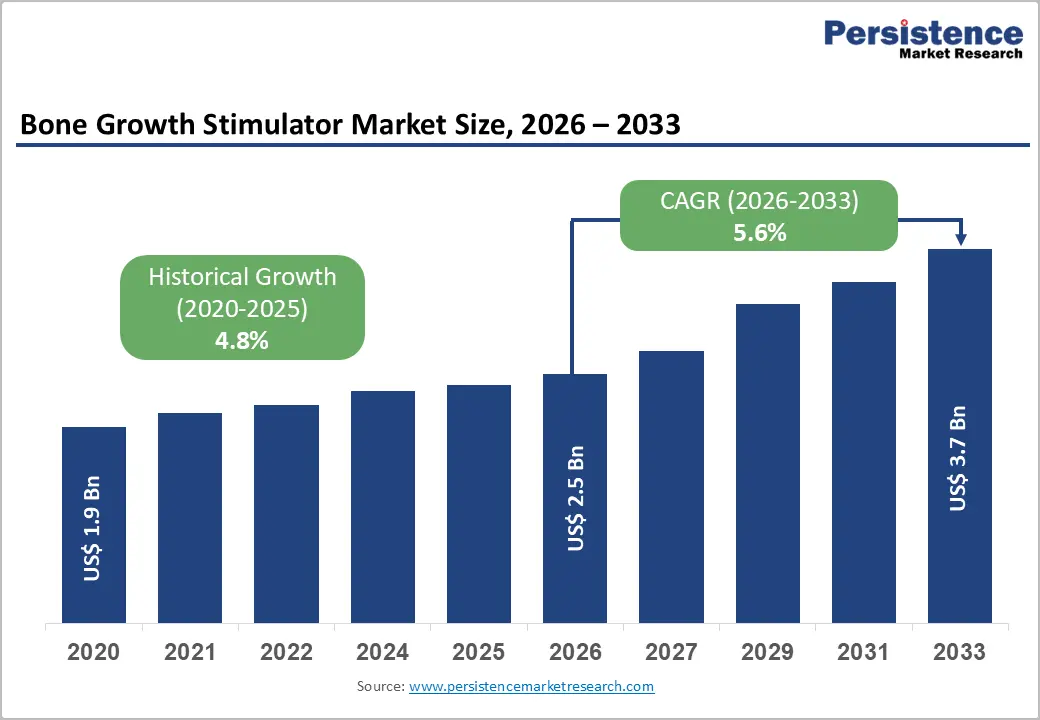
The global bone growth stimulator market is expected to reach US$ 2.5 billion in 2026 and is projected to reach US$ 3.7 billion by 2033, with a CAGR of 5.6% over the forecast period.
The bone growth stimulator industry overview shows a steady growth in the upcoming years. The industry encompasses devices designed to facilitate fracture healing and promote bone growth, particularly in patients with delayed unions or non-unions. These stimulators employ various technologies, including electrical stimulation, ultrasound, and magnetic fields, to enhance the body's natural healing processes. The industry is experiencing notable growth, driven by technological advancements and the increasing prevalence of orthopedic conditions. One notable trend is the rising adoption of non-invasive and portable devices, which provide patients with greater convenience and comfort during their recovery.
Key Industry Highlights:
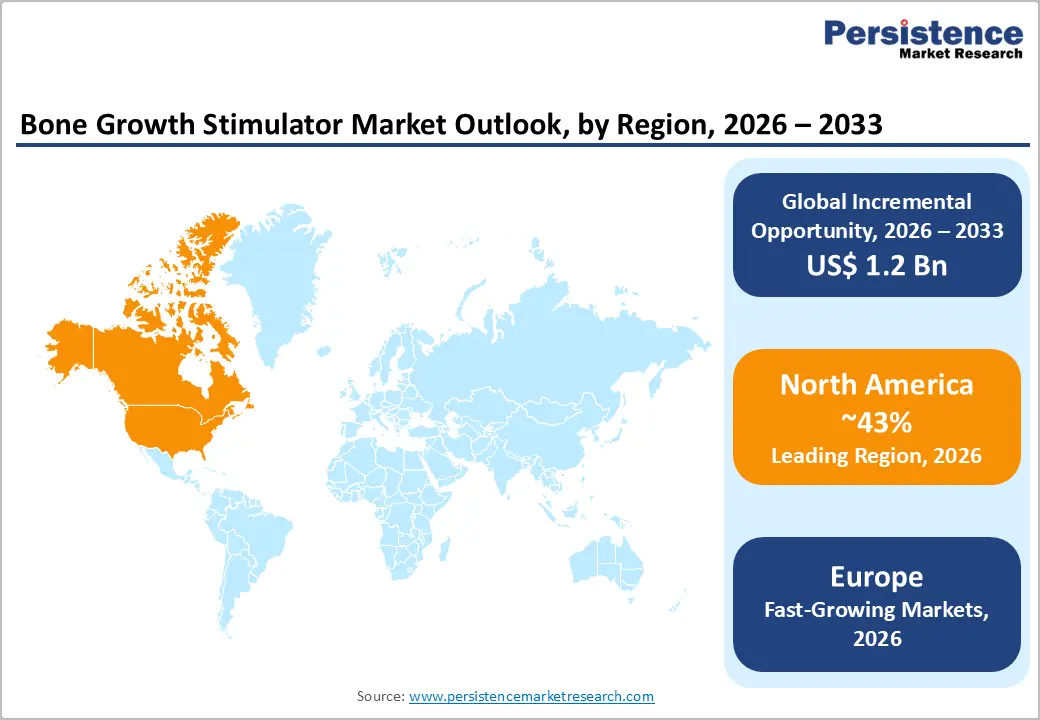
- North America is expected to become the leading regional market in 2025, owing to the high incidence of orthopedic and spinal conditions.
- Demand for effective bone growth stimulators is expected to rise due to healthcare providers' innovation and improved treatment options.
- Europe is expected to emerge as a promising market for bone growth stimulators owing to its growing older adult population.
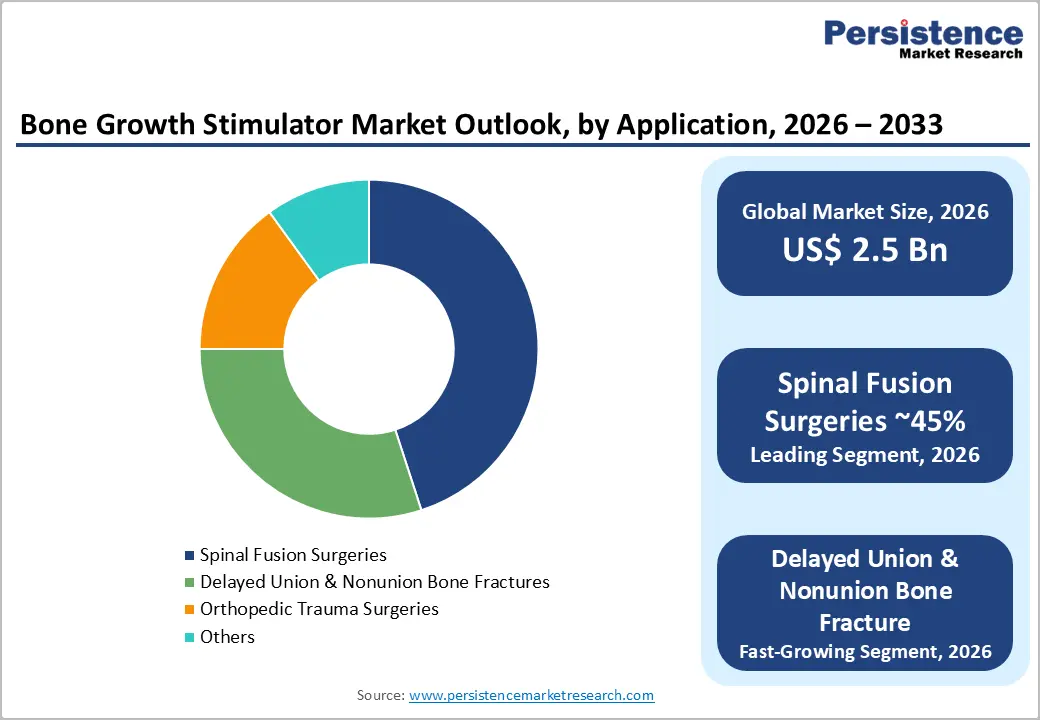
- Based on application, spinal fusion surgeries are predicted to lead the segment.
- The increasing geriatric population and rising incidence of sports-related injuries are driving demand for effective bone-healing solutions.
| Key Insights | Details |
|---|---|
| Bone Growth Stimulator Market Size (2026E) | US$ 2.5 Mn |
| Market Value Forecast (2033F) | US$ 3.7 Mn |
| Projected Growth (CAGR 2026 to 2033) | 5.6% |
| Historical Market Growth (CAGR 2020 to 2024) | 4.8% |
Market Dynamics
Driver - Rising Orthopedic Injury Burden, Technological Progress, and Aging Population
The rising incidence of orthopedic injuries, including fractures, trauma-related injuries, and sports-related injuries, is a major driver of the bone growth stimulator market. Increased participation in physical activities, organized sports, and fitness programs has led to a higher risk of musculoskeletal injuries across all age groups. These injuries often require prolonged healing, especially in cases of delayed union or non-union fractures, creating demand for therapies that can accelerate bone regeneration. Bone growth stimulators are increasingly used as adjunct treatments to enhance healing efficiency and reduce recovery timelines, encouraging broader adoption by orthopedic specialists and healthcare providers.
Technological progress has further strengthened market growth by improving device performance and patient usability. The development of portable, non-invasive bone growth stimulators has expanded treatment beyond hospital settings, allowing patients to continue therapy at home. The integration of smart features, such as digital tracking and treatment monitoring, has improved patient adherence and enabled clinicians to assess progress more effectively.
Additionally, the growing global elderly population significantly increases market demand. Aging individuals are more prone to osteoporosis, fractures, and degenerative bone conditions, increasing the need for reliable bone healing solutions. This demographic shift is reinforcing the long-term growth potential of the bone growth stimulator market.
Restraints - Limited Awareness and High Device Costs
Limited awareness and acceptance among healthcare professionals and patients continue to restrain growth in the bone growth stimulator market. Many clinicians remain cautious due to insufficient familiarity with clinical outcomes, long-term benefits, and appropriate patient selection criteria. As a result, these devices are not always integrated into standard orthopedic treatment protocols. Among patients, skepticism toward device-based therapies persists, with a strong preference for conventional surgical or pharmacological approaches. This hesitation slows adoption, particularly in regions where patient education initiatives are limited and clinical evidence is not widely disseminated.
In addition, the high cost of bone growth stimulators presents a significant barrier. These devices often involve advanced technologies, specialized components, and regulatory compliance expenses, which increase overall pricing. Patients without comprehensive insurance coverage may find it financially inaccessible. Healthcare providers in cost-sensitive settings may also hesitate to recommend such devices, especially when lower-cost alternatives are available. Together, limited awareness and high costs restrict broader utilization despite the proven therapeutic value of bone growth stimulators.
Opportunity - Digital Health Integration and Emerging Market Expansion
The integration of telemedicine and digital health technologies presents a strong growth opportunity for the bone growth stimulator market. As remote care models become more widely accepted, manufacturers can incorporate connectivity features into stimulators that enable real-time treatment tracking and progress assessment. Devices linked to mobile applications can support adherence reminders, monitoring therapy duration, and data sharing with clinicians. This approach enhances patient engagement while allowing healthcare providers to personalize treatment plans and intervene early when healing progress slows. Such digital capabilities align well with value-based care models focused on outcomes and efficiency.
Expansion into emerging markets also offers significant potential. Countries across the Asia Pacific and Latin America are investing heavily in healthcare infrastructure and orthopedic services. Rising awareness of advanced treatment options, combined with the growth of middle-class populations, is increasing demand for innovative bone-healing solutions. By introducing cost-effective models, local manufacturing, and region-specific training programs, manufacturers can improve accessibility and acceptance. Strategic partnerships with hospitals and orthopedic clinics in these regions can further accelerate adoption, positioning bone growth stimulators as essential tools in modern fracture and post-surgical care.
Category-wise Analysis
By Product Type Insights
The bone growth stimulator market by product type is expected to experience substantial growth in 2025, driven by rising orthopedic procedure volumes and increasing clinical focus on accelerated bone healing. The increasing incidence of fractures, joint degeneration, and post-surgical complications has strengthened demand for devices that support effective bone regeneration. Healthcare providers are increasingly favoring non-invasive and minimally invasive stimulation technologies, as these solutions reduce surgical risks while supporting consistent healing outcomes.
Bone growth stimulators are valued for their ability to enhance osteogenesis, lower infection risks, and minimize the need for repeat interventions. Their use contributes to shorter hospital stays and faster patient rehabilitation, aligning well with cost-containment goals of healthcare systems. Additionally, the expanding geriatric population, which is more susceptible to delayed bone healing and nonunion fractures, continues to drive device utilization. As clinical evidence supporting improved recovery outcomes grows, bone growth stimulators are becoming an integral part of orthopedic and trauma treatment protocols across hospitals and specialty clinics.
By Application Insights
Spinal fusion surgeries are projected to dominate the bone growth stimulator market by application in 2025, supported by the rising prevalence of degenerative spinal disorders and traumatic spinal injuries. Conditions such as spinal stenosis, spondylolisthesis, and disc degeneration frequently require surgical fusion to restore stability and alleviate chronic pain. Bone growth stimulators play a critical role in improving fusion success rates, particularly in high-risk patients with compromised healing potential.
Patients increasingly prefer treatment options that ensure reliable outcomes and faster post-operative recovery. The use of bone growth stimulation in spinal fusion procedures supports enhanced bone consolidation, reduces the risk of pseudoarthrosis, and shortens rehabilitation timelines. From a clinical perspective, these devices help surgeons achieve predictable fusion outcomes while minimizing the need for revision surgeries. As healthcare providers prioritize patient-centric care and long-term treatment effectiveness, the integration of bone growth stimulators into spinal fusion protocols continues to gain traction, reinforcing the segment’s leadership within the overall market.
Region-wise Insights
North America Bone Growth Stimulator Market Trends
North America is expected to remain the dominant regional market for bone growth stimulators in 2025, supported by a high prevalence of orthopedic disorders, spinal injuries, and trauma-related fractures. The region benefits from early adoption of advanced medical technologies and strong clinical acceptance of adjunctive bone-healing therapies. Continuous improvements in surgical techniques, post-operative care, and rehabilitation protocols have increased the use of bone growth stimulators across hospitals and outpatient orthopedic centers.
The U.S. leads regional growth due to its well-developed healthcare infrastructure and focus on outcome-driven treatment pathways. Rising healthcare expenditure, coupled with growing demand for minimally invasive and non-surgical treatment options, has strengthened device utilization. In addition, favorable reimbursement policies for specific indications and increasing awareness among orthopedic surgeons support sustained adoption. As patient expectations for faster recovery and reduced complication rates increase, bone growth stimulators are increasingly integrated into standard orthopedic and spinal care practices across North America.
Europe Bone Growth Stimulator Market Trends
Europe represents a steadily expanding market for bone growth stimulators, driven largely by demographic shifts and rising orthopedic care needs. The region’s aging population has led to a higher incidence of osteoporosis-related fractures, delayed bone healing, and degenerative spinal conditions, increasing reliance on adjunctive bone regeneration therapies. Public healthcare systems across Europe emphasize improving long-term patient outcomes and reducing hospitalization durations, thereby supporting the adoption of non-invasive bone-stimulation technologies.
Countries such as the UK, Germany, and France are experiencing increasing demand due to higher surgical volumes and greater availability of advanced orthopedic treatments. In particular, the UK market is benefiting from rising medical tourism and a preference for less invasive procedures that shorten recovery time. Strong clinical guidelines, growing physician familiarity, and investments in orthopedic innovation further enhance market prospects. These factors position Europe as a key region for sustained growth in bone growth stimulator adoption.
Asia Pacific Bone Growth Stimulator Market Trends
Asia Pacific is emerging as a high-growth region for the bone growth stimulator market, supported by rapid healthcare infrastructure development and a growing patient population. Rising cases of road accidents, sports injuries, and age-related bone disorders are increasing the demand for effective bone-healing solutions. Countries such as China, India, Japan, and South Korea are experiencing increasing orthopedic procedure volumes, thereby driving interest in advanced post-surgical recovery technologies.
Improving access to healthcare services and increased government investment in hospital modernization have strengthened adoption across urban centers. Additionally, increasing awareness among clinicians and patients of non-invasive treatment options is encouraging wider acceptance of bone growth stimulators. Japan’s aging population and China’s large patient base create substantial demand for therapies addressing delayed union and nonunion fractures. As disposable incomes rise and private healthcare expands, Asia Pacific is expected to record the fastest growth rate, positioning it as a critical future market for bone growth stimulation devices.
Competitive Landscape
The bone growth stimulator market is characterized by a competitive landscape featuring key players like Medtronic and Orthofix Medical Inc. Medtronic, a leader in medical technology, launched its OsteoCool RF Ablation System in 2022 enhancing the treatment of bone tumors while promoting recovery.
Orthofix introduced the PhysioStim device, a non-invasive bone growth stimulator designed for easy patient use. These innovations reflect a trend toward developing user-friendly, effective solutions that cater to diverse patient needs, as companies strive to maintain a competitive edge in an evolving healthcare environment focused on improved outcomes and accessibility.
Key Industry Developments:
- September 2024, Orthofix Medical Inc. presented new data supporting the use of its proprietary Pulsed Electromagnetic Field (PEMF) stimulation to increase fusion rates as an adjunct to lumbar spine fusion surgery. Patients treated with the SpinalStim™ bone growth therapy device achieved a high fusion rate and significant improvements in pain, function, and quality of life.
- April 2024, Xstim received premarket approval from the US FDA for its Xstim spine fusion stimulator, a wearable, non-invasive device that promotes bone healing in patients after spinal fusion surgery. The device emits a low-energy signal and is expected to be commercially launched in the second quarter of this year. The global orthobiologics market, including bone growth stimulation devices, is expected to exceed $7.8bn by 2025.
Companies Covered in Bone Growth Stimulator Market
- Orthofix Holdings, Inc.
- Medtronic
- Zimmer Biomet
- DePuy Synthes
- Arthrex, Inc.
- Bioventus
- DJO Global, Inc.
- Ossatec benelux
- BTT Health GmbH
- IGEA
- Isto Biologics
- Others
Frequently Asked Questions
The global bone growth stimulator market is projected to be valued at US$ 2.5 Mn in 2026.
Rising spinal fusion and fracture surgeries, increasing orthopedic trauma cases, technological advancements in stimulators, and growing geriatric population drive growth.
The global market is expected to witness a CAGR of 5.6% between 2026 and 2033.
The integration of telemedicine and digital health solutions is a key opportunity for the market players.
North America is the leading region in the global bone growth stimulator market.


