




- Healthcare Services
- Skin Rejuvenation Market
Skin Rejuvenation Market Size, Share, Growth, and Regional Forecast, 2026 - 2033
Skin Rejuvenation Market by Treatment Type (Laser-based Treatments, Intense Pulsed Light (IPL), Radiofrequency (RF), Ultrasound-based Treatment, LED Light Therapy, Chemical Peels, Others), by Application, by End-user, and Regional Analysis from 2026 - 2033

Skin Rejuvenation Market Share and Trends Analysis
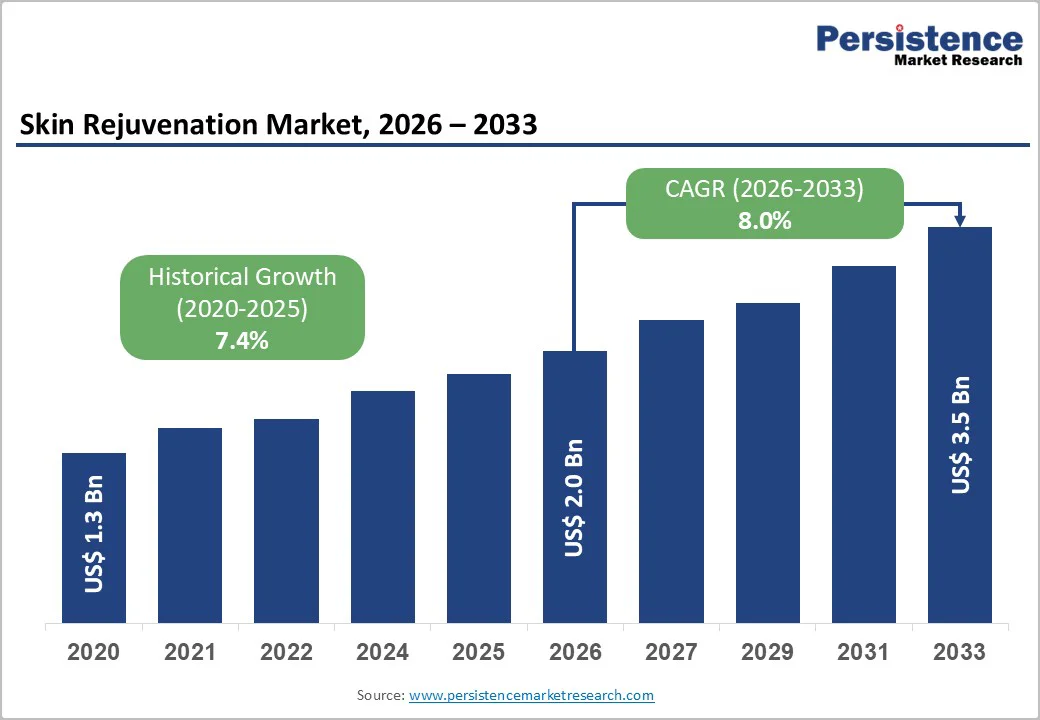
The global skin rejuvenation market is estimated to grow from US$2.0 billion in 2026 to US$3.5 billion by 2033. The market is projected to record a CAGR of 8.0% during the forecast period from 2026 to 2033.
The Global Skin Rejuvenation Market is expanding rapidly as consumers increasingly seek minimally invasive and non-invasive aesthetic solutions to address aging, pigmentation, scars, and texture concerns. Advances in laser, RF, IPL, and combination energy-based technologies are driving wider adoption across dermatology clinics and med-spas. Rising social media influence, growing awareness of preventive skincare, and increasing affordability in emerging markets are boosting demand. Manufacturers are focusing on safer, faster, and customizable devices that suit diverse skin types. With both professional treatments and home-use devices gaining traction, the market is evolving toward personalized rejuvenation experiences and continuous aesthetic maintenance.
Key Industry Highlights:
- Laser, RF, ultrasound, and combination devices are witnessing rapid adoption due to their precision, versatility, and long-lasting outcomes.
- Clinics now combine technologies such as laser + RF, microneedling + PRP, or IPL + resurfacing to deliver more personalized and enhanced results.
- The rapid rise of med-spas, franchise aesthetic chains, and boutique dermatology centers worldwide is increasing consumer access to rejuvenation services.
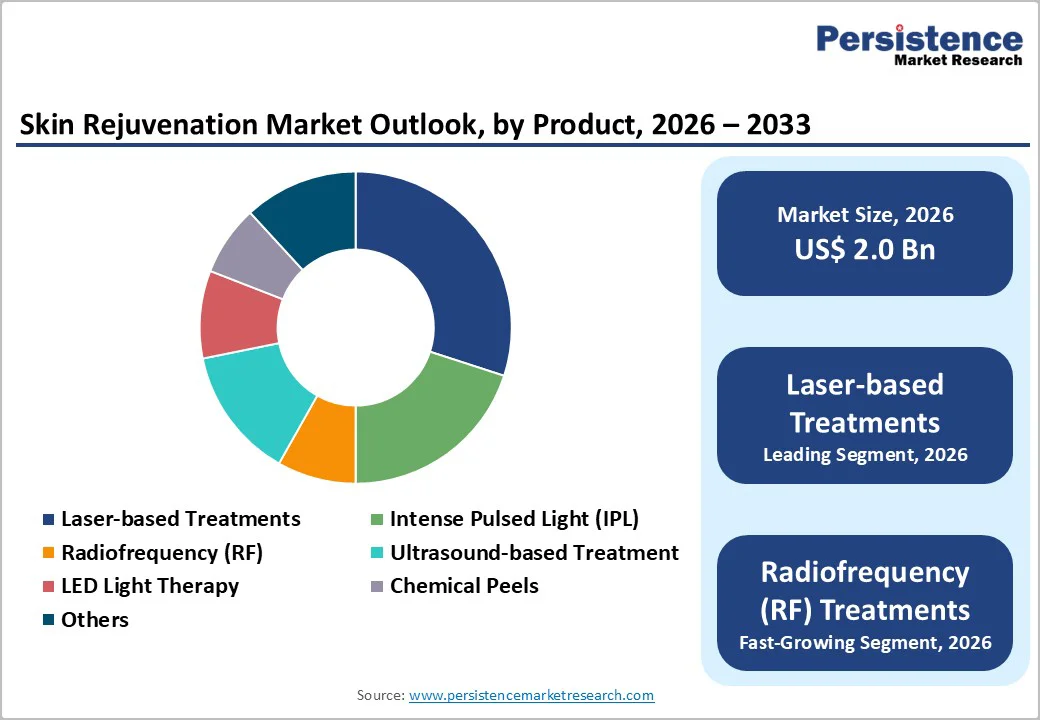
- Laser-based Treatments are the leading segment in the global skin rejuvenation market because they deliver the most precise, reliable, and visible results across a wide range of skin concerns including wrinkles, pigmentation, scars, uneven tone, and sun damage.
| Key Insights | Details |
|---|---|
|
Skin Rejuvenation Market Size (2026E) |
US$2.0 Bn |
|
Market Value Forecast (2033F) |
US$3.5 Bn |
|
Projected Growth (CAGR 2026 to 2033) |
8.0% |
|
Historical Market Growth (CAGR 2020 to 2024) |
7.4% |
Market Dynamics
Driver - Rising Prevalence of Pigmentation, Acne Scars, and Sun-damage Issue
The rising prevalence of pigmentation problems, acne scars, and sun-damage is becoming a major driver of the global skin rejuvenation market, as these conditions affect both younger and older populations. Increasing exposure to pollution, harsh UV rays, stressful lifestyles, and hormonal changes has led to more people experiencing uneven skin tone, dark spots, and post-acne marks. These concerns often create long-term cosmetic distress, pushing consumers to seek professional solutions instead of relying solely on topical products. Clinics are witnessing higher demand for laser toning, resurfacing, chemical peels, and combination therapies that offer faster, more visible results. The need for corrective and maintenance-based skin treatments continues to rise, significantly boosting the uptake of advanced rejuvenation technologies worldwide.
Restraints - Risk of Side Effects & Complications
The risk of side effects and complications remains a major restraint for the global skin rejuvenation market. Procedures involving lasers, IPL, RF, and chemical-based treatments can lead to burns, blistering, pigmentation changes, swelling, and even scarring when not performed correctly. These risks are higher in individuals with sensitive or darker skin tones, where improper energy settings or technique can cause long-term damage. Many aesthetic providers, especially in med-spas, may lack adequate dermatology training, increasing the likelihood of adverse outcomes. Such incidents reduce patient confidence and create hesitation toward undergoing advanced procedures. Negative experiences, social media reports, and safety concerns often discourage first-time consumers, limiting broader market acceptance despite technological advancements.
Opportunity - New Indications for Pigmentation & Scar Treatment
The rising incidence of pigmentation disorders such as melasma, sun-induced dark spots, and post-inflammatory hyperpigmentation, along with the high global burden of acne scarring, is creating strong demand for effective skin rejuvenation solutions. Patients increasingly seek targeted, long-lasting treatments that can address multiple concerns in a single session. This trend is driving rapid adoption of advanced multi-energy devices combining laser, RF, and IPL technologies, which offer superior precision, deeper penetration, and safer outcomes across diverse skin types. Clinics are investing in these versatile platforms to treat complex pigmentation and scar indications more effectively, making this segment a major opportunity within the global skin rejuvenation market.
Category-wise Analysis
By Treatment Type Insights
Laser-based Treatments dominate the global skin rejuvenation market because they offer precise, effective, and versatile solutions for a wide range of skin concerns, including wrinkles, pigmentation, scars, and uneven texture. Their ability to deliver controlled energy at different depths ensures consistent, long-lasting results with minimal downtime. Clinics and med-spas prefer lasers due to their multi-application functionality, treating multiple indications with a single device. Continuous technological advancements—such as fractional, ablative, non-ablative, and hybrid lasers—enhance safety, efficiency, and patient satisfaction. High adoption among professionals and growing patient trust in clinical outcomes make laser-based treatments the leading segment, capturing the largest market share globally.
By Application Insights
The anti-aging / wrinkle reduction application holds the highest share in the global skin rejuvenation market because aging-related skin concerns are widespread and affect a broad demographic, from middle-aged to older adults. Consumers increasingly prioritize maintaining youthful skin and preventing early signs of aging, creating strong demand for effective treatments. Clinics and med-spas focus on procedures like laser resurfacing, RF tightening, and injectables that target fine lines, sagging, and loss of elasticity, often delivering multiple benefits in a single session. High patient awareness, social media influence, and the willingness to invest in aesthetic procedures further drive adoption. Additionally, technological advancements offering safer, minimally invasive, and faster anti-aging solutions reinforce the dominance of wrinkle reduction in the market.
Regional Insights
North America Skin Rejuvenation Market Trends
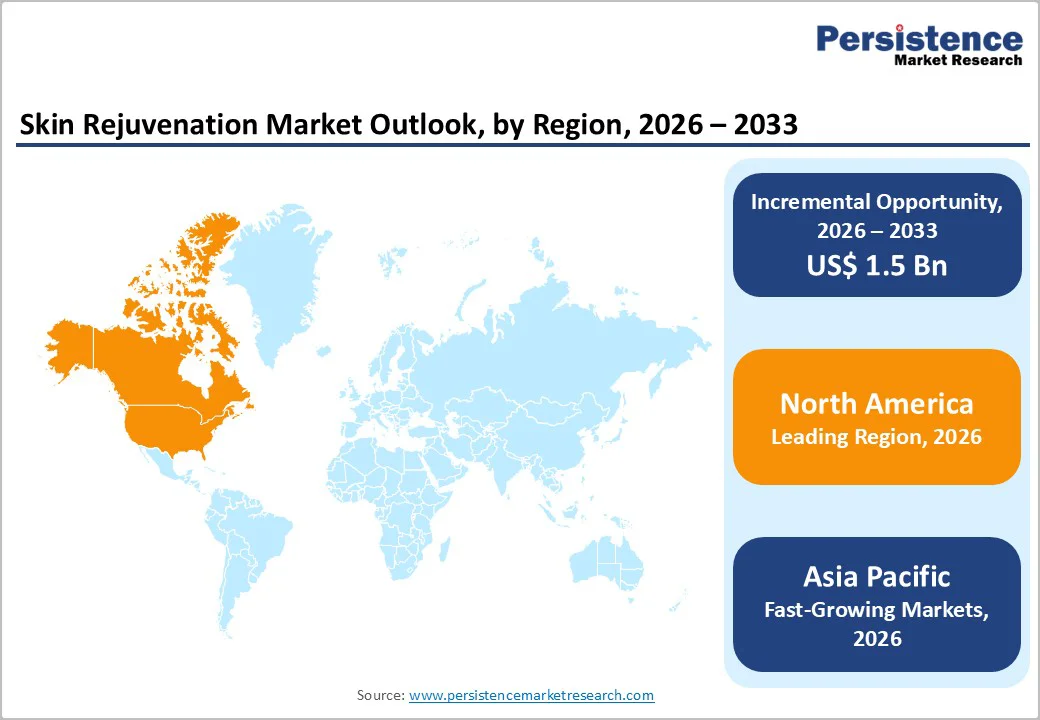
North America is the leading region in the global skin rejuvenation market, driven by high consumer spending, early adoption of advanced technologies, and a well-established network of dermatology clinics and med-spas. In the U.S., laser-based treatments dominate, with strong demand for anti-aging, wrinkle reduction, and pigmentation correction. Consumers increasingly prefer minimally invasive procedures with minimal downtime, fueling the adoption of fractional, non-ablative, and hybrid lasers. Rising awareness of preventive skincare, social media influence, and a growing aging population further support market growth. Continuous technological innovation, combined with easy access to professional aesthetic services, ensures North America remains the largest and most mature skin rejuvenation market globally.
Asia Pacific Skin Rejuvenation Market Trends
The Asia Pacific Skin Rejuvenation Market is emerging rapidly, driven by rising disposable incomes, growing beauty consciousness, and expanding private aesthetic clinics. Countries such as China, India, South Korea, and Japan show high demand for anti-aging, pigmentation, and scar treatments. Consumers increasingly prefer minimally invasive procedures, supported by social media influence and awareness of preventive skincare. The market is also boosted by medical tourism, affordable treatment options, and local manufacturing of energy-based devices, making the Asia Pacific the fastest-growing and most promising region globally.
Competitive Landscape
The Skin Rejuvenation Market competition landscape is highly dynamic, marked by intense rivalry among global and regional players. Companies focus on continuous innovation in laser, RF, IPL, and combination technologies to maintain a competitive edge. Providers compete through customizable treatment packages, attractive pricing, and superior patient experiences. Emerging players target niche segments and price-sensitive consumers to expand market presence. Strategic partnerships, mergers, and expanded distribution networks further intensify competition.
Key Industry Developments:
- In June 2025, Hydrafacial launched its latest technological innovation, the HydraFillic with Pep9 Booster. The skin booster utilized a blend of nine peptides to target fine lines and wrinkles while hydrating the skin and strengthening its barrier.
- In September 2025, Galderma launched Alastin® in China, supporting the skin’s natural regenerative abilities in a rapidly expanding market.
Companies Covered in Skin Rejuvenation Market
- Lumenis
- Cynosure (Hologic)
- Alma Lasers
- Cutera
- Candela (Syneron-Candela)
- Sciton
- Solta Medical
- Venus Concept
- Strata Skin Sciences
- Merz Aesthetics
- Other
Frequently Asked Questions
The global skin rejuvenation market is projected to be valued at US$2.0 Bn in 2026.
Increasing consumer focus on maintaining youthful skin drives demand for wrinkle reduction and skin tightening treatments.
The global market is poised to witness a CAGR of 8.0% between 2026 and 2033.
Opportunities in multi-modal treatments like laser + RF or microneedling + PRP for enhanced results.
North America is the leading region in the global market.


