




- Animal Health
- Pet Probiotics Supplements Market
Pet Probiotics Supplements Market Size, Share, Growth, and Regional Forecast, 2026 - 2033
Pet Probiotics Supplements Market by Product (Chewables, Powder, Capsules and Tablets, Liquids, and Others), by Pet Type (Dogs, Cats, and Others), by Application (Gut Health, Digestive Health, Immunity Booster, Allergy Support, Coat Quality, Itching Skin & Dermatological Support, and Others) by Distribution Channel (Online Retail and Offline Retail), and Regional Analysis from 2026 - 2033

Pet Probiotics Supplements Market Share and Trend Analysis
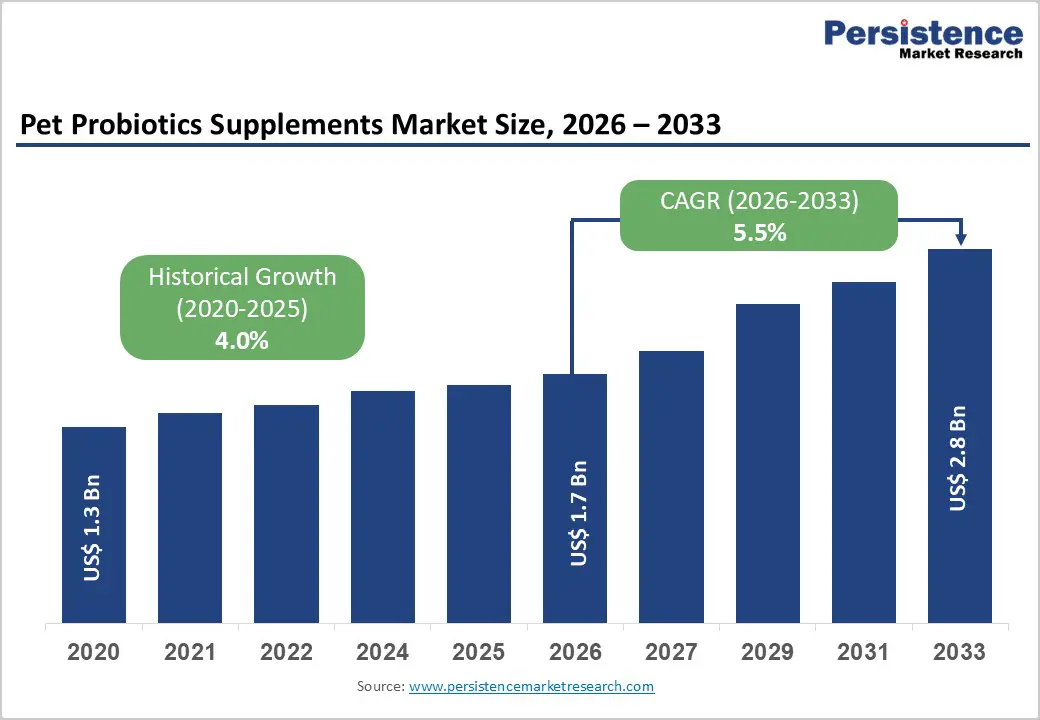
The global pet probiotics supplement market is projected to grow from US$ 1.7 Bn in 2026 to US$ 2.8 Bn by 2033. The market is projected to grow at a CAGR of 5.5% from 2026 to 2033. Global demand for pet probiotics is increasing steadily, driven by pet humanization, growing awareness of preventive pet healthcare, and the rising incidence of digestive disorders, allergies, and immune-related conditions in companion animals. Pet owners are increasingly incorporating probiotic supplements into daily nutrition routines to support gut balance, immunity, and overall wellness. Expanding use of pet probiotics across veterinary clinics, specialty pet stores, online platforms, and home-care settings is supporting sustained market growth.
Higher diagnosis rates of gastrointestinal issues, improved veterinarians' awareness of microbiome health, and rising owners' preference for easy-to-administer, palatable supplements are further accelerating adoption. In addition, increasing pet healthcare expenditure and broader access to premium nutrition products are enabling wider uptake across both developed and emerging markets. Continuous innovation in probiotic strain selection, formulation stability, flavor enhancement, and dosage formats is improving efficacy, compliance, and outcomes. The growing emphasis on preventive care, long-term wellness, and digitally enabled direct-to-consumer platforms is further propelling global demand for pet probiotics supplements.
Key Industry Highlights
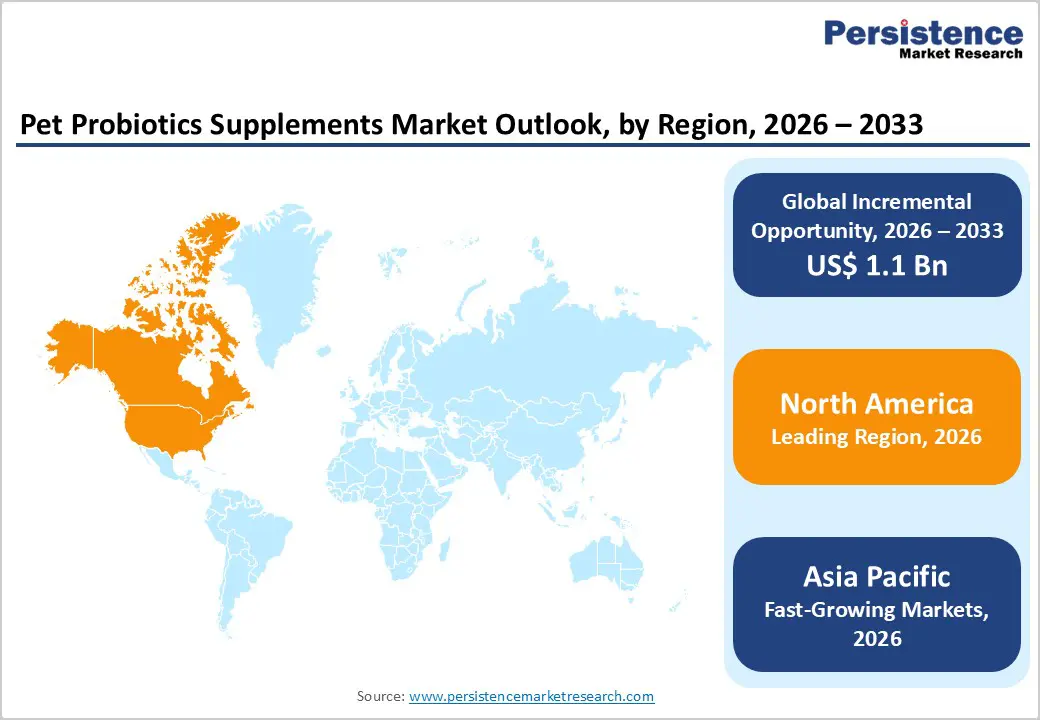
- Leading Region: North America holds the largest share at 46.7%, supported by high pet ownership, strong preventive care awareness, advanced veterinary infrastructure, widespread adoption of premium supplements, and the presence of major pet nutrition companies.
- Fastest-Growing Region: Asia-Pacific is expanding fastest due to rapidly rising pet adoption, rising disposable incomes, increased awareness of pet digestive health, and expanding access to veterinary and online pet care services.
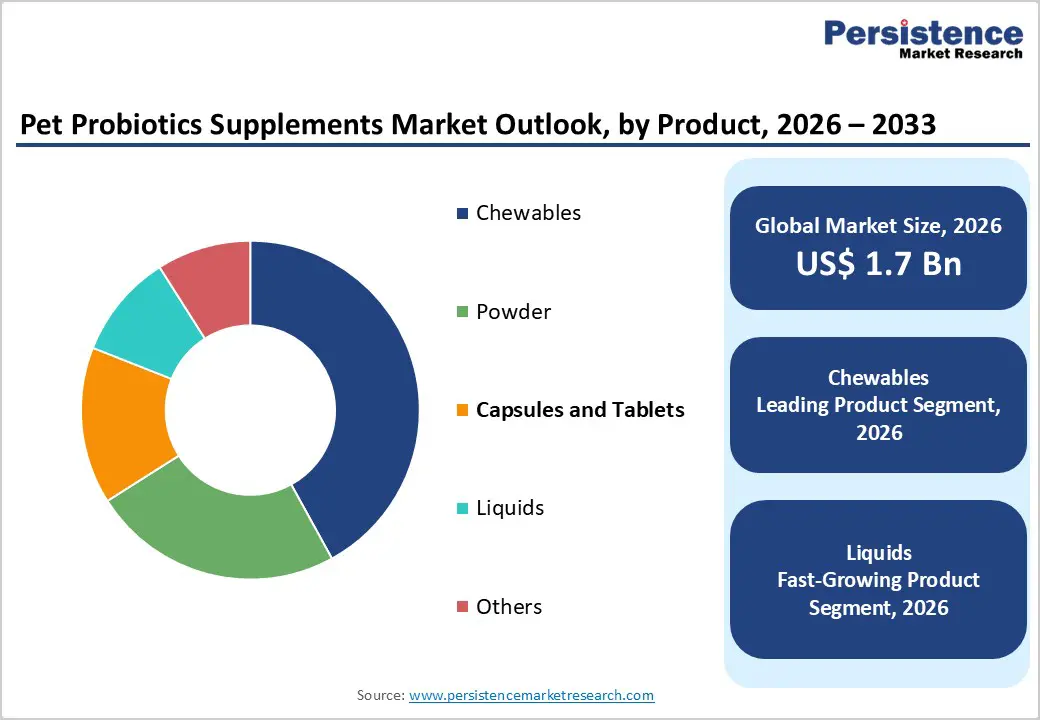
- Leading Product Segment: Chewables dominate the market due to high palatability, accurate dosing, ease of administration, and strong acceptance for daily and long-term supplementation.
- Fastest-Growing Product Segment: Liquids are expanding rapidly as demand grows for flexible dosing options suited for senior pets, small breeds, and pets with feeding challenges.
- Leading Application Segment: Digestive health remains the top application, driven by the high prevalence of gastrointestinal disorders and routine use of probiotics for gut balance and maintenance.
- Fastest-Growing Application Segment: Immunity booster is scaling quickly due to increased focus on preventive wellness, aging pet populations, and rising recommendations for immune-supportive nutrition.
| Key Insights | Details |
|---|---|
|
Pet Probiotics Supplements Market Size (2026E) |
US$ 1.7 Bn |
|
Market Value Forecast (2033F) |
US$ 2.8 Bn |
|
Projected Growth (CAGR 2026 to 2033) |
5.5 % |
|
Historical Market Growth (CAGR 2020 to 2025) |
4.0 % |
Market Dynamics
Driver - Rising Pet Humanization and Preventive Health Mindset
Growing emotional attachment between pet owners and companion animals is a central force accelerating demand for probiotic supplements. Pets are increasingly treated as family members, leading owners to prioritize long-term wellness rather than reactive treatment alone. Digestive disorders, food sensitivities, stress-related gut imbalance, and declining immunity, particularly among aging pets, are becoming more commonly recognized and proactively managed. Probiotics are gaining traction as a safe, natural, and preventive solution that supports gut health, immune modulation, and overall vitality. Veterinarians play a key role in recommending probiotic supplementation during antibiotic use, dietary transitions, and recovery from illness.
Additionally, increasing awareness of the gut–immune–skin axis is expanding probiotic use beyond digestive health to allergy management and dermatological support. Increased availability of species-specific and condition-targeted formulations further strengthens adoption. Additionally, growth in premium pet nutrition spending, especially in developed economies, supports consistent usage. As preventive care becomes embedded in routine pet management, probiotic supplements are increasingly viewed as a foundational component of daily wellness regimens.
Restraints - Product Differentiation Challenges and Variable Clinical Evidence
Despite strong consumer interest, several factors continue to constrain the wider penetration of probiotic supplements for pets. One key challenge is inconsistent clinical validation across products, as probiotic efficacy depends heavily on strain specificity, dosage, and formulation stability. Many products lack robust, peer-reviewed evidence, creating skepticism among veterinarians and informed pet owners. This variability makes product differentiation difficult and can dilute consumer trust. Additionally, probiotic viability is highly sensitive to moisture, temperature, and storage conditions, thereby increasing the risk of potency loss before consumption. Cost pressures also act as a restraint, particularly in emerging markets where supplements are often viewed as discretionary rather than essential. Premium probiotic products with clinically validated strains and clean-label claims are priced at a premium, limiting adoption among price-sensitive consumers. Regulatory ambiguity in several regions further complicates market growth, as pet supplements are subject to varying oversight standards. The absence of harmonized labeling and quality benchmarks can lead to inconsistent product quality across markets.
Opportunity - Functional Innovation, Veterinary Integration, and Emerging Markets
Shifting consumer expectations are creating meaningful opportunities for innovation and expansion. Product development is moving beyond basic digestive support toward multifunctional probiotic solutions addressing immunity, allergy relief, stress management, and skin health. Combining probiotics with prebiotics, postbiotics, enzymes, and botanicals allows brands to deliver differentiated, condition-specific offerings. Growing collaboration between manufacturers and veterinary professionals presents another opportunity, as clinically endorsed products gain greater credibility and longer-term use. Expansion into emerging markets offers substantial upside, supported by rising pet ownership, increasing disposable incomes, and improving access to veterinary care. E-commerce and subscription-based delivery models enable brands to reach new consumers while supporting recurring revenue and customer retention. Clean-label positioning, sustainability-focused packaging, and transparency around strain efficacy resonate strongly with younger pet owners. Advances in microencapsulation and shelf-stability technologies are also improving product reliability. As pet care ecosystems increasingly integrate nutrition, supplements, and digital education, probiotic supplements are well-positioned to benefit from both volume growth and premiumization trends globally.
Category-wise Analysis
By Product, Chewables Lead Due to Palatability, Accurate Dosing, and High Compliance
The chewables segment is projected to dominate the global pet probiotics supplement market in 2026, accounting for 42.0% of revenue. This leadership is driven by superior palatability, precise dose delivery, and ease of administration compared to powders or liquids. Chewable probiotics are widely preferred by pet owners because they resemble treats, thereby significantly improving daily compliance, particularly for picky eaters and for long-term supplementation. These formats minimize dosing errors and reduce contamination risks associated with multi-use containers. Veterinarians frequently recommend chewable products due to their convenience, controlled intake, and suitability for routine maintenance of digestive and immune health. Additionally, manufacturers favor chewables because they enable the incorporation of multiple functional ingredients, such as prebiotics, enzymes, and vitamins, without compromising taste. Rising demand for premium, treat-based supplements, increasing pet humanization, and continuous innovation in flavor masking and texture optimization continue to reinforce the global dominance of chewables.
By Application, Digestive Health Leads Due to High Incidence of Gastrointestinal Issues in Pets
The digestive health segment is expected to lead the global pet probiotics supplements market in 2026, accounting for 28.0% of revenue. This dominance is driven by the widespread prevalence of gastrointestinal disorders in companion animals, including diarrhea, food intolerance, antibiotic-associated gut imbalance, and age-related digestive decline. Digestive health probiotics are routinely used for both preventive care and long-term maintenance, making them a staple supplement category for dogs and cats. Increasing awareness among pet owners of the benefits of the gut–immune axis has further expanded adoption. Veterinarians frequently prescribe probiotic supplements to support digestion during dietary transitions, stressors, and post-medication recovery. The growing trend toward holistic and preventive pet care has positioned digestive health as the primary entry point for probiotic supplementation. Additionally, the availability of species-specific and condition-targeted formulations strengthens consistent usage. Rising pet ownership, longer pet lifespans, and increased spending on wellness products continue to sustain this segment’s leadership.
By Distribution Channel, Online Retail Leads Due to Convenience, Subscriptions, and Direct-to-Consumer Access
Online retail is projected to dominate the global pet probiotics supplement market in 2026, accounting for 63.0% of revenue. The channel’s leadership is driven by convenience, wide product availability, and the rapid growth of direct-to-consumer (DTC) and subscription-based purchasing models. Pet owners increasingly prefer online platforms for routine supplement purchases due to doorstep delivery, competitive pricing, and access to detailed product information and reviews. E-commerce channels also enable brands to offer customized formulations, bundle wellness products, and provide auto-refill options that support long-term adherence to supplementation. The expansion of pet-focused online marketplaces and the strong penetration of general e-commerce platforms have significantly increased product visibility. Additionally, digital marketing, influencer endorsements, and veterinarian-backed online recommendations are strengthening consumer trust. The rise of mobile commerce and improved logistics infrastructure further supports growth. As pet owners prioritize convenience and continuity of care, online retail continues to outperform offline channels globally.
Regional Insights
North America Pet Probiotics Supplements Market Trends
North America is expected to dominate the global pet probiotics supplements market in 2026, accounting for a 46.7% value share, primarily driven by the United States. The region benefits from high pet ownership rates, strong pet humanization trends, and well-established preventive healthcare practices for companion animals. Pet owners in North America demonstrate high awareness of digestive and immune health, driving consistent demand for probiotic supplements as part of routine wellness regimens. The presence of leading manufacturers, advanced veterinary infrastructure, and widespread availability of premium and clinically backed products further strengthens market leadership.
E-commerce adoption is highly mature, supporting strong sales through online and subscription channels. Favorable spending capacity, coupled with increasing demand for clean-label, grain-free, and natural pet supplements, continues to fuel growth. Regulatory oversight by agencies such as the FDA’s Center for Veterinary Medicine promotes product quality and safety. Additionally, rising focus on senior pet care and chronic condition management reinforces sustained market dominance across the region.
Europe Pet Probiotics Supplements Market Trends
Europe’s pet probiotics supplements market is expected to grow steadily in 2026, supported by rising pet adoption, increasing awareness of animal nutrition, and strong preference for natural and sustainable products. Countries such as Germany, the U.K., France, Italy, and the Nordic region demonstrate robust demand due to high standards of pet care and widespread access to veterinary services. European consumers show a strong inclination toward preventive health solutions, driving regular use of probiotics for digestive balance and immune support. Regulatory emphasis on ingredient transparency, safety, and sustainability encourages the adoption of high-quality probiotic formulations.
The region also benefits from growing acceptance of functional pet foods and supplements integrated into daily feeding routines. Online retail and specialty pet stores play a key role in distribution, while veterinarians remain influential in product recommendations. Increasing focus on environmentally responsible packaging and clean-label claims further supports product differentiation. These factors collectively sustain stable long-term growth across Europe.
Asia Pacific Pet Probiotics Supplements Market Trends
Asia Pacific pet probiotics supplements market is projected to register a higher CAGR of around 7.5% between 2026 and 2033, driven by rapid urbanization, rising disposable incomes, and growing pet ownership across China, India, Japan, and South Korea. Changing lifestyles and the rise of nuclear households are accelerating pet humanization, leading to increased spending on pet health and nutrition. Awareness of digestive health and preventive care is gradually improving, particularly in urban centers. Expansion of veterinary clinics, pet specialty stores, and online platforms is improving product accessibility.
Governments in several countries are supporting local pet food and supplement manufacturing, enhancing affordability and supply. Global brands are entering the region through partnerships and localized production to cater to diverse dietary preferences. The growing influence of social media, pet influencers, and digital education is further shaping consumer behavior. These factors position Asia Pacific as the fastest-growing regional market globally.
Competitive Landscape
The global pet probiotics supplements market is highly competitive, with strong participation from Nestlé, Mars, Incorporated, Nutramax Laboratories, Inc., Elanco Animal Health Incorporated, and Zesty Paws, LLC. These players leverage extensive global distribution networks, strong brand equity, and continuous innovation in probiotic strain selection, formulation stability, palatability enhancement, dosage accuracy, and pet-friendly delivery formats to address a wide range of digestive, immune, and dermatological health needs across companion animals.
Rising pet humanization, increasing prevalence of digestive disorders and allergies in pets, and growing preference for natural and preventive health solutions are driving innovation in the market. Manufacturers are focusing on clinically validated strains, species-specific formulations, clean-label and grain-free products, and convenient formats such as chewables and powders, while strengthening veterinary partnerships, expanding e-commerce presence in emerging markets, and sustaining R&D investments to deliver safe, effective, and high-compliance probiotic solutions for pets.
Key Industry Developments:
- In February 2026, Vitaquest International LLC expanded its manufacturing infrastructure by opening a new probiotics manufacturing suite in Parsippany, New Jersey, highlighting its continued investment in production capacity and advanced technical capabilities to support rising demand for probiotic supplements.
- In November 2025, Probi expanded its probiotic portfolio to include new sports nutrition and pet care products, strengthening its presence across both human and companion animal health segments. This strategic expansion reflects the company’s focus on leveraging clinically validated probiotic strains to address performance, digestive, and immune health needs in growing consumer and pet wellness markets.
- In November 2025, Native Microbials and Zesty Paws, an H&H Group brand, announced a strategic partnership to launch a new product line featuring novel microbial species sourced from the gut microbiomes of healthy dogs and scientifically studied to help alleviate gastrointestinal dysbiosis in canine populations.
- In June 2024, ADM, a global leader in nature-based innovative solutions, announced the European launch of seven turnkey pet product formulations designed to meet the growing demand for holistic pet health. Available in soft chew and supplement powder sachet formats, these science-backed formulations offer high-value wellness claims while remaining fully compliant with European regulatory standards, giving consumers reliable options to support comprehensive pet wellness.
Companies Covered in Pet Probiotics Supplements Market
- Nestlé Purina
- Mars, Incorporated
- Nutramax Laboratories, Inc.
- Elanco Animal Health Incorporated
- Zesty Paws, LLC
- Swedencare AB
- NOW Foods
- Virbac
- Novonesis
- PetLab Co.
- AdvaCare Pharma
- PetHonesty, LLC.
- VetriScience
- General Mills Inc.
- Others
Frequently Asked Questions
The global pet probiotics supplements market is projected to be valued at US$ 1.7 Bn in 2026.
Increased pet ownership and pet humanization, rising awareness of digestive and immune health benefits of probiotics, growing preference for natural and premium pet health products, and rapid e-commerce penetration boosting accessibility.
The global pet probiotics supplements market is poised to witness a CAGR of 5.5%between 2026 and 2033.
Expansion of online retail and subscription models along with product innovation in targeted and natural probiotic formulations.
Nestlé, Mars, Incorporated, Nutramax Laboratories, Inc., Elanco Animal Health Incorporated, and Zesty Paws, LLC., are some of the key players in the pet probiotics supplements market.


