




- Biotechnology
- Insect-based Pet Food Market
Insect-based Pet Food Market Size, Share, and Growth Forecast 2026 - 2033
Insect-based Pet Food Market by Product Type (Kibble/Dry (Extruded, Baked, Coated), Dehydrated Food, Treats and Chews, Freeze-dried Raw, Wet Food, Frozen, Others), by Pet Type (Cat (Kitten, Senior), Dog (Puppy, Adult, Senior), Birds, Others), Source, Distribution Channel, and Regional Analysis, 2026 - 2033

Insect-based Pet Food Market Share and Trends Analysis
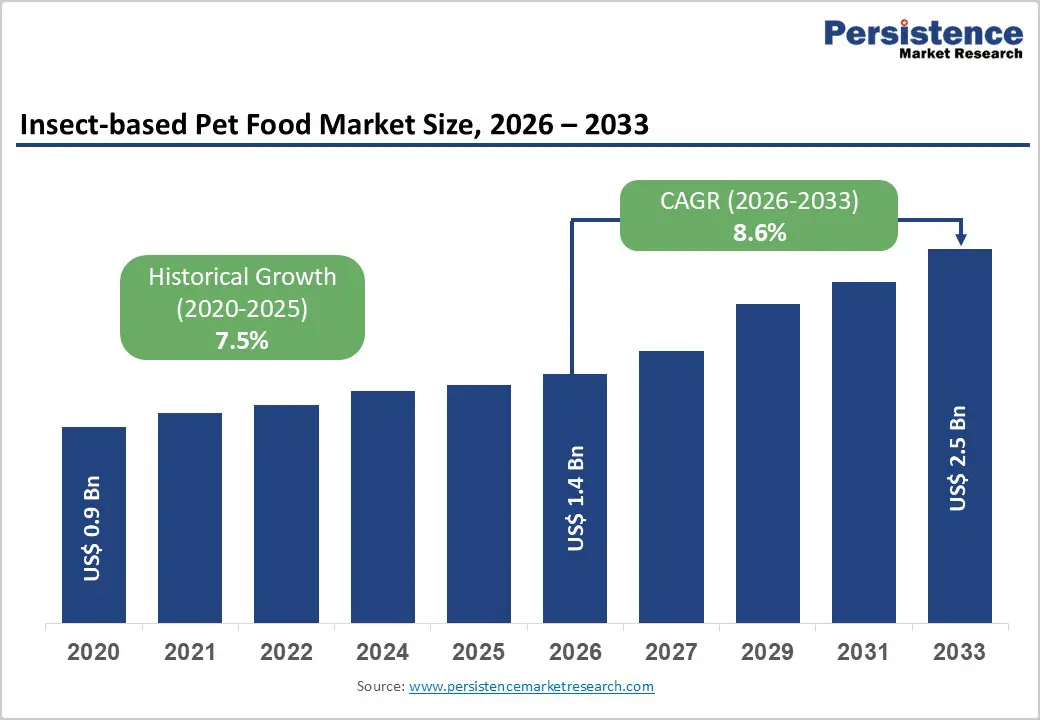
The global insect-based pet food market size is expected to be valued at US$ 1.4 billion in 2026 and projected to reach US$ 2.5 billion by 2033, growing at a CAGR of 8.6% between 2026 and 2033. The global insect-based pet food market is emerging as a sustainable and nutritious alternative to conventional pet foods. Rising demand for eco-friendly protein sources, driven by environmental concerns and the trend of pet humanization, has positioned insects as a viable ingredient in pet diets. Insects such as black soldier fly larvae, mealworms, and crickets offer high protein content, essential amino acids, and healthy fats, making them an attractive option for pet owners seeking both nutrition and sustainability. Compared to traditional meat sources, insect protein requires significantly less land, water, and feed, supporting global sustainability goals and reducing the ecological footprint of pet food production.
Market trends indicate growing adoption among premium pet food consumers, driven by rising pet ownership and greater awareness of hypoallergenic benefits. Insect-based formulas are particularly appealing for pets with food sensitivities, offering an alternative to conventional proteins that may trigger allergic reactions. With rising environmental consciousness and demand for functional, nutrient-rich diets, the insect-based pet food segment is expected to expand rapidly, particularly in regions with high disposable incomes and strong pet care awareness.
Key Industry Highlights:
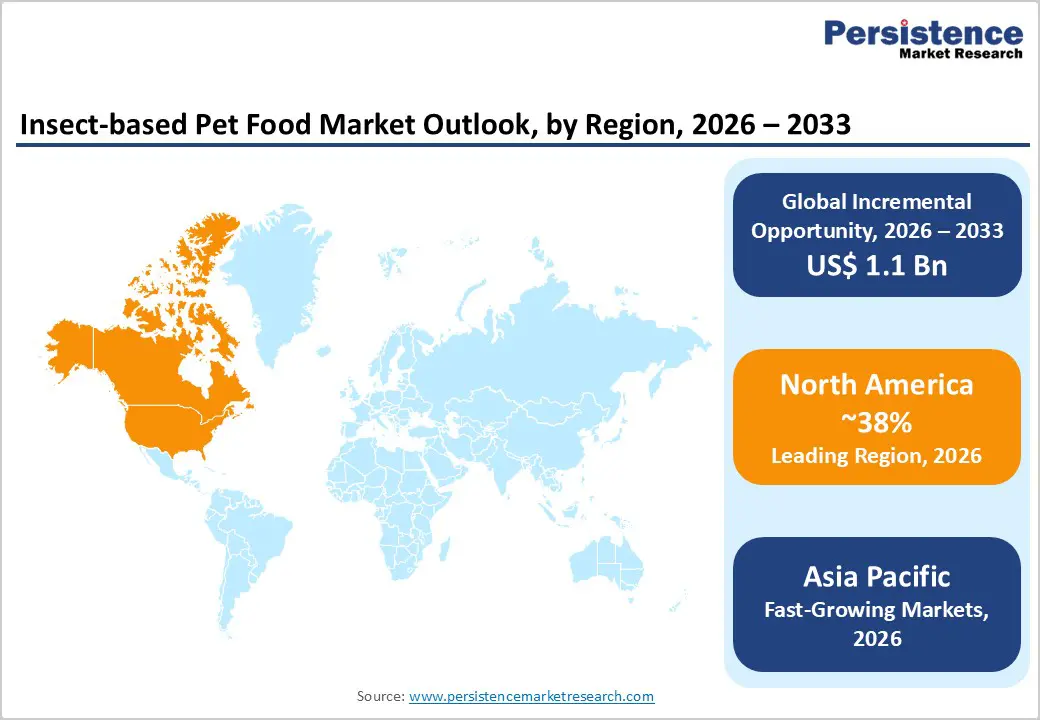
- Leading Region: North America leads the insect-based pet food market, supported by high pet adoption rates, growing awareness of sustainable protein sources, strong retail and e-commerce presence, and increasing focus on pet health and nutrition.
- Fastest-Growing Region: Asia Pacific is the fastest-growing region, driven by rising pet ownership, urbanization, increasing disposable incomes, expanding modern retail channels, and growing interest in alternative and sustainable pet food options.
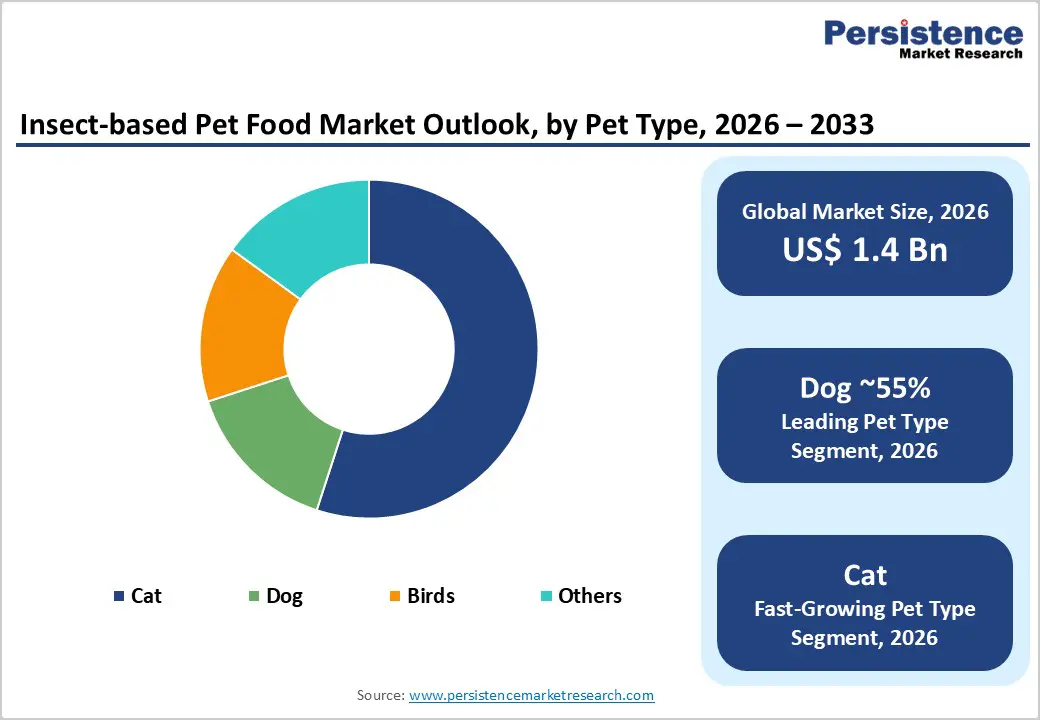
- Dominant Segment: Dog food dominates the market due to a higher dog population, increasing pet humanization trends, and growing demand for nutritious and hypoallergenic diets tailored for dogs.
- Fastest Growing Segment: Cat food is the fastest-growing segment, fueled by rising cat ownership, awareness of cat-specific nutritional needs, and increasing preference for protein-rich and environmentally sustainable food options.
| Key Insights | Details |
|---|---|
|
Insect-Based Pet Food Market Size (2026E) |
US$ 1.4 billion |
|
Market Value Forecast (2033F) |
US$ 2.5 billion |
|
Projected Growth CAGR (2026-2033) |
8.6% |
|
Historical Market Growth (2020-2025) |
7.5% |
Market Dynamics
Driver - Rising Demand for Sustainable Pet Nutrition
Pet owners are increasingly prioritizing environmentally responsible choices, creating strong momentum for insect-based pet foods. Insects, such as black soldier fly larvae, offer remarkable feed conversion efficiency, exceeding 90%, which significantly reduces the environmental impact compared to traditional livestock farming. Livestock production contributes substantially to greenhouse gas emissions and requires far more land, water, and feed. In contrast, insect farming consumes fewer resources and generates lower emissions, aligning with global sustainability goals. This eco-conscious approach resonates strongly with modern pet owners, especially in regions with heightened awareness of climate change and ethical consumption.
The trend of pet humanization further accelerates market growth, as owners seek high-quality, nutritionally complete, and environmentally friendly diets for their pets. Companies are developing innovative insect-based formulations that meet the nutritional needs of dogs and cats while minimizing their carbon footprints. The convergence of sustainability, nutritional quality, and ethical considerations is a primary driver, prompting manufacturers to expand insect protein offerings and supporting wider acceptance in premium pet food segments globally.
Nutritional Superiority and Hypoallergenic Benefits
Insect proteins provide high-quality nutrition, rich in essential amino acids, highly digestible, and suitable for pets with food sensitivities. Unlike some conventional meat sources, insect protein offers a complete protein profile with excellent bioavailability, ensuring pets receive balanced nutrition while avoiding allergens. Ingredients such as black soldier fly larvae and mealworms have received approval from authoritative bodies such as AAFCO, which has enhanced consumer and manufacturer confidence in their use. Such endorsements encourage pet owners to explore premium insect-based options for cats and dogs prone to allergies or digestive issues.
The hypoallergenic nature of insects is especially appealing to owners seeking specialized diets for sensitive pets. As allergy prevalence rises among domestic pets, insect-based formulas present an alternative that is both safe and nutrient-dense. Combined with the growing trend of health-conscious, ethically minded pet ownership, these nutritional advantages drive steady market adoption. Companies are leveraging these benefits to position insect-based products as premium, sustainable, and effective solutions for the evolving needs of pets, ensuring consistent growth in targeted markets.
Restraints - Consumer Perception Challenges
Despite growing awareness, the insect-based pet food market continues to face significant consumer perception challenges. Many pet owners remain hesitant as they associate insects with uncleanliness. Cultural and psychological barriers limit adoption, especially in regions where entomophagy is uncommon. Even when informed of the nutritional and environmental benefits, some consumers struggle to accept insects as a viable ingredient in pet diets, which slows demand in mainstream retail channels.
These perception challenges affect both market penetration and marketing strategies. Limited shelf space in conventional stores reduces visibility, while extensive educational campaigns are required to overcome bias, increasing operational costs for manufacturers. Early adoption tends to concentrate in premium and niche segments, where owners are more open to experimentation. Overcoming these perception barriers is essential for long-term expansion but remains a short-term restraint, particularly in conservative markets where traditional protein sources dominate pet nutrition.
Regulatory Hurdles Across Region
Inconsistent and evolving regulations present major challenges for the insect-based pet food industry. Approval processes vary widely, with Europe requiring up to 24 months under EFSA’s novel food authorization, delaying market entry for new species. In the U.S., differing state-level regulations increase compliance costs by 20–35%, particularly impacting smaller manufacturers. These fragmented frameworks complicate product launches, limit scalability, and can discourage investment in new formulations.
Regulatory uncertainties also create pricing pressures, as companies must factor in extended testing, documentation, and certification costs. Manufacturers must navigate these barriers while ensuring product safety and nutritional compliance, which slows expansion into new regions. While larger players with resources can manage these hurdles, smaller firms face greater risk, which restricts competitive diversity. Consequently, regulatory challenges remain a key constraint, affecting both market growth and the timeline for innovation in insect-based pet foods.
Opportunity - Expansion in Premium Pet Segments
The insect-based pet food market presents significant opportunities in the premium segment, particularly in hypoallergenic products for cats. The cat segment is projected to grow the fastest, driven by rising awareness of food sensitivities and demand for specialized nutrition. Insect proteins, with their low-allergen profiles, provide an ideal alternative to traditional protein sources, allowing pet owners to manage allergies while maintaining a nutrient-rich diet. Regulatory approvals and successful formulations further enhance consumer confidence, supporting market adoption among health-conscious pet owners.
Technological advancements in insect farming amplify this opportunity. AI-assisted production and optimized breeding techniques increase efficiency, reduce operational costs, and make premium products more accessible. Scalable systems for crickets, mealworms, and black soldier fly larvae, along with waste-to-protein models, lower resource use by up to 80%, improving sustainability. Rapid growth in regions such as the Asia-Pacific, where pet ownership is surging in China, India, and Southeast Asia, creates a growing market for these innovations. Companies leveraging technology-driven, hypoallergenic, and sustainable formulations are positioned to capture substantial revenue in this specialized nutrition segment.
Category-wise Analysis
By Product Type Insights
Kibble and dry pet food lead the insect-based segment, accounting for approximately 45% of the market in 2025. This dominance is driven by convenience, long shelf life, and cost-effectiveness, making dry formats a preferred choice for daily feeding. Extruded and baked varieties retain the nutritional value of insect proteins, such as crickets and black soldier fly larvae, ensuring pets receive a complete amino acid profile and essential nutrients. AAFCO approvals for dry insect-based formulations further enhance consumer confidence, encouraging adoption among both dog and cat owners.
Surveys indicate that more than 28% of pet owners prefer dry food due to its ease of storage, portion control, and consistent feeding routines. Retailers also support this segment with wide availability, reinforcing its market leadership. Manufacturers are innovating with enriched kibble that combines insect proteins with functional ingredients to support digestive health, immunity, and skin health. The combination of practicality, nutritional integrity, and regulatory endorsement positions kibble and dry formats as the cornerstone of the insect-based pet food market.
By Pet Type Insight
Dogs dominate the insect-based pet food market, accounting for 55% of global consumption in 2025. This is largely due to rising global dog ownership and increasing demand for tailored formulations for puppies, adults, and senior dogs. Insect proteins, such as black soldier fly larvae, provide high-quality protein that supports muscle development, joint health, and overall vitality, aligning with canine nutritional needs. The extensive product range targeting dogs, from dry kibble to wet and snack formats, reinforces their leading market share.
Pet food companies are capitalizing on this trend by creating specialized products addressing breed-specific requirements and dietary sensitivities. Marketing efforts highlight hypoallergenic benefits and sustainability advantages, further influencing dog owners’ purchasing decisions. With continued innovation in formulation and growing global dog populations, the canine segment is expected to remain the primary driver of insect-based pet food demand.
Region-wise Insights
North America Insect-based Pet Food Market Trends
North America leads the global insect-based pet food market, driven by strong innovation and regulatory support in the U.S. Approvals from AAFCO and the FDA for black soldier fly larvae have expedited commercialization, enabling manufacturers to introduce nutritionally complete insect-based products quickly. Pet humanization trends encourage premium adoption, with owners seeking sustainable and hypoallergenic options for dogs and cats. Production facilities in states such as Illinois and California are scaling operations to meet growing demand, thereby enhancing supply reliability and distribution efficiency.
Sustainability awareness is a key driver of growth, as consumers increasingly prefer low-impact protein sources to traditional meat-based alternatives. Partnerships between insect producers and pet food manufacturers strengthen supply chains, ensuring steady raw material availability. High pet ownership rates in the U.S. and Canada, combined with rising interest in eco-friendly nutrition, create favorable market conditions. The region’s strong infrastructure, regulatory clarity, and consumer willingness to adopt innovative pet foods maintain North America’s dominant position, providing a stable base for further expansion in premium and specialty pet food segments.
Europe Insect-Based Pet Food Market Trends
Europe’s insect-based pet food market is advancing through structured regulatory frameworks and growing sustainability awareness. EFSA approvals for species like mealworms and black soldier fly larvae have standardized safety assessments, particularly in Germany, the U.K., France, and Spain. Companies such as Protix have optimized the novel food authorization process, reduced timelines and accelerated product launches. These measures encourage manufacturers to expand the use of insect-based formulations across multiple European markets.
Government initiatives, including the EU Green Deal, promote sustainable protein adoption, incentivizing the production and consumption of insect-based feeds. Consumer preference for eco-conscious pet foods, coupled with higher disposable income in Western Europe, drives growth in the premium market. Production volumes are projected to increase significantly by 2033, reflecting the combined effect of regulatory support, sustainability policies, and consumer demand. European manufacturers are capitalizing on these trends to scale operations efficiently while maintaining high nutritional and safety standards, positioning the region as a key contributor to global market growth.
Asia Pacific Insect-based Pet Food Market Trends
The Asia-Pacific insect-based pet food market is experiencing rapid growth due to rising pet ownership and expanding manufacturing capacity. Countries such as China, Japan, India, and members of ASEAN are establishing large-scale insect farming hubs, enabling efficient production of black soldier fly larvae, crickets, and mealworms. Facilities in Thailand and Vietnam are leveraging cost advantages, applying vertical farming and waste-to-feed models to maximize yield while minimizing resource consumption. This regional focus on scalable, sustainable farming supports high growth rates.
Rising middle-class incomes and greater awareness of pet nutrition drive demand for affordable, high-protein alternatives. Regulatory frameworks are evolving, gradually facilitating market entry and ensuring product safety, which encourages adoption among new consumers. The region’s high CAGR reflects these dynamics, with manufacturers targeting both domestic and export markets. Emerging consumer trends, combined with government support and technological innovation in insect farming, are propelling the Asia Pacific to become a major growth engine in the global insect-based pet food market, particularly in the dog and cat segments.
Competitive Landscape
The insect-based pet food market is fragmented but gradually consolidating, with innovators like Innovafeed, Ynsect, and Protix operating alongside major players such as Purina and Mars Incorporated. Market leaders focus on expanding production through U.S. and EU facilities, investing in R&D for hypoallergenic and nutritionally complete formulas, and implementing circular, sustainable production models. Key differentiators include scalable insect farming, environmental certifications, and supply chain efficiency. Emerging trends highlight strategic B2B collaborations and direct-to-consumer online channels, allowing companies to respond quickly to evolving demand, reach niche premium segments, and strengthen brand presence in the growing insect-based pet food market.
Key Industry Developments:
- In May 2025, the insect-based petcare brand Some Grub secured £270k in funding to expand its presence across the UK and spearhead the country’s insect food movement.
- In January 2024, Danish pet food and treat startup Globe Buddy advanced its commitment to sustainable pet nutrition by launching Globe Buddy Brown, a super-premium dog food featuring insect-based protein.
Companies Covered in Insect-based Pet Food Market
- Innovafeed
- Ynsect
- Protix
- Purina
- Mars Incorporated
- Agri Protein Holdings Ltd
- Enterra
- Entocycle
- Beta Hatch
- Entobel
- Others
Frequently Asked Questions
What is the global insect-based pet food market in 2026?
Rising pet adoption, demand for sustainable protein, allergy-friendly diets, and eco-conscious pet owner preferences drive growth.
The global market is expected to witness a CAGR of 8.6% between 2026 and 2033.
The top players are Innovafeed, Ynsect, Protix, Purina, and Mars Incorporated.
North America is the leading region in the global insect-based pet food market.


