




- Automation & Robotics
- Mining Fatigue Monitoring Market
Mining Fatigue Monitoring Market Size, Share, and Growth Forecast, 2026 - 2033
Mining Fatigue Monitoring Market by Component (Hardware and Software), Deployment (On Premise, and Cloud Based), Mine Type (Surface Mine and Underground Mine), End-user (Mining Companies, Contractors, and Others), and Regional Analysis for 2026 - 2033

Mining Fatigue Monitoring Market Size and Trends Analysis
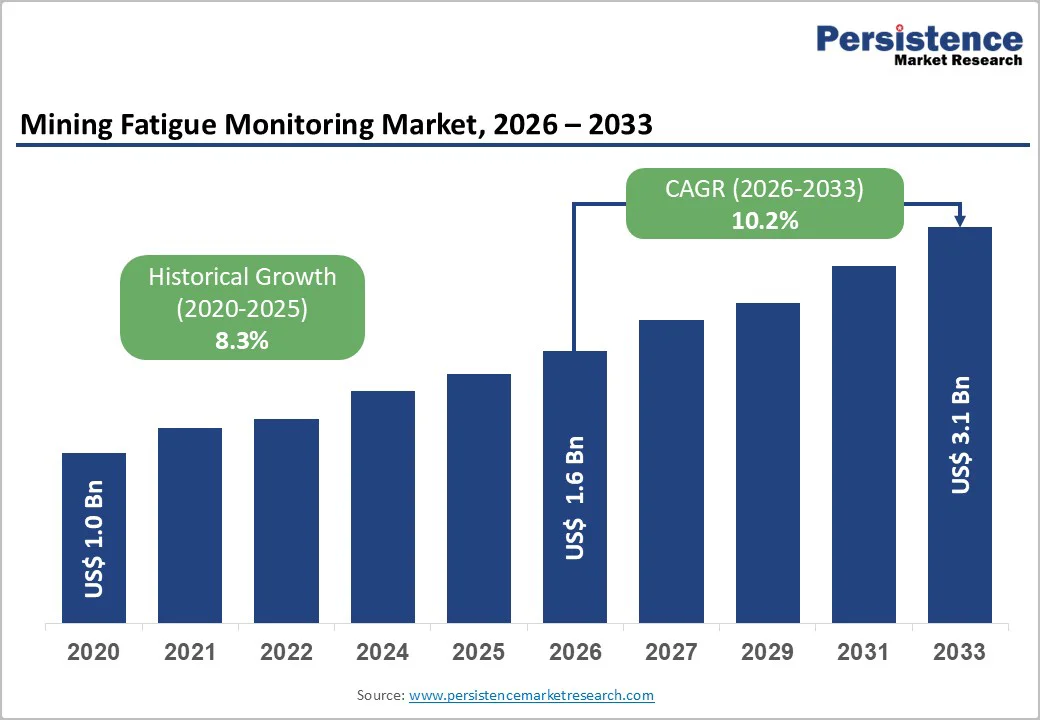
The global mining fatigue monitoring market is projected to grow from US$ 1.6 billion in 2026 to US$ 3.1 billion at a CAGR of 10.2% from 2026 to 2033.
The market is experiencing significant growth, driven primarily by the increasing focus on safety and well-being in the mining industry. As mining operations become more complex and the demands on personnel heighten, the need for effective fatigue-monitoring systems has become critical.
Key Industry Highlights:
- By Component Analysis: In terms of technology, the wearable device category is projected to grow at a CAGR of 9.7% by 2033, driven by the adoption of smart helmets and wearable sensors that enhance worker safety and provide real-time monitoring of fatigue levels.
- Application Analysis: Based on Application, the metal & mineral mining segment is projected to grow at a CAGR of 10.7% through 2033, driven by rising safety regulations and a growing focus on worker health and productivity. Consequently, this has led to increased investments in fatigue monitoring solutions.
- Regional Analysis: In North America, the U.S. is estimated to dominate with a CAGR of 9.4% through 2033 as major mining companies prioritize advanced technology integration to mitigate risks associated with worker fatigue and enhance operational efficiency.
- East Asia Analysis: China in East Asia is anticipated to capture a CAGR of 10.2% by 2033 amid rapid industrialization and an expanding mining sector that drives the demand for effective fatigue monitoring systems to improve safety standards and productivity in mining operations.
| Key Insights | Details |
|---|---|
| Mining Fatigue Monitoring Market Size (2026E) | US$ 1.6 Bn |
| Projected Market Value (2033F) | US$ 3.1 Bn |
| Global Market Growth Rate (CAGR 2026 to 2033) | 10.2% |
| Historical Market Growth Rate (CAGR 2020 to 2025) | 8.3% |
Market Dynamics
Drivers - Stricter Safety Regulations Boost Adoption of Fatigue Monitoring in Mining
The increasing enforcement of safety regulations in the mining industry is a primary driver for the mining fatigue monitoring market. Regulatory bodies, such as the Mine Safety and Health Administration (MSHA) in the United States, have implemented strict guidelines to protect workers and minimize workplace accidents.
Growing compliance mandates require mining companies to adopt comprehensive fatigue-monitoring systems as part of their safety protocols. Consequently, organizations are motivated to invest in technologies that effectively meet these regulatory requirements.
As mining operations expand globally, robust safety measures become critical. Countries with emerging mining sectors are adopting international safety standards, thereby increasing demand for fatigue-monitoring solutions. This trend encourages mining companies to prioritize worker safety and seek advanced technologies that can monitor fatigue levels, ultimately enhancing compliance with safety regulations and improving their reputational standing.
- In March 2024, Hexagon AB introduced an advanced fatigue-monitoring platform that incorporates real-time data analytics, enabling proactive monitoring of operator fatigue and enhancing safety compliance.
Innovative Technologies Accelerate Growth in Mining Fatigue Monitoring Solutions
Rapid technological advancements are significantly driving growth in the mining fatigue monitoring market. Innovations in wearable devices, sensors, and artificial intelligence (AI) are revolutionizing the capabilities of fatigue monitoring systems, enabling them to provide accurate, real-time insights into worker health.
The demand for these advanced solutions continues to rise as mining operations become sophisticated. Mining companies recognize the importance of integrating technology into their operations to mitigate the risks of worker fatigue.
The increasing availability of wearable technologies enables continuous monitoring of vital signs, such as heart rate and sleep patterns, which directly correlate with fatigue levels. These technologies empower employers to take preventative measures by alerting supervisors and operators before fatigue-related incidents occur.
AI enhances these systems by enabling predictive analytics that can forecast fatigue trends and recommend appropriate interventions, ultimately improving workplace safety and productivity.
- In October 2023, Caterpillar Inc. unveiled a fatigue-monitoring system that uses machine-learning algorithms to assess operator alertness from physiological data, providing real-time feedback to enhance safety in mining operations.
Restraint - Cost Differential and Material Price Volatility
One significant restraint for the mining fatigue monitoring market is the lack of awareness and understanding of the benefits of fatigue monitoring systems among mining companies. The integration of fatigue monitoring solutions into existing mining operations poses technical challenges.
Companies may face difficulties in effectively implementing new systems due to outdated infrastructure or a lack of skilled personnel to operate advanced monitoring technologies. This can result in delays and complications that deter investment in fatigue monitoring initiatives, stifling market growth.
Mining Fatigue Monitoring Market Trends and Opportunities
Growth in Emerging Markets
The market presents significant opportunities in emerging markets, particularly in countries like India. With rapid industrialization and the expansion of mining operations, the mining fatigue monitoring market in India is increasingly prioritizing worker safety and health.
The government's push for enhanced safety measures, combined with growing awareness of fatigue-related risks, creates a favourable environment for implementing fatigue monitoring solutions. As mining companies seek to improve compliance with safety regulations and optimize workforce efficiency, the demand for advanced monitoring technologies is expected to rise substantially.
Several technology firms are responding to this growing demand by developing tailored fatigue monitoring systems that meet local regulatory requirements. The introduction of cost-effective solutions that integrate seamlessly with existing mining technologies can further encourage adoption in the region.
Integration of AI and Machine Learning
The integration of AI and machine learning into fatigue monitoring systems presents a lucrative opportunity for innovation within the mining fatigue monitoring market. Countries such as Australia, known for its advanced mining technologies, are increasingly adopting these intelligent systems to enhance operator safety.
Through AI algorithms, mining companies can analyse vast amounts of data in real time, identifying patterns and predicting fatigue levels among operators. This capability enables timely interventions to prevent accidents and improve overall productivity.
Leading companies in the mining sector are now developing AI-driven platforms that not only monitor fatigue but also provide actionable insights to optimize operations. These advancements represent a transformative shift in how mining firms approach worker health and safety.
Category-wise Analysis
Component Insights
Wearable devices technology is expected to dominate the market during the forecast period, with a projected CAGR of around 9.8%. In the global mining fatigue monitoring market, wearable devices occupy a substantial market share due to their effectiveness in providing real-time monitoring of worker fatigue and health metrics. These devices, which include smart helmets and wristbands, are designed to collect data on various physiological parameters.
Wearable devices are leading globally, catering to diverse applications across both surface and underground mining operations. Major mining companies increasingly adopt them to monitor operators' alertness and physical condition, reducing the risk of fatigue-related accidents. This segment is particularly valuable as it integrates seamlessly with existing safety protocols and enhances overall operational efficiency.
Fitbit Health Solutions recently introduced a specialized fatigue monitoring system tailored for industrial environments. This system combines fitness tracking with fatigue assessment features, enabling mining companies to proactively address worker wellness and safety, thereby enhancing their operational standards.
End-user Insights
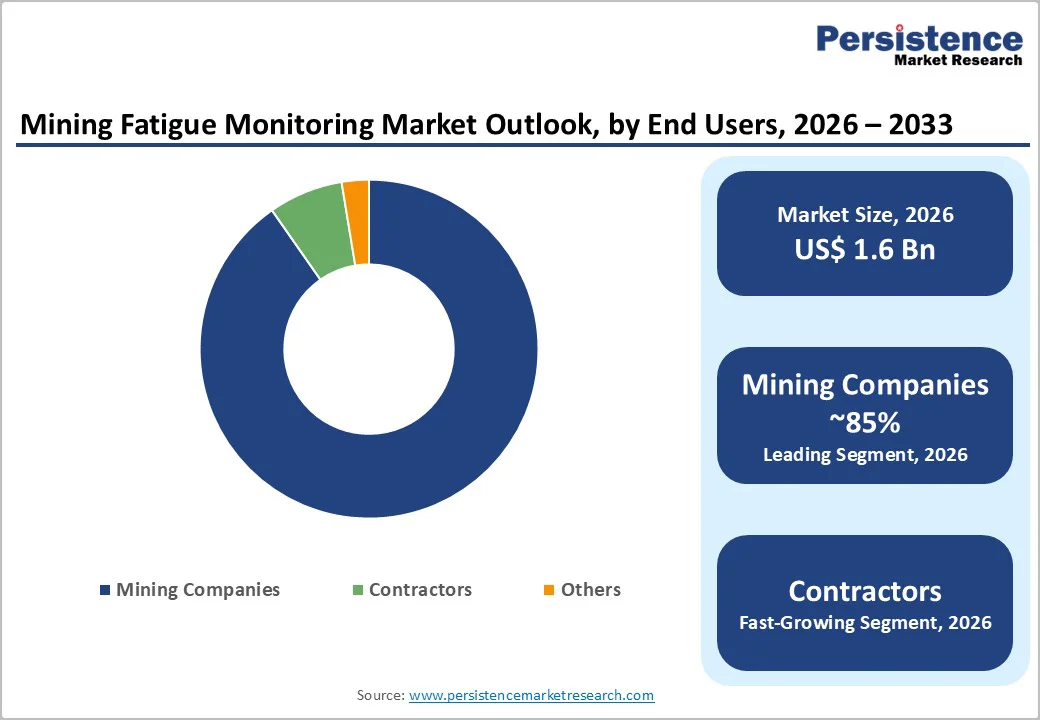
The mining companies segment is projected to achieve a CAGR of 9.7% in the mining fatigue monitoring market from 2026 to 2033. This growth is driven by mining companies' emphasis on safety and adherence to regulatory standards, positioning them as leading stakeholders in this market.
As the largest stakeholders in mining operations, these companies are responsible for protecting their workforce and minimizing operational risks, making fatigue-monitoring systems essential to maintaining high safety standards.
Mining companies are leading globally in adopting advanced fatigue monitoring solutions across various applications, particularly in surface and underground mining. These organizations use fatigue-monitoring technologies to enhance worker safety, reduce accident rates, and improve overall productivity, positioning themselves at the forefront of industry safety innovations compared to small operators or contractors.
ABB Ltd. recently launched an integrated fatigue monitoring solution designed specifically for the mining sector. This system leverages AI and real-time data analytics to provide insights into operator alertness and safety compliance, reinforcing ABB's commitment to advancing safety technologies and supporting mining companies in optimizing their operational safety protocols.
Regional Insights and Trends
U.S. Mining Sector Embraces Advanced Fatigue Monitoring Solutions to Enhance Worker Safety and Compliance
In North America, the U.S. mining fatigue monitoring market is projected to grow at a CAGR of 9.4% through 2033. In North America, the United States holds a significant market share, driven by stringent safety regulations and a strong emphasis on worker health.
The country's established mining industry, characterized by extensive operations in coal, metals, and minerals, requires advanced safety solutions to protect its workforce and ensure regulatory compliance. The U.S. leads the region in implementing comprehensive fatigue-monitoring systems across various end-user applications, particularly in surface and underground mining operations.
Compared to Canada, where mining activities are also prominent, the U.S. has extensive infrastructure and high investment in safety technologies, enabling rapid adoption of fatigue-monitoring solutions.
Hexagon AB recently launched an advanced fatigue-monitoring system that integrates real-time driver-behavior analytics with machine-learning algorithms. This development aims to enhance safety protocols in mining operations by providing actionable insights to mitigate fatigue-related risks effectively.
China Drives Growth in East Asia Mining Fatigue Monitoring Market with Advanced Safety Technologies
The mining fatigue monitoring market in East Asia is projected to grow significantly in China, with an estimated CAGR of around 10.2% through 2033. China holds a substantial share of the market, primarily because it is the world's largest producer and consumer of coal and various minerals.
The country’s rapid industrialization and vast mining operations drive the demand for effective safety solutions, emphasizing the importance of monitoring worker fatigue to reduce accidents. China leads the region in implementing advanced fatigue-monitoring technologies across multiple end-user applications, particularly in coal and metal mining.
Compared to countries like Japan and South Korea, China has a more extensive network of mining operations and a larger workforce, resulting in a greater need for comprehensive fatigue-monitoring systems to ensure safety and compliance with local regulations.
Hikvision has recently developed an AI-based fatigue-detection system specifically for mining vehicles. This technology uses facial recognition and real-time monitoring to alert operators and supervisors to potential fatigue risks, significantly enhancing safety in China's expansive mining sector.
Competitive Landscape
The mining fatigue monitoring market is characterized by intense competition among key players, including Hexagon AB, Caterpillar Inc., and Vanguard.
These companies are leveraging their technological expertise and established market presence to develop innovative fatigue monitoring solutions tailored to the unique needs of mining operations. Key competitors strive to capture market share in various regions, particularly in emerging markets where mining activities are on the rise with a focus on enhancing worker safety and operational efficiency.
Players are investing in research and development to integrate advanced technologies such as AI and IoT into their monitoring systems to gain a competitive edge. These strategic partnerships with local mining companies and industry stakeholders further enhance their market positioning. Additionally, they are expanding their product offerings and tailoring solutions to comply with specific regulatory requirements.
Key Industry Developments:
- In March 2024, Hexagon AB unveiled its latest fatigue monitoring platform, integrating real-time data analytics and advanced sensor technology to enhance safety protocols in mining operations. This innovation aims to proactively monitor operator fatigue levels to ensure a safer work environment.
- In February 2024, Caterpillar Inc. announced a strategic partnership with a leading AI firm to develop intelligent fatigue monitoring solutions. This collaboration focuses on leveraging AI algorithms to provide predictive analytics and enhance safety measures in mining operations.
- In January 2024, Vanguard acquired a technology startup specializing in wearable fatigue monitoring devices. This acquisition is expected to bolster Vanguard's product offerings and enhance its capabilities in providing comprehensive fatigue management solutions for the mining sector.
- In December 2023, MineSense Technologies expanded into Australia, focusing on implementing its fatigue-monitoring solutions in the region's growing mining sector. This expansion aims to enhance operational safety and efficiency in Australian mines.
Companies Covered in Mining Fatigue Monitoring Market
- Caterpillar Inc.
- Schneider Electric
- Hexagon Mining
- Wenco International Mining Systems Ltd
- Vareli Tecnac Pvt. LTD
- Expert Mining Solutions
- Optalert
- Fatigue Science
- OKO Systems
- Future Fleet
- SNC Technologies
- Booyco Electronics
- Others
Frequently Asked Questions
The Mining Fatigue Monitoring market is estimated to be valued at US$ 1.6 Bn in 2026.
The key demand driver for the mining fatigue monitoring market is the increasing emphasis on worker safety and the need to reduce fatigue-related accidents in high-risk mining environments.
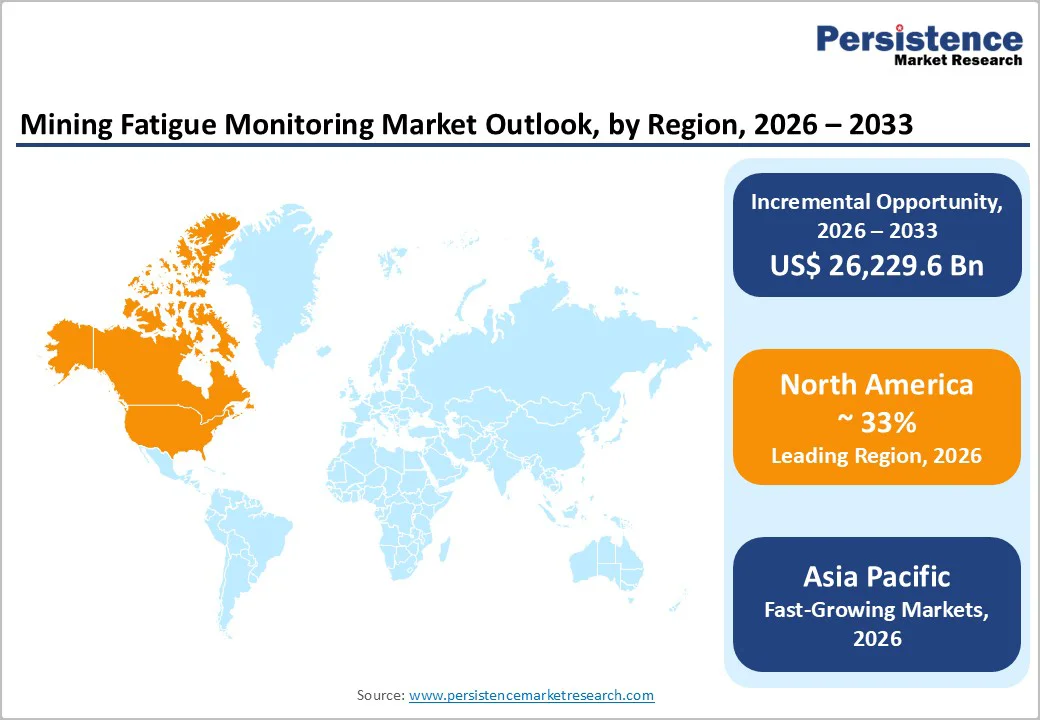
In 2026, North America is likely to dominate with an exceeding 32% revenue share in the global Mining Fatigue Monitoring market.
Among end-users, Mining Companies enjoy the highest preference, with a projected share of 75% in 2026.
Hexagon Mining, Caterpillar Inc., Schneider, Wenco, Vareli, and Optalert are a few leading players in the Mining Fatigue Monitoring market.


