




- Pharmaceuticals
- Facial Wrinkle Treatment Market
Facial Wrinkle Treatment Market Size, Share, Growth, and Regional Forecast, 2025 - 2032
Facial Wrinkle Treatment Market by Product (Medication, Procedural Treatment), by Wrinkle Type (Dynamic Wrinkles, Static Wrinkles, Wrinkle Folds), by End-user, and Regional Analysis from 2025 - 2032

Facial Wrinkle Treatment Market Share and Trends Analysis
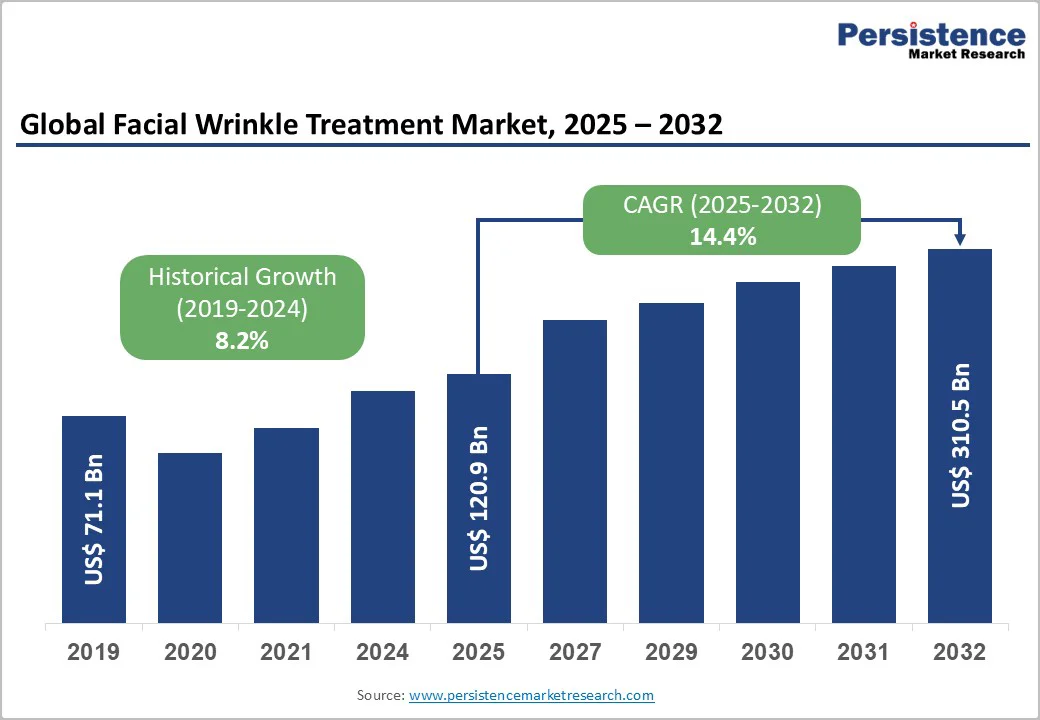
The global facial wrinkle treatment market size is valued at US$120.9 billion in 2025 and projected to reach US$310.5 billion by 2032. The market is projected to record a CAGR of 14.4% from 2025 to 2032. Rise in aesthetic awareness, the expanding aging population, and advancements in minimally invasive cosmetic procedures.
Demand for botulinum toxin, dermal fillers, laser therapies, and energy-based devices continues to rise as consumers seek quick, low-downtime solutions. Increasing disposable incomes, medical tourism, and social media influence further accelerate market expansion. Technological innovations such as combination therapies, longer-lasting injectables, and AI-based skin assessment tools are enhancing treatment outcomes and patient satisfaction.
Key Industry Highlights:
- Consumers increasingly prefer non-surgical wrinkle treatments such as botulinum toxin, fillers, and laser therapies.
- Botulinum toxin remains the gold-standard wrinkle treatment, while hyaluronic acid-based fillers are gaining traction for volume restoration and smoothing facial lines.
- Procedural treatments account for the highest market share because these procedures, such as botulinum toxin injections, dermal fillers, lasers, and RF microneedling, deliver faster, more noticeable, and longer-lasting wrinkle reduction than topical medications.
- The proliferation of med-spas and aesthetic clinics is improving accessibility to wrinkle treatments worldwide.
| Key Insights | Details |
|---|---|
|
Facial Wrinkle Treatment Market Size (2025E) |
US$120.9 Bn |
|
Market Value Forecast (2032F) |
US$310.5 Bn |
|
Projected Growth (CAGR 2025 to 2032) |
14.4% |
|
Historical Market Growth (CAGR 2019 to 2024) |
8.2% |
Market Dynamics
Driver - Rapid Innovation in Long-Lasting Injectable Technologies
Rapid innovation in long-lasting injectable technologies is significantly advancing the facial wrinkle treatment market. New-generation botulinum toxin formulations and highly cross-linked dermal fillers are engineered to provide extended durability, improved tissue integration, and more predictable outcomes. These innovations reduce the frequency of clinic visits, making treatments more convenient and cost-effective for patients. Enhanced rheology, better stability, and refined injection techniques also ensure natural-looking results with minimal side effects. As manufacturers focus on optimized molecule structures and controlled-release mechanisms, long-lasting injectables are becoming a key preference among both practitioners and consumers, driving strong market growth and wider procedural adoption globally.
Restraints - High Costs Associated with Wrinkle Correction Procedures Restricting Their Demand among Low- and Middle-income Groups
Aesthetic treatments, including surgeries and non-invasive therapies, are associated with high costs, which makes them inaccessible to people in low- and middle-income groups. Non-invasive treatments require a series of sessions to achieve the desired result. The recurring sessions also include travel costs. For instance, according to the American Society of Plastic Surgeons, the average cost of laser hair removal is US$287. Similarly, the average cost of laser skin tightening is US$2,134. The cost of treatment, number of sessions required, and treatment duration can vary by treatment area, which can be a deterrent for some potential customers. The high cost is a factor that can adversely impact the market.
Opportunity - Manufacturers’ Increasing Focus on Product Innovation & Research and Development
Manufacturers of products used in facial wrinkle treatment are highly engaged in industry consolidation activities, such as mergers, acquisitions, and collaborations, to expand their product range and distribution network, creating significant growth opportunities for the dermatology market.
For instance, in January 2021, Quantel Medical completed the acquisition of Allex. In December 2021, Allergan Aesthetics completed the acquisition of Soliton, and in April 2022, Cutera partnered with Synchrony to offer financing options for dermatology patients seeking innovative acne treatments.
Innovations in research and development, along with advances in technology, are driving the growth of more sophisticated laser devices to meet the growing demand for safe and effective laser therapies. These enhancements include cooling mechanisms, prolonged pulse durations, specific wavelengths, non-ablative techniques such as intense pulsed light (IPL), and laser combinations.
The development of dermatologic laser equipment has led to several cosmetic procedures, fueling growth in the aesthetic laser market in the United States. Furthermore, the surging demand for laser skin resurfacing has led to some highly innovative solutions.
Category-wise Analysis
By Product Insights
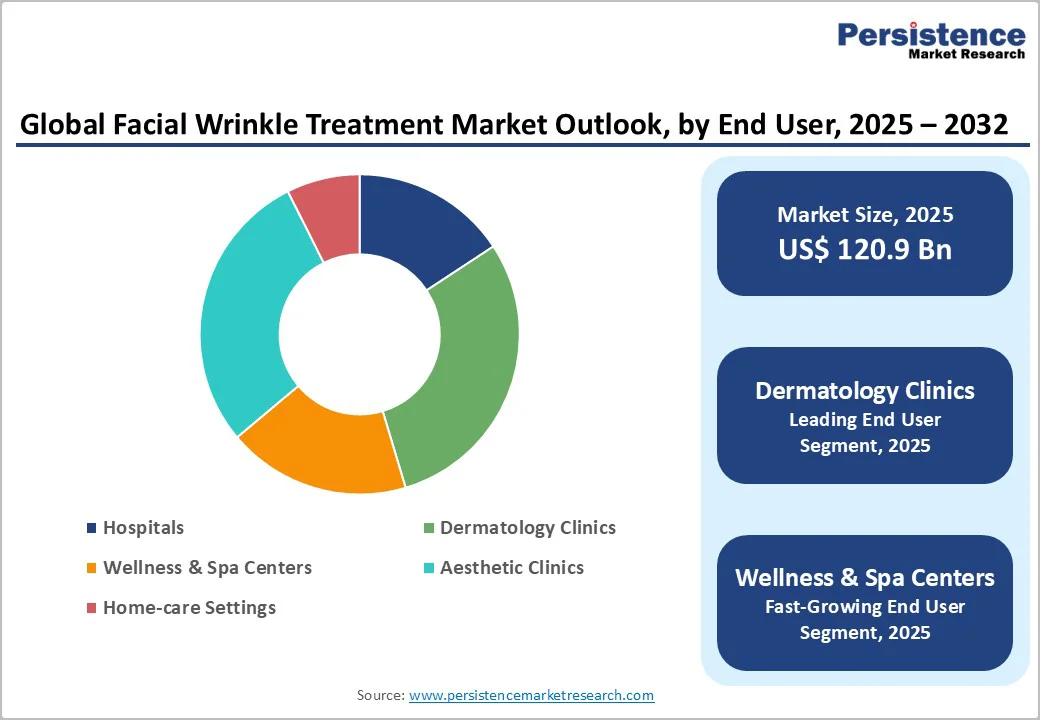
Medication-based facial wrinkle treatment procedures accounted for a high share in 2025. Specialized formulations of medications are designed to help the facial skin retain moisture and firmness, improve skin tone, minimize the appearance of wrinkles and fine lines, and enhance brightness and radiance. Facial wrinkle treatment medications are specifically formulated to repair and treat the skin by promoting self-healing and preventing potential damage. Although these medications often have a thick texture that may not be ideal for wearing makeup, they contain active ingredients that are highly effective when used regularly in daily skincare routines. This feature is driving the demand for medicated facial wrinkle treatments.
By Wrinkle Type
Dynamic wrinkles account for the highest market share because they are the most common and earliest visible signs of aging, driven by repetitive facial movements such as smiling, frowning, or squinting. These wrinkles, like crow’s feet and forehead lines, form in high-visibility areas, prompting individuals to seek treatment sooner. Injectable solutions such as botulinum toxin are highly effective, fast-acting, and widely available, making dynamic wrinkle correction the leading choice in clinics and med-spas. Their strong responsiveness to minimally invasive procedures, combined with high patient satisfaction and repeat treatment cycles, ensures consistent demand and positions this segment as the largest revenue contributor.
Region-wise Insights
North America Facial Wrinkle Treatment Market Trends
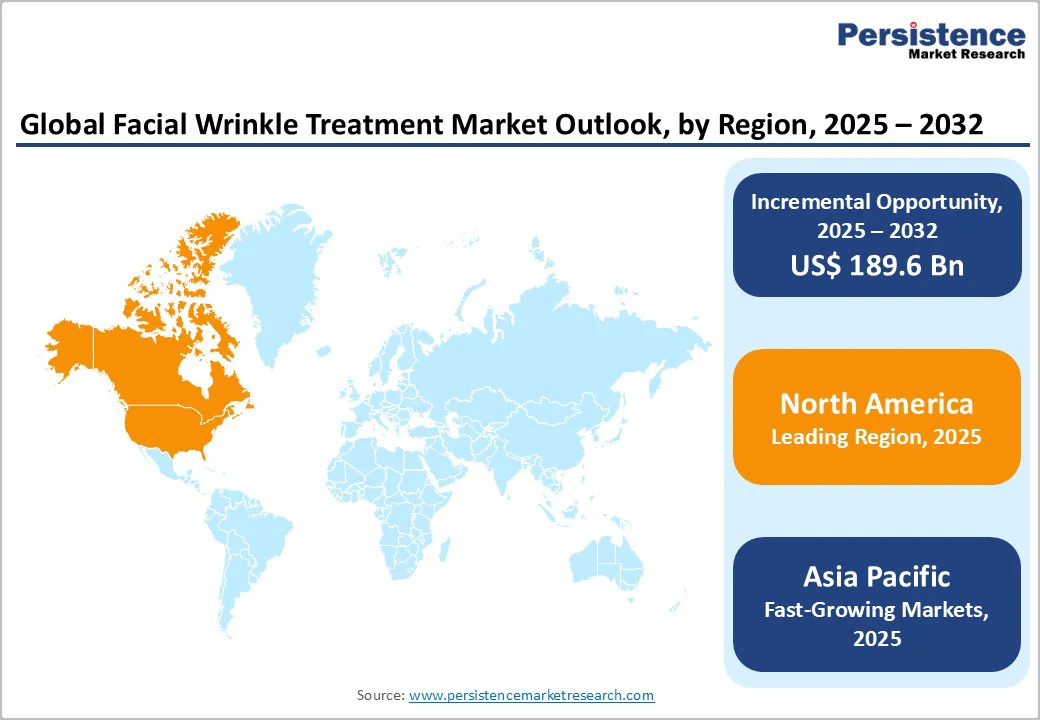
North America leads the facial wrinkle treatment market due to strong consumer spending on aesthetic procedures, early adoption of advanced injectables, and the presence of top dermatology clinics and med-spas. The region benefits from rapid regulatory approvals, high awareness of non-invasive treatments, and rising demand for combination therapies. In the U.S., the market is driven by a large base of certified aesthetic professionals, widespread use of botulinum toxin and fillers, and the strong influence of social media and celebrity-driven beauty trends. Growing male participation, technological innovation, and continuous product launches further strengthen North America’s dominant position in the global market.
Asia Pacific Facial Wrinkle Treatment Market Trends
Asia Pacific is emerging as one of the fastest-growing regions in the Facial wrinkle treatment market, driven by rising aesthetic awareness, expanding middle-class income, and rapid urbanization. Countries like China, Japan, and South Korea are becoming major hubs for cosmetic dermatology due to advanced technologies and skilled practitioners. Medical tourism in Thailand, India, and Malaysia further accelerates treatment demand with affordable, high-quality procedures. Younger populations increasingly seek preventive treatments, while aging demographics fuel corrective procedures. The growing popularity of K-beauty trends, the increasing availability of med-spas, and strong adoption of minimally invasive injectables position the Asia Pacific as a powerful growth engine in the global market.
Competitive Landscape
The Facial Wrinkle Treatment Market exhibits intense competition driven by rapid innovation, expanding treatment options, and rising consumer demand for minimally invasive procedures. Manufacturers are focusing on long-lasting injectable formulations, advanced energy-based devices, and personalized treatment technologies to differentiate their offerings. Strong emphasis on clinical efficacy, safety, and natural-looking results fuels continuous product development. Companies increasingly invest in practitioner training, digital marketing, and patient education to enhance brand visibility and procedure adoption.
Key Industry Developments:
- In April 2024, Weleda launched two new face care ranges: the regenerating Pomegranate and Maca Peptides Firming Face Care collection, and the Blue Gentian and Edelweiss Contouring Face Care range. Both collections were unveiled over the weekend at the Natural & Organic Products Expo (NOPEX), highlighting the brand’s expansion in natural anti-aging skincare.
Companies Covered in Facial Wrinkle Treatment Market
- Weleda
- Clarins
- Body Merry
- Himalaya Global Holdings Ltd.
- Browne Drug Co., Inc. (Palmer’s)
- Givaudan SA
- NEOSTRATA COMPANY, INC. (Johnson & Johnson Services, Inc.)
- Merz Pharma
- Dermaclara
- Unilever
- L’Oreal SA
- Procter & Gamble
- Others
Frequently Asked Questions
The global facial wrinkle treatment market is valued at US$120.9 Bn in 2025.
The market is driven by rising aesthetic awareness, increasing aging populations, and strong demand for minimally invasive procedures such as botulinum toxin injections, fillers, and energy-based treatments.
The global facial wrinkle treatment market is poised to witness a CAGR of 14.4% between 2025 and 2032.
Significant opportunities lie in developing long-lasting injectable formulations, personalized treatment protocols, and AI-driven facial analysis tools that enhance precision and outcomes.
Weleda, Clarins, Body Merry, L’Oreal SA, Procter & Gamble, and others


