




- Beauty & Personal Care
- Cosmetic Pencil & Pen Market
Cosmetic Pencil & Pen Market Size, Share, and Growth Forecast, 2026 – 2033
Cosmetic Pencil & Pen Market by Product Type (Eyeliner Pencils & Pens, Lip Liner Pencils, Lip Crayons & Pens, Eyebrow Pencils & Pens, Concealer Pencils, Multi-Purpose Cosmetic Pencils), Material (Plastic, Wood, Metal), End-User (Individual Consumers, Professional Makeup Artists, Beauty Salons & Studios), and Regional Analysis for 2026-2033

Cosmetic Pencil & Pen Market Share and Trends Analysis
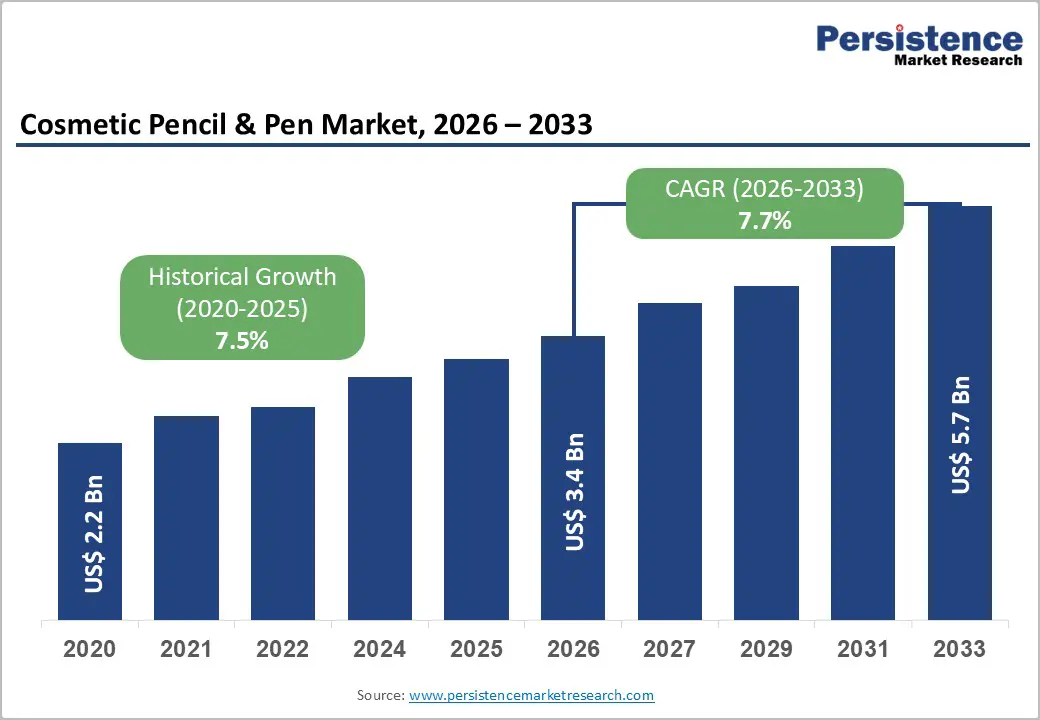
The global cosmetic pencil & pen market size is likely to be valued at US$ 3.4 billion in 2026, and is projected to reach US$ 5.7 billion by 2033, growing at a CAGR of 7.7% during the forecast period 2026−2033. Market expansion reflects a rising demand for precision-based cosmetic formats that support controlled application, portability, and hygienic use.
Growth momentum is reinforced by rising urban female workforce participation, higher disposable incomes across emerging economies, and the expansion of daily-use color cosmetics across mass and premium segments. Changing grooming routines and time-efficient beauty practices have strengthened the preference for pencil and pen formats, supporting consistent volume growth across retail and professional channels. Product innovation centered on long-wear, waterproof, and multi-purpose formats continues to strengthen market penetration. Regulatory oversight by authorities such as the Food and Drug Administration (FDA) and the European Commission's Cosmetic Regulation has improved standardization and consumer confidence, encouraging repeat purchase behavior.
Key Industry Highlights
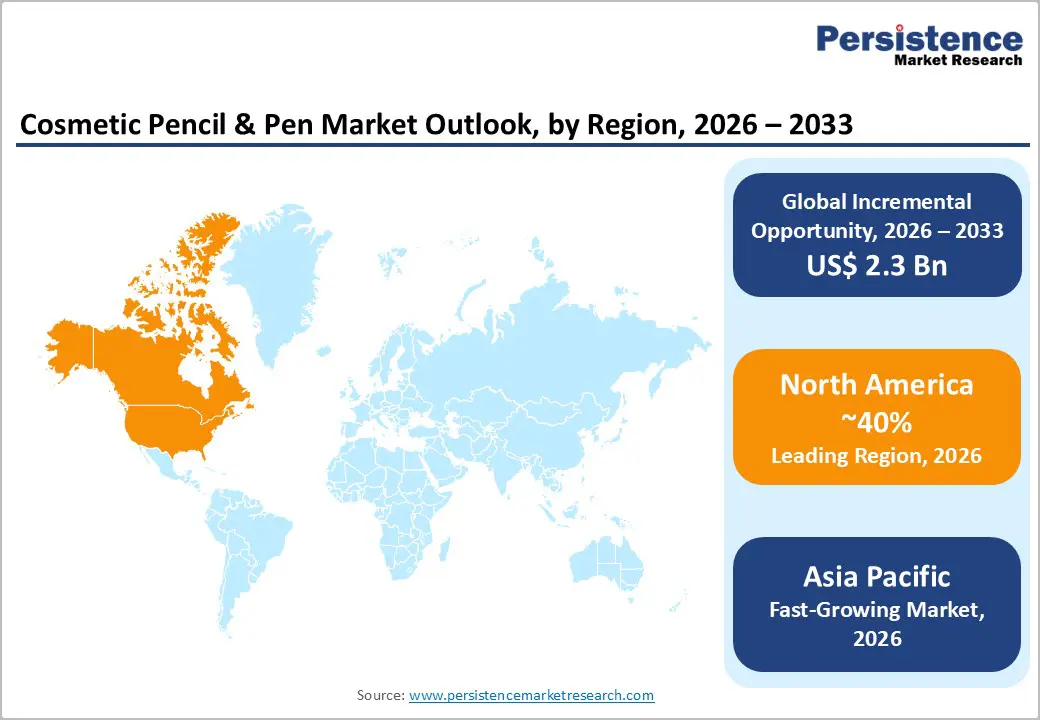
- Dominant Region: North America is projected to hold around 40% of the market share in 2026, supported by high consumer spending and advanced retail channels.
- Fastest-growing Market: Asia Pacific is forecasted to be the fastest-growing market between 2026 and 2033, driven by a soaring demand for multifunctional and professional-use products.
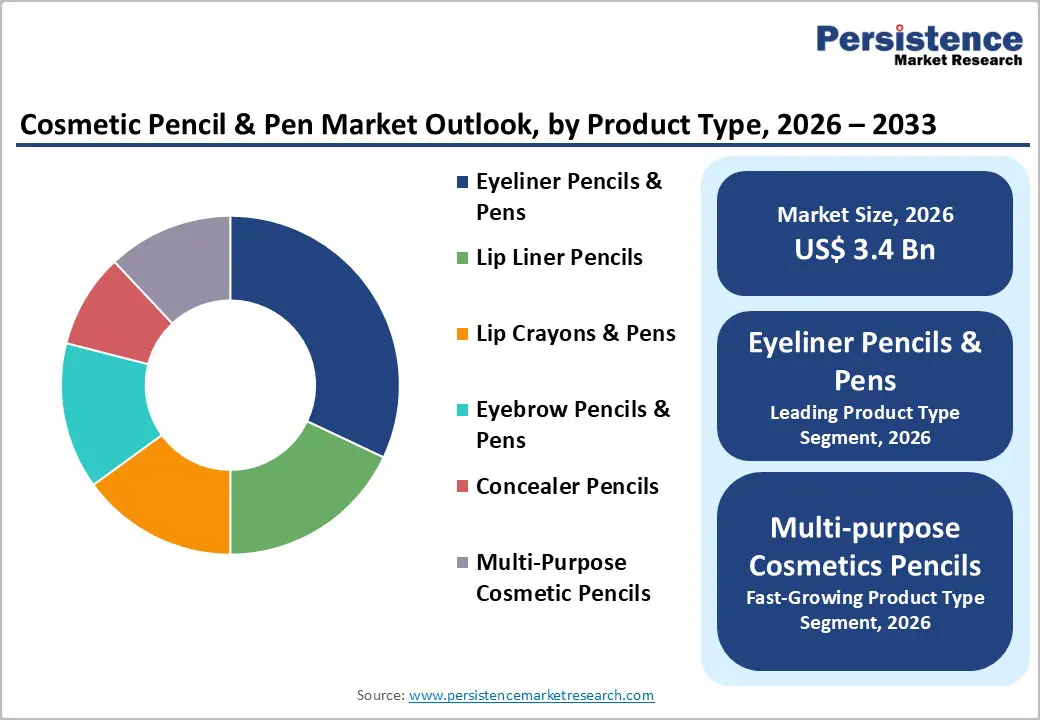
- Leading Product Type: Eyeliner pencils and pens are set to lead with a 32% share in 2026, fueled by daily usage, repeat purchases, and extensive retail and professional adoption.
- Fastest-growing Product Type: Multi-purpose cosmetic pencils are projected to be the fastest-growing through 2033, fueled by a huge demand for simplified routines, travel-friendly formats, and multi-functionality.
- March 2025: Faber-Castell Cosmetics debuted the "Aware" line of skincare-infused cosmetic pencils at Cosmopack Worldwide Bologna, featuring a wide range of multifunctional products.
| Key Insights | Details |
|---|---|
|
Cosmetic Pencil & Pen Market Size (2026E) |
US$ 3.4 Mn |
|
Market Value Forecast (2033F) |
US$ 5.7 Mn |
|
Projected Growth (CAGR 2026 to 2033) |
7.7% |
|
Historical Market Growth (CAGR 2020 to 2025) |
7.5% |
Market Factors – Growth, Barriers, and Opportunity Analysis
Innovative Formulations and Technological Advancements
Innovative formulations serve as a primary growth catalyst as performance expectations in color cosmetics continue to intensify. Precision formats require compositions that ensure uniform pigment delivery, smooth application, and extended wear across varied environmental conditions. Progress in polymer chemistry, refined pigment dispersion, and advanced film-forming systems has enabled improved smudge resistance, water resistance, and color stability while maintaining skin comfort. These formulation capabilities align with evolving grooming routines that emphasize reliability and efficiency, strengthening product differentiation across mass and premium price categories and reinforcing consumer confidence in daily-use formats.
Technological progress in applicator design and packaging engineering further reinforces growth momentum. Enhanced retractable systems, high-accuracy tips, and sealed casing structures improve application control, reduce material loss, and extend product shelf stability. Synergy between formulation performance and delivery mechanisms enables multi-purpose functionality, supporting higher usage frequency and value perception. Compliance-oriented product design reduces reformulation risk and supports faster market entry. Precision manufacturing systems and automated filling processes improve consistency at scale, enabling rapid response to trend evolution and regional demand shifts.
Regulatory Compliance and Ingredient Restrictions
Escalating oversight across global cosmetic value chains has emerged as a structural limitation for growth, driven by tightening safety, labeling, and formulation requirements. Authorities enforce strict controls on pigments, preservatives, and fragrance compounds used in pencil and pen formats, limiting formulation flexibility and slowing innovation cycles. Frequent updates to restricted substance lists compel manufacturers to reformulate existing product lines, leading to higher research costs, extended approval timelines, and inventory write-offs. Small and mid-sized brands face disproportionate pressure, as compliance investments strain operating margins and delay market entry. Cross-border regulatory divergence further complicates expansion strategies, as products approved in one jurisdiction often require reformulation to meet standards in another, reducing scalability and increasing operational complexity.
Heightened scrutiny over allergens, heavy metals, and synthetic colorants has reshaped supplier selection and raw material sourcing strategies. Limited availability of compliant alternatives constrains product differentiation and raises input costs, particularly for long-wear and waterproof formats that rely on specialized chemical compositions. Packaging and applicator regulations add another layer of complexity, as sustainability mandates and safety testing requirements extend development cycles. These constraints reduce speed-to-market and weaken responsiveness to fast-changing consumer trends driven by social media and professional usage patterns. Compliance-driven cost escalation often transfers into higher retail pricing, affecting demand elasticity in price-sensitive segments.
Multi-Purpose Cosmetic Pencil Adoption
Rising preference for streamlined beauty routines is creating a strong commercial opening for versatile cosmetic formats that consolidate multiple functions into a single applicator. Consumers increasingly prioritize efficiency, portability, and space optimization in daily grooming, particularly within urban working populations and frequent travelers. A single pencil capable of serving as an eye, lip, and face enhancer reduces purchase frequency across separate products while increasing perceived value per unit. This shift aligns with evolving spending behavior where buyers favor multifunctional items that balance performance with convenience. Brands leveraging this trend gain access to higher margin positioning through premium pricing justified by utility, formulation sophistication, and design innovation. The format also supports faster decision-making at retail, shortening purchase cycles and improving shelf productivity for distributors.
Commercial appeal is further strengthened by alignment with sustainability goals and digital retail dynamics. Fewer individual products translate into reduced packaging intensity, supporting corporate environmental commitments and compliance with tightening cosmetic waste expectations. Compact, all-in-one designs improve logistics efficiency across e-commerce channels by lowering shipping volume and damage risk, enhancing profitability across supply chains. Professional users in salons and studios increasingly adopt these tools to improve workflow speed and hygiene control during periods of high client turnover. From a brand strategy perspective, multi-use pencils create differentiation in a crowded color cosmetics landscape while enabling cross-category consumer engagement through a single stock-keeping unit.
Category-wise Analysis
Product Type Insights
Eyeliner pencils and pens are poised to dominate with a forecasted market share of 32% in 2026, powered by high daily usage frequency, strong repeat purchase behavior, and sustained demand across mass and premium cosmetic ranges. Precision-focused application supports everyday grooming needs, reinforcing habitual usage across diverse age groups. Broad shade portfolios and varied formulations strengthen consumer loyalty, while compatibility with professional makeup practices sustains institutional demand. Strong shelf presence across physical and digital retail channels enhances visibility and purchase frequency, supporting stable revenue leadership.
Multi-purpose cosmetic pencils are estimated to be the fastest-growing segment from 2026 to 2033, fueled by rising preference for simplified beauty routines, compact travel-friendly formats, and increasing acceptance of hybrid cosmetic solutions across consumer and professional channels. Functional versatility enhances perceived value, encouraging trial and repeat adoption. Compact designs align with mobility-driven lifestyles and digital commerce efficiency. Brand focus on innovation and premium positioning strengthens differentiation, while professional users benefit from faster application workflows, reinforcing accelerated adoption momentum through the forecast period.
Material Insights
Plastic is likely to be the dominant material with a projected 48% of the cosmetic pencil & pen market revenue share in 2026 due to its cost efficiency, lightweight properties, and scalable manufacturing. Lightweight structure improves consumer handling and portability, reinforcing suitability for daily-use cosmetic routines. Flexible molding capabilities enable diverse shapes, finishes, and branding options, supporting rapid product launches across mass-market portfolios. Strong compatibility with automated production lines improves scale economics, while broad acceptance across supermarkets, drugstores, and online platforms sustains consistent turnover.
Metal-based cosmetic pens are anticipated to be the fastest-growing segment from 2026 to 2033, fueled by premium positioning, refillable mechanisms, and increasing consumer perception of sustainability. Durable construction enhances perceived quality and supports refillable mechanisms aligned with sustainability-focused purchasing behavior. Sleek finishes and weight balance improve user experience, strengthening appeal among professional makeup artists and high-income consumers. Brands leverage metal formats to justify premium pricing and reinforce luxury positioning.
End-User Insights
Individual consumers are anticipated to secure around 64% of the cosmetic pencil & pen market share in 2026, reflecting growing adoption driven by daily cosmetic usage and expanding personal grooming routines. Rising awareness of appearance and self-expression across urban and semi-urban populations supports consistent purchase frequency. E-commerce and digital retail platforms enhance product accessibility, offering convenience, variety, and competitive pricing. Strong alignment with mass-market and premium product tiers ensures broad adoption, while targeted marketing campaigns reinforce brand loyalty, sustaining stable demand and revenue leadership across retail and online channels.
Professional makeup artists are expected to be the fastest-growing segment during the 2026–2033 forecast period, driven by rising demand for event-based makeup, influencer-led content creation, and the expansion of professional certification programs across beauty academies. Adoption is supported by the need for precision tools, durable formulations, and multi-functional products suitable for high-frequency usage in studios and client appointments. Brands targeting this segment leverage specialized products and training support, strengthening professional relationships and repeat purchases. Rising demand for premium and innovative formats in salons and makeup studios accelerates segment expansion and commercial potential.
Regional Insights
North America Cosmetic Pencil & Pen Market Trends
North America is projected to dominate the market for cosmetic pencils & pens with an estimated share of approximately 40% in 2026, reflecting high consumer purchasing power and sophisticated beauty consumption patterns. Leadership is underpinned by the prevalence of multi-channel retail infrastructure that efficiently bridges the availability of premium and mass-market products. Consumers prioritize precision, hygiene, and convenience in daily cosmetic routines, which aligns with the widespread adoption of pencil and pen formats. Established brand presence of multinational cosmetic companies, coupled with aggressive product innovation in long-wear, waterproof, and multifunctional formats, strengthens loyalty and repeat purchase behavior. In addition, mature professional beauty services, including salons and makeup studios, contribute substantial institutional demand, particularly for high-quality, durable, and aesthetically designed products.
The leadership of North America is further reinforced by technological integration across product development and retail channels. Advanced formulation capabilities allow brands to introduce hybrid pencils that combine eyeliner, eyebrow, and lip applications without compromising quality or safety standards. High digital adoption and e-commerce penetration reduce purchase barriers, facilitating instant access to new launches and limited-edition products. Environmental consciousness among consumers has prompted brands to offer sustainable pencil casing options and refillable pen formats, adding perceived value and aligning with ethical purchasing behavior. Professional and educational institutions increasingly standardize pencil-based tools in training programs, amplifying institutional uptake.
Europe Cosmetic Pencil & Pen Market Trends
Europe holds a significant position in the cosmetic pencil & pen market landscape, supported by a mature beauty industry and well-established retail infrastructure. High consumer awareness regarding product quality, safety, and formulation drives preference for precision-based pencil and pen formats. Rising adoption of multifunctional cosmetic solutions and long-wear formulations aligns with urban lifestyle demands, where convenience and portability are increasingly valued. Premiumization is a key factor, with consumers willing to invest in innovative, durable, and aesthetically appealing products. Regulatory frameworks, including strict compliance with cosmetic safety standards, enhance consumer confidence and reinforce repeat purchase behavior. Established professional networks, such as salons and makeup academies, further bolster demand, particularly for high-quality, durable pencils and pens suitable for frequent use.
Market growth is strengthened by digital commerce penetration and influencer-driven trends that accelerate consumer exposure to new products. Compact, multifunctional designs support busy lifestyles, travel convenience, and professional application, while eco-conscious packaging and refillable mechanisms resonate with sustainability-focused buyers. Collaboration between global brands and local distributors facilitates wide availability across retail tiers, ensuring both mass-market and premium adoption. Educational initiatives and professional training programs standardizing pencil-based tools amplify institutional demand, while innovative marketing strategies enhance engagement across online and offline channels.
Asia Pacific Cosmetic Pencil & Pen Market Trends
Asia Pacific is forecasted to be the fastest-growing regional market for cosmetic pencils & pens between 2026 and 2033, stimulated by rising urbanization, increasing female workforce participation, and growing adoption of multifunctional and travel-friendly cosmetic formats. Rapid economic growth and expanding disposable income among younger populations accelerate demand for mid-tier and premium products, while the strong influence of social media and beauty influencers drives early adoption of innovative cosmetic solutions. The growth of professional makeup services, including salons and specialized studios, further reinforces demand for precision-based pencils and pens that meet performance and hygiene standards.
The adoption of cosmetic pens and pencils in the region is further being driven by an increasing focus on product innovation tailored to local preferences, such as formulations suitable for diverse skin tones, tropical climates, and long-wear performance. Rising interest in sustainable and refillable designs resonates with environmentally conscious buyers, creating opportunities for differentiated positioning. Educational institutions and beauty academies have standardized pencil-based tools for training, supporting institutional demand and professional uptake. Compact, multifunctional designs cater to mobile lifestyles and travel convenience, reinforcing daily-use adoption among urban populations.
Competitive Landscape
The global cosmetic pencil & pen market is moderately fragmented, with the top 10 players accounting for approximately 50% of global revenue, indicating the presence of both established multinational corporations and smaller regional brands. Market leadership is shaped by the ability to combine product innovation, brand recognition, and wide distribution networks. Key players, including L’Oréal Groupe, Estée Lauder Companies, Shiseido Co., Ltd., Louis Vuitton India Retail Private Limited, and Coty Inc., leverage advanced research and development capabilities to introduce long-wear, multifunctional, and climate-adapted formulations, meeting diverse consumer requirements across daily-use and professional segments. Formulation innovation remains a critical differentiator, encompassing features such as waterproof performance, smudge resistance, and multi-purpose functionality, which enhances perceived product value and drives repeat purchases.
Branding scale also significantly influences competitive positioning. Strong brand equity allows these players to command premium pricing, expand loyalty programs, and cultivate aspirational consumer perception. Global distribution networks, spanning physical retail, e-commerce platforms, and professional channels such as salons and studios, further consolidate market presence and revenue stability. Strategic initiatives, including collaborations with beauty influencers, digital marketing campaigns, and limited-edition product launches, enhance visibility and engagement. Regional customization, sustainability-driven packaging, and refillable designs reinforce differentiation while addressing evolving consumer expectations.
Key Industry Developments
- In August 2025, Tokiwa Cosmetics showcased its EcoLux Pencil at MakeUp in New York, featuring 100% paper packaging for plastic-free sustainability. The pencil uses lightweight natural oils and amino acid emollients for 6X the moisturization of traditional lipsticks, with a strong, layered paper barrel that prevents oil bleed.
- In August 2025, Beauty Creations launched a Japanese-inspired makeup collection, including eyeliners, lipsticks, and eyeshadow palettes, featuring design elements such as cherry blossoms and sakura-inspired aesthetics that blend cultural motifs with contemporary beauty appeal.
- In June 2025, Huda Beauty teased two exciting new product launches on social media: the Lip Contour Stain hybrid liner and stain and the Faux Filler Jelly Oil tinted lip oil, generating strong anticipation among beauty enthusiasts ahead of their official release.
Companies Covered in Cosmetic Pencil & Pen Market
- L’Oréal Groupe
- Estée Lauder Companies
- Shiseido Co.,Ltd.
- Louis Vuitton India Retail Private Limited
- Coty Inc.
- Amorepacific
- Modi-Mundipharma Beauty Products Pvt Ltd.
- CHANEL (INDIA) PRIVATE LIMITED
- Kao Corporation
- Beiersdorf AG
- Oriflame Cosmetics AG.
Frequently Asked Questions
The global cosmetic pencil & pen market is projected to reach US$ 3.4 billion in 2026.
Widening uptake of multifunctional and travel-friendly cosmetic pencils and pens is driving market growth across online and professional channels.
The market is poised to witness a CAGR of 7.7% from 2026 to 2033.
Rising demand for sustainable and refillable cosmetic pencils presents significant growth opportunities in the market.
Key players in the market include L’Oréal Groupe, Estée Lauder Companies, Shiseido Co., Ltd., Louis Vuitton India Retail Private Limited, and Coty Inc.


