




- Home Care & Utilities
- Cat Scratchers and Trees Market
Cat Scratchers and Trees Market Size, Share, and Growth Forecast, 2026 - 2033
Cat Scratchers and Trees Market by Purpose Type (Exercise, Grooming Products, To Play, To Sleep, Decoration), Material (Sisal Fabric, Carpet, Rope, Cardboard, Wood), and Regional Analysis for 2026 - 2033

Cat Scratchers and Trees Market Size and Trends Analysis
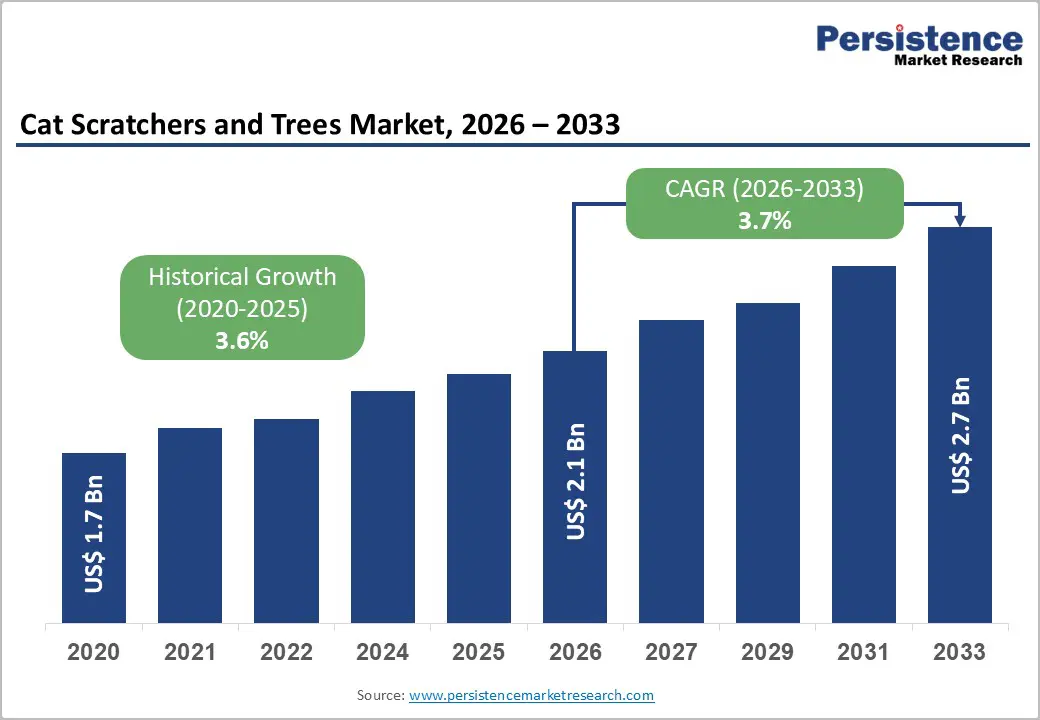
The global cat scratchers and trees market size is likely to be valued at US$2.1 billion in 2026 and is expected to reach US$2.7 billion by 2033, growing at a CAGR of 3.7% during the forecast period from 2026 to 2033, driven by rising cat ownership and increasing awareness of feline behavioral health needs. As urbanization accelerates and living spaces become more compact, cat owners are investing in functional, space-efficient furniture that supports scratching, climbing, resting, and play while complementing modern home décor.
The natural scratching instinct of cats, essential for claw maintenance, stress relief, and territorial marking, continues to make scratchers and multi-level cat trees a necessity rather than a discretionary purchase. Rising pet humanization among millennials and Gen Z is driving demand for stylish, durable, and enrichment-focused cat furniture that supports overall pet wellness.
Key Industry Highlights:
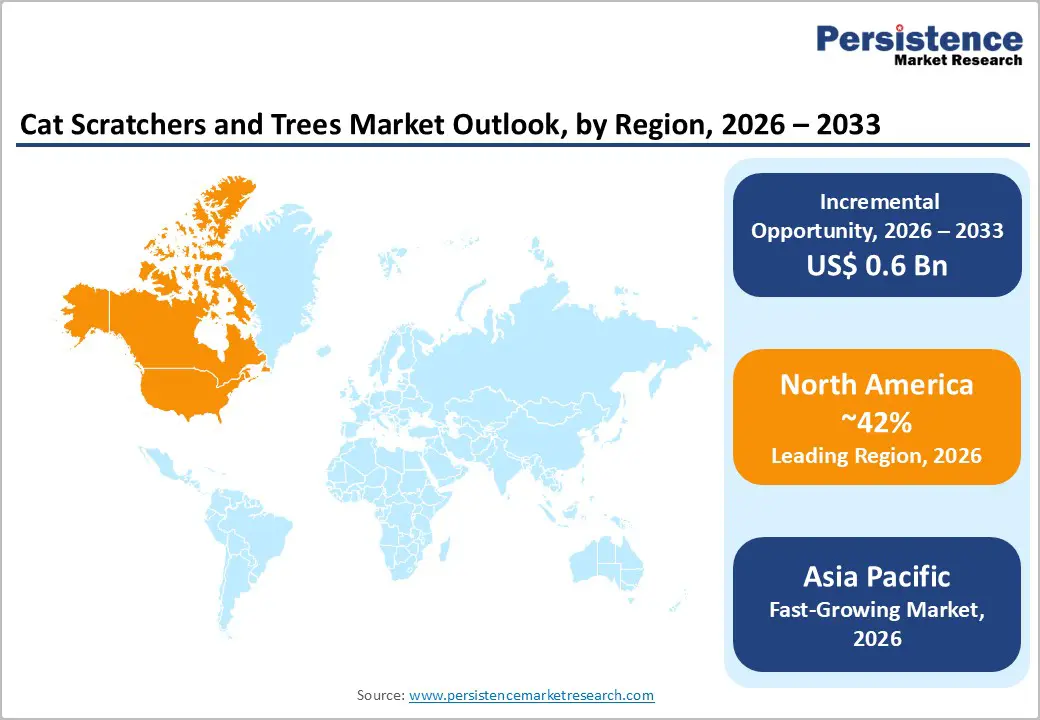
- Leading Region: North America is anticipated to be the leading region, accounting for a market share of 42% in 2026, driven by high pet humanization, strong e-commerce penetration, regulatory quality standards, and growing premium product adoption.
- Fastest-growing Region: Asia Pacific is likely to be the fastest-growing region in the cat scratchers and trees in 2026, supported by rising urban pet ownership, expanding middle-class consumers, strong e-commerce growth, and increasing regional manufacturing capabilities.
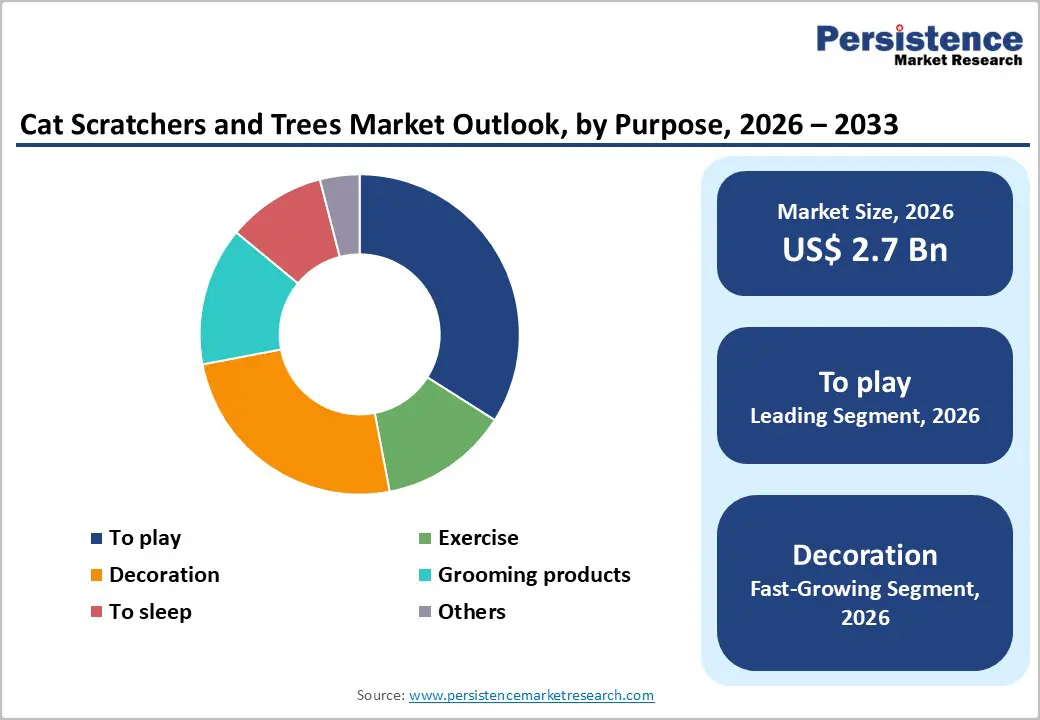
- Leading Purpose Type: The to-play segment is projected to be the leading purpose type in 2026, accounting for 38% of revenue share, driven by rising demand for multi-functional cat trees that combine entertainment, exercise, and space-efficient design.
- Leading Material Type: The sisal fabric segment is expected to be the leading material type, accounting for over 41% of revenue share in 2026, supported by its durability, natural texture, and strong preference among cat owners for long-lasting scratching surfaces.
| Key Insights | Details |
|---|---|
|
Cat Scratchers and Trees Market Size (2026E) |
US$2.1 Bn |
|
Market Value Forecast (2033F) |
US$2.7 Bn |
|
Projected Growth (CAGR 2026 to 2033) |
3.7% |
|
Historical Market Growth (CAGR 2020 to 2025) |
3.6% |
Market Factors - Growth, Barriers, and Opportunity Analysis
Growth Analysis - Rising Pet Ownership and Humanization Trends
Increasing adoption rates among millennials and Gen Z consumers, along with delayed parenthood trends, are contributing to higher pet companionship demand. Cats are increasingly viewed as family members, leading owners to invest in products that enhance comfort, health, and mental stimulation. Scratchers and cat trees are no longer considered optional accessories but essential behavioral tools that prevent furniture damage and support claw health. This shift toward pet humanization is directly influencing premium purchasing decisions.
Pet humanization also fuels demand for aesthetically pleasing, durable, and enrichment-focused cat furniture. Consumers prefer multi-functional products that combine play, exercise, and relaxation while blending seamlessly with home décor. Higher discretionary spending on pet wellness, particularly in urban households, supports consistent market demand even during economic slowdowns. Social media influence and online pet communities amplify awareness of enrichment needs. Owners prioritize mental stimulation and stress reduction for indoor cats, investment in structured climbing systems and interactive scratchers continues to expand.
Urbanization and Indoor Lifestyle Adaptation
As more consumers move into apartments and smaller living spaces, cats are increasingly kept indoors for safety and convenience. Indoor cats need structured environments to meet their instincts, such as climbing, scratching, and marking territory. Vertical cat trees and wall-mounted scratchers offer space-efficient solutions to provide enrichment in settings with limited outdoor access. The growing trend of nuclear families and single-person households in urban areas is driving higher pet adoption, further boosting the demand for products that support indoor behaviors.
Urban living also fosters innovation in modular and compact designs that cater to apartment life. Manufacturers are creating slim, multi-level systems that maximize vertical space without taking up much floor area. Noise-reducing materials and lightweight structures are also becoming more important in high-density residential buildings. Given the connection between indoor confinement and behavioral stress in cats, pet owners are increasingly investing in products that promote physical activity and mental stimulation.
Barrier Analysis - Supply Chain Vulnerabilities for Natural Materials
The cat scratchers and trees market relies heavily on natural materials such as sisal, wood, cardboard, and rope, making it vulnerable to supply chain disruptions. Fluctuations in raw material availability, transportation bottlenecks, and trade uncertainties can impact production timelines and pricing stability. As sisal and wood are often sourced from specific geographic regions, climate variability and export restrictions can create supply inconsistencies. These disruptions increase manufacturing costs and limit inventory availability, affecting both premium and mass-market segments.
Rising freight costs and sustainability regulations complicate sourcing strategies for manufacturers. Brands focusing on eco-friendly positioning must maintain responsible sourcing practices, which may limit supplier options and increase operational complexity. Smaller players often struggle with bulk procurement advantages, leading to margin pressure. Delays in raw material procurement can also slow product launches and innovation cycles. As demand grows, ensuring stable and diversified sourcing channels becomes essential to maintaining competitiveness and meeting consumer expectations.
Space Constraints in Urban Areas
Although urbanization drives demand, limited living space can also restrain the adoption of large cat trees. In compact apartments, consumers may hesitate to purchase bulky multi-level structures due to floor space limitations. Households with minimalist interior preferences may avoid oversized pet furniture that disrupts aesthetics. This constraint particularly affects entry-level consumers and renters who prioritize portability and flexible home layouts. Frequent relocation among urban tenants reduces willingness to invest in heavy, fixed installations.
Space limitations also influence replacement frequency, as owners may prefer smaller, single-function scratchers over full climbing systems. Budget-conscious urban consumers may choose low-cost cardboard options instead of permanent wooden structures. The challenge for manufacturers lies in balancing functional complexity with spatial efficiency. Failure to design adaptable and compact models may reduce penetration in high-density housing markets. Limited storage space restricts bulk purchases, impacting average order size. This trend pushes brands to innovate in slim-profile, multi-utility solutions tailored specifically for urban apartments.
Opportunity Analysis - Sustainable and Smart Product Convergence
Consumers increasingly favor eco-friendly materials such as recycled cardboard, natural sisal, and responsibly sourced wood. Brands that emphasize biodegradable components and low-impact manufacturing gain a competitive advantage among environmentally conscious buyers. The shift toward green living extends to pet products, encouraging innovation in recyclable designs and minimal waste packaging. Sustainable positioning not only enhances brand value but also strengthens long-term customer loyalty.
Beyond sustainability, smart integration offers emerging growth potential. Interactive cat furniture equipped with motion sensors, activity tracking, or modular attachments aligns with the broader smart home ecosystem trend. As technology adoption expands, combining enrichment furniture with digital monitoring tools can differentiate premium offerings. Smart-enabled scratchers that promote engagement or track usage patterns may appeal to tech-savvy pet owners. The convergence of sustainability and smart innovation creates new revenue streams and premium product categories within the market.
Customization Trends
Modern consumers seek personalized solutions that align with their home décor, available space, and their cat’s behavioral preferences. Modular systems that allow adjustable heights, interchangeable components, and expandable platforms are gaining traction. Custom finishes, color variations, and material choices enhance aesthetic integration with interior design themes. This shift toward tailored solutions increases perceived product value and encourages premium pricing strategies. Personalized sizing options also help optimize vertical space utilization in compact urban apartments.
Direct-to-consumer channels enable customization by allowing brands to offer made-to-order configurations and personalized recommendations. Online visualization tools and augmented reality previews support informed purchasing decisions. Customization also caters to multi-cat households requiring scalable structures. By offering flexible, design-forward options, manufacturers can differentiate themselves in a competitive market. Subscription-based replacement parts and add-on modules enhance long term customer retention.
Category-wise Analysis
Purpose Type Insights
The to play segment is expected to lead the cat scratchers and trees market, accounting for approximately 38% of revenue in 2026, driven by strong consumer demand for multi-functional cat trees that combine climbing, scratching, and resting features. Indoor cats require structured stimulation to maintain physical health and reduce behavioral stress, making play-oriented cat furniture an essential purchase rather than a discretionary item. Vertical multi-level trees are particularly popular in urban apartments where floor space is limited but vertical space can be optimized. For example, multi-tier activity trees from brands such as Vesper have gained strong consumer traction due to their integrated platforms and interactive elements.
The decoration segment is likely to represent the fastest-growing segment in 2026, supported by rising demand for aesthetically refined cat furniture that blends seamlessly with modern interiors. Consumers increasingly view pet furniture as part of home design rather than as a separate utility product. Minimalist cat trees, neutral color palettes, and premium wood finishes are gaining popularity among urban professionals who prefer décor-friendly pet solutions. For example, walnut finish designer cat trees offered by Vesper demonstrate how décor-oriented products can merge functionality with contemporary styling.
Material Insights
Sisal fabric is projected to lead the market, capturing around 41% of the revenue share in 2026, supported by its durability, natural texture, and effectiveness in satisfying feline scratching instincts. Cats are naturally drawn to coarse, fibrous surfaces that help maintain claw health, and sisal provides a long-lasting solution compared to softer alternatives. Its strength and resistance to fraying make it highly preferred in premium and mid-range cat trees. For example, leading brands integrate thick sisal-wrapped scratching columns into their core product lines to ensure extended usability and repeat purchase retention.
Cardboard is likely to be the fastest-growing material in 2026, driven by its affordability, recyclability, and growing appeal among sustainability-focused consumers. Lightweight and easy to replace, cardboard scratchers cater to cost-conscious households and renters seeking portable solutions. The material’s eco-friendly positioning resonates strongly with environmentally aware millennials and Gen Z pet owners. Cardboard designs often feature curved loungers and compact pads that fit easily into small apartments. For example, recyclable cardboard scratcher lounges offered by mainstream pet brands demonstrate increasing adoption due to their low environmental footprint and accessibility.
Regional Insights
North America Cat Scratchers and Trees Market Trends
North America is anticipated to be the leading region, accounting for a market share of 42% in 2026, driven by rising pet ownership and shifting consumer lifestyles. Urban living and apartment dwellers increasingly seek space-efficient, multi-functional cat trees that combine scratching, climbing, and resting features. This has led to an uptick in premium modular designs that adapt to small floor spaces while enhancing feline enrichment. E-commerce channels remain a key sales driver, offering broad assortments and convenience for pet owners. Digital platforms also enable brands to leverage customer reviews and social media engagement, influencing purchasing decisions.
Manufacturers are increasingly integrating innovative materials and customizable elements to differentiate offerings. For example, Tuft + Paw has expanded its product portfolio with sleek, design-centric cat furniture that appeals to style-conscious urban consumers seeking integration with modern interiors. Broader market dynamics reflect an emphasis on sustainability and durability, prompting established brands to invest in high-quality sisal and recyclable components. Regional retail strategies also emphasize omnichannel experiences, blending online convenience with in-store expertise at specialty pet shops.
Europe Cat Scratchers and Trees Market Trends
Europe is likely to be a significant market for cat scratchers and trees, due to growing pet ownership and heightened awareness of feline welfare needs. Western European countries such as the U.K., Germany, and France are key demand centers, where urban lifestyles and smaller living spaces drive the adoption of vertical and multi-functional cat furniture. Consumers increasingly prioritize products that combine enrichment, comfort, and home aesthetics, reflecting the broader trend of pet humanization across the region.
European market growth is also supported by the expansion of specialty pet retail channels and omnichannel strategies that blend physical store experiences with online convenience. For example, Trixie Pet Products, a major European brand, has introduced a range of premium cat trees and scratchers that emphasize both functionality and contemporary design, catering to style-aware pet owners looking for décor-integrated solutions. Innovation in ergonomic features such as adjustable platforms, cushioned resting areas, and modular add-ons enhances the appeal of high-end cat furniture.
Asia Pacific Cat Scratchers and Trees Market Trends
The Asia Pacific region is likely to be the fastest-growing region in the cat scratchers and trees market in 2026, driven by rising disposable incomes, expanding middle-class populations, and rapid urbanization. In countries such as China, Japan, and South Korea, increasing pet adoption, especially among younger demographics, has fueled demand for enrichment-focused products such as multi-level cat trees and interactive scratchers. E-commerce penetration remains a key trend, with major online marketplaces expanding pet categories and offering convenient delivery options that cater to busy urban consumers.
Regional manufacturers and brands are tailoring their strategies to local preferences and price sensitivities. For example, Hangzhou Tianyuan Pet Products Co., Ltd., a China-based manufacturer, offers a broad range of cat trees, scratching posts, and interactive furniture that cater to both domestic and international online retailers, reflecting Asia Pacific’s strong manufacturing and export capabilities in cat scratchers and trees. Demand for eco-friendly materials such as recyclable cardboard and sisal continues to rise as consumer preferences shift toward sustainable options.
Competitive Landscape
The global cat scratchers and trees market exhibits a moderately fragmented structure, driven by a growing base of urban pet owners, rising pet humanization, and increasing investment in functional, aesthetically pleasing cat furniture across both online and offline channels. Market players vary from well-established multinational brands to regional specialists and niche boutique producers, each catering to specific consumer needs ranging from premium multi-level cat trees to budget-friendly scratch posts and lounges.
With key leaders including brands such as PetFusion, Frisco (by Chewy), and Vesper, as well as traditional players such as Trixie Pet Products and Catit, competition is characterized by broad product portfolios and differentiated value propositions that appeal to diverse segments of pet owners. These players compete through innovation in material selection, such as sustainable sisal or recycled components, ergonomic and modular design enhancements, and omnichannel distribution strategies that blend direct-to-consumer online sales with partnerships in specialty pet stores.
Key Industry Developments:
- In February 2026, brands such as Happy and Polly, Mau, and Hammer Woodworking Co. expanded their portfolios with high-quality, modern cat trees and accessories that blended seamlessly with contemporary interiors. This trend reflected the growing pet humanization and increased spending on cats, with household adoption continuing to rise across North America. Premium, design-forward cat furniture brands accelerated the transformation of the market, shifting demand from traditional beige-carpeted structures to stylish, décor-integrated solutions.
- In March 2025, Costco introduced a warehouse-themed cat scratcher modeled after its iconic store layout, complete with miniature storefront graphics and a food court design. The novelty product went viral on social media, reflecting the premiumization and lifestyle-driven innovation in the cat scratcher market, where brands increasingly blended pet functionality with pop culture and brand fandom.
Companies Covered in Cat Scratchers and Trees Market
- Trixie Pet Products
- PetFusion
- Frisco (by Chewy)
- Vesper Cat Furniture
- Catit (Hagen Group)
- Dibea
- Karlie
- MidWest Homes for Pets
- CATIT
- Tuft + Paw
- New Cat Condos
- K&H
- Qiheng PET Products Manufactory Co., Ltd.
- Horizon Structures
- Erva Tool & Manufacturing Co., Inc.
Frequently Asked Questions
The global cat scratchers and trees market is projected to reach US$2.1 billion in 2026.
The cat scratchers and trees market is driven by rising pet ownership, growing pet humanization trends, and increasing demand for space-efficient, enrichment-focused indoor cat furniture.
The cat scratchers and trees market is expected to grow at a CAGR of 3.7% from 2026 to 2033.
Key market opportunities lie in sustainable material innovation, smart and modular product designs, customization trends, and expanding e-commerce distribution channels.
Trixie Pet Products, PetFusion, Frisco (by Chewy), Vesper Cat Furniture, Catit (Hagen Group), Dibea, Karlie, MidWest Homes for Pets, and Tuft + Paw are the leading players.


