




- Animal Health
- Veterinary Catheters Market
Veterinary Catheters Market Size, Share, and Growth Forecast, 2026 - 2033
Veterinary Catheters Market by Catheter Type (Peripheral Intravenous (IV) Catheters, Others), Material Type (Silicone, Polyurethane, Latex, Teflon, Others), Animal Type (Companion Animals, Livestock Animals, Other Animals), and Regional Analysis for 2026 - 2033

Veterinary Catheters Market Share and Trends Analysis
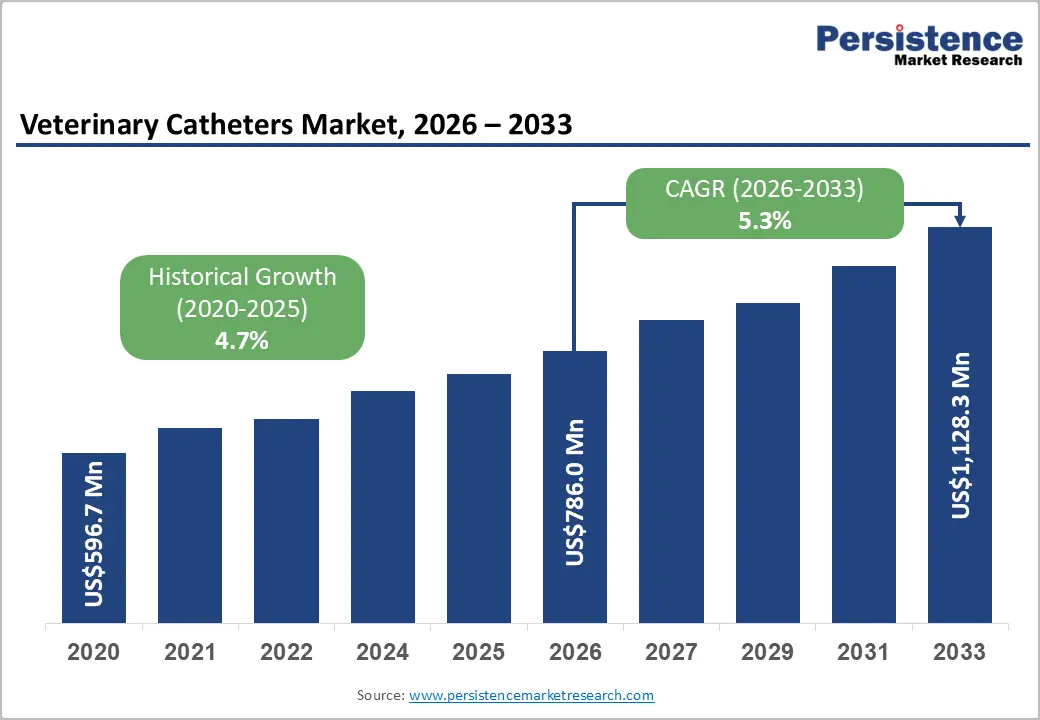
The global veterinary catheters market size is likely to be valued at US$786.0 million in 2026 and is estimated to reach US$1128.3 million by 2033, growing at a CAGR of 5.3% during the forecast period from 2026 to 2033, driven by rising companion animal healthcare expenditure, expanding veterinary infrastructure, and increasing adoption of advanced clinical procedures.
Growth momentum is supported by increasing pet ownership and longer animal lifespans, creating greater demand for diagnostic, surgical, and critical care interventions requiring catheterization. Regulatory emphasis on animal welfare standards is encouraging modernization of veterinary treatment protocols and procedural capabilities. Adoption of biocompatible materials and specialized catheter technologies is improving procedural outcomes and reducing complications.
Key Industry Highlights:
- Leading Catheter Type: Peripheral intravenous (IV) catheters are set to hold around 38% revenue share in 2026, driven by near-universal clinical application across companion animal emergency care and fluid therapy protocols.
- Fastest-growing Catheter Type: Intraosseous (IO) catheters are projected as the fastest-growing segment, supported by expanding adoption in exotic and critically ill animal care, where peripheral venous access is clinically impractical.
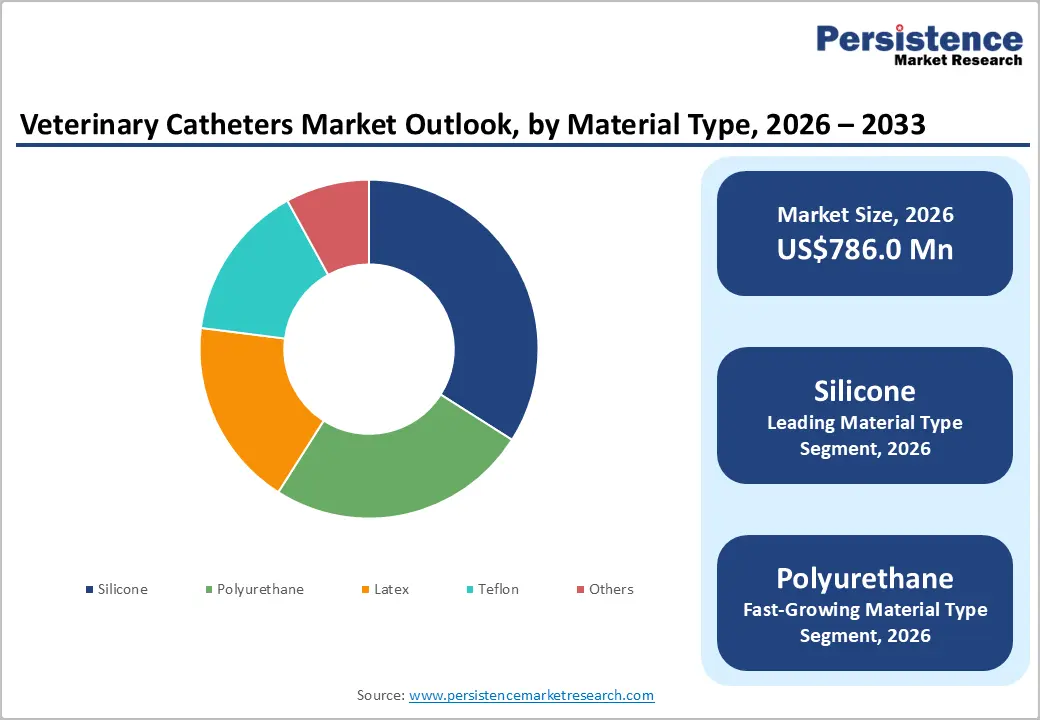
- Leading Material Type: Silicone catheters are estimated to hold roughly 34% revenue share in 2026, due to superior biocompatibility and established clinical acceptance in long-term indwelling urinary and central venous veterinary applications.
- Fastest-growing Material Type: Polyurethane is forecast to record the fastest growth, driven by kink resistance and antimicrobial coating compatibility that address critical care infection control requirements in companion animal intensive care settings.
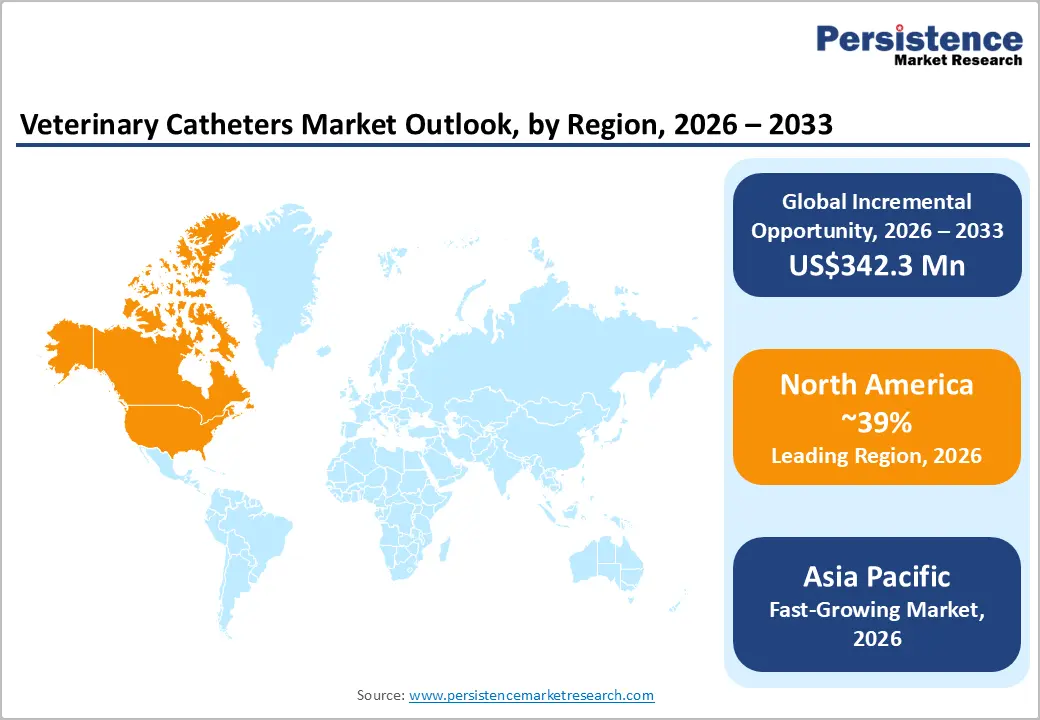
- Regional Leadership: North America is projected to capture roughly 39% of the market share by 2026, driven by advanced veterinary healthcare infrastructure.
- Competitive Environment: The market reflects a moderately fragmented structure, driven by participation from B. Braun, ICU Medical, Smiths Medical, Mila International, and Jorgensen Laboratories.
DRO Analysis
Driver - Rising Companion Animal Healthcare Expenditure and Clinical Interventions
Growing pet ownership and increasing willingness to invest in advanced veterinary care are expanding demand for catheter-based procedures across hospitals and specialty clinics. Chronic disease management, surgical interventions, oncology treatments, and emergency medicine frequently require intravenous access, urinary drainage, or vascular monitoring, creating consistent utilization of veterinary catheter products. Improved awareness regarding preventive healthcare is increasing clinical visits and treatment adoption.
According to the American Veterinary Medical Association (AVMA), veterinary service expenditures in the U.S. continued to rise in 2025, reflecting sustained investment in animal healthcare. Higher spending levels enable wider adoption of advanced treatment protocols, intensive care services, and surgical procedures. Greater procedural volumes directly increase utilization of peripheral intravenous, central venous, and urinary catheter systems across veterinary facilities.
Restraint - Supply Chain Complexity and Distribution Challenges
Global supply chains for medical-grade polymers and sterilized healthcare products remain vulnerable to transportation disruptions, inventory shortages, and supplier concentration risks. Veterinary-focused catheter manufacturers frequently compete with human healthcare suppliers for similar raw materials and production resources.
Distribution inefficiencies can increase lead times and inventory carrying costs, affecting product availability across smaller veterinary facilities. Limited supply consistency may constrain expansion strategies and reduce operational flexibility for distributors serving geographically dispersed healthcare networks.
Opportunity - Development of Species-Specific Catheter Technologies
Growing clinical specialization within veterinary medicine creates opportunities for manufacturers to design catheters optimized for distinct animal anatomies and treatment requirements. Species-specific products can improve procedural efficiency, reduce insertion complications, and enhance patient outcomes. Differentiated product portfolios support stronger clinical adoption among specialty hospitals and advanced care facilities.
Innovation pathways include antimicrobial coatings, flexible materials, imaging-compatible designs, and minimally invasive access systems. Regulatory focus on animal welfare and procedural safety supports investment in advanced technologies. Product customization can expand utilization across companion animals, livestock, and exotic species while strengthening manufacturer positioning in specialized clinical segments.
Category-wise Analysis
Catheter Type Insights
Peripheral intravenous (IV) catheters are anticipated to secure around 38% of the veterinary catheters market share in 2026, reflecting the near-universal application of peripheral IV access across companion animal emergency care, surgical preparation, and outpatient fluid therapy. Major veterinary hospital chains such as Veterinary Centers of America (VCA) Animal Hospitals integrate peripheral IV catheters into standard admission protocols, driving consistent high-volume procurement.
Intraosseous (IO) catheters are expected to be the fastest-growing segment, propelled by the increasing application of IO access in neonatal, exotic, and critically ill animals where peripheral venous access is clinically impractical. Emergency veterinary programs at Colorado State University Veterinary Teaching Hospital have standardized IO catheter protocols for avian and small exotic species, demonstrating the expanding procedural base.
Material Type Insights
Silicone catheters are poised to dominate with a forecast market share of over 34% in 2026, powered by superior biocompatibility, flexibility across body temperature ranges, and an established clinical track record in long-term indwelling urinary and central venous applications. Manufacturers such as Smiths Medical supply silicone-based veterinary catheters to multi-specialty referral centers, where extended dwell-time requirements make material quality a primary purchasing criterion.
Polyurethane is estimated to be the fastest-growing segment, fueled by its advantageous combination of kink resistance, radiopacity, and compatibility with antimicrobial coating technologies that address catheter-associated infection concerns in critical care environments. Becton, Dickinson and Company has commercialized polyurethane-based veterinary catheter lines specifically designed for small animal intensive care, establishing a clinical reference base that accelerates institutional adoption. The material's mechanical performance at thinner wall gauges allows the development of higher-flow catheters with reduced vessel trauma profiles, a benefit that drives preference among board-certified veterinary surgeons.
Animal Type Insights
Companion animals are likely to be the leading segment with a projected 62% of the veterinary catheters market share in 2026 due to the high procedural frequency associated with canine and feline medical care, including surgery, chemotherapy, chronic disease management, and emergency critical care. Banfield Pet Hospital, operating within PetSmart locations across North America, reports catheter utilization as a standard component of wellness and acute care protocols for dogs and cats.
Livestock animals are anticipated to be the fastest-growing segment, fueled by government-mandated improvements in large-animal health management across emerging agricultural economies and the rising economic value assigned to individual livestock units within commercial dairy, poultry, and aquaculture operations. Zoetis has expanded its large-animal clinical support programs in India and Brazil, providing veterinary practitioners with catheter-based fluid therapy training that directly increases procedural adoption.
Regional Insights
North America Veterinary Catheters Market Trends
North America is expected to lead with an estimated 39% of the veterinary catheters market share in 2026, supported by advanced veterinary infrastructure, high companion animal healthcare expenditure, strong insurance penetration, and widespread adoption of specialty treatment services. Expansion of referral hospitals and emergency care facilities is increasing procedural volumes that require vascular access devices.
U.S. Veterinary Catheters Market Insights
The U.S. is projected to account for nearly 82% of the North American market in 2026, supported by a large companion animal population, extensive veterinary hospital networks, and growing utilization of advanced surgical procedures. Increasing pet healthcare spending is driving demand for intravenous and urinary catheterization products.
Canada Veterinary Catheters Market Insights
Canada is expected to contribute approximately 18% of the North American market in 2026, driven by increasing veterinary clinic modernization and rising adoption of preventive animal healthcare services. Growing awareness regarding advanced treatment options is encouraging the use of specialized catheter products. Continued investment in veterinary infrastructure is supporting wider access to diagnostic and therapeutic procedures.
Europe Veterinary Catheters Market Trends
Europe is estimated to hold around 24% of the veterinary catheters market share in 2026, supported by strong animal welfare regulations, established veterinary healthcare systems, and increasing adoption of advanced treatment protocols. Regulatory emphasis on treatment quality is encouraging utilization of high-performance catheter technologies. Expansion of specialty veterinary services and rising clinical sophistication continue to support regional growth.
Germany Veterinary Catheters Market Insights
Germany is projected to represent approximately 24% of the European market in 2026, supported by advanced veterinary infrastructure and strong adoption of specialized medical devices. Growing utilization of oncology, surgery, and intensive care treatments is increasing demand for reliable vascular access solutions. Continuous investment in veterinary healthcare facilities is strengthening long-term growth prospects.
U.K. Veterinary Catheters Market Insights
The U.K. is expected to account for nearly 19% of the European market in 2026, driven by rising pet ownership and the expansion of corporate veterinary practice networks. The development of referral centers and emergency treatment facilities is increasing procedural requirements. Growing demand for advanced companion animal healthcare is supporting the adoption of premium catheter products.
Asia Pacific Veterinary Catheters Market Trends
Asia Pacific is forecast to be the fastest-growing market for veterinary catheters, stimulated by expanding veterinary infrastructure, rising pet ownership, and increasing livestock healthcare investments. Rapid development of veterinary hospitals, stronger animal welfare awareness, and increasing healthcare expenditure are accelerating product adoption. Expansion of local manufacturing capabilities is improving product accessibility across emerging healthcare systems.
China Veterinary Catheters Market Insights
China is projected to account for nearly 36% of the Asia Pacific market in 2026, supported by the rapid expansion of companion animal healthcare services and modernization of livestock treatment facilities. Increasing investments in veterinary hospitals and diagnostic capabilities are creating higher demand for catheter-based procedures. Growth in domestic manufacturing is improving product availability and affordability.
India Veterinary Catheters Market Insights
India is expected to contribute approximately 21% of the Asia Pacific market in 2026, driven by increasing pet ownership, expanding veterinary clinic networks, and strengthening livestock healthcare initiatives. Government-supported animal health programs are improving access to veterinary treatment services. Rising awareness regarding advanced animal care is supporting broader adoption of catheter technologies.
Competitive Landscape
The global veterinary catheters market is moderately fragmented, characterized by participation from diversified medical device manufacturers and specialized veterinary healthcare suppliers. Key companies include B. Braun, ICU Medical, Smiths Medical, Mila International, and Jorgensen Laboratories. Product differentiation is largely based on material innovation, procedural suitability, and clinical performance.
Competition focuses on expanding veterinary-specific product portfolios, improving distribution reach, and strengthening relationships with veterinary hospitals and clinics. Investment priorities include biocompatible materials, infection prevention technologies, and specialized catheter designs. Strategic partnerships and product development initiatives continue supporting market positioning across developed and emerging veterinary healthcare environments.
Companies Covered in Veterinary Catheters Market
- B. Braun
- ICU Medical
- Smiths Medical
- Mila International
- Jorgensen Laboratories
- Vygon
- Covetrus
- Medtronic
- Terumo Corporation
- Argon Medical Devices
- Norfolk Vet Products
- SURFLO (Terumo)
- VetOvation
- Henry Schein Animal Health
- Cardinal Health
Frequently Asked Questions
The global veterinary catheters market is projected to reach US$786.0 million in 2026.
Rising companion animal healthcare expenditure, expanding veterinary infrastructure, and increasing adoption of advanced surgical and critical care procedures drive the veterinary catheters market.
The veterinary catheters market is poised to witness a CAGR of 5.3% from 2026 to 2033.
Development of species-specific catheter technologies and expansion of advanced veterinary specialty care services create significant market opportunities.
Some of the key market players include B. Braun, ICU Medical, Smiths Medical, Mila International, and Jorgensen Laboratories.


