




- Nutraceuticals & Functional Foods
- Bio Active Protein and Peptides Market
Bio Active Protein and Peptides Market Size, Share, Growth, and Regional Forecast, 2026 to 2033
Bio Active Protein and Peptides Market by Procedure (Plant Source, Animal Source), End User (Functional Food, Functional Beverages, Dietary Supplements, Animal Nutrition, Personal Care, Others) and Regional Analysis from 2026 to 2033

Bio Active Protein and Peptides Market Share and Trends Analysis
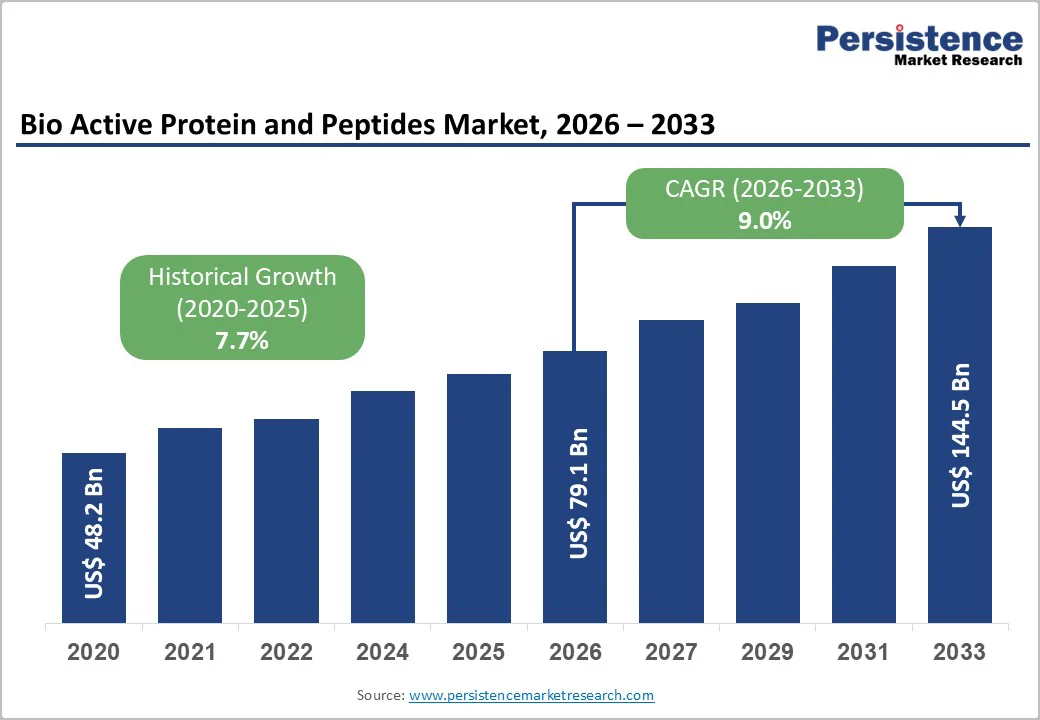
The global bio active protein and peptides market size is estimated to grow from US$ 79.1 billion in 2026 to US$ 144.5 billion by 2033. The market is projected to record a CAGR of 9.0% from 2026 to 2033.
The market is growing steadily, driven by an aging population, rising musculoskeletal disorders, and increasing demand for functional nutrition and supplements. North America leads due to advanced R&D and regulatory efficiency. At the same time, Asia Pacific grows fastest, fueled by expanding healthcare access, rising consumer awareness, and increasing local production of protein and peptide-based ingredients.
Key Industry Highlights
- Dominant Segment: Functional Food leads the 2025 bioactive protein and peptides market with 40.6% share, driven by rising consumer demand for health-promoting foods, increased awareness of protein’s role in musculoskeletal and overall health, growing preference for plant- and animal-based bioactive proteins, and expanding product innovation in nutrition and wellness applications.
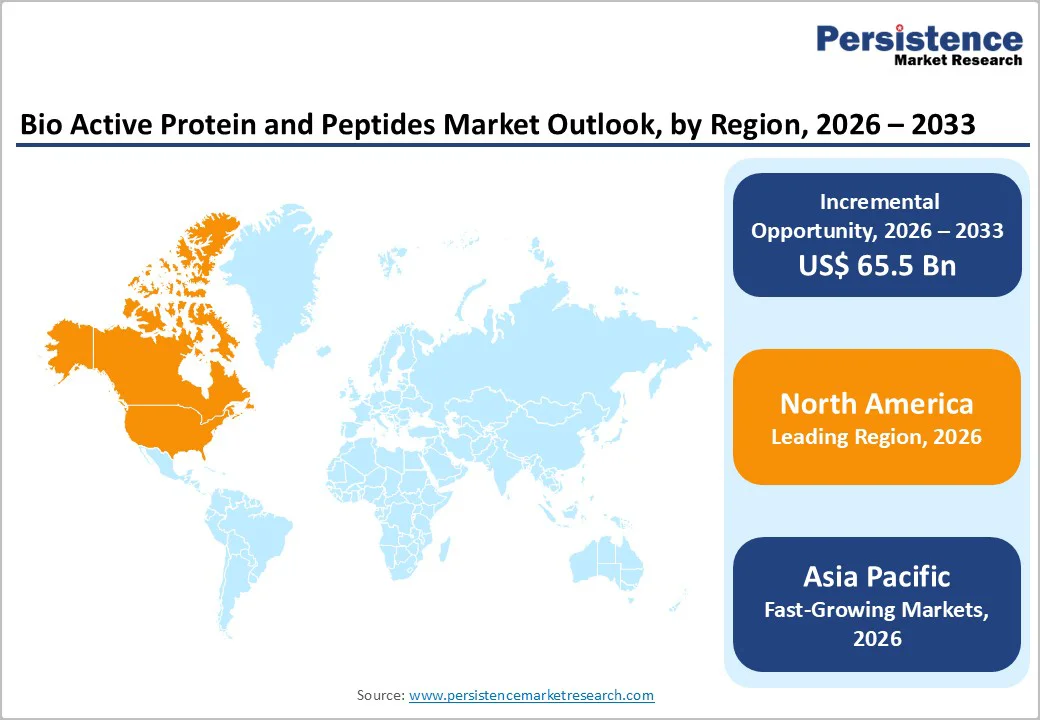
- Dominant Region: North America holds 35.9% share due to strong R&D, efficient regulatory pathways, high consumer awareness, and established manufacturing infrastructure. Europe follows closely, while Asia Pacific grows fastest, fueled by expanding healthcare access, rising nutrition awareness, and strengthening local protein and peptide production capabilities.
- Market Drivers: Growth is propelled by aging populations, rising musculoskeletal and metabolic health concerns, increasing demand for dietary supplements and functional foods, technological innovations in protein extraction and bioactive peptide development, and expanding distribution channels across emerging markets.
- Market Opportunity: Key opportunities include plant-based and marine-derived bioactive proteins, protein hydrolysates and peptide supplements, expansion into functional beverages and dietary supplements, cost-effective production, collaborations for novel bioactive formulations, and growth in emerging regions with rising health-conscious consumer bases.
| Key Insights | Details |
|---|---|
| Bioactive Protein and Peptides Market Size (2026E) | US$ 79.1 Bn |
| Market Value Forecast (2033F) | US$ 144.5 Bn |
| Projected Growth (CAGR 2026 to 2033) | 9.0% |
| Historical Market Growth (CAGR 2020 to 2025) | 7.7% |
Market Dynamics
Driver - Growing Awareness of Nutritional Benefits
Growing awareness of the nutritional benefits of protein is a key driver for the bioactive protein and peptides market. Older adults who consume higher dietary protein, around 1.0-1.2 grams per kilogram of body weight per day instead of the standard 0.8 grams, maintain muscle mass and strength more effectively, reducing risks of sarcopenia, frailty, and bone loss.
Studies in older populations show that increasing total protein intake improves skeletal muscle index and hand-grip strength. International guidelines now recommend at least 1.0-1.2 grams per kilogram per day for seniors, with up to 1.5 grams per kilogram during periods of illness or recovery, emphasizing the need for high-quality protein sources or supplements.
As populations age globally, this rising recognition drives demand for bioactive protein and peptide-based functional foods, dietary supplements, and specialized nutritional products. Consumer education on protein’s role in overall wellness further accelerates market growth and encourages innovation in protein formulations.
Restraints - Competition from Alternative Ingredients
Competition from alternative protein sources, such as plant-based proteins (soy, pea, and rice) and mycoprotein, as well as insect proteins and lab-cultured proteins, is increasingly restraining the growth of the bioactive protein and peptides market. Plant-based proteins already account for roughly 62-71% of the alternative protein market, reflecting strong consumer adoption.
Rising preference for vegan, vegetarian, or flexitarian diets, coupled with sustainability and ethical considerations, reduces demand for animal-derived or specialty peptide-based products. The availability of plant protein powders, mycoproteins, and other alternatives with improved taste, digestibility, and complete amino acid profiles makes them attractive substitutes in functional foods, supplements, and nutrition-focused products.
As manufacturers and consumers increasingly choose more affordable, scalable, and clean-label protein sources, the willingness to pay for high-cost bioactive peptides declines. This growing competition from alternative ingredients limits market expansion and pressures bioactive protein suppliers to innovate or differentiate their offerings to maintain market share.
Opportunity - Development of Plant-Based and Marine Proteins
The rise of high-quality plant-based and marine proteins opens a large opportunity for the bioactive protein and peptides market. Globally, plant-derived sources now supply about 60% of average daily protein intake, while aquatic foods contribute roughly 7%. As farmed aquaculture production recently surpassed wild fish catch, global per-capita seafood consumption has more than doubled since the early 1960s, making marine proteins increasingly accessible.
Simultaneously, plant proteins (from pulses, legumes, grains) are gaining acceptance due to lower fat, zero cholesterol, and better sustainability compared to animal proteins. These shifts, increasing appetite for sustainable, clean-label proteins and greater availability of aquatic protein, create a vast addressable base for bioactive protein/peptide formulations.
Manufacturers can leverage plant and marine-derived proteins to craft functional foods, supplements, and nutrition products that meet evolving consumer preferences for health, environmental sustainability, and affordability, thus expanding the market beyond traditional animal-derived proteins.
Category-wise Analysis
By Source Insights
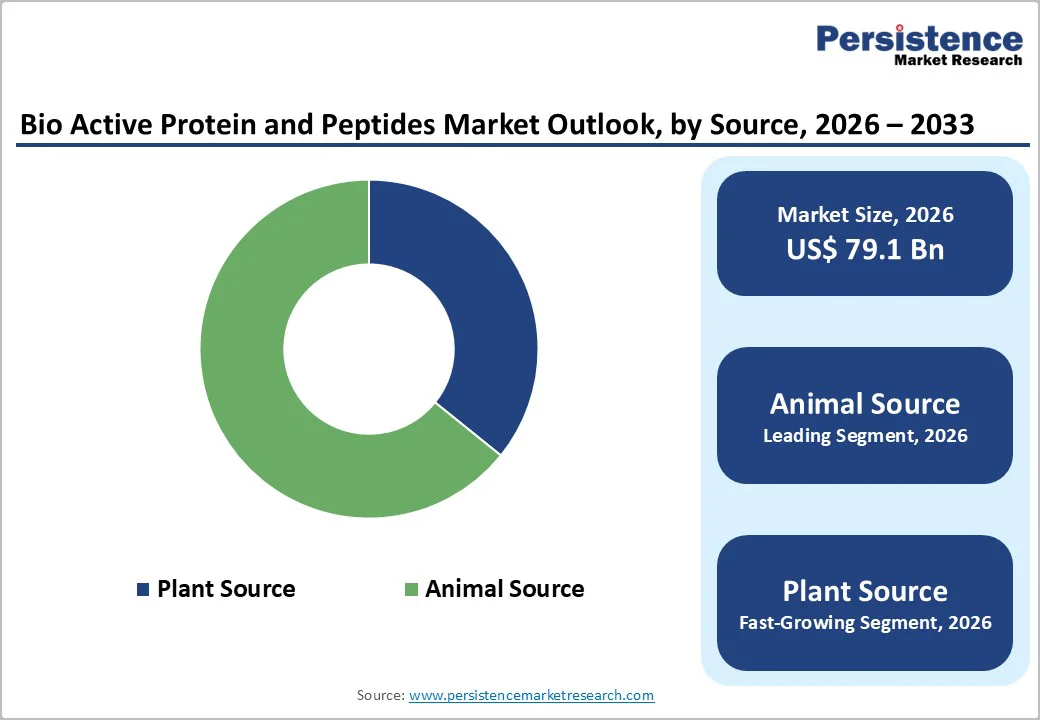
Animal Source occupies 64.2% share of the global market in 2025, due to their superior nutritional quality and bioavailability. Proteins from milk, eggs, meat, and fish have digestibility rates of about 94-97%, higher than the 78-88% typical of plant proteins. They also provide a complete profile of essential amino acids, including leucine and sulfur-containing amino acids, which are critical for muscle synthesis, tissue repair, and overall health.
Bioactive protein and peptide products often target muscle maintenance, bone support, and recovery, especially for older adults or clinical nutrition. The high efficacy, faster absorption, and proven health benefits of animal proteins make them more widely adopted in functional foods, supplements, and therapeutic formulations, securing their dominant market share over plant-based or alternative protein sources.
By Application Insights
Functional foods dominate the bioactive protein and peptides market with 40.6% share in 2025, because they enable consumers with health benefits, such as improved muscle strength, bone support, and overall wellness, through daily meal intake. Protein-enriched foods have become increasingly popular, with surveys showing that over 70% of adults prioritize nutrient-fortified foods in their diets.
The convenience of consuming protein through familiar foods like dairy products, cereals, and snacks makes them more acceptable than standalone powders or supplements. Rising health awareness, busy lifestyles, and the desire to prevent chronic conditions drive adoption of protein-fortified functional foods.
As a result, functional foods remain the largest application segment, capturing the majority of market share and serving as the primary route for delivering bioactive proteins and peptides to consumers.
Regional Insights
North America Bio Active Protein and Peptides Market Trends
North America dominates the bio active protein and peptides market with 35.9% share in 2025, due to high protein consumption, strong health awareness, and advanced infrastructure. U.S. adults consume about 15-16% of their daily calories from protein, reflecting substantial baseline demand for high-quality protein sources.
Additionally, a significant portion of the population regularly uses dietary supplements, indicating willingness to invest in health and wellness. The region benefits from well-established healthcare systems, clear regulatory frameworks, and advanced research and development capabilities, enabling the production and commercialization of innovative protein and peptide-based products.
These factors, combined with widespread availability of functional foods, fortified products, and clinical nutrition options, position North America as the leading market, capturing the largest share of global bioactive protein and peptide consumption.
Europe Bioactive Protein and Peptides Market Trends
Europe is a significant market, as dietary protein consumption there is consistently above recommended levels, indicating a strong base demand for high-quality protein sources. Most European diets combine meat, dairy and grains, which together supply around 75% of total protein intake.
Adult males in several European countries consume between 67 and 114 grams of protein per day, and women between 59 and 102 grams, exceeding the baseline recommendation of 0.83 g/kg body weight. Widespread acceptance of dairy, meat, and mixed-diet proteins makes the region receptive to advanced protein and peptide-based products.
Additionally, a significant proportion of Europeans already use dietary supplements, reflecting health awareness and openness to fortified foods. This combination of high existing protein intake, nutritional awareness and a culture of supplementation makes Europe a solid and receptive market for bioactive proteins and peptides.
Asia Pacific Bioactive Protein and Peptides Market Trends
Asia Pacific is the fastest-growing market for bioactive proteins and peptides due to rising health awareness, changing dietary habits, and increasing protein consumption. Urban population are adopting more protein-rich diets to support muscle health, aging wellness, and overall nutrition.
Per capita protein intake in countries such as China and India has increased significantly over the past decade, reflecting greater access to dairy, eggs, fish, and plant-based protein sources. Rapid economic growth, higher disposable incomes, and expansion of modern retail and healthcare infrastructure make functional foods and dietary supplements more accessible.
Additionally, younger generations are embracing fitness and preventive healthcare, boosting demand for bioactive protein and peptide-enriched products. These factors collectively position Asia Pacific as the fastest-growing market for bioactive proteins and peptides.
Competitive Landscape
Leading companies in the bioactive protein and peptides market focus on high-quality protein and peptide production, innovative formulations, and strict quality control. They invest in research, sustainable sourcing, and functional product development, partnering with food and supplement manufacturers to enhance efficacy, safety, and global market adoption.
Key Industry Developments:
- In August 2024, Fonterra Co-operative Group Ltd expanded its Studholme site on New Zealand’s South Island to boost production of high-value protein ingredients. The co-op invested around NZ$ 75 million in the project, aiming to transform Studholme into a hub for advanced dairy-derived proteins used in medical nutrition and high-protein sports-nutrition applications.
- In February 2024, Cargill and ENOUGH expanded their partnership after Cargill invested in ENOUGH’s most recent funding round and signed a commercial agreement to use and market ENOUGH’s mycoprotein brand ABUNDA. The deal enabled Cargill to co-create and offer sustainable, protein-rich alternative foods using ABUNDA, which is produced via zero-waste fungal fermentation.
Companies Covered in Bio Active Protein and Peptides Market
- Archer Daniels Midland Company (ADM)
- Kerry Group
- Cargill Inc.
- Omega Protein
- Bunge Ltd.
- E.I. Du Pont De Nemours and Company
- Fonterra Co-operative Group Ltd.
- Royal DSM
- CHS Inc
- Glanbia plc
- Arla Foods amba
- Others
Frequently Asked Questions
The global bio active protein and peptides market is projected to be valued at US$ 79.1 billion in 2026.
Rising health awareness, aging populations, growing protein demand, functional foods adoption, and technological innovations drive the global Bioactive Protein and Peptides market.
The global bio active protein and peptides market is poised to witness a CAGR of 9.0% between 2026 and 2033.
Opportunities include plant-based and marine proteins, functional foods, dietary supplements, emerging markets expansion, sustainable sourcing, and innovative peptide formulations.
Archer Daniels Midland Company (ADM), Kerry Group, Cargill Inc., Omega Protein, Bunge Ltd., E.I. Du Pont De Nemours and Company.


