




- Nutraceuticals & Functional Foods
- Probiotics Market
Probiotics Market Size, Share, and Growth Forecast 2026 - 2033
Probiotics Market by Probiotics Type (Lactobacillus, Bifidobacterium, Streptococcus, Bacillus, Others), by Form (Capsules & Tablets, Powder, Liquid, Others), Application (Food & Beverages, Dietary Supplements, Pharmaceuticals, Animal Feed, Others), Distribution Channel (Supermarkets/Hypermarkets, Pharmacies, Online Stores, Specialty Stores), and Regional Analysis, 2026 - 2033

Probiotics Market Share and Trends Analysis
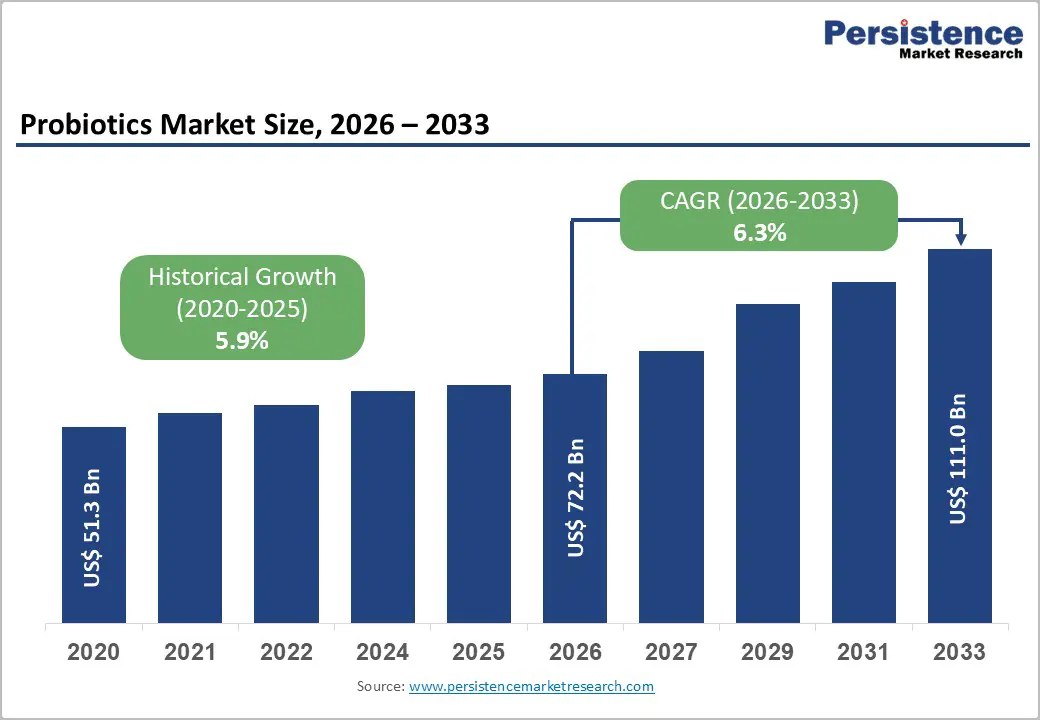
The global probiotics market size is expected to be valued at US$ 72.2 billion in 2026 and projected to reach US$ 111.0 billion by 2033, growing at a CAGR of 6.3% between 2026 and 2033. Rise in consumer awareness regarding gut health and its connection to overall well-being has significantly driven the demand for probiotics across functional foods, dietary supplements, and pharmaceutical applications.
The shift towards preventive healthcare measures, coupled with increasing incidences of gastrointestinal disorders, lifestyle-related health concerns, and antibiotic-induced gut imbalances, has accelerated the adoption of probiotic-enriched products globally. The expanding middle-class population with higher disposable incomes, particularly in emerging economies, is further contributing to sustained market expansion as consumers increasingly invest in health-promoting products.
Key Industry Highlights:
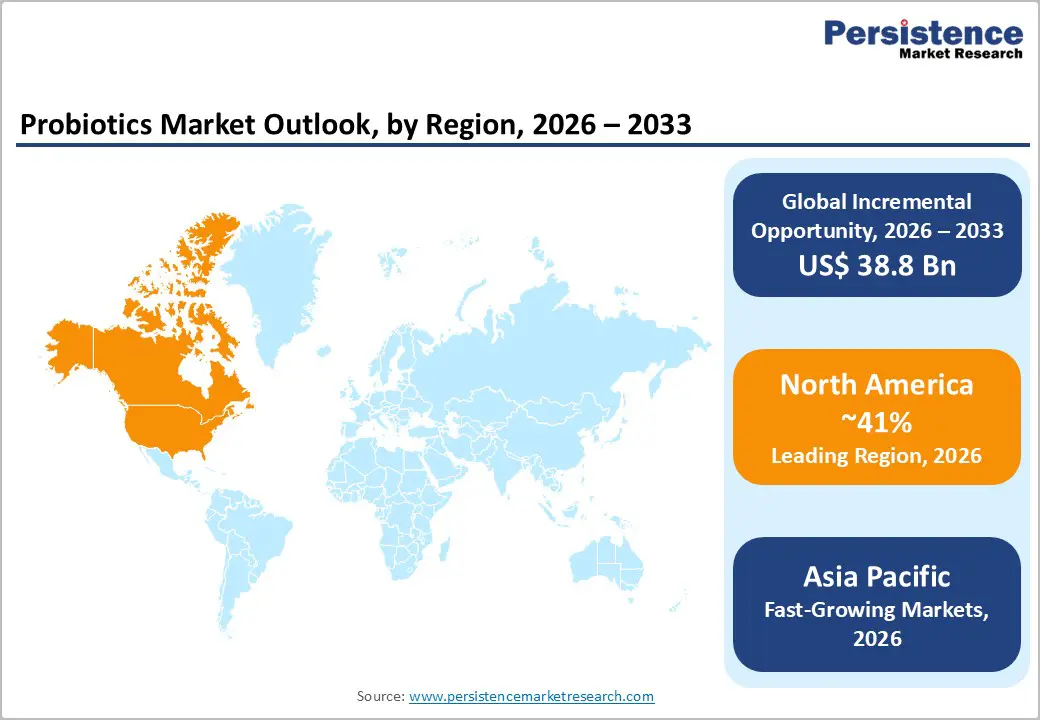
- Leading Region: North America led the global probiotics market with about 41% share in 2025, supported by robust regulatory frameworks, high consumer awareness, strong healthcare professional endorsements, progressive FDA actions enabling health claims, and sustained research and innovation investment by leading dairy, supplement, and ingredient companies.
- Fastest Growing Region: Asia Pacific is projected to post the highest CAGR through 2033, as rising incomes, urban lifestyles, post-pandemic immunity concerns, supportive government messaging on functional foods, and rapid expansion of e-commerce channels together drive accelerated uptake across both probiotic foods and supplements.
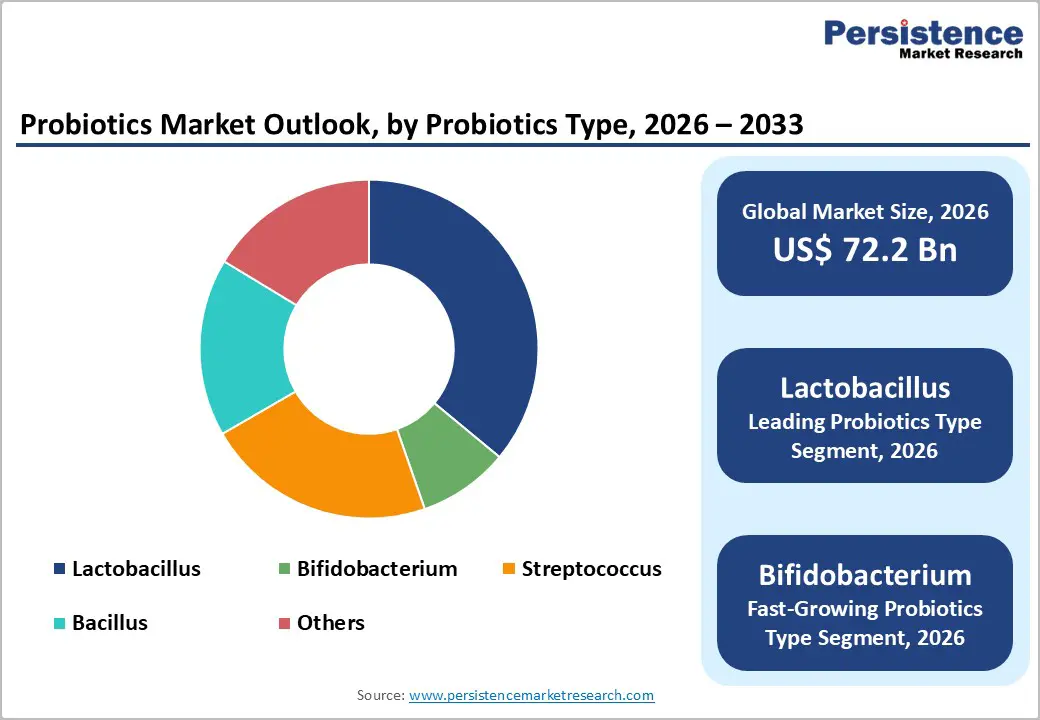
- Dominant Segment: Lactobacillus remains the leading probiotics type, with about 36% market share in 2025, underpinned by decades of clinical research, strong efficacy in digestive and immune health, broad regulatory acceptance, and ubiquitous presence in yogurt, fermented milk, and a wide range of supplements.
- Fastest Growing Segment: Bifidobacterium is the fastest-growing probiotics type, benefiting from mounting evidence in early-life nutrition, immune modulation, metabolic regulation, and mental health via the gut-brain axis, alongside increased industry focus on developing differentiated Bifidobacterium-based formulations.
| Key Insights | Details |
|---|---|
| Probiotics Market Size (2026E) | US$ 72.2 Bn |
| Market Value Forecast (2033F) | US$ 111.0 Bn |
| Projected Growth (CAGR 2026 to 2033) | 6.3% |
| Historical Market Growth (CAGR 2020 to 2025) | 5.9% |
Market Dynamics
Drivers - Rising Prevalence of Gastrointestinal Disorders and Preventive Healthcare Adoption
The increasing diagnosis of gastrointestinal disorders, including irritable bowel syndrome, inflammatory bowel disease, and other digestive health concerns, has significantly propelled the probiotics market growth. Evidence from the National Center for Biotechnology Information (NCBI) indicates that probiotics demonstrate efficacy in disease prevention, treatment, and adjunctive management across gastrointestinal, immune-mediated, and metabolic disorders. The rising population, sedentary lifestyles, and poor dietary habits have contributed to a higher prevalence of gut-related health issues, pushing consumers toward probiotic solutions as part of daily health routines. Clinical studies show that specific bacterial strains help improve digestive health, reduce gastrointestinal disease risk, and enhance immune function, encouraging physicians and pediatricians to recommend probiotics as adjuncts to antibiotic therapy and pediatric nutrition. The broader shift to preventive healthcare, where individuals proactively seek to strengthen immunity and prevent diseases rather than treat them post onset, is transforming probiotics into essential, repeat-purchase health products across diverse age groups.
Integration of Probiotics into Functional Foods and Beverage Applications
The integration of probiotics into functional foods and beverages has emerged as a powerful growth driver, with manufacturers fortifying everyday consumables with beneficial bacteria to meet rising demand for health-promoting nutrition. Under the European Food Safety Authority (EFSA) framework and supported by research in Food Science & Biotechnology, functional foods are now considered essential diet components in developed economies because of their combined nutrition and health benefits, and probiotics are central to this trend. The food and beverages segment accounts for the majority of global probiotic consumption, supported by strong uptake of probiotic-enriched yogurt, fermented milk products, cereals, and beverages among health-conscious consumers. Companies are extending innovation beyond traditional dairy into plant-based yogurts, snack bars, infant formula, and ready-to-drink probiotic beverages that fit busy lifestyles. Advanced encapsulation and stabilization technologies are enhancing probiotic viability and shelf life through processing, transport, and storage, ensuring that effective colony-forming units reach the consumer. This deep integration into familiar foods enables consumers to obtain probiotic benefits seamlessly as part of daily diets, significantly broadening market reach and improving long-term adherence.
Restraints - Regulatory Complexity and Stringent Health Claims Approval Processes
The fragmented and tightening regulatory environment surrounding probiotics presents a major barrier for companies aiming at international scale-up. Studies in the American Journal of Nutrition and Applied Research highlight that probiotics are variably classified as food, dietary supplements, or medicines across jurisdictions, each with distinct compliance requirements. The U.S. Food and Drug Administration (FDA) primarily regulates probiotics used in foods via the Generally Recognized as Safe (GRAS) system, while EFSA follows a rigorous Qualified Presumption of Safety (QPS) approach and requires strong clinical evidence to support any health claims on labels. This divergence complicates cross-border product launches, as dossiers must be customized and multiple trials may be needed to satisfy local regulators.
The lack of globally harmonized guidance on strain safety, efficacy standards, and permitted claims forces manufacturers to invest heavily in regulatory, clinical, and quality systems. These costs lengthen development timelines, constrain smaller firms, reduce product innovation speed, and limit the range of claims that can be communicated to consumers, thereby dampening the full potential market growth.
Viability and Stability Challenges Across Manufacturing and Distribution
Ensuring that live probiotic microorganisms remain viable from production line to consumer ingestion remains a major operational restraint for the industry. Probiotics are sensitive to heat, humidity, oxygen, gastric acid, and bile salts; exposure to unfavorable conditions during processing, storage, or distribution can dramatically reduce living cell counts and diminish health benefits.
Pharmaceutical research in the International Journal of Nanomedicine points out that biological and formulation barriers limit clinical performance, because microorganisms require controlled environments to retain their functional properties. Historically, inadequate temperature-stability technologies led to widespread availability of products that did not maintain viable counts at room temperature, undermining consumer trust and attracting regulatory scrutiny. Even with modern microencapsulation and advanced delivery systems, consistently preserving targeted colony-forming units through the full shelf life remains challenging, especially in large-scale or multi-climate logistics networks. Cold chain requirements and strict inventory management increase costs for manufacturers and retailers, while improper storage at retail or in home environments can further compromise efficacy, restraining broader market penetration.
Opportunities - Development of Next-Generation Probiotics and Strain-Specific Therapeutic Applications
Next-generation probiotics (NGPs) and highly targeted, strain-specific formulations are opening new, higher-value segments that blend nutrition and therapeutics. Research in Frontiers in Microbiology and the International Journal of Nanomedicine describes NGPs as advanced probiotic candidates such as Faecalibacterium prausnitzii, Akkermansia muciniphila, and Christensenella minuta, shows significant promise in managing inflammatory bowel disease, metabolic disorders, obesity, and immune dysregulation. The U.S. FDA has defined a distinct regulatory framework for Live Biotherapeutic Products (LBPs) intended to diagnose, cure, mitigate, or treat diseases, enabling a new class of prescription or clinician-supervised probiotic therapies.
Globally, more than 2,147 clinical trials involving probiotic interventions have been registered, spanning indications from viral infections (including COVID-19) and antibiotic-associated diarrhea to neurological conditions and cancer adjunct therapy. This expanding evidence base supports movement toward precision probiotics tailored by strain, dosage, and delivery format to specific conditions, patient cohorts, or microbiome profiles. Companies that invest in proprietary strains supported by robust clinical data, and that navigate the LBP pathway effectively, can capture premium pricing and strong competitive differentiation in both pharmaceutical and advanced nutraceutical channels.
Category-wise Analysis
Probiotics Type Insights
Lactobacillus is the leading probiotic type, holding about 36% market share in 2025. This dominance stems from extensive clinical backing, broad regulatory familiarity, and deep penetration in consumer products. The UK Food Standards Agency notes Lactobacillus as one of the most widely used probiotic genera, especially in yogurt and fermented dairy that underpin the global probiotic foods segment. Clinical studies in NCBI database have demonstrated that strains such as Lactobacillus rhamnosus GG, L. acidophilus, L. plantarum, and L. casei supports digestive health, help prevent or manage irritable bowel syndrome and infectious diarrhea, bolster immune responses, and assist with lactose intolerance. Their ability to survive gastric acidity and transiently colonize the intestine makes them attractive for diverse formulations across foods, supplements, and pharmaceutical products.
Bifidobacterium is the fastest-growing type, fuelled by strong evidence in infant and elderly nutrition, immune support, and metabolic health. Studies show strains such as B. lactis, B. longum, B. bifidum, and B. breve are beneficial for infants’ gut microbiota, support barrier function, and may reduce risk or severity of certain inflammatory and functional bowel disorders. With increasing focus on early-life microbiome development and healthy aging, investment in novel Bifidobacterium strains and condition-specific formulations is accelerating, expanding this segment’s share across applications.
Form Analysis
Capsules & Tablets lead the form segment with an estimated 42% share in 2025, reflecting their convenience, precise dosing, and strong association with clinical efficacy. Consumer health platforms such as Healthline and retail data from chains like CVS Pharmacy show that capsule and tablet probiotics dominate the dietary supplement shelf, commonly delivering between 10 billion and 50 billion CFU per serving with clearly stated strain compositions. Enteric-coated and delayed-release technologies help these formats protect sensitive bacteria from gastric acid, enhancing delivery to the intestines. Modern packaging, including moisture-protective blisters and desiccant systems, improves room-temperature stability and shelf life. Third-party certifications from bodies such as the United States Pharmacopeia (USP) and adherence to Good Manufacturing Practice (GMP) guidelines further enhance trust, making capsules and tablets the preferred choice for consumers seeking predictable, therapeutic-style outcomes.
Powder formats are the fastest growing, driven by flexibility and suitability for a wide range of users, including children and older adults who may have difficulty swallowing pills. Powders can be mixed into water, juices, smoothies, yogurt, or infant formula, supporting both personalization and adherence. They are also well-suited to combination products that include prebiotic fibers, vitamins, or minerals. Single-dose sachets and sticks support on-the-go use and precise CFU delivery, while bulk powders appeal to cost-sensitive or family users, collectively supporting rapid growth of this format.
Distribution Channel Insights
Supermarkets/Hypermarkets remain the leading distribution channel with around 35% share in 2025, driven by strong penetration of probiotic foods and drinks in mainstream grocery baskets. These large-format retailers provide broad product assortments, from mass-market dairy brands to premium functional beverages and private-label offerings that widen access at lower price points. Prominent chilled displays, in-store promotions, and health-focused shelf zoning help educate shoppers and encourage trial. Because grocery trips are frequent and routine, supermarkets are a natural fit for recurring probiotic purchases in yogurt, milk drinks, and other perishable formats.
Online Stores are the fastest-growing channel, benefitting from broader e-commerce adoption and consumer comfort with purchasing health products via digital platforms. Online channels offer extensive product choice, including niche or specialized probiotic brands not available in physical retail, and provide detailed product descriptions, clinical references, and user reviews that support informed decisions. Direct-to-consumer brands leverage subscriptions, personalized recommendations, and microbiome-based consultations to drive loyalty and consistent usage. The shift toward home delivery also supports formulations that do not require a continuous cold chain, or that use specialized packaging to maintain stability, helping online channels rapidly gain share across both supplements and shelf-stable functional beverages.
Regional Insights
North America Probiotics Market Trends and Insights
North America held about 41% of the global probiotics market in 2025. The USFDA’s evolving stance on probiotic-related health claims, for example, the March 2024 qualified health claim linking yogurt consumption to a reduced risk of type 2 diabetes, has strengthened scientific credibility and encouraged manufacturers to invest further in clinical research and product innovation. In the United States, survey data from the International Food Information Council (IFIC) suggest that around 67% adults are aware of probiotics and roughly 32% consume them daily, indicating deep penetration and habitual usage. The region benefits from high healthcare spending, strong physician influence on supplement use, and sophisticated consumers who actively seek evidence-based wellness products.
Robust retail infrastructure spanning supermarkets, drugstores, warehouse clubs, and specialty health retailers supports the broad availability of probiotic foods and supplements. Pharmacies and health professionals often recommend probiotics in conjunction with antibiotics or for chronic digestive conditions, reinforcing trust and supporting repeat purchases. The Canadian Food Inspection Agency (CFIA), maintains structured guidance for probiotic foods and natural health products, supporting growth with clear labeling and quality expectations. Ongoing investment by major players in R&D centers, clinical trials, and age- or condition-specific formulations (e.g., pediatric drops, women’s health capsules, senior-focused blends) ensures North America remains both an innovation hub and a large, relatively mature revenue base.
Asia Pacific Probiotics Market Trends and Insights
Asia Pacific is the fastest-growing probiotics region and is expected to account for an increasingly large share of global demand through 2033. Demographic trends, rising middle-class, urbanization, and aging populations combine with strong cultural traditions of fermented foods to create fertile ground for probiotic adoption. Market analyses suggest Asia Pacific could capture around 47% of global probiotics consumption over the coming decade, supported by rapid uptake in both foods and supplements. China is a central growth engine, with government policies promoting healthier diets and functional foods. Local dairy and beverage companies are ramping up production of probiotic yogurts and drinks, while partnerships between global ingredient suppliers such as ADM and domestic players such as Qingdao Biotech Group help develop regionally tailored formulations and improve manufacturing capabilities.
Competitive Landscape
The probiotics market is highly competitive and moderately fragmented, with a mix of global ingredient suppliers, finished product manufacturers, and emerging biotech firms. Competition is driven by strain innovation, clinical validation, product differentiation, and expansion into functional foods and dietary supplements. Companies focus on developing scientifically backed, condition-specific strains targeting digestive health, immunity, women’s health, and metabolic support. Strategic collaborations, research partnerships, and mergers are common to strengthen product portfolios and geographic presence. Regulatory compliance and quality certifications also play a critical role in brand positioning.
Key Market Developments
- In November 2025, Alkem Laboratories Limited, a leading Indian pharmaceutical company, made a significant move in the gut health management sector by launching DSS, the original De Simone formulation probiotic blend, in India. This strategic entry into the prescription probiotic market, valued at approximately INR 2,071 crore, marked Alkem's commitment to addressing the growing demand for gut health solutions in the country.
Companies Covered in Probiotics Market
- Danone S.A.
- Nestlé S.A.
- Yakult Honsha Co., Ltd.
- Chr. Hansen Holding A/S
- IFF
- Lallemand Inc.
- Probi AB
- BioGaia AB
- Bayer AG
- Morinaga Milk Industry Co., Ltd.
- Kerry Group plc
- Arla Foods amba
- Others
Frequently Asked Questions
The global probiotics market is expected to be valued at about US$ 72.2 billion in 2026, supported by rising awareness of gut-health links, increasing uptake of functional foods and supplements, and a growing burden of gastrointestinal and lifestyle-related disorders across both developed and emerging economies.
Key demand drivers include increasing prevalence of digestive disorders, growing emphasis on preventive healthcare, and expanding clinical evidence that probiotics can support digestive health and immunity. Parallel growth in functional foods and beverages, supported by advanced microencapsulation technologies that protect live bacteria and extend shelf life, is also a major growth catalyst.
North America leads the global probiotics market, with an estimated 41% share in 2025, driven by progressive regulatory developments from the FDA, high consumer awareness (around 67% of U.S. adults recognize probiotics), significant healthcare professional endorsement, and extensive retail and pharmacy distribution networks.
The most important opportunity lies in next-generation probiotics and strain-specific, clinically validated formulations for defined conditions, supported by FDA pathways for Live Biotherapeutic Products, more than 2,147 registered clinical trials, and strong consumer interest in personalized, microbiome-based health solutions that can justify premium pricing.
Key market participants include Danone S.A., Nestlé S.A., Yakult Honsha Co., Ltd., Chr. Hansen Holding A/S (Novonesis), IFF, Lallemand Inc., Probi AB, BioGaia AB, Bayer AG, Morinaga Milk Industry Co., Ltd., Kerry Group plc, Arla Foods amba.


