




- Healthcare Services
- Automated Drug Kiosk Market
Automated Drug Kiosk Market Size, Share, and Growth Forecast 2026 - 2033
Automated Drug Kiosk Market by Product Type (Prescription Drugs, Over-the-Counter Drugs, Wellness Products), End-User (Hospital Pharmacies, Drug Stores & Retail Pharmacies, Others), and Regional Analysis, 2026 - 2033

Automated Drug Kiosk Market Size and Trends Analysis
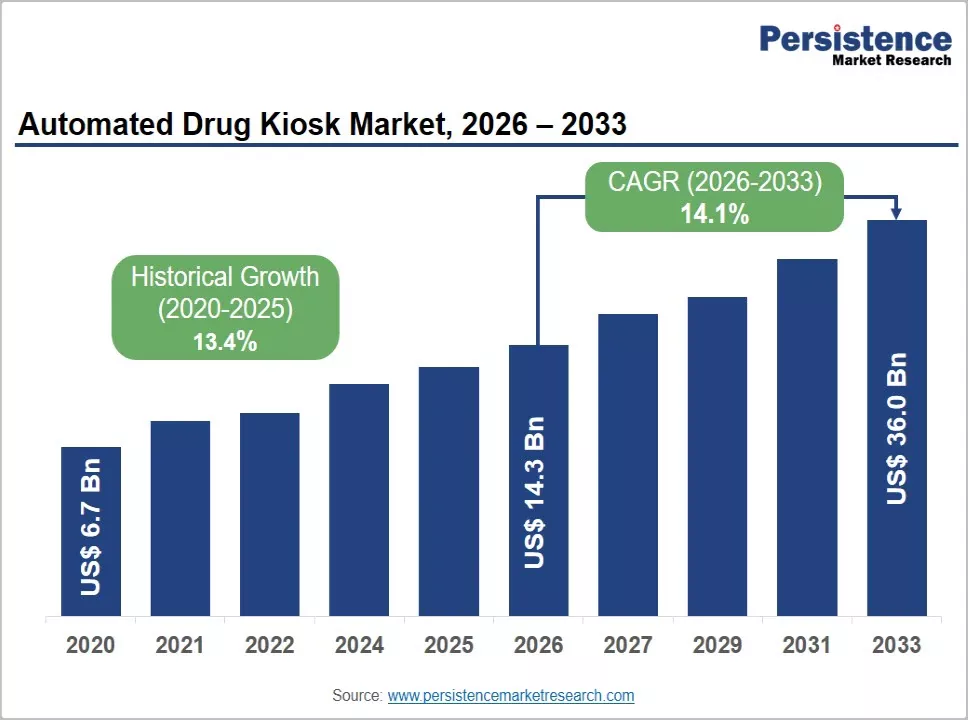
The global automated drug kiosk market size is likely to be valued at US$14.3 billion in 2026 and is projected to reach US$36.0 billion by 2033, growing at a CAGR of 14.1% during the forecast period from 2026 to 2033, driven by rising healthcare consumerism, cost-containment pressures, and digital transformation across pharmacy services. These factors are expanding demand for automated drug kiosks.
Patients increasingly value the convenience, privacy, and round-the-clock access offered by these systems, while healthcare providers benefit from reduced pharmacist workload, shorter wait times, and improved pharmacy service efficiency.
Automated drug kiosks are computer-controlled, pharmacist-overseen dispensing units that provide rapid, self-service access to prescription drugs, over-the-counter medications, and wellness products.
Key Industry Highlights:
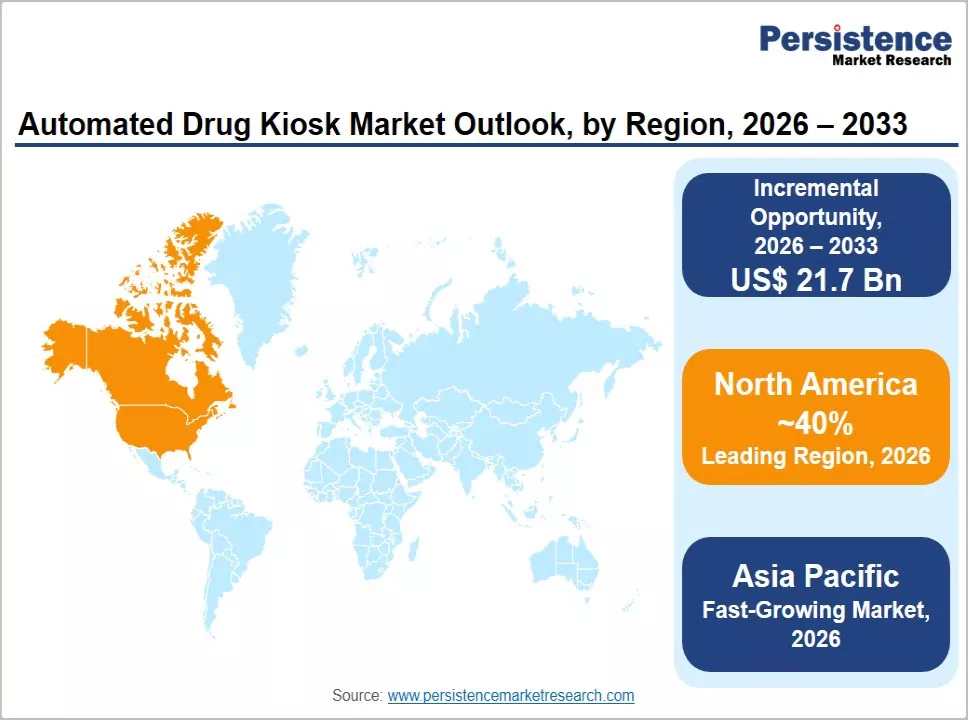
- Leading Region: North America is forecast to lead with around a 40% share in 2026, supported by strong purchasing power, advanced healthcare infrastructure, and widespread adoption of healthcare automation technologies.
- Fastest-growing Region: Asia Pacific is projected to grow the fastest, driven by strong economic expansion in China and India, healthcare modernization, and increasing adoption of digital pharmacy solutions.
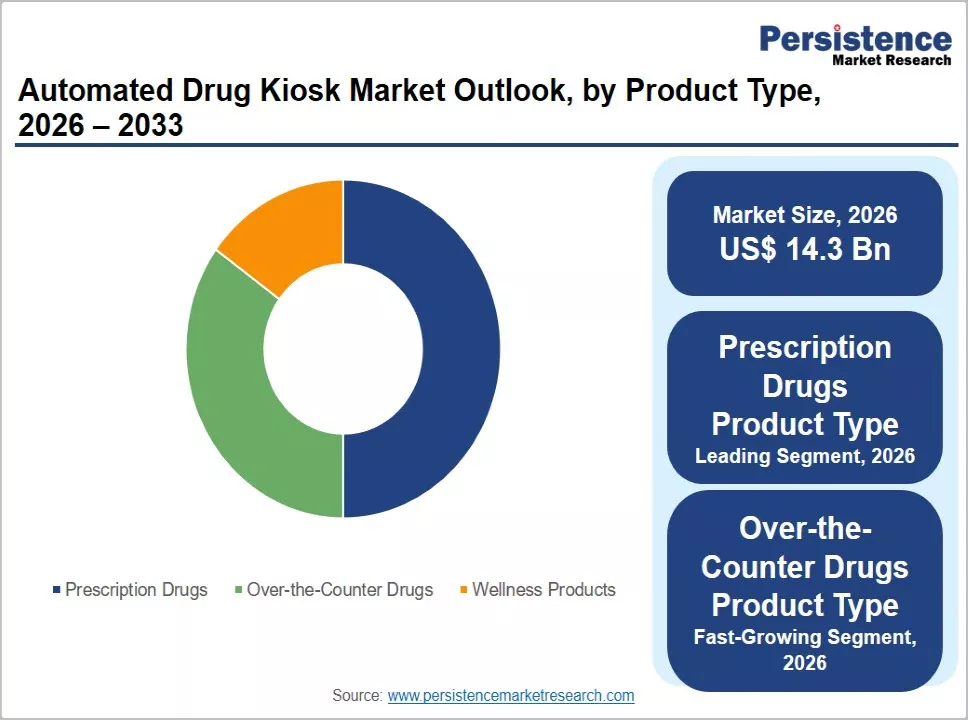
- Leading Product Type: Prescription drugs are expected to lead with around 50% share in 2026, driven by rising e-prescription adoption, high prescription volumes, and expanding digital pharmacy ecosystems.
- Leading End-user: Hospital pharmacies are anticipated to lead with around 48% share in 2026, given extensive automated dispensing system penetration, high medication volumes, and continued investment in centralized medication management infrastructure.
DRO Analysis
Driver - Rising Healthcare Consumerism and Demand for Convenient Access
Automated drug kiosks are transforming medication access by offering secure, self-service alternatives to traditional pharmacy counters, providing round-the-clock availability of prescription and over-the-counter drugs in hospitals, clinics, airports, and remote locations.
Patients increasingly demand convenience, privacy, and 24/7 access, which kiosks can deliver at a fraction of traditional dispensing costs while streamlining last-mile pharmaceutical delivery and addressing pharmacist shortages and wait-time challenges. Growing deployment of these systems continues to reduce pharmacist workload, freeing time for direct patient counseling while maintaining medication safety through integrated technologies such as biometric verification and barcode scanning.
The possibility of remote operations and point-of-administration deployment, including worksites and community health locations, continues to reduce the need for physician visits and expand access in areas underserved by traditional pharmacies. Growing healthcare expenditure worldwide further supports capital investment in automated dispensing infrastructure across both hospital and retail pharmacy settings.
Restraint - High Installation Costs and Limited Awareness
High installation costs associated with automated drug kiosks continue to limit adoption, particularly among smaller pharmacies and healthcare facilities operating on constrained capital budgets. Lack of awareness regarding the technology, combined with its nascent stage of development in several markets, further hampers broader deployment.
Ongoing maintenance, software updates, and inventory replenishment add further operating costs beyond the initial hardware investment, requiring healthcare facilities to weigh long-term total cost of ownership against the labor savings and efficiency gains these systems provide. Smaller independent pharmacies in particular may find it difficult to justify this investment without clear visibility into payback timelines.
Opportunity - Growth in Subscription-Based Service Models
The increasing adoption of subscription-based automation services is creating new opportunities for automated drug kiosk manufacturers. Instead of paying a high upfront cost for kiosk hardware, healthcare providers can use subscription models that bundle software, maintenance, analytics, system upgrades, and remote support into recurring payments.
This model can make automation more affordable for smaller hospitals, clinics, and community pharmacies with limited capital budgets. Subscription services also allow providers to scale their kiosk networks gradually as demand increases. For manufacturers, recurring service fees create more predictable revenue while strengthening long-term relationships with healthcare customers.
The shift toward subscription-based models is also encouraging vendors to offer cloud-connected platforms, remote monitoring, predictive maintenance, and data analytics alongside physical kiosks. These additional services can improve system performance and reduce downtime, making service-based automation an increasingly important growth opportunity in the automated drug kiosk market.
Category-wise Analysis
Product Type Insights
Prescription drugs are estimated to account for close to 50% of global market revenue in 2026. Their dominance is supported by the increasing use of electronic prescriptions and the expansion of digital pharmacy services. Automated kiosks can connect with prescription systems, helping healthcare providers dispense medicines more efficiently while reducing manual processing and patient waiting times.
Over-the-counter drugs are likely to be the fastest-growing product type through 2033. Consumers can purchase commonly used medicines without waiting for prescription processing, making OTC-focused kiosks suitable for retail pharmacies, supermarkets, healthcare facilities, and other convenient locations. Increasing consumer preference for quick, accessible, and self-service purchasing options is expected to support the expansion of OTC drug kiosks.
End-User Insights
Hospital pharmacies are projected to account for close to 48% of market revenue in 2026. Hospitals handle large volumes of medications every day, creating a strong need for efficient dispensing and inventory management. Automated kiosks can help hospitals organize medication distribution, reduce repetitive manual tasks, and improve access to medicines within inpatient and outpatient departments.
Drug stores and retail pharmacies are likely to be the fastest-growing end-user segment. Pharmacies are increasingly adopting self-service dispensing technologies to manage high customer volumes and reduce waiting times. Automated kiosks can support routine medicine dispensing, payment, and prescription-related workflows, allowing pharmacists to spend more time on patient counseling and medication-related services.
Regional Insights
North America Automated Drug Kiosk Market Trends
North America is estimated to dominate the regional market, holding around 40% of the automated drug kiosk market revenue in 2026, supported by strong healthcare spending, advanced pharmacy infrastructure, and early adoption of automated dispensing technologies. Hospitals, retail pharmacies, and other healthcare providers are increasingly using automation to improve dispensing efficiency and expand convenient medication access.
U.S. Automated Drug Kiosk Market Trends
The U.S. is forecast to lead the North America market, accounting for around 86% of market share in 2026, driven by its large healthcare system, high technology adoption, and well-established pharmacy automation infrastructure. Hospitals and pharmacies are investing in automated dispensing solutions to reduce routine workload, improve medication management, and provide more convenient access to medicines.
Canada Automated Drug Kiosk Market Trends
Canada is anticipated to account for around 14% of the North American market share in 2026, propelled by it offers steady growth opportunities through healthcare automation and digital pharmacy adoption. Automated kiosks can support medication access in rural and remote communities where conventional pharmacy services may be less accessible.
Europe Automated Drug Kiosk Market Trends
Europe is estimated to account for around 24% of the global market revenue in 2026, supported by advanced healthcare infrastructure, pharmacy automation, and increasing investment in digital healthcare technologies. Hospitals and pharmacies are adopting automated dispensing systems to improve medication handling, reduce repetitive work, and provide faster access to medicines.
Germany Automated Drug Kiosk Market Trends
Germany is expected to dominate the Europe market, holding around 30% of the European market share in 2026, due to its well-developed healthcare system, strong pharmacy network, and high adoption of healthcare automation. Hospitals and community pharmacies are increasingly using automated technologies to improve dispensing accuracy, streamline operations, and manage medication more efficiently.
U.K. Automated Drug Kiosk Market Trends
The U.K. is anticipated to hold around 24% of the European market share in 2026, fueled by healthcare digitalization, pharmacy automation, and efforts to improve medication access. Automated drug kiosks can help pharmacies and healthcare facilities handle routine dispensing activities while allowing pharmacists to focus more on patient-facing services.
Asia Pacific Automated Drug Kiosk Market Trends
Asia Pacific is likely to be the fastest-growing region during the forecast period between 2026 and 2033, supported by healthcare modernization, expanding digital pharmacy infrastructure, and increasing adoption of self-service healthcare technologies. Large patient populations in China and India are increasing the need for convenient medicine access. Hospitals and pharmacies are adopting automated dispensing solutions to improve efficiency and reduce manual work.
China Automated Drug Kiosk Market Trends
China is projected to lead the Asia Pacific market, holding around 42% of the market share in 2026, fueled by substantial healthcare infrastructure development, digitalization of pharmacy services, and increasing adoption of automated technologies in hospitals and retail healthcare settings. The country's large urban population and expanding smart healthcare ecosystem are also creating opportunities for kiosks that provide faster and more convenient access to medicines.
India Automated Drug Kiosk Market Trends
India is estimated to hold nearly 27% of market share in 2026, driven by healthcare infrastructure expansion, increasing digital healthcare adoption, and the need to improve medicine accessibility across urban and semi-urban areas. The expansion of organized pharmacy networks and increasing acceptance of self-service technologies are also supporting adoption. Automated drug kiosks can help healthcare providers improve dispensing efficiency while extending access to medicines beyond conventional pharmacy operating hours.
Competitive Landscape
The global automated drug kiosk market is moderately consolidated, led by established healthcare automation companies with strong hospital and retail pharmacy relationships. Omnicell, BD, and Capsa Healthcare maintain strong positions given their broad pharmacy automation portfolios and deep integration with electronic health record and hospital management systems. MedAvail Technologies, Inc. brings specialized expertise in video-enabled pharmacy kiosks designed to extend pharmacist access to underserved communities.
Pickpoint, Asteres Inc., medifriendRx, and InstyMeds maintain established positions in retail and community-focused automated dispensing solutions, offering compact kiosk formats suited to non-traditional retail and remote deployment locations. Competitive dynamics center on expanding subscription-based service models, integrating advanced biometric and AI-driven verification technology, and broadening deployment into non-traditional retail and community health locations to capture demand beyond conventional hospital and pharmacy settings.
Key Industry Developments:
- In June 2026, Queue secured $12.6 million in seed funding led by AlleyCorp to accelerate the development and deployment of its autonomous robotic pharmacy kiosks. The company had already secured a major national pharmacy chain as a customer and deployed a working prototype. Its kiosks used robotics and computer vision to verify and dispense prescription medications without requiring an on-site pharmacist, supporting deployment across retail locations, hospitals, and underserved communities.
- In October 2025, Amazon Pharmacy announced plans to launch electronic prescription kiosks at One Medical primary care locations, starting in Los Angeles. The kiosks were designed to dispense common prescription medicines, including antibiotics, asthma inhalers, and treatments for high blood pressure. Amazon said the service would improve medication access and reduce shipping costs. The company planned to expand the kiosk model beyond California in 2026 and explored partnerships with other health systems.
Companies Covered in Automated Drug Kiosk Market
- Omnicell
- Capsa Healthcare
- MedAvail Technologies, Inc.
- BD
- Pickpoint
- Asteres Inc.
- medifriendRx
- InstyMeds.
Frequently Asked Questions
The global automated drug kiosk market is estimated at US$14.3 billion in 2026.
Rising healthcare consumerism and demand for convenient access, along with digital transformation and e-prescription adoption, are key drivers.
The automated drug kiosk market is projected to grow at a CAGR of 14.1% between 2026 and 2033.
Expansion into non-traditional retail and community locations, along with growth in subscription-based service models, is creating new opportunities.
Leading players include Omnicell, Capsa Healthcare, MedAvail Technologies, Inc., BD, Pickpoint, and Asteres Inc.


