




- Beverages
- Alcoholic Flavors Market
Alcoholic Flavors Market Size, Trends, Share, Growth, and Regional Forecast, 2026 to 2033
Alcoholic Flavors Market by Flavor Profile (Fruit Flavors, Botanical & Herbal, Sweet & Dessert, Spice Flavors, Others), Nature (Natural, Synthetic), End-user (Spirits & Liqueurs, Beer & Malt Beverages, Wine & Wine-Based Beverages, Cider, RTD Cocktails, Hard Seltzers), and Regional Analysis from 2026 to 2033

Alcoholic Flavors Market Share and Trends Analysis
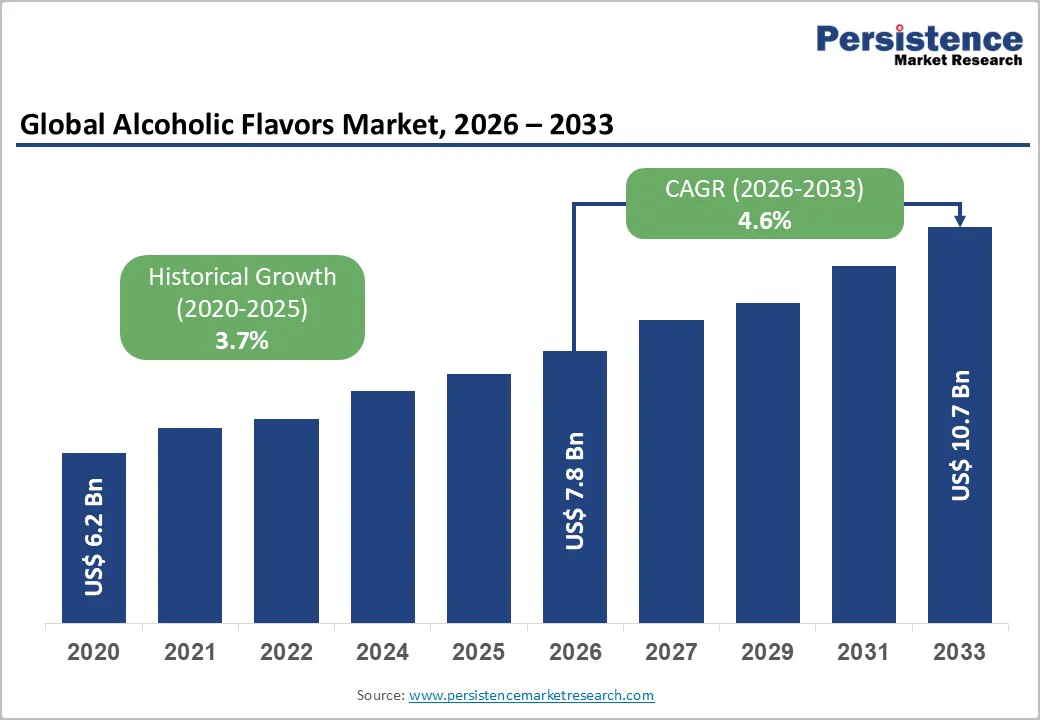
The global alcoholic flavors market size is estimated to grow from US$ 7.8 billion in 2026 to US$ 10.7 billion by 2033. The market is projected to record a CAGR of 4.6% during the forecast period from 2026 to 2033.
As young consumers prefer RTD beverages, flavored spirits, and low-ABV cocktails, the market is witnessing a dynamic transformation fueling demand for innovative, nature-inspired flavor solutions. Brands are increasingly blending fruit, botanical, and dessert profiles to deliver unique drinking experiences that align with convenience, authenticity, and premiumization trends.
Key Industry Highlights
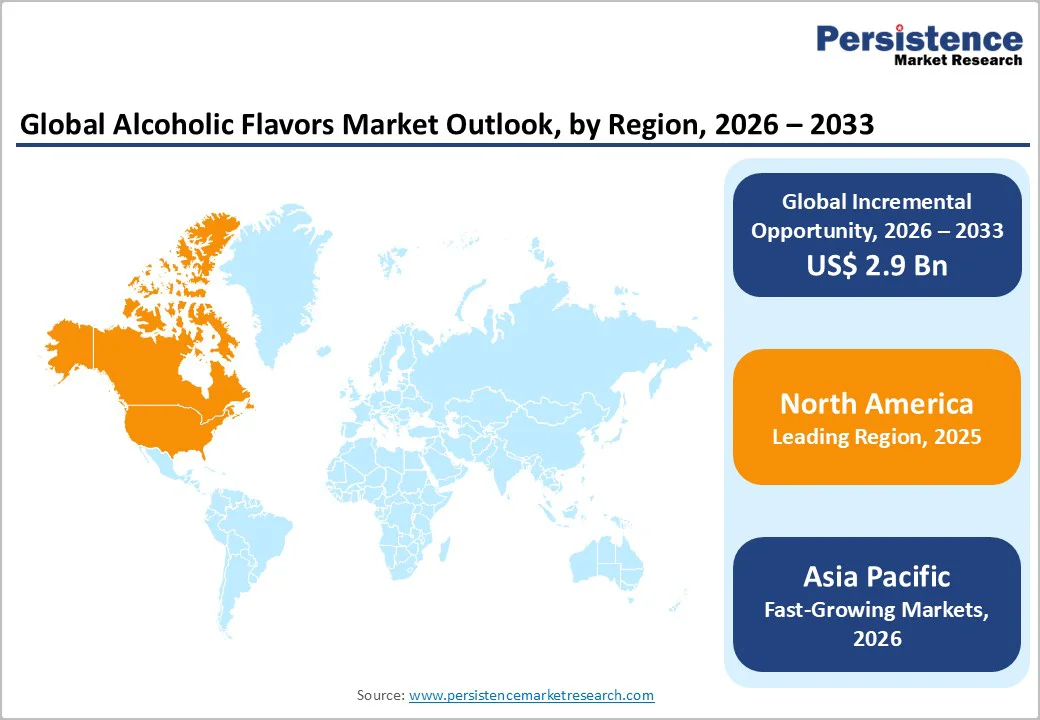
- Leading Region: North America, holding 39% market share, driven by RTD adoption, craft spirit innovation, and demand for natural, flavor-forward beverages.
- Fastest-Growing Region: Asia Pacific, fueled by rising RTD consumption, premiumization, and experimentation with fruit-botanical, spice, and fusion flavors across China, India, Japan, and South Korea.
- Fastest-Growing Flavor Profile Segment: Fruit Flavors, supported by broad appeal in cocktails, flavored spirits, and low-ABV drinks targeting younger consumers.
- Market Drivers: Growth of RTD and flavored alcoholic beverages segment, with 64% of millennials preferring RTD drinks over traditional formats.
- Opportunities: Expanding organic and natural alcoholic flavor solutions to support healthier, clean-label reformulation and botanical innovations.
- Key Developments: In December 2025, Givaudan showcased natural solutions at Fi Europe 2025; In April 2024, Synergy Flavours introduced gin and tequila flavor ranges.
| Key Insights | Details |
|---|---|
| Global Alcoholic Flavors Market Size (2026E) | US$ 7.8 Bn |
| Market Value Forecast (2033F) | US$ 10.7 Bn |
| Projected Growth (CAGR 2026 to 2033) | 4.6% |
| Historical Market Growth (CAGR 2020 to 2025) | 3.7% |
Market Dynamics
Driver - Growth of the RTD and flavored alcoholic beverages segment
A sharp shift in drinking behavior is reshaping demand as the RTD and flavored alcoholic beverages segment captures the attention of younger consumers seeking convenience and flavor-forward experiences. 64% of millennial consumers prefer RTD alcoholic drinks over traditional options, underscoring how portability, mixology-style profiles, and low-effort consumption are becoming decisive purchase drivers.
This surge fuels stronger adoption of innovative alcoholic flavors that deliver fruit-centric, botanical, and cocktail-inspired notes with high stability across varied alcohol bases. Brands are increasingly reformulating to keep pace with demand for sessionable, low-ABV formats that maintain flavor integrity through canning and pasteurization. The momentum around flavor experimentation continues to elevate the role of tailored alcoholic flavor solutions globally.
Restraints - Varying International Regulations Regarding Flavoring Agents
Ever-shifting regulatory frameworks across global markets are creating a persistent hurdle for alcoholic flavor manufacturers navigating compliance demands. Countries apply different definitions, purity thresholds, and permissible usage levels for flavoring agents, forcing brands to manage complex formulation adjustments for each region.
Stricter rules around natural flavor claims, residual solvents, and allergen declarations further complicate product launches, particularly in cross-border RTD and spirits portfolios. Import and labeling requirements add additional friction, increasing approval timelines and raising operational costs.
These inconsistencies limit the scalability of universal flavor profiles and often delay innovation cycles. As regulations continue evolving independently across major markets, flavor suppliers face mounting compliance risks that restrain seamless global expansion.
Opportunity - Companies can capture growth by positioning organic flavor solutions as key enablers of healthier product reformulation
A shifting reformulation agenda across the alcoholic beverage industry is opening a strategic window for companies that position organic flavor solutions as catalysts for healthier product innovation. As brands reduce sugar, artificial additives, and synthetic flavor enhancers, organic extracts, botanicals, terpenes, and fermented flavor bases are emerging as high-value tools for rebuilding complexity without compromising ingredient transparency.
Startups can gain early traction by developing clean, label-friendly flavor systems tailored for low-ABV spirits, botanical RTDs, and wellness-inspired cocktails. Established players are strengthening partnerships with certified organic growers and aroma distillation specialists to secure resilient supply chains.
With consumers gravitating toward purity-driven drinking experiences, suppliers capable of delivering organic flavor authenticity stand to secure premium positioning and long-term category relevance.
Category-wise Analysis
By Flavor Profile Insights
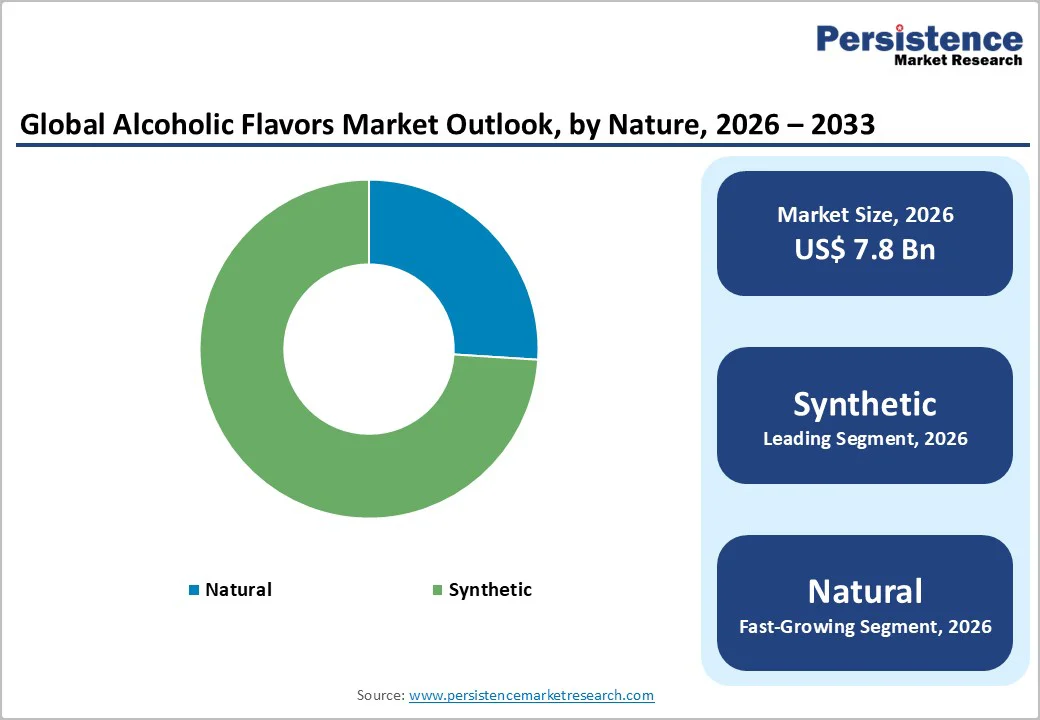
Fruit flavors accounts for 28% share as of 2025, and their dominance stems from how decisively they shape consumer expectations in RTD cocktails, flavored spirits, and low-ABV beverages. Their familiarity, vibrant aroma release, and ability to blend seamlessly with alcohol bases make fruit profiles the quickest route to mass-market acceptance.
Botanical & Herbal flavors are gaining momentum as brands lean into botanical gins, aperitifs, and wellness-inspired alcoholic infusions that demand cleaner, more aromatic complexity. Sweet & Dessert flavors maintain strong traction in cream liqueurs and indulgent RTD formats where richness and comfort drive repeat purchases. Spice flavors carve out niche but fast-growing appeal in craft spirits and seasonal releases, energizing experimentation among younger drinkers.
By Nature Insights
Natural alcoholic flavors is projected to grow at a CAGR of 8.3% during the forecast period, and this momentum reflects a decisive shift in how consumers judge authenticity and ingredient integrity in beverages. A rising preference for clean-label cocktails, botanical spirits, and minimally processed RTD formats is pushing manufacturers to pivot toward flavor systems sourced from fruits, herbs, spices, and fermentation streams.
Producers are upgrading extraction technologies to capture fresher top notes and more stable natural volatiles suited for high-proof environments. Craft distillers and global brands are expanding portfolios with naturally derived variants to meet evolving premiumization trends. Growing scrutiny of artificial additives across major markets strengthens demand for natural alcoholic flavors positioned around transparency, purity, and elevated sensory experiences.
Region-wise Insights
North America Alcoholic Flavors Market Trends
North America holds approximately 39% market share in the global Alcoholic Flavors Market, reflecting a region where shifting taste expectations and rapid category innovations continually reshape flavor strategies. In the U.S., brands are ramping up development of bolder, layered profiles for RTD cocktails, hard seltzers, and flavored spirits, with strong traction for tropical, citrus, smoked, and botanical blends that appeal to younger drinkers seeking sensory novelty.
Canada is seeing a surge in demand for nature-inspired flavors aligned with craft spirits, premium ciders, and low-ABV beverages as consumers lean toward authenticity and ingredient transparency. Across both countries, producers are leveraging culinary-inspired flavor mapping, hybrid flavor pairings, and natural extracts to differentiate launches and sustain momentum in premium and convenience-oriented formats.
Asia Pacific Alcoholic Flavors Market Trends
Asia Pacific Alcoholic Flavors Market is expected to grow at a CAGR of 7.7%, reflecting a region where evolving drinking cultures and premiumization are reshaping flavor innovation at speed. China is pushing demand for sophisticated fruit-botanical combinations inspired by modern cocktail bars and tea-house mixology, while India is expanding its appetite for spice-led, tropical, and fusion flavors aligned with rising RTD consumption.
Japan continues to favor clean, subtle, and precision-crafted flavor notes for highball variants, chu-hi, and low-ABV beverages driven by its minimalist taste philosophy. South Korea is accelerating experimentation in dessert-inspired, floral, and spirit-infused flavors as K-alcohol gains global visibility. Across the region, brands are investing in localized flavor creation and cross-cultural blends to capture diverse palates.
Competitive Landscape
The global alcoholic flavors market operates in a moderately consolidated environment where a mix of global flavor houses and agile regional specialists compete through rapid innovation cycles. Leading companies are prioritizing advanced flavor development centered on natural extractions, low-ABV suitability, and RTD-focused profiles to stay aligned with shifting consumer preferences.
B2B expansion is intensifying as suppliers deepen partnerships with breweries, distillers, and RTD manufacturers to secure long-term formulation pipelines. Strategic collaborations with mixologists, beverage labs, and fermentation-tech startups are rising to accelerate new flavor creation.
Acquisitions and mergers focus on strengthening botanical sourcing and sensory capabilities, while R&D teams refine flavor stability under global regulatory frameworks governing alcohol labeling, permitted additives, and purity standards across major markets.
Key Developments:
- In December 2025, Givaudan showcased a wide portfolio of natural solutions spanning beverages, savoury, and sweet applications at Fi Europe 2025. The presentation underscored the company’s focus on clean-label innovation and nature-driven formulation technologies.
- In January 2025, United Breweries launched Kingfisher Flavours, signaling a strategic move to tap into shifting taste preferences among younger drinkers. The new range reflects UB’s push toward more contemporary, flavour-forward alcoholic beverages.
- In April 2024, Synergy Flavours introduced new gin and tequila flavour ranges designed for alcoholic as well as low- and no-alcohol applications. The launch strengthens its position in premium beverage innovation by supporting brands targeting sophisticated, spirit-inspired profiles.
Companies Covered in Alcoholic Flavors Market
- Givaudan
- IFF
- Symrise
- Kerry Group
- DSM-Firmenich
- Synergy
- Sensient Technologies
- Mane SA
- Takasago International Corporation
- T. Hasegawa
- Döhler
- Prova
- Others
Frequently Asked Questions
The global alcoholic flavors market is projected to be valued at US$ 7.8 Bn in 2026.
Growth of the RTD and flavored alcoholic beverages segment is driving the global Alcoholic Flavors market.
The global alcoholic flavors market is poised to witness a CAGR of 4.6% between 2026 and 2033.
Companies can tap strong growth by advancing organic flavor solutions that enable cleaner, healthier product reformulation, opening high-value opportunities for leading industry players.
Major players in the global Alcoholic Flavors market include Givaudan, IFF, Symrise, DSM-Firmenich, Synergy, Sensient Technologies, Mane SA, and others.


