




- Food Ingredients & Additives
- Spices Market
Spices Market Size, Trends, Share, Growth, and Regional Forecast, 2026 to 2033
Spices Market by Product Type (Pepper, Cinnamon, Ginger, Cumin, Bay Leaves, Dried Chilies, Cardamom, Turmeric, Cloves, Others), by Nature (Organic, Conventional), by Form (Whole, Powder, Oil, Other), Application (Processed Food, Nutraceuticals, Cosmetics & Personal Care, Beverages, Other), Distribution Channel (B2B, B2C) and Regional Analysis from 2026 to 2033

Spices Market Share and Trends Analysis
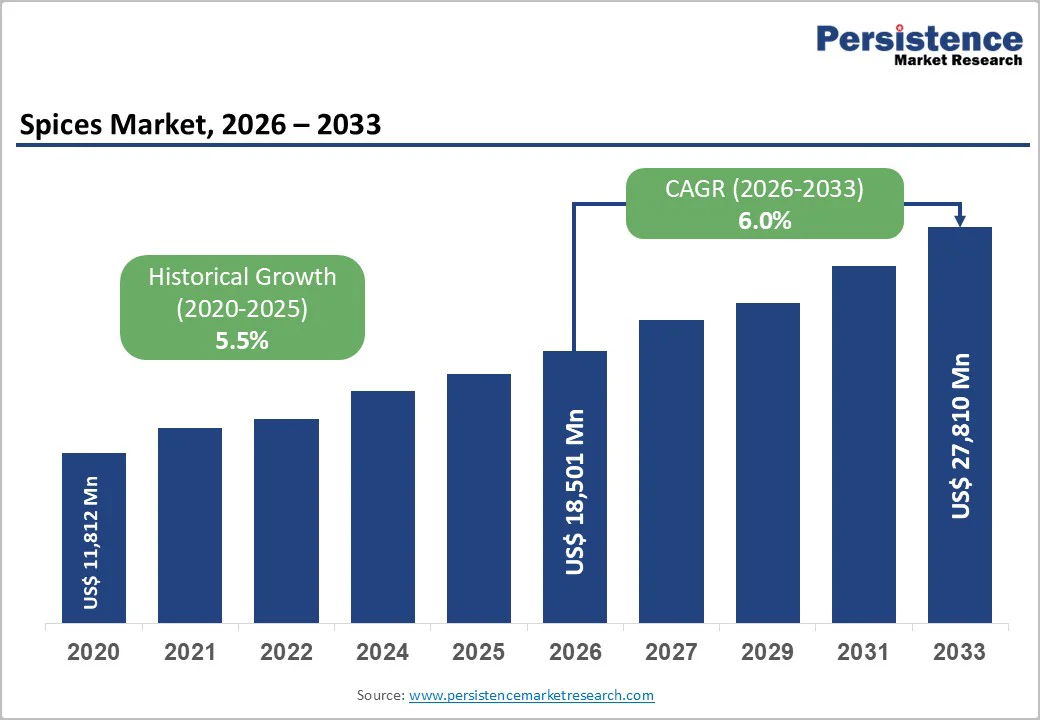
The global spices market size is estimated to grow from US$18.5 billion in 2026 to US$27.8 billion, growing at a CAGR of 6.0% during the forecast period from 2026 to 2033.
The spices market growth is driven by increasing consumer preference for natural, chemical-free, and organic spices. Moreover, the rise in the number of quick-service restaurants and cloud kitchens globally has fuelled the demand for ready-to-use spice blends and seasonings.
The rise in online grocery shopping and e-commerce platforms has boosted the direct-to-consumer sales of packaged and organic spices globally. Rise in awareness of the medicinal and health benefits of spices such as turmeric, ginger, and cinnamon is driving their demand in nutraceuticals and health supplements.
Key Industry Highlights:
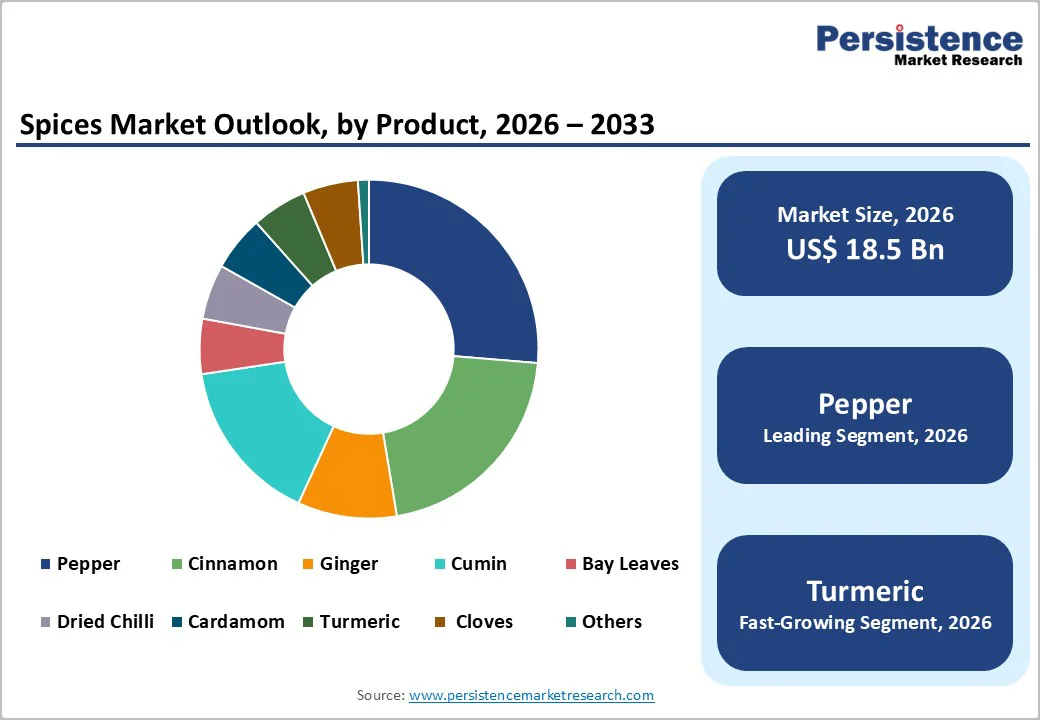
- Leading Product Type: Pepper accounts for more than 25% of the global spice market due to its universal culinary appeal, versatility, and high demand across global cuisines. It is widely used as a seasoning and preservative, offering both flavor and health benefits. Strong production in countries like India and Vietnam ensures a consistent supply, reinforcing its market leadership.
- Fastest Growing Form: Powdered spices dominate the market with around 50% of market share in 2025 because they offer convenience, uniformity, and ease of use in cooking and food processing. Their longer shelf life, consistent flavour, and suitability for packaged and ready-to-eat products make them highly preferred by consumers and manufacturers, driving their widespread adoption globally.
- Fastest Growing Application: In food and beverages, spices are increasingly used in ready-to-drink products, flavored teas, functional beverages, and plant-based formulations. They enhance taste, provide natural antioxidants, and support clean-label trends. This growing integration reflects consumer demand for health benefits and authentic flavors, driving innovation and expanding spice applications in the sector.
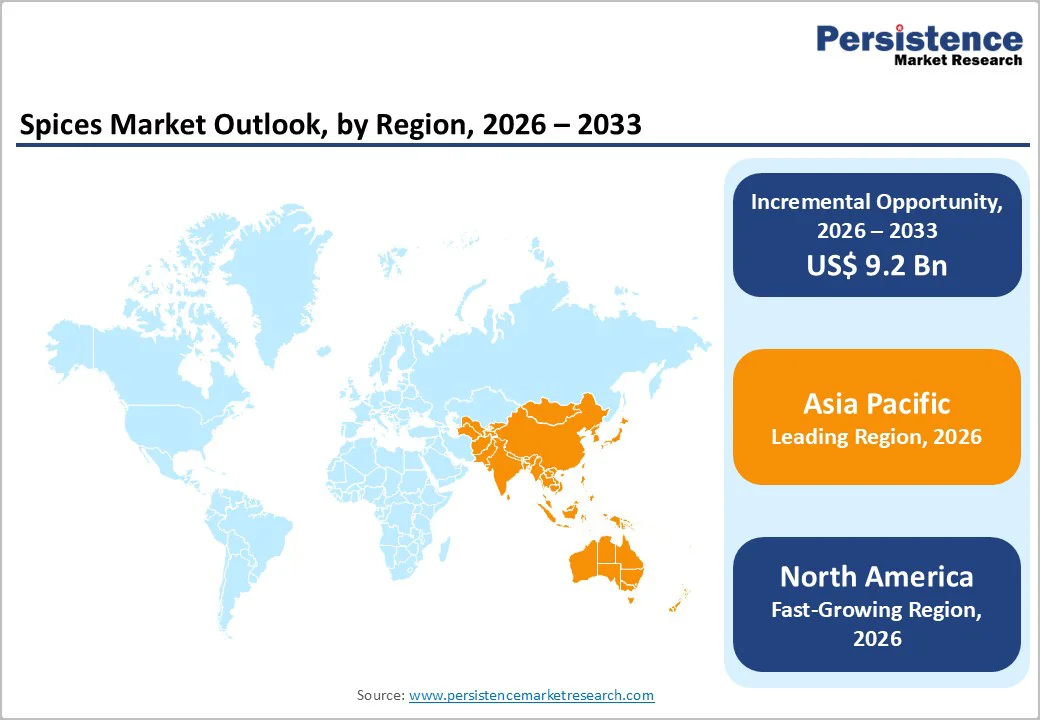
- Leading Region: Asia Pacific, holding approximately 37% market share, due to its vast production capacity, favorable agro-climatic conditions, and strong export infrastructure. India, Vietnam, and China lead global supply, supported by advanced processing facilities and rising domestic consumption. The region’s established trade networks and compliance with international standards further reinforce its market leadership.
- Distribution Channel Insights: Supermarkets and hypermarkets lead the spice market distribution due to their wide reach, organized retail structure, and ability to offer diverse product ranges. Online platforms are growing rapidly but remain secondary to physical retail.
| Key Insights | Details |
|---|---|
| Global Protein Bars Market Size (2026E) | US$ 18,501 Mn |
| Market Value Forecast (2033F) | US$ 27,810 Mn |
| Projected Growth (CAGR 2026 to 2033) | 6.0% |
| Historical Market Growth (CAGR 2020 to 2025) | 5.5% |
Market Dynamics
Driver - Increasing Immigrant Population Driving Demand for Spices in North America
Increasing population in various regions such as Asia, North America, and others has tended to raise the consumption of spices. For instance, Indian consumers prefer spicy food and also use spices as a key ingredient for a variety of food products. Increasing immigration from Asia to North America is significantly influencing local food preferences, thereby driving spice sales in North America.
According to World Population Review (2024), the United States is home to the highest number of immigrants in the world, with an estimated 50.6 million people, accounting for over 15% of the total U.S. population of 331.4 million. This demographic shift has led to an increased demand for ethnic cuisines, particularly from Indian and Chinese origins, promoting the use of various spices in food preparation.
Additionally, the growing number of Indian and Chinese restaurants across North America is further boosting spice consumption, as these restaurants heavily rely on traditional spices to deliver authentic flavors. As a result, the increasing immigrant population, particularly from spice-intensive regions such as Asia, is playing a pivotal role in shaping the North American spice market.
Restraints - Seasonal Volatility and High Costs
Spices experience significant seasonal fluctuations, leading to scarcity and price volatility. Their cultivation is labor-intensive and requires extensive processing, making them costlier than many other organic products.
Supply shortages and price disparities often push companies toward cheaper substitutes, which are frequently adulterated with chemicals, fillers, artificial colors, and low-cost synthetics. These inferior products compromise flavor and can pose health risks. The rise in such adulteration threatens market integrity and hampers growth, as consumers increasingly demand authentic, high-quality spices.
Opportunity - Focus on Health-Driven Demand and Innovative Formats
The global spices market presents significant growth opportunities driven by shifting consumer preferences and emerging trends. The growing demand for natural flavoring in processed foods and beverages is fostering innovation in spice blends and extracts. Health-conscious consumers are boosting interest in functional spices like turmeric, ginger, and cinnamon for their wellness benefits.
The popularity of ethnic cuisines and ready-to-eat meals is expanding spice applications worldwide. Organic and clean-label products are gaining momentum due to sustainability and transparency concerns. Advances in spice oleoresins and essential oils offer new prospects for flavor manufacturers, while e-commerce and global trade enhance market reach, particularly in developing regions
Natural Food Trend Bodes Well for Organic Spices & Herbs
Consumers today value their health above everything, and they are willing to spend extra on organic food because of its health benefits. Organic spices and herbs are becoming more popular as customers become increasingly aware of the toxic chemicals used in agricultural practices.
The health benefits of organic products are the most significant reason driving the organic products market, which, in turn, is driving demand for organic spices and herbs. Increasing government measures to promote natural foods, since organic farming helps maintain environmental health by lowering pollution levels, have an impact on the growth of organic spices.
Category-wise Analysis
By Product Type Insights
Black pepper dominates the global spice market, accounting for the largest share due to its universal culinary use and strong export demand. Its popularity is driven by versatility in flavoring, widespread use in processed foods, and growing applications in functional products for its antioxidant and digestive benefits.
Key trends include rising demand for organic and sustainably sourced pepper, expansion in ready-to-eat meals and seasoning blends, and increased use in health supplements due to its active compound, piperine, which enhances nutrient absorption.
Additionally, technological advancements in pepper oleoresins and extracts are fueling growth in the flavor and fragrance industry. E-commerce platforms and global trade are further boosting accessibility, making black pepper a cornerstone of both traditional and modern food systems.
Spices like turmeric, ginger, cinnamon, cardamom, saffron, harissa, and various chillies are gaining popularity for their health benefits, vibrant flavors, and role in global fusion cuisine, making them key drivers of modern culinary trends.
By Form Insights
Powdered spices lead the global market because they provide convenience, uniform flavor, and extended shelf life, making them ideal for processed foods, seasonings, and ready-to-eat products. Their easy storage and transport support large-scale distribution.
Oils and pastes are growing in marinades and gourmet dishes, while whole spices remain favored for traditional cooking and premium experiences due to their authentic aroma and flavor release. However, powders dominate as they integrate seamlessly into industrial food production and home kitchens, meeting rising demand for quick, versatile, and cost-effective seasoning solutions worldwide.
Essential oils and liquid extracts are anticipated to be the evolving forms of spices in the forecast period, driven by demand for natural flavors in beverages, functional foods, and clean-label products. These forms offer concentrated flavor, easy blending, and health benefits, making them ideal for modern food processing and wellness-focused applications in the future.
By Application Insights
Processed foods remain the primary application for spices, with extensive use in snacks, ready-to-eat meals, sauces, and frozen products. In contrast, functional food applications such as nutraceuticals and health beverages are expanding rapidly but still represent a smaller portion of overall spice demand.
Dominance of the food and beverage industry in spice market is driven by growing global demand for ready-to-eat meals, snacks, and processed products that require consistent flavor and extended shelf life. Powdered spices are widely used in seasonings, sauces, and marinades due to their easy blending and cost efficiency.
The expansion of fast-food chains and the popularity of international cuisines further boost spice consumption in processed foods. Although pharmaceuticals and cosmetics utilize spices for functional benefits, their share is comparatively small, making food applications the primary force behind global spice market growth.
Region-wise Insights
Asia Pacific Spices Market Trends
Asia Pacific leads the global spice market accounting for more than 35% share in 2025. Culinary tourism and the worldwide popularity of Asian cuisine are major drivers of spice demand in Asia Pacific region. Travelers seek authentic flavors during their journeys and often recreate those experiences at home, fueling interest in traditional spices such as turmeric, cardamom, and chili blends.
Restaurants and packaged food brands respond by incorporating these spices into menus and products. Social media, cooking shows, and food influencers amplify this trend, making authentic Asian flavors more accessible and desirable. As Asian dishes are sharing the global mainstream, the demand for premium, ethically sourced spices is growing, encouraging innovation in blends and formats to cater to adventurous and health-conscious consumers.
India spices market accounts for around 70% of the South Asia spice market in 2025. Spices remain an essential component of everyday cooking in households across the country. Their strong influence on both local and international cuisines ensures continued demand, which is expected to grow further as global food trends increasingly embrace diverse flavors and authentic seasoning experiences.
India’s spice industry is making remarkable progress in aligning with the rigorous international standards for quality and traceability demanded by the global market.
Industry-led programs such as the World Spice Organisation’s ‘National Sustainable Spice Programme (NSSP)’ and the Spice Board’s ‘SPICED’ initiative aim to enhance pre- and post-harvest quality, encourage Good Agricultural Practices (GAPs), and ensure adherence to global quality standards through progressive and collaborative interventions.
North America Spices Market Trends
In North America, the U.S. spices market is growing rapidly at a CAGR of 5.8%, and it accounts for more than 80% of the region's market share. This is owing to a surge of South Asian immigrants into the region.
Key drivers for spice use in the U.S. include rising demand for ethnic cuisines, health-conscious eating, and home cooking trends. Consumers prefer natural, organic, and clean-label spices, with turmeric, ginger, and cinnamon leading due to wellness benefits. Trends also include premium blends, global flavors, and growth in e-commerce and meal kits.
Canada’s spice market is experiencing steady growth, fueled by its multicultural population and increasing interest in global cuisines. Consumers are seeking authentic flavors from regions such as India, the Middle East, and Southeast Asia. Health-conscious preferences drive demand for organic, natural, and clean-label spices, while sustainability and ethical sourcing shape buying decisions.
Innovative blends and convenient seasonings are becoming popular among home cooks and foodservice operators. Spice demand is projected to rise because of their influence on local food platters. As a result, an increasing number of Indian and Chinese restaurants are offering ethnic cuisines with a variety of ingredients. It also encourages residents to utilize certain spices in their dishes.
Europe Spices Market Trends
The European spices market is evolving rapidly, driven by health-conscious consumers seeking natural, organic, and clean-label products. Demand for spices like turmeric, ginger, and cinnamon is rising due to their functional benefits. Spice consumption in Germany, the U.K., France, and Italy reflect diverse culinary traditions and growing health trends.
Germany and the U.K. favor convenient spice blends and ethnic flavors, driven by multicultural cuisines and home cooking. France emphasizes premium, aromatic spices for gourmet dishes, while Italy focuses on herbs and Mediterranean blends like basil, oregano, and chilli.
Across all four countries, demand for organic, clean-label, and sustainably sourced spices is rising, supported by e-commerce growth and culinary tourism. Innovative blends and ready-to-use seasonings are gaining popularity, aligning with consumer preferences for authentic flavors and wellness-oriented products.
Market Competitive Landscape
The global spices market is highly competitive and fragmented, with global, regional, and local players vying for share. Leading brands such as McCormick, Ajinomoto, and Everest compete alongside smaller companies and private labels. Price, quality, flavor innovation, and sustainability are key differentiators. Growing demand for organic, clean-label, and ethically sourced spices has pushed brands toward premiumization and transparency.
E-commerce intensifies competition by enabling direct-to-consumer sales and niche entrants. Additionally, mergers, acquisitions, and strategic partnerships are common as companies seek to expand product portfolios and strengthen their global presence in this dynamic market.
Key spice manufacturers are relying on technological innovation to produce a wide range of spices. Spices Market players are also working on assuring safety, quality, and customer satisfaction using technology to attract a larger consumer base.
Digital platforms are transforming the spice industry by enabling end-to-end traceability and compliance with global standards. They provide buyers with instant access to essential documentation, certifications, and audit trails, ensuring transparency and trust. This technology-driven approach enhances quality assurance, streamlines processes, and strengthens India’s position in international markets.
Key Industry Developments:
- In November 2025, The Spices Board, Regional Office, Gangtok, under the Ministry of Commerce and Industry, Government of India, organised a Buyer-Seller Meet (BSM). The meet aimed to enhance market linkages, promote exports, and strengthen the entire supply chain for Sikkim’s premium spices -large cardamom, dalle chilli, ginger, and turmeric.
- In May 2025, Amul announced its debut into organic staples such as tea, sugar and spices marking a major transition as the company broadens its non-dairy portfolio and positions itself to compete more aggressively with leading FMCG players across multiple categories
- In September 2024, the Spices Board, under the Ministry of Commerce and Industry in India, introduced a transformative scheme aimed at boosting the global competitiveness of Indian spices. This initiative focuses on significantly enhancing the export of spices and value-added spice products while simultaneously improving cardamom productivity and upgrading the post-harvest quality of various spices.
- In September 2024, iD Fresh Food, a prominent fresh food brand in India, entered the branded spices market by introducing three spice varieties: Pure Spice (Red Chilli Powder), Blended Spice (Garam Masala), and Sambar Powder. With this expansion, the company aims to strengthen its market presence and capture a substantial share of the packaged spices segment.Global Protein Bars Market Report Scope .
Companies Covered in Spices Market
- McCormick & Company Inc.
- British Pepper & Spice
- Olam Internatioaln
- Sleaford Quality Foods Ltd.
- PrymatGroup
- Worlée NaturProdukte GmbH
- Kräuter Mix GmbH
- El Clarín Spices S.L
- Elite Spice
- Ramón Sabater, S.A.U.
- DF World of Spices GmbH
- Sensient Technologies Corporation
- The British Pepper & Spice Company Limited
- Koninklijke Euroma BV
- Everest Spices
- Others
Frequently Asked Questions
The global spices market is estimated to increase from US$18.5 billion in 2026 to US$27.8 billion by 2033.
The global spices industry is propelled by rising consumer demand for authentic flavors, increasing ethnic cuisine popularity, expanding spice production, and growing health-conscious food consumption trends.
The market is projected to record a CAGR of 6.0% during the forecast period from 2026 to 2033.
Targeting niche segments, direct-to-consumer strategies, collaboration to expand reach, and alignment with ESG goals are certain strategic opportunities for the market players.
McCormick & Company Inc., Olam International, Sleaford Quality Foods Ltd., PrymatGroup., Worlée NaturProdukte GmbH are some of the leading industry players.


