ID: PMRREP2833| 182 Pages | 8 Jan 2026 | Format: PDF, Excel, PPT* | Healthcare
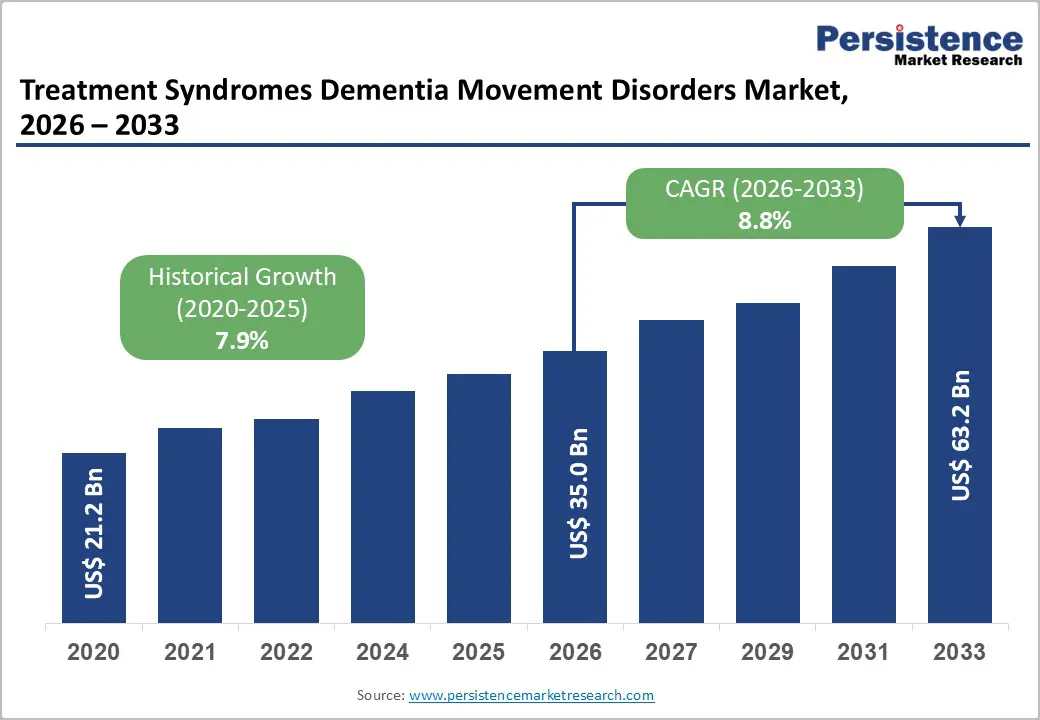
The global treatment syndromes dementia movement disorders market is estimated to grow from US$ 35.0 Bn in 2026 to US$ 63.2 Bn by 2033. The market is projected to record a CAGR of 8.8% from 2026 to 2033.
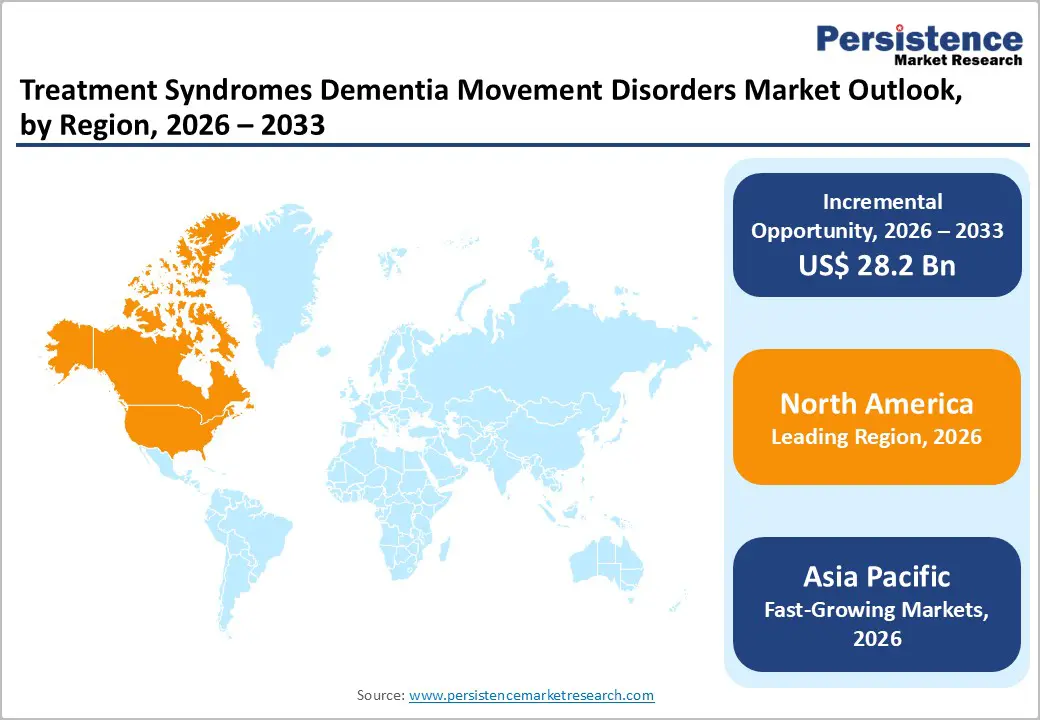
The treatment syndromes dementia movement disorders market is expanding steadily, driven by aging populations, rising disease prevalence, and improved diagnosis rates. North America leads due to advanced healthcare infrastructure, high treatment adoption, and strong R&D activity. Asia-Pacific is the fastest-growing region, driven by expanding healthcare access, rising awareness, and growing investment in neurological care.
| Global Market Attributes | Key Insights |
|---|---|
| Treatment Syndromes Dementia Movement Disorders Market Size (2026E) | US$ 35.0 Bn |
| Market Value Forecast (2033F) | US$ 63.2 Bn |
| Projected Growth (CAGR 2026 to 2033) | 8.8% |
| Historical Market Growth (CAGR 2020 to 2025) | 7.9% |
Rising disease awareness and diagnosis rates are a critical driver for the treatment of syndromes, dementia, and movement disorders market because increased detection directly expands the treated patient base. Globally, approximately 57 million people lived with dementia in 2021, and nearly 10 million new cases occur annually, indicating substantial disease burden and recognition needs. Public health initiatives and screening programs are increasingly identifying cases earlier, evidenced by CDC data showing 4.0 percent of U.S. adults aged 65 and older reported a dementia diagnosis in 2022, rising to 13.1 percent among those aged 85+. Early diagnosis enables timely treatment engagement, boosting demand for therapeutic interventions.
Improved awareness and diagnosis also uncover previously undiagnosed conditions, thereby expanding market demand for both pharmacological and supportive treatments. WHO data project dementia prevalence will grow significantly, with global cases forecast to rise from 55 million (2020) to 78 million by 2030 and 139 million by 2050, driven by aging populations and better case reporting. Early detection through cognitive screening and enhanced clinical education contributes to this visibility, highlighting unmet treatment needs. Similarly, Parkinson’s disease prevalence has doubled over 25 years, reaching over 8.5 million individuals globally in 2019, underscoring rising movement disorder recognition. These trends support increasing utilization of diagnostic, pharmacologic, and rehabilitative care services.
High cost of long-term treatment and care significantly restrains the treatment of dementia and movement disorders market because these conditions require chronic management across drug therapy, rehabilitation, and caregiver support. In the United States, the Alzheimer’s Association reports total dementia care costs at nearly $345 billion in 2024, with Medicare and Medicaid shouldering most of the burden. Long-term care services, including nursing homes and home health aides, can exceed $100,000 per patient annually in many regions. Similar patterns appear globally; the World Health Organization cites dementia as one of the costliest conditions in aging populations, intensifying financial strain on families and health systems.
For movement disorders such as Parkinson’s disease, cost burdens also accumulate due to lifelong medication and supportive therapies. A study published by the National Institutes of Health indicates that Parkinson’s patients in the U.S. incur direct medical costs approximately 1.75 times higher than age-matched peers, with non-medical expenses and lost income further elevating total economic impact. Globally, the WHO estimates the total cost of dementia care could surpass $1 trillion annually by 2030, reflecting both medical and social care. Such high, sustained expenditures discourage treatment uptake and limit market growth, particularly in regions lacking comprehensive insurance or public health funding.
A major opportunity in the treatment of syndromic dementia and movement disorders lies in the development of disease-modifying and regenerative therapies that can slow or alter disease progression rather than just treat symptoms. For Alzheimer’s disease alone, current clinical trial registries list over 160 active therapies, with approximately 76-80 percent classified as disease-modifying agents targeting underlying pathological processes such as amyloid and tau accumulation. These novel approaches include monoclonal antibodies and emerging biologics designed to directly impact disease pathways, offering the potential to change clinical outcomes and reduce long-term disability for millions worldwide.
Regenerative treatment approaches, including cell and gene therapies, present a transformative opportunity for movement disorders like Parkinson’s disease by focusing on neural repair and functional restoration rather than symptomatic relief. In Parkinson’s research, about two-thirds of Phase I-III pipeline products are oriented toward neuroprotective or disease-modifying mechanisms, such as targeting protein aggregation and neuroinflammation, reflecting significant industry prioritization. Regenerative medicine efforts, including stem cell and gene therapy, aim to repair or replace affected neural circuits, addressing root causes of degeneration. This shift aligns with growing global neurological disease burden and unmet therapeutic needs, emphasizing substantial market potential for novel interventions.
Pharmacological Treatments dominates with 60.7% share of the global market in 2025, because drug therapies remain the primary clinical intervention for managing symptoms and slowing progression of neurodegenerative conditions such as Alzheimer’s and Parkinson’s disease. For example, in dementia care, symptomatic medications like donepezil, memantine, rivastigmine, and galantamine are widely prescribed and their use has been increasing over time; in Australia alone, nearly 22 million defined daily doses of dementia-specific medications were dispensed in 2023-24, with donepezil accounting for the highest rate at 2.5 DDD per 1,000 population per day. Such widespread pharmacotherapy utilization reflects strong clinical reliance on drugs to address cognitive decline and motor symptoms, reinforcing their dominant role in treatment paradigms. Additionally, in the United States, studies show that 55.8 percent of Medicare beneficiaries with dementia received antidementia drugs within one year of diagnosis, underlining the central role of drug therapy in real-world care. These patterns underscore why pharmacological treatments capture the largest share in the market compared with non-drug or supportive interventions.
Alzheimer’s disease dominates the treatment syndromes, dementia, movement disorders market because it comprises the majority share of all dementia cases worldwide, making it far more prevalent than other neurological conditions. According to WHO and Alzheimer’s Disease International, Alzheimer’s accounts for an estimated 60-70 percent of all dementia cases globally, establishing it as the most common form of dementia and the primary focus of clinical care and therapeutic demand. In the United States alone, the Centers for Disease Control and Prevention report that about 6.7 million older adults currently live with Alzheimer’s, a figure projected to nearly double by 2060, underscoring its dominant clinical footprint. By contrast, other conditions such as Parkinson’s disease affect a smaller global population, approximately 8.5-11.8 million individuals, reinforcing Alzheimer’s disproportionate contribution to overall market volume and treatment utilization.
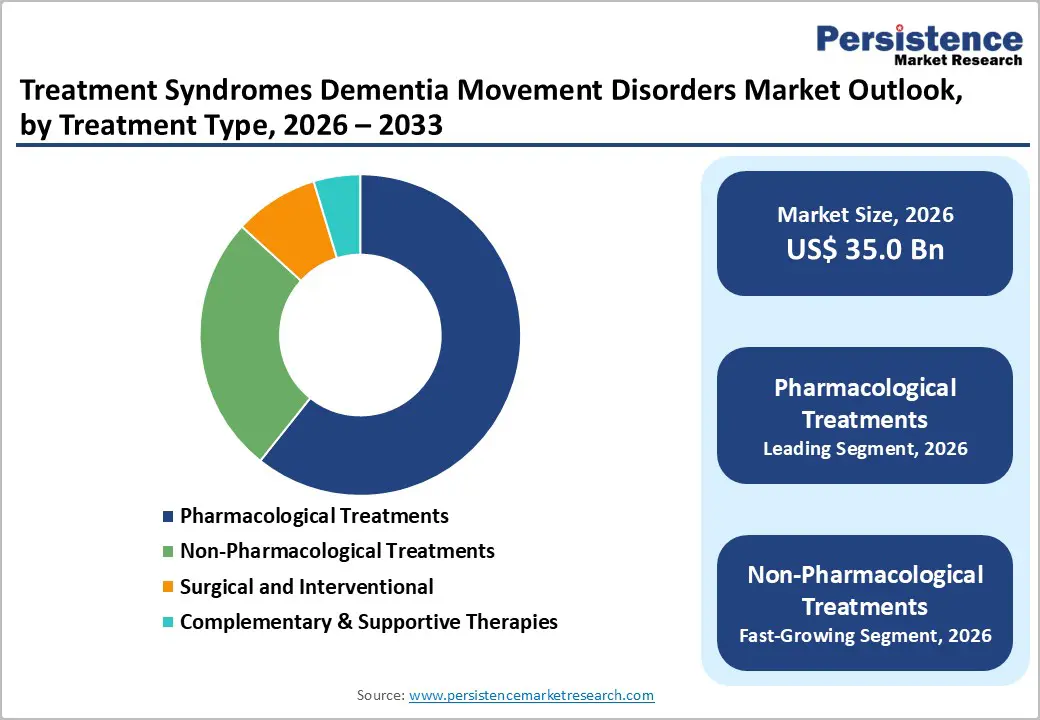
North America dominates the treatment syndromes dementia movement disorders market with 48.7% share in 2025, due to its high disease prevalence, robust healthcare infrastructure, and extensive treatment accessibility. In the United States, the Centers for Disease Control and Prevention estimates that over 6.7 million adults aged 65 and older are living with Alzheimer’s disease, a figure projected to increase significantly by 2060, illustrating substantial clinical demand. Additionally, Parkinson’s disease affects approximately 1 million Americans, further adding to neurological care needs. The region’s well-established reimbursement systems, advanced diagnostic capabilities, and high per-capita healthcare expenditure enable broader use of pharmacological and supportive treatments compared with other regions, supporting deeper market penetration and higher treatment utilization. These factors collectively secure North America’s leading share in the global market.
Europe is an important region in the treatment syndromes dementia movement disorders market due to its high prevalence of aging populations, strong public health infrastructure, and coordinated government strategies for neurological care. According to Alzheimer Europe, nearly 10 million people live with dementia across European countries, and projections indicate this will rise significantly as populations age. The European Brain Council reports that neurological disorders, including dementia and movement disorders, account for the highest overall disease burden in Europe, with substantial direct and indirect costs to health systems. Europe’s well-developed healthcare systems ensure broad access to diagnostics, pharmacological treatments, and multidisciplinary care programs, reinforcing treatment uptake. Additionally, strong policy frameworks and research collaborations across the EU support clinical innovation and standardized care pathways, underscoring Europe’s strategic significance in the global market.
Asia Pacific is the fastest-growing region in the treatment syndromes dementia movement disorders market due to its rapidly aging population and surging neurological disease burden, which significantly expands the potential patient base. In this region, the number of people living with dementia is projected to triple from 23 million in 2015 to nearly 71 million by 2050, meaning more than half of the global dementia population will reside in the Asia Pacific, driven by demographic shifts toward older age groups. Additionally, studies show that prevalent cases of Alzheimer’s and related dementias in Asia surged from about 9 million in 1990 to nearly 32 million in 2021, highlighting exponential growth in disease burden. These factors, combined with improving healthcare access, rising disease awareness, and enhanced diagnostic capabilities, are accelerating treatment adoption and market expansion across pharmacological, supportive, and interventional care pathways in the region.
The treatment syndromes dementia movement disorders market is highly competitive, led by companies like Biogen, Eisai, AbbVie, Novartis, and Pfizer. Innovation in pharmacological therapies, digital therapeutics, neurostimulation devices, and personalized care, alongside strategic partnerships, clinical advancements, and geographic expansion, drives differentiation. AI integration, biomarkers, and patient support programs further enhance competitiveness and market growth globally.
The global Treatment syndromes dementia movement disorders market is projected to be valued at US$ 35.0 Bn in 2026.
Rising dementia prevalence, aging populations, improved diagnosis, healthcare spending, and adoption of advanced therapies drive growth.
The global treatment syndromes dementia movement disorders market is poised to witness a CAGR of 8.8% between 2026 and 2033.
Development of disease-modifying therapies, regenerative treatments, digital therapeutics, early diagnosis, and emerging market expansion.
AbbVie Inc., Acorda Therapeutics Inc., Acadia Pharmaceuticals Inc., Amgen Inc., Amneal Pharmaceuticals Inc., AstraZeneca Plc.
| Report Attributes | Details |
|---|---|
| Historical Data/Actuals | 2020 - 2025 |
| Forecast Period | 2026 - 2033 |
| Market Analysis | Value: US$ Bn |
| Geographical Coverage |
|
| Segmental Coverage |
|
| Competitive Analysis |
|
| Report Highlights |
|
By Treatment Type
By Condition Type
By End User
By Region
Delivery Timelines
For more information on this report and its delivery timelines please get in touch with our sales team.
About Author