




- Animal Health
- Companion Animal Ear Infection Treatment Market
Companion Animal Ear Infection Treatment Market Size, Share and Growth Forecast, 2026 - 2033
Companion Animal Ear Infection Treatment Market by Animal Type (Dogs, Cats, Others), Product Type (Anti-bacterial, Anti-fungal, Corticosteroids, Other Product Types), Disease Type (Otitis Externa, Otitis Media, Otitis Interna), and Regional Analysis for 2026 - 2033

Companion Animal Ear Infection Treatment Market Share and Trends Analysis
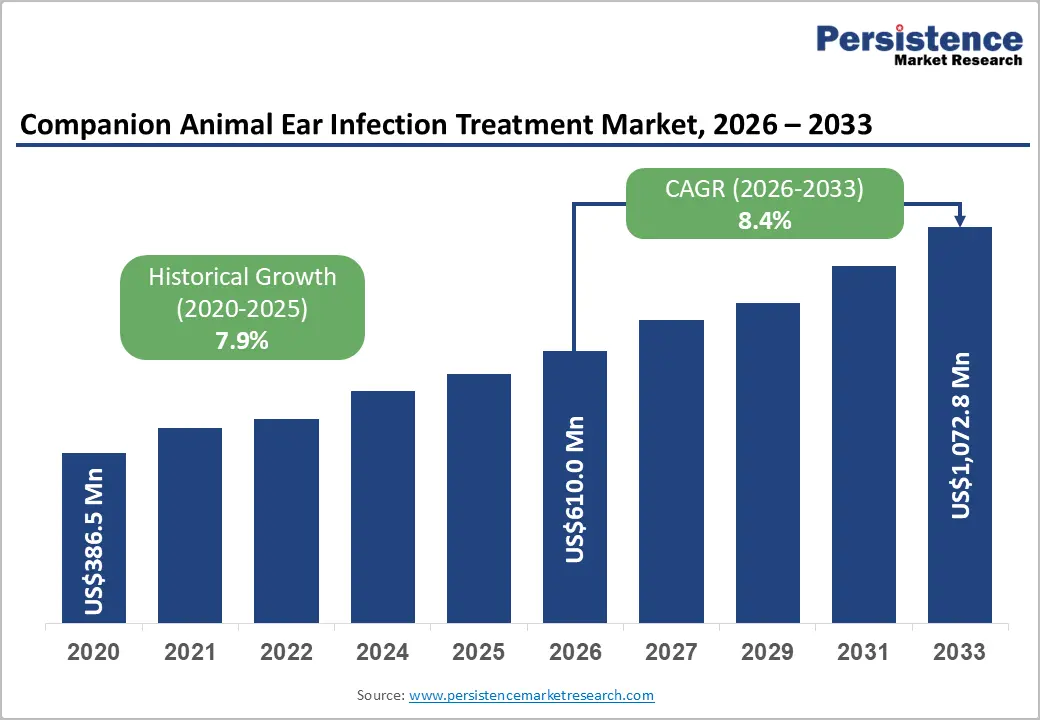
The global companion animal ear infection treatment market size is likely to be valued at US$610.0 million in 2026 and is projected to reach US$1,072.8 million by 2033, growing at a CAGR of 8.4% during the forecast period from 2026 to 2033, driven by the rising incidence of otitis externa and otitis media in dogs and cats, increasing pet ownership, and higher veterinary spending on pet ear care and infection management products.
Expansion of veterinary healthcare infrastructure and availability of advanced veterinary ear drops for dogs and cats are further strengthening adoption. Regulatory support for safer veterinary antibiotics for ear infections in pets and growing awareness of early diagnosis are also improving treatment outcomes across developed and emerging markets.
Key Industry Highlights:
- Animal Type Dynamics: Dogs are expected to lead the companion animal ear infection treatment market with 60% share in 2026, while cats are likely to grow the fastest at 8.6% CAGR through 2033, driven by rising adoption and diagnosis of cat ear infection treatment veterinary drugs.
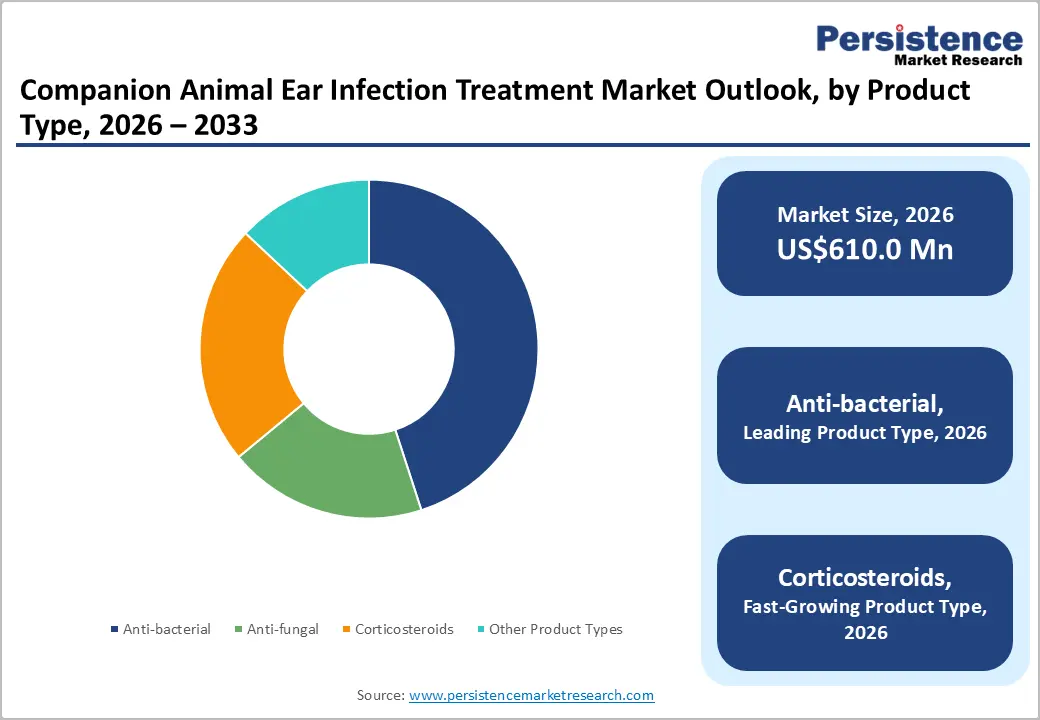
- Product Type Leadership: Anti-bacterial therapies are projected to dominate veterinary otitis externa treatment products with 45% share in 2026, while corticosteroids are expected to grow the fastest at 8.8% CAGR, supported by combination-based otitis treatment drugs for companion animals.
- Disease Type Dominance: Otitis externa is anticipated to lead the animal health ear infection therapeutics market with 70% share in 2026, while otitis interna is expected to be the fastest-growing at 8.5% CAGR due to improved diagnostics and treatment intensity.
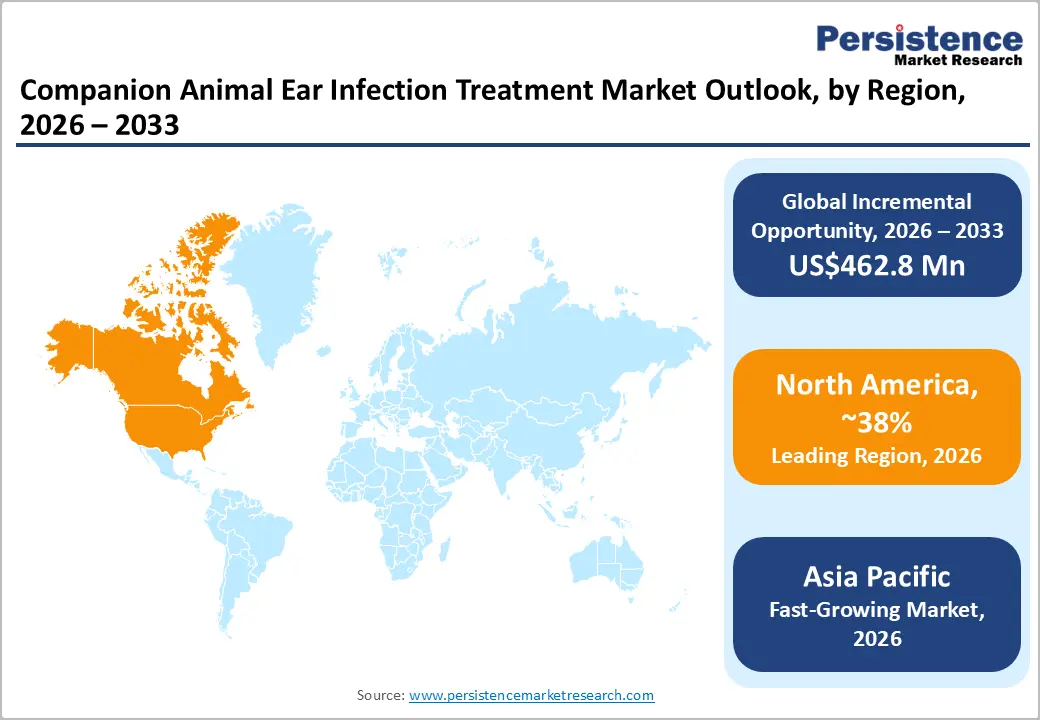
- Regional Leadership: North America is set to dominate the companion animal ear infection treatment market with 38% share in 2026, while Asia Pacific is expected to grow the fastest at 8.9% CAGR, driven by rising demand for pet ear care and infection management products.
- Competitive Environment: Market competition is shaped by R&D in antimicrobial resistance solutions, portfolio expansion in veterinary antibiotics for ear infections in pets, and strategic moves by Zoetis, Elanco, and Boehringer Ingelheim across the global markets.
DRO Analysis
Driver - Rising Pet Humanization and Veterinary Healthcare Expenditure Growth
The increasing trend of pet humanization is significantly accelerating demand for dog ear infection treatment solutions and cat ear infection treatment veterinary drugs. According to the American Pet Products Association (APPA), pet industry expenditure in the U.S. alone has consistently exceeded multi-billion-dollar thresholds annually, with veterinary care forming a major component. The World Organisation for Animal Health (WOAH) also reports rising global veterinary service utilization due to improved disease awareness.
Companion animals are increasingly treated as family members, leading to a higher willingness among owners to spend on advanced animal health ear infection therapeutics market solutions. This shift is boosting demand for prescription-based therapies, diagnostics, and follow-up treatments. As a result, veterinary clinics are expanding specialized ENT (ear, nose, throat) care services, directly supporting market expansion across developed economies and urban centers in emerging regions.
Restraint - Antibiotic Resistance and Regulatory Constraints in Veterinary Drug Use
A key restraint impacting the veterinary otitis externa treatment products market is the tightening regulatory environment surrounding antibiotic usage in animals. Agencies such as the U.S. Food and Drug Administration (FDA) and the European Medicines Agency (EMA) have introduced stricter antimicrobial stewardship guidelines to reduce resistance risks. Overuse of veterinary antibiotics for ear infections in pets has been linked to antimicrobial resistance concerns, prompting restrictions on certain active pharmaceutical ingredients. This has increased compliance costs for manufacturers and slowed product approvals.
Veterinary professionals are also encouraged to adopt alternative therapies, which can limit the use of conventional antibiotic-based ear infection treatments. Supply chain constraints for active pharmaceutical ingredients (APIs) further add to production complexity. These regulatory and scientific pressures create a barrier to rapid commercialization and increase R&D costs across the companion animal otitis externa market growth trends landscape.
Opportunity - Expansion of Preventive and Advanced Otic Therapeutics in Emerging Markets
A key opportunity in the pet ear care and infection management products market is the rapid expansion of preventive care and advanced otic therapies across emerging economies, including India, China, Brazil, and Southeast Asia. Rising pet adoption, improving veterinary clinic density, and higher awareness of otitis treatment drugs for companion animals are significantly expanding the addressable patient pool. Urbanization and increasing disposable incomes are further driving spending on routine veterinary care rather than reactive treatment.
The innovation in long-acting formulations, dual-action therapies, and non-antibiotic antimicrobial solutions is creating new product pathways within veterinary ear drops for dogs and cats. Support from veterinary bodies such as WOAH and national animal health councils is strengthening early diagnosis and screening programs, improving treatment penetration. This combination of demand growth and product innovation is expected to unlock strong commercial expansion in underserved rural and semi-urban companion animal healthcare markets.
Category-wise Analysis
Animal Type Insights
Dogs dominate the companion animal ear infection treatment market with an estimated 60% share in 2026, primarily due to higher anatomical vulnerability to otitis externa, including narrow ear canals and moisture retention in floppy-eared breeds. This biological susceptibility results in a higher incidence of recurrent infections, which consistently drives demand for dog ear infection treatment solutions. Established veterinary treatment pathways and frequent clinical consultations further reinforce stable and repeat prescription volumes across key markets.
Cats are projected to be the fastest-growing segment, expanding at an estimated 8.6% CAGR through 2033 in the cat ear infection treatment veterinary drugs category, driven by rising feline adoption and improved clinical identification of otitis cases that were previously underdiagnosed. Growth is further supported by increasing availability of feline-specific otic therapies and preventive screening adoption in veterinary clinics, particularly across North America and Asia Pacific, where higher pet healthcare spending is improving early diagnosis rates.
Product Type Insights
Anti-bacterial therapies are expected to lead the veterinary otitis externa treatment products market with an estimated 45% share in 2026, as bacterial infections remain the most commonly diagnosed cause of ear disease in companion animals. These therapies are widely prescribed as first-line treatment in veterinary antibiotics for ear infections in pets, supported by strong clinical efficacy and established veterinary prescribing behavior across acute and chronic infection cases, ensuring consistent demand across global veterinary practices.
Corticosteroids are anticipated to be the fastest-growing product type, registering an estimated 8.8% CAGR by 2033 in otitis treatment drugs for companion animals, driven by their rapid anti-inflammatory action that improves symptom relief and recovery outcomes. Increasing preference for combination therapies in veterinary dermatology and rising demand for faster clinical response in chronic otitis cases are accelerating adoption, particularly in developed veterinary healthcare systems.
Disease Type Insights
Otitis externa is projected to dominate the animal health ear infection therapeutics market with an estimated 70% share in 2026, as it remains the most frequently diagnosed ear condition in dogs and cats, commonly triggered by allergies, moisture exposure, and microbial infections. High recurrence rates and routine veterinary screening practices ensure steady treatment demand, reinforcing its position as the primary driver of pet ear care and infection management products globally.
Otitis interna is expected to be the fastest-growing segment, expanding at an estimated 8.5% CAGR through 2033 due to improved diagnostic accuracy enabled by advanced imaging technologies such as CT scans and endoscopic evaluation. Although less common, it represents severe and high-cost cases requiring specialized intervention, and increasing referral rates to advanced veterinary hospitals are significantly driving adoption of intensive treatment protocols.
Regional Analysis
North America Companion Animal Ear Infection Treatment Market Trends
North America leads the companion animal ear infection treatment market, with an estimated 38% global share in 2026, supported by strong veterinary infrastructure, high pet ownership density, and widespread adoption of veterinary otitis externa treatment products. High expenditure on companion animal healthcare and established insurance coverage enhance treatment access and continuity. The rising incidence of chronic otitis cases in dogs and cats further sustains steady therapeutic demand across clinics.
U.S. Companion Animal Ear Infection Treatment Market Trends
The U.S. is estimated to account for 72% of the North America market in 2026, driven by a mature veterinary ecosystem and high per-capita pet spending. FDA regulatory oversight ensures controlled use of veterinary antibiotics for ear infections in pets, supporting standardized treatment practices. The increasing prevalence of recurrent ear infections is steadily driving demand for dog ear infection treatment solutions, particularly in urban companion animal populations.
Canada Companion Animal Ear Infection Treatment Market Trends
Canada is estimated to hold 15% of the North American market in 2026, supported by rising pet adoption and the gradual expansion of veterinary clinic networks. Growing preventive care awareness is supporting the uptake of otitis treatment drugs for companion animals. Expanding pet insurance penetration and improving affordability are further strengthening treatment accessibility and clinical adoption.
Europe Companion Animal Ear Infection Treatment Market Trends
Europe accounts for an estimated 30% global share in 2026, driven by strong animal welfare regulations, structured veterinary systems, and increasing demand for veterinary otitis externa treatment products. Rising pet ownership in urban households and greater emphasis on preventive care are supporting market expansion. Strict antimicrobial stewardship policies are also shaping innovation toward safer and combination-based therapies.
Germany Companion Animal Ear Infection Treatment Market Trends
Germany is estimated to represent 25% of the European market in 2026, supported by advanced veterinary infrastructure and strong insurance coverage. Regulatory control over veterinary antibiotics for ear infections in pets encourages responsible prescribing practices. High clinical awareness and strong pet healthcare spending are driving demand for cat ear infection treatment veterinary drugs.
U.K. Companion Animal Ear Infection Treatment Market Trends
The U.K. is estimated to account for 18% of the regional market in 2026, driven by high pet ownership and increasing preventive healthcare adoption. Veterinary clinics are increasingly using advanced diagnostics and combination therapies for otitis management. Expanding insurance coverage is improving access to veterinary ear drops for dogs and cats, supporting steady market growth.
Asia Pacific Companion Animal Ear Infection Treatment Market Trends
Asia Pacific is estimated to hold 22% global share in 2026, emerging as the fastest-growing region in the pet ear care and infection management products market. Growth is driven by rising pet adoption, rapid urbanization, and expanding veterinary infrastructure across China, India, Japan, and ASEAN countries. Increasing awareness of early disease detection is accelerating demand for dog ear infection treatment solutions.
China Companion Animal Ear Infection Treatment Market Trends
China is estimated to account for 35% of the regional market in 2026, supported by rapid urban pet adoption and expanding veterinary clinic networks. Local manufacturing strength is improving affordability and access to otitis treatment drugs for companion animals. Government-led modernization of animal healthcare systems is further supporting faster uptake of advanced otic therapies.
India Companion Animal Ear Infection Treatment Market Trends
India is estimated to hold 15% of the Asia Pacific market in 2026, driven by rising pet ownership and improving veterinary service penetration in urban areas. Expansion of private clinics is increasing the availability of veterinary otitis externa treatment products. Growing awareness of preventive pet healthcare is steadily improving early diagnosis and treatment adoption rates.
Competitive Landscape
The global companion animal ear infection treatment market is moderately consolidated, with key players such as Zoetis, Elanco Animal Health, Boehringer Ingelheim Animal Health, Merck Animal Health, and Virbac holding a significant share of global revenues. These companies maintain strong positions through extensive veterinary distribution networks and established trust in veterinary otitis externa treatment products. Continuous R&D investments are driving innovation in combination therapies and advanced veterinary antibiotics for ear infections in pets.
Mid-tier and regional players such as Dechra Pharmaceuticals, Vetoquinol, Ceva Santé Animale, and Norbrook are expanding through niche dermatology portfolios and cost-effective formulations. Market entry barriers remain moderate due to strict regulatory approvals and prescription-based distribution requirements. However, rising demand for advanced pet ear care and infection management products is encouraging product diversification and innovation in non-antibiotic therapies. Increasing partnerships with veterinary clinics and expansion in emerging markets are intensifying competition.
Companies Covered in Companion Animal Ear Infection Treatment Market
- Zoetis Inc.
- Elanco Animal Health
- Boehringer Ingelheim Animal Health
- Merck Animal Health
- Dechra Pharmaceuticals
- Virbac
- Ceva Santé Animale
- Vetoquinol
- PetIQ
- Norbrook Laboratories
- HIPRA
- Phibro Animal Health
- Zydus Animal Health
- Intas Pharmaceuticals Animal Health Division
Frequently Asked Questions
The global companion animal ear infection treatment market is projected to reach US$610.0 million in 2026.
Rising pet adoption, increasing otitis prevalence, and growing use of veterinary otitis externa treatment products drive the market.
The animal ear infection treatment market is expected to grow at a CAGR of 8.4% from 2026 to 2033.
Expanding veterinary infrastructure in emerging economies and rising demand for pet ear care and infection management products create strong opportunities.
Key players include Zoetis, Elanco Animal Health, Boehringer Ingelheim Animal Health, Merck Animal Health, and Virbac.


