




- Healthcare Services
- Alternative Cancer Treatment Market
Alternative Cancer Treatment Market Size, Share, and Growth Forecast, 2026 - 2033
Alternative Cancer Treatment Market by Disease Indication (Gastrointestinal, Lung Cancer, Breast Cancer, Colorectal Cancer, Leukemia, Lymphoma, Melanoma, Prostate Cancer, Others), Therapy Type (Hormone Therapies, Acupuncture & Dietary Supplements, Others), End-Use (Hospitals & Clinics, Cancer & Radiation Therapy Centers, Home Care, Others), and Regional Analysis for 2026 - 2033

Alternative Cancer Treatment Market Share and Trends Analysis
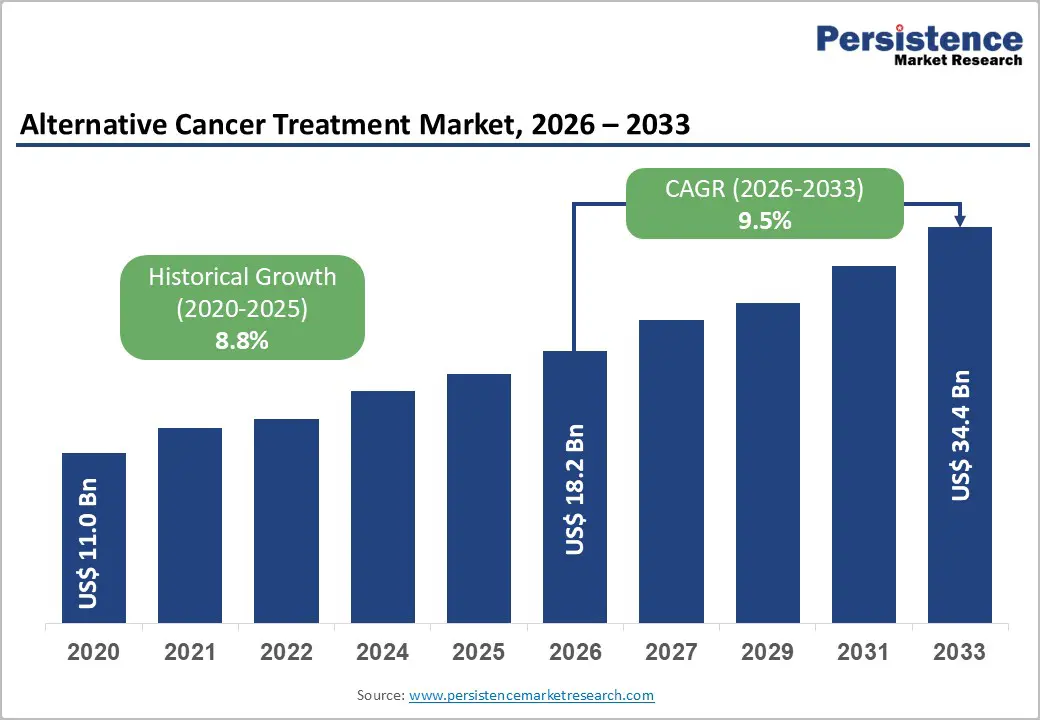
The global alternative cancer treatment market size is likely to be valued at US$ 18.2 billion in 2026, and is projected to reach US$ 34.4 billion by 2033, growing at a CAGR of 9.5% during the forecast period 2026 - 2033.
This expansion reflects increasing patient demand for complementary and holistic oncology therapies that can support conventional care, manage treatment side effects, and improve quality of life. The growth is underpinned by rising global cancer incidence, expanding integrative care offerings, and broader consumer awareness of alternative modalities. However, scientific validation gaps, regulatory complexity, and reimbursement challenges remain structural restraints. Strategic innovation and policy support can unlock new adoption pathways.
Key Industry Developments
- Dominant Disease Indication: Breast cancer is expected to command the largest share of around 30% of the revenue in 2026, supported by high disease prevalence and extended survivorship.
- Fastest-Growing Disease: Lung cancer is projected to be the fastest-growing at an estimated CAGR of 11% through 2033, driven by the rising global incidence of the disease.
- Leading Therapy: Hormone therapies are expected to lead with approximately 35% market share in 2026, driven by adoption in integrative oncology.
- Regional Leadership: North America is likely to dominate with an estimated 42% share in 2026, owing to established integrative oncology programs and reimbursement pathways.
- Fastest-growing Market: The Asia Pacific market is forecast to achieve the highest growth, with a CAGR of nearly 10% through 2033, led by an increase in cancer prevalence in China and India.
- October 2025: Outcomes4Me was named to TIME’s Best Inventions of 2025 for its AI-driven cancer care platform that empowers over 400,000 patients globally by simplifying oncology guidelines, supporting clinical trial matching, and enhancing symptom management.
| Key Insights | Details |
|---|---|
|
Alternative Cancer Treatment Market Size (2026E) |
US$ 18.2 Bn |
|
Market Value Forecast (2033F) |
US$ 34.4 Bn |
|
Projected Growth (CAGR 2026 to 2033) |
9.5% |
|
Historical Market Growth (CAGR 2020 to 2025) |
8.8% |
Market Factors - Growth, Barriers, and Opportunity Analysis
Escalating Global Cancer Burden and Survivorship to Fuel Adoption
The rapidly increasing global cancer burden is a core demand driver for the alternative cancer treatment market. According to estimates released by the World Health Organization (WHO), nearly 20 million new cancer cases were diagnosed worldwide in 2022, with around 9.7 million cancer-related deaths. Lung cancer, female breast cancer, and colorectal cancer were the most commonly diagnosed malignancies, underscoring the scale and complexity of cancer care globally. This rising incidence is expanding the number of patients requiring long-term symptom management and supportive care beyond primary treatment.
The evidence from a late-2025 global clinician survey, published in BMC Complementary Medicine and Therapies and highlighted by The ASCO Post and News-Medical, demonstrates measurable adoption of integrative oncology practices. The study of more than 300 oncology professionals across eight regions found that about 70% of respondents reported having used or recommended at least one integrative approach, such as acupuncture, yoga, nutrition counseling, exercise, or massage, to help patients manage cancer-related symptoms, including pain, fatigue, anxiety, and gastrointestinal distress. Nearly 80% perceived these supportive services as underutilized, with cost, limited insurance coverage, and training gaps cited as barriers to broader implementation. These findings provide empirical support for the increasing integration of complementary therapies into cancer care pathways, reinforcing quality-of-life benefits alongside conventional treatment outcomes.
Evidence and Regulation Challenges to Inhibit Market Growth
The lack of robust, standardized clinical evidence continues to constrain the growth of the alternative cancer treatment market. Many widely used therapies, including herbal supplements, dietary interventions, and mind-body modalities, rely on small-scale studies focusing primarily on symptom relief rather than survival outcomes or tumor regression. Systematic reviews indicate that only a minority of trials demonstrate statistically meaningful clinical benefits. This limited evidentiary base makes it difficult for oncology practitioners and guideline committees to formally endorse these therapies. As a result, institutional adoption remains cautious, slowing broader integration into conventional oncology care programs and supportive treatment pathways.
The regulatory fragmentation and quality variability across regions further suppress market growth. Unlike conventional oncology drugs that undergo centralized, stringent review, many alternative therapies are classified as supplements or wellness products with inconsistent oversight, leading to variable potency, safety, and labeling standards. This inconsistency complicates large-scale clinical research and limits clinicians' confidence in recommending therapies. Without harmonized frameworks and clear quality benchmarks, hospitals and payers are hesitant to adopt or reimburse these treatments widely. Consequently, both access and adoption rates are constrained, slowing overall market expansion despite growing patient demand.
Strategic Expansion via Policy and Technology to Unlock New Opportunities
Emerging economies are unlocking tangible policy-driven opportunities for alternative and integrative cancer care. For example, at the 78th World Health Assembly in May 2025, WHO Member States adopted the WHO Global Traditional Medicine Strategy 2025–2034, committing to strengthening evidence, regulation, and health-system integration of traditional, complementary, and integrative medicine. It was a move endorsed by high-level delegates from China, India, Malaysia, and other countries to enhance universal health coverage. India has signed agreements with WHO to standardize traditional systems such as Ayurveda, Siddha, and Unani within international health frameworks, while committing US$ 85 million to support the WHO Global Traditional Medicine Centre, enhancing research and evidence generation for these practices. These policy actions, backed by multilateral strategy and direct government investment, are enhancing institutional openness to integrative oncology approaches and reducing barriers to broader market adoption in fast-growing economies.
Digital health and tele-oncology platforms are transforming access to complementary care, with measurable uptake. In 2025, global digital health funding exceeded US$ 30 billion, with significant investment in telehealth and remote patient monitoring solutions, including nutrition counseling, lifestyle coaching, and symptom management for cancer patients. These platforms reduce geographic barriers, lower delivery costs, and improve continuity of care, especially in underserved areas. The combination of emerging-market healthcare spending growth and accelerating digital adoption creates a substantial, measurable opportunity to scale alternative cancer treatment offerings through 2033.
Category-wise Analysis
Disease Indication Insights
Breast cancer is expected to account for about 30% of the market share in 2026, making it the largest disease indication in alternative cancer treatment. Patients frequently adopt dietary supplements, acupuncture, and mind-body therapies to manage fatigue, nausea, and stress during conventional treatment. The 21st International Conference of the Society for Integrative Oncology in 202 highlighted multiple clinical trials focusing on breast cancer supportive care, confirming strong institutional endorsement. About 70% of oncology professionals reported recommending integrative therapies for breast cancer symptom management. Awareness campaigns and research-backed interventions further drive patient adoption.
Lung cancer is projected to be the fastest-growing disease indication from 2026 to 2033, driven by severe symptom burden and limited treatment outcomes. Complementary therapies, such as respiratory exercises, herbal medicine, and stress management interventions, are increasingly integrated into standard care. The systematic reviews and clinical studies published in 2025 evaluated Traditional Asian Medicine (TAM) and acupuncture for lung cancer, confirming effectiveness for symptom relief. Patients seek supportive care to improve the quality of life alongside conventional therapies. Rising interest in alternative therapy research and clinical validation will further bolster wider adoption.
Therapy Type Insights
Hormone therapies are expected to account for roughly 35% of the alternative cancer treatment market's revenue share in 2026, remaining the largest therapy type. Targeted hormone interventions complement conventional endocrine treatment for breast and prostate cancers, mitigating systemic effects such as fatigue, mood swings, and appetite loss. Hospitals integrate hormone-supportive supplements and nutritional strategies alongside standard treatments, reflecting clinical confidence. Ongoing outcome monitoring and structured programs ensure consistency in care delivery. Integrative oncology programs leverage these therapies for survivorship and long-term supportive care. Institutional recognition strengthens this segment's leadership in therapy adoption.
Acupuncture and dietary supplements are likely to be the fastest-growing therapy types during the 2026-2033 forecast period, driven by clinical endorsement and patient preference. Acupuncture is particularly effective against chemotherapy-induced symptoms, while supplements address immune and nutritional support. According to the National Library of Medicine, acupuncture is widely used for people with a cancer diagnosis to relieve symptoms related to cancer and its treatments. Several guidelines recommend acupuncture for fatigue, myofascial, arthralgic, and musculoskeletal pain, chemotherapy-induced peripheral neuropathy (CIPN), chemotherapy-induced and anticipatory nausea and vomiting, radiotherapy-induced xerostomia, anxiety, depressive symptoms, and hot flushes. Telehealth platforms expand access to these therapies, including remote guidance and home integration.
End-Use Insights
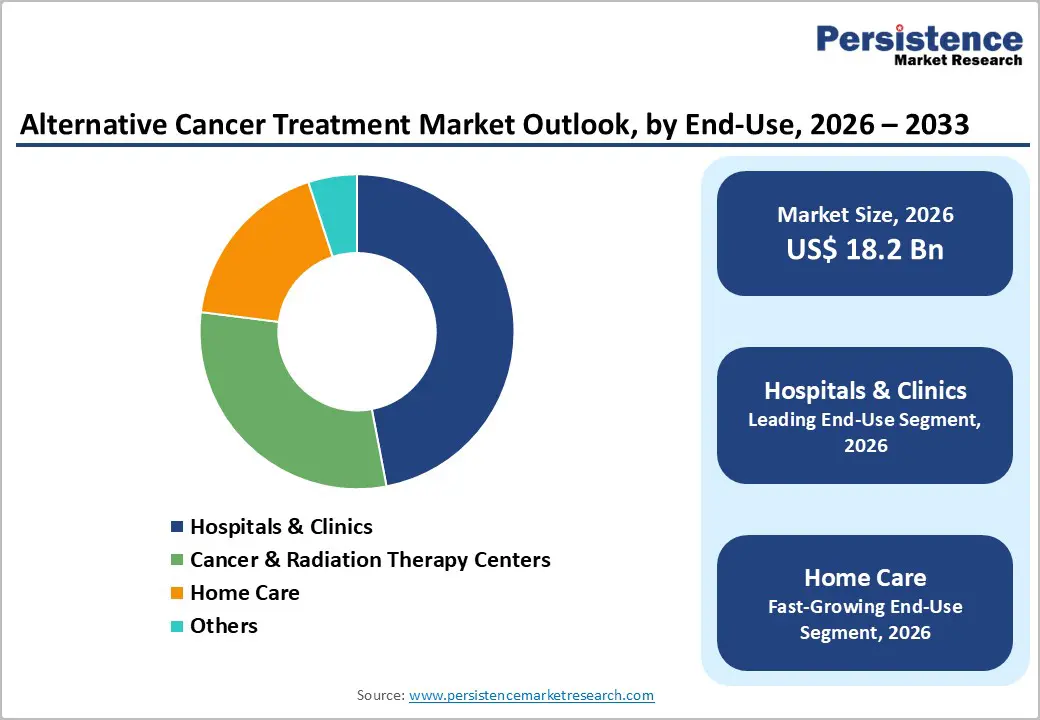
Hospitals and clinics are projected to account for nearly 47% of market revenue share in 2026, maintaining their dominant position in alternative cancer treatments. Reputed institutions such as City of Hope have expanded integrative oncology research and trials encompassing acupuncture, diet, exercise, and mind-body interventions. Coordinated delivery ensures consistent treatment, outcome tracking, and practitioner collaboration. Patients benefit from supportive programs that complement chemotherapy, radiation, and surgery. Hospital-based integrative services improve symptom management, adherence, and overall patient satisfaction. Established infrastructure allows rapid implementation of new therapies. High patient trust and institutional capacity sustain its market leadership.
Home care is expected to be the fastest-growing end-user segment with an estimated 11% CAGR through 2033, bolstered by promising growth in remote patient monitoring (RPM) technologies and telemedicine services that extend supportive care into patients’ homes. In 2024, for instance, Tennessee Oncology launched its NEST (Navigated, Embedded, Supportive Care via Telehealth) program, backed by a US$ 1.5 million grant from the Tennessee Department of Health. Serving seven rural Middle Tennessee counties, it connects patients with palliative care, supportive psychology, and integrative oncology specialists, including nutrition and lifestyle support. Using a community-based participatory approach, telehealth equipment and navigators are embedded in local clinics to ensure reliable broadband access.
Regional Insights
North America Alternative Cancer Treatment Market Trends
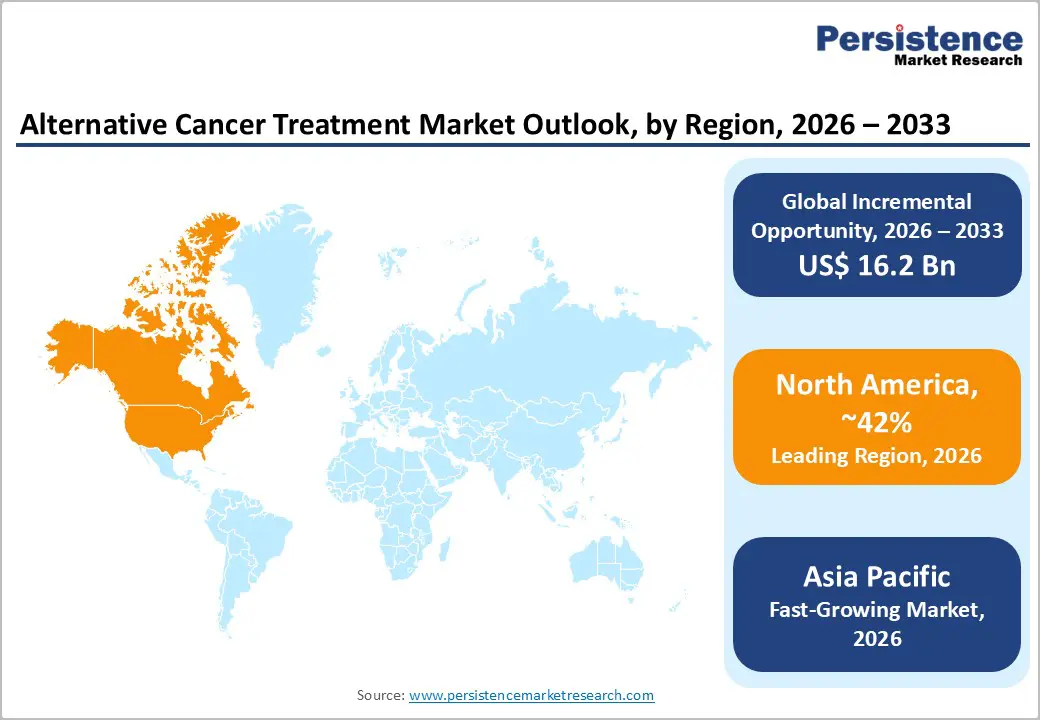
North America is expected to command approximately 42% of the alternative cancer treatment market share in 2026, supported by advanced healthcare infrastructure, high cancer prevalence, and widespread institutional adoption of integrative oncology. The U.S. leads regional demand, with the National Center for Complementary and Integrative Health (NCCIH) receiving over US$ 144 million in FY 2023 for research into acupuncture, nutrition, and mind-body interventions, while the National Cancer Institute contributed around US$ 65 million toward complementary oncology studies. Hospitals integrate these therapies into conventional oncology programs to improve patient quality of life, symptom management, and survivorship outcomes. Insurance coverage and reimbursement for certain integrative services strengthen access. Physician education programs increasingly emphasize evidence-based supportive care, encouraging referrals. Telehealth expansions further extend therapy reach to rural populations, consolidating North America’s market leadership.
In 2025, federal and institutional initiatives strengthened alternative therapy adoption. Research portfolios funded by NCCIH and NCI expanded to include tele-oncology and remote symptom monitoring for cancer patients. Integrative oncology programs at major cancer centers now provide structured nutrition, lifestyle, and mind-body support. Partnerships with digital health providers facilitate continuous patient monitoring and adherence tracking. Policy and guideline development recognize complementary modalities as adjuncts to conventional treatment. Hospitals are embedding integrative care pathways into standard oncology protocols. These actions solidify North America’s dominant market position and strengthen the region’s clinical integration of alternative cancer therapies.
Europe Alternative Cancer Treatment Market Trends
Europe is likely to be the second-largest market for alternative cancer treatments, driven by established universal healthcare systems and increasing recognition of evidence-based complementary therapies in oncology. Germany, the U.K., and France lead adoption through integration of standardized herbal formulations, accredited acupuncture, and mind-body support into clinical care. Funding for complementary interventions is typically embedded within broader health programs. In 2025, the Horizon Europe Work Programme allocated € 960 million for health and cancer research, supporting studies on integrative care pathways and alternative treatments for chronic conditions. National health systems offer coverage for certain therapies, reducing cost barriers and encouraging patient uptake. Clinical networks and collaborative research projects enhance quality and consistency. Physician training and guideline updates further support adoption of integrative oncology approaches.
Regulatory and research initiatives in 2025 strengthened the evidence base and clinician confidence. The European Medicines Agency (EMA) continues harmonizing standards for herbal and complementary medicines, improving pharmacovigilance and product safety. Cross-border research consortia funded by the European Union (EU) evaluate integrative therapies for symptom relief, fatigue management, and quality-of-life outcomes. Professional accreditation programs expand training in evidence-based supportive care. Hospitals implement structured protocols combining conventional and complementary care. Patient advocacy and public health campaigns further encourage integrative adoption. These efforts support steady growth and maintain Europe’s role as a key regional market for alternative cancer treatments.
Asia Pacific Alternative Cancer Treatment Market Trends
Asia Pacific is projected to be the fastest-growing regional market for alternative cancer treatments, with a 2026-2033 CAGR of 11%, driven by extensive adoption of traditional medical systems and expanding healthcare infrastructure. China and India are major contributors, integrating Traditional Chinese Medicine (TCM), Ayurveda, and other indigenous practices into oncology supportive care. Cultural familiarity and patient trust in traditional modalities fuel adoption, while hospitals increasingly embed integrative services for symptom management, nutrition, and quality-of-life support. Telehealth platforms extend care to rural and underserved populations. Professional training programs and academic networks enhance practitioner capacity. Asia Pacific’s rapid growth reflects both demand and the formalization of integrative care pathways in mainstream oncology.
Government initiatives in 2024–2025 reinforced this expansion. For example, China committed US$ 5 million over five years to support the WHO Traditional, Complementary, and Integrative Medicine (TCIM) program and allocated ¥ 750 billion (about US$ 105 billion) in its 2024 healthcare budget, which includes TCM integration in hospitals. India’s Ministry of AYUSH continues to fund research, education, and institutional infrastructure for Ayurveda, Yoga, Naturopathy, Unani, Siddha, and Homeopathy. The WHO launched its Global Traditional Medicine Strategy 2025–2034, standardizing integrative therapies in primary healthcare and supporting global evidence generation. These policy and funding actions enhance regulatory pathways, promote clinical recognition, and accelerate market growth in the region, positioning the Asia Pacific as a key driver of global adoption.
Competitive Landscape
The global alternative cancer treatment market shows a moderately consolidated structure, with pharmaceutical leaders such as Pfizer and Merck, alongside integrative and natural health providers such as Natura Health, Integrative Therapeutics, and Himalaya Global, capturing a significant share of revenues across pharmaceuticals, nutraceuticals, and supportive care offerings. These companies strengthen their positions through sustained research & development (R&D) investment, formal clinical validation, and structured evidence-generation programs that support the integration of hormone-based therapies, dietary supplements, and acupuncture into oncology care pathways in collaboration with hospital systems and integrative oncology centers.
Regional and niche innovators such as Ayushakti and Tianjin Traditional Chinese Medicine (TCM) Co. increasingly differentiate by embedding culturally familiar therapies into care models that respond to local patient beliefs and health-seeking behaviors, and by selectively using internet hospitals and telehealth to extend access for follow-up and supportive care. At the same time, stringent regulatory compliance requirements, rising standards for clinical evidence, and the need for institutional endorsement in oncology networks raise barriers for new entrants, even as telehealth, telemedicine, and digital therapeutic platforms create opportunities for software-driven care coordination, remote monitoring, and education. Over the medium term, consolidation is likely to intensify as global incumbents acquire specialized providers to gain proprietary protocols, regional brands, and digital capabilities, while forward-looking regional players position themselves as acquisition or partnership targets.
Key Industry Developments
- In November 2025, researchers at the National Institute of Technology (NIT) Rourkela discovered that piperlongumine, a compound from long pepper, selectively kills colon cancer cells by inducing oxidative stress, mitochondrial dysfunction, and apoptosis while sparing healthy cells. The study validates its low-cost potential as a chemotherapy alternative, especially for low-income regions, with future research exploring combinations such as oxaliplatin to overcome resistance.
- In November 2025, the Chinese Congress on Holistic Integrative Oncology (CCHIO) brought together thousands of experts to advance integrated cancer prevention and treatment from a global perspective. Hosted by the Chinese Anti-Cancer Association (CACA) with international partners, the congress showcased innovations that bridge traditional Chinese medicine and modern oncology, promote the Chinese Anti-Cancer Association Guidelines for Holistic Integrative Management of Cancer, and highlight new models for standardized, evidence-based integrative care.
- In May 2025, Outcomes4Me secured US$ 21 million in funding led by Salica Investments, accelerating its AI-driven cancer care platform, integrating clinical guidelines, genomics, symptom tracking, and trial matching. It also supports international expansion and strengthens collaborations with global health systems. This highlights the growing adoption of digital supportive care solutions.
Companies Covered in Alternative Cancer Treatment Market
- Memorial Sloan Kettering Cancer Center
- MD Anderson Cancer Center
- Holistic Bio S.p.A.
- Innovative Medicine, LLC
- Northwest Natural Health Clinic
- Immunotherapy Institute
- Georgia Cancer Specialists
- Esperity Nutrition
- ZenHeal Wellness Private Ltd.
- Pellegrino Healing Center
- Saskatoon Naturopathic Medicine
- Saint Elizabeth Medical Center, Inc.
Frequently Asked Questions
The global alternative cancer treatment market is projected to reach US$ 18.2 billion in 2026.
Rising global cancer prevalence, increased patient preference for integrative therapies, and growing awareness of holistic supportive care options are primary growth drivers.
The market is poised to witness a CAGR of 9.5% between 2026 and 2033.
Government initiatives, widening adoption of traditional and complementary therapies, and expansion of digital health platforms and tele-oncology solutions are major market opportunities.
Pfizer, Merck, Natura Health, Integrative Therapeutics, and Himalaya Global are some of the leading players in the market.


