




- Healthcare Services
- Dimpleplasty Treatment Market
Dimpleplasty Treatment Market Size, Share, and Growth Forecast, 2026 – 2033
Dimpleplasty Treatment Market by Treatment Type (Light Therapy, Laser Therapy), End-user (Hospitals, Dermatology Clinics, Cosmetic Surgery Clinics, Home Care Settings, Ambulatory Surgical Centers), and Regional Analysis for 2026 – 2033

Dimpleplasty Treatment Market Size and Trends Analysis
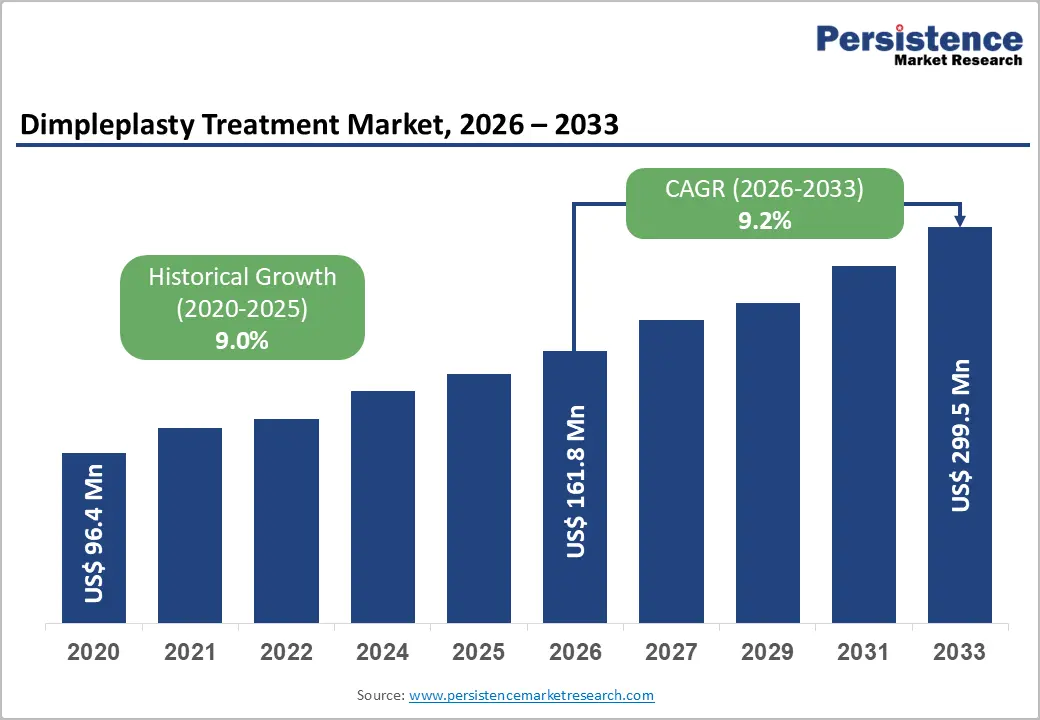
The global dimpleplasty treatment market size is likely to be valued at US$161.8 million in 2026 and is expected to reach US$299.5 million by 2033, growing at a CAGR of 9.2% during the forecast period from 2026 to 2033, driven by the growing demand for minimally invasive cosmetic procedures that enhance facial aesthetics. This treatment involves creating natural-looking dimples through precise techniques such as small incisions, suturing procedures, or emerging light- and laser-assisted methods, making it increasingly appealing to individuals seeking subtle, personalized enhancements.
Advancements in procedural techniques, particularly those that reduce downtime and improve safety outcomes, are supporting market growth. The shift toward outpatient and clinic-based settings, along with the availability of less invasive options, has made dimpleplasty treatments more accessible and convenient for patients. Expanding middle-class populations, especially in emerging economies, are also playing a crucial role by increasing the pool of consumers willing to spend on elective cosmetic enhancements.
Key Industry Highlights:
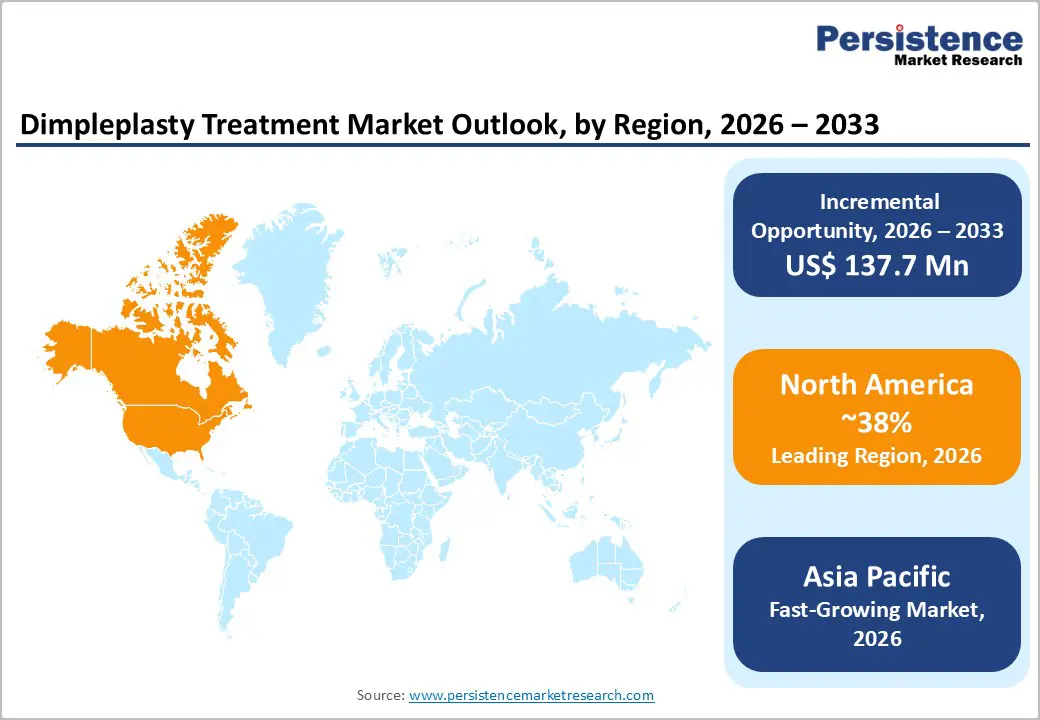
- Leading Region: North America is anticipated to be the leading region, accounting for a market share of 38% in 2026, driven by strong aesthetic procedure adoption, advanced clinical infrastructure, and high acceptance of minimally-invasive cosmetic treatments.
- Fastest-growing Region: Asia Pacific is likely to be the fastest-growing region, supported by rising aesthetic awareness, expanding medical tourism, and increasing adoption of minimally invasive cosmetic procedures.
- Leading Treatment Type: Laser therapy is projected to represent the leading treatment type in 2026, accounting for 62% of the revenue share, driven by its precision and widespread adoption in aesthetic procedures.
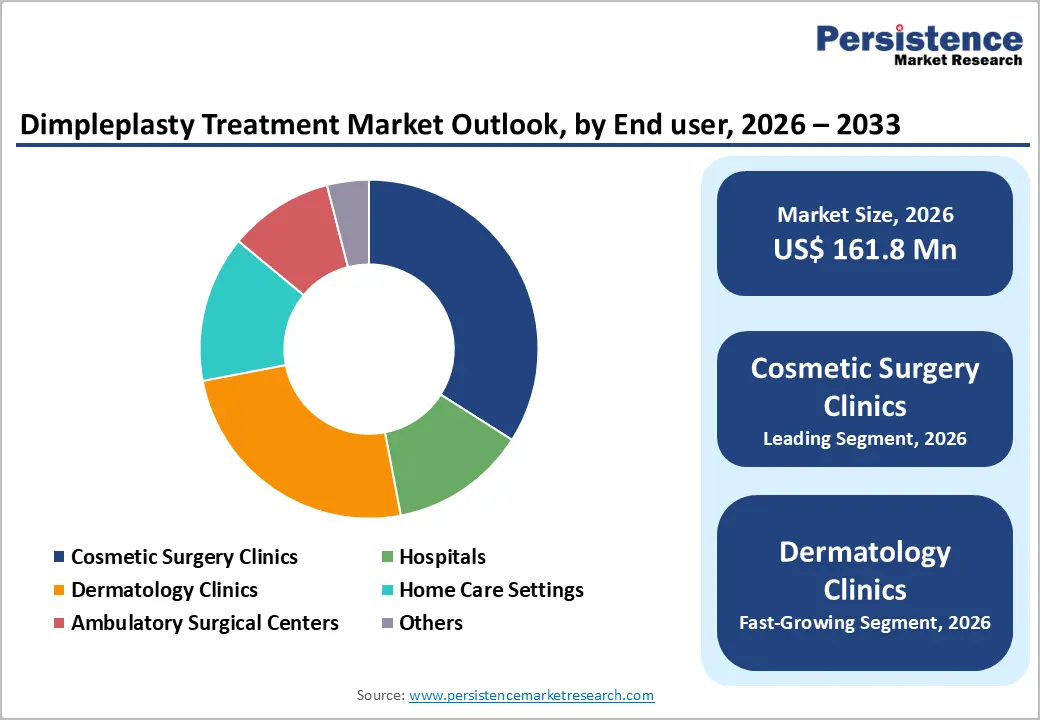
- Leading End-user: Cosmetic surgery clinics are anticipated to be the leading end-user, accounting for over 46% of the revenue share in 2026, supported by specialized expertise and higher procedure volumes.
| Key Insights | Details |
|---|---|
| Dimpleplasty Treatment Market Size (2026E) | US$161.8 Mn |
| Market Value Forecast (2033F) | US$299.5 Mn |
| Projected Growth (CAGR 2026 to 2033) | 9.2% |
| Historical Market Growth (CAGR 2020 to 2025) | 9.0% |
Market Factors – Growth, Barriers, and Opportunity Analysis
Growth Analysis- Rising Demand for Minimally Invasive Aesthetic Procedures
The growing preference for minimally invasive cosmetic procedures is significantly influencing the adoption of dimpleplasty treatments. Individuals increasingly seek subtle facial enhancements that require limited downtime and offer natural-looking results. Dimple creation procedures, involving small incisions and suturing techniques, align well with this demand, as they are relatively quick and can often be performed in outpatient settings. The appeal is particularly strong among younger populations who prioritize convenience, faster recovery, and reduced procedural risks compared to traditional surgeries, thereby contributing to a steady increase in treatment volumes across aesthetic clinics.
This trend is supported by heightened awareness through social media platforms and digital beauty influencers who promote personalized facial aesthetics. As patients become more informed, they are opting for procedures that enhance facial symmetry without significant alteration. The accessibility of minimally invasive treatments in dermatology clinics and cosmetic centers has also improved, allowing a broader consumer base to consider such options. Advancements in anesthesia techniques and post-procedure care have increased patient confidence, reinforcing the growing inclination toward minimally invasive dimpleplasty procedures worldwide.
Technological Advancements in Treatment Modalities
Continuous technological advancements in aesthetic medicine are enhancing the effectiveness and safety of dimpleplasty treatments. Innovations in laser-assisted and light-based techniques have improved precision in tissue manipulation, enabling practitioners to achieve more predictable and symmetrical results. These technologies reduce trauma to surrounding tissues and minimize complications, making the procedures more appealing to patients. The integration of advanced tools also allows for better control during the procedure, contributing to improved outcomes and higher patient satisfaction rates in cosmetic clinics and specialized centers.
The development of refined suturing methods and minimally invasive instruments has streamlined the procedure, reducing operation time and recovery periods. Emerging technologies are also facilitating better visualization and planning, enabling practitioners to tailor treatments according to individual facial structures. As clinics adopt modern equipment and upgrade their service offerings, they are able to attract a wider patient base. These advancements improve treatment results and also increase trust and acceptance of dimpleplasty procedures in the cosmetic market.
Barrier Analysis - Skilled Practitioner Shortages and Training Gaps
The availability of skilled practitioners remains a critical challenge affecting the growth of dimpleplasty treatments. Performing precise facial aesthetic procedures requires specialized training and experience to ensure symmetry and natural results. In many regions, particularly emerging markets, there is a shortage of adequately trained professionals, which can limit access to quality treatments. This gap often leads to variability in outcomes, potentially affecting patient trust and slowing adoption rates in certain areas where expertise is not consistently available.
The lack of standardized training programs and certification pathways contributes to inconsistencies in procedural quality. As demand for aesthetic procedures rises, the need for continuous professional development becomes increasingly important. Clinics must invest in training and skill enhancement to maintain high standards of care. Without sufficient emphasis on practitioner education and competency, the risk of suboptimal results increases, creating barriers to market expansion and highlighting the importance of structured training initiatives in the dimpleplasty treatment sector.
Surgical Complication Risks
Despite being minimally invasive, dimpleplasty treatments carry certain surgical risks that may influence patient decisions. Potential complications such as infection, swelling, asymmetry, or scarring can occur if the procedure is not performed correctly. These risks, although generally low, can create hesitation among prospective patients, particularly those seeking purely cosmetic enhancements. Concerns about achieving natural-looking results and avoiding long-term side effects can act as a deterrent, especially in markets where awareness of procedural risks is increasing.
Variations in individual healing responses and procedural techniques can impact outcomes, leading to dissatisfaction in some cases. Managing patient expectations and ensuring proper post-procedure care are essential to minimize complications. Clinics must maintain strict hygiene standards and follow best practices to reduce risks. As safety remains a key consideration in cosmetic procedures, addressing these concerns through improved techniques and patient education is crucial for sustaining confidence and supporting continued growth in the dimpleplasty treatment market.
Opportunity Analysis - Technological Convergence with Non-Surgical Options
The convergence of dimpleplasty treatments with non-surgical aesthetic technologies is creating new opportunities for market expansion. Techniques that combine traditional suturing methods with laser or light-based therapies are enhancing treatment outcomes and broadening the scope of procedures. These hybrid approaches offer improved precision and reduced recovery times, making them attractive to patients seeking less invasive options. The integration of complementary technologies also enables practitioners to provide more comprehensive aesthetic solutions within a single treatment plan.
The growing popularity of non-surgical facial enhancements is encouraging innovation in dimpleplasty procedures. Clinics are increasingly adopting multi-modality approaches that incorporate fillers, skin tightening, and light therapies to achieve more refined results. This convergence allows for customization based on individual patient needs, improving overall satisfaction. As technology continues to evolve, the ability to combine surgical and non-surgical techniques will play a significant role in differentiating service offerings and driving future growth in the dimpleplasty treatment market.
Rising Adoption of Personalized and AI-Assisted Treatment Planning
The adoption of personalized treatment approaches, supported by advanced digital tools, is transforming the dimpleplasty treatment landscape. Practitioners are increasingly using imaging technologies and simulation software to design procedures tailored to individual facial anatomy. This level of customization helps achieve more natural and symmetrical outcomes, enhancing patient satisfaction. Personalized planning also allows for better communication between patients and practitioners, ensuring that expectations are clearly defined before the procedure.
Artificial intelligence is enhancing this trend by enabling precise analysis of facial features and predicting optimal dimple placement. AI-assisted tools can improve decision-making and reduce the likelihood of errors, contributing to more consistent results. As patients seek highly individualized aesthetic solutions, the demand for such advanced planning technologies is growing. The integration of AI and personalization not only improves clinical outcomes but also strengthens the overall appeal of dimpleplasty treatments in a competitive cosmetic procedures market.
Category-wise Analysis
Treatment Type Insights
Laser therapy is expected to lead the dimpleplasty treatment market, accounting for approximately 62% of revenue in 2026, driven by its superior precision, controlled depth of penetration, and strong clinical acceptance in aesthetic dermatology. The technology enables practitioners to perform highly accurate tissue manipulation, which is essential for achieving symmetrical and natural-looking dimples. Clinics equipped with modern laser systems are able to deliver standardized results, strengthening adoption. For example, platforms from companies such as Alma Lasers and Cynosure are widely used in aesthetic dermatology for precise soft-tissue procedures, supporting the integration of laser-assisted techniques in facial aesthetic treatments.
Light therapy is likely to represent the fastest-growing segment, supported by its gentle, non-thermal approach and increasing integration into aesthetic treatment protocols. This modality is particularly appealing for patients with sensitive skin or those seeking less invasive alternatives, as it minimizes tissue damage while supporting healing and post-procedure care. The growing trend toward combination treatments, where light therapy is used alongside minor surgical techniques, is accelerating its adoption. For example, dermatology clinics are increasingly incorporating LED-based light therapy systems as adjunct treatments following cosmetic procedures to enhance healing and improve skin quality.
End-user Insights
Cosmetic surgery clinics are projected to lead the market, capturing around 46% of the revenue share in 2026, supported by their specialized expertise, advanced equipment, and strong focus on aesthetic procedures. These facilities are designed to provide personalized treatments, enabling practitioners to tailor procedures according to individual facial structures and patient expectations. Their ability to handle high volumes of elective cosmetic procedures efficiently gives them a competitive advantage over general healthcare settings. For example, well-established cosmetic clinics in metropolitan areas routinely perform dimpleplasty procedures as part of their facial enhancement services, leveraging specialized tools and expertise to deliver consistent and natural-looking results.
Dermatology clinics are likely to be the fastest-growing end-user, driven by the increasing shift toward outpatient and cost-effective treatment settings. These facilities offer convenience, reduced procedural costs, and shorter recovery times, making them highly attractive to patients seeking minimally invasive cosmetic procedures. Dermatology clinics, in particular, are integrating aesthetic procedures into their practice, broadening access to treatments such as dimpleplasty. For example, many multi-specialty dermatology clinics now provide minor cosmetic procedures alongside skin treatments, utilizing minimally invasive techniques to cater to a growing patient base seeking quick and efficient aesthetic solutions without the need for hospital-based care.
Regional Insights
North America Dimpleplasty Treatment Market Trends
North America is anticipated to be the leading region, accounting for a market share of 38% in 2026, driven by strong demand for minimally invasive aesthetic procedures and a highly developed cosmetic healthcare ecosystem. The region benefits from a well-established network of cosmetic surgery clinics and dermatology centers that actively adopt advanced techniques such as laser- and light-assisted procedures. High consumer awareness, coupled with the influence of social media and evolving beauty standards, continues to drive interest in subtle facial enhancements such as dimple creation.
Clinics are increasingly investing in advanced laser platforms and combination treatment technologies to enhance precision and patient outcomes. For example, companies such as Cynosure have established a strong presence in the region by providing energy-based aesthetic systems widely used across dermatology and cosmetic clinics, supporting the adoption of minimally invasive facial procedures. The expansion of medical aesthetic clinics and med-spas across the United States is also contributing to higher accessibility of such treatments.
Europe Dimpleplasty Treatment Market Trends
Europe is likely to be a significant market for dimpleplasty treatment, due to increasing demand for minimally invasive cosmetic procedures and a strong focus on natural-looking aesthetic outcomes. The region benefits from well-established healthcare systems and growing consumer awareness regarding advanced dermatological treatments. Countries such as Germany, France, and the U.K. are key contributors, driven by rising interest in facial aesthetics and the availability of modern aesthetic technologies. The expansion of medical spas and aesthetic clinics is enhancing accessibility to treatments such as dimpleplasty.
The increasing role of advanced aesthetic device manufacturers and clinic networks in driving innovation and adoption. The market is characterized by a competitive landscape where both local and international players contribute to technological advancements and service expansion. For example, Lynton Lasers has a strong presence in Europe, providing clinically validated laser platforms widely used in dermatology and aesthetic clinics, supporting precision-based cosmetic procedures.
Asia Pacific Dimpleplasty Treatment Market Trends
The Asia Pacific region is likely to be the fastest-growing region, driven by rising beauty consciousness, expanding middle-class populations, and increasing acceptance of minimally invasive cosmetic procedures. Countries such as China, India, South Korea, and Japan are witnessing strong demand for facial aesthetic enhancements due to the influence of social media and evolving beauty standards. The region also benefits from a rapidly developing healthcare infrastructure and a growing number of specialized aesthetic clinics offering advanced procedures. The popularity of outpatient and quick-recovery treatments aligns well with patient preferences for convenience and affordability.
The increasing adoption of advanced aesthetic technologies and the expansion of regional and device manufacturers across Asia Pacific. Clinics are investing in modern laser and light-based systems to improve treatment precision and patient outcomes, supporting the wider adoption of dimpleplasty procedures. For example, Quanta System has expanded its presence across Asia Pacific by providing advanced laser platforms widely used in dermatology and aesthetic clinics, enabling precise and minimally invasive procedures. The growing trend of combining surgical and non-surgical treatments is enhancing overall patient satisfaction.
Competitive Landscape
The global dimpleplasty treatment market exhibits a moderately fragmented structure, driven by the presence of numerous aesthetic clinics, dermatology centers, and medical device providers offering minimally invasive cosmetic solutions. The market is largely influenced by practitioner expertise, technological adoption, and patient-driven demand for personalized facial aesthetics. Growth is supported by continuous advancements in laser and light-based technologies, along with increasing preference for outpatient procedures.
With key leaders including Alma Lasers, Cynosure, Syneron Medical, and Quanta Aesthetic Lasers, the market demonstrates a mix of device manufacturers and regional service providers contributing to innovation and accessibility. These players compete through continuous technological innovation, expansion of aesthetic service portfolios, and strategic collaborations with clinics and healthcare providers. Companies focus on enhancing precision, safety, and patient outcomes through advanced energy-based systems and minimally invasive techniques.
Key Industry Developments:
- In March 2026, Aesthetic Clinics (India) reported a significant rise in dimpleplasty procedures, with clinics expanding treatment capacity and consultation services due to increasing demand for minimally invasive facial aesthetic procedures.
- In October 2025, Cynosure Lutronic launched the eCO2 3D fractional CO laser platform, designed to deliver enhanced precision, control, and versatility in soft-tissue and skin procedures, supporting minimally invasive facial aesthetic treatments relevant to dimpleplasty.
- In June 2025, Alma Lasers introduced the next-generation Alma Harmony platform, integrating multiple laser and light-based technologies into one system to improve customization and efficiency in aesthetic procedures.
Companies Covered in Dimpleplasty Treatment Market
- Alma Lasers
- Mayo Clinic
- UCLA Health
- Mount Sinai Health System
- Johns Hopkins Medicine
- Royal Free Hospital
- University of Texas Southwestern Medical Center
- Smith & Nephew
Frequently Asked Questions
The global dimpleplasty treatment market is projected to reach US$161.8 million in 2026.
Rising demand for minimally invasive cosmetic procedures and increasing influence of social media on facial aesthetic preferences are anticipated to drive the dimpleplasty treatment market.
The dimpleplasty treatment market is expected to grow at a CAGR of 9.2% from 2026 to 2033.
Growing adoption of minimally invasive procedures and increasing demand for personalized, technology-assisted aesthetic treatments create key opportunities in the dimpleplasty treatment market.
Alma Lasers, Mayo Clinic, UCLA Health, Mount Sinai Health System, Johns Hopkins Medicine, and Royal Free Hospital are the leading players.


