




- Medical Devices
- Medical Tapes and Bandages Market
Medical Tapes and Bandages Market Size, Trends, Share, Growth, and Regional Forecast, 2026 to 2033
Medical Tapes and Bandages Market by Drugs (Medical Bandages, Medical Tapes), Route of Administration (Surgical Wound Treatment, Traumatic Wound Treatment, Ulcer Treatment, Sports Injury Treatment, Burn Injury Treatment, Others), Application, End-user, and Regional Analysis from 2026 to 2033

Medical Tapes and Bandages Market Share and Trends Analysis
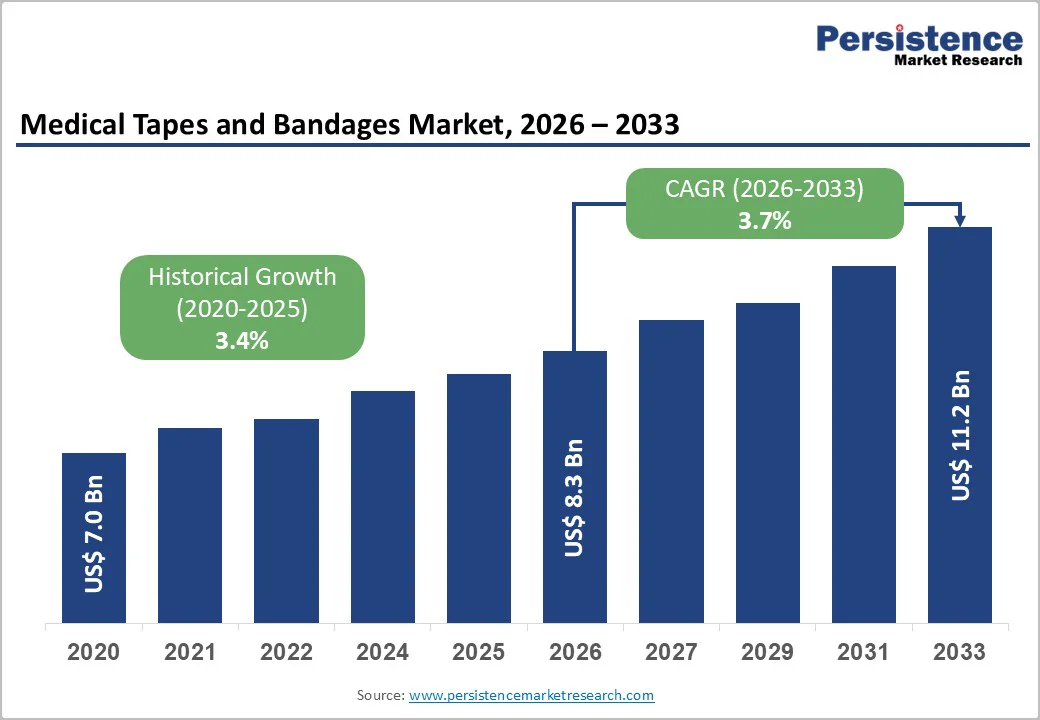
The global medical tapes and bandages market size is estimated to grow from US$8.7 billion in 2026 to US$11.2 billion by 2033.
The market is projected to record a CAGR of 3.5% from 2026 to 2033. The global market is steadily expanding as hospitals, clinics, and home-care settings increasingly prioritize effective wound management and infection control. The rise in rates of chronic wounds, diabetic ulcers, burns, and surgical procedures is driving consistent product demand.
Innovations in hypoallergenic, breathable, and antimicrobial materials are improving patient comfort and accelerating healing outcomes. The shift toward advanced wound-care solutions, along with growing awareness of first-aid and self-care practices, further supports market growth.
Additionally, the expanding elderly population and higher healthcare spending in emerging economies are creating strong opportunities for manufacturers across both traditional and advanced dressing segments.
Key Industry Highlights
- Growth Indicator: Chronic illnesses such as diabetes and vascular disorders are generating a persistent need for effective wound-care materials. The rise of home care treatments, first-aid awareness, and telehealth is driving demand for easy-to-use medical tapes and bandages. The market is seeing strong adoption of advanced tapes and bandages for managing complex wounds, burns, and chronic ulcers.
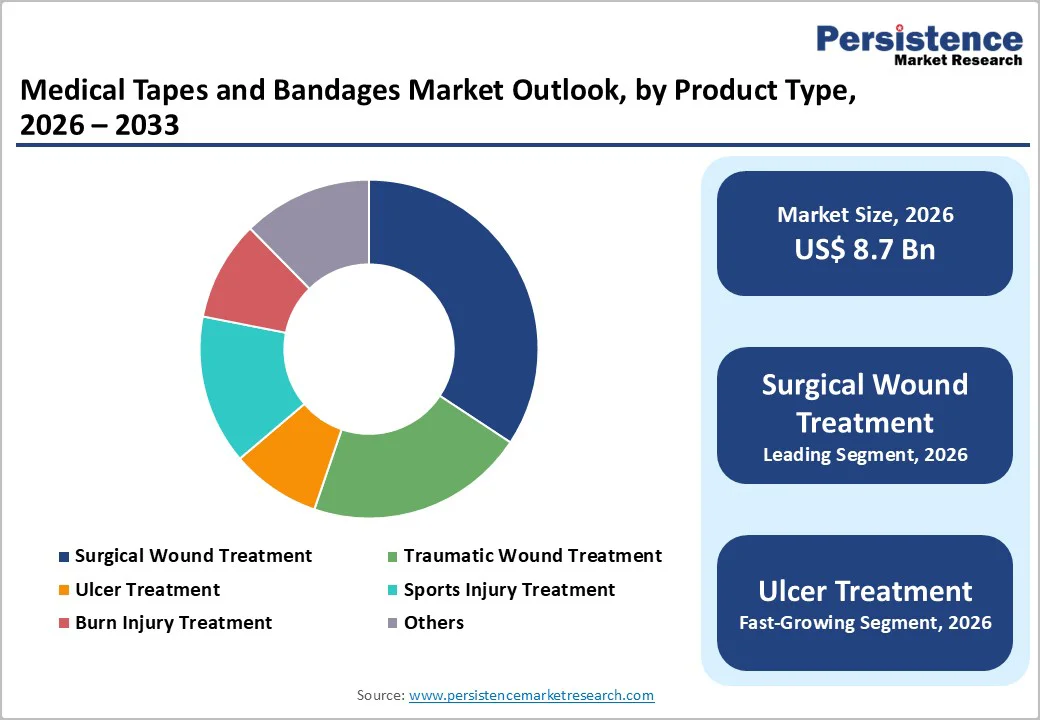
- Leading Application: Surgical wound treatment accounts for the highest share as surgeries are performed in large volumes worldwide, ranging from routine procedures to complex interventions.
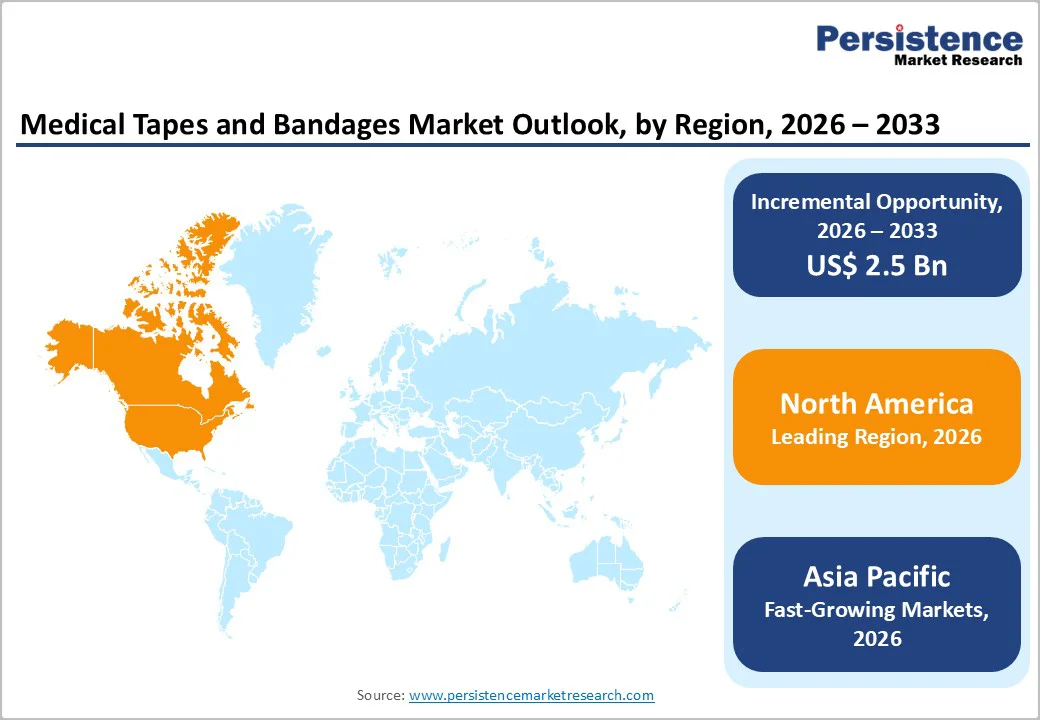
- Leading Region: North America holds the largest share due to its high volume of surgical procedures, strong adoption of advanced wound-care technologies, and well-established hospital infrastructure.
| Key Insights | Details |
|---|---|
| Medical Tapes and Bandages Market Size (2026E) | US$8.3 Bn |
| Market Value Forecast (2033F) | US$11.2 Bn |
| Projected Growth (CAGR 2026 to 2033) | 3.7% |
| Historical Market Growth (CAGR 2020 to 2024 | 3.4% |
Market Dynamics
Driver - Rising Surgical Volumes and Growing Chronic Wound Burden
The medical tapes and bandages market is predominantly driven by the combined impact of rising global surgical procedures and the increasing prevalence of chronic wounds. Growing numbers of elective, trauma, orthopedic, and cardiac surgeries require sterile, high-adhesion tapes for incision protection and postoperative dressing, significantly boosting product consumption.
Simultaneously, the escalating burden of diabetic foot ulcers, venous leg ulcers, and pressure injuries demands continuous wound management using durable, breathable, and gentle-adhesion bandages. Together, these factors create sustained, high-volume demand across hospitals, outpatient centers, and long-term care settings, firmly positioning surgical and chronic wound care as the largest contributors to market growth.
Restraints - Increasing Skin Sensitivity Cases
The growing number of patients experiencing skin sensitivity, dermatitis, and allergic reactions is becoming a significant restraint in the Medical Tapes and Bandages Market. Many traditional adhesives contain chemicals that may irritate sensitive or compromised skin, especially in elderly, pediatric, or long-term care patients.
As awareness of these reactions increases, hospitals and clinicians are becoming more cautious about using standard tapes that may cause redness, blistering, or discomfort. This shift compels healthcare facilities to adopt hypoallergenic, silicone-based, or low-sensitizing alternatives, which are often more expensive and not always covered by reimbursement policies.
As a result, procurement budgets face pressure, limiting the widespread use of advanced materials and creating disparities in product availability across regions.
Opportunity - Expansion in Home Healthcare Kits
The rapid shift toward home-based care is creating a strong opportunity to develop comprehensive home healthcare kits that combine premium medical tapes, cohesive bandages, and easy-to-apply dressings. As patients increasingly manage minor injuries, chronic wounds, and postoperative recovery at home, demand for convenient, ready-to-use kits is rising.
These kits offer standardized wound-care essentials, reduce dependence on frequent hospital visits, and support better patient compliance. Manufacturers can further differentiate by offering specialized versions for diabetic wound care, elderly patients, sports injuries, and pediatric use. E-commerce expansion and subscription-based refill models make this segment even more commercially attractive and scalable.
Category-wise Analysis
By Application Insights
Surgical wound treatment accounts for the highest market share because surgeries are performed in large and growing numbers worldwide, driving consistent demand for high-quality tapes and bandages. Every surgical procedure requires secure fixation of dressings, drains, and IV lines, as well as postoperative wound protection, resulting in repeated product use throughout recovery.
Surgical wounds also involve strict sterility protocols, encouraging hospitals to use premium, hypoallergenic, and antimicrobial adhesive products. With rising orthopedic, cardiovascular, bariatric, and cosmetic surgeries, healthcare facilities consume higher volumes of advanced tapes and bandages. The need for frequent dressing changes and infection prevention further strengthens this segment’s dominant position.
By End-user Insights
Hospitals perform the largest volume of surgeries, trauma treatments, emergency care, and chronic wound management, making them the biggest consumers of medical tapes and bandages. They require sterile, high-adhesion, and durable products for postoperative care, IV line fixation, dressing changes, and infection control.
Hospitals also treat complex wounds that need frequent monitoring and premium advanced dressings. Their high patient inflow, stringent clinical protocols, and continuous supply requirements position them as the dominant end-use segment in the market.
Region-wise Insights
North America Medical Tapes and Bandages Trends
North America leads the Medical Tapes and Bandages Market due to its strong surgical volume, early adoption of advanced wound-care materials, and stringent infection-control standards. The region is witnessing trends such as rapid uptake of silicone-based adhesives, antimicrobial dressings, and eco-friendly tape innovations.
The U.S. dominates regional demand, driven by a high prevalence of chronic wounds, diabetic ulcers, and trauma cases, along with extensive use of postoperative dressings in hospitals and ambulatory centers. Growing home-care utilization and strong reimbursement support further boost product consumption. Continuous R&D investments and the strong presence of premium wound-care brands keep North America at the forefront.
Asia Pacific Medical Tapes and Bandages Market Trends
Asia Pacific is emerging as a high-growth region in the Medical Tapes and Bandages Market, supported by expanding healthcare infrastructure, rising surgical volumes, and increasing chronic disease prevalence. Countries like India, China, and Japan are witnessing strong demand for affordable yet advanced wound-care products.
Trends include rapid adoption of hypoallergenic tapes, breathable fabric bandages, and antimicrobial dressings, especially in urban hospitals. Growing awareness of home-care wound management and the rise of e-commerce channels are accelerating product accessibility. Government investments in universal healthcare and rising geriatric populations further elevate market potential, making the Asia Pacific one of the fastest-expanding regions globally.
Competitive Landscape
The global medical tapes and bandages market features a highly competitive landscape dominated by established international players and emerging regional manufacturers. Key companies compete through product innovation, advanced adhesive technologies, antimicrobial and hypoallergenic solutions, and strategic collaborations with hospitals and distributors.
Price competitiveness, extensive distribution networks, and strong brand recognition play critical roles in market positioning. Companies are increasingly investing in R&D to develop eco-friendly, smart, and patient-friendly wound-care products.
Key Industry Developments:
- In February 2023, 3M unveiled the 3M™ Medical Tape 4578, a new medical adhesive designed to adhere to the skin for up to 28 days. It was intended for use with a wide range of health monitors, sensors, and long-term medical wearables.
Companies Covered in Medical Tapes and Bandages Market
- 3M Company
- B. Braun Melsungen AG
- Johnson & Johnson
- Smith & Nephew Plc
- Nitto Denko Corporation
- Cardinal Health Inc.
- Beiersdorf Aktiengesellschaft
- Lohmann & Rauscher International GmbH & Co. KG
- Paul Hartmann AG
- Medline Industries Inc.
- Other
Frequently Asked Questions
The global medical tapes and bandages market is projected to be valued at US$8.7 Bn in 2026.
Increasing number of surgeries worldwide, including orthopedic, cardiovascular, cosmetic, and trauma procedures, boosts demand for secure wound dressings and adhesive tapes.
The global medical tapes and bandagesmarket is poised to witness a CAGR of 3.7% between 2026 and 2033.
Development of bandages with real-time monitoring for moisture, temperature, and infection detection.
3M, B. Braun Melsungen AG, Johnson & Johnson, Smith & Nephew Plc, and others.


