




- Medical Devices
- Soft Tissue Anchors Market
Soft Tissue Anchors Market Size, Share, and Growth Forecast 2026 - 2033
Soft Tissue Anchors Market by Product (Absorbable, Non-Absorbable), by Material (Metallic Suture Anchor, Bio-absorbable Suture Anchor, PEEK Suture, All Suture, Bio-composite Suture Anchor), by Knot Type (Knotted, Knotless), by End User (Hospitals, Emergency Medical Services, Clinics, Ambulatory Surgical Centers), by Regional Analysis, 2026-2033

Soft Tissue Anchors Market Share and Trends Analysis
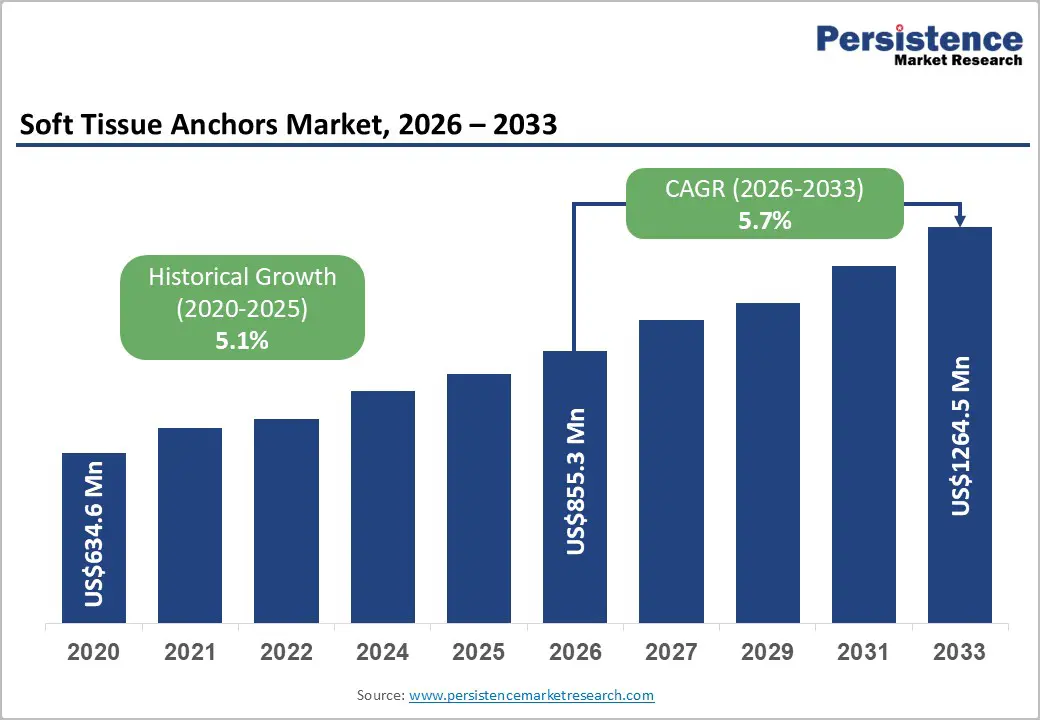
The global Soft Tissue Anchors market size is expected to be valued at US$ 855.3 million in 2026 and projected to reach US$ 1, 264.5 million by 2033, growing at a CAGR of 5.7% between 2026 and 2033.
The rising incidence of sports injuries and orthopedic procedures primarily drives this growth. Acute trauma from sports and repetitive motions contributes to higher demand for soft tissue repair devices, with orthopedic injuries affecting millions annually. An aging population exacerbates musculoskeletal conditions, as geriatric individuals face increased bone fractures due to reduced density, boosting reconstructive surgeries. Advancements in minimally invasive techniques further support market expansion by improving procedure efficiency and patient outcomes.
Key Market Highlights
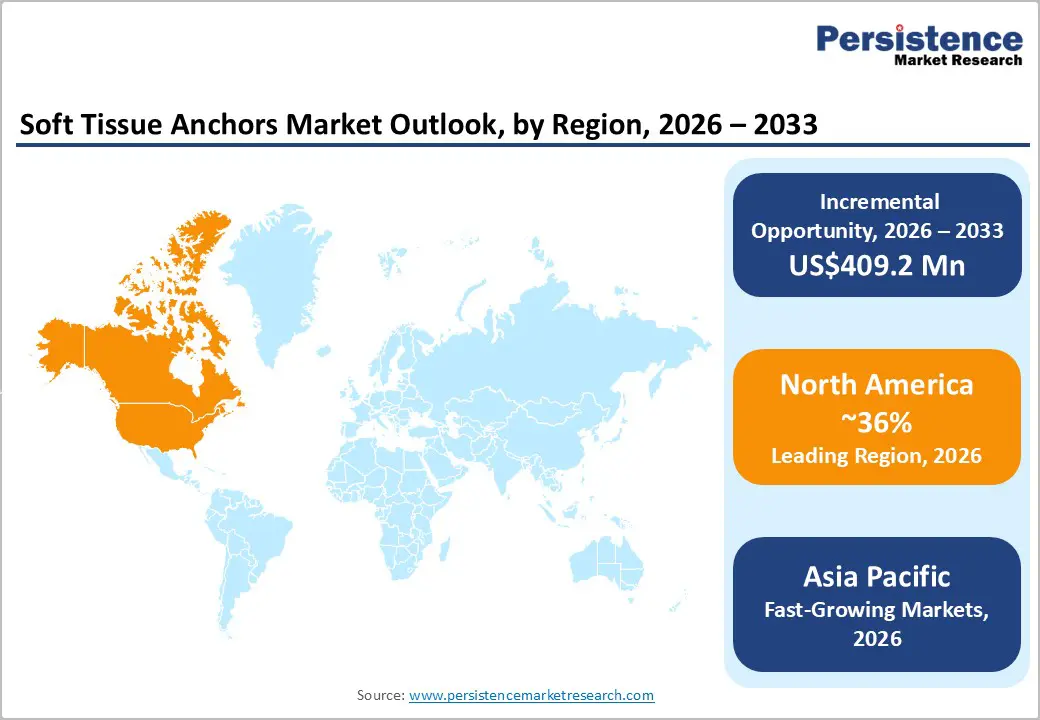
- North America Dominance: North America is expected to hold the largest share of around 36% in 2025. This is primarily driven by the high prevalence of sports-related injuries in the U.S., increasing demand for orthopedic and tendon repair procedures, and the presence of advanced healthcare infrastructure and well-established hospitals and surgical centers.
- Asia Pacific Fastest Growth: Asia Pacific is projected to be the fastest-growing region, propelled by increasing surgical procedures in countries like China and India.
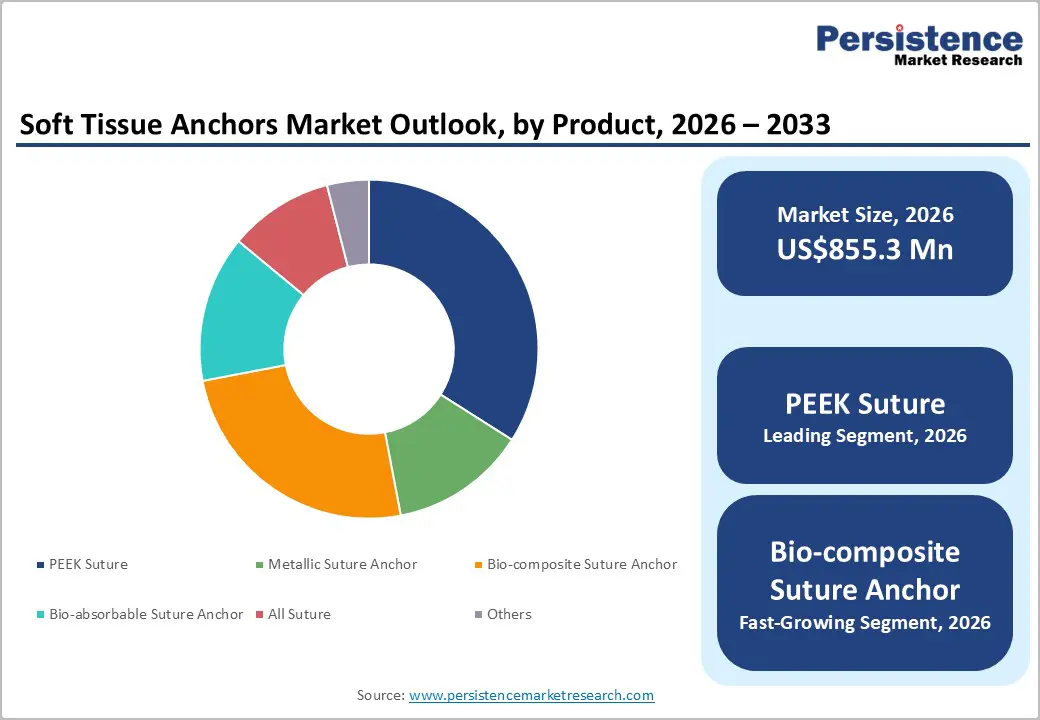
- PEEK Suture Anchors Lead: PEEK suture anchors currently dominate the material segment with a 34% market share, largely due to their high durability, biocompatibility, and strong performance in complex tendon and ligament repairs, making them preferred by surgeons globally.
- Rapid Expansion of Bio-absorbable Anchors: Bio-absorbable suture anchors are experiencing rapid growth as they offer the advantage of natural resorption over time, reducing the need for secondary surgeries.
- Opportunities in Ambulatory Surgical Centers (ASCs): The rising shift of orthopedic and sports-related surgeries from hospitals to outpatient settings is creating significant opportunities in ASCs.
| Global Market Attributes | Key Insights |
|---|---|
| Soft Tissue Anchors Size (2026E) | US$ 855.3 million |
| Market Value Forecast (2033F) | US$ 1,264.5 million |
| Projected Growth CAGR(2026-2033) | 5.7% |
| Historical Market Growth (2020-2025) | 5.1% |
Market Dynamics
Rising Sports Injuries and Orthopedic Demand
Increasing sports participation and traumatic injuries fuel demand for soft tissue anchors. Globally, sports-related orthopedic injuries have surged, with repetitive motions and acute trauma causing fractures and soft tissue damage that require anchor-based repairs. In the United States, sports injuries drive significant procedure volumes, supported by high awareness of reconstructive options. This trend positively impacts the market by necessitating durable fixation devices, enhancing recovery times and athlete return-to-play rates. Public health data underscores how elevated injury rates correlate with higher surgical interventions, positioning anchors as essential tools.
Aging Population and Musculoskeletal Disorders
The global rise in the geriatric population propels market growth through higher prevalence of osteoporosis and related fractures. Elderly individuals often exhibit reduced bone density, making them prone to injuries that require soft tissue anchors for stabilization. Over the last decade, orthopedic surgeries on patients aged 90+ tripled, with hip and pelvis procedures dominating at 69%. This demographic shift ensures sustained demand, as aging societies invest in treatments to maintain mobility and quality of life.
Market Restrains
Product Recalls and Brand Impact
Product recalls act as a significant restraint in the soft tissue anchors market, as they directly affect surgeon confidence and hospital purchasing decisions. Recalls often arise from issues such as anchor breakage, suture slippage, poor fixation strength, or adverse tissue reactions, which can compromise surgical outcomes. When recalls occur, healthcare providers tend to delay adoption of newer anchor technologies and revert to familiar or previously approved products, slowing overall market innovation. In addition, regulatory scrutiny increases following recalls, leading to longer approval timelines, higher compliance costs, and more rigorous post-market surveillance for manufacturers. The reputational damage associated with recalled brands can be long-lasting, particularly in orthopedic and sports medicine segments where surgeons strongly rely on clinical reliability and peer experience. As a result, even isolated recall events can negatively influence sales, limit market expansion, and discourage investment in novel soft tissue anchor designs.
Stringent Regulatory Approvals
Stringent regulatory approval requirements present a key restraint in the soft tissue anchors market, as these devices must meet high safety, performance, and biocompatibility standards before commercialization. Regulatory bodies demand extensive preclinical testing, clinical evidence, and long-term outcome data to demonstrate fixation strength, material safety, and reliability within human tissue. This process significantly increases development timelines and costs, particularly for innovative anchors using new materials such as bio-composites or all-suture designs. Smaller manufacturers often face challenges in funding prolonged trials and navigating complex documentation requirements, limiting product launches and reducing competitive diversity. Additionally, frequent regulatory updates and region-specific approval pathways create delays in global market entry, restricting rapid adoption across multiple geographies. These hurdles can slow technological advancement, discourage innovation, and ultimately limit the availability of advanced soft tissue anchor solutions in both developed and emerging healthcare markets.
Market Opportunities
Advancements in Bioabsorbable Technologies
Advancements in bioabsorbable technologies present a strong growth opportunity for the soft tissue anchors market, driven by increasing demand for implants that provide reliable fixation while naturally degrading over time. New-generation bioabsorbable materials are being engineered to offer improved mechanical strength, controlled degradation rates, and enhanced biocompatibility, reducing risks of inflammation, implant-related complications, and the need for revision surgeries. These innovations align well with surgeon preferences for minimally invasive procedures and long-term patient safety. Improved bioabsorbable anchors also support better bone healing and tissue integration, making them suitable for a wide range of orthopedic and sports medicine applications. As healthcare systems increasingly prioritize value-based care, bioabsorbable anchors help lower long-term treatment costs by eliminating implant removal procedures. Growing clinical evidence supporting their safety and effectiveness, combined with ongoing material science innovations, is expected to accelerate adoption and create significant opportunities for manufacturers focusing on advanced bioabsorbable soft tissue anchor solutions.
Expansion in Ambulatory Surgical Centers
The rapid expansion of ambulatory surgical centers (ASCs) presents a strong growth opportunity for the soft tissue anchors market. ASCs are increasingly preferred for orthopedic and sports medicine procedures due to lower treatment costs, shorter hospital stays, and faster patient recovery times. Minimally invasive surgeries such as rotator cuff repair, ligament reconstruction, and tendon fixation are well suited to the ASC setting, driving consistent demand for reliable and easy-to-use soft tissue anchors. Surgeons operating in ASCs often favor knotless, all-suture, and bio-absorbable anchors that reduce operative time and simplify surgical workflows. In addition, rising payer support and favorable reimbursement for outpatient procedures are accelerating the shift from hospital-based surgeries to ASCs. As healthcare systems focus on efficiency and cost containment, the growing number of ASCs globally is expected to significantly boost procedural volumes, creating sustained demand for advanced soft tissue anchor technologies.
Category-wise Insights
Material Analysis
The PEEK suture anchor segment accounts for the highest share in the soft tissue anchors market primarily due to its strong balance of mechanical performance, biocompatibility, and clinical reliability. PEEK (polyether ether ketone) offers high tensile strength and durability comparable to metallic anchors, while avoiding issues such as imaging interference and metal-related complications. Its radiolucent nature allows surgeons to clearly assess post-operative healing through MRI or CT scans, making it highly preferred in orthopedic and sports medicine procedures.
Additionally, PEEK anchors demonstrate excellent resistance to wear, chemical degradation, and fatigue, ensuring long-term fixation stability in high-load applications such as rotator cuff and ligament repairs. Unlike some bio-absorbable materials, PEEK does not carry risks of inflammatory reactions or unpredictable degradation, which enhances surgeon confidence and repeat usage. Broad product availability, established clinical evidence, and compatibility with minimally invasive surgical techniques further strengthen adoption, enabling PEEK suture anchors to maintain the largest market share globally.
End User Analysis
Hospitals account for the highest share in the soft tissue anchors market primarily due to their role as the main centers for complex orthopedic and sports medicine surgeries. Most soft tissue anchor–based procedures, such as rotator cuff repair, ligament reconstruction, and trauma-related tendon fixation, are performed in hospitals because they offer advanced surgical infrastructure, specialized operating rooms, and access to multidisciplinary medical teams. Hospitals also manage a higher volume of severe and referral cases, including trauma and revision surgeries, which require reliable and high-performance anchoring systems.
In addition, hospitals are more likely to adopt a wide range of anchor types and materials to meet diverse clinical needs. Favorable reimbursement policies for inpatient and specialized surgical procedures further support high utilization in hospital settings. Moreover, strong relationships between hospitals and leading medical device manufacturers enable early adoption of innovative soft tissue anchor technologies, reinforcing hospitals’ dominance in overall market share.
Regional Insights
North America Soft Tissue Anchors Market Trends
North America continues to lead the soft tissue anchors market, driven by a combination of advanced healthcare infrastructure, high procedure volumes, and early adoption of innovative orthopedic technologies. The region benefits from a strong prevalence of sports injuries, age-related musculoskeletal disorders, and rotator cuff and ligament tears, which directly increases demand for soft tissue anchor–based procedures. Surgeons in North America show a strong preference for technologically advanced solutions such as knotless, all-suture, and bio-composite anchors that improve surgical efficiency and patient outcomes.
In addition, the presence of major medical device manufacturers supports rapid product launches, continuous innovation, and widespread surgeon training. Favorable reimbursement frameworks for orthopedic and sports medicine surgeries further encourage procedural growth in both hospital and ambulatory settings. Moreover, rising participation in recreational and professional sports, coupled with an aging yet active population, continues to sustain North America’s dominant position in the global soft tissue anchors market.
Asia Pacific Soft Tissue Anchors Market Trends
Asia Pacific is emerging as a high-growth region in the soft tissue anchors market, supported by rapid improvements in healthcare infrastructure and rising awareness of advanced orthopedic treatments. Increasing incidence of sports injuries, road accidents, and age-related musculoskeletal conditions is driving demand for ligament and tendon repair procedures across the region. Countries such as China, India, Japan, and South Korea are witnessing a steady shift toward minimally invasive orthopedic surgeries, boosting adoption of modern soft tissue anchor systems.
Growing investments in hospital expansion, the rising number of trained orthopedic surgeons, and improving access to specialized care are further accelerating market growth. In addition, medical tourism in countries like India and Thailand is increasing surgical volumes, particularly for cost-effective orthopedic procedures. While price sensitivity remains a challenge, the gradual introduction of locally manufactured anchors and expanding private healthcare networks are making advanced fixation solutions more accessible, positioning Asia Pacific as a key emerging market.
Competitive Landscape
Market Structure Analysis
The soft tissue anchors market features a moderately competitive landscape, characterized by the presence of established global medical device companies and emerging regional players. Leading manufacturers compete through continuous product innovation, focusing on advanced materials, knotless designs, and minimally invasive solutions to improve surgical outcomes. Strong brand reputation, surgeon loyalty, and extensive distribution networks provide major players with a competitive advantage. Companies also invest heavily in clinical studies, surgeon training programs, and strategic collaborations to strengthen market positioning. Meanwhile, smaller and regional manufacturers compete by offering cost-effective alternatives, particularly in emerging markets.
Key Market Developments
- In June 2025, OSSIO Inc. recently expanded its best-in-class soft-tissue fixation portfolio with the launch of OSSIOfiber® 2.5mm Suture Anchors, which were designed to improve several surgical procedures, including Brostrom repair for lateral ankle instability.
- In January 2024, Aragon 28 introduced the Grappler Knotless Anchor System and Bridgeline Tape to strengthen its presence in the foot and ankle soft tissue market. These new offerings complemented the company’s existing hardware products and addressed multiple foot and ankle conditions. The Grappler Suture Anchor System was offered as a sterile kit, containing all the instruments required for each procedure. It was designed to minimize waste and simplify surgical operations, enhancing efficiency and ease of use for surgeons.
Companies Covered in Soft Tissue Anchors Market
- Medtronic Plc.
- Smith & Nephew plc.
- Zimmer Biomet Holdings, Inc.
- ConMed Corporation
- Arthrex, Inc.
- Johnson and Johnson (DePuy Synthes, Inc.)
- Stryker Corporation
- Parcus Medical, LLC.
- Wright Medical Group N.V.
- Teknimed SA
- MedShape, Inc.
- South America Implants S.A.
- Anstem Medical
- Groupe Lepine S.A.
Frequently Asked Questions
The global Soft Tissue Anchors market is expected to reach US$ 855.3 million in 2026.
Key drivers include rising sports injuries and aging population-induced orthopedic needs.
North America holds the leading position with 36% market share in 2025.
Growth in bio-absorbable anchors and ASCs offers significant potential.
Major players include Medtronic Plc., Arthrex, Inc., and Stryker Corporation.


