




- Food Ingredients & Additives
- Oat Fiber Market
Oat Fiber Market Size, Share, and Growth Forecast 2026 - 2033
Oat Fiber Market by Nature (Organic, Conventional), Product (Oat Bran, Oat Hull Fiber, Oat Flour), Application (Food & Beverages, Dietary Supplements, Pharmaceuticals, Animal Feed), and Regional Analysis, 2026 - 2033

Oat Fiber Market Share and Trends Analysis
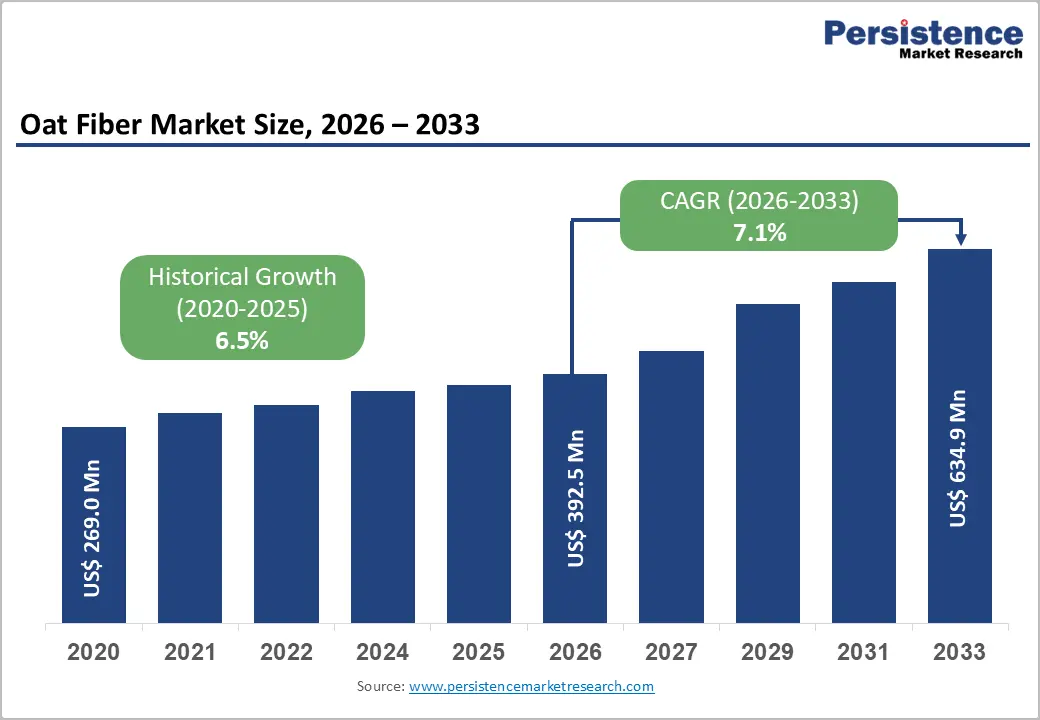
The global oat fiber market size is expected to be valued at US$ 392.5 million in 2026 and projected to reach US$ 634.9 million by 2033, growing at a CAGR of 7.1% between 2026 and 2033.
The market is advancing as manufacturers and consumers increasingly favor plant-based, clean-label, and fiber-rich ingredients that support digestive wellness and product functionality. Oat fiber is gaining traction because it offers bulking, water-binding, and texture-enhancing benefits without heavily affecting taste, which makes it attractive across food, nutraceutical, and pharmaceutical applications. Demand is also supported by the steady shift toward healthier processed foods, where oat fiber helps improve nutrition profiles while maintaining product quality and shelf stability.
Key Highlights:
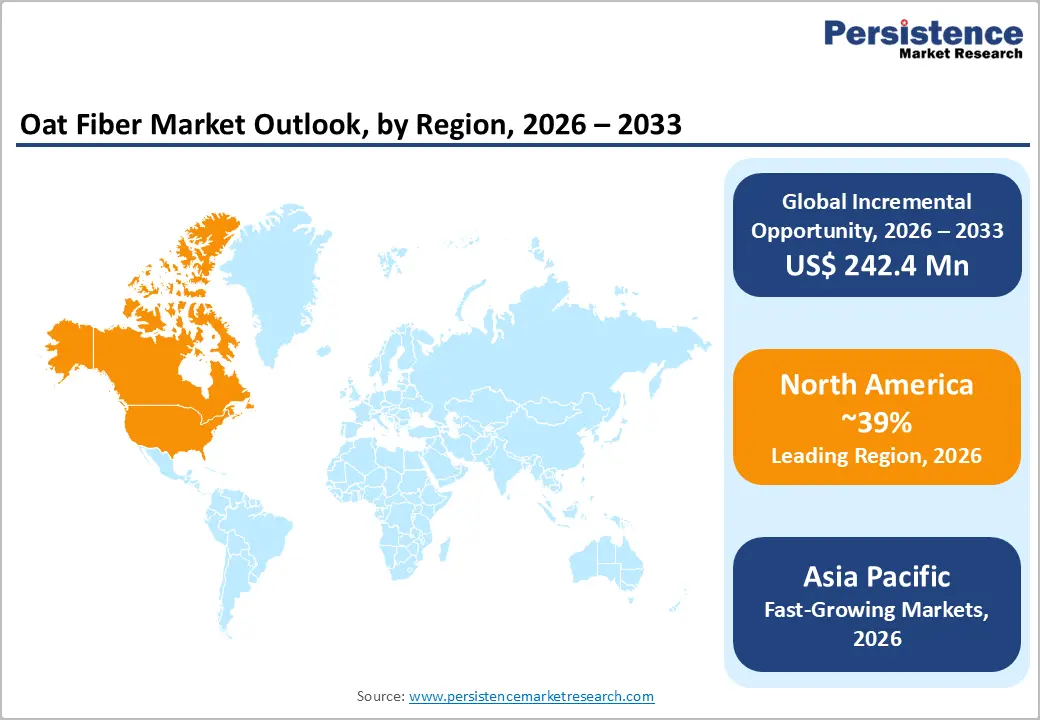
- Regional Leadership: North America is the leading regional market for oat fiber, supported by strong functional food demand, mature food processing infrastructure, and high consumer awareness of dietary fiber benefits.
- Fast-growing Market: Asia Pacific is the fastest-growing region, driven by rising health consciousness, premium food consumption, and expanding manufacturing capacity for fiber-enriched products.
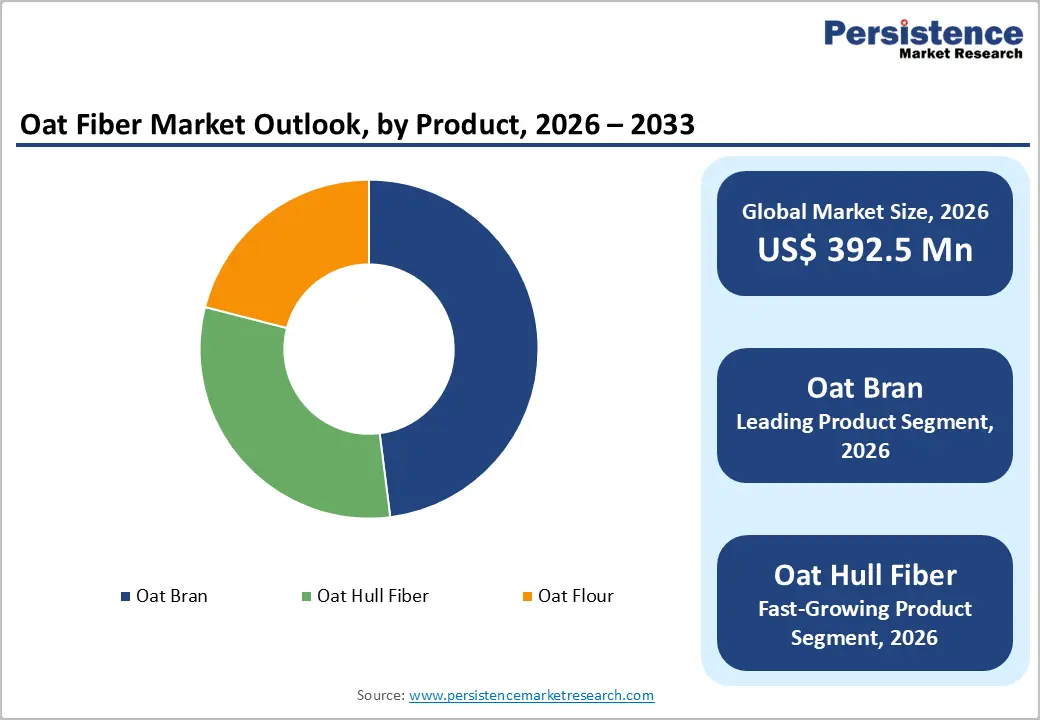
- Leading Product: Oat Bran is the dominant product segment with 48% share in 2025, due to its broad use in cereals, bakery products, and nutrition-focused foods.
- Fast-growing Product: Oat Hull Fiber is the fastest-growing product segment because manufacturers value it for cost-efficient bulking, texture improvement, and high-fiber formulation support.
- Opportunity: A key market opportunity lies in dietary supplements and functional bakery products, where oat fiber can support clean-label positioning, digestive health, and reformulation goals.
| Key Insights | Details |
|---|---|
| Oat Fiber Market Size (2026E) | US$ 392.5 million |
| Market Value Forecast (2033F) | US$ 634.9 million |
| Projected Growth CAGR (2026 - 2033) | 7.1% |
| Historical Market Growth (2020 - 2025) | 6.5% |
DRO Analysis
Driver - Rising Demand for Digestive Health and Functional Food Ingredients
Consumer awareness of gut health, fiber intake, and preventive nutrition is one of the strongest forces behind the Oat Fiber Market. Oat fiber is widely adopted because it provides insoluble fiber benefits while fitting into everyday formulations such as bakery products, cereals, snack bars, and fortified beverages. The growing preference for foods that support satiety, weight management, and regular digestion is encouraging food brands to add fiber without compromising taste or texture. This is especially relevant in markets where consumers are reading labels more carefully and choosing ingredients they recognize. As a result, oat fiber has moved from being a simple processing input to a value-adding functional ingredient in health-oriented product development.
Expanding Clean-label, Plant-based, and Gluten-conscious Reformulation Trends
The second major driver is the global shift toward cleaner labels and plant-based formulations. Food manufacturers are under pressure to replace artificial additives and synthetic texturizers with familiar, natural ingredients, and oat fiber fits this need well. It helps improve structure, moisture retention, and mouthfeel in products that are reduced in sugar, reduced in fat, or free from animal-derived ingredients. The ingredient is also used in gluten-conscious formulations, where formulators want a fiber source that improves dough performance and nutritional value. This broad utility makes oat fiber especially attractive in bakery, dairy alternatives, and ready-to-eat packaged foods, where reformulation is often needed to meet modern nutrition expectations and retail requirements.
Restraints - Raw Material Supply Variability and Oat Price Sensitivity
The Oat Fiber Market is exposed to fluctuations in oat availability, crop quality, and agricultural pricing. Because oat fiber is derived from oat processing streams, changes in oat harvest volumes or processing costs can quickly affect ingredient pricing. Weather variability, logistics disruptions, and regional supply concentration can also limit consistent availability for industrial buyers. These issues matter because food manufacturers prefer predictable input costs and stable supply chains, especially for large-scale bakery and packaged food production. When raw material prices rise, oat fiber suppliers may struggle to preserve margins or may need to pass costs through to customers, which can slow adoption in price-sensitive categories.
Competition from Alternative Fiber and Texturizing Ingredients
The presence of substitutes such as wheat fiber, pea fiber, inulin, psyllium, citrus fiber, and resistant starch often compete on functionality, cost, and regulatory familiarity. In some formulations, alternative fibers may offer better solubility, smoother texture, or stronger binding performance than oat fiber. For manufacturers, the decision often comes down to product cost and whether oat fiber can deliver the needed sensory outcome without creating dry or gritty mouthfeel. This creates pressure on oat fiber suppliers to differentiate through purity, particle size, application support, and blending solutions rather than relying on basic ingredient positioning alone.
Opportunities - Growth in Oat Fiber for High-fiber Bakery, Supplements, and Nutraceuticals
A major opportunity lies in expanding use across high-fiber bakery products, dietary supplements, and nutraceutical applications. Consumer demand for better-for-you snacks and digestive health products is rising, and oat fiber fits well in bars, biscuits, breakfast foods, capsules, and powder blends. Manufacturers are increasingly using oat fiber to improve nutrition claims while preserving product texture, which is especially useful in reduced-sugar or reduced-fat reformulations. This is creating room for higher-value specialty grades, including organic and finely milled oat fiber. The opportunity is strongest where food companies want to market “natural fiber” and “clean-label” benefits together, particularly in products designed for wellness-focused adults and older consumers.
Expansion into Asia Pacific and Premium Functional Food Manufacturing
The fastest growth opportunity is expected in Asia Pacific, where urban consumers are increasingly adopting functional foods, convenience products, and Western-style bakery items. Rising disposable incomes, improved retail infrastructure, and strong interest in digestive wellness are expanding the addressable market for oat fiber-based ingredients. Food processors in the region are also scaling production of fortified snacks, instant mixes, and fiber-enriched baked goods, which creates more demand for texture-improving ingredients. This is especially relevant for companies that can offer local supply partnerships, formulation support, and cost-effective industrial grades. As brands in Asia Pacific look for ways to improve nutritional claims without sacrificing taste, oat fiber can gain a stronger role in both mainstream and premium product lines.
Category-wise Analysis
Nature Insights
The conventional segment is expected to remain the leading nature category in the Oat Fiber Market, supported by broader availability, lower input costs, and easier integration into mass-market food manufacturing. Conventional oat fiber is widely used in bakery, cereals, snacks, and industrial formulations because buyers often prioritize functionality and price consistency over certification. While organic ingredients continue to gain visibility, the larger share still belongs to conventional products because they can serve both high-volume manufacturers and private-label food producers. This dominance reflects the practical needs of the food industry, where scale, stable sourcing, and predictable processing performance are essential for repeat production and cost control.
Product Insights
Oat bran is the leading product segment, accounting for 48% market share in 2025, because it combines fiber content with familiar consumer recognition and broad usability across food applications. Oat bran is widely incorporated into cereals, bakery items, breakfast foods, and nutrition products because it supports both functional and nutritional goals. Its popularity is reinforced by consumer awareness of oats as a heart-friendly and digestive-health ingredient. At the same time, oat hull fiber is the fastest-growing product segment because it offers a cost-efficient fiber source for high-fiber formulations and industrial applications. Its value lies in strong bulking and texturizing properties, making it increasingly attractive for manufacturers seeking higher fiber claims at competitive cost.
Application Insights
Food & beverages is the leading application segment in the oat fiber market as oat fiber is heavily used in bakery, snack foods, cereal products, beverages, and plant-based formulations. The segment benefits from broad retail demand for healthier packaged foods and from the growing use of oat fiber in reformulation projects aimed at improving fiber content and texture. Food manufacturers value oat fiber because it helps deliver “better-for-you” positioning while supporting product consistency.
The fastest-growing end-use area is expected to be Dietary Supplements, as consumers increasingly seek digestive support, daily fiber intake, and preventive wellness solutions. Oat fiber’s natural profile and compatibility with powders, capsules, and blends make it a strong fit for supplement brands.
Regional Insights
North America Oat Fiber Market Trends and Insights
North America leads with 39% share in 2025, supported by strong demand for functional foods, a mature processed food industry, and widespread consumer awareness of dietary fiber. The U.S. remains the primary demand center because of its large bakery, cereal, and nutritional products sector, along with a well-developed distribution network that supports ingredient adoption. Food companies in the region also emphasize label transparency, protein-fiber combinations, and reformulation of traditional products into healthier variants. This has made oat fiber useful in both branded and private-label innovation.
The region’s regulatory environment and innovation ecosystem also favor ingredient development. Food manufacturers in North America are actively investing in clean-label snack formulations, high-fiber bakery applications, and plant-based product lines. This creates a strong fit for oat fiber suppliers that can provide technical support and application-specific grades. The region also benefits from established processing capacity and a broad base of ingredient manufacturers, which helps sustain commercial adoption.
Asia Pacific Oat Fiber Market Trends and Insights
Asia Pacific is the fastest-growing region, driven by rising health awareness, expanding middle-class consumption, and growing interest in fiber-rich packaged foods. Countries such as China, Japan, India, and several ASEAN markets are seeing higher demand for bakery products, breakfast foods, and nutritionally enhanced snacks. Oat fiber is becoming more relevant as local manufacturers look for ingredients that improve texture while also supporting better nutrition positioning.
The region’s manufacturing advantages also support growth. Food processing capacity is expanding, e-commerce is broadening access to wellness products, and regional brands are increasingly experimenting with functional formulations. This is especially visible in urban markets, where consumers are open to premium health-oriented foods. For oat fiber suppliers, the opportunity lies in serving both large industrial buyers and emerging nutrition brands with application support and cost-effective ingredient solutions.
Competitive Landscape
The global oat fiber market is moderately fragmented, with a mix of global ingredient suppliers and specialized regional producers competing on quality, application support, and sourcing reliability. Large companies differentiate through scale, technical expertise, and the ability to serve food manufacturers across multiple geographies. Smaller firms often compete by offering customized fiber grades, organic options, and faster customer support. Expansion strategies commonly include capacity upgrades, partnerships with food processors, and development of application-specific solutions for bakery, supplement, and beverage customers. R&D is increasingly focused on improving functionality, purity, and blending performance, while business models are shifting toward solution-based ingredient supply rather than commodity selling.
Key Developments
- In March 2026, Oatly launched new flavored variants of its Barista Edition oat milk in the UK, including vanilla, caramel, coconut, churros, and popcorn, expanding its product portfolio to cater to evolving consumer taste preferences.
- In November 2024, Potina launched a new range of clean-label banana oat milk drinks in the UK, specifically targeting children’s nutrition, focusing on high-fibre content and gut health benefits. The products were formulated using oats, banana pulp, and added fibres, delivering around 2g of fibre per 100ml, while being free from added sugars, sweeteners, oils, and additives.
Companies Covered in Oat Fiber Market
- Tate & Lyle PLC, Cargill Incorporated
- DuPont de Nemours, Inc.
- Roquette Frères
- Grain Millers, Inc.
- SunOpta Inc.
- Avena Foods Limited
- J. Rettenmaier & Söhne GmbH + Co KG
- Limagrain Ingredients
- InterFiber Sp. z o.o.
- Herba Ingredients BV
- Richardson International Limited
Frequently Asked Questions
The Oat Fiber Market is expected to be valued at US$ 392.5 million in 2026.
The main demand driver is rising demand for digestive-health ingredients, clean-label reformulation, and fiber-rich functional foods.
North America leads with a 39% share in 2025.
Asia Pacific is the fastest-growing region due to expanding functional food demand and manufacturing growth.
Key players include Tate & Lyle PLC, Cargill, Incorporated, DuPont de Nemours, Inc., Roquette Frères, Grain Millers, Inc., and SunOpta Inc.


