




- Processed Food
- Goat Milk Infant Formula Market
Goat Milk Infant Formula Market Size, Share, and Growth Forecast, 2026 - 2033
Goat Milk Infant Formula Market by Product Type (Infant Milk Formula (0-6 Months), Others), Growing-Up Milk Formula (12+ Months), Form (Powdered, Liquid), Packaging Type (Cans, Others), Distribution Channel, and Regional Analysis for 2026 - 2033

Goat Milk Infant Formula Market Size and Trends Analysis
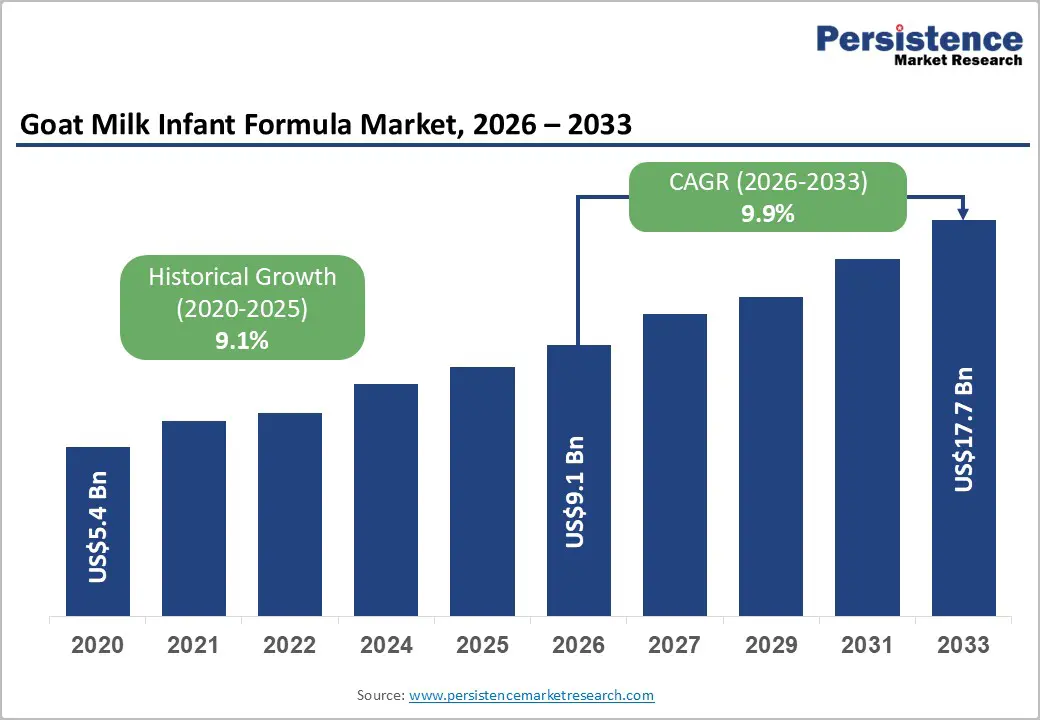
The global goat milk infant formula market size is likely to be valued at US$9.1 billion in 2026, and is expected to reach US$17.7 billion by 2033, growing at a CAGR of 9.9% during the forecast period from 2026 to 2033, driven by rising awareness of goat milk as a gentle alternative to cow milk, increasing cases of cow milk protein allergy in infants, and growing demand for premium, easy-to-digest infant nutrition.
Increasing parental preference for goat milk-based formulas, driven by better digestibility and nutritional profile, remains a major driver of growth in the goat milk infant formula market.
Key Industry Highlights:
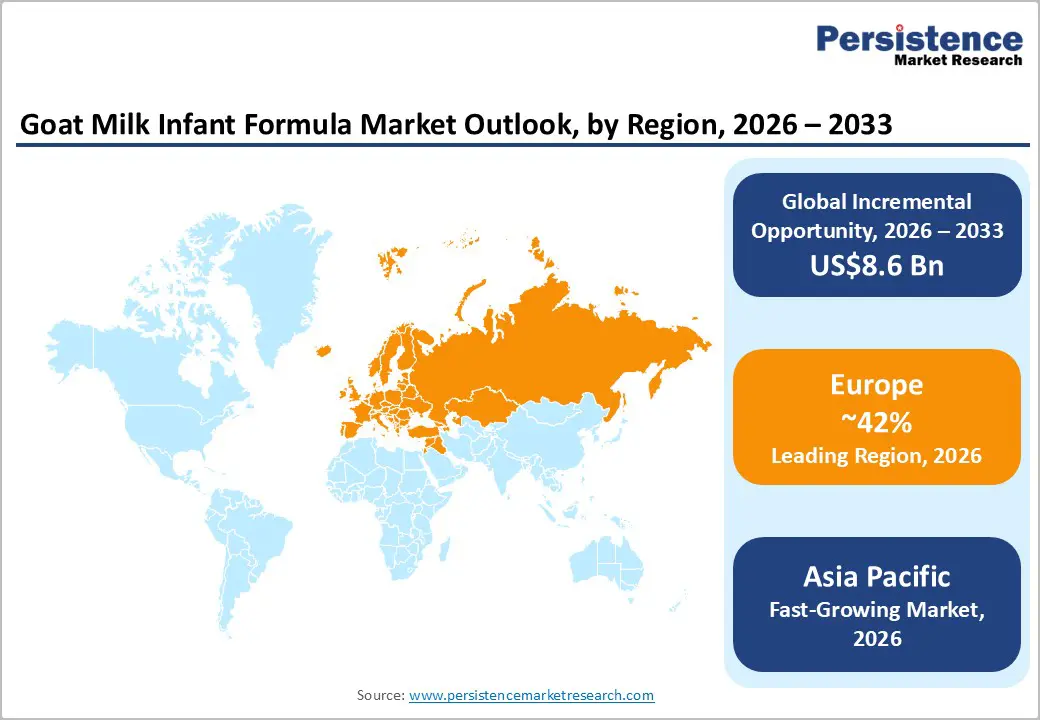
- Leading Region: Europe, anticipated to account for a 42% market share in 2026, driven by strong consumer trust, premium positioning, and a preference for organic, high-quality goat milk formulas.
- Fastest-growing Region: Asia Pacific, fueled by rising birth rates, expanding middle classes, and increasing demand for goat milk formulas for sensitive infants.
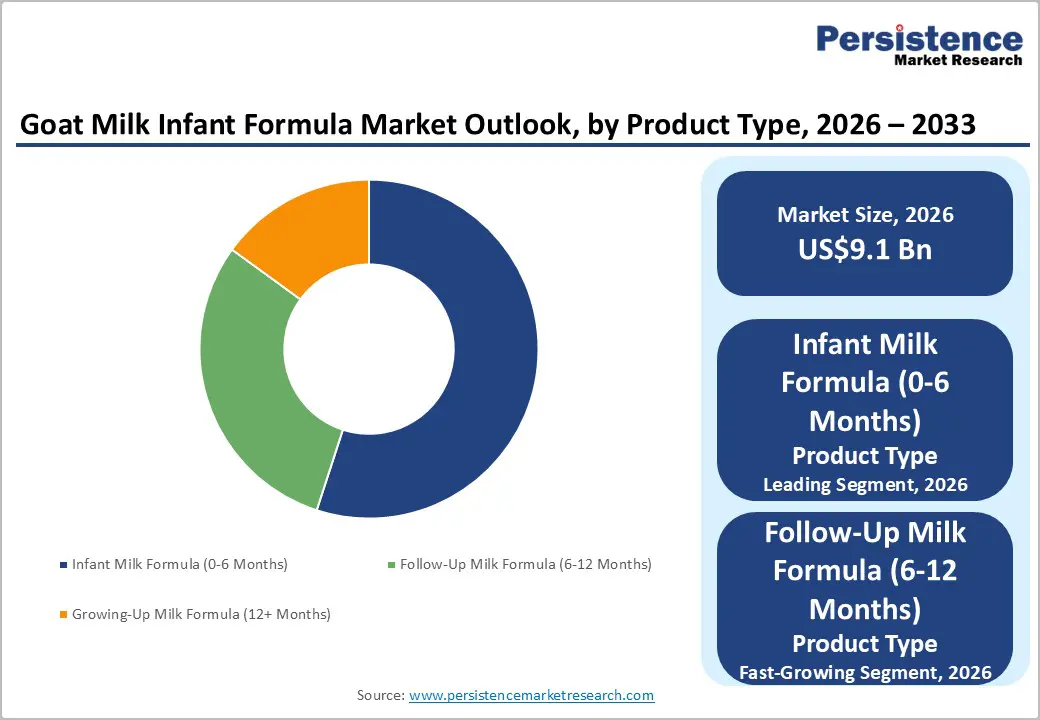
- Dominant Product Type: Infant milk formula (0-6 months) is expected to lead with a 55% share in 2026, driven by its essential nutrition and gentle digestibility for newborns.
- Leading Form: Powdered formula is projected to dominate with a 65% share in 2026, driven by its longer shelf life, affordability, and easier storage and transport.
| Key Insights | Details |
|---|---|
| Goat Milk Infant Formula Market Size (2026E) | US$9.1 Bn |
| Market Value Forecast (2033F) | US$17.7 Bn |
| Projected Growth CAGR (2026 - 2033) | 9.9% |
| Historical Market Growth (2020 - 2025) | 9.1% |
DRO Analysis
Driver - Superior Digestibility & Nutritional Profile
Goat milk-based infant formula is widely valued for its ease of digestion and well-balanced nutritional composition, making it a suitable alternative for sensitive infants. The fat globules present in goat milk are naturally smaller and form a softer curd in the stomach, which allows for smoother breakdown and absorption during digestion. It contains a higher proportion of medium-chain fatty acids, which are metabolized more efficiently and provide quick energy to infants without putting stress on their developing digestive systems.
From a protein perspective, goat milk has lower levels of alpha-s1 casein compared to cow milk, resulting in a gentler protein structure that is less likely to cause digestive discomfort. This makes it particularly beneficial for infants who experience mild intolerance to traditional formulas. Goat milk is rich in essential nutrients such as calcium, phosphorus, and vitamins A and D, all of which are crucial for bone development, immune support, and overall growth. Another advantage lies in its naturally occurring oligosaccharides, which support gut health by promoting beneficial bacteria.
Increasing Health Consciousness among Parents
Growing awareness about infant nutrition and long-term health outcomes is significantly influencing parental purchasing decisions. Modern parents are increasingly informed about the importance of early-life nutrition in supporting physical growth, brain development, and immune strength. They are actively seeking high-quality, nutrient-rich feeding options that go beyond basic nourishment.
There is a noticeable shift toward products perceived as natural, safe, and closer to breast milk in composition. Parents are paying closer attention to ingredient lists, preferring formulas that are free from artificial additives, preservatives, and unnecessary processing. This has increased interest in alternatives that offer better digestibility and a more balanced nutrient profile. The rise of digital platforms, parenting communities, and healthcare awareness campaigns has made information more accessible. Parents are now more likely to research and compare different formula options before making a choice. Recommendations from pediatricians and nutrition experts also play a key role in shaping preferences.
Restraint - Regulatory Challenges & Compliance Barriers
Strict oversight in the infant nutrition sector creates significant hurdles for manufacturers. Products intended for infants must meet highly specific standards related to ingredient composition, safety, labeling, and nutritional adequacy. Regulatory authorities in different countries often have varying requirements, which makes global expansion complex and time-consuming. Companies must invest heavily in clinical validation, quality testing, and documentation before gaining approvals.
Any changes in formulation or sourcing may require re-evaluation and fresh approvals, slowing down innovation cycles. Labeling rules are particularly stringent, with clear guidelines on health claims, nutritional information, and marketing practices. Failure to comply can lead to product recalls, penalties, or reputational damage.
Supply Chain Disruptions & Volatility
Fluctuations in the availability of raw materials and logistics challenges can significantly impact the production of goat milk infant formula. Goat milk supply is inherently limited and often dependent on small-scale farming, making it vulnerable to seasonal variations, climate conditions, and animal health issues. Any disruption at the farm level can quickly lead to shortages and increased input costs.
Transportation and distribution networks also play a critical role. Delays caused by fuel price changes, infrastructure constraints, or global trade disruptions can affect timely product delivery. For manufacturers operating across borders, import-export restrictions and changing trade policies may further complicate supply continuity.
Opportunity - Increasing Premiumization of Infant Nutrition
A noticeable shift in consumer behavior is driving demand for higher-quality and specialized infant feeding solutions. Parents are increasingly willing to invest in products that offer enhanced nutritional value, superior ingredients, and added functional benefits for their child’s development. This trend is supported by rising disposable incomes and a stronger focus on providing the best possible start in life.
Premium infant formulas are often formulated with carefully selected ingredients, including high-quality proteins, essential fatty acids, and added components such as probiotics and prebiotics. These products are designed to more closely resemble the composition of breast milk while supporting digestion, immunity, and cognitive development. Clean-label positioning, organic certification, and the absence of artificial additives further strengthen their appeal. Brand trust and product transparency also play a critical role in this shift. Parents are paying closer attention to sourcing practices, manufacturing standards, and quality assurance.
Rising Demand for Organic & Clean-Label Products
A growing preference for transparency and natural nutrition is shaping purchasing decisions in the infant formula category. Parents are becoming more cautious about what goes into their child’s diet, leading to increased scrutiny of ingredient lists and manufacturing practices. Products perceived as simple, natural, and free from unnecessary additives are gaining stronger acceptance.
Clean-label formulas typically avoid artificial preservatives, flavors, colors, and genetically modified ingredients, which aligns with the expectations of health-conscious consumers. Organic variants are produced using milk sourced from animals raised without synthetic pesticides, hormones, or antibiotics, further reinforcing trust and safety perceptions. This focus on purity is especially important in infant nutrition, where even small ingredient differences can influence buying decisions. Improved access to information through digital platforms has empowered parents to make more informed choices. They are increasingly drawn to brands that clearly communicate sourcing, certifications, and quality standards.
Category-wise Analysis
Product Type Insights
Infant milk formula (0-6 Months) is anticipated to dominate, holding the 55% share in 2026, as this stage represents the most critical period of infant nutrition when exclusive milk feeding is essential. Many parents rely on formula as a primary or supplementary source of nutrition when breastfeeding is not possible or insufficient. Goat milk-based options are increasingly preferred due to their gentle digestibility and balanced nutrient profile, making them suitable for newborns with sensitive digestive systems.
Kabrita 1 Infant Formula, produced by Ausnutria, is specifically developed for infants from birth up to 6 months of age. This Stage 1 formula is designed to deliver complete nutrition during the early stages of life, when milk serves as the primary source of nourishment. It is enriched with essential nutrients such as DHA, ARA, vitamins, and minerals that support healthy growth and overall development.
Follow-up milk formula (6-12 Months) represents the fastest-growing segment, supported by the transition from exclusive milk feeding to a more diversified diet during the weaning stage. At this phase, infants require additional nutrients to complement solid foods and support rapid physical and cognitive development. Parents increasingly prefer specialized formulas that provide balanced nutrition, including essential fatty acids, vitamins, and minerals. Kabrita 2 Follow-on Formula by Ausnutria is designed for infants aged 6-12 months.
It supports weaning by complementing a mixed diet with balanced nutrition, including DHA, vitamins, minerals, and prebiotics. Made from high-quality Dutch goat milk, it also contains 2’-FL fibers and probiotics to promote gut health and nutrient absorption.
Form Insights
The powdered segment is projected to dominate, accounting for 65% of the market share in 2026, due to its practical advantages in storage, transportation, and affordability. Its longer shelf life reduces the risk of spoilage, making it suitable for bulk purchasing and distribution across wider geographies. The lightweight and compact format also lowers shipping and logistics costs compared to liquid alternatives. Bubs Goat Milk Infant Formula Stage 1 by Bubs Australia is packaged in sealed tins, enabling storage in a cool, dry environment and use over several weeks after opening, demonstrating its extended shelf life and practicality.
Its powdered form allows for simple preparation by mixing with water, making it convenient for everyday feeding.
Liquid is the fastest-growing form, with its high convenience and ready-to-feed nature. It eliminates the need for mixing or measuring, reducing preparation time and minimizing the risk of contamination or incorrect dilution. This makes it especially appealing for busy parents and on-the-go feeding situations. The pre-sterilized packaging ensures safety and consistent quality, further enhancing trust among consumers. DGC (Dairy Goat Co-operative), the producer of Karicare Goat Milk Formula, focuses on maintaining high hygiene standards, precise preparation practices, and product safety, thereby minimizing the risk of contamination during feeding.
The company also supports safe usage through clear preparation guidelines and packaging designed to ensure accurate handling and consistency.
Regional Insights
North America Goat Milk Infant Formula Market Trends
North America is evolving parental preferences and increasing awareness of alternative nutrition options. Parents are showing greater interest in formulas that are perceived as gentle on digestion, particularly for infants with mild sensitivities to traditional cow milk-based products. This has contributed to rising demand for goat milk-based offerings across the region.
Consumers are actively seeking formulas made with high-quality ingredients, free from artificial additives, and aligned with organic or non-GMO standards. Transparency in sourcing and manufacturing practices is becoming an important factor influencing brand selection. Regulatory developments are also shaping the market, with increased acceptance and approvals supporting product availability in the U.S. and Canada. This has encouraged international brands to expand their presence and invest in distribution networks. E-commerce is playing a significant role in market expansion, enabling easier access to specialized products.
Europe Goat Milk Infant Formula Market Trends
Europe is expected to dominate, capturing 42% of revenue in 2026, powered by high consumer acceptance, premium positioning, and strong regulatory backing. The region’s long-standing tradition of goat milk consumption fosters greater trust and adoption compared to other markets. Key countries such as Germany, France, and the U.K. act as major centers for both production and consumption, supported by advanced dairy capabilities and continuous product innovation. There is also a growing preference for organic and clean-label products, with many parents opting for natural and minimally processed formulations, reflecting a strong emphasis on quality and sustainability.
The increasing focus on functional nutrition, with manufacturers incorporating ingredients like probiotics, prebiotics, DHA, and ARA to support digestion and cognitive development. The market is further strengthened by well-defined and harmonized regulatory standards that enhance product safety and build consumer confidence. In addition, distribution through specialty channels such as pharmacies and baby stores remains important, as parents often rely on professional advice when choosing infant formula products.
Asia Pacific Goat Milk Infant Formula Market Trends
Asia Pacific is likely to be the fastest-growing region, supported by rising birth rates, expanding middle-class populations, and increasing awareness of infant nutrition. Parents across countries such as China, India, and Southeast Asian nations are becoming more conscious of the importance of high-quality feeding options, especially for infants with sensitive digestion. This has led to growing acceptance of goat milk-based formulas as an alternative to traditional cow milk products.
The region is experiencing a strong demand for premium and imported infant formula, particularly in urban areas where consumers associate international brands with higher quality and safety. There is increasing interest in products that offer enhanced nutritional benefits, including added DHA, probiotics, and vitamins to support overall development. E-commerce platforms are playing a crucial role in improving product accessibility, allowing parents to explore a wider range of options and make informed choices. Improving healthcare awareness and pediatric recommendations are supporting market growth.
Competitive Landscape
The global goat milk infant formula market is highly competitive, characterized by the presence of both specialized players and large multinational dairy companies that emphasize quality, safety, and continuous innovation. Key companies such as Ausnutria Dairy Corporation Ltd, Dairy Goat Co-operative (NZ) Ltd, Danone S.A., H&H Group (Kabrita), and Bubs Australia Ltd actively compete by offering premium products with enhanced nutritional profiles. A major focus is placed on developing formulations that improve digestibility and more closely resemble breast milk, incorporating ingredients like DHA, probiotics, and prebiotics.
In addition to product innovation, companies are strengthening their market position through organic certifications and clean-label offerings, which appeal to health-conscious parents. Expansion into high-growth markets, particularly across Asia Pacific, remains a key strategy due to rising demand and increasing purchasing power. Firms are also investing in omnichannel distribution, including e-commerce and specialty retail stores, to improve accessibility. Building strong brand trust through quality assurance and regulatory compliance continues to be a critical competitive factor.
Key Industry Developments:
- In February 2025, Kabrita, a leading global provider of goat milk nutrition, announced the launch of its goat milk-based infant formula for babies aged 0-12 months. The company received approval from Health Canada and made the product available across Canada through major retailers such as Walmart and Amazon.ca. Kabrita also confirmed plans to expand availability to additional retail outlets in the following months.
- In January 2024, Kabrita, a leading global goat milk formula manufacturer, introduced the first and only goat milk-based infant formula to meet all FDA requirements in the United States. The company completed years of clinical testing to demonstrate the product’s safety and its ability to provide complete nutrition for infants during their first year. Kabrita also ensured consistent production capacity, giving parents confidence in a reliable supply throughout their baby’s feeding journey.
Companies Covered in Goat Milk Infant Formula Market
- Ausnutria Dairy Corporation Ltd
- Dairy Goat Co-operative (NZ) Ltd
- Danone S.A.
- H and H Group (Kabrita)
- Bubs Australia Ltd
- Holle Baby Food AG
- Jovie Netherlands B.V.
- Nannycare Ltd
- Kendal Nutricare Ltd
- The Little Oak Company
- Spring Sheep Milk Co.
- Pure Goat Company B.V.
- Xi'an Baiyue Goat Milk Group
- Fineboon Foods Co., Ltd
- AVH Dairy Trade B.V.
Frequently Asked Questions
The global goat milk infant formula market is projected to reach US$9.1 billion in 2026.
The goat milk infant formula market is primarily driven by increasing cases of cow milk protein allergy and rising awareness of the nutritional benefits and digestibility of goat milk.
The goat milk infant formula market is poised to witness a CAGR of 9.9% from 2026 to 2033.
Key opportunities in the goat milk infant formula market include the development of organic and A2 goat milk variants, expansion in Asia Pacific, and growth through online retail and convenience store channels.
Key players in the goat milk infant formula market include Ausnutria Dairy Corporation Ltd, Danone S.A., H and H Group (Kabrita), Bubs Australia Ltd., and Holle Baby Food AG.


