




- Home Appliances
- Neck and Shoulder Massager Market
Neck and Shoulder Massager Market Size, Share, and Growth Forecast 2026 - 2033
Neck and Shoulder Massager Market by Product Type (Vibrating Massagers, Manual Massagers, Impulse Massagers, Shiatsu Massagers, Others), by Power Type (Cordless, Corded), by Price Range (Below US$ 100, US$ 100 - US$ 200, US$ 200 - US$ 300, US$ 300 and Above), by Sales Channel, by End User, by Regional Analysis, 2026 - 2033

Neck and Shoulder Massager Market Size and Trend Analysis
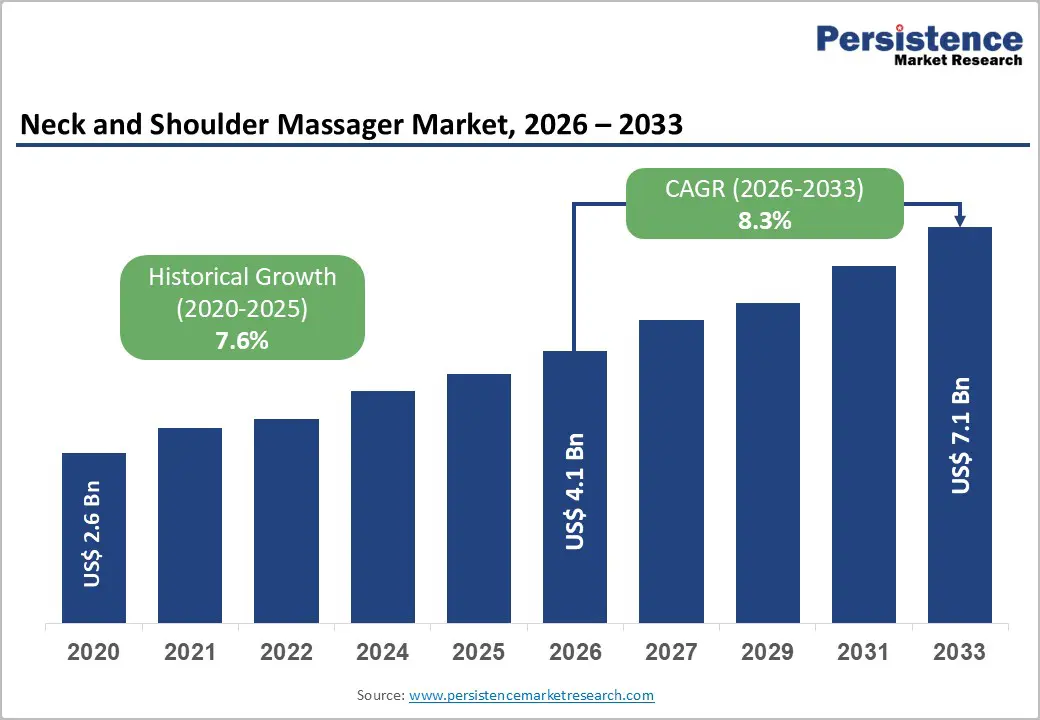
The global neck and shoulder massager market size is likely to be valued at US$ 4.1 billion in 2026 and is projected to reach US$ 7.1 billion by 2033, growing at a CAGR of 8.3% between 2026 and 2033.
The expansion is driven by the rising incidence of musculoskeletal disorders and a growing focus on personal wellness. Sedentary lifestyles and prolonged screen time have increased neck and shoulder pain, with annual cases around 350-360 in monitored populations. Additionally, the emphasis on stress reduction through non-invasive therapies supports market growth, as massage devices provide convenient home-based relief and evidence of reduced stress hormone levels and blood pressure. These factors enhance access to health solutions and sustain demand.
Key Market Highlights
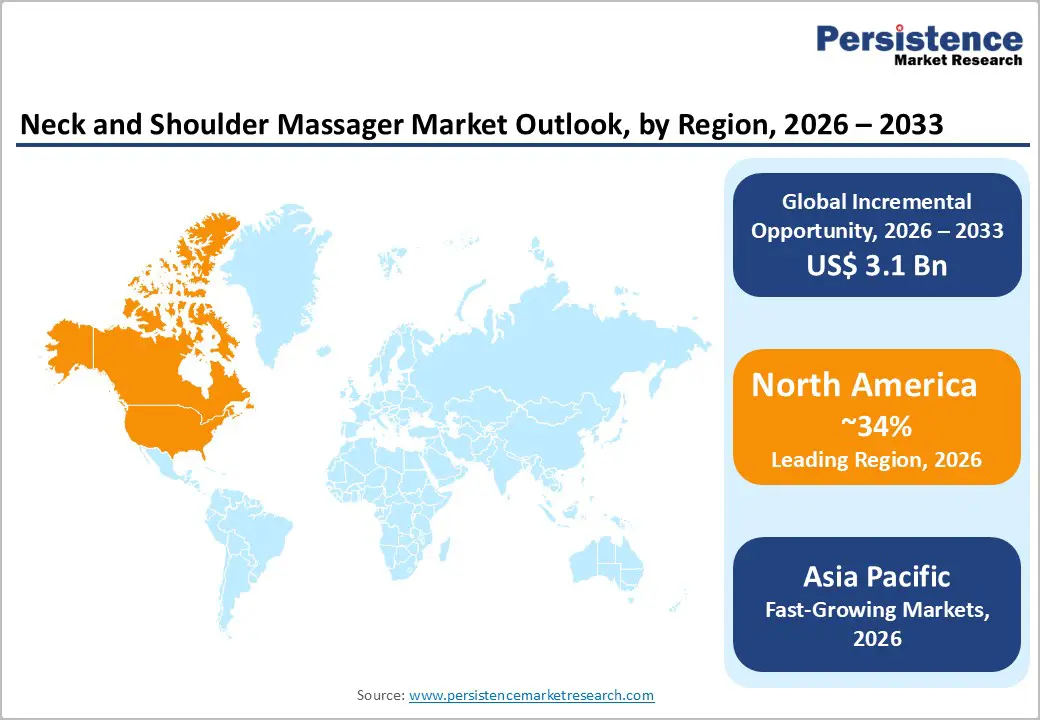
- Leading Region: North America leads the Neck and Shoulder Massager Market due to advanced wellness infrastructure and high consumer spending on home health devices, ensuring dominant regional performance through 2032.
- Fastest-Growing Region: Asia Pacific is the fastest-growing region, driven by manufacturing efficiencies and urbanization in China and India, with strong potential for accelerated demand in emerging economies.
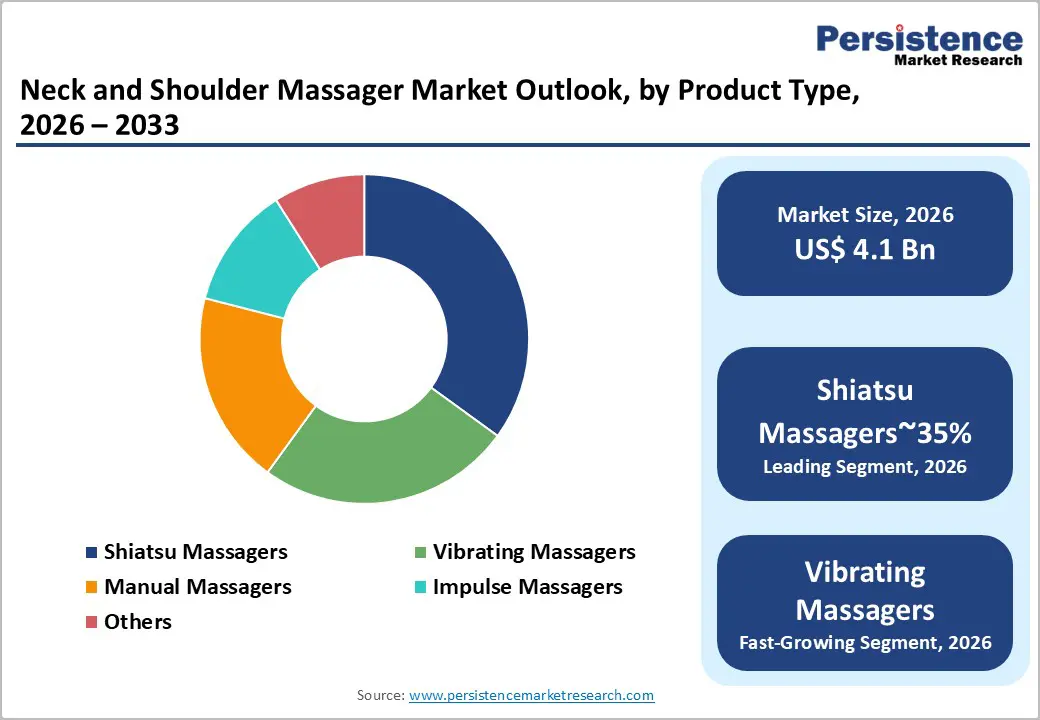
- Leading Segment: Shiatsu Massagers dominate product types, offering deep-tissue relief favored by 60% of users for authentic therapeutic experiences in daily self-care routines.
- Fastest-Growing Segment: Cordless power types are the fastest-growing, capturing mobile consumers with portability and battery innovations, making them ideal for on-the-go stress management solutions.
- Key Opportunity: Advancements in smart technologies present key opportunities, enabling AI personalization in household segments for enhanced user engagement and market expansion.
| Key Insights | Details |
|---|---|
| Neck and Shoulder Massager Market Size (2026E) | US$ 4.1 Billion |
| Market Value Forecast (2033F) | US$ 7.1 Billion |
| Projected Growth CAGR (2026 - 2033) | 8.3% |
| Historical Market Growth (2020 - 2025) | 7.6% |
Market Dynamics
Driver - Increased Screen Time and Poor Ergonomics among Remote Workers Accelerate Massager Adoption
The rapid adoption of remote and hybrid work models has significantly increased the incidence of neck and shoulder strain associated with prolonged screen exposure and poor ergonomic setups. According to The Science and Information (SAI) Organization Limited, more than 70% of remote employees experience musculoskeletal discomfort, with neck pain affecting nearly 60% of respondents due to prolonged sitting and poor posture. This rise in digital fatigue has created strong demand for practical at-home relief solutions, such as neck and shoulder massagers.
Studies from occupational health sources show that consistent use of these devices can reduce pain intensity by up to 40%, enhancing comfort and productivity. Professionals aged 25 to 54, the most affected group, are increasingly integrating massagers into daily wellness routines. This trend has accelerated market growth and spurred innovation in ergonomic, user-friendly designs that cater to evolving home-office environments.
Booming Wellness Spending and Holistic Lifestyle Trends Drive Long-Term Market Growth
The global wellness industry, now valued at trillions of dollars, continues to drive the adoption of self-care devices like neck and shoulder massagers as consumers prioritize preventive health. Post-pandemic, wellness spending has surged by 10-15% annually, with massage-based therapies gaining popularity for their non-invasive and restorative benefits. According to NIH, regular massage use improves sleep quality and mood by 20-30%, reinforcing their value in everyday wellness. This demand is amplified by social media influence and endorsements from wellness advocates, which have normalized massage devices as part of holistic living. Urban consumers, in particular, view them as essential tools for relaxation and mental balance. As the wellness economy expands, manufacturers are introducing smart, app-enabled models to personalize user experiences, boosting accessibility, brand engagement, and long-term market profitability.
Restraint - Premium Pricing of Feature-Rich Massagers Limits Affordability and Market Penetration in Developing Regions
Despite growing demand, the high cost of technologically advanced neck and shoulder massagers remains a key market restraint. Models equipped with features such as heat therapy, variable speed control, and smart connectivity often exceed affordable price thresholds, particularly in developing regions. This limits accessibility for middle- and lower-income consumers, restricting market reach to premium buyers. Additionally, some consumers remain uncertain about the long-term value of these devices relative to professional massage therapy, thereby slowing adoption rates.
While innovation continues to improve performance, the overall pricing gap highlights the need for cost-efficient alternatives that balance quality with affordability. To overcome this restraint, manufacturers are focusing on modular designs and scalable technologies to create competitively priced products suitable for mass-market penetration.
Lack of User Knowledge and Inconsistent Performance Hinder Wider Consumer Trust and Repeat Purchases
A major restraint in the market is limited consumer awareness of proper use and actual effectiveness of neck and shoulder massagers. Many users report dissatisfaction due to improper application, unrealistic expectations, or device fitting issues. AHFE International reports that electromagnetic pulse massagers resulted in an average slipping distance of 10.256 mm among female users, reducing therapeutic efficacy.
Inconsistent performance or discomfort can discourage repeat purchases, especially among first-time users unfamiliar with device handling. Moreover, the absence of standardized product quality and varying safety regulations across countries creates additional hesitation. These factors together slow down adoption rates. To address this challenge, market players are investing in educational campaigns, instructional content, and certifications to build user trust and optimize device utilization.
Opportunity - AI Integration and Portable Designs Create Strong Opportunities for Personalized Wellness Solutions
The integration of smart technologies and portable designs offers significant growth opportunities in the Neck and Shoulder Massager Market. Companies are increasingly incorporating AI-based programs, app connectivity, and heat customization to deliver a more personalized massage experience. Cordless and rechargeable models are gaining popularity due to their ease of use during travel or work, which aligns with modern mobile lifestyles.
The growing adoption of e-commerce platforms further supports product accessibility and awareness. Additionally, wellness programs and corporate initiatives are incorporating such technologies for employee health benefits, creating a high-potential revenue stream. This trend encourages premium pricing strategies and subscription-based service models, thereby generating recurring revenue and strengthening brand loyalty.
Collaborations with Wellness Centers and Eco-Friendly Innovations Expand Market Reach and Adoption
The market presents strong opportunities through integration with the global wellness ecosystem, including spas, physiotherapy centers, and home care services. With governments promoting preventive healthcare and non-invasive therapies, massagers are increasingly seen as essential wellness tools. Partnerships between device manufacturers and wellness facilities are expanding distribution networks, especially across developing regions. The improved availability through online and retail channels could deliver significant market growth in underserved markets.
Moreover, the demand for eco-friendly and sustainable models is rising as environmentally conscious consumers seek greener alternatives. These developments position neck and shoulder massagers as effective tools in recovery and daily self-care. Manufacturers focusing on affordability, sustainability, and clinical validation are well positioned to capitalize on this expanding wellness-driven demand.
Category-wise Analysis
Product Type Insights
Among product types, shiatsu massagers dominate the neck and shoulder massager market, with an estimated 35% market share, primarily due to their ability to replicate traditional Japanese kneading techniques that effectively target deep muscle tension. Consumers prefer Shiatsu massagers for their therapeutic benefits, as numerous wellness reviews highlight notable relief from chronic neck and shoulder pain. Additionally, ergonomic improvements have enhanced comfort and fit, positioning Shiatsu massagers as the top choice for households seeking professional-quality massage experiences at home.
Power Type Insights
In the power type category, Cordless variants dominate the market, capturing around 55% market share, thanks to their portability and user-friendly design. These battery-operated models support modern lifestyles, allowing users to receive massages while traveling, commuting, or working remotely. Ergonomic assessments reveal that cordless models offer safer and easier use, minimizing movement restrictions. Moreover, advancements in rechargeable battery technology now provide longer session durations, making cordless massagers a preferred choice for active, on-the-go consumers.
Price Range Insights
The segment below US$100 holds the largest market share, at approximately 45%, driven by affordability and accessibility for first-time buyers. Budget-friendly models make relaxation and muscle relief more attainable for the mass market, especially in developing regions where price sensitivity is high. E-commerce platforms further support this segment through attractive discounts and value-oriented marketing strategies. Consumer health surveys indicate that buyers in this range report high satisfaction, as the products provide essential relief features such as vibration and mild heating. This segment continues to drive market growth by offering cost-effective wellness solutions that address everyday needs.
Sales Channel Insights
Online Retailers lead the market with a commanding 40% share, propelled by the growing preference for digital shopping and diverse product availability. The expansion of e-commerce platforms has transformed purchasing behavior by providing customers with detailed product descriptions, user reviews, and demonstration videos that simplify decision-making. The post-pandemic shift toward virtual shopping has further strengthened this trend, as tech-savvy consumers increasingly rely on online stores to explore, compare, and purchase wellness devices conveniently from home.
End-user Insights
Households constitute the largest end-user segment, accounting for approximately 50% of the Neck and Shoulder Massager Market. The rise in at-home wellness routines and the growing need for stress relief have made massagers a common household device. The segment’s growth is further supported by remote work trends, in which users seek rapid ergonomic relief from extended desk hours. Cost savings, privacy, and ease of access drive household adoption, solidifying this segment as the key contributor to the market’s long-term expansion.
Regional Insights
North America Neck and Shoulder Massager Trends
North America leads the global neck and shoulder massager market, supported by a strong culture of health innovation and favorable regulatory frameworks such as those from the U.S. FDA. The prevalence of sedentary workstyles and stress-related pain has increased consumer dependence on ergonomic and therapeutic devices. Companies in the region prioritize R&D collaborations with healthcare institutions to enhance device safety, efficacy, and comfort.
This emphasis on scientific validation builds consumer trust and accelerates product adoption across households and physiotherapy centers. Moreover, corporate wellness programs in the U.S. have also begun integrating such devices to improve employee well-being, creating new commercial opportunities. The region’s mature retail infrastructure and high disposable income further ensure sustained growth and market leadership.
Europe Neck and Shoulder Massager Trends
Europe's neck and shoulder massager market is experiencing consistent growth, driven by countries such as Germany, the U.K., France, and Spain, where wellness and preventive healthcare are integral to public policy. The European Union’s harmonized safety regulations have ensured the availability of reliable and high-quality massagers across borders. The market also benefits from strong demand within the wellness tourism sector, where therapeutic massages are included in spa and rehabilitation programs.
Growing environmental consciousness has driven the production of eco-friendly massagers made from recyclable materials. Government-backed studies validating the device's effectiveness, particularly for pain management in older adults, have further supported adoption. Overall, the European market is progressing steadily, backed by regulation, innovation, and sustainability-focused initiatives.
Asia Pacific Neck and Shoulder Massager Trends
Asia-Pacific is experiencing the fastest growth in the neck and shoulder massager market, driven by manufacturing expertise, affordability, and rising consumer awareness. Key markets such as China, Japan, India, and South Korea are leading the way, supported by expanding middle-class populations and higher spending on self-care. Cultural traditions emphasizing massage therapy, such as Shiatsu and acupressure, have contributed to a natural acceptance of these devices. The surge in urbanization and digital work has increased demand for relaxation and stress-relief tools. Regional manufacturers leverage cost-efficient production and rapid technological innovation, including AI integration and portable models, to cater to both domestic and international markets. With rapid e-commerce adoption, the Asia-Pacific market is positioned as a global hub for production, innovation, and exports.
Competitive Landscape
The global neck and shoulder massager market displays a moderately consolidated structure, with top players controlling over 60% share through strategic expansions and R&D investments. Companies prioritize differentiation via smart features and ergonomic enhancements, while emerging models like subscription services gain traction. Growth strategies focus on geographic expansion and partnerships, amid a fragmented lower-end segment that fosters innovation in sustainable practices.
Key Market Developments
- In October 2025, OSIM International launched an AI-powered cordless neck and shoulder massager featuring mobile app integration for personalized massage sessions and real-time relaxation tracking.
- In June 2024, Panasonic Corporation introduced a heat-therapy Shiatsu massager specifically designed for elderly users, highlighting enhanced safety certifications and ergonomic comfort.
- In March 2023, Human Touch expanded its Asia-Pacific distribution network, launching eco-friendly portable massagers featuring sustainable materials and enhanced portability.
Companies Covered in Neck and Shoulder Massager Market
- JSB Health & Fitness Pvt. Ltd.
- Nekteck
- OSIM International
- HoMedics
- Family Inada Co., Ltd.
- FUJIIRYOKI
- Human Touch
- SKG
- Panasonic Corp.
- Beurer GmbH
- Wenzhou Huifan Technology Co., Ltd
- Prospera Corp.
- CERAJADE KYOSUNGMED
- Zyllion
- OGAWA
Frequently Asked Questions
The global Neck and Shoulder Massager Market is expected to reach US$ 7.1 Billion by 2033, growing from US$ 4.1 Billion in 2026 at a CAGR of 8.3%, driven by wellness trends and technological innovations.
Key drivers include the rising prevalence of sedentary lifestyle-induced musculoskeletal disorders and growing wellness awareness, with studies showing consistent neck and shoulder issue cases and massage benefits for stress reduction.
Shiatsu Massagers lead with 35% share, valued for their deep-kneading action mimicking professional therapy, supported by high consumer satisfaction in pain relief applications.
North America holds the leading position, bolstered by U.S. innovation ecosystems and FDA regulations, with strong adoption in household and clinical settings for ergonomic health solutions.
Advancements in AI and portable technologies offer significant potential, especially in Asia Pacific, enabling personalized home care and capturing growth in corporate wellness programs.
Prominent companies include OSIM International, Panasonic Corp., and HoMedics, focusing on innovative features like heat therapy and smart connectivity to maintain competitive edges.


