




- Food Ingredients & Additives
- Yeast Market
Yeast Market Size, Share, Growth, and Regional Forecast, 2025 to 2032
Yeast Market by Yeast Type (Baker’s Yeast, Brewer’s Yeast, Feed Yeast, Industrial Yeast), by Form (Fresh Yeast, Dry Yeast, Liquid Yeast), by End Use (Food & Beverages, Animal Feed / Nutrition, Biofuels, Pharmaceuticals, Others), and Regional Analysis from 2025 to 2032

Yeast Market Share and Trends Analysis
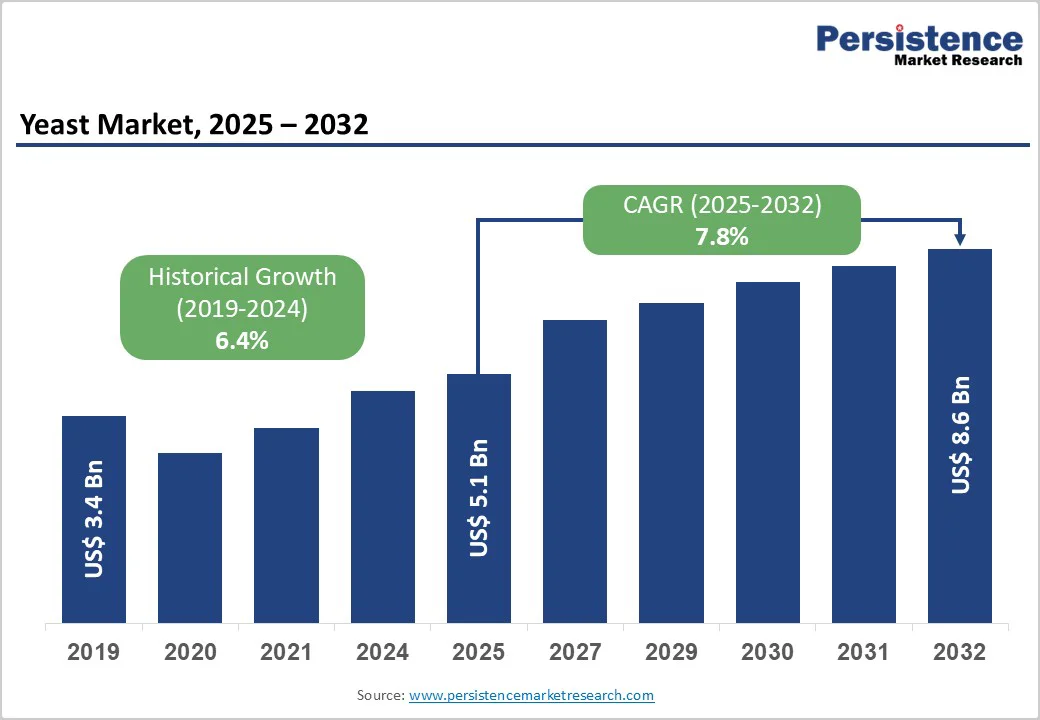
The global yeast market size is valued at US$ 5.1 billion in 2025 and projected to reach US$ 8.6 billion by 2032. The market is projected to record a CAGR of 7.8% during the forecast period from 2025 to 2032. The market is riding a wave of innovation and expanding applications across food, beverage, and industrial sectors.
From artisanal baking to bioethanol production, players are leveraging functional strains, fortified formulations, and advanced fermentation technologies to meet rising consumer demand for health, convenience, and sustainability. Startups and established companies alike are redefining yeast applications, tapping into probiotics, clean-label trends, and sensory-driven experiences to capture market share in an increasingly competitive environment.
Key Industry Highlights:
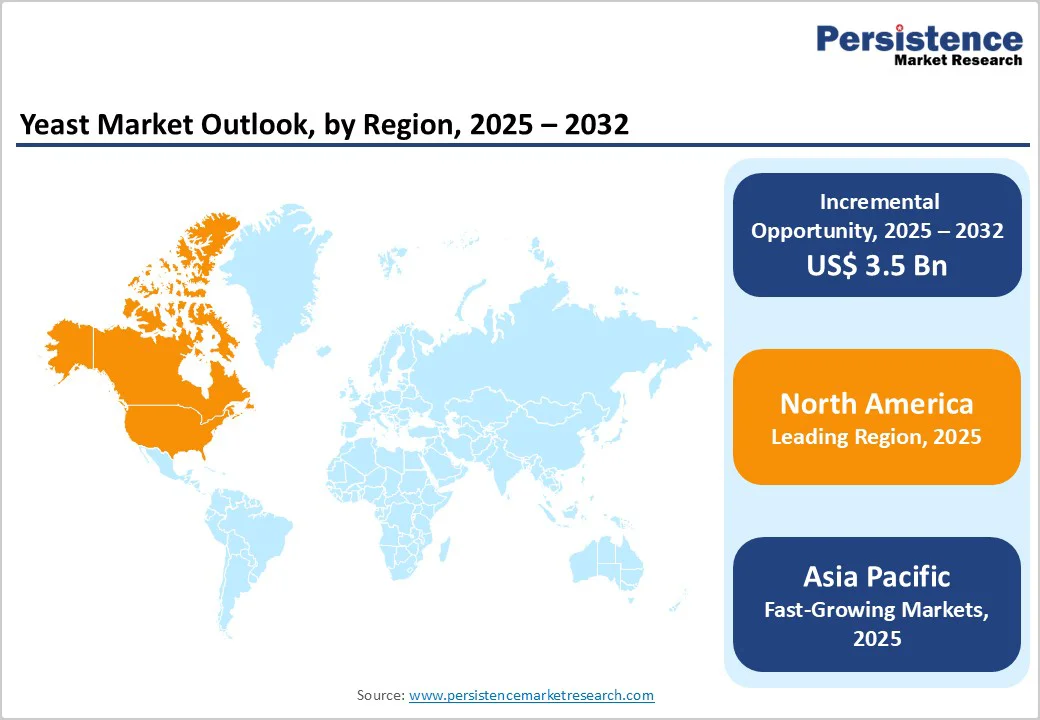
- Leading Region: North America, commanding 39% market share, driven by bakery, beverage, and industrial applications, along with rising demand for functional and probiotic yeast products.
- Fastest-Growing Region: Asia Pacific, fueled by urbanization, craft brewing, functional yeast adoption, and industrial applications across India, China, and Thailand.
- Fastest-Growing Segment: Industrial Yeast, expanding due to bioethanol, enzyme production, and pharmaceutical uses.
- Market Drivers: Rising bakery and convenience food consumption, along with functional and fortified yeast demand, is boosting global yeast adoption.
- Opportunities: Development of probiotic, functional, and flavored yeast solutions for health-conscious consumers and industrial applications.
- Key Developments: In September 2025, Angel Yeast showcased innovative yeast solutions at Fi India 2025. In July 2025, LAFFORT® launched ZYMAFLORE™ CGN24 for aromatic sparkling wines. In March 2025, Asahi Group Foods acquired shares in a German beer yeast company. In October 2024, Novonesis introduced Innova Eclipse for ethanol production.
| Key Insights | Details |
|---|---|
| Global Yeast Market Size (2025E) | US$ 5.1 Bn |
| Market Value Forecast (2032F) | US$ 8.6 Bn |
| Projected Growth (CAGR 2025 to 2032) | 7.8% |
| Historical Market Growth (CAGR 2019 to 2024) | 6.4% |
Market Dynamics
Driver - Rising demand for bakery and convenience foods is boosting global yeast consumption
The global rise in demand for baked goods and convenient, ready-to-eat foods is driving a remarkable surge in yeast consumption. As urban lifestyles accelerate and consumers prioritize quick meal solutions, demand for breads, pastries, pizza bases, and snack items is rising steadily. Yeast plays a crucial role in delivering consistent leavening, texture, and flavor, making it indispensable in modern baking and food processing.
Artisanal-style breads and frozen bakery products are also expanding, further fueling yeast requirements. Retail growth of pre-packaged, on-the-go meals and frozen foods adds another layer of demand, as manufacturers seek reliable fermentation and shelf-life stability. This shift toward convenience and indulgence ensures yeast remains a strategic ingredient across both traditional and innovative culinary applications worldwide.
Restraints - Price volatility of inputs like sugars and grains affects production economics
Fluctuating prices of key raw materials such as sugars and grains are creating significant challenges for yeast manufacturers. Yeast production relies heavily on consistent, high-quality carbohydrate sources, and sudden spikes or drops in sugar or grain costs can disrupt profit margins and operational planning. Supply chain disruptions caused by adverse weather, geopolitical tensions, or transportation bottlenecks further exacerbate cost unpredictability.
Manufacturers may face the need to adjust formulations, renegotiate contracts, or pass increased costs to consumers, potentially affecting demand. Small and mid-sized producers are particularly vulnerable, as they lack the financial flexibility to absorb rapid input cost changes. This price volatility limits long-term investment planning and can slow market expansion in certain regions.
Opportunity - Development of functional and probiotic yeast products taps into health-conscious consumer trends
The growing focus on gut health, immunity, and overall wellness is driving demand for functional and probiotic yeast products. Yeast strains enriched with vitamins, minerals, and live probiotics are increasingly being incorporated into beverages, nutritional supplements, and fortified foods, appealing to health-conscious consumers seeking natural and effective solutions.
Startups can differentiate themselves by developing specialty yeast formulations targeting digestive wellness, enhanced energy, and immune support, while established players can leverage R&D to create scalable, high-quality functional lines.
Innovations such as encapsulated probiotics, shelf-stable yeast blends, and synbiotic combinations provide opportunities for premium positioning and value-added products. The convergence of clean-label trends, natural ingredients, and scientific validation further accelerates adoption, making functional and probiotic yeasts a strategic growth avenue for the industry.
Category-wise Analysis
By Yeast Type, Baker’s Yeast dominates the market
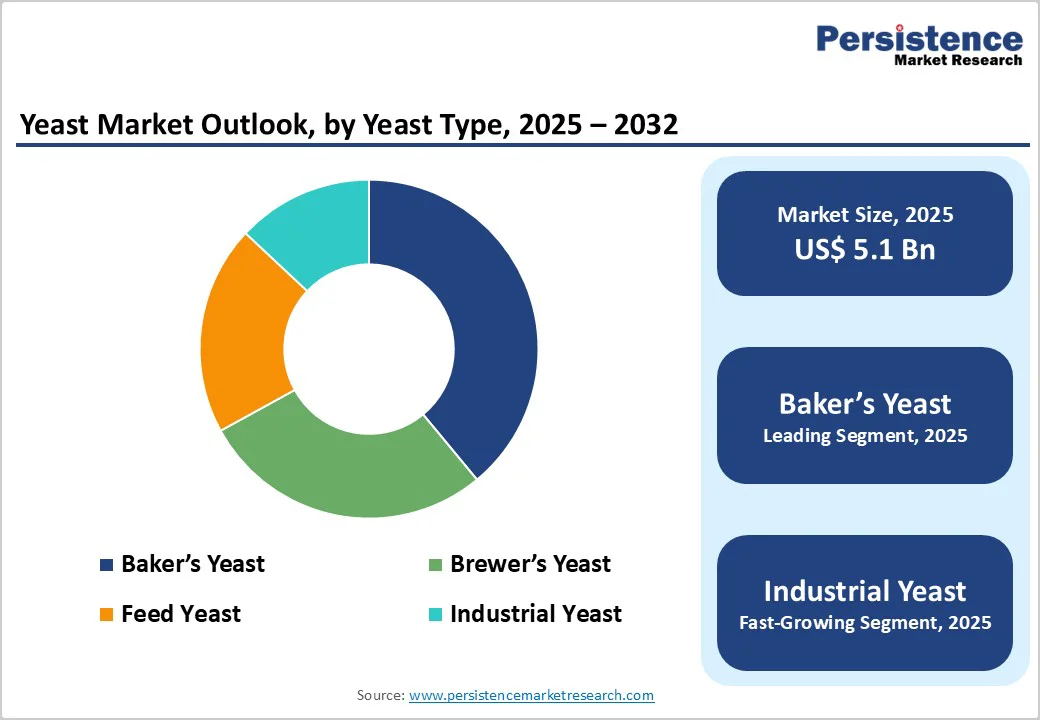
Baker’s Yeast holds approx. 37% market share as of 2025, maintaining its dominance due to its essential role in leavening bread, pastries, and other baked goods across industrial and artisanal baking segments. Its consistent performance, ease of use, and ability to enhance texture, flavor, and shelf life make it indispensable to bakeries and food manufacturers.
Brewer’s Yeast is steadily growing, driven by rising demand for alcoholic beverages, craft brewing, and nutritional supplements rich in proteins and B-vitamins. Feed Yeast supports livestock and aquaculture industries by improving animal health, digestion, and growth performance, contributing to its steady adoption.
Industrial Yeast finds application in bioethanol, pharmaceuticals, and enzyme production, making it a critical component for large-scale biotechnological and fermentation processes worldwide.
By End Use, Industrial Yeast are expected to lead growth during the forecast period
Industrial Yeast is projected to grow at a CAGR of 12.3% during the forecast period, fueled by expanding applications in bioethanol production, pharmaceuticals, and specialty enzymes.
Its ability to deliver consistent fermentation performance and high yield efficiency makes it a preferred choice for large-scale industrial operations. Increasing demand for renewable energy sources is driving adoption in biofuel manufacturing, while pharmaceutical companies are leveraging yeast for active ingredient synthesis, probiotics, and nutraceuticals.
Enzyme producers are relying on industrial yeast for cost-effective, scalable fermentation processes. Growth in global biotechnology and sustainable industrial practices is further accelerating demand. This segment’s versatility and capacity to support diverse industrial applications position it to lead overall yeast market expansion in the coming years.
Region-wise Insights
North America Yeast Market Trends
North America holds approximately 39% market share in the global Yeast Market, driven by rising demand for bakery, beverage, and industrial applications across the U.S. and Canada.
Consumers increasingly seek clean-label, functional, and probiotic-enriched products, prompting manufacturers to innovate with specialty baker’s yeast, brewers’ yeast, and industrial strains. Plant-based and gluten-free formulations are gaining traction, influencing yeast applications in alternative protein and convenience foods.
Leading brands in the region are investing in sustainable production, traceable sourcing, and advanced fermentation technologies to improve consistency and flavor profiles. E-commerce channels and foodservice expansion are creating new distribution opportunities, while collaborations with research institutes and startups accelerate product innovation. The market is evolving toward multifunctional yeast solutions that meet health, taste, and efficiency demands simultaneously.
Asia Pacific Yeast Market Trends
Asia Pacific Yeast Market is expected to grow at a CAGR of 10.2%, driven by expanding bakery, beverage, and industrial applications across the region.
In India, demand is surging for baker’s yeast and functional yeast products in artisanal bread, snacks, and confectionery, fueled by rising urbanization and modern retail penetration. China is witnessing growth in brewers’ yeast and probiotic-enriched strains, supported by increasing craft beer production, plant-based protein alternatives, and health-conscious consumer preferences.
Thailand is emerging as a hub for industrial yeast applications, including bioethanol, animal feed, and fermented food production, with companies adopting advanced fermentation and sustainable sourcing practices. Startups and established players are investing in pilot plants, enzyme-assisted processes, and fortified yeast solutions to cater to evolving nutritional, functional, and industrial requirements.
Market Competitive Landscape
The global yeast market exhibits a moderately consolidated landscape, where innovation pace and production scale determine competitive advantage. Leading companies are expanding fermentation capacity, enhancing strain performance, and investing in functional, probiotic, and fortified yeast variants.
Startups are driving niche growth with precision-fermented yeasts, enzyme-assisted processes, and novel flavor profiles for bakery, beverages, and industrial applications. Industry players emphasize certifications such as Organic, Non-GMO, and Kosher to strengthen consumer trust.
Advanced processing technologies, including micro-fermentation, cold-pressing, and bioengineering, are improving yield, consistency, and sensory quality. R&D investments and funding rounds are accelerating global expansion, enabling regional rollouts and new product development. Flavored and fortified yeast offerings are gaining traction across food, feed, and wellness segments, reshaping market dynamics and differentiation.
Key Industry Developments:
- In September 2025, Angel Yeast showcased its innovative yeast-based solutions at Fi India 2025, highlighting technologies designed to transform the food industry. The company emphasized applications that enhance flavor, nutrition, and sustainability across diverse food products.
- In July 2025, LAFFORT® expanded its yeast portfolio with ZYMAFLORE™ CGN24, a Saccharomyces cerevisiae strain tailored for aromatic sparkling wines. The yeast enhances green apple and fresh pear notes, elevating the sensory profile of Prosecco and similar wines.
- In March 2025, Asahi Group Foods acquired shares in a German beer yeast products company to strengthen its yeast business. The move supports sustainable initiatives while addressing evolving consumer well-being needs in the food and beverage sector.
- In October 2024, Novonesis launched Innova Eclipse, its most advanced yeast innovation for ethanol production. The strain is engineered to overcome fermentation barriers and endure stressors, enhancing efficiency and output for ethanol producers.
Companies Covered in Yeast Market
- Lesaffre
- Lallemand Inc.
- Angel Yeast Co., Ltd.
- Novonesis Group
- Associated British Foods
- DSM-Firmenich
- Kerry Group plc
- Alltech, Inc.
- ADM
- Oriental Yeast Co., ltd
- Asahi Group Foods, Ltd.
- Laffort SA
- Others
Frequently Asked Questions
The global yeast market is projected to be valued at US$ 5.1 Bn in 2025.
Rising demand for bakery and convenience foods is boosting global yeast consumption.
The global Yeast market is poised to witness a CAGR of 7.8% between 2025 and 2032.
Development of functional and probiotic yeast products taps into health-conscious consumer trends represents a major market opportunity.
Major players in the global yeast market include Lesaffre, Lallemand Inc., Angel Yeast Co., Ltd., Novonesis Group, Associated British Foods, DSM-Firmenich, and Kerry Group plc. and others.


