




- Nutraceuticals & Functional Foods
- Keto Diet Products Market
Keto Diet Products Market Size, Share, and Growth Forecast, 2026 - 2033
Keto Diet Products Market by Product Type (Supplements, Beverages, Snacks, Meals, Dairy), Distribution Channel (Hypermarkets or Supermarkets, Specialty Stores, Health & Fitness Stores, Pharmaceuticals or Drug Stores, Online Retail), and Regional Analysis for 2026 - 2033

Keto Diet Products Market Size and Trends Analysis
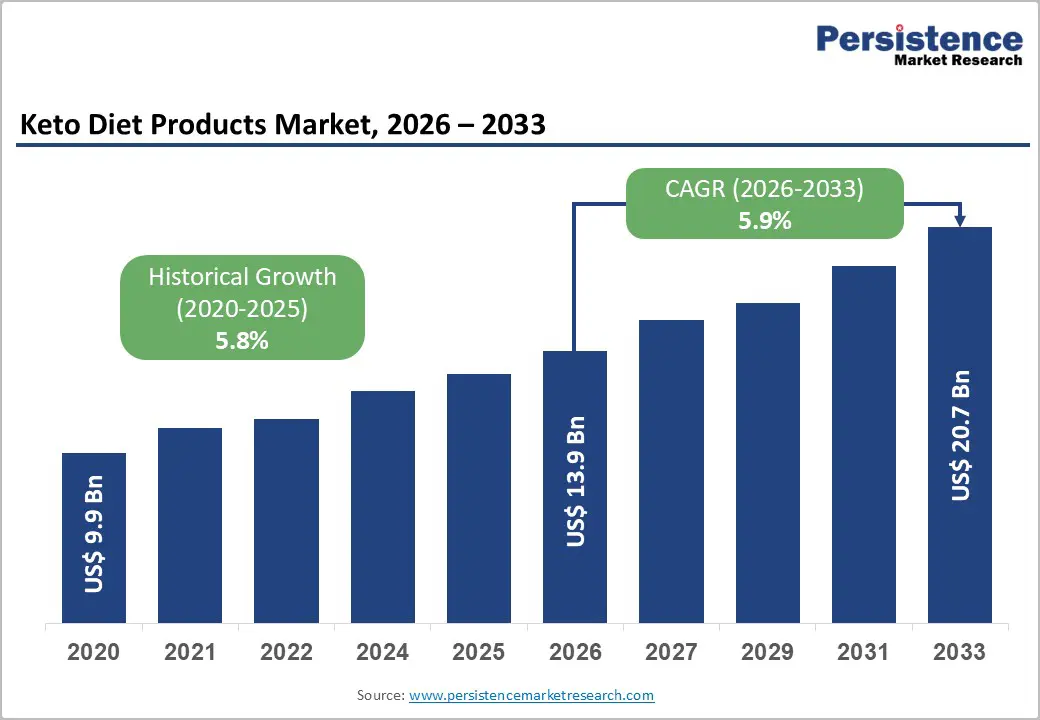
The global keto diet products market size is likely to be valued at US$13.9 billion in 2026 and is expected to reach US$20.7 billion by 2033, growing at a CAGR of 5.9% during the forecast period from 2026 to 2033, driven by rising awareness of the health benefits associated with ketogenic diets, such as improved weight control, blood sugar regulation, and enhanced energy levels.
Market expansion is further supported by product innovation in supplements, snacks, beverages, meals, and dairy, alongside wider availability through hypermarkets, specialty stores, health & fitness outlets, drug stores, and online retail channels. Key growth drivers include the rising prevalence of obesity, diabetes, and cardiovascular conditions, coupled with the growing demand for convenient, ready-to-consume keto-compliant foods.
Key Industry Highlights:
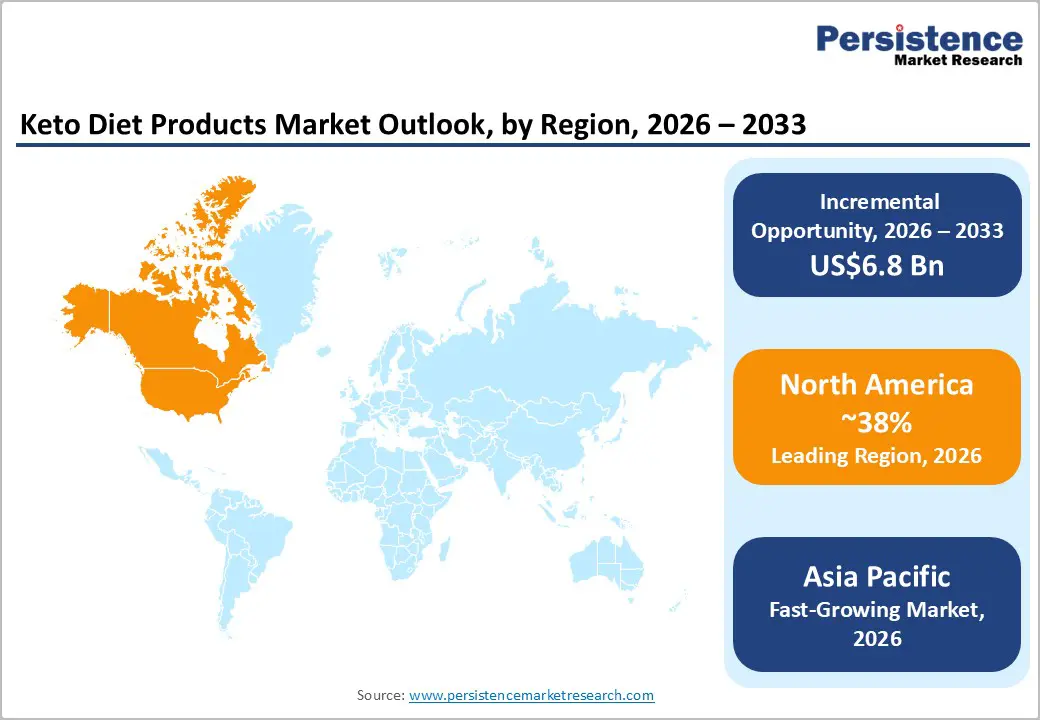
- Leading Region: North America is anticipated to be the leading region, accounting for 38% market share in 2026, driven by high consumer adoption of ketogenic diets, rising obesity prevalence, and strong retail and e-commerce penetration.
- Fastest-growing Region: Asia Pacific is likely to be the fastest-growing region in the keto diet products in 2026, supported by rising disposable incomes, increasing diabetes prevalence, and rapid urbanization.
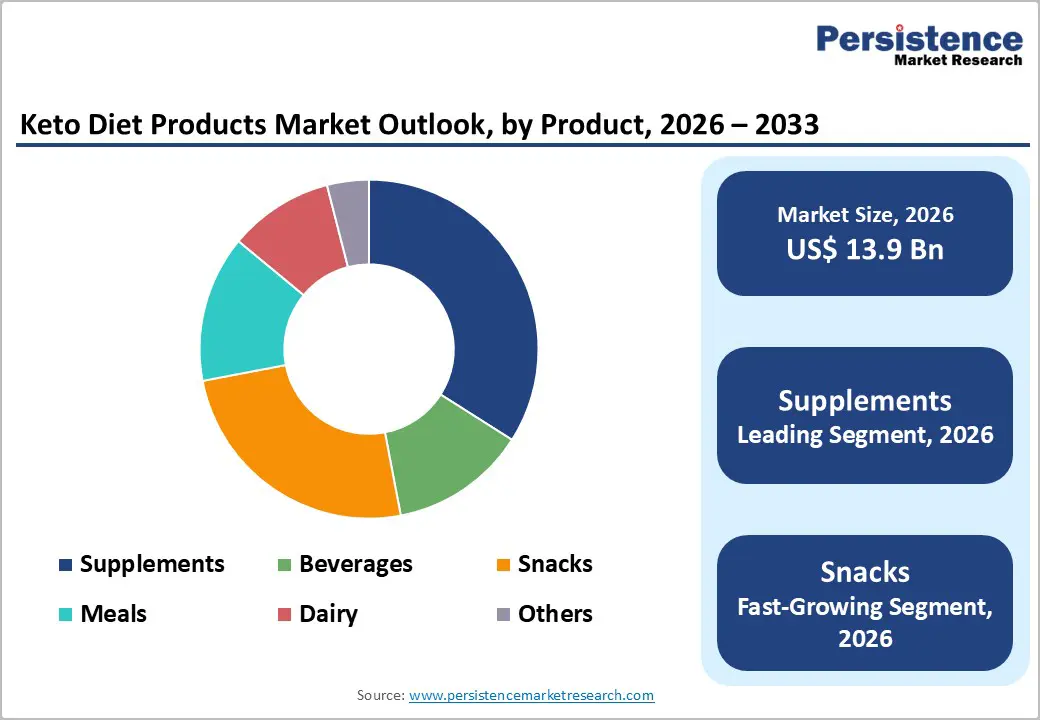
- Leading Product Type: The supplements are projected to be the leading product type in 2026, accounting for 50% of revenue, driven by high consumer demand for exogenous ketones, MCT oils, and protein products that support ketosis.
- Leading Distribution Channel: Hypermarkets and supermarkets are anticipated to be the leading distribution channel type, accounting for over 55% of the revenue share in 2026, supported by wide accessibility, in-store promotions, and strong consumer trust in established retail networks.
| Key Insights | Details |
|---|---|
|
Keto Diet Products Market Size (2026E) |
US$13.9 Bn |
|
Market Value Forecast (2033F) |
US$20.7 Bn |
|
Projected Growth (CAGR 2026 to 2033) |
5.9% |
|
Historical Market Growth (CAGR 2020 to 2025) |
5.8% |
Market Factors - Growth, Barriers, and Opportunity Analysis
Rising Prevalence of Obesity and Lifestyle-Related Diseases
According to the World Health Organization (WHO), obesity rates have escalated significantly over the past decade, with millions of adults and children affected worldwide. Obesity is often linked to metabolic disorders such as type 2 diabetes, hypertension, and cardiovascular diseases, prompting consumers to adopt dietary interventions to manage weight and improve overall health. The ketogenic diet, which emphasizes low-carbohydrate and high-fat intake, has gained popularity as a scientifically supported approach to promote fat metabolism, maintain energy levels, and control blood sugar. This trend has fueled demand for keto-compliant products, including supplements, snacks, beverages, and ready-to-eat meals, which simplify adherence to strict low-carb nutritional patterns.
Lifestyle-related diseases caused by sedentary behavior, poor diet, and stress are increasingly recognized as preventable through nutritional management. Keto diet products offer a functional solution by providing high-protein, low-carb alternatives that align with health-conscious consumer behavior. Market players are responding with innovative formulations, such as MCT oils, exogenous ketones, keto bars, and dairy alternatives, and expanding their product portfolios to address diverse consumer needs. Regions such as North America and Europe witness high adoption due to health awareness campaigns, regulatory support, and established retail channels, while Asia Pacific is experiencing rapid growth driven by urbanization and rising disposable incomes.
Potential Health Concerns and Nutritional Imbalances
Strict low-carbohydrate and high-fat regimens can limit the intake of essential nutrients such as fiber, vitamins, and minerals, which may lead to digestive issues, fatigue, and electrolyte disturbances. Short-term effects, commonly referred to as keto flu, include headaches, nausea, irritability, and lethargy as the body transitions into ketosis. Excessive consumption of saturated fats, often present in keto-focused snacks, meals, and dairy products, may elevate cholesterol levels in susceptible individuals, increasing cardiovascular risks if not carefully monitored. These health concerns can deter consumers from adopting or sustaining keto diets, potentially restricting market growth. Growing consumer focus on product ingredients and nutritional transparency has driven companies to offer more detailed labeling, while the rising demand for plant-based and low-saturated-fat keto-friendly options is influencing product innovation.
The restrictive nature of ketogenic diets may not be suitable for all age groups, pregnant women, or individuals with pre-existing conditions such as kidney, liver, or metabolic disorders. This limits the target consumer base and necessitates careful formulation and clear nutritional guidance. Market players are responding by introducing fortified products, nutritionally balanced meal replacements, and fiber-enriched snacks to mitigate deficiencies. Regulatory frameworks and professional dietary guidance ensure product safety and help maintain consumer trust, supporting the credibility. Companies are investing in research-driven product development and functional ingredients to enhance health benefits while minimizing potential risks, helping expand consumer adoption.
Innovation in Organic and Plant-Based Keto Variants
As consumer awareness of clean-label, natural, and sustainable food options grows, there is a rising demand for keto products that are both plant-based and organically sourced. These products, including plant-based protein powders, dairy substitutes, ready-to-eat snacks, beverages, and meal replacements, follow low-carbohydrate, high-fat nutritional guidelines while catering to vegan, lactose-intolerant, and eco-conscious consumers. Companies are using ingredients such as almond flour, coconut oil, pea protein, and MCT oils to create keto-friendly formulations that offer better digestibility, fewer additives, and a more balanced nutritional profile.
The advantages of organic and plant-based diets, such as reduced exposure to preservatives, improved gut health, and a lower environmental footprint, align with shifting consumer preferences, boosting the adoption of these keto products. Market leaders are ramping up investments in research and development to deliver fortified products, innovative packaging, and certification-compliant options that meet both keto and organic standards. This commitment to product differentiation fosters brand loyalty, expands market reach, and drives revenue growth across North America, Europe, and emerging markets in the Asia Pacific. By addressing health, ethical, and sustainability concerns, organic and plant-based keto innovations are poised to become a key growth driver in the keto diet products market.
Category-wise Analysis
Product Type Insights
Supplements are expected to lead the keto diet products market, accounting for approximately 50% of revenue share in 2026, driven by strong consumer demand for exogenous ketones, MCT oils, and protein powders that facilitate ketosis without strict dietary adherence. Supplements are highly preferred by fitness enthusiasts, weight-conscious individuals, and busy professionals seeking convenient, nutritionally optimized options. For example, Perfect Keto, a leading brand in this segment, has successfully captured market attention with its MCT oil powders and keto protein supplements, formulated to accelerate fat metabolism while maintaining energy levels. The segment’s dominance is reinforced by increasing health awareness, rising obesity prevalence, and the growing demand for functional nutrition that supports metabolic health.
Snacks are likely to be the fastest-growing segment in 2026, driven by consumer demand for convenient, on-the-go, keto-friendly options. Ready-to-eat products such as bars, nuts, chips, and bite-sized treats allow consumers to maintain a low-carb, high-fat diet without complex meal preparation. For example, Quest Nutrition, a prominent player, has expanded its keto snack portfolio with high-protein bars and nut-based snacks, offering both flavor variety and nutritional value. Growth is driven by innovations such as fiber enrichment, plant-based alternatives, and novel flavors, catering to health-conscious, vegan, and gluten-free consumers. Snack products are also well-suited for e-commerce platforms and subscription-based delivery, making them easily accessible and boosting consumer adoption. Increasing urbanization, busy lifestyles, and the popularity of snacking as a convenient nutrition strategy contribute to rapid expansion.
Distribution Channel Insights
Hypermarkets and supermarkets are projected to lead the market, capturing around 55% of the total revenue share in 2026, supported by wide accessibility, in-store promotions, and strong consumer trust in established retail networks. Large retail chains make keto products such as snacks, supplements, beverages, and dairy easily available in everyday shopping environments, increasing exposure and impulse purchases. For example, major grocery chains such as Whole Foods Market and Kroger stock a broad range of keto-specific products, including low-carb snacks and ingredient staples used for ketogenic diets, reflecting the strong footprint of keto offerings in physical retail. These outlets attract health-oriented consumers seeking convenience and variety under one roof.
Online retail stores are likely to be the fastest-growing distribution channel in 2026, driven by the increasing penetration of e-commerce, subscription models, and direct-to-consumer strategies. E-commerce platforms and specialized online retailers have expanded access to a wide range of keto products, including supplements, snacks, ready meals, and specialty ingredients that may not be readily available in physical stores. For example, dedicated online grocers such as Thrive Market offer extensive selections of keto-friendly and specialty low-carb products, making it easy for consumers to discover, compare, and purchase keto items from home. The convenience of doorstep delivery, the ability to read detailed nutritional information, and the proliferation of subscription services are key drivers of this growth.
Regional Insights
North America Keto Diet Products Market Trends
North America is expected to lead the market, capturing a 38% share in 2026, driven by strong health and wellness trends and widespread adoption of the ketogenic diet. The U.S. is positioned as the primary growth driver, supported by high consumer awareness, a well-established retail infrastructure, and a robust health supplement industry. Consumers are increasingly seeking low-carb, high-fat products to support weight management, performance nutrition, and metabolic health, fueling the ongoing introduction of keto-friendly snacks, beverages, supplements, and ready-to-eat meals in supermarkets, specialty stores, and online platforms. Functional and clean-label keto options are particularly popular among lifestyle-focused groups, such as fitness enthusiasts and busy professionals.
Innovation and strategic partnerships are shaping current market dynamics as companies respond to evolving consumer preferences and technological advancements. For instance, Quest Nutrition, a U.S.-based brand known for its high-protein keto snacks and bars, continues to expand its distribution and diversify its product offerings to meet the changing needs of keto dieters. This reflects a broader market trend toward convenient, on-the-go products that align with fast-paced lifestyles. Product development increasingly focuses on functional benefits such as enhanced protein content, fiber enrichment, and reduced sugars, appealing to both traditional keto followers and a wider audience of health-conscious consumers. The growing popularity of personalized nutrition apps and digital diet tools also promotes customized keto meal planning, further integrating the diet into mainstream lifestyle choices.
Europe Keto Diet Products Market Trends
Europe is expected to be a key market for keto diet products in 2026, driven by the growing adoption of low-carbohydrate, high-fat nutritional approaches across major Western European countries, including Germany, the U.K., and France. European consumers are increasingly turning to ketogenic diets for weight management, metabolic health, and overall wellness, leading to wider acceptance of keto-friendly snacks, supplements, beverages, and dairy alternatives in mainstream retail. This demand aligns with broader health trends focused on reducing sugar intake, managing blood glucose levels, and improving cardiovascular health. In response, retailers and manufacturers are expanding their keto product offerings in supermarkets, health stores, and online platforms, while also emphasizing clean-label, plant-based, and natural formulations to appeal to European consumers' preferences for quality and sustainability.
Innovation in product development and strategic expansions by regional keto brands are driving market growth in Europe. For instance, KetoMix, a European-based brand, has created an extensive portfolio tailored to local tastes and dietary needs, offering low-carb meals, snacks, supplements, and beverages that help consumers achieve ketosis conveniently and sustainably. The success of this brand reflects a larger trend: European keto companies are focusing on localized formulations that combine low-carbohydrate content with added fiber, vitamins, and clean ingredients to meet regional nutritional standards. Growth is further supported by the rise of e-commerce, multilingual product labeling for EU markets, and partnerships with specialty retailers, enhancing distribution reach and accessibility.
Asia Pacific Keto Diet Products Market Trends
The Asia Pacific region is expected to be the fastest-growing market for keto diet products in 2026, driven by a growing shift toward low-carbohydrate, high-fat diets to support weight management and metabolic health. Rising health awareness, urbanization, and increasing disposable incomes across key markets such as China, India, Japan, and South Korea are fueling this trend. Consumers are becoming more aware of the benefits of ketogenic diets, including weight loss and improved blood sugar control, often influenced by health experts, digital nutrition platforms, and fitness communities popular in urban areas. The expanding e-commerce landscape is also enhancing accessibility, allowing consumers to easily explore a wide range of keto products, from supplements and snacks to ready-to-eat meals, regardless of their location.
Innovation and regional brand expansion are shaping the keto market in the Asia Pacific. For instance, Ketos of Manila, a keto meal delivery and food brand in the Philippines, offers personalized ketogenic meal plans and snacks tailored to local preferences while meeting low-carb nutritional standards, helping urban consumers conveniently achieve their weight management goals. This reflects a broader trend of regional companies creating keto products that combine traditional ingredients with ketogenic requirements to boost consumer acceptance. Manufacturers are introducing keto alternatives to staple foods, such as konjac-based rice and noodles from Asian producers such as Ketoslim Mo in China, catering to carb-conscious consumers looking for familiar yet low-carb options.
Competitive Landscape
The global keto diet products market is moderately fragmented, driven by growing consumer demand for low-carbohydrate, high-fat nutrition solutions that support weight management, metabolic health, and performance outcomes. The market features a mix of large multinational corporations and niche specialist brands, all vying for market share by expanding their product offerings across supplements, snacks, beverages, meals, and dairy alternatives, while utilizing extensive distribution networks and digital platforms. These companies invest significantly in R&D to create innovative formulations with functional ingredients, clean-label appeal, and enhanced sensory qualities that align with shifting consumer preferences.
Key players such as Nestlé, Perfect Keto, Pruvit Ventures, Bulletproof 360, and Know Brainer Foods define the competitive landscape through a combination of broad reach and specialized expertise. Nestlé capitalizes on its strong R&D capabilities and vast distribution network to introduce keto-compliant foods aimed at mainstream consumers, while Perfect Keto focuses on scientifically formulated, high-quality supplements and snacks that appeal to health-conscious buyers. These companies compete through continuous product innovation, diverse distribution strategies, such as direct-to-consumer and subscription models, strategic partnerships, and brand differentiation that highlights nutritional benefits and convenience.
Key Industry Developments:
- In January 2026, better-for-you bakery brand HeyLo!, based in the U.K., introduced the country’s first lupin flour-based low-carb, high-protein crackerbreads, marking a significant innovation in the keto and low-carbohydrate food market. Designed for consumers following keto and low-carb diets, the new product contains just 1.5 g of carbohydrates and 5.7 g of protein per cracker, addressing common concerns about taste and texture in low-carb snacks. By using lupin flour, a naturally low-carb, high-protein ingredient, the product meets the growing consumer demand for functional foods that promote satiety, metabolic health, and weight management.
- In May 2025, Nature’s Own, America’s No.1 selling bread brand, expanded its portfolio to target smaller households and keto-friendly consumers, responding to shifting demand for better-for-you and low-carb bakery products. The company introduced seven new products, including additions to its Small Loaf range and new items under its Keto Life platform. The expanded Small Loaf lineup, Homestyle White, Ancient Grain, 100% Whole Wheat, Hawaiian, and Sourdough features 12-slice loaves designed to reduce food waste while maintaining freshness and value for smaller households.
Companies Covered in Keto Diet Products Market
- Ample Foods
- Danone S.A.
- Nestlé
- Pruvit Ventures, Inc.
- TDN Nutrition
- Zenwise
- Perfect Keto Group
- Max Sweets
- Bulletproof 360, Inc.
- Glanbia plc
Frequently Asked Questions
The global keto diet products market is projected to reach US$13.9 billion in 2026.
The keto diet products market is driven by the increasing prevalence of obesity and lifestyle-related diseases, heightened health awareness, and growing consumer demand for low-carbohydrate nutrition solutions focused on weight management.
The keto diet products market is expected to grow at a CAGR of 5.9% from 2026 to 2033.
Key market opportunities include innovation in organic and plant-based keto products, expansion via e-commerce and direct-to-consumer channels, the development of convenient ready-to-eat options, and increasing adoption in emerging markets driven by growing health awareness.
Ample Foods, Danone S.A., Nestlé, Pruvit Ventures, Inc., TDN Nutrition, Zenwise, and Perfect Keto Group are the leading players.


