




- Medical Devices
- Blood Ketone Meter Market
Blood Ketone Meter Market Size, Share, and Growth Forecast 2026 - 2033
Blood Ketone Meter Market by Product (Blood Ketone Monitoring, Blood Glucose Monitoring), Application (Human, Veterinary), End-user (Hospitals, Diagnostic Centres, Homecare Settings), Regional Analysis, from 2026 to 2033.

Blood Ketone Meter Market Share and Trends Analysis
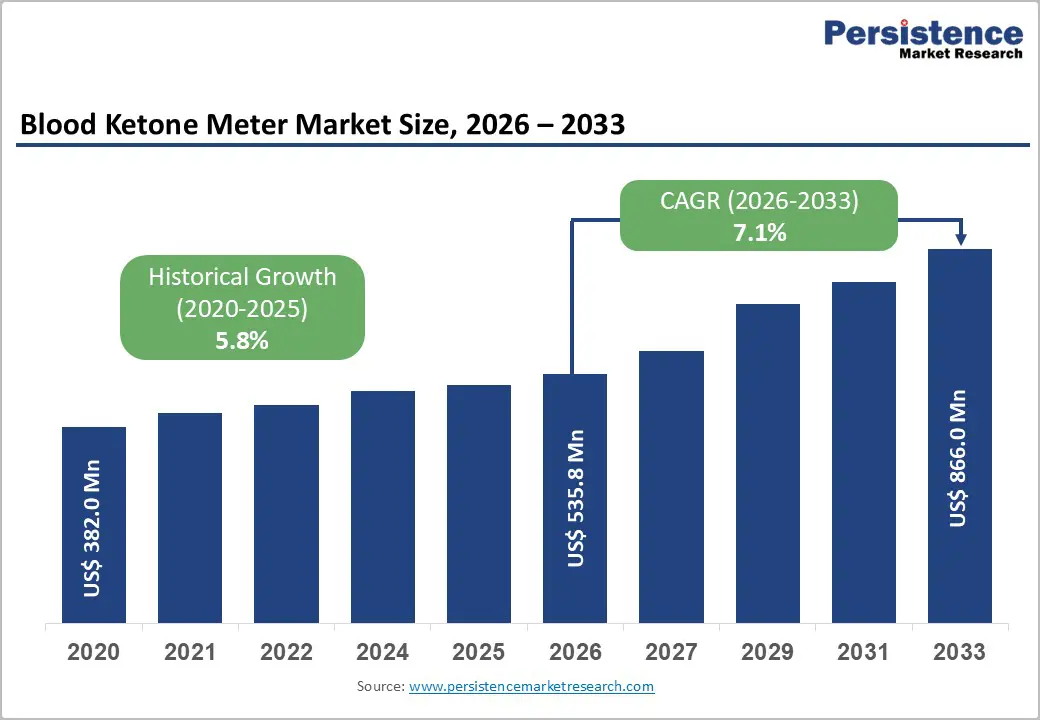
The global blood ketone meter market size is expected to be valued at US$ 535.8 million in 2026 and projected to reach US$ 866.0 million by 2033, growing at a CAGR of 7.1% between 2026 and 2033.
A blood ketone meter is a device used to quantify the concentration of ketones in the bloodstream. This monitoring meter is the most precise method to assess ketones. Blood glucose meters can measure blood ketone levels in addition to glucose levels. The market for blood ketone meters is primarily driven by the increasing prevalence of diabetes and the growing awareness of the importance of ketone monitoring among diabetic patients.
The ketone meter technology is a broader application. Modern blood ketone meters offer fast, accurate readings and often come integrated with digital health platforms, enabling better data tracking and sharing with healthcare providers. Glucose serves as a primary source of energy for the body. Ketones can be detected in blood or urine.
The primary purpose of conducting a blood test to measure ketone levels is to detect the presence of diabetic ketoacidosis (DKA) in individuals with diabetes. Ketoacidosis can occur when there is excessive ketone production, leading to an acidic blood pH. Diabetes ketoacidosis (DKA) is a severe outcome of type 1 diabetes that occurs less frequently in type 2 diabetes. Therefore, individuals with diabetes must monitor their ketone levels.
Key Industry Highlights:
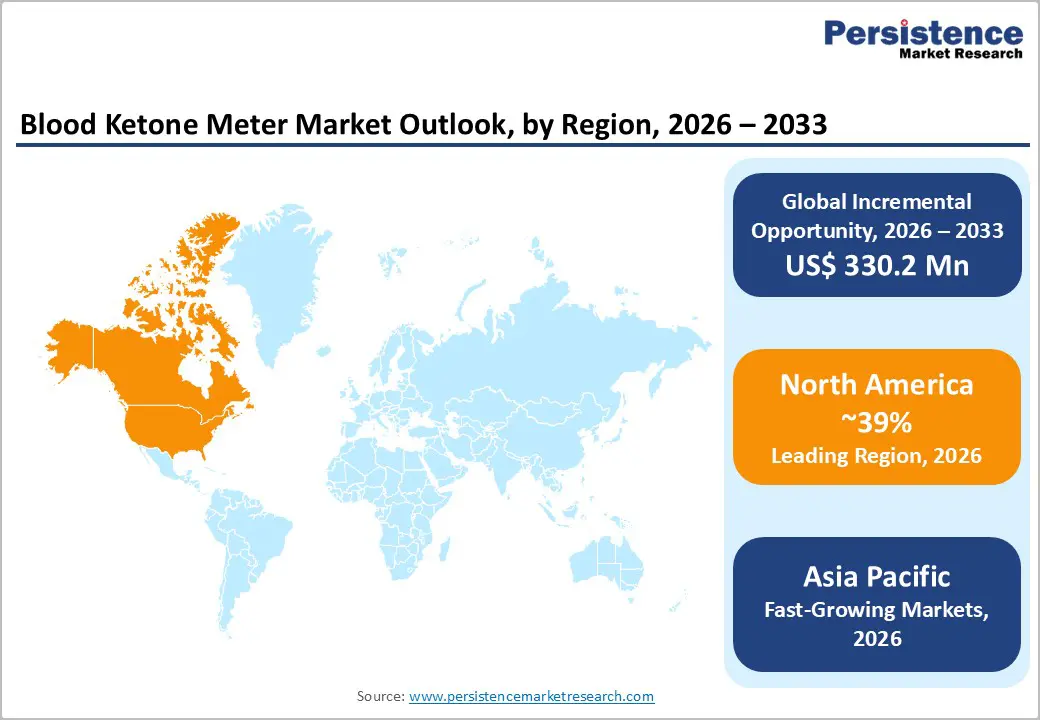
- Leading Region: North America leads the global market, supported by high diabetes prevalence, strong reimbursement systems, and widespread home-monitoring adoption.
- Fastest Growing Region: Asia Pacific is the fastest-growing region, driven by rising diabetes incidence, expanding middle-class populations, and improving healthcare access.
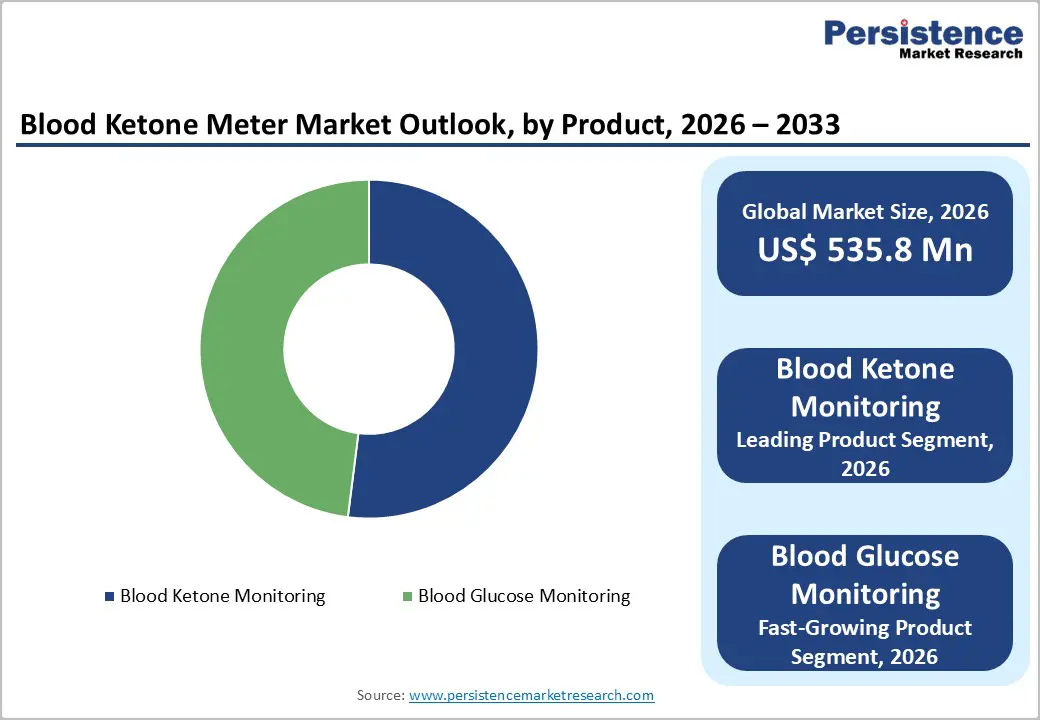
- Dominant Segment: Blood ketone monitoring devices dominate due to clinical use in DKA detection, ketogenic dieting, and metabolic disorder management.
- Fastest Growing Segment: Blood glucose monitoring grows fastest, driven by dual-function devices, convenience, diabetes management demand, and affordability globally.
| Key Insights | Details |
|---|---|
|
Blood Ketone Meter Market Size (2026E) |
US$ 535.8 million |
|
Market Value Forecast (2033F) |
US$ 866.0 million |
|
Projected Growth CAGR (2026-2033) |
7.1% |
|
Historical Market Growth (2020-2025) |
5.8% |
Market Dynamics
Driver – Rising Prevalence of Diabetes and Metabolic Disorders
The increasing incidence of diabetes and other metabolic disorders is a primary driver for the market for blood ketone. With diabetes becoming a global health concern, there is a heightened need for practical monitoring tools to manage the disease and prevent complications such as diabetic ketoacidosis (DKA). Blood ketone meters provide an essential function, allowing patients to track their ketone levels accurately.
As healthcare providers emphasize the importance of regular ketone monitoring in diabetic care, the demand for reliable and easy-to-use blood ketone meters is expected to grow. This trend is particularly significant in regions with high diabetes prevalence, such as North America, Europe, and parts of Asia, where the adoption of advanced medical devices is supported by robust healthcare infrastructure.
Growing Popularity of Ketogenic Diets
The rising popularity of ketogenic and low-carbohydrate diets for weight loss and health improvement is another crucial driver for the blood ketone meter market. These diets aim to induce a state of ketosis, where the body burns fat for energy instead of carbohydrates, leading to increased ketone production. Individuals following such diets use blood ketone meters to monitor their ketone levels and ensure they are in the desired state of ketosis. The health and fitness community's growing interest in ketogenic diets has fuelled the demand for these devices.
The proliferation of online resources, social media, and wellness influencers promoting ketogenic diets has significantly raised awareness about the benefits of ketone monitoring, further driving market growth.
Technological Advancements and Integration with Digital Health
Technological advancements in blood ketone meters are significantly enhancing their appeal and usability. Modern devices are becoming more accurate, user-friendly, and capable of providing rapid results. Integration with digital health platforms, such as smartphone apps and wearable devices, allows for seamless tracking and analysis of ketone levels over time. This integration offers users a comprehensive view of their health data, facilitating better health management and personalized care.
Advancements in sensor technology and non-invasive testing methods are making ketone monitoring more accessible and less cumbersome. As the digital health ecosystem expands, the synergy between blood ketone meters and other health monitoring tools is expected to drive market growth.
Restraints – High Cost of Advanced Meters
The high cost of advanced blood ketone meters significantly restrains market growth. While technological advancements have improved the accuracy and functionality of these devices, they have also increased their price. Cost barrier can be prohibitive, particularly for individuals in lower-income regions or those without adequate health insurance coverage. The high upfront expense and the ongoing cost of consumables, such as test strips, can deter potential users from adopting these devices. The financial burden limits widespread adoption, especially in developing countries where healthcare budgets are constrained despite the clear benefits of regular ketone monitoring.
Competition from Alternative Ketone Measurement Methods
Competition from alternative ketone measurement methods, such as breath analysers and urine test strips poses a challenge to the blood ketone meter market. These alternatives are often more affordable and less invasive, appealing to users looking for cost-effective and convenient ways to monitor ketone levels. The less invasive nature of breath and urine tests makes them attractive options for routine monitoring while blood ketone meters provide the most accurate readings.
The availability and increasing accuracy of these alternative methods can divert potential customers away from blood ketone meters, impacting their market share and growth potential. The preference for alternatives could restrain the expansion of the market for blood ketone meter as consumers weigh the benefits of accuracy against cost and convenience.
Opportunity – Expansion into Emerging Markets
Expanding into emerging markets represents a significant opportunity for the blood ketone meter market. Countries like Asia Pacific, Latin America, and Africa are experiencing rapid economic growth, leading to improved healthcare infrastructure and greater disposable incomes. There is an increasing focus on addressing the rising prevalence of chronic diseases, including diabetes, which is becoming a primary health concern due to lifestyle changes and urbanization. Emerging markets present a vast, untapped customer base with growing awareness of the importance of health monitoring.
Governments and healthcare organizations in these regions are implementing initiatives to improve diabetes management and promote the use of advanced medical devices. These initiatives create a favourable environment for introducing and adopting blood ketone meters. Multinational companies are increasingly investing in these markets, establishing local manufacturing facilities, and partnering with regional distributors to enhance accessibility and affordability.
The opportunity in emerging markets is further bolstered by educational campaigns and community outreach programs to increase awareness about diabetes and the benefits of regular ketone monitoring. These efforts can help overcome barriers related to a lack of understanding and cultural resistance, making blood ketone meters more acceptable to the local population.
The demand for practical diabetes management tools like blood ketone meters is expected to rise significantly as emerging markets continue to develop and prioritize healthcare. Companies that strategically position themselves in these markets and focus on affordability, education, and local partnerships are likely to experience substantial growth.
Category-wise Analysis
By Product Insights
The blood ketone meter market is segmented into blood ketone monitoring and blood glucose monitoring devices, with blood ketone monitoring accounting for the larger revenue share, estimated at about 52% in 2026. This dominance reflects growing clinical and consumer emphasis on directly measuring ketone bodies for metabolic assessment rather than inferring ketosis indirectly through glucose trends. Blood ketone monitoring is widely used in diabetes management to detect early signs of diabetic ketoacidosis, particularly among insulin-dependent patients.
Adoption has also increased among athletes and fitness-focused consumers seeking to optimize endurance and fat metabolism, as well as individuals following ketogenic or low-carbohydrate diets. Continuous improvements in sensor accuracy, strip stability, and faster testing times have enhanced reliability and user confidence. Manufacturers are also integrating Bluetooth connectivity and mobile applications, allowing users to track trends over time and share data with clinicians. These factors collectively sustain strong demand for dedicated blood ketone monitoring products across clinical, homecare, and wellness settings.
By Application Insights
By application, the blood ketone meter market is categorized into human and veterinary uses, with human applications representing most of the demand. In clinical practice, these devices are essential for monitoring metabolic status in people with diabetes, critically ill patients, and individuals at risk of ketoacidosis, enabling rapid intervention when abnormal ketone levels are detected. Outside hospitals, consumers increasingly rely on blood ketone meters to guide dietary and weight-management programs, particularly when following ketogenic or low-carbohydrate regimens.
Real-time readings allow users to adjust meal composition, fasting routines, and physical activity to maintain targeted ketosis ranges. The convenience of portable meters and disposable test strips has expanded adoption in home settings, while growing awareness campaigns around metabolic health further support uptake. Healthcare professionals also value these devices for outpatient monitoring and telehealth consultations, where accurate self-testing data improves clinical decision-making. Veterinary use remains smaller but steady, mainly for livestock and companion animals, reinforcing the predominance of human-focused applications in overall market revenues.
Region-wise Insights
North America Blood Ketone Meter Market Trends
North America holds a leading share in the blood ketone meter market, driven by widespread adoption across the U.S. and Canada and supported by sophisticated healthcare infrastructure. Substantial government healthcare spending, strong reimbursement frameworks, and early uptake of advanced monitoring technologies continue to stimulate demand. Rising awareness of metabolic health and diabetic ketoacidosis management has accelerated routine ketone testing among insulin-dependent patients, while growing interest in ketogenic diets and preventive care has expanded consumer usage. Hospitals, outpatient clinics, and home-care settings increasingly rely on accurate point-of-care devices, strengthening regional sales volumes.
The region is also marked by frequent mergers, partnerships, and acquisitions among established manufacturers and digital-health firms, aimed at broadening product portfolios and geographic reach. Regulatory clarity and well-defined approval pathways encourage innovation, enabling companies to launch connected meters, dual glucose-ketone systems, and faster-reading test strips. These developments, combined with a large diagnosed diabetic population and strong clinician adoption, are expected to sustain North America’s dominance throughout the forecast period.
Asia Pacific Blood Ketone Meter Market Trends
Asia Pacific represents one of the fastest-expanding markets for blood ketone meters, primarily due to the rapidly increasing prevalence of diabetes across countries such as China, India, Japan, and Southeast Asian nations. Urbanization, sedentary lifestyles, changing dietary patterns, and rising obesity levels have contributed to growing metabolic disorders, encouraging routine ketone monitoring among at-risk populations. Expanding middle-class incomes and heightened health awareness further support consumer adoption, particularly for home-testing devices used in dietary management and chronic-disease control.
Healthcare access is steadily improving across the region through public hospital upgrades, pharmacy-based distribution, and private diagnostic networks, making monitoring devices more readily available. Government-backed screening programs and digital-health initiatives also promote earlier detection and continuous monitoring of metabolic conditions. Manufacturers are strengthening local manufacturing, distribution partnerships, and pricing strategies to penetrate cost-sensitive markets, while introducing portable and app-enabled meters to attract tech-savvy users. Together, demographic pressures, healthcare investments, and broader retail availability position the Asia Pacific as a major growth engine for the blood ketone meter market.
Competitive Landscape
The blood ketone meter market is characterized by moderate competition, with companies evaluated on product portfolios, financial performance, recent developments, geographic presence, and overall market positioning. Leading players emphasize innovation in dual glucose-ketone devices, strip accuracy, digital connectivity, and ease of use to differentiate offerings. Strategic collaborations with hospitals, diabetes clinics, and digital-health platforms are increasingly common. Market participants also pursue mergers, acquisitions, and regional expansion to broaden distribution networks and enter emerging economies. Investments in regulatory approvals, manufacturing scale-up, and e-commerce channels further strengthen competitiveness, enabling companies to capture growing demand from home-care users, wellness consumers, and acute-care settings worldwide.
Key Industry Developments:
- In February 2023, Assure Tech, a biotechnology firm, announced advanced research, development, production, and distribution of diagnostic reagents, point-of-care testing, and biological materials and introduced a new platform that offers complete health solutions for dogs.
- In October 2023, Insulet Corporation, a pioneering medical device company, announced its acquisition of the assets of Automated Glucose Control LLC (AGC), based in Palo Alto, California, that specializes in developing and commercializing top-tier automated insulin delivery technology.
Companies Covered in Blood Ketone Meter Market
- Abbott
- APEX Biotechnology Corporation
- TaiDoc Technology Corporation
- EKF Diagnostics Holdings plc
- Nova Biomedical
- KETO-MOJO
- ACON Laboratories Inc.
- Care Touch LLC
- ForaCare Inc.
- GlucoRx Ltd.
- Nipro
- Trividia Health, Inc
- Others
Frequently Asked Questions
The blood ketone meter market is estimated to be valued at US$ 535.8 Mn in 2026.
Rising diabetes prevalence, keto dieting popularity, home testing demand, DKA awareness, technological advances globally.
The global market is expected to witness a CAGR of 7.1% between 2026 and 2033.
Emerging markets growth, integrated meters, digital apps, subscriptions, telehealth partnerships, wellness adoption, pricing innovation.
North America is the leading region in the global blood ketone meter market.


