




- Medical Devices
- Heel Pressure Injury Relieving Devices Market
Heel Pressure Injury Relieving Devices Market Size, Share, Growth, and Regional Forecast, 2026 - 2033
Heel Pressure Injury Relieving Devices Market by Product (Heel Cushions, Heel Cups, Heel Elevators, and Heel Protectors), by Material (Foam, Gel, Rubber, and Silicone) Distribution Channel (Hospital Pharmacies, Retail Pharmacies, and Online Pharmacies), and Regional Analysis from 2026 - 2033

Heel Pressure Injury Relieving Devices Market Share and Trends Analysis
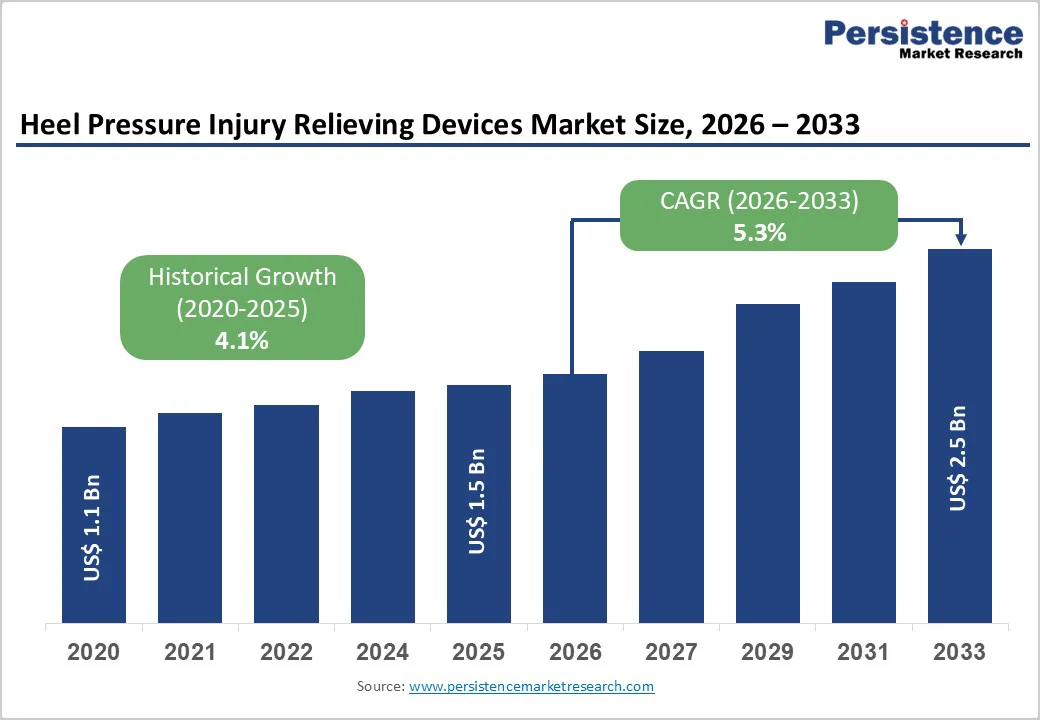
The global heel pressure injury relieving devices market size is estimated to grow from US$ 1.5 billion in 2026 to US$ 2.5 billion by 2033, growing at a CAGR of 5.3% during the forecast period from 2026 to 2033. Global demand for heel pressure injury-relieving devices is accelerating as hospitals, long-term care centers, and home-care providers increasingly prioritize early prevention of pressure ulcers.
Rising cases of diabetes, immobility, peripheral neuropathy, and geriatric frailty are driving the adoption of cushioning supports, offloading systems, and repositioning aids. Growing awareness of pressure injury–related complications, such as infection, tissue necrosis, and extended hospital stays, is prompting healthcare facilities to invest in preventive solutions. Advances in lightweight foams, moisture-wicking fabrics, antimicrobial textile chemicals, and ergonomic immobilization designs are improving patient comfort and reducing ulcer recurrence. Additionally, the shift toward value-based care and emphasis on reducing hospital-acquired pressure injuries (HAPIs) continues to boost market growth.
Key Industry Highlights:
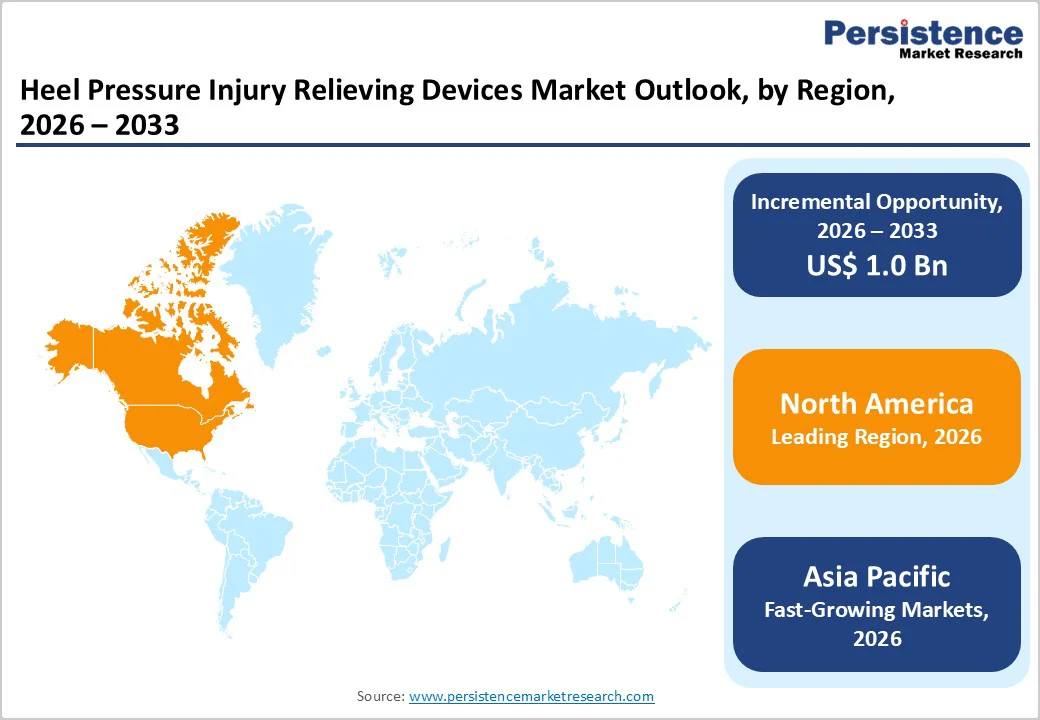
- Leading Region: North America leads with 46.8% share due to strong emphasis on HAPI prevention, established reimbursement systems, and high adoption of advanced offloading and protective devices.
- Fastest-Growing Region: Asia Pacific grows fastest owing to expanding elderly populations, rising hospitalization rates, and increased investments in long-term care infrastructure.
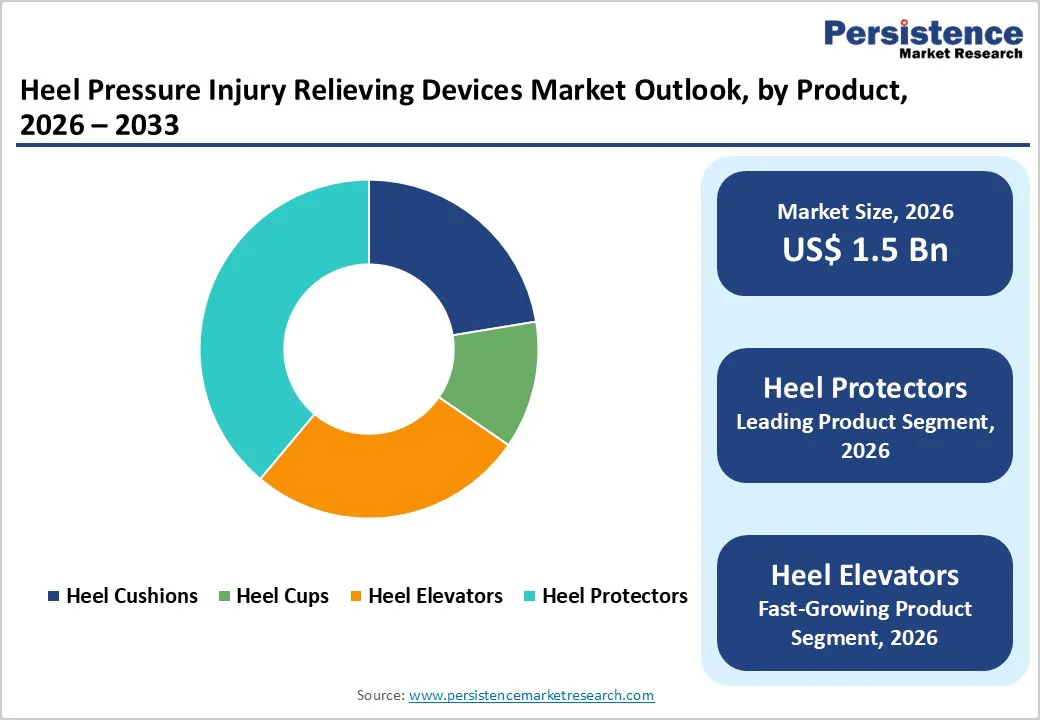
- Leading Product Segment: Heel protectors dominate, driven by extensive use in bedridden, elderly, and post-operative patients for effective offloading and pressure redistribution.
- Fastest-Growing Product Segment: Heel elevators are expanding rapidly as demand rises for devices that completely lift the heel off the bed surface, reducing tissue stress and improving microcirculation.
- Leading Material Segment: Foam leads due to its affordability, breathability, and widespread use in both acute and long-term care settings. Its ability to evenly distribute pressure while minimizing heat and moisture buildup makes it a preferred choice for preventing breakdown of the skin on the heel.
- Fastest-Growing Material Segment: Gel-based devices grow fastest as patients and clinicians seek enhanced cushioning, temperature regulation, and improved pressure distribution. Their superior ability to conform to heel contours and reduce shear forces is accelerating adoption across hospitals and home care settings.
| Key Insights | Details |
|---|---|
|
Heel Pressure Injury Relieving Devices Market Size (2026E) |
US$ 1.5 Bn |
|
Market Value Forecast (2033F) |
US$ 2.5 Bn |
|
Projected Growth (CAGR 2026 to 2033) |
5.3% |
|
Historical Market Growth (CAGR 2020 to 2025) |
4.1% |
Market Dynamics
Driver - Rising Prevalence of Pressure Ulcers & Chronic Diseases and Advancements in Offloading Materials & Ergonomic Designs
The growing burden of pressure ulcers, particularly heel injuries, remains a major driver of demand for advanced offloading and protective devices. The rising global incidence of diabetes, peripheral vascular disease, neuropathy, obesity, and prolonged immobility is significantly increasing the risk of heel tissue breakdown. For instance, according to the Agency for Healthcare Research and Quality (AHRQ), over 2.5 million people in the United States develop pressure ulcers each year. These injuries not only cause significant pain and discomfort but also increase the risk of severe infections and substantially elevate healthcare utilization and treatment costs.
Hospitalized patients, ICU admissions, long-term bedridden individuals, and aging populations are particularly vulnerable to heel pressure injuries due to reduced mobility, compromised blood circulation, and impaired wound-healing capacity. Healthcare facilities worldwide are adopting stronger preventive protocols because heel ulcers often progress rapidly, leading to infection, extended hospital stays, and higher treatment costs. As clinical guidelines increasingly emphasize early offloading and pressure redistribution, the adoption of heel pads, cushions, protectors, and elevation systems continues to accelerate across hospitals, home-care settings, and rehabilitation centers.
Continuous advancements in materials and product engineering are significantly improving the performance and usability of heel pressure injury-relieving devices. Modern solutions incorporate viscoelastic foams, gel-filled chambers, air-cell technologies, silicone-based supports, and moisture-wicking fabrics that enhance pressure redistribution, reduce shear, and improve skin microclimate. Ergonomic designs with anatomical contouring ensure proper heel suspension, minimize foot rotation, and improve comfort during prolonged use. Manufacturers are also introducing lightweight, adjustable, and infection-resistant models that will enhance patient compliance and ease of caregiver handling. These innovations are expanding device adoption in acute care, long-term care, and home care environments, thereby strengthening overall market growth.
Restraints - Limited Awareness & Lack of Standardized Preventive Guidelines across Healthcare Facilities
A major restraint in the heel pressure injury relieving devices market is the persistent gap in awareness and standardized clinical practices, particularly across low- and middle-income countries. In many regions, frontline caregivers, nursing staff, and home-care attendants receive limited formal training on early identification of heel pressure risks, proper patient repositioning, or the use of offloading devices. This results in inconsistent prevention practices and delays in intervention, allowing heel injuries to progress to advanced stages. Even within hospitals, variability in clinical protocols and the absence of universally accepted guidelines for device selection, heel assessment frequency, and offloading techniques lead to uneven adoption of premium or technologically advanced protective solutions. Some facilities rely heavily on traditional cushioning methods, while others incorporate sophisticated offloading boots or pressure-sensing systems, creating a wide disparity in patient outcomes. Budget limitations, staff shortages, and high patient loads further hinder consistent protocol implementation in developing regions.
The lack of harmonized standards also affects procurement decisions, as hospital administrators often prioritize cost over evidence-based solutions. Together, these factors limit market growth by slowing the integration of advanced materials, reducing device utilization rates, and weakening pressure injury prevention pathways across global healthcare systems.
Opportunity - Growing Adoption of Smart Offloading Technologies, Home-Based Care Solutions, and Investments in Long-Term Care Infrastructure
The heel pressure injury relieving devices market is boosting significantly from the rising integration of smart technologies and the shift toward home-centric patient management. Modern offloading solutions increasingly incorporate pressure-sensing wearables, automated alert systems, and real-time monitoring platforms that enable clinicians and caregivers to track heel pressure levels, repositioning frequency, and early signs of tissue stress. These innovations not only help prevent ulcer formation but also support data-driven decision-making, making them highly attractive for premium healthcare providers.
Moreover, global preference for home-based care is surging, especially among elderly, bedbound, diabetic, and post-surgical patients who require continuous heel protection but prefer recovery outside hospital settings. User-friendly heel protectors, cushions, and elevation devices designed for daily use are witnessing rapid adoption due to their simplicity, affordability, and comfort. Additionally, rising investments in long-term care facilities, rehabilitation centers, and assisted living homes are strengthening market demand, as these institutions increasingly prioritize pressure injury prevention to reduce complications, treatment costs, and legal liabilities. This combined momentum from smart device advancements to expanding care infrastructure is creating strong opportunities for manufacturers to introduce personalized, connected, and scalable offloading solutions worldwide.
Category-wise Analysis
By Product, Heel Protectors Dominate Globally Due to High Demand for Effective Offloading and Comprehensive Heel Ulcer Prevention
Heel protectors are expected to account for a 38.9% revenue share in 2026, making them the leading product category in the global heel pressure injury relieving devices market. Their dominance stems from increasing adoption in hospitals, long-term care facilities, and home care settings to prevent heel ulcers among bedridden, postoperative, and geriatric patients. Modern heel protectors feature enhanced cushioning, breathable fabrics, moisture-wicking materials, and ergonomic wrap-around designs that offer complete offloading and comfort during prolonged immobility.
Rising HAPI incidence, coupled with strict clinical guidelines mandating routine heel offloading for high-risk patients, is significantly boosting demand. Manufacturers are integrating lightweight foam-gel composites, antimicrobial coatings, and adjustable strapping systems to reduce shear forces and maintain proper positioning. Growing awareness among nurses and wound-care specialists about early heel protection, along with expanding adoption of dynamic offloading boots and sensor-enabled heel devices, continues to boost market growth.
By Material, Foam Leads the Market Globally Due to Superior Cushioning, Cost-Effectiveness, and Wide Clinical Acceptance
The foam segment is projected to hold a 45.8% share of the heel pressure injury relieving devices market in 2026, driven by its versatility, comfort, and suitability for high-risk immobile patients. Foam-based heel protectors and cushions offer excellent pressure redistribution, lightweight construction, and affordability, making them widely adopted across hospitals, nursing homes, and home-care environments. High-density medical foam materials effectively minimize heel loading, reduce shear stress, and maintain consistent support during extended bed rest.
Advancements in memory foam formulations, ventilated structures, and multi-layered cushioning systems are improving durability and moisture control, reducing the likelihood of skin breakdown. Foam materials are also preferred in disposable and infection-control-focused products due to their ease of manufacturing and cost-efficient scaling. As healthcare systems prioritize early pressure-injury prevention and adopt standardized offloading protocols, foam-based devices continue to gain traction over silicone, gel, and rubber alternatives, strengthening their global market growth.
By Distribution Channel, Hospital Pharmacies Dominate Globally Due to High Utilization in Acute Care and Early Intervention Protocols
Hospital pharmacies are projected to command a 54.6% revenue share in 2026, making them the dominant distribution channel in the heel pressure injury relieving devices market. This leadership is driven by the high demand for heel cushions, protectors, and offloading boots in acute-care, ICU, surgical, and long-term hospital units where immobility and pressure-injury risks are highest. Hospitals follow strict prevention guidelines that mandate routine heel offloading, creating consistent demand through procurement cycles.
The availability of specialized wound-care teams, early risk-assessment tools, and standardized care pathways ensures rapid device adoption at the point of treatment. Hospital pharmacies also maintain strong purchasing agreements with leading manufacturers, enabling streamlined access to premium products with advanced cushioning, antimicrobial fabrics, and moisture-control technologies. As healthcare systems expand critical-care capacity and focus on reducing HAPI-related penalties, hospital pharmacies remain the primary channel for high-quality heel pressure relief solutions.
Region-wise Insights
North America Heel Pressure Injury Relieving Devices Market Trends
North America is expected to dominate the global market with a 46.8% share in 2026, driven by a high burden of hospital-acquired pressure injuries (HAPIs), a large geriatric population, and significant rates of diabetes and mobility impairment. The U.S. leads the region due to strong adoption of preventive care standards, mandatory pressure-injury reporting systems, and the presence of wound-care specialists across hospitals and long-term care facilities. Rising emphasis on early risk assessment and compliance with CMS guidelines is driving demand for advanced heel offloading boots, gel cushions, and protective heel pods.
Technological advancements such as smart pressure-sensing wearables, moisture-management textiles, and breathable offloading materials are improving prevention outcomes. Major manufacturers are strengthening partnerships with hospitals, home-health agencies, and VA facilities to expand product penetration. Increasing preference for lightweight, non-restrictive offloading devices and growing investment in pressure-mapping technologies continue to boost the market growth across the region.
Europe Heel Pressure Injury Relieving Devices Market Trends
Europe is experiencing steady growth driven by an expanding elderly population, a high incidence of chronic wounds, and an increased focus on standardized pressure injury prevention protocols in hospitals and nursing homes. Countries such as Germany, France, the UK, and the Netherlands are prioritizing early intervention programs that incorporate heel protectors, pressure-relief boots, and dynamic cushioning devices to reduce ulcer progression. Strong reimbursement frameworks and well-established clinical guidelines issued by wound-care associations support the adoption of high-quality heel offloading solutions.
Innovation is accelerating as manufacturers introduce advanced foam technologies, antimicrobial fabrics, and ergonomic designs to improve patient comfort during prolonged immobility. Growing emphasis on home-care and palliative care services is further increasing the use of portable heel protection devices. Cross-border collaborations, expanding clinical education programs for nurses, and rising investment in preventive healthcare infrastructure are enabling greater access to premium heel-pressure–relieving products across Europe.
Asia Pacific Heel Pressure Injury Relieving Devices Market Trends
Asia Pacific is projected to achieve a fast-paced growth, supported by rising cases of diabetes, vascular diseases, and mobility limitations among the elderly, major contributors to heel ulcer risk. Increasing hospital admissions, expanding critical-care units, and greater recognition of pressure injuries as a major clinical and financial burden are accelerating the adoption of heel protectors, gel-based cushions, and offloading boots. Countries including Japan, China, India, and Australia are implementing structured wound-care training programs that emphasize early heel protection in high-risk patients.
Improved healthcare infrastructure, growing private hospital investments, and the rapid expansion of home-health services are enabling broader access to preventive devices. Manufacturers are introducing cost-efficient foam and silicone heel protectors tailored for price-sensitive markets, while premium products featuring smart pressure-redistribution materials are gaining traction in developed APAC economies. Rising awareness, increasing insurance coverage, and strong government focus on chronic wound management are positioning the Asia Pacific as a key growth hub for heel pressure injury relieving devices.
Competitive Landscape
The global heel pressure injury relieving devices market is moderately competitive, with key players including Stryker, EHOB, DeRoyal Industries, Inc., DermaSaverPro, Mölnlycke AB, Medline Industries, LP. These companies compete through extensive wound-care portfolios, strong relationships with hospitals and long-term care facilities, and continuous advancements in heel offloading, pressure redistribution, and protective cushioning technologies. Competition is strengthening as manufacturers prioritize improved ergonomics, advanced foam and gel materials, and breathable, moisture-wicking designs tailored for high-risk immobile patients.
Leading players are increasingly investing in next-generation prevention technologies such as sensor-integrated offloading boots, smart pressure-monitoring systems, and adaptive cushioning devices to enhance early detection and reduce hospital-acquired pressure injuries (HAPIs). Strategic focus areas include expanding product accessibility in emerging markets across Asia-Pacific, strengthening partnerships with nursing teams and wound-care specialists, and broadening direct-to-home-care distribution channels.
Key Industry Developments:
- In October 2025, scientists at the National Institute of Technology (NIT) Rourkela developed a low-cost indigenous force-plate system capable of analyzing heel-pad mechanics during walking. Their study showed significantly higher heel-pad stiffness in overweight and obese individuals, a key risk factor for heel pain and pressure-related injuries. The device, now being commercialized through the startup KineUtkal, aims to make gait profiling and foot-health assessment more affordable and accessible across clinical and rehabilitation settings.
- In March 2025, Recovery Force Health (RF Health) announced the acquisition of HeelP.O.D. from NelDerm. This strategic product integration strengthens RF Health’s portfolio in pressure injury prevention and reinforces its focus on addressing the two most common causes of hospital-acquired pressure injuries (HAPIs).
Companies Covered in Heel Pressure Injury Relieving Devices Market
- Stryker
- EHOB
- DeRoyal Industries, Inc.
- DermaSaverPro
- Mölnlycke AB
- Medline Industries, LP
- Owens & Minor, Inc.
- TIDI Products, LLC.
- Maxxcare
- Skil-Care Corporation
- Sumed International (UK) Ltd
- STERIS
- Distrauma Medical,S.L
- Pelican Manufacturing
- Others
Frequently Asked Questions
The global heel pressure injury relieving devices market is projected to be valued at US$ 1.5 Bn in 2026.
Rising prevalence of pressure injuries, growing elderly and immobile patient populations, and increasing adoption of preventive care protocols in hospitals are driving the global heel pressure injury relieving devices market.
The global heel pressure injury relieving devices market is poised to witness a CAGR of 5.3% between 2026 and 2033.
Growing demand for home-care solutions, development of advanced gel/air-offloading materials, and rising e-commerce penetration are creating opportunities in the market.
Stryker, EHOB, DeRoyal Industries, Inc., DermaSaverPro, Mölnlycke AB, Medline Industries, LP are some of the key players in the heel pressure injury relieving devices market.


