




- Food Ingredients & Additives
- Bakery Toppings Market
Bakery Toppings Market Size, Share, Growth, and Regional Forecast, 2026 to 2033
Bakery Toppings Market by Category (Icing, Frosting, Glazing), Route of Administration (Oral, Parental, Topical), Service, Distribution Channel, and Regional Analysis from 2026 to 2033

Bakery Toppings Market Share and Trends Analysis
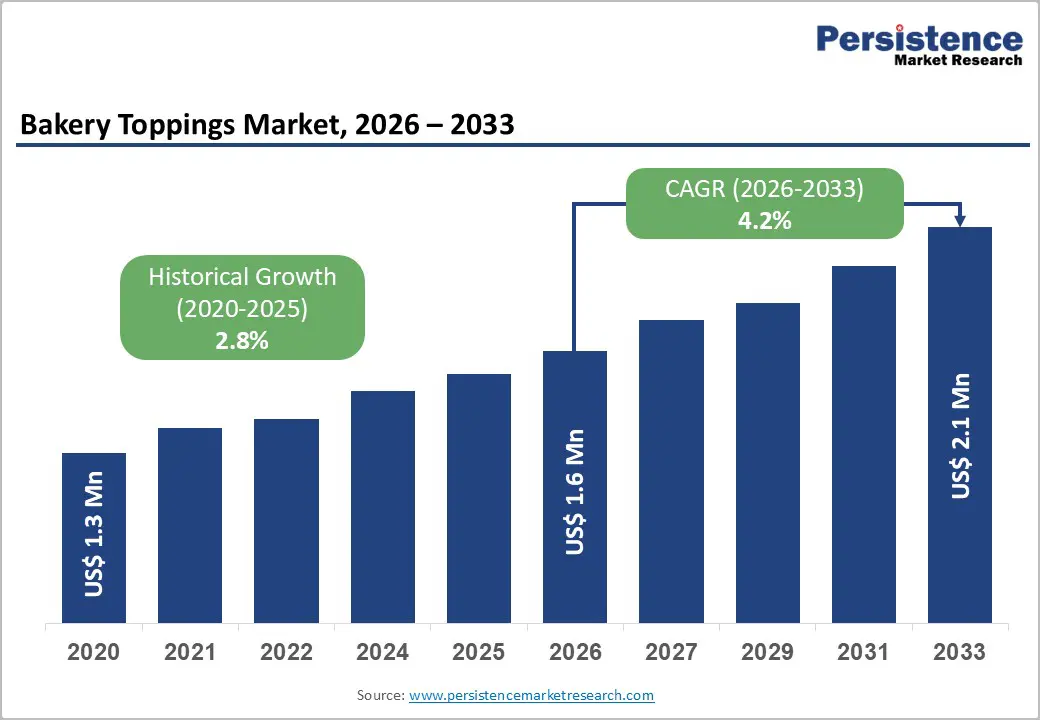
The global bakery toppings market size is likely to be valued at US$1.6 billion in 2026 to US$2.1 billion by 2033 growing at a CAGR of 4.2% during the forecast period from 2026 to 2033.
The market is growing steadily due to rising demand for visually appealing and flavorful baked products. Toppings such as chocolate chips, nuts, fruits, and decorative sprinkles are widely used to enhance taste, texture, and product differentiation. Increasing consumption of cakes, pastries, cookies, and specialty desserts, along with the expansion of artisanal and home baking trends, is supporting market growth. Innovation in premium, clean-label, and natural toppings is gaining traction as consumers seek healthier and indulgent options. Additionally, the growth of café culture, quick-service bakeries, and online baking ingredient sales is further accelerating market expansion across both developed and emerging regions.
Key Industry Highlights
- Rising demand for visually attractive baked goods is driving strong adoption of decorative and flavored bakery toppings globally.
- Chocolate-based toppings remain the most preferred due to universal taste appeal and wide usage across cakes, pastries, and cookies.
- Growth of artisanal bakeries is increasing demand for premium, customized, and high-quality toppings with unique textures and flavors.
- Home baking trends, supported by social media influence, are significantly boosting retail sales of bakery toppings worldwide.
- Clean-label and natural ingredient toppings are gaining popularity as consumers prioritize health, transparency, and ingredient simplicity.
- Fruits and nut-based toppings are witnessing rising demand due to their perceived nutritional value and premium positioning.
| Key Insights | Details |
|---|---|
| Bakery Toppings Market Size (2026E) | US$1.6 Bn |
| Market Value Forecast (2033F) | US$2.1 Bn |
| Projected Growth (CAGR 2026 to 2033) | 4.2% |
| Historical Market Growth (CAGR 2020 to 2025) | 2.8% |
Market Dynamics
Driver - Rise of “Instagram-ready” baked goods
The rapid rise of “Instagram-ready” baked goods has emerged as a powerful driver for the bakery toppings market, as visual appeal increasingly influences consumer purchasing behavior. In the age of social media, especially platforms such as Instagram, Pinterest, and short-video apps, baked products are no longer judged solely on taste; their appearance plays an equally critical role. Consumers are drawn to vibrant colors, glossy finishes, layered textures, and intricate designs that photograph well and stand out in crowded digital feeds. This trend has encouraged bakeries to invest heavily in decorative toppings such as colorful sprinkles, chocolate shards, fruit glazes, edible flowers, metallic drizzles, and textured nut or seed blends that enhance the visual impact of cakes, pastries, donuts, and cupcakes.
Artisanal bakeries, in particular, use premium toppings to create signature products that reinforce brand identity and storytelling online. Meanwhile, commercial bakeries and café chains increasingly adopt visually striking toppings to drive impulse purchases and social sharing at scale. Limited-edition and themed bakery items-often designed specifically for festivals, collaborations, or viral trends-further accelerate demand for innovative toppings with unique shapes, finishes, and color profiles. Importantly, visually appealing toppings also support higher price realization, as consumers associate attractive presentation with premium quality and craftsmanship. As social media continues to shape food discovery and consumption habits, the demand for eye-catching, photo-friendly bakery toppings is expected to remain a key growth catalyst, pushing manufacturers to continuously innovate in aesthetics, texture, and application performance.
Restraints - Competition from Ready-to-Eat Snacks
The rising popularity of ready-to-eat (RTE) snacks is emerging as a significant restraint for the bakery toppings market. Modern consumers, driven by fast-paced lifestyles and convenience-oriented habits, are increasingly turning to packaged snack options such as chips, cookies, granola bars, and instant desserts. These products are often available at competitive prices, require no preparation, and offer extended shelf life, making them an attractive alternative to freshly baked goods. As a result, the frequency of visits to bakeries or the purchase of bakery items with premium toppings is declining in several regions. This shift in consumer preference directly impacts the demand for bakery toppings, especially specialty or high-value options such as fruit preserves, flavored creams, or decorative chocolate.
Moreover, RTE snacks often incorporate pre-blended flavors or coatings, reducing the need for consumers to invest in separate toppings. The convenience factor is particularly influential among younger demographics and urban populations, who prioritize quick consumption over artisanal quality or customization. Consequently, bakery businesses face pressure to innovate and create products that can compete with the ease and accessibility of RTE snacks, which indirectly constrains the growth potential of the bakery toppings segment.
Opportunity - Exotic & Ethnic Flavors
The growing consumer appetite for unique and memorable taste experiences is driving bakery manufacturers to explore exotic and ethnic flavors in their toppings. Traditional flavors like chocolate, vanilla, and strawberry, while popular, are now being complemented-or even replaced-by international and culturally inspired options. Ingredients such as matcha from Japan, yuzu citrus from East Asia, saffron from the Middle East, and cardamom from South Asia are increasingly making their way into bakery toppings, offering both a visual appeal and a distinctive taste profile. These flavors not only provide a novel sensory experience but also allow bakeries to differentiate their products in a highly competitive market.
For instance, a matcha-infused frosting or yuzu glaze can attract health-conscious and adventurous consumers seeking sophisticated options. Similarly, saffron or cardamom sprinkles add a luxurious, aromatic dimension to cakes, pastries, and bread. This trend also aligns with the global culinary movement where consumers are more willing to experiment with international cuisines and incorporate diverse flavors into everyday indulgences. Moreover, exotic toppings can be paired with seasonal or limited-edition bakery items, creating buzz and encouraging repeat purchases. By leveraging these flavors, bakery brands can elevate their offerings, strengthen brand identity, and tap into a premium segment of the market driven by curiosity, taste exploration, and cultural appreciation.
Category-wise Analysis
By Category Insights
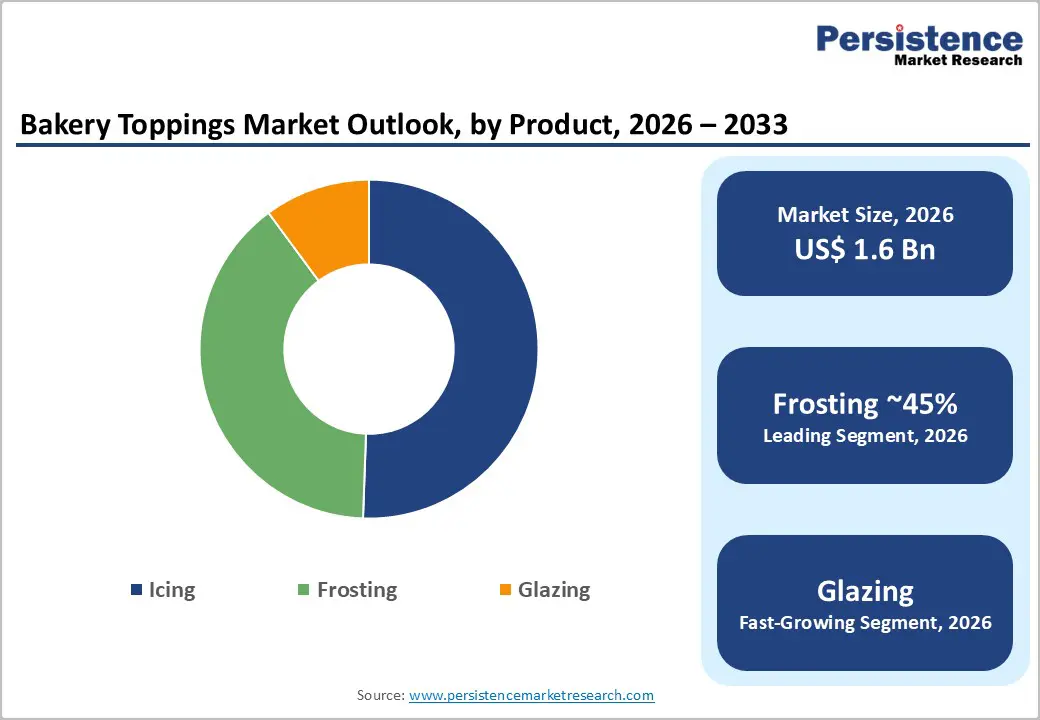
Frosting dominates primarily due to its versatility, widespread usage, and strong consumer appeal. Frosting, typically made from butter, sugar, and cream, provides a rich, creamy texture that enhances both taste and visual presentation of baked goods. Its ability to be piped into intricate shapes and designs makes it indispensable for cakes, cupcakes, and specialty pastries, catering to both home bakers and commercial bakeries. Additionally, frosting offers flexibility in flavor customization, from classic vanilla and chocolate to innovative options like matcha, coffee, or fruit-infused variants, aligning with evolving consumer preferences for unique taste experiences. In contrast, icing, while popular for smooth finishes and decorative detailing on cookies and cakes, is thinner and less versatile, which limits its overall market share. Glazing, although currently smaller in volume, is experiencing rapid growth due to the rising demand for visually appealing, glossy finishes and healthier alternatives like fruit- or honey-based glazes. Overall, frosting’s dominance is driven by its multifunctionality, ability to enhance both flavor and aesthetics, and adaptability to premium and customized bakery offerings, making it the most preferred choice in the market.
By Application Insights
The cakes and pastries account for the highest share due to their intrinsic dependence on toppings for flavor, texture, and visual appeal. These products are often the centerpiece of celebrations such as birthdays, weddings, anniversaries, and festivals, where appearance and taste are equally important. Toppings like frosting, icing, glazes, nuts, and decorative sprinkles play a crucial role in enhancing both the aesthetics and sensory experience of cakes and pastries. Their versatility allows bakers to experiment with diverse flavors, colors, and designs, catering to evolving consumer preferences for premium, customized, and indulgent bakery products.
In comparison, cookies and biscuits primarily use simpler toppings such as chocolate drizzles, icing, or sugar coatings, which are less elaborate and consume lower volumes of topping ingredients. Doughnuts, although increasingly popular in gourmet and specialty formats, generally have a smaller production scale and rely on simpler glazes and icings, limiting their share. The “Other” category, which includes muffins, bread, and regional baked goods, contributes marginally to topping consumption. Overall, cakes and pastries dominate due to their high consumption during special occasions, greater reliance on decorative and flavorful toppings, and the premium positioning of products in this segment.
Region-wise Insights
North America Bakery Toppings Trends
The bakery toppings market in North America is driven by evolving consumer preferences for premium, indulgent, and visually appealing baked goods. Frosting, icing, and glazes remain staples, with innovative flavors such as salted caramel, matcha, and exotic fruit blends gaining traction. U.S. consumers, in particular, are embracing customization and personalization, seeking bakery items with unique decorations, seasonal themes, and Instagram-worthy aesthetics. The rise of home baking, fueled by online tutorials and DIY kits, has further boosted demand for ready-to-use toppings. Health-conscious trends are also influencing product development, with sugar-reduced, plant-based, and functional toppings becoming increasingly popular.
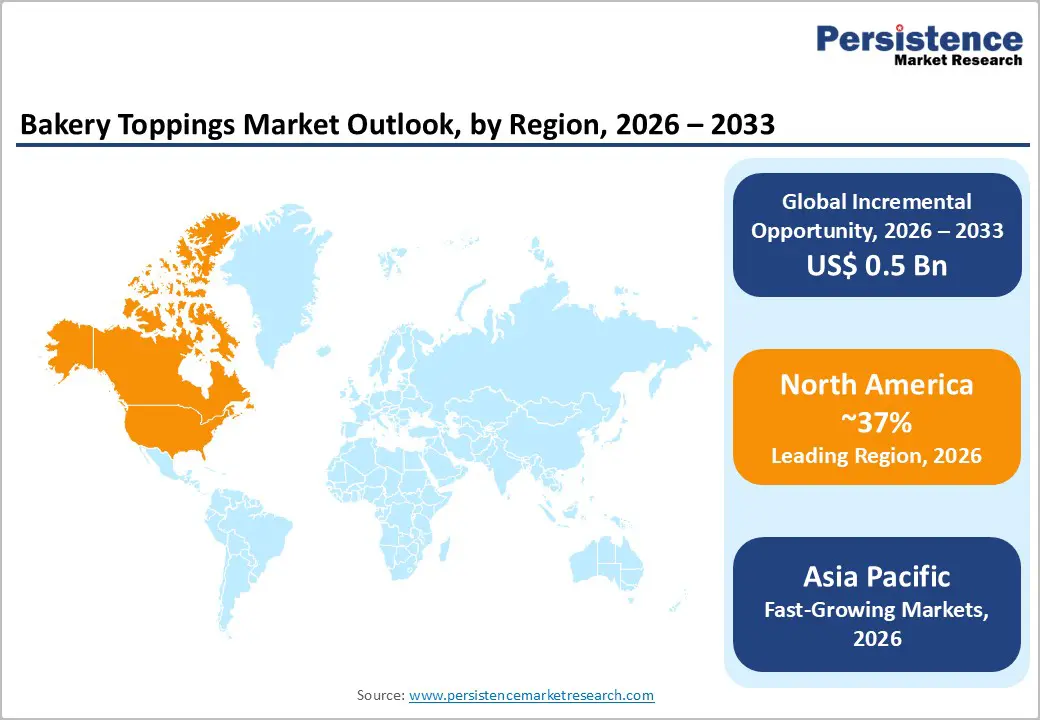
Retailers and bakeries are leveraging e-commerce and subscription models to provide convenient access to a wide variety of toppings. Additionally, collaborations with artisanal chocolate, nut, and fruit brands are creating premium offerings that cater to the U.S. market’s appetite for innovation, flavor diversity, and high-quality bakery experiences, reinforcing North America’s leadership in the global toppings market.
Asia Pacific Bakery Toppings Market Trends
The bakery industry in Asia Pacific is emerging rapidly, driven by increasing urbanization, rising disposable incomes, and growing consumer interest in Western-style baked goods. Countries like China, India, Japan, and South Korea are witnessing heightened demand for cakes, pastries, and specialty bakery products, which is fueling the adoption of diverse toppings such as frosting, glazes, nuts, and chocolate. Consumers in the region are increasingly exploring innovative and exotic flavors like matcha, yuzu, and tropical fruit blends, creating opportunities for premium and customized bakery offerings. E-commerce platforms and modern retail chains are making a wide variety of toppings more accessible, while the influence of social media and food trends is encouraging visually appealing, Instagram-worthy bakery creations. Additionally, health-conscious trends are emerging, with demand for sugar-reduced, plant-based, and clean-label toppings. The combination of rising consumption, flavor experimentation, and modernization of retail channels positions Asia Pacific as the fastest-growing region in the global bakery toppings market.
Competitive Landscape
The global bakery toppings market is highly competitive, driven by the growing demand for innovative, premium, and health-focused products. Key players focus on product diversification, introducing exotic flavors, clean-label ingredients, and functional toppings to capture niche consumer segments. Companies are leveraging R&D and collaborations to develop ready-to-use, shelf-stable, and customizable toppings for both retail and commercial bakeries. Strong branding, distribution networks, and e-commerce presence are critical for market penetration.
Key Industry Developments:
- In March 2025, The New Rice Krispies Treats Bliss bars combined the Kellanova marshmallow treat with multiple toppings, including a salty snack. The bars were designed to provide consumers with a multi-textural experience, featuring a satisfying crunch.
Companies Covered in Bakery Toppings Market
- AAK AB
- Goodrich Carbohydrates Ltd
- Bakels
- Dawn Foods
- Agrana
- ADM
- Associated British Foods Plc
- Cargill, Incorporated
- Custom Food Group
- Puratos
- Others
Frequently Asked Questions
The global bakery toppings market is projected to be valued at US$1.6 Bn in 2026.
Consumers increasingly seek visually appealing, indulgent, and gourmet bakery products that rely heavily on toppings like frosting, icing, glazes, and decorative elements.
The global market is poised to witness a CAGR of 4.2% between 2026 and 2033.
Expanding the range of dairy-free and plant-based toppings aligns with the growing vegan and flexitarian population.
AAK AB, Goodrich Carbohydrates Ltd, Bakels, Cargill, Incorporated, and others.


