




- Pharmaceuticals
- Artificial Saliva Market
Artificial Saliva Market Size, Share, Trends, Growth, and Regional Forecast, 2026 to 2033
Artificial Saliva Market by Product Type (Oral Spray, Oral Solution, Oral Liquid, Gel, Powder), by Age Group (Adult, Pediatric), by Distribution Channel (Hospital Pharmacies, Retail Pharmacies, Online, Hypermarkets and Supermarkets), by Regional Analysis, from 2026 to 2033

Artificial Saliva Market Share and Trends Analysis
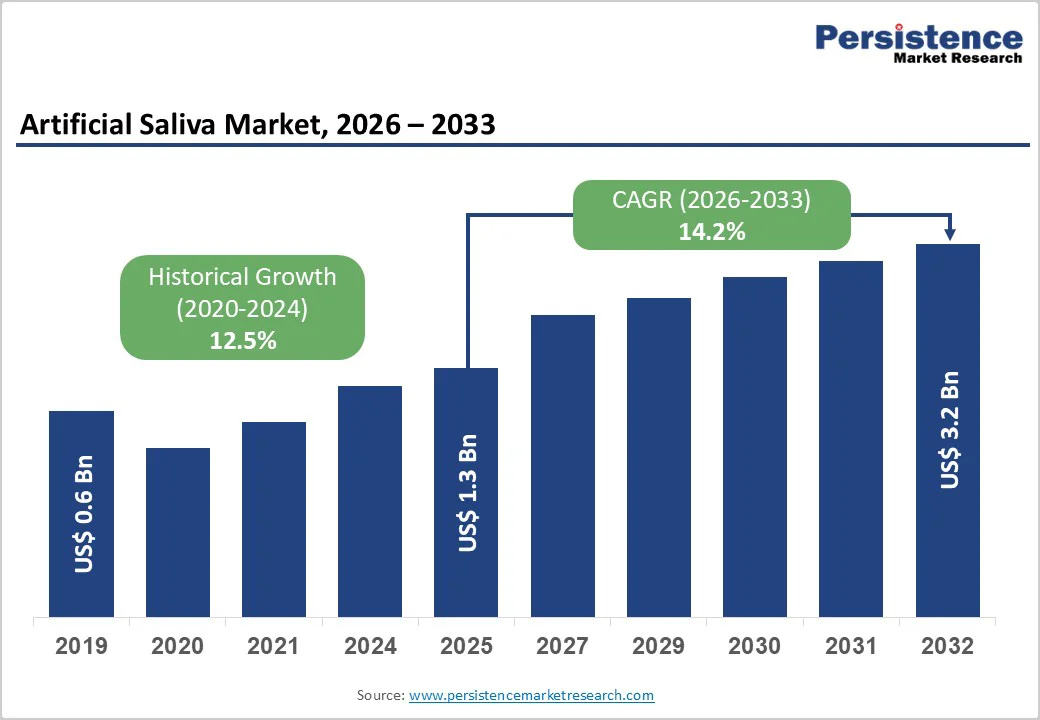
The global artificial saliva market size is valued at US$ 1.3 billion in 2026 and is expected to reach US$ 3.2 billion by 2033. The market is projected to record a CAGR of 14.2% from 2026 to 2033.
The World Health Organization data shows that oral diseases are the fourth-most expensive disease to treat in both emerging and developed economies. Oral health maintenance expenditure is a major healthcare issue that directly impacts market growth. In addition, rising disposable income and per-capita spending are likely to drive the market over the forecast period.
Key Industry Highlights
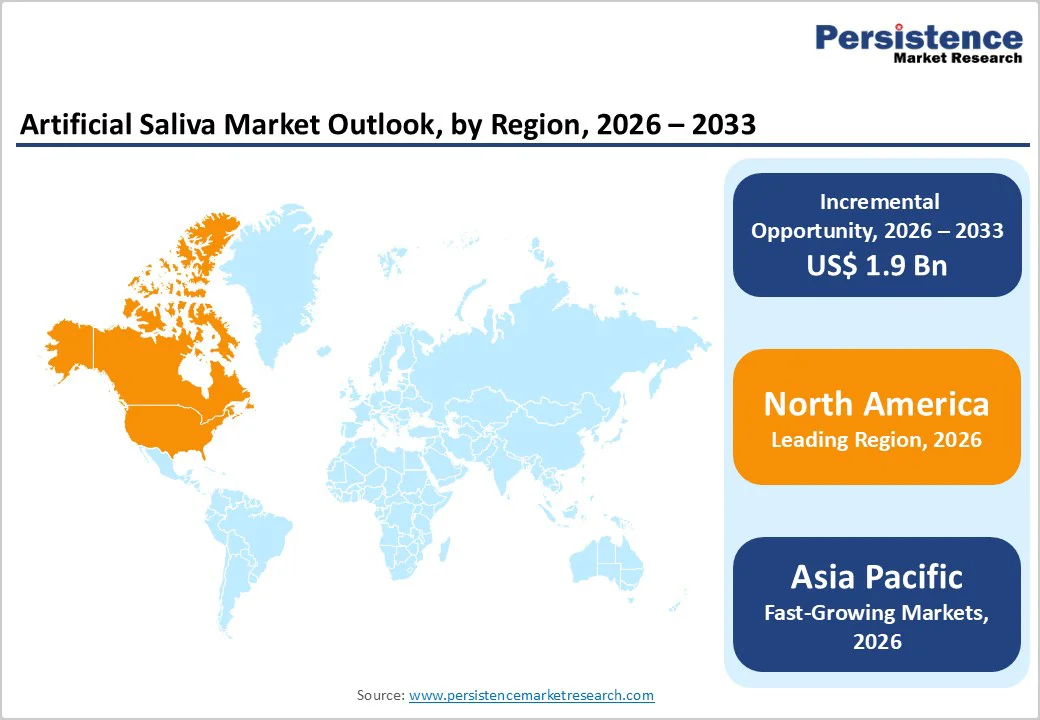
- Leading Region: North America leads the global market, backed by robust pharmacy infrastructure, premium product offerings, and advanced reimbursement models.
- Fastest Growing Region: Asia Pacific is the fastest-growing region, driven by rising geriatric care, cancer survivorship, and digital health adoption in Japan, China, and India.
- Dominant Segment: Oral spray solutions remain the dominant segment due to their convenience, availability, and effectiveness for both chronic and acute cases.
- Fastest Growing Opportunity: Online and digital pharmacy channels offer the fastest growth opportunity as patients increasingly prioritize convenience, privacy, and selection diversity.
| Key Insights | Details |
|---|---|
| Artificial Saliva Market Size (2026E) | US$ 1.3 Bn |
| Market Value Forecast (2033F) | US$ 3.2 Bn |
| Projected Growth (CAGR 2026 to 2033) | 14.2% |
| Historical Market Growth (CAGR 2020 to 2024) | 12.5% |
Market Dynamics
Driver - Innovation and Accessibility in Delivery Formats
One of the key drivers of the artificial saliva market is the ongoing innovation in delivery formats, which has significantly improved accessibility and patient adherence. Over-the-counter products in spray, liquid, and gel forms have made management of xerostomia more convenient for both adult and pediatric populations.
Sprays are particularly popular due to their portability and ease of use, offering quick relief that can be administered independently throughout the day without disrupting routine activities. Liquids provide uniform coverage of the oral cavity, ensuring hydration for moderate cases. At the same time, gels are designed for prolonged action, making them highly suitable for patients with severe dry mouth, such as those undergoing chemotherapy or radiation therapy.
The availability of these formats across hospitals, retail pharmacies, and online platforms has expanded market reach, enabling patients to access treatment without prescriptions in many regions.
Continuous product improvements, including enhancements in flavor, texture, and moisturizing efficacy, encourage repeated use and improve compliance, particularly in children and elderly patients. The combination of convenience, effectiveness, and broad availability continues to drive adoption, reinforcing growth in both established and emerging markets globally.
Restraints - Availability of Alternatives in the Artificial Saliva Market
The artificial saliva market faces notable restraints due to the availability of alternative therapies for managing xerostomia (dry mouth). Several non-synthetic options, including herbal remedies, acupuncture, and salivary stimulants, provide patients with effective methods to alleviate symptoms without relying solely on artificial saliva products.
The presence of these alternatives limits market growth, as some patients and healthcare providers prefer natural or minimally invasive interventions.
Additionally, ongoing research and development in advanced technologies further impacts the market by offering potential substitutes. Innovations such as artificial salivary glands and saliva-stimulating devices are gaining attention for individuals with salivary gland damage or chronic conditions affecting saliva production.
For instance, Farmington-based company Oral Fluid Dynamics secured approximately US$175,000 over two years to develop artificial salivary gland technology, underscoring the growing investment in alternative solutions.
These developments not only provide patients with more treatment options but also challenge the traditional artificial saliva segment, as such innovations can offer more sustained relief and better mimic natural salivary function. Consequently, the availability of alternatives is expected to restrain the market's unrestricted growth over the forecast period.
Opportunity - Focus on Pediatric & Cancer-Care Segments (Artificial Saliva)
There is a strong and growing opportunity in the artificial saliva market targeting pediatric cancer survivors and oncology supportive care, driven by the high burden of xerostomia in these groups.
Among childhood cancer survivors, over 30% exhibit hyposalivation (low salivary flow) following therapy, while 9-10% report persistent dry mouth even many years later. Radiation and chemotherapy, especially in head and neck cancers, damage salivary glands, with 60-90% of adult head-and-neck cancer patients experiencing xerostomia post-treatment.
Manufacturers are increasingly developing flavored, tailored formulations and packaging designed specifically for children, making artificial saliva more acceptable in pediatric care. Clinical partnerships between pharma companies and oncology centers, combined with trials validating safety and effectiveness in these populations, provide strong market traction.
Simultaneously, the growing population of cancer survivors globally is pushing demand: artificial saliva is not just a luxury, but a clinical necessity in maintaining oral health, quality of life, and treatment adherence. As awareness grows, these specialized segments are projected to generate one of the fastest-growing revenue streams for artificial saliva providers.
Category-wise Analysis
By Product Insights
In the artificial saliva market, the oral spray segment continues to lead, capturing an estimated 30% share in 2025. The dominance of oral sprays is largely driven by their convenience, ease of application, and widespread availability as over-the-counter (OTC) products. Patients prefer sprays for their fast-acting relief, portability, and minimal need for professional supervision, making them well-suited for routine use.
Healthcare providers also recommend sprays for their consistent dosing and improved patient compliance. Ongoing formulation enhancements, including long-lasting hydration, improved taste, and the inclusion of natural moisturizing agents, have reinforced the segment’s market position, ensuring sustained consumer preference.
Conversely, the oral liquid segment is emerging as the fastest-growing product type. Oral liquids provide comprehensive coverage of the oral cavity, making them particularly effective for patients with severe xerostomia or those requiring prolonged hydration. Their versatility allows integration with flavors, therapeutic additives, and thicker formulations for extended relief.
Growing patient awareness, expanding pediatric applications, and increasing demand for customizable dosing options are driving rapid adoption. With continuous innovation in formulation and delivery mechanisms, oral liquids are poised to capture a larger share of the market in the coming years, complementing the established spray segment.
By Age Group Insights
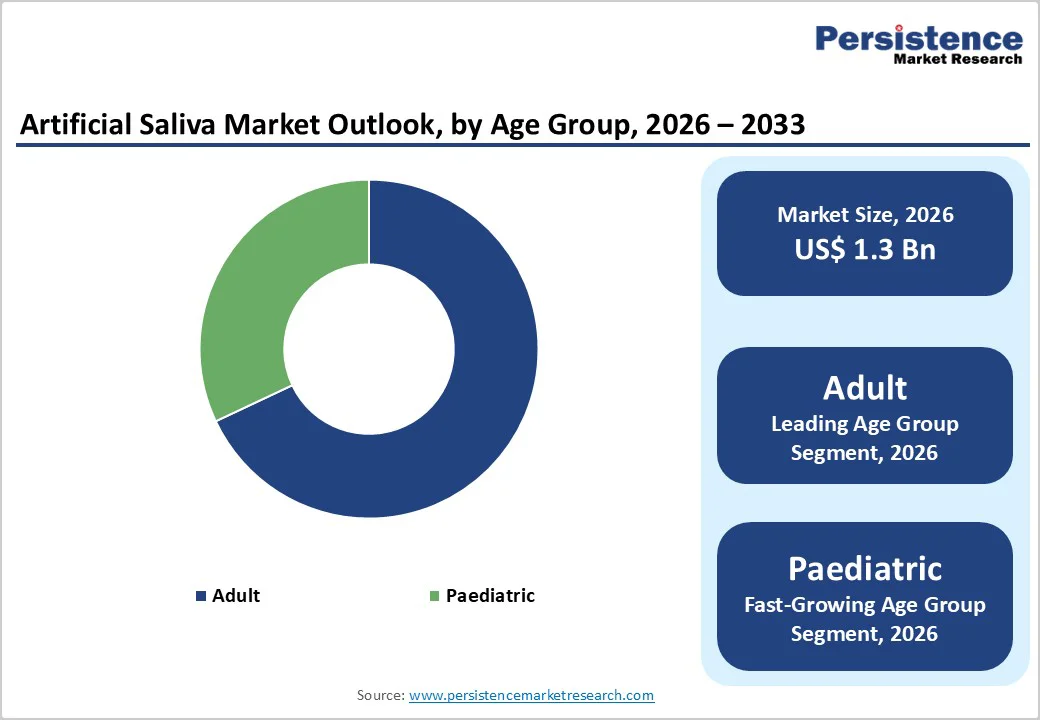
Adult consumers are the primary end users of artificial saliva products, accounting for approximately 68% of the market in 2024. This dominance is largely due to the higher prevalence of xerostomia among adults, particularly older individuals, who often experience reduced salivary flow as a result of natural aging, chronic health conditions, or long-term medication use.
Polypharmacy, which is increasingly common in elderly populations, further exacerbates dry mouth symptoms, making effective and convenient oral hydration solutions essential for daily life.
Adults rely on artificial saliva to alleviate discomfort, prevent oral infections, maintain proper oral hygiene, and support overall quality of life. The growing global elderly population, along with rising awareness of oral health issues associated with chronic diseases such as diabetes, cancer, and autoimmune disorders, is driving sustained demand in this segment.
Healthcare providers frequently recommend artificial saliva products to manage persistent symptoms, reinforcing the adult consumer base as the largest and most consistent contributor to market growth.
Region-wise Insights
North America Artificial Saliva Market Trends
North America holds the leading position in the artificial saliva market, representing approximately 33% of global sales in 2024. The region’s market strength is supported by widespread awareness of xerostomia management, high accessibility of over-the-counter products, and well-established reimbursement mechanisms that make treatment more affordable for patients.
The U.S. plays a central role, driven by innovative pharmaceutical research, aggressive marketing strategies, and the increasing prevalence of conditions such as Sjögren’s syndrome and dry mouth following cancer therapies. Rapid adoption of newly formulated products, including sprays, gels, and liquids, has strengthened market maturity and patient compliance.
Distribution channels, including retail pharmacies, hospitals, and online platforms, have expanded quickly, ensuring product availability across diverse population segments. Canada contributes through supportive coverage programs, dental awareness campaigns, and patient education initiatives that emphasize oral health management for chronic conditions.
Collectively, these factors create a favorable environment for sustained market growth, encouraging manufacturers to continue innovating product lines while targeting both adult and pediatric populations in clinical and daily care settings.
Asia and Pacific Artificial Saliva Market Trends
Asia Pacific is emerging as the fastest-growing regional market for artificial saliva, fuelled by demographic and healthcare trends in countries such as Japan, China, and India. Rapid urbanization, an aging population, and rising cancer survivorship are increasing the demand for effective dry mouth management solutions.
Companies are tailoring formulations and product formats to meet local preferences, dietary considerations, and regulatory standards. E-commerce platforms play a crucial role in extending reach to underserved urban and rural areas, while hospitals and dental clinics drive bulk procurement for clinical use.
Strategic collaborations with dental associations and educational campaigns are helping increase awareness about xerostomia and the benefits of artificial saliva, promoting higher adoption rates.
Additionally, ASEAN nations and South Korea are witnessing significant potential, supported by tele-consultation services, growing online retail penetration, and rising disposable incomes. With investments in marketing, localized formulations, and integrated distribution channels, the Asia Pacific is expected to sustain its rapid growth, capturing new patient segments and strengthening the overall regional footprint of artificial saliva products.
Competitive Landscape
The market is moderately fragmented, with global and local firms competing on formulation innovation, accessibility, and targeted marketing. Leading brands such as GlaxoSmithKline plc, Cipla Limited, and Mission Pharmacal Company emphasize research-driven product launches, flavor diversity, and tailored packaging.
Companies invest in clinical partnerships, technology integration for patient tracking, and expansion into pediatric and oncology segments to differentiate and grow. Digital sales, direct-to-consumer campaigns, and presence in medical conferences continue to define business model trends.
Key Industry Developments:
- In March 2024, GlaxoSmithKline expanded its Biotène line with an alcohol-free, long-lasting gel, designed for cancer patients and those with chronic dry mouth, reflecting rising demand for gentle, preservative-free, and biocompatible saliva substitutes for clinical and home use.
- In January 2024, Sunstar Suisse S.A. introduced a new oral spray under the GUM Hydral line, offering a preservative-free, pH-balanced formulation for global markets.
Companies Covered in Artificial Saliva Market
- GlaxoSmithKline plc
- Cipla Limited
- Mission Pharmacal Company
- Fresenius Kabi
- Parnell Pharmaceuticals, Inc.
- CCMed Group
- Entod International
- Midatech Pharma Plc.
- Forward Science
- Valeant Pharmaceuticals International, Inc.
- Biocosmetics Laboratories
- Icpa Health Products LTD.
- Perrigo
- Laboratorios Kin, S.A.
- Others
Frequently Asked Questions
The global artificial saliva market is projected to value at US$ 1.3 Bn in 2026.
Aging population, increased xerostomia (dry mouth) from polypharmacy, and growing cancer survivorship are key demand drivers.
The global artificial saliva market is poised to witness a CAGR of 14.2% between 2026 and 2033.
The pediatric and cancer care segments offer major growth potential through targeted flavor, formulation, and hospital partnerships.
Prominent firms include GlaxoSmithKline plc, Cipla Limited, Mission Pharmacal Company, Fresenius Kabi, Valeant Pharmaceuticals International, Inc.


