




- Retail
- Alternative Accommodation Market
Alternative Accommodation Market Size, Share, and Growth Forecast, 2026 - 2033
Alternative Accommodation Market by Accommodation Type (Homes, Apartments/Condominiums, Others), Booking Mode (Offline Alternative Accommodation Booking, Others), and Regional Analysis for 2026 - 2033

Alternative Accommodation Market Size and Trends Analysis
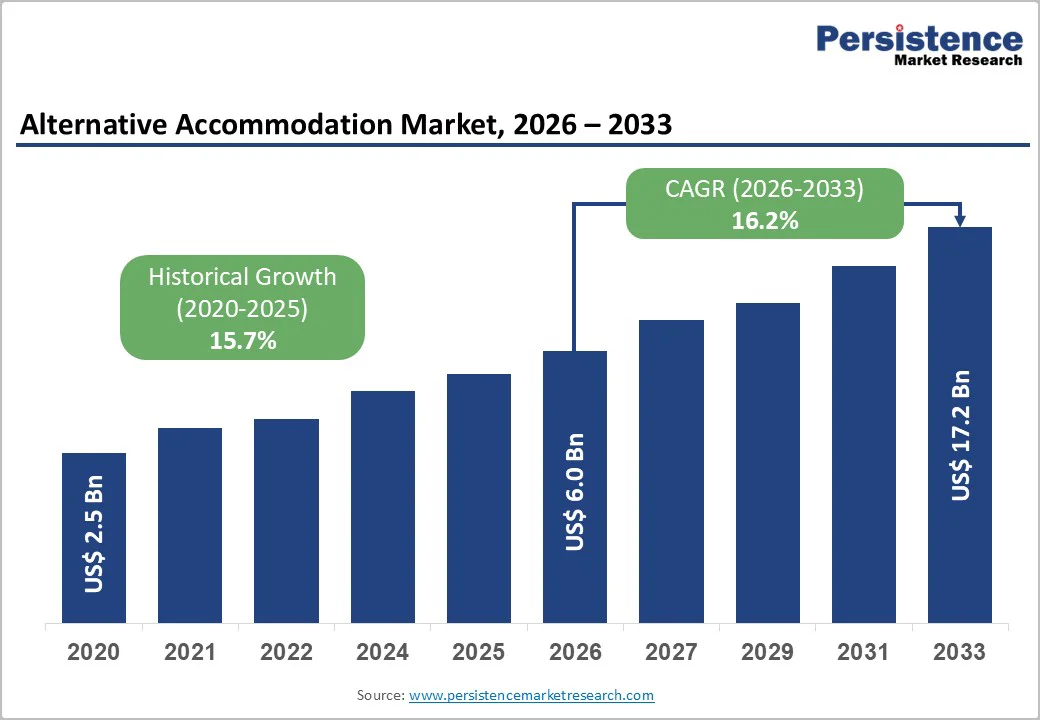
The global alternative accommodation market size is likely to be valued at US$6.0 billion in 2026. It is expected to reach US$17.2 billion by 2033, growing at a CAGR of 15.7% during the forecast period from 2026 to 2033, driven by shifting traveler preferences toward unique, personalized stays such as vacation homes and eco-camping, rising demand for flexible booking platforms amid post-pandemic recovery, and digital innovations in online platforms.
The alternative accommodation market benefits from millennials and Gen Z prioritizing experiential travel, with homes and apartments offering home-like comforts at competitive prices. Enhanced sustainability features in camping and hostels further propel growth, making alternative accommodation a go-to for budget-conscious and adventure-seeking tourists worldwide.
Key Industry Highlights:
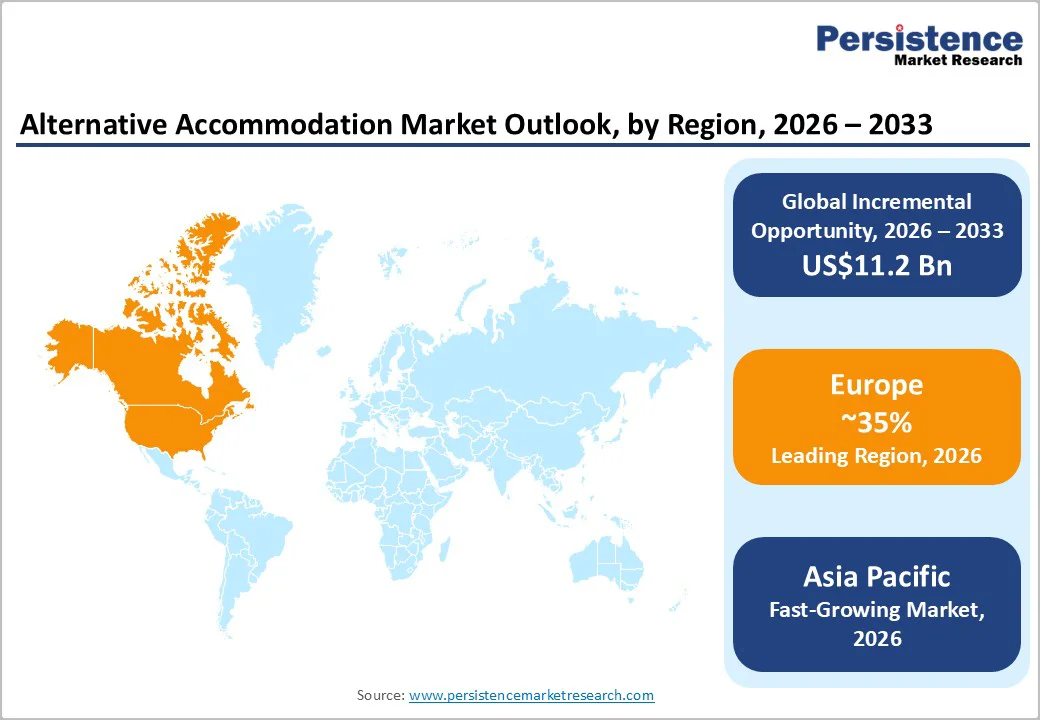
- Leading Region: Europe, expected to account for 35% market share in 2026, driven by diverse offerings in vacation rentals and strong online penetration in countries such as the U.K. and France.
- Fastest-growing Region: Asia Pacific, propelled by booming domestic tourism, app-based bookings, and infrastructure investments in India and China.
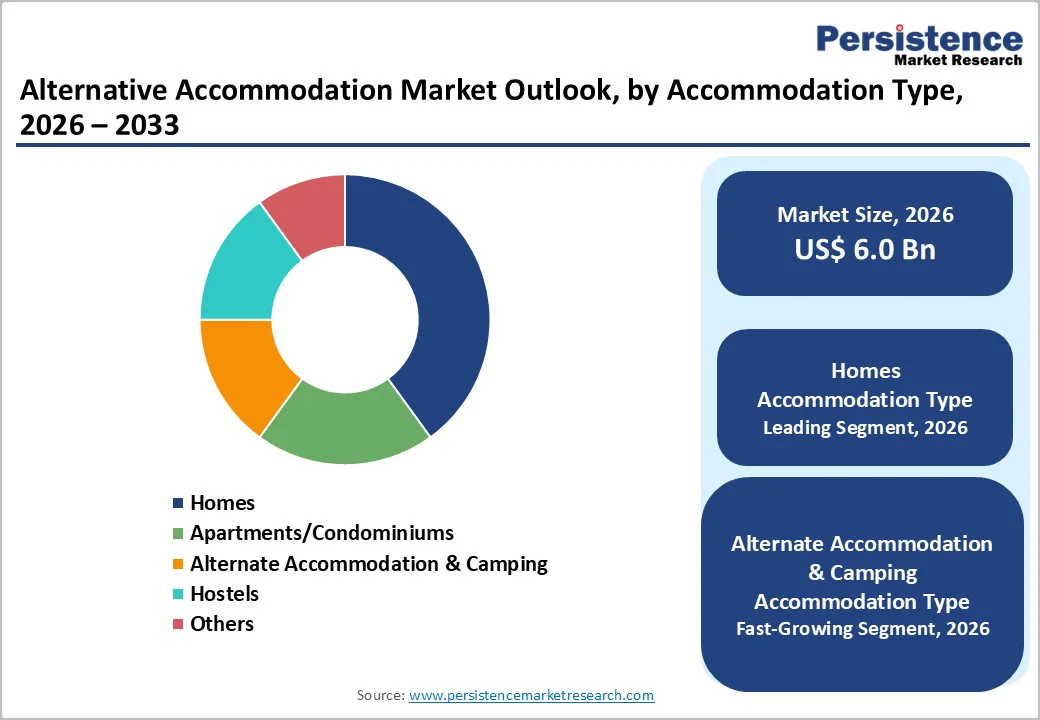
- Dominant Accommodation Type: Homes, which will command about 40% of the market, as they offer spacious, family-friendly options ideal for long stays.
- Leading Booking Mode: Online/Platform-based alternative accommodation booking, to account for over 70% of the market revenue in 2026, owing to seamless mobile apps and AI-driven recommendations.
| Key Insights | Details |
|---|---|
|
Alternative Accommodation Market Size (2026E) |
US$6.0 Bn |
|
Market Value Forecast (2033F) |
US$17.2 Bn |
|
Projected Growth (CAGR 2026 to 2033) |
15.7% |
|
Historical Market Growth (CAGR 2020 to 2025) |
16.2% |
Market Factors - Growth, Barriers, and Opportunity Analysis
Rising Preference for Experiential Travel and Growth of Digital Platforms
The rising preference for experiential travel is strongly driving the alternative accommodation market. Modern travelers increasingly seek unique, authentic, and local experiences rather than standardized hotel stays. Vacation rentals, boutique homes, and homestays allow guests to immerse themselves in local culture, cuisine, and lifestyles, creating memorable and personalized travel experiences. This shift in traveler behavior is especially pronounced among millennials and Gen Z, who prioritize experiences over material possessions and value accommodations that offer authenticity and a sense of connection with the destination.
The growth of digital platforms has revolutionized the way travelers discover, book, and manage alternative accommodations. Platforms such as Airbnb, Vrbo, Booking.com, and HomeToGo provide seamless booking interfaces, transparent pricing, verified reviews, and instant communication with hosts, significantly reducing friction in the travel planning process. These platforms also enable property owners to easily list and manage multiple units, expanding the inventory of available accommodations. The integration of secure payment systems, mobile apps, and AI-driven personalization further enhances user convenience and builds trust and loyalty.
Economic and Seasonal Fluctuations
Economic and seasonal fluctuations significantly impact the alternative accommodation market. During periods of economic downturn or reduced consumer spending, travelers often cut discretionary expenses, including vacations and leisure trips, leading to lower bookings for short-term rentals, homestays, and vacation homes. High inflation, currency instability, or rising travel costs can further discourage travel, directly affecting occupancy rates and revenue for property owners. Economic growth and increased disposable incomes tend to boost travel frequency, benefiting the market.
Seasonal variations also play a critical role. Demand for alternative accommodations tends to peak during holidays, summer vacations, and major local events, while off-peak seasons often experience lower occupancy. Properties in regions with extreme weather conditions may face even more pronounced seasonal demand swings. This uneven demand challenges hosts and operators to optimize pricing, marketing strategies, and maintenance schedules throughout the year. Seasonal oversupply in popular destinations can lead to pricing pressures and reduced profitability.
Sustainable and Eco-Friendly Stays
Sustainable and eco-friendly stays represent a significant growth opportunity in the alternative accommodation market, as travelers increasingly prioritize environmental responsibility alongside comfort and convenience. Modern consumers, particularly millennials and Gen Z, are increasingly conscious of their ecological footprint and seek accommodations that align with sustainable practices, such as energy-efficient lighting, water-saving fixtures, renewable energy, and waste reduction initiatives. Eco-certified properties, green lodges, and environmentally responsible vacation rentals appeal to this growing demographic by offering a guilt-free, socially conscious travel experience.
Adopting sustainable practices also allows property owners to differentiate their offerings in a highly competitive market. Integrating eco-friendly design elements, locally sourced materials, and low-impact operations not only attracts environmentally aware travelers but also often results in long-term cost savings through reduced energy and water consumption. Platforms increasingly highlight and promote green-certified accommodations, making them more visible to potential guests. The trend toward eco-conscious travel is further reinforced by global initiatives that foster sustainable tourism and reduce carbon footprints.
Category-wise Analysis
Accommodation Type Insights
Homes are expected to dominate, accounting for 40% of revenue share in 2026, driven by their space, comfort, and privacy. They are particularly preferred by families, groups, and long-stay travelers as they offer multiple bedrooms, kitchens, living areas, and self-catering facilities, providing a true “home away from home” experience. The rise of remote work and digital nomadism further increases the demand for homes that combine living and working spaces. For example, entire vacation homes listed on platforms often include dedicated workstations, high-speed internet, and recreational areas, making them ideal for both leisure and extended stays.
Alternative accommodation & camping is expected to be the fastest-growing segment, as travelers increasingly seek nature-based, immersive, and flexible stays rather than conventional hotels. The rising demand for outdoor experiences, ranging from tents and cabins to eco-lodges and glamping pods, appeals to millennials, Gen Z, and families seeking unique, nature-immersive, and affordable vacations. Improvements in modern camping gear, smart amenities, and upgraded facilities have made camping more comfortable and accessible. Many campgrounds have recently introduced luxury camping (glamping) options with enhanced comforts, fueling renewed interest and boosting bookings globally.
Booking Mode Insights
The online/platform-based alternative accommodation segment is anticipated to dominate with a 70% share in 2026, driven by convenience, accessibility, and transparency. Travelers prefer platforms that make it easy to compare prices, amenities, locations, and guest reviews, streamlining the booking process. Digital platforms also provide flexible payment options, instant confirmations, and 24/7 support, enhancing user confidence. Recent developments include platforms integrating features such as AI-based property recommendations, virtual tours, and bundled travel experiences, making bookings more personalized. Many platforms now offer long-stay discounts, subscription services, and curated local experiences, attracting both leisure and business travelers.
Offline alternative accommodation booking is likely to be the fastest-growing segment, as many travelers still value personalized service, human interaction, and the reassurance of in-person arrangements, especially for complex, luxury, or group stays. This preference remains strong among older travelers and families planning long vacations, where trust, clarity, and direct communication are essential. Recently, several travel companies have strengthened their physical presence to cater to this demand. For example, EaseMyTrip.com opened a brick-and-mortar travel store in Indore in 2024 to serve customers who prefer face-to-face consultation and offline booking. Such initiatives reflect a rising hybrid travel model in which travelers discover options online but finalize bookings offline for added confidence.
Regional Insights
North America Alternative Accommodation Market Trends
North America is projected to account for around 30% of the market share in 2026, driven by growing demand for unique, flexible, and personalized travel experiences. Travelers are increasingly opting for vacation rentals, homestays, and boutique properties over traditional hotels, valuing privacy, home-like amenities, and authentic local experiences. The widespread use of digital booking platforms, including vacation rental websites and mobile apps, has streamlined property discovery, booking, and payments, making alternative accommodations more accessible and convenient.
In North America, high disposable incomes, extensive tourism infrastructure, and strong domestic and international travel demand support market dominance. The rise of remote work and long-stay travel has further accelerated adoption, as travelers look for residences that combine living and working spaces. The region has witnessed innovations in property offerings, including fully furnished homes, smart homes, and eco-friendly stays, catering to evolving consumer expectations. Safety, hygiene, and transparency remain key priorities, prompting hosts to adopt strict quality standards and enhanced cleaning protocols. For example, Airbnb launched its “Live and Work Anywhere” initiative in 2022 to support remote workers by partnering with global destinations and promoting long-stay-ready properties, reinforcing North America's leadership in flexible travel.
Europe Alternative Accommodation Market Trends
Europe is expected to lead, accounting for around 35% of the global market share in 2026, supported by travelers’ growing preference for unique, flexible, and experience-driven accommodations. Vacation rentals, boutique homes, and homestays are increasingly chosen over traditional hotels, appealing to visitors seeking cultural authenticity, privacy, and home-like comforts. The region’s rich heritage, varied landscapes, and well-established tourism infrastructure further strengthen its appeal for both short- and long-term stays.
Digital booking platforms have played a key role in market expansion by simplifying property discovery, reservations, and payments, while providing transparent pricing and verified reviews. The rise of remote work and flexible travel has also increased demand for long-term rentals that support both living and working needs. Sustainability remains a strong theme in Europe, with eco-friendly and energy-efficient properties gaining traction among environmentally conscious travelers. Countries such as France, Italy, Spain, and Germany are at the forefront of adoption, supported by strong urban tourism, regional events, and growing rural tourism. For instance, Landfolk, a European vacation rental platform, expanded across six countries by 2025, offering curated holiday homes and villas focused on authentic and flexible travel experiences.
Asia Pacific Alternative Accommodation Market Trends
Asia Pacific is likely to be the fastest-growing region, fueled by rising tourism, urbanization, and increasing disposable incomes across countries such as China, India, Japan, Australia, and Southeast Asian nations. Travelers in the region are increasingly seeking flexible, personalized, and culturally immersive stays over traditional hotels, favoring vacation rentals, serviced apartments, homestays, and boutique accommodations. The growing popularity of experiential travel, combined with the growth of domestic tourism, has significantly increased demand for alternative lodging options.
Digital platforms and mobile booking applications have played a key role in the market expansion by offering seamless property search, booking, payment, and review systems. The rise of remote work and digital nomadism has also contributed to the increase of long-term stay preferences, with travelers seeking accommodations that combine comfort, workspaces, and leisure amenities. Sustainable and eco-friendly stays are gaining traction, as environmentally conscious travelers prefer properties that incorporate green practices and local experiences. For example, the Singapore-headquartered hospitality firm Pan Pacific Hotels Group (PPHG) recently expanded its long-stay offering in Southeast Asia by launching PARKROYAL Serviced Suites in Hanoi, Vietnam, reflecting the growing demand for flexible, serviced-apartment-style stays in the region.
Competitive Landscape
The global alternative accommodation market is highly competitive, with several large platforms holding significant market shares alongside numerous smaller and boutique operators. Major players such as Airbnb, Vrbo (Expedia Group), Booking.com, and HomeToGo dominate through broad inventory, brand recognition, and a range of property types. At the same time, regional and niche operators focus on eco-stays, luxury rentals, co-living, and glamping to cater to specialized traveler segments.
Inventory diversity, seamless booking experiences, AI-driven personalization, flexible payment and cancellation policies, and high-quality service standards drive competition. Partnerships with property managers, travel agencies, and local hosts further strengthen market positioning. Recent trends include technological innovation, long-stay and co-living offerings, sustainability initiatives, and enhanced hygiene and safety protocols.
Key Industry Developments
- In January 2024, Pan Pacific Hotels Group (PPHG) announced the opening of PARKROYAL Serviced Suites Jakarta. Designed by acclaimed architect Kohn Pedersen Fox Associates, PARKROYAL Serviced Suites Jakarta is well-positioned on levels 73 to 82 of Luminary Tower at the Thamrin Nine development and dominates the central district skyline, rising to an impressive height of 304 meters across 95 levels.
Companies Covered in Alternative Accommodation Market
- Holidu
- Trivago
- Airbnb
- Booking.com
- VRBO (Expedia Group)
- MakeMyTrip
- Wyndham Destinations
- HomeToGo
- Peakah
- Trip.com Group
- TripAdvisor
Frequently Asked Questions
The global alternative accommodation market is projected to reach US$6.0 billion in 2026.
Key drivers include shifting preferences toward experiential and sustainable lodging, digital booking innovations, and demographic trends among millennials favoring flexible, home-like options.
The alternative accommodation market is set to grow at a CAGR of 15.7% from 2026 to 2033.
Opportunities lie in AI-personalized bookings, eco-glamping expansions, and rural digitalization, potentially adding US$5 billion by 2030.
Leading players include Airbnb, Booking.com, VRBO (part of Expedia Group), MakeMyTrip, and Trip.com Group.


