




- Processed Food
- Sweet Potato Fries Market
Sweet Potato Fries Market Size, Share, Growth, and Regional Forecast, 2026 - 2033
Sweet Potato Fries Market by Product Type (Straight Cut Fries, Crinkle Cut Fries, Waffle Cut Fries, Curly/Spiral Fries, Wedges, Others), Nature (Frozen, Fresh-Cut, Dehydrated/Freeze-Dried), Distribution Channel (B2B, B2C), and Regional Analysis from 2026 - 2033

Sweet Potato Fries Market Share and Trends Analysis
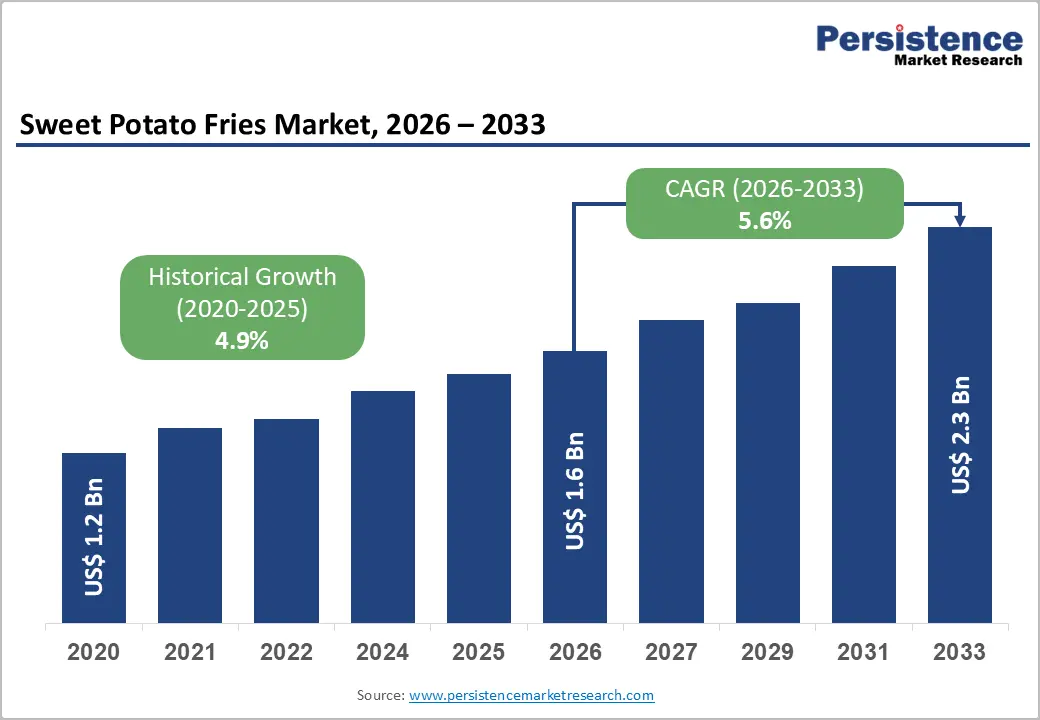
The global sweet potato fries market size is likely to be valued at US$ 1.6 billion in 2026 and US$2.3 billion by 2033, growing at a CAGR of 5.6% during the forecast period from 2026 to 2033. Sweet potato fries are moving beyond side dishes into a premium, nutrition-led category shaped by health perceptions, foodservice innovation, and convenience-driven consumption. Strong foodservice pull and evolving retail formats are redefining how this category scales globally.
Key Industry Highlights:
- Leading Region: North America, holding approximately 42% market share, driven by strong foodservice penetration, health-oriented menu upgrades, and high consumer acceptance of frozen, air-fryer-friendly formats.
- Fastest-Growing Region: Asia Pacific, supported by rapid QSR expansion, urban snacking culture, rising disposable incomes, and increasing exposure to Western-style frozen foods.
- Dominant Product Segment: Frozen Sweet Potato Fries, accounting for around 73% market share due to year-round availability, consistent texture, extended shelf life, and ease of preparation across retail and foodservice.
- Market Drivers: The rising popularity of sweet potato as a nutrient-rich vegetable enhances menu visibility and retail appeal, supported by its fiber content, natural color, and alignment with clean-label preferences.
- Key Opportunities: Targeting quick-service and casual dining chains seeking premium side-menu upgrades through custom cuts, seasoning innovations, and fryer-optimized solutions.
- Recent Developments: In January 2025, Blue Tribe Foods launched nutritionally positioned sweet potato fries. In September 2025, IFCG-Egypt introduced a new range of frozen sweet potato wedges for foodservice and retail. In November 2025, Crizpo debuted Sweet Potato Chips in a Kalamkaval Special Edition pack.
| Key Insights | Details |
|---|---|
|
Sweet Potato Fries Market Size (2026E) |
US$ 1.6 Bn |
|
Market Value Forecast (2033F) |
US$ 2.3 Bn |
|
Projected Growth (CAGR 2026 to 2033) |
5.6% |
|
Historical Market Growth (CAGR 2020 to 2025) |
4.9% |
Market Dynamics
Driver - Popularity of sweet potato as a nutrient-rich vegetable boosts menu and retail visibility
Golden-orange fries are quietly reshaping menus and freezer aisles worldwide. The rising popularity of sweet potato as a nutrient-rich vegetable is boosting the visibility of sweet potato fries across foodservice and retail channels. Naturally high in fiber, beta-carotene, and complex carbohydrates, sweet potatoes align with modern preferences for wholesome comfort foods. Their perceived health halo encourages consumers to choose sweet potato fries as a smarter indulgence, supporting frequent purchase and repeat consumption.
This nutritional appeal is reinforced by culinary versatility and visual differentiation. Restaurants leverage sweet potato fries to elevate menu offerings with premium cues, while retailers highlight them as better-for-you frozen alternatives. Demand is further strengthened by compatibility with plant-forward diets, gluten-free preferences, and clean-label positioning. As consumers increasingly associate taste with functional value, sweet potato fries gain stronger shelf presence, broader menu penetration, and sustained global demand momentum.
Restraints - Texture inconsistency after cooking can impact repeat purchases and brand loyalty
Crisp on the outside and soft within is the promise consumers expect. Texture inconsistency after cooking remains a notable restraint in the global sweet potato fries market, as variations in moisture content and natural sugar levels can result in soggy or uneven texture. When fries fail to achieve consistent crunch across batches, consumer satisfaction declines, particularly in frozen and ready-to-cook formats where convenience is a key expectation.
This challenge directly affects repeat purchases and brand loyalty. Home cooks and foodservice operators often avoid products that deliver unpredictable texture, as it complicates preparation and portion control. For brands, inconsistency increases the risk of negative reviews and reduced shelf trust. Over time, even strong flavor profiles struggle to compensate when texture reliability becomes questionable.
Opportunity - Target foodservice and quick-service restaurants seeking premium side-menu upgrades
Side dishes are no longer an afterthought on modern menus. Targeting foodservice and quick-service restaurants seeking premium side-menu upgrades presents a strong market opportunity in the global sweet potato fries segment. Operators are actively refreshing menus to boost ticket value, visual appeal, and perceived health credentials, making sweet potato fries an attractive alternative to standard potato sides. Their vibrant color, mild sweetness, and nutrient-rich positioning help brands align with evolving consumer expectations for indulgence with added value.
For key players and startups, foodservice partnerships enable faster volume scaling and brand visibility. Custom cuts, seasoning profiles, and fryer-optimized formats allow operators to differentiate menus without major kitchen disruption. Consistent quality and reliable supply further strengthen long-term contracts.
Category-wise Analysis
By Nature Insights
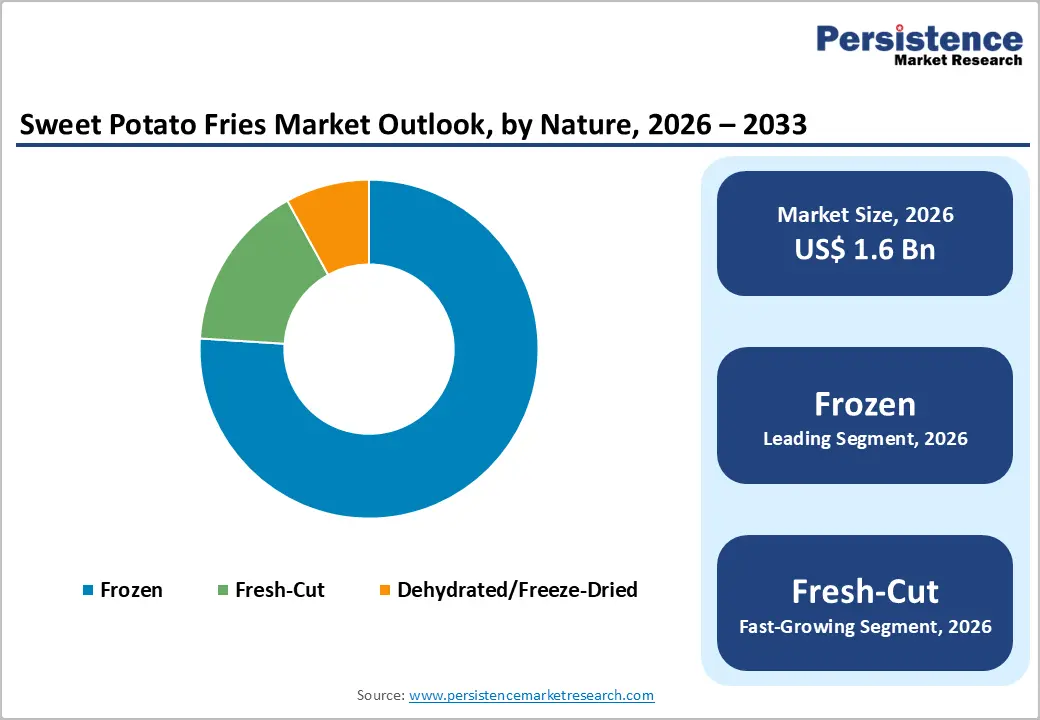
Frozen sweet potato fries hold approx. 73% market share as of 2025, reflecting how convenience and consistency drive global consumption patterns. From restaurant freezers to household kitchens, frozen formats deliver reliable taste, texture, and portion control across foodservice and retail channels. Advanced freezing techniques lock in color and nutrients while extending shelf life, allowing year-round availability independent of harvest cycles. Ease of storage, reduced prep time, and compatibility with ovens, air fryers, and fryers make frozen sweet potato fries the default choice for operators and consumers seeking predictable results.
Fresh-cut sweet potato fries appeal to niche, local foodservice settings but face challenges with their short shelf life and labor-intensive preparation. Dehydrated and freeze-dried variants serve snack and ingredient applications, though limited use in mainstream meals keeps frozen formats dominant.
Distribution Channel Insights
Online retail is projected to achieve a CAGR of 9.7% during the forecast period in the global sweet potato fries market, driven by changing shopping behaviors and the rising preference for at-home convenience foods. Consumers increasingly seek easy access to frozen and ready-to-cook options that fit busy lifestyles, making e-commerce platforms a natural channel for discovery and purchase. Wider product assortments, clear nutritional labeling, and digital promotions enhance visibility and encourage trial.
Growth is further supported by improved cold-chain logistics, quick-commerce models, and subscription-based grocery services that ensure product quality and freshness. Brands benefit from direct consumer engagement, targeted marketing, and data-driven personalization. As online grocery adoption deepens across urban and semi-urban markets, digital channels are becoming a critical growth lever for sweet potato fries.
Region-wise Insights
North America Sweet Potato Fries Market Trends
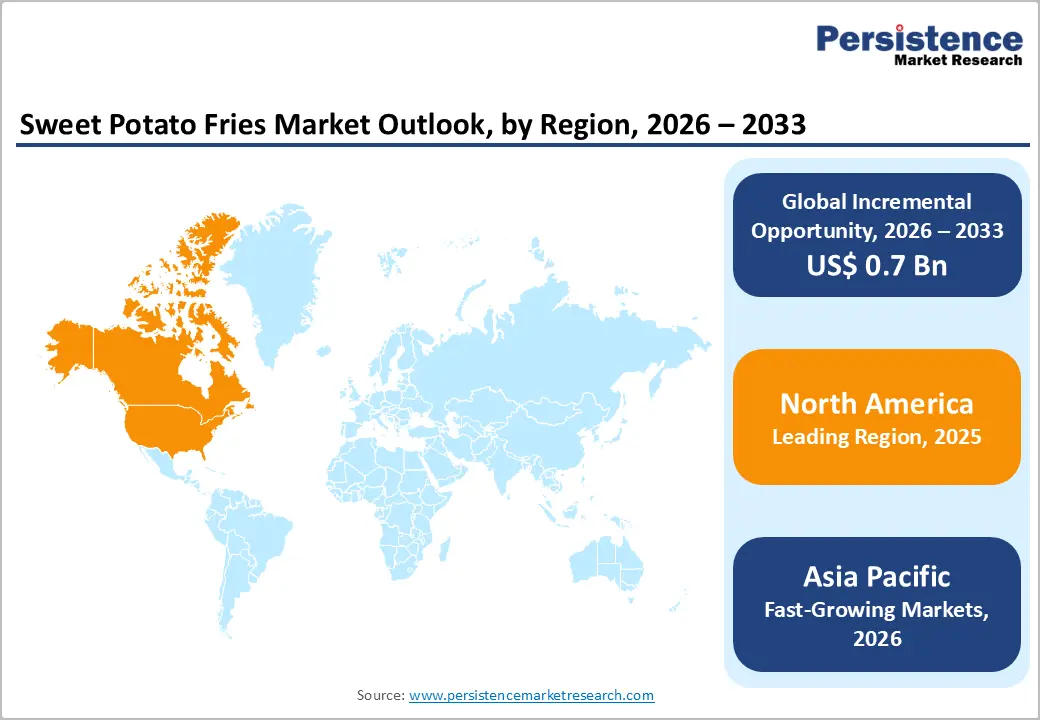
North America holds approximately 42% market share, reflecting on how indulgence intersects with better-for-you eating habits. Sweet potato fries are gaining traction as a perceived healthier alternative to conventional fries, supported by rising interest in fiber-rich vegetables and naturally vibrant foods. Premium frozen formats, clean-label coatings, and air-fryer compatibility are shaping purchasing decisions across retail and foodservice channels.
In the US, quick-service restaurants and casual dining chains are upgrading side menus with seasoned, skin-on, and crinkle-cut sweet potato fries to justify premium pricing. Canada shows growing demand for organic, minimally processed, and locally sourced frozen options, driven by sustainability awareness and plant-forward diets.
Asia Pacific Sweet Potato Fries Market Trends
Asia Pacific sweet potato fries market is expected to achieve a robust CAGR of 8.6%, driven by rapid urbanization, evolving snacking habits, and rising exposure to global quick-service dining formats. Consumers across the region are embracing sweet potato fries as a flavorful, visually appealing alternative to traditional fried snacks, especially within youth and working-age populations. Foodservice-led demand is a major catalyst, supported by café culture, casual dining expansion, and delivery-friendly menus.
In India, sweet potato fries are emerging in premium cafés and QSRs as innovative, healthier sides. China is witnessing growth through frozen imports and locally processed variants for home cooking. Japan favors portion-controlled, lightly seasoned fries aligned with quality-focused consumption, while South Korea integrates sweet potato fries into trend-driven, social-media-led food concepts.
Competitive Landscape
The global sweet potato fries market reflects a moderately fragmented competitive landscape, with established frozen food players operating alongside agile regional brands and startups. Leading companies are strengthening portfolios through consistent quality, expanded cut varieties, and better oil management to meet expectations of taste and texture. Nutrition-forward positioning is gaining traction, with emphasis on fiber content, reduced fat absorption, and clean ingredient lists to appeal to health-aware consumers.
Startups are pushing product innovation through air-fryer-friendly formats, seasoned variants, and premium packaging that enhances shelf appeal. Sustainability initiatives such as responsible sourcing and recyclable packaging are becoming differentiators. Collaborations with foodservice chains boost visibility, while digital marketing builds consumer awareness. Millennial health trends are shaping branding strategies centered on balance, indulgence with better nutrition, and convenient at-home preparation.
Key Developments:
- In November 2025, Crizpo announced the launch of its all-new Sweet Potato Chips, unveiled in a distinctive Kalamkaval Special Edition pack created in collaboration with MammoottyKampany, blending bold flavor innovation with culturally resonant packaging to capture premium snack consumers.
- In September 2025, IFCG-Egypt officially launched its new season of frozen sweet potato wedges, introducing a product that combines robust flavor, strong nutritional appeal, and consistent quality standards, targeting foodservice operators and retail buyers seeking reliable, value-added frozen alternatives.
- In January 2025, Blue Tribe Foods announced the launch of its new Sweet Potato Fries, designed to deliver indulgent taste alongside meaningful nutritional benefits, catering to consumers seeking wholesome, naturally powered snacking options.
Companies Covered in Sweet Potato Fries Market
- McCain® Foods Limited
- Aviko
- Simplot Global Food, LLC
- Blue Tribe
- Lamb Weston, Inc.
- Agristo
- MBRF
- Kraft Heinz
- Conagra Brands, Inc.
- Farm Frites
- Cavendish Farms Corporation
- IFCG
- Others
Frequently Asked Questions
The global sweet potato fries market is projected to be valued at US$ 1.6 Bn in 2026.
The popularity of sweet potatoes as a nutrient-rich vegetable, boosting menu and retail visibility, is a key driver for the global Sweet Potato Fries market.
The global Sweet Potato Fries market is poised to witness a CAGR of 5.6% between 2026 and 2033.
Targeting foodservice and quick-service restaurants seeking premium side-menu upgrades is key opportunity.
Major players in the global Sweet Potato Fries market include McCain® Foods Limited, Aviko, Simplot Global Food, LLC, Lamb Weston, Inc., Agristo, MBRF, Kraft Heinz, Conagra Brands, Inc., and others.


