




- Beverages
- RTD Cocktail Market
RTD Cocktail Market Size, Share, Growth, and Regional Forecast, 2026 - 2033
RTD Cocktail Market by Base Spirit (Vodka, Rum, Tequila, Whiskey, Gin, Multi-Spirit), by Alcohol Content (<4% ABV, 4%–7% ABV, 7%–15% ABV, >15% ABV), by Flavor Profile Channel (Citrus, Berry & Fruit, Tropical, Classic/Herbal, Spicy & Bold), and Regional Analysis from 2026 - 2033

RTD Cocktail Market Share and Trends Analysis
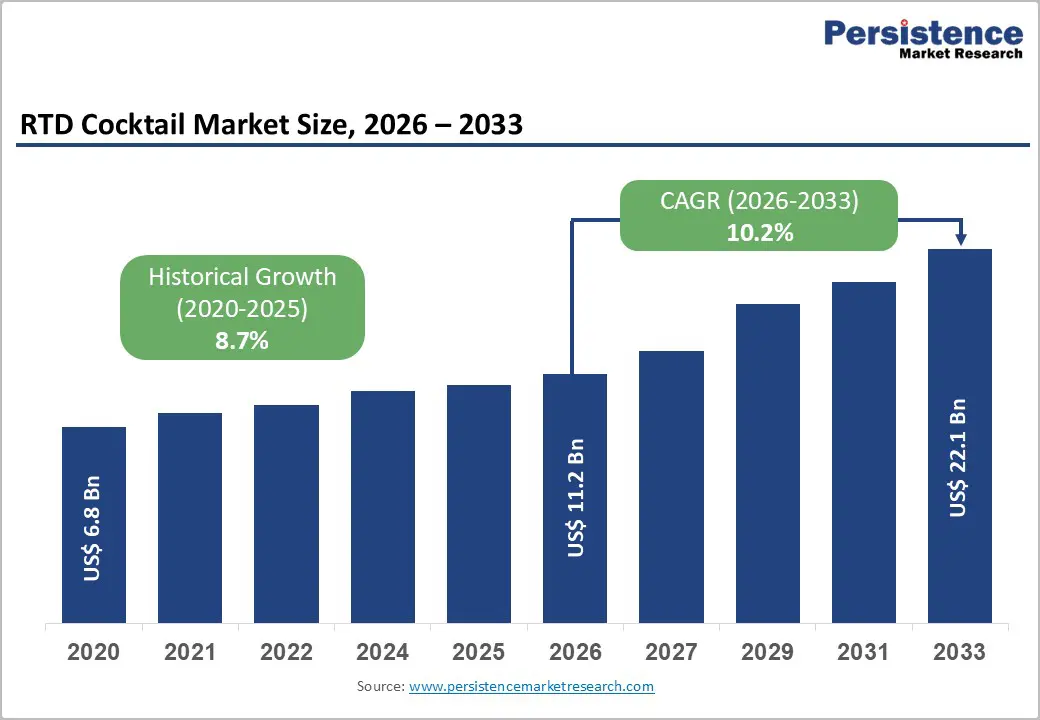
The global RTD cocktail market size is estimated to grow from US$ 11.2 billion in 2026 to US$ 22.1 billion by 2033, projected to record a CAGR of 10.2% during the forecast period from 2026 to 2033. A rising appetite for sophisticated yet convenient alcoholic beverages is redefining the global RTD Cocktail Market. High-quality spirits, crafted flavor profiles, and mixology-style creations are propelling the category into a phase of rapid, high-value expansion.
Key Industry Highlights:
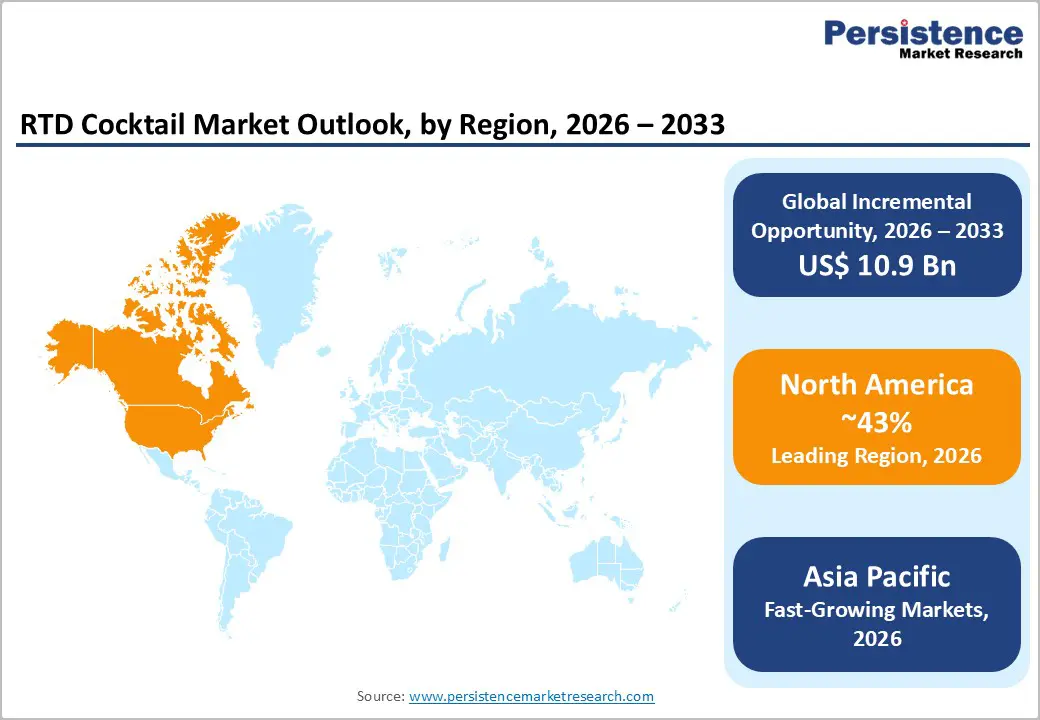
- Leading Region: North America retains leadership with approximately 43% market share, driven by strong enthusiasm for premium canned cocktails, clean-label mixes, and mixology-style flavor innovation across the U.S. and Canada.
- Fastest-Growing Region: Asia Pacific emerges as the fastest-expanding region, supported by rising urban lifestyles, vibrant flavor experimentation, and booming RTD adoption across India, China, Japan, South Korea, and Thailand.
- Fastest-Growing Flavor Profile Segment: Tropical flavored RTD Cocktails accelerate rapidly, propelled by consumer demand for refreshing, fruit-forward blends that mirror vacation-inspired drinking experiences.
- Growth Indicators: Growth in premium alcohol consumption fuels interest in RTDs that replicate bar-quality cocktails, encouraging brands to invest in top-shelf spirits, authentic juices, botanical infusions, and elevated formulations.
- Opportunities: Premiumization trends create strong space for craft-style RTD cocktails featuring natural ingredients, small-batch spirits, chef-driven flavor profiles, and collaborations with local distilleries.
- Key Developments: In December 2025, Anheuser-Busch InBev moved to acquire a majority stake in BeatBox, strengthening its youth-driven RTD portfolio. In September 2025, Sazerac Company expanded its regional reach through a partnership with Andrews Distributing to roll out new RTD launches in Texas.
| Key Insights | Details |
|---|---|
|
Global RTD Cocktail Market Size (2026E) |
US$ 11.2 Bn |
|
Market Value Forecast (2033F) |
US$ 22.1 Bn |
|
Projected Growth (CAGR 2026 to 2033) |
10.2% |
|
Historical Market Growth (CAGR 2020 to 2025) |
8.7% |
Market Dynamics
Driver - Growth in Premium Alcohol Consumption Fuels Interest in RTDs That Mirror Bar-Quality Experiences
A clear move toward elevated drinking habits is reshaping consumer behavior, giving RTD cocktails strong momentum. As premium alcohol consumption rises, buyers are turning toward ready-to-drink options that deliver the finesse and balance of a handcrafted bar cocktail. Shoppers across key markets are demanding richer flavor complexity, higher-grade spirits, and transparent formulations, which pushes the category toward more refined, premium-positioned offerings across cans, bottles, and portable single serves.
In response, manufacturers are crafting upgraded blends using quality bases such as aged rum, premium tequila, and botanical-forward gin. Techniques like flash-mixing and controlled aromatics help preserve the character of freshly made cocktails while ensuring long shelf life. This premium experience-driven shift continues to propel the RTD cocktail market forward.
Restraints - Shelf-space Saturation in Retail Increases Slotting Pressure for Entrants
A crowded retail environment is tightening the path for new RTD cocktail brands, making shelf access one of the toughest hurdles in the category. As supermarkets, liquor chains, and convenience stores prioritize fast-moving premium SKUs, newcomers face heavy slotting fees and strict performance expectations. Buyers increasingly favor established labels with proven velocity, leaving emerging brands with fewer facings and limited visibility during crucial launch phases.
This saturation forces startups to rethink entry strategies, investing more in proof-of-demand, regional rollouts, and retailer-specific differentiation. Many must demonstrate stronger merchandising plans, data-backed sell-through projections, or unique flavor concepts to secure space. Without strong backing and retailer confidence, new entrants struggle to gain traction in an already compressed shelf landscape.
Opportunity - Premiumization Trends Create Room for Craft-Style RTD Cocktails with Top-shelf Spirits and Natural Ingredients
A growing preference for refined drinking experiences is opening strong opportunities in the RTD cocktail space for brands that focus on craftsmanship. Shoppers are gravitating toward canned cocktails made with high-quality spirits, real fruit juices, botanical infusions, and clean-label ingredients, pushing premium RTDs closer to the standard of bar-made drinks. This creates momentum for products that highlight authenticity, transparent sourcing, and more sophisticated flavor builds, giving craft-style offerings a clear advantage.
For new startups, this trend makes it easier to stand out through small-batch recipes, local distillery partnerships, and creative, chef-inspired blends. Established players can expand their presence by introducing premium lines that emphasize superior spirits, natural components, and elevated taste, strengthening their appeal among consumers seeking upscale convenience.
Category-wise Analysis
By Base Spirit Insights
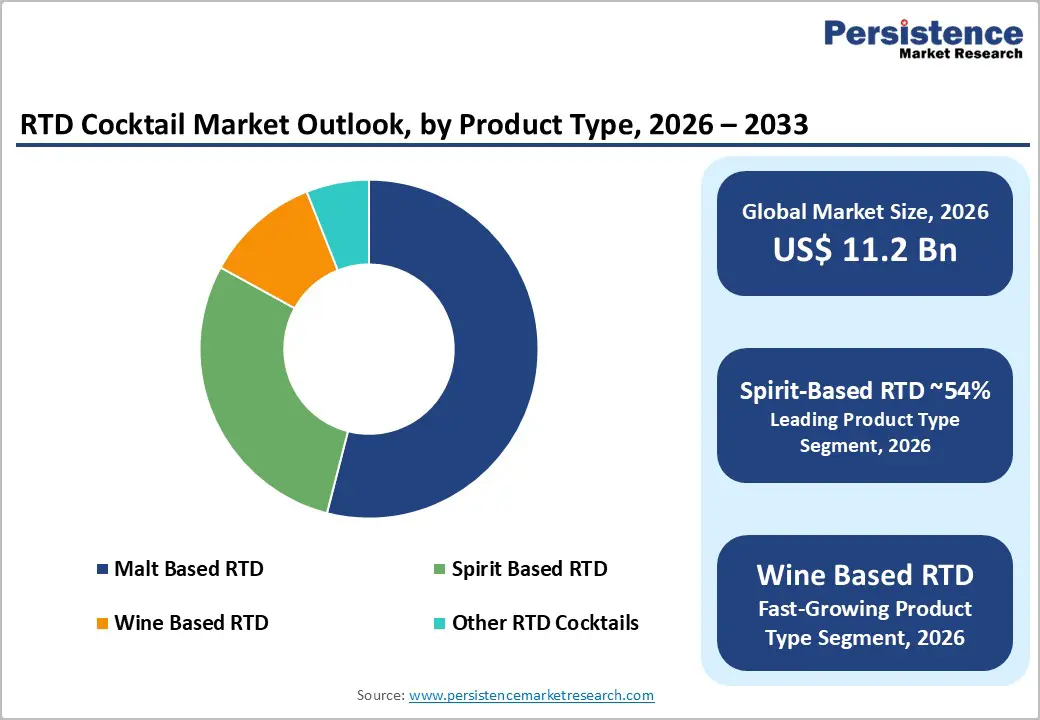
Vodka-based RTD Cocktail holds approx. 34% market share as of 2025, driven by its neutral flavor profile that supports broad consumer appeal and versatile recipe development. Brands rely on vodka as a reliable base for fruit-forward, botanical, and low-sugar formulations, making it the anchor spirit for mainstream and premium RTD segments. Its compatibility with sparkling mixers and clean-label ingredients strengthens its position across convenience, on-the-go, and social drinking occasions.
Rum, tequila, whiskey, gin, and multi-spirit RTD cocktails are expanding through niche flavor trends and regional preferences, yet they remain secondary due to stronger taste signatures and higher formulation costs. Vodka’s simplicity, mixability, and wide acceptance across geographies keep it firmly ahead, giving RTD manufacturers predictable scalability and consistent consumer traction worldwide.
By Flavor profile Insights
Tropical flavored RTD Cocktails are projected to grow at a CAGR of 13.8% during the forecast period in the global RTD Cocktails market, driven by rising consumer attraction toward vibrant, vacation-inspired taste experiences. Mango, pineapple, passion fruit, coconut, and guava blends resonate with younger drinkers seeking refreshing, fruit-led cocktails that match warm-weather occasions and social settings. These flavors pair well with vodka, rum, and tequila, giving brands flexibility to create light, bright, and easy-drinking formats that appeal across casual and premium segments.
The surge in social media–driven flavor discovery accelerates tropical adoption, as consumers gravitate toward colorful, photogenic beverages linked to travel and beach culture. Beverage innovators are responding with cleaner ingredient lists, lower sugar options, and sparkling tropical cocktails that enhance drinkability. This momentum positions tropical RTDs as one of the most dynamic growth pockets in the category.
Region-wise Insights
North America RTD Cocktail Market Trends
North America holds approximately 43% market share in the global RTD Cocktail Market, reflecting the region’s strong shift toward convenient, bar-quality beverages. In the United States, consumers are gravitating toward premium canned cocktails made with top-shelf spirits, real fruit extracts, and cleaner ingredient labels. Flavor experimentation is accelerating, with tequila-based margaritas, espresso martini RTDs, and botanical gin spritzes gaining significant traction. Growth in outdoor dining, tailgating, and home-centered social occasions keeps demand elevated across retail and on-premise channels.
Canada is witnessing rapid adoption of low-sugar and sessionable RTD formats as wellness-conscious drinkers influence product development. Craft distilleries are entering the segment with small-batch canned cocktails, tapping into local flavor trends and regional ingredients. Expanding flavor portfolios, rising mixology-inspired launches, and strong consumer acceptance of premium convenience continue to set the direction of North America’s evolving RTD cocktail landscape.
Asia Pacific RTD Cocktail Market Trends
Asia Pacific RTD Cocktail Market is expected to grow at a CAGR of 13.4%, driven by rising urban lifestyles, shifting alcohol preferences, and a strong appetite for convenient, mixology-inspired drinks. In India, younger consumers are embracing flavored vodka and gin-based RTDs that fit social gatherings and weekend culture. China is seeing momentum in fruit-forward sparkling cocktails aligned with its growing ready-to-drink alcohol movement. Japan’s market leans toward balanced, low-ABV cocktails that match its long-standing chu-hi culture, strengthening adoption across retail and convenience stores.
South Korea is fueling demand for playful, café-style cocktail flavors, supported by the country’s booming convenience store ecosystem. Thailand continues to expand interest in tropical, citrus-forward RTDs favored by tourists and local drinkers seeking easy, refreshing formats. Across the region, flavor innovation, premium packaging, and rising e-commerce penetration are shaping a fast-evolving and highly opportunity-rich RTD cocktail landscape.
Competitive Landscape
The global RTD Cocktail Market reflects a moderately fragmented competitive landscape where established alcohol giants and agile startups are racing to capture a fast-moving consumer base. Leading companies are expanding portfolios with bar-quality recipes, premium spirit bases, and region-specific flavor lines to strengthen global reach. Startups are pushing trend-forward concepts such as low-ABV botanical cocktails, natural ingredient blends, and eco-friendly packaging formats that appeal strongly to millennial drinkers.
Cross-brand collaborations, influencer-driven social media campaigns, and limited-edition flavor drops are becoming central strategies to boost visibility and create cultural relevance. Producers are also investing in recyclable cans, lightweight designs, and clean-label formulations to gain traction among sustainability-focused consumers. As flavor innovation accelerates across tropical, spicy, and craft-inspired profiles, competition intensifies through marketing creativity, distribution partnerships, and continuous product refinement.
Key Developments:
- In December 2025, Anheuser-Busch InBev announced plans to acquire a majority stake in BeatBox, calling it a rising force in the RTD category. The deal strengthens AB InBev’s position in youthful, flavor-driven alcoholic beverages as demand for bold, convenience-led formats accelerates.
- In September 2025, Sazerac Company partnered with Molson Coors–aligned wholesaler Andrews Distributing to launch three new RTD beverages in Texas. The move strengthens Sazerac’s regional RTD footprint and accelerates its expansion into high-growth convenience-driven alcohol segments.
- In August 2025, Pernod Ricard partnered with fruit and beverage company Dole to launch a new range of ready-to-drink (RTD) cocktails. The collaboration combined Pernod Ricard’s expertise in premium spirits with Dole’s reputation for high-quality fruit products, creating a line of beverages designed to deliver fresh, tropical flavors in a convenient format.
- In June 2025, Spanish company MG Destilerías introduced a new line of canned ready-to-drink (RTD) cocktails to its Coppa Cocktails portfolio. The 200ml cans, featuring an ABV of 10%, are available in three distinct flavors: Spicy Margarita, Paloma Spritz, and Coconut Daiquiri.
Companies Covered in RTD Cocktail Market
- Diageo plc
- Brown-Forman Corporation
- Bacardi Limited
- Pernod Ricard
- Suntory Holdings Limited
- Funkin Cocktails
- American Beverage Corporation
- Mark Anthony Brands
- Anheuser-Busch InBev
- Asahi Group Holdings
- Sazerac Co, Inc.
- Others
Frequently Asked Questions
The global RTD Cocktail market is projected to be valued at US$ 5.4 Bn in 2026.
Rising premium alcohol consumption is accelerating demand for RTDs that deliver bar-level quality, driving the expansion of the global RTD Cocktail market.
The global RTD Cocktail market is poised to witness a CAGR of 10.2% between 2026 and 2033.
Premiumization trends are creating space for craft-style RTD cocktails made with top-shelf spirits and natural ingredients, unlocking a strong opportunity for companies operating in the RTD Cocktail industry.
Major players in the global RTD Cocktail market include Diageo plc, Brown-Forman Corporation, Bacardi Limited, Pernod Ricard, Suntory Holdings Limited, Anheuser-Busch InBev, Asahi Group Holdings, and others


