




- Beverages
- High-Strength RTD Malt Beverages Market
High-Strength RTD Malt Beverages Market Size, Trends, Share, Growth, and Regional Forecast, 2026 to 2033
High-Strength RTD Malt Beverages Market by ABV (5% - 7%, 7% - 10%, 10% - 14%, 14% +), Flavor Type (Fruit-Based Flavors, Cocktail-Inspired Flavors, Cola & Dark Flavors, Tea & Herbal Infused, Others), Distribution Channel (On Trade, Off Trade), and Regional Analysis from 2025 to 2032

High-strength RTD Malt Beverages Market Share and Trends Analysis
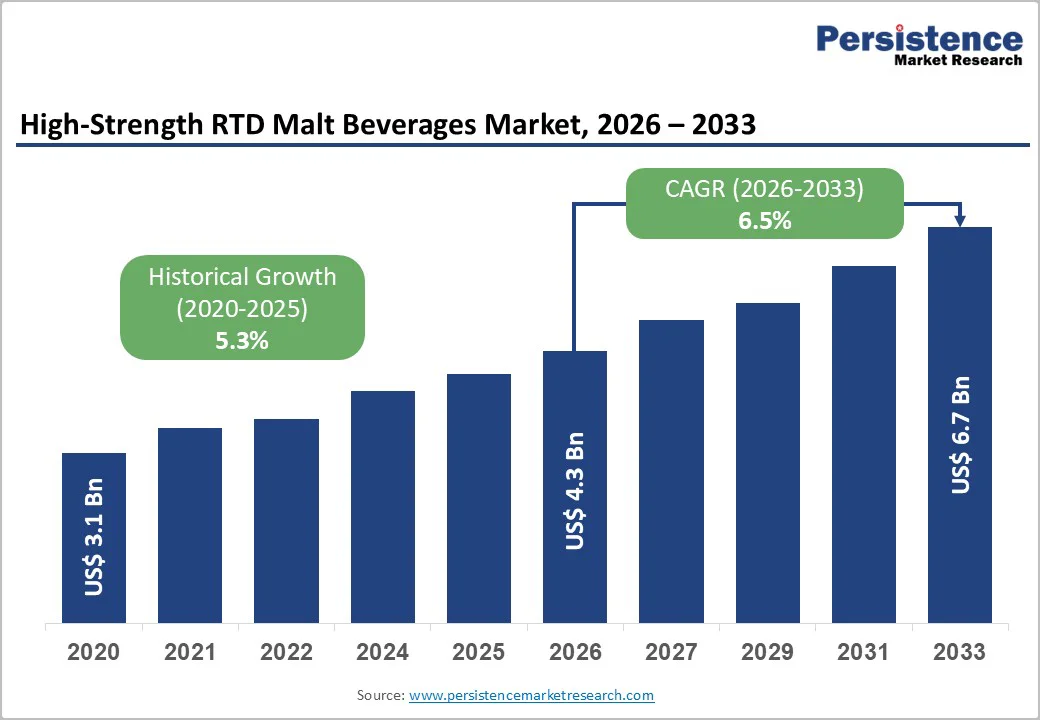
The global high-strength RTD malt beverages market size is estimated to grow from US$ 4.3 billion in 2026 to US$ 6.7 billion, growing at a CAGR of 6.5% during the forecast period from 2026 to 2033.
The market is entering a phase of rapid evolution, powered by flavor-forward innovation, constant experimentation across ABV formats, and beverage drinking cultures.
Key Industry Highlights:
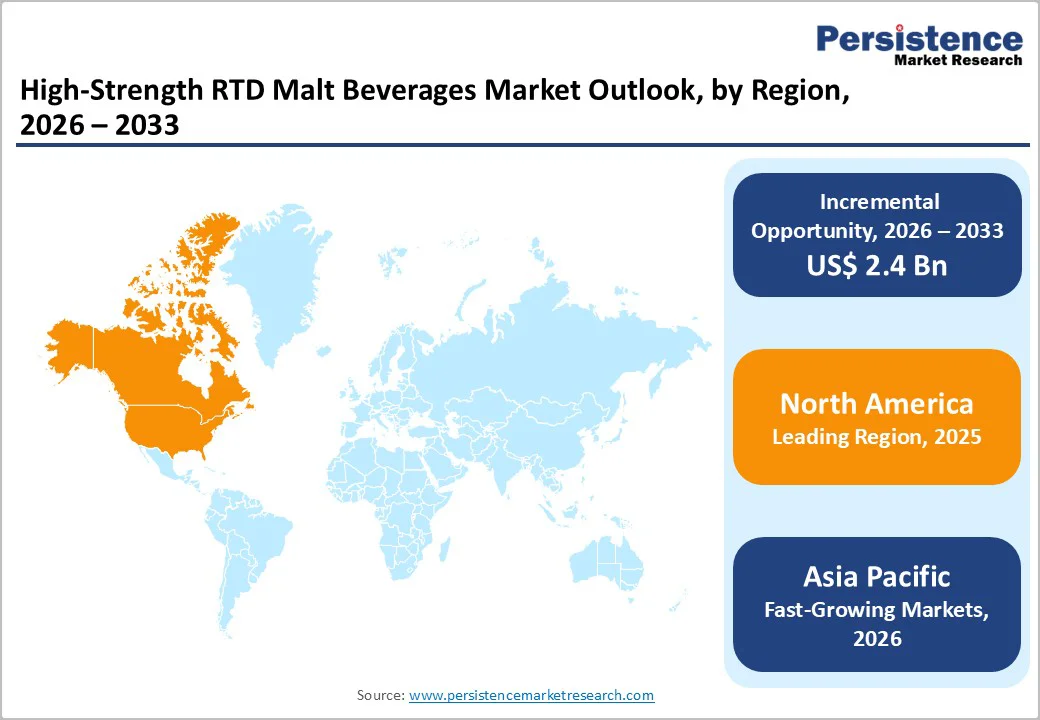
- Leading Region: North America retains dominance with a 41% market share, shaped by bold flavor experimentation, convenience-led drinking occasions, and highly active digital-first consumer engagement.
- Fastest-Growing Region: Asia Pacific, expanding at a CAGR of 8.8%, driven by youthful social drinking cultures, vibrant flavor adoption, and wider acceptance of high-strength canned formats in urban markets.
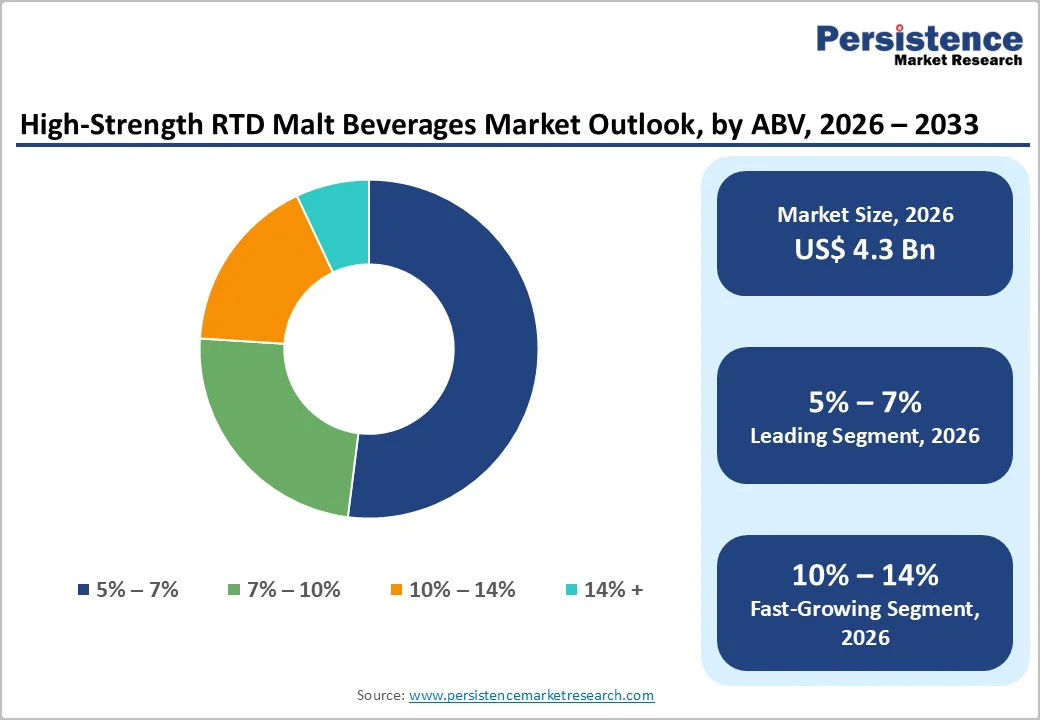
- Fastest-Growing ABV Segment: The 5%-7% category, supported by smoother taste profiles, regulatory ease, and strong appeal among millennials and Gen Z seeking balanced strength with accessible flavors.
- Fastest-Growing Flavor Segment: Cocktail-Inspired Flavors, gaining momentum through rising interest in mixology-style experiences and demand for mojito, margarita, cosmopolitan, and mule-inspired high-strength RTD variants.
- Growth Indicators: Urban youth-driven preference shifts toward bold, ready-to-drink malt beverages featuring adventurous flavors and hassle-free consumption formats that align with nightlife, home entertainment, and social gatherings.
- Opportunities: High-impact collaborations with music festivals, gaming communities, and digital influencers that enable immersive brand engagement, rapid audience scaling, and culturally relevant product positioning.
- Key Developments: In November 2025, Brown-Forman introduced New Mix in the U.S. market with two citrus-forward tequila-based variants, Paloma and Cantarito. In June 2025, Masons of Yorkshire and Franklin & Sons launched a premium RTD range combining crafted spirits with elevated mixer profiles to meet rising demand for high-quality ready-to-serve beverages.
| Key Insights | Details |
|---|---|
| Global High-Strength RTD Malt Beverages Market Size (2026E) | US$ 4.3 Bn |
| Market Value Forecast (2033F) | US$ 6.7 Bn |
| Projected Growth (CAGR 2026 to 2033) | 6.5% |
| Historical Market Growth (CAGR 2020 to 2025) | 5.3% |
Market Dynamics
Driver - Urban Youth Preferences Drive Flavor Innovation in High-Strength RTD Malt Beverages
A dynamic shift in urban youth preferences is redefining the high-strength RTD malt beverages landscape. Young consumers are increasingly drawn to ready-to-drink options that deliver bold, distinctive flavors combined with convenient, on-the-go consumption. Flavored malt beverages, ranging from tropical blends to sour and spiced variants, appeal to adventurous palates while offering consistent alcohol content without the need for mixing.
Bars, social events, and casual gatherings are driving visibility, encouraging brands to innovate with packaging, limited editions, and interactive experiences. This trend is prompting manufacturers to focus on flavor diversity, smoothness, and instant appeal, while leveraging marketing strategies that resonate with digital-savvy audiences, ultimately expanding the reach and adoption of pre-mixed malt beverages in urban markets.
Restraints -Stringent Regulations on Alcohol Content and Labeling Restrict Innovation in High-Strength RTD Malt Beverages
Increasingly stringent regulations on alcohol content and labeling are reshaping product development in the high-strength RTD malt beverages market. Producers face tighter limits on permitted alcohol by volume (ABV), labeling accuracy, and marketing claims, which constrain recipe formulation and flavor experimentation. Compliance requires extensive testing, documentation, and certification, adding operational complexity and slowing time-to-market for innovative blends.
Restrictions on promotional language, packaging size, and health warnings further limit creative positioning, especially in youth-oriented and on-the-go segments. Brands aiming to balance bold flavor profiles with legal thresholds must adjust formulations, often at higher production costs. These regulatory pressures reduce flexibility in product design and challenge rapid innovation in a competitive and trend-driven market.
Opportunity - Collaborations with Music Festivals, Gaming Communities, and Digital Influencers Create Powerful Engagement Channels
A dynamic opportunity is emerging as high-strength RTD malt beverage brands increasingly tap into experiential marketing through music festivals, gaming communities, and digital influencers. These collaborations enable companies to connect with highly engaged, youthful audiences through immersive experiences that enhance brand recall and foster loyalty.
Limited-edition flavors, co-branded activations, and influencer-led content amplify social media presence while encouraging trial and repeat consumption. Startups can leverage these platforms to build niche followings quickly, while established players can reinforce their market leadership by integrating online and offline engagement strategies.
By aligning product launches with popular cultural events and digital trends, beverage companies can convert audience enthusiasm into measurable sales growth, creating high-impact channels for brand storytelling and consumer connection.
Category-wise Analysis
By ABV Insights
5% - 7% accounts for nearly 51% market share as of 2025, reflecting a clear consumer shift toward balanced strength paired with approachable flavor profiles. This ABV range appeals to urban millennials and Gen Z drinkers who want a noticeable kick without overwhelming intensity, making it ideal for fruity, citrusy, and spiced RTD malt formats.
Brands favor this segment because it supports smoother flavor integration, easier regulatory compliance, and broader retail placement across convenience and modern trade channels. Higher-ABV variants, typically above 8%, continue appealing to niche consumers seeking bold, hard-hitting options, yet their growth is constrained by stricter labeling rules and limited mass-market acceptance.
As lifestyle drinking trends prioritize flavor-driven refreshment, the 5%-7% category retains its dominance.
By Flavor Type Insights
Cocktail-inspired flavors are expected to reach a positive CAGR during the forecast period, signaling a decisive shift toward bar-quality experiences delivered through convenient, ready-to-drink formats. Consumers in urban markets are gravitating toward mojito, margarita, cosmopolitan, and mule-style profiles that offer familiar, mixology-inspired tastes without the need for preparation or premium bar pricing.
This segment gains momentum as younger drinkers embrace social drinking at home, rooftop gatherings, and music-led events where sophisticated flavors enhance the experience. Enhanced flavor engineering, better carbonation control, and improved malt bases are enabling brands to recreate cocktail authenticity with greater precision. With rising interest in global cocktail culture and adventurous palates, these flavors are set to reshape premium RTD malt innovation.
Region-wise Insights
North America High-Strength RTD Malt Beverages Market Trends
North America is the dominant market, holding a share of 41% in 2025, and its momentum reflects a rapid shift toward flavor-rich, convenience-driven drinking occasions shaped by younger consumers. In the US, demand is rising for high-strength RTD malt beverages positioned around bold cocktail profiles, tropical mixes, and energy-leaning formats that fit nightlife, sports events, and home entertainment.
Brands are experimenting with cleaner malt bases, expanded flavor rotations, and limited-edition drops to align with seasonal trends and pop-culture moments. Canada is seeing a surge in premium, sessionable formats with smoother finishes and curated flavor blends designed for relaxed social occasions. Across the region, digital-first marketing, influencer tie-ins, and lifestyle-driven packaging continue to redefine category expectations.
Asia Pacific High-Strength RTD Malt Beverages Market Trends
Asia Pacific high-strength RTD malt beverages market is expected to grow at a CAGR of 8.8%, driven by a sharp rise in youthful drinking cultures and a shift toward flavored, convenience-led alcohol formats. China is seeing strong traction for fruit-forward, low-bitterness, high-strength malt blends that appeal to new drinkers seeking smooth profiles. India is expanding rapidly as urban nightlife and e-commerce alcohol channels push demand for ready-to-serve premium mixes.
Japan is experimenting with refined, balanced formulations that cater to consumers seeking controlled strength with elevated flavor precision. Indonesia’s growth is linked to rising acceptance of canned beverages in social gatherings, while South Korea is accelerating innovations around hybrid malt-cocktail fusions. Across the region, portability, vibrant flavoring, and trend-driven packaging are shaping category evolution.
Competitive Landscape
The global high-strength RTD malt beverages market reflects a moderately fragmented structure, where agile brands and established alcohol players compete to capture fast-moving consumer preferences. Leading companies are intensifying R&D to refine malt bases, enhance flavor stability, and engineer smoother high-ABV profiles that appeal to younger drinkers.
Product development pipelines now focus on cocktail-inspired blends, tropical fusions, and limited-edition releases that boost seasonal sales. B2B expansion is accelerating as brands partner with convenience retailers, QSR chains, and music venues to secure high-visibility placements.
Marketing strategies are becoming more immersive, leveraging club collaborations, nightlife promotions, and influencer-driven campaigns. Celebrity endorsements are emerging as a key differentiator, helping brands build aspirational appeal and strengthen loyalty in trend-led urban markets.
Key Industry Developments:
- In November 2025, Brown-Forman introduced New Mix in the U.S. RTD market, crafted with El Jimador Blanco Tequila. The launch debuts two vibrant flavors Paloma and Cantarito designed to capture rising demand for authentic, citrus-forward tequila cocktails.
- In June 2025, Masons of Yorkshire and Franklin & Sons unveiled a new RTD drinks range combining Masons’ award-winning gin and vodka with Franklin & Sons' premium mixers. The collaboration targets soaring demand for convenient, high-quality alcoholic beverages with crafted flavor profiles.
- In December 2024, Suntory Holdings expanded its U.S. RTD portfolio with the debut of MARU-HI, a Japanese-inspired sparkling cocktail crafted for modern consumers. The launch strengthens the company’s premium RTD positioning and brings authentic Japanese flavor cues to the growing convenience-led beverage segment.
Companies Covered in High-Strength RTD Malt Beverages Market
- Anheuser-Busch InBev
- Diageo plc
- Bacardi Limited
- Molson Coors Beverage Company
- Carib Brewery Limited
- Constellation Brands
- Pabst Brewing Company
- Heineken Group
- Suntory Holdings
- Others
Frequently Asked Questions
The global high-strength RTD malt beverages market is projected to be valued at US$ 4.3 Bn in 2026.
Youth-driven urban consumption trends are pushing demand toward bold, ready-to-drink malt beverages with convenient, pre-mixed flavors.
The global high-strength RTD malt beverages market is poised to witness a CAGR of 6.5% between 2026 and 2033.
Partnering with music festivals, gaming communities, and digital influencers offers key players high-impact avenues for consumer engagement and brand visibility.
Major players in the global High-Strength RTD Malt Beverages market include Anheuser-Busch InBev, Diageo plc, Bacardi Limited, Constellation Brands, Pabst Brewing Company, Heineken Group, Suntory Holdings, and others.


