




- Nutraceuticals & Functional Foods
- Marine Nutraceutical Market
Marine Nutraceutical Market Size, Share, Growth, and Regional Forecast, 2026 to 2033
Marine Nutraceutical Market is segmented by Active Compounds (Omega-3 Fatty Acids, Marine Collagen, Amino Acids, Carotenoids, Vitamins, Minerals, and Others), by Form (Capsules & Softgels, Liquid/Oil, Powder & Granules, Tablets, and Gummies), by Sales Channel (Supermarkets & Hypermarkets, Pharmacies & Drugstores, Specialty Health Stores, Healthcare Practitioners, Online Retail, and Others), and Regional Analysis, 2026 - 2033

Marine Nutraceutical Market Share and Trends Analysis
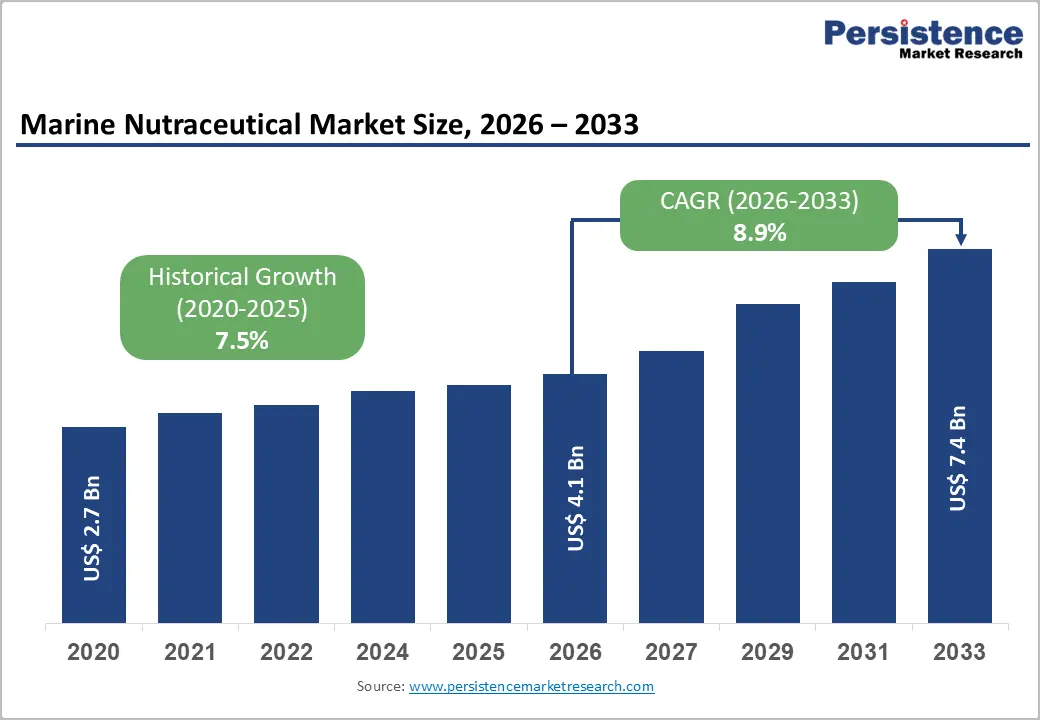
The global marine nutraceutical market size is expected to be valued at US$ 4.1 billion in 2026 and projected to reach US$ 7.4 billion by 2033, growing at a CAGR of 8.9% between 2026 and 2033.
The market expansion is fundamentally driven by the escalating global demand for bioavailable nutritional supplements and a structural shift toward preventive healthcare. High absorption rates of marine-derived proteins and lipids, compared to terrestrial alternatives, have positioned these products as premium solutions for cardiovascular, bone, and skin health. Furthermore, the historical market growth of 7.5% between 2020 and 2025 highlights a steady consumer transition toward sustainable blue economy products, supported by rigorous clinical validation from organizations such as the European Food Safety Authority (EFSA) and the U.S. Food and Drug Administration (FDA).
Key Industry Highlights:
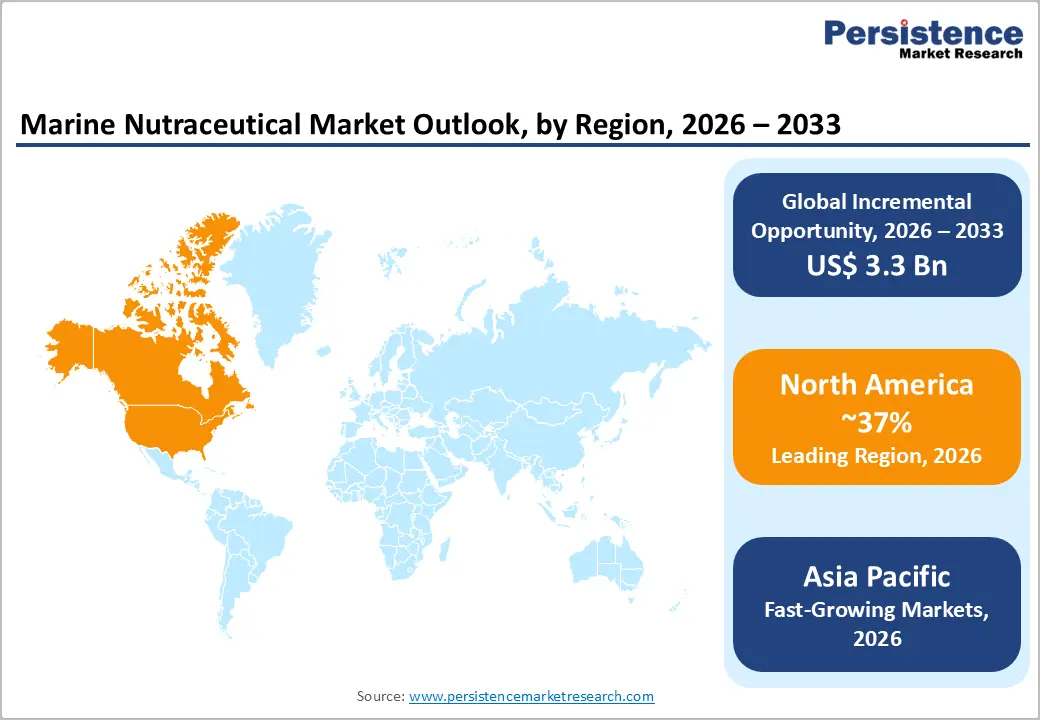
- Leading Region: North America dominated the market in 2025 with a 37% share, supported by high consumer health awareness and the strong presence of global supplement giants like Amway and Herbalife.
- Fastest Growing Region: Asia Pacific is the fastest growing region through 2033, fueled by the burgeoning beauty and wellness industry in China and rising disposable incomes across India and ASEAN nations.
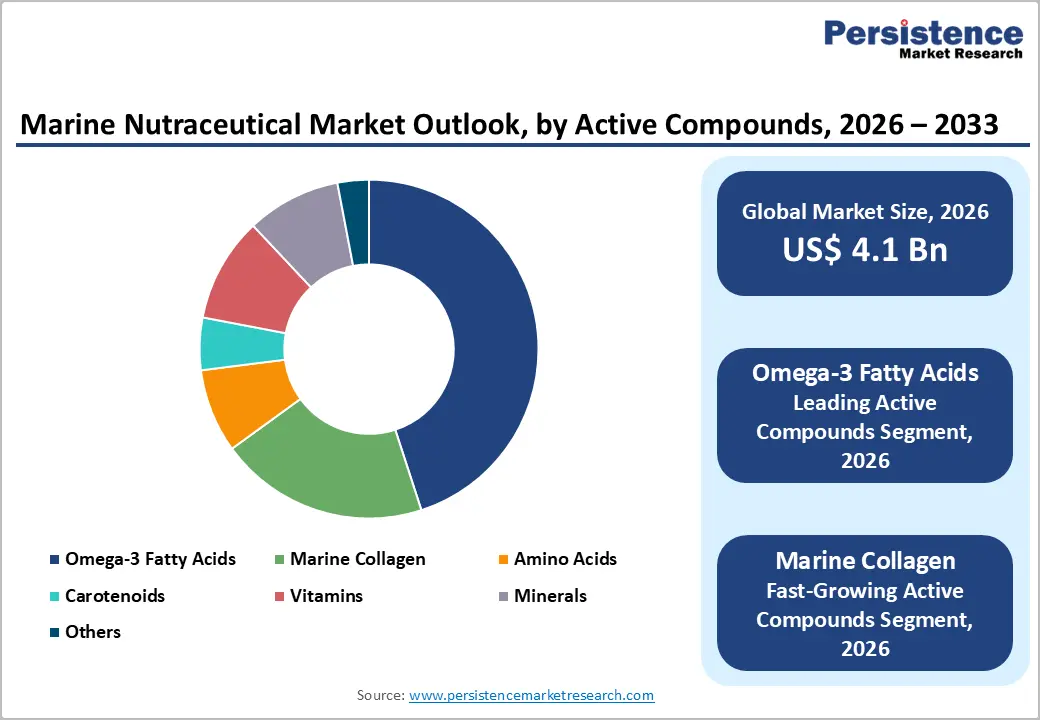
- Dominant Segment: Omega-3 Fatty Acids held a 46% market share in 2025, remaining the primary driver for heart and brain health supplementation globally.
- Fastest Growing Segment: Marine Collagen is the fastest growing active compound, benefiting from its superior bioavailability and the explosive growth of the nutricosmetics and anti-aging sectors.
- Key Market Opportunity: The integration of Personalized Nutrition with marine based products offers a significant avenue for brands to leverage digital health data and subscription models.
| Key Insights | Details |
|---|---|
| Global Marine Nutraceutical Market Size (2026E) | US$ 4.1 Bn |
| Market Value Forecast (2033F) | US$ 7.4 Bn |
| Projected Growth (CAGR 2026 to 2033) | 8.9% |
| Historical Market Growth (CAGR 2020 to 2025) | 7.5% |
Market Dynamics
Driver - Rising Prevalence of Lifestyle Related Diseases and Preventive Care
The primary catalyst for the Marine Nutraceutical Market is the burgeoning global focus on proactive health management to combat chronic conditions such as heart disease and osteoporosis. According to data from the World Health Organization (WHO), cardiovascular diseases remain the leading cause of death globally, prompting consumers to seek long term nutritional interventions. Omega-3 Fatty Acids, specifically EPA and DHA sourced from fish and krill oil, are clinically recognized for their ability to manage triglyceride levels and reduce systemic inflammation. In 2025, the American Heart Association emphasized the role of marine lipids in maintaining vascular health, which has significantly increased the adoption of marine supplements among the aging populations of North America and Europe.
Restraint - Sustainability Concerns and Stringent Environmental Regulations
The market faces significant hurdles due to the delicate nature of marine ecosystems and the risk of overfishing. Regulatory bodies have implemented strict certification requirements to ensure that the harvest of krill and small pelagic fish stays within sustainable limits. In 2025, supply chain disruptions were noted in the Peruvian anchovy fisheries due to climatic shifts, leading to price volatility for raw fish oil. These supply constraints, coupled with the high cost of maintaining certified sustainable operations, often lead to premium retail pricing that can limit market penetration in price sensitive emerging economies.
Opportunity - Surging Demand for Marine Collagen in Nutricosmetics
The intersection of nutrition and dermatology represents a massive growth frontier for marine ingredients. Marine Collagen is identified as the fastest growing active compound segment for the period 2026 - 2033, as it is perceived to have superior bioavailability and a lower risk of bovine spongiform encephalopathy (BSE) compared to land based collagen. In 2025, the global beauty from within trend reached new heights, with consumers in Asia Pacific leading the demand for marine peptides to improve skin elasticity and hydration. Brands like Swisse Wellness and Blackmore are increasingly launching hybrid products that combine marine minerals with collagen to target both joint health and aesthetic wellness.
Category-wise Analysis
Active Compounds Insights
Omega-3 fatty acids remain the dominant segment, commanding a 46% market share. This leadership is sustained by decades of clinical research supporting their efficacy in brain and heart health, making them a staple in household supplement cabinets. However, Marine Collagen is the fastest growing segment. Unlike traditional collagen, marine versions are valued for their smaller molecular weight and higher absorption through the intestinal barrier. The growth of this segment is primarily fueled by the Nutricosmetics sector, where it is marketed as a clean label, sustainable alternative to porcine and bovine proteins, particularly in the premium skincare markets of Japan and South Korea.
Sales Channel Insights
Pharmacies & Drugstores represent the leading sales channel, as consumers often seek professional advice for condition specific supplements like marine oils for cholesterol management. Chains like CVS and Walgreens have dedicated wellness sections that drive high volume sales. Meanwhile, Online Retail is the fastest growing channel. The ease of comparing third party purity reports and the convenience of subscription models have shifted consumer behavior. In 2025, e-commerce revenue for companies such as NOW Foods and Nordic Naturals saw double digit growth, supported by the rise of social commerce and influencer led education on the benefits of marine collagen and krill oil.
Region-wise Insights
North America Marine Nutraceutical Market Trends and Insights
North America held the largest market share of 37% in 2025, with the United States acting as the primary hub for innovation and consumption. The market is characterized by high health literacy and a well-established regulatory framework under the Dietary Supplement Health and Education Act (DSHEA). The FDA continued to support the Qualified Health Claims for EPA and DHA, which has maintained high consumer confidence in the category.
Trends in the region are heavily focused on transparency and sustainability. U.S. consumers are increasingly looking for MSC or Friend of the Sea certifications on labels. The innovative ecosystem is experiencing a surge in vegan marine alternatives, such as Algal Oil, which targets the growing vegetarian population. Large scale players like GNC Holdings and Amway have leveraged their extensive distribution networks to push high potency marine concentrates, ensuring that North America remains at the forefront of the global value share.
Asia Pacific Marine Nutraceutical Market Trends and Insights
Asia Pacific is the fastest growing region, projected to witness a high CAGR during the period. This growth is underpinned by the rapid urbanization and rising disposable income in China and India. In 2025, China led the regional market in the consumption of marine collagen, driven by its extensive beauty and wellness industry. The cultural familiarity with seafood and marine based traditional medicine provides a strong foundation for the adoption of modern marine nutraceuticals.
Manufacturing advantages in the region, particularly the abundant marine resources in Southeast Asia and the advanced biotechnology hubs in Japan and South Korea, allow for cost effective production. In India, the expansion of digital health infrastructure and the increasing awareness of heart health among urban professionals are driving the demand for Omega-3 supplements. As the regional middle class continues to expand, Asia Pacific is expected to become the primary engine for volume growth in the global marine supplement landscape.
Competitive Landscape
The marine nutraceutical market is a moderately consolidated landscape, with established global leaders coexisting with specialized marine biotechnology firms. Companies like Amway, Herbalife Nutrition, and Nordic Naturals maintain dominance through vertical integration and extensive global distribution. Strategic mergers and acquisitions are common as larger firms seek to acquire specialized extraction technologies or sustainable sourcing licenses.
Key market differentiators have shifted from simple nutrient content to Purity Levels, Sustainability Certifications, and Traceability. Emerging business models are increasingly focusing on the B2B supply of marine ingredients to the functional food and beverage industry. Research and development are currently focused on microencapsulation to improve the shelf life and odor profile of marine oils, allowing for their integration into a wider variety of everyday food products.
Key Developments:
- In February 2026, GNC announced a new partnership with High Level Science®, aimed at strengthening its science-backed supplement portfolio and accelerating innovation across performance nutrition and targeted wellness categories.
- In January 2026, Songji Biotech Enterprise Co., Ltd. commercially launched standardized 1,000-Dalton marine collagen peptides, validated for anti-aging efficacy through a collaborative clinical study with Hualien Tzu Chi Hospital, marking a significant advancement in clinically substantiated marine bioactive ingredients.
- In November 2025, the Global Organization for EPA and DHA Omega-3s (GOED) announced that it will host its Biennial Global Omega-3 Conference in Singapore in March 2026, reinforcing Asia’s strategic importance in omega-3 innovation, regulatory dialogue, and global supply chain collaboration.
Companies Covered in Marine Nutraceutical Market
- Amway
- Herbalife Nutrition
- Nordic Naturals
- Blackmores
- Nature Made
- Nature’s Bounty
- NOW Foods
- Swisse Wellness
- GNC Holdings
- Viva Naturals
- Jamieson Wellness
- Orkla Health
- Others
Frequently Asked Questions
The global marine nutraceutical market is projected to be valued at US$ 4.1 Bn in 2026.
Rising Prevalence of Lifestyle Related Diseases and Preventive Care is driving demand for Marine Nutraceutical market.
The Global Marine Nutraceutical market is poised to witness a CAGR of 8.9% between 2026 and 2033.
Surging Demand for Marine Collagen in Nutricosmetics is key opportunity for key players in the market.
The marine nutraceutical market is led by global giants such as Amway, Herbalife Nutrition, Nordic Naturals, Blackmores, Nature Made, Nature’s Bounty, NOW Foods, and others.


