




- Specialty & Fine Chemicals
- Marine Calcium Market
Marine Calcium Market Size, Share, and Growth Forecast, 2026 - 2033
Marine Calcium Market by Product Type (Brackish Water, Salt Water, Others), Application (Supplements, Cosmetics, Others), End-user (Healthcare, Ornament), and Regional Analysis for 2026 - 2033

Marine Calcium Market Size and Trends Analysis
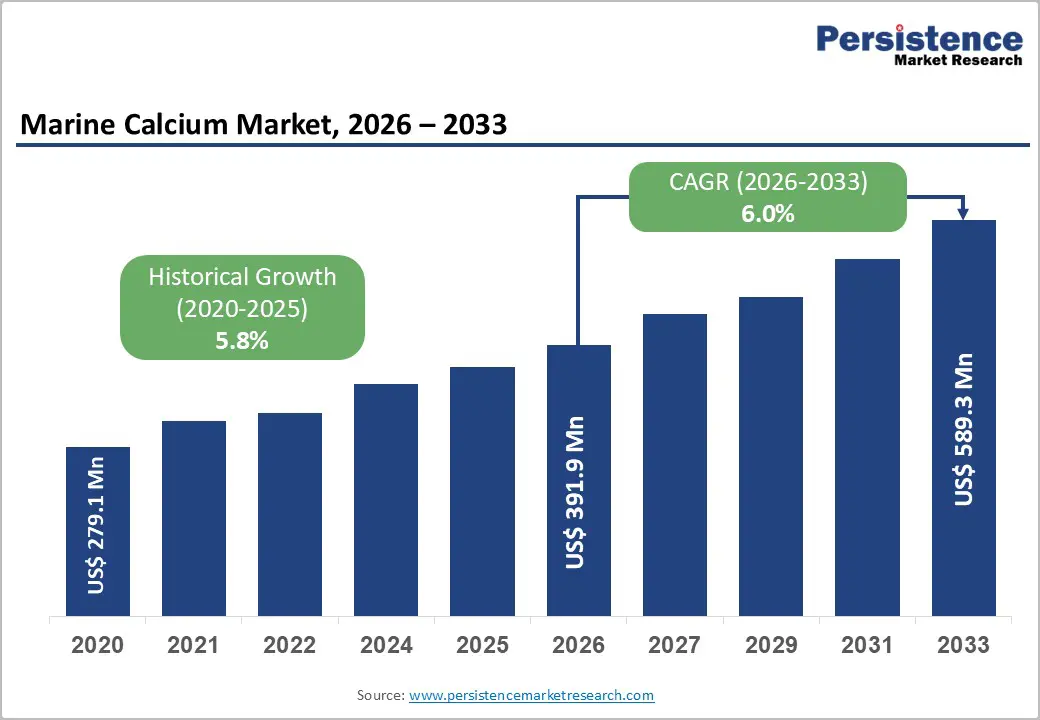
The global marine calcium market size is likely to be valued at US$391.9 million in 2026, and is expected to reach US$589.3 million by 2033, growing at a CAGR of 6.0% during the forecast period from 2026 to 2033, driven by the increasing prevalence of calcium deficiency disorders, rising consumer preference for natural and bioavailable supplements, and growing demand for marine-derived ingredients in premium cosmetics formulations.
Growing demand for high-purity, sustainable marine calcium, particularly saltwater-sourced variants for dietary supplements and healthcare applications, is accelerating adoption across end uses. Advances in extraction technologies and clean-label processing are further boosting uptake by offering superior bioavailability and eco-friendly credentials. Increasing recognition of marine calcium as a critical natural alternative to synthetic calcium sources in emerging wellness and personal care markets remains a major driver of market growth.
Key Industry Highlights:
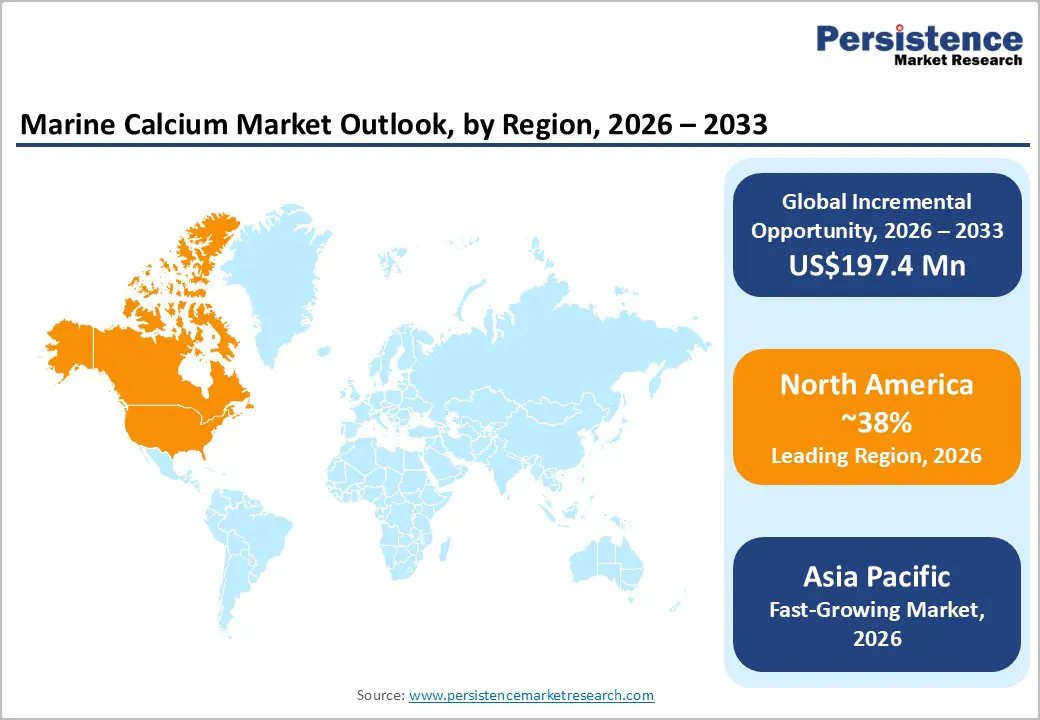
- Leading Region: North America, anticipated to account for a 38% market share in 2026, driven by high supplement consumption, strong clean-label trends, and premium demand in the U.S.
- Fastest-growing Region: Asia Pacific, fueled by rising middle-class health awareness, expanding nutraceutical industry, and growing investments in marine-derived ingredients in China and India.
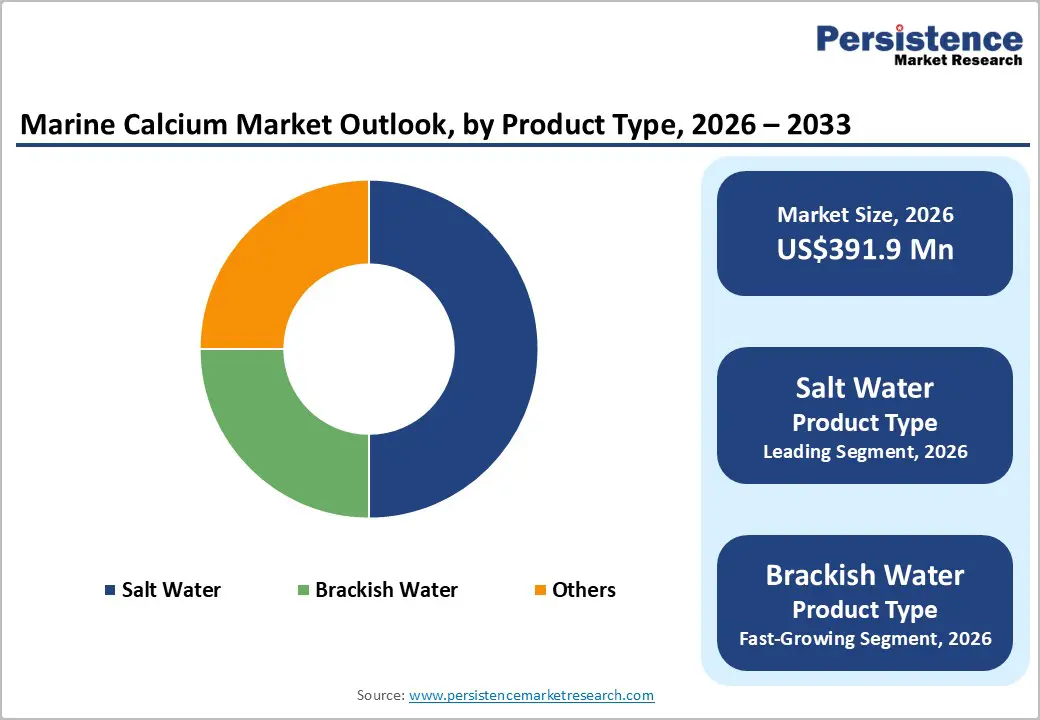
- Dominant Product Type: Salt Water, to hold approximately 65% of the market share, as it offers the highest natural calcium content and widespread availability.
- Leading Application: Supplements, to account for over 70% of the market revenue, due to primary use in bone health and dietary products.
- Leading End-user: Healthcare, accounting for nearly 75% of market revenue, owing to dominant consumption of nutraceuticals and functional foods.
| Key Insights | Details |
|---|---|
| Marine Calcium Market Size (2026E) | US$391.9 Mn |
| Market Value Forecast (2033F) | US$589.3 Mn |
| Projected Growth (CAGR 2026 to 2033) | 6.0% |
| Historical Market Growth (CAGR 2020 to 2025) | 5.8% |
Market Factors - Growth, Barriers, and Opportunity Analysis
Rising Demand for Calcium Deficiency and Natural Bioavailable Sources
The rising demand for calcium is strongly influenced by the increasing prevalence of calcium deficiency across age groups, particularly among women, children, and the elderly. Rapid urbanization, changing dietary habits, and increased consumption of processed foods have reduced intake of calcium from traditional diets. Sedentary lifestyles and limited sun exposure have contributed to poor bone health, further intensifying the need for effective calcium supplementation. Increased awareness of osteoporosis, osteopenia, and bone-related disorders has encouraged consumers to proactively manage calcium intake rather than rely on treatment at later stages.
There is a clear shift toward natural and bioavailable calcium sources. Consumers are becoming more informed and cautious about synthetic additives, thereby increasing demand for calcium derived from natural sources such as algae, marine sources, milk minerals, and plant-based ingredients. These sources are perceived to offer better absorption, improved tolerability, and fewer side effects than conventional inorganic calcium salts. The growing adoption of clean-label supplements and functional foods has further reinforced this trend. Manufacturers are increasingly focusing on formulations that combine calcium with co-nutrients such as vitamin D, magnesium, and vitamin K to enhance bioavailability.
Sustainability Concerns and Raw Material Supply Constraints
Sustainability concerns and raw material supply constraints have emerged as significant challenges across nutrition and ingredient-driven industries. Increasing pressure to reduce environmental impact has pushed manufacturers to re-evaluate sourcing practices, production methods, and supply chain transparency. Many raw materials used in health and nutrition products are derived from agriculture, marine ecosystems, or mineral extraction, all of which are vulnerable to climate change, resource depletion, and stricter environmental regulations. Issues such as water scarcity, soil degradation, and declining biodiversity are directly affecting the availability and quality of key inputs.
Raw material supply chains are becoming more complex and fragile. Seasonal variability, geopolitical uncertainties, and dependence on a limited number of sourcing regions often result in supply disruptions and price volatility. Sustainable alternatives, while desirable, frequently involve higher costs, longer certification timelines, and limited scalability, creating a gap between sustainability goals and commercial feasibility. Small-scale producers may struggle to meet consistent volume and quality requirements, further tightening supply.
Growth of Vegan & Lactose-Free Nutrition
The growth of vegan and lactose-free nutrition is being driven by a combination of health awareness, ethical considerations, and changing dietary preferences. A growing number of consumers are reducing or eliminating animal-derived products due to concerns about digestion, allergies, cholesterol intake, and overall health. Lactose intolerance, which affects a significant portion of the global population, has further accelerated the shift toward dairy-free alternatives, particularly in regions where traditional milk consumption is associated with digestive discomfort.
Vegan diets are gaining acceptance beyond niche consumer groups and are increasingly viewed as balanced and sustainable lifestyle choices. This has encouraged the development of plant-based alternatives to milk, yogurt, cheese, and nutritional supplements. Removing dairy from the diet often creates nutritional gaps, especially for calcium and other essential minerals traditionally obtained from milk. As a result, demand is increasing for non-dairy, naturally sourced, and bioavailable nutrient solutions that can support bone and overall health.
Category-wise Analysis
Product Type Insights
Salt water is expected to lead the market, holding 65% of the share in 2026, due to its abundant availability and consistent mineral composition. Marine calcium extracted from salt water benefits from a stable and scalable sourcing base, enabling manufacturers to maintain a reliable supply and cost efficiency. The purification and concentration processes allow for the recovery of highly bioavailable calcium while retaining trace minerals that support absorption. Nature’s Answer offers a marine-based calcium and magnesium supplement that is derived from red algae and seawater in the pristine waters off the coast of Iceland. This product uses minerals naturally accumulated in Aquamin® red algae, which is formed in saltwater environments and contains calcium along with 72 other trace minerals.
Brackish water is likely to be the fastest-growing product type, due to its balanced mineral profile and increasing focus on sustainable sourcing. Formed through the natural mixing of freshwater and seawater, brackish environments enable the accumulation of calcium alongside complementary trace minerals that support improved absorption. Extraction from brackish water often requires lower processing intensity compared to deep-sea sources, reducing energy use and operational costs. Rising innovation in controlled aquaculture and inland saline water processing is expanding the commercial viability of brackish water calcium, making it attractive for use in dietary supplements and functional foods targeting natural, eco-conscious nutrition solutions.
Application Insights
Supplements are projected to lead the market, holding 70% of the share in 2026, driven by their convenience, dosage accuracy, and strong consumer trust. Dietary supplements allow precise delivery of calcium in bioavailable forms, making them a preferred choice for addressing deficiencies across different age groups. Growing awareness of bone health, active aging, and preventive nutrition has encouraged routine supplement consumption rather than reactive treatment. Supplements are available in formats such as capsules, powders, and liquids, facilitating easy integration into daily routines. Strong retail and e-commerce availability further supports their dominant market position. VegLife Red Marine Calcium is a dietary supplement formulated with marine-derived calcium sourced from red marine algae (Lithothamnion calcareum), a natural oceanic source rich in bioavailable calcium and trace minerals. Such marine calcium is known for its enhanced absorption and gentler effect on digestion compared with many synthetic calcium salts, making it popular in bone health and preventive nutrition products.
Cosmetics are likely to be the fastest-growing application, driven by increasing demand for skin-friendly, mineral-based, and naturally sourced ingredients. Consumers are prioritizing products that support skin barrier repair, hydration, and long-term skin health rather than short-term cosmetic effects. Calcium plays a critical role in skin cell renewal, differentiation, and barrier function, making it valuable in premium skincare formulations. Marine-derived calcium is especially attractive due to its purity, trace mineral content, and gentle interaction with sensitive skin. Marine Bio Co. Ltd. produces coral calcium powder, a marine-derived mineral ingredient sourced from natural coral beds. This coral calcium contains calcium and trace minerals that can be incorporated into cosmetics and personal care formulations focused on skin remineralization, barrier support, or fortification. Marine Bio explicitly lists applications of their coral calcium material in cosmetics alongside supplements and other uses, highlighting its role as a functional marine mineral in premium skincare product development.
End-user Insights
Healthcare is expected to dominate the market, contributing nearly 75% of revenue in 2026, due to the critical role of calcium in disease prevention, clinical nutrition, and long-term patient care. Rising incidence of osteoporosis, bone fractures, and age-related mineral deficiencies has increased the use of calcium in therapeutic supplements, hospital nutrition, and prescribed formulations. Healthcare settings prioritize clinically validated, bioavailable calcium sources to ensure effective absorption and patient compliance. Calciup-AQ with Aquamin (LevenCare Life Sciences Pvt. Ltd.) - Calciup-AQ tablets combine Aquamin®, a marine-derived calcium and multi-mineral complex sourced from red algae (Lithothamnion calcareum), with co-nutrients such as magnesium, vitamin D3, and vitamin K2 for enhanced bone health support. This product is formulated for osteoporosis prevention and bone health management, making it suitable for clinical or health care-oriented use where physicians and health care providers recommend calcium supplementation for deficiency and skeletal support.
Ornament is expected to be the fastest-growing end-use segment, due to the rising consumer interest in aesthetically appealing, mineral-infused jewelry and decorative items. Calcium-based materials such as coral, seashells, and other marine minerals are increasingly used in artisanal and luxury ornamentation for their natural beauty, unique textures, and sustainable storytelling. Designers and brands are tapping into eco-conscious trends by incorporating responsibly sourced marine elements, creating products that resonate with consumers seeking meaningful, nature-inspired pieces. Original Italian Red Coral Moonga Pendant, a jewelry piece made from natural coral, reflecting the use of marine-derived calcium-rich coral skeletons in ornaments.
Regional Insights
North America Marine Calcium Market Trends
North America is projected to lead, accounting for nearly 38% of the market share in 2026, driven by the region’s high per-capita supplement consumption, strong clean-label trends, and high public awareness of natural-source benefits. Distribution systems in the U.S. and Canada provide extensive support for marine calcium programs, ensuring wide accessibility across supplements, cosmetics, and health care populations. Increasing demand for saltwater-sourced, convenient, and easy-to-formulate forms is further accelerating adoption, as these formats improve bioavailability and reduce barriers associated with synthetic calcium.
Innovation in marine calcium technology, including stable micronization, improved brackish delivery, and targeted premium enhancement, is attracting significant investments from both public and private sectors. Government initiatives and FDA campaigns continue to promote use against deficiency risks, label compliance, and emerging wellness threats, creating sustained market demand. The growing focus on cosmetics grades and specialty uses, particularly for anti-aging and others, is expanding the target applications for marine calcium.
Europe Marine Calcium Market Trends
Europe shows significant growth by increasing awareness of natural-source benefits, strong regulatory systems, and government-led wellness programs. Countries such as Germany, France, and the U.K. have well-established nutraceutical frameworks that support routine marine calcium use and encourage adoption of innovative ingredient delivery methods, including marine calcium. These premium formulations are particularly appealing for supplement populations, regulation-conscious brands, and cosmetics users, improving efficacy and coverage rates.
Technological advancements in marine calcium development, such as enhanced extraction, application-targeted delivery, and improved sustainable grades, are further boosting market potential. European authorities are increasingly supporting research and trials for marine calcium against both routine and specialized needs, strengthening market confidence. The growing emphasis on convenient, bioavailable options is aligned with the region’s focus on preventive health and reducing synthetic intake. Public awareness campaigns and promotion drives are expanding reach in both urban and rural areas, while suppliers are investing in sourcing and novel variants to increase efficacy.
Asia Pacific Marine Calcium Market Trends
Asia Pacific is likely to be the fastest-growing market, driven by rising wellness awareness, increasing government initiatives, and expanding application programs across the region. Countries such as China, India, Japan, and South Korea are actively promoting marine calcium campaigns to address bone health growth and emerging cosmetics needs. Marine calcium is particularly attractive in these regions due to its cost-competitive administration, ease of formulation, and suitability for large-scale supplement drives in both urban and rural populations.
Technological advancements are supporting the development of stable, effective, and easy-to-incorporate marine calcium that can withstand challenging regulatory conditions and minimize dependence on sourcing. These innovations are critical for reaching domestic brands and improving overall market coverage. Growing demand for supplements, cosmetics, and health care applications is contributing to market expansion. Public-private partnerships, increased nutraceutical expenditure, and rising investments in marine calcium research and processing capacity are further accelerating growth. The convenience of marine calcium delivery, combined with improved absorption and reduced risk of deficiency, positions it as a preferred choice.
Competitive Landscape
The global marine calcium market features competition between established ingredient suppliers and emerging sustainable marine-focused companies. In North America and Europe, Carlyle Nutritionals LLC and Green Nutritionals lead through strong R&D, distribution networks, and brand partnerships, bolstered by innovative saltwater and premium-grade programs.
In Asia Pacific, Marine Bio Co. Ltd. advances with localized solutions, enhancing accessibility. Sustainable sourcing and delivery boost clean-label appeal, cut environmental risks, and enable mass integrations across brands. Strategic partnerships, collaborations, and acquisitions merge expertise, expand portfolios, and speed commercialization. Premium formulations solve efficacy issues, aiding penetration in high-end supplements and cosmetics.
Companies Covered in Marine Calcium Market
- Caltron Clays and Chemicals Pvt. Ltd.
- Carlyle Nutritionals LLC
- Coral Calcium
- Coral Cay Health Pty Ltd.
- Green Nutritionals
- Health Leads UK Ltd.
- Healthwin
- Life Nutrition
- Marine Bio Co. Ltd.
- Nanoshel LLC
- Nature and Praan Naturals
- Natura
- Nature's Farmacy Wix
- Natures Sunshine Products Inc.
- Nutraceutical Corp.
- Swanson Health Products Inc.
Frequently Asked Questions
The global marine calcium market is projected to reach US$391.9 million in 2026.
Rising calcium deficiency disorders and demand for natural bioavailable sources are key drivers.
The marine calcium market is poised to witness a CAGR of 6.0% from 2026 to 2033.
Sustainable aquaculture sourcing and premium cosmetics integration are the key opportunities.
Carlyle Nutritionals LLC, Green Nutritionals, Marine Bio Co. Ltd., Nature and Praan Naturals, and Natures Sunshine Products Inc. are the key players.


