




- Healthcare Services
- Hospital Disinfectant Products & Services Market
Hospital Disinfectant Products & Services Market Size, Share, and Growth Forecast, 2026 – 2033
Hospital Disinfectant Products & Services Market by Product Type (Liquid, Gel & Lotions, Spray & Foam, Wipes, Devices), Application (Skincare, Surface Cleansers, Water Cleaners, Air Cleaners, Surveillance Providers), and Regional Analysis for 2026 – 2033

Hospital Disinfectant Products & Services Market Size and Trends Analysis
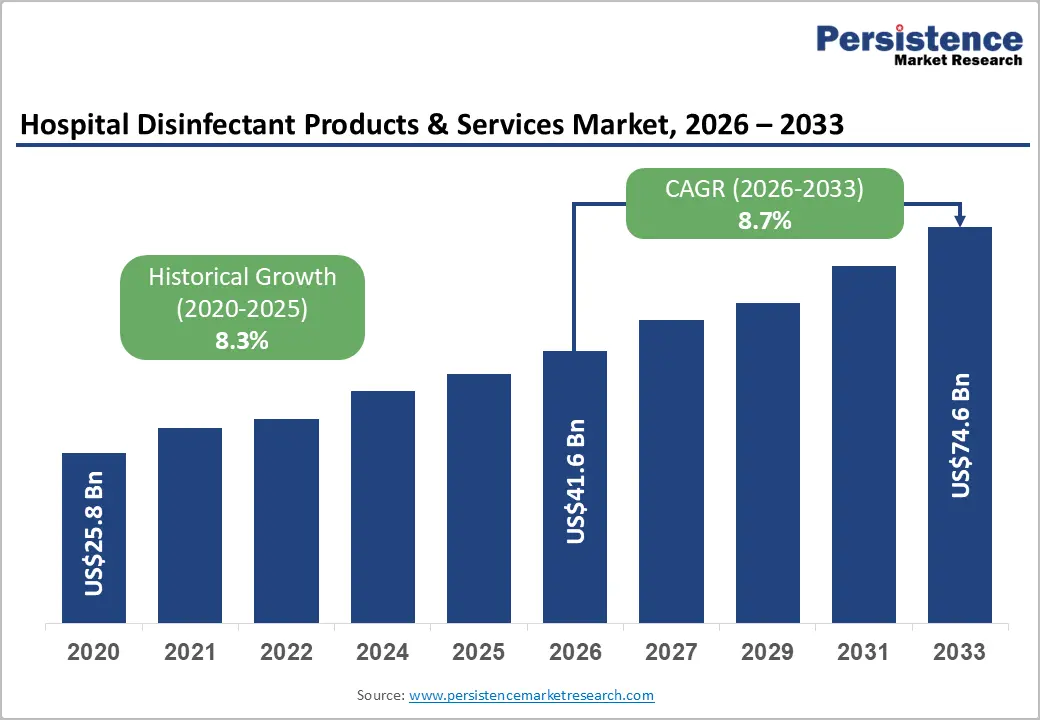
The global hospital disinfectant products & services market size is likely to be valued at US$41.6 billion in 2026 and is expected to reach US$74.6 billion by 2033, growing at a CAGR of 8.7% during the forecast period from 2026 to 2033, driven by the rising incidence of hospital-acquired infections (HAIs), which continue to pose a significant burden on healthcare systems.
According to the World Health Organization (WHO), more than 7% of patients in developed economies and up to 15% in developing countries acquire at least one HAI during hospitalization, underscoring the critical need for effective infection prevention and control measures. Stringent regulatory frameworks and hygiene standards enforced by authorities such as the U.S. CDC, WHO, and national health agencies are compelling hospitals to adopt certified disinfectant products and professional disinfection services.
Key Industry Highlights:
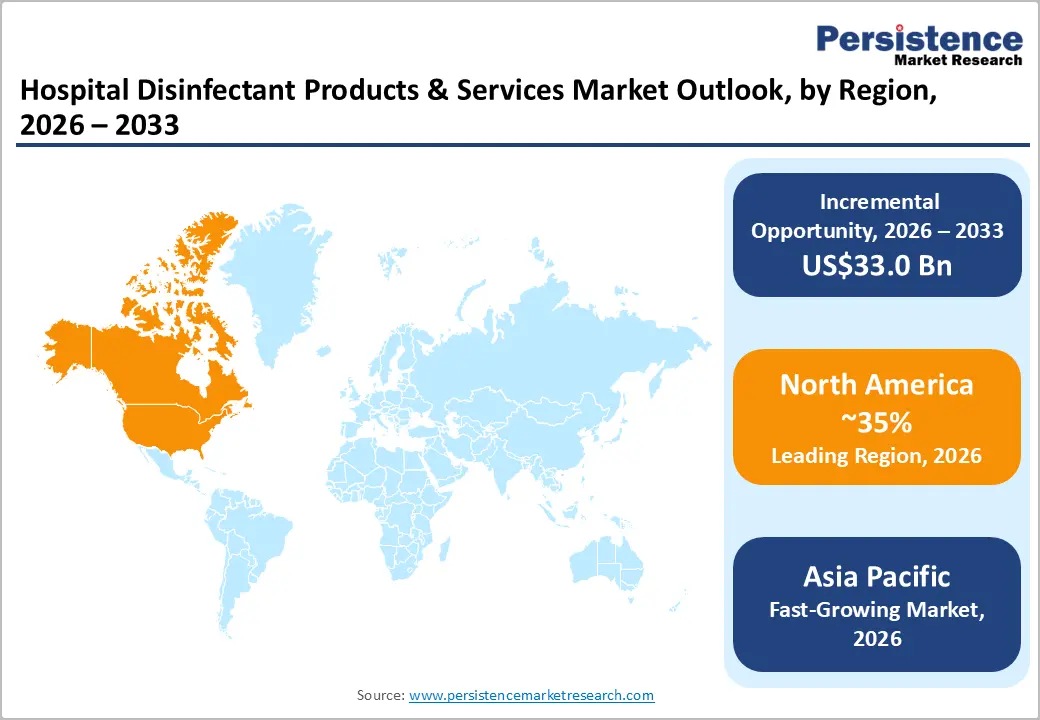
- Leading Region: North America is anticipated to be the leading region, accounting for a market share of 35% in 2026, driven by stringent regulations, advanced healthcare infrastructure, and high adoption of infection control solutions.
- Fastest-growing Region: Asia Pacific is likely to be the fastest-growing region, supported by expanding healthcare infrastructure, rising infection control awareness, and strong growth across emerging economies.
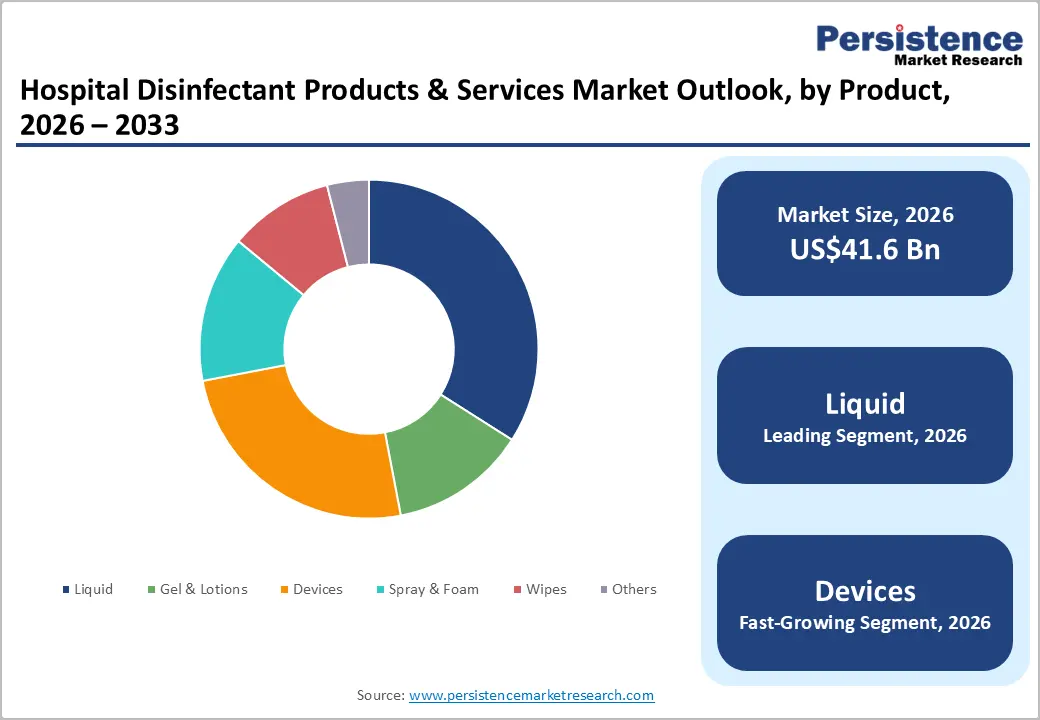
- Leading Product Type: The liquid segment is projected to represent the leading product type in 2026, accounting for 45% of the revenue share, driven by its wide applicability and cost-effectiveness in hospital cleaning protocols.
- Leading Application: Surface cleansers are anticipated to be the leading application type, accounting for over 40% of the revenue share in 2026, supported by stringent hygiene standards and high demand for disinfection of high-touch hospital surfaces.
| Key Insights | Details |
|---|---|
| Hospital Disinfectant Products & Services Market Size (2026E) | US$ 41.6 Bn |
| Market Value Forecast (2033F) | US$74.6 Bn |
| Projected Growth (CAGR 2026 to 2033) | 8.7% |
| Historical Market Growth (CAGR 2020 to 2025) | 8.3% |
Market Factors – Growth, Barriers, and Opportunity Analysis
Increasing Prevalence of Hospital-Acquired Infections (HAIs)
Healthcare-associated infections (HAIs), including surgical site infections, bloodstream infections, pneumonia, and urinary tract infections, pose a significant challenge to healthcare systems globally. These infections contribute to longer hospital stays, higher treatment costs, and increased patient mortality. The rising number of hospital admissions, complex surgeries, and the use of invasive devices have heightened the risk of pathogen transmission in healthcare settings. Key contamination points, such as high-touch surfaces, medical equipment, air circulation systems, and water supplies, underscore the need for robust disinfection protocols. As hospitals continue to prioritize patient safety and quality care, the demand for effective surface disinfectants, hand hygiene products, and advanced disinfection technologies is steadily increasing.
The economic and regulatory burden associated with HAIs further accelerates market expansion. Healthcare providers face substantial financial penalties, reputational risks, and legal liabilities due to infection outbreaks, compelling them to invest heavily in preventive disinfection solutions. Regulatory agencies and global health organizations mandate strict infection control guidelines, making compliance a non-negotiable requirement for healthcare institutions. Hospitals are increasingly adopting certified disinfectants, automated disinfection devices, and surveillance-based hygiene monitoring systems to reduce infection rates. Technological advancements such as UV-based disinfection, antimicrobial coatings, and AI-enabled monitoring tools are gaining traction as hospitals seek long-term solutions to minimize infection risks.
Antimicrobial Resistance and Regulatory Hurdles
Continuous exposure of pathogens to sub-optimal concentrations of disinfectants may encourage adaptive resistance, diminishing product effectiveness and raising concerns among healthcare professionals. This challenge compels hospitals to frequently reassess and rotate disinfectant products, increasing operational complexity and costs. Growing awareness of chemical overuse has heightened scrutiny over disinfectant formulations, particularly those containing harsh or toxic ingredients. Healthcare providers are increasingly cautious about selecting products that balance efficacy with safety for patients, staff, and the environment. This cautious approach can slow procurement cycles and delay large-scale adoption of newer disinfectant solutions.
Regulatory hurdles limit market expansion by creating complex approval and compliance pathways for disinfectant manufacturers and service providers. Hospital disinfectants are subject to stringent regulations from multiple authorities, requiring extensive efficacy testing, safety validation, and periodic recertification. Variations in regulatory frameworks across regions add further complexity, forcing companies to customize formulations and documentation for different markets. Lengthy approval timelines can delay product launches and reduce the pace of innovation, particularly for small and mid-sized players with limited regulatory expertise. Frequent updates to infection control guidelines also require hospitals to revise procurement strategies and retrain staff, increasing implementation costs.
Automated Disinfection Systems
Healthcare facilities increasingly seek efficient, consistent, and technology-driven infection control solutions. These systems, which include UV-C light devices, hydrogen peroxide vapor systems, electrostatic sprayers, and robotic disinfectors, reduce dependence on manual cleaning while ensuring standardized disinfection outcomes. Hospitals are adopting automated solutions to address challenges such as labor shortages, human errors, and inconsistent cleaning practices. Automated systems are particularly effective in high-risk areas such as intensive care units, operating rooms, and isolation wards, where infection control is critical. Their ability to disinfect hard-to-reach surfaces and reduce microbial load on high-touch areas enhances overall hygiene performance.
Technological advancements strengthen the opportunity landscape for automated disinfection systems. Integration of artificial intelligence, Internet of Things (IoT), and real-time monitoring capabilities allows hospitals to track disinfection cycles, ensure compliance, and generate data-driven insights for infection control programs. These systems support predictive maintenance, optimize cleaning schedules, and improve accountability, making them attractive for large hospital networks and multispecialty facilities. Declining technology costs and increasing awareness of long-term cost savings are also encouraging adoption, as automated systems can reduce labor expenses and limit infection-related financial losses.
Category-wise Analysis
Product Type Insights
The liquid segment is projected to dominate the hospital disinfectant products and services market, contributing around 45% of the revenue by 2026. This is primarily due to the versatility and broad applicability of liquid disinfectants across various hospital settings, including floors, medical equipment, operating rooms, and patient care areas. Supported by well-established clinical guidelines and standardized usage protocols, liquid disinfectants offer reliable performance and regulatory compliance. For instance, Ecolab, a major provider of hospital-grade liquid disinfectant solutions, is extensively used in both acute care and long-term care facilities, further solidifying the segment's leading position.
Devices are expected to be the fastest-growing segment in 2026, driven by the increasing demand for automation, precision, and a reduced reliance on manual cleaning. Hospitals are quickly adopting advanced technologies such as UV-based systems, automated sprayers, and robotic disinfection units to improve the efficiency and consistency of infection control. The heightened focus on high-risk hospital areas, such as intensive care units and isolation wards, has accelerated the shift toward device-driven solutions. The integration with digital platforms allows for real-time monitoring, compliance tracking, and enhanced accountability, supporting hospitals' broader digital transformation efforts. For instance, STERIS offers automated disinfection systems specifically designed for critical healthcare settings, promoting safer and more controlled hygiene practices.
Application Insights
Surface cleansers are projected to lead the market, capturing around 40% of the revenue share in 2026, supported by the critical need to disinfect high-touch surfaces such as bed rails, door handles, medical carts, and workstations, which are primary transmission points for pathogens within hospitals. Effective surface sanitation is a foundational element of infection prevention programs, making surface cleansers indispensable across all hospital departments. These products are deeply embedded in daily cleaning routines and are essential for minimizing cross-contamination risks between patients, staff, and visitors. For example, The Clorox Company, which supplies hospital-grade surface disinfectants widely used for routine and terminal cleaning.
Surveillance providers are likely to be the fastest-growing application in 2026, driven by increasing adoption of AI-enabled hygiene monitoring, real-time contamination detection, and data-driven infection control practices in hospitals. Hospitals are adopting surveillance solutions that monitor hygiene compliance, track disinfection effectiveness, and detect contamination risks in real time. The growing emphasis on accountability, transparency, and performance measurement has positioned surveillance tools as a strategic component of modern hospital hygiene programs. Integration with digital dashboards and analytics platforms allows infection control teams to optimize workflows and improve decision-making. For example, Ecolab offers digital infection prevention and monitoring solutions that complement traditional disinfectant products.
Regional Insights
North America Hospital Disinfectant Products & Services Market Trends
North America is expected to lead the market, capturing a 35% share by 2026, driven by a combination of strict regulatory standards, increased awareness of infection control, and rapid technological advancements. Healthcare facilities in the U.S. and Canada are placing a high priority on effective disinfection practices to reduce hospital-acquired infections (HAIs), which remain a significant challenge to patient safety and contribute to higher treatment costs. Regulatory agencies such as the U.S. Centers for Disease Control and Prevention (CDC) and the Environmental Protection Agency (EPA) enforce stringent guidelines on disinfectant efficacy, prompting hospitals to use certified products that meet rigorous safety and performance standards.
Technological progress and service innovations are reshaping market growth, as digital integration and automation become essential components of modern disinfection strategies. These technologies enhance coverage, minimize human error, and improve workflow efficiency, making them appealing investments for large healthcare networks focused on infection prevention. For instance, GOJO Industries Inc., a prominent player known for its PURELL™ hand and surface hygiene solutions, has expanded its offerings to include digital compliance tools that enable real-time monitoring of hand hygiene practices across healthcare facilities.
Europe Hospital Disinfectant Products & Services Market Trends
Europe is likely to be a significant market for hospital disinfectant products & services in 2026, due to strong regulatory frameworks, high healthcare standards, and a heightened focus on infection prevention and control across the region. European healthcare systems, particularly in Germany, France, and the UK, enforce rigorous hygiene protocols that drive consistent demand for hospital grade disinfectants, sterilization solutions, and related services. These regulatory mandates ensure that hospitals adopt evidence based disinfection practices that minimize the spread of healthcare associated infections (HAIs) and protect patient safety, contributing to steady market growth.
Technological innovation is driving the fastest-growing segment of the market, as hospitals adopt automated disinfection systems and digital hygiene monitoring tools to enhance efficiency and compliance. For example, Diversey Holdings, Ltd. provides integrated cleaning and disinfection solutions, including IoT-enabled monitoring systems that track cleaning performance in real time, helping healthcare facilities reduce HAIs and optimize workflows. The increasing adoption of UV-C devices, electrostatic sprayers, and robotics complements chemical disinfectants, ensuring uniform coverage and minimizing human errors. Service-based models, such as managed hygiene programs, are also gaining traction, allowing hospitals to outsource disinfection operations while maintaining regulatory compliance.
Asia Pacific Hospital Disinfectant Products & Services Market Trends
The Asia Pacific region is likely to be the fastest-growing region in 2026, driven by the rapid expansion of healthcare infrastructure, increasing awareness of infection prevention, and rising incidence of healthcare associated infections (HAIs) across the region. Countries such as China, India, Japan, and ASEAN member states are investing heavily in modern medical facilities to cater to growing populations and rising demand for quality healthcare. This has led to enhanced adoption of hospital grade disinfectants, including advanced liquid formulations, wipes, and surface cleaning solutions.
Technological adoption and service innovation are shaping the fastest growing trends in the Asia Pacific market, as hospitals seek more effective, efficient, and data driven disinfection approaches. For example, Kimberly Clark Corporation is expanding its presence by offering integrated hygiene and surface disinfection solutions tailored to regional needs, including advanced wipes and automated dispensing systems that support standardized cleaning practices. Healthcare facilities across the region are increasingly implementing digital monitoring platforms, IoT enabled devices, and automated disinfection technologies to enhance compliance, streamline workflows, and minimize reliance on manual cleaning.
Competitive Landscape
The global hospital disinfectant products & services market exhibits a moderately fragmented structure, driven by the presence of both multinational corporations and a growing number of regional specialists catering to diverse healthcare needs. The competitive landscape is shaped by continuous innovation in disinfectant formulations, advanced delivery systems, and services that address stringent infection control standards. Market participants are actively investing in research and development to enhance efficacy, compliance, and sustainability, responding to increasing demand for solutions that reduce hospital-acquired infections while minimizing environmental impact.
With key leaders including Ecolab Inc., Reckitt Benckiser Group plc, 3M Company, and Kimberly-Clark Corporation maintaining strong positions, competition continues to intensify as firms seek market share through diversified offerings and strategic initiatives. These players compete through product innovation, broad distribution networks, and customer-centric solutions that emphasize efficacy, safety, and environmental stewardship. Competitive strategies also include mergers and acquisitions, expanded service portfolios such as managed disinfection programs, and enhanced customer support services.
Key Industry Developments:
- In October 2025, Sonoma Pharmaceuticals and Medline Industries announced the launch of a new hypochlorous acid (HOCl) wound cleanser for U.S. hospitals. Manufactured by Sonoma using its patented Microcyn® technology and distributed nationwide by Medline, the product is designed to promote wound healing and reduce infection risk without harming healthy tissue. This collaboration strengthens Sonoma’s presence in the U.S. hospital market while leveraging Medline’s extensive healthcare distribution network across hospitals, home healthcare, and other medical settings. The launch highlights growing demand for safe, non-toxic, and clinically effective infection prevention and wound care solutions within the hospital disinfectant and hygiene market.
- In July 2024, Ecolab Inc. launched Disinfectant 1 Wipe, the first EPA-registered, 100% plastic-free, degradable hospital disinfectant wipe delivering 1-minute hospital disinfection. Made from renewable wood-pulp fibers, the wipe addresses growing sustainability concerns linked to single-use plastic disinfectant wipes while maintaining high clinical efficacy. The product provides broad-spectrum disinfection against 40+ organisms, including rapid effectiveness against SARS-CoV-2, and supports hospitals in improving patient safety alongside environmental performance. By offering a plastic-free alternative with strong disinfecting capabilities and operational efficiency, the launch marks a significant step toward sustainable infection prevention solutions in North American healthcare facilities.
Companies Covered in Hospital Disinfectant Products & Services Market
- Colgate-Palmolive Company
- Contec Inc.
- Ecolab Inc.
- Georgia-Pacific LLC
- GOJO Industries Inc.
- Henry Schein Inc.
- Johnson & Johnson Company
- Kimberly-Clark Corporation
- Reckitt Benckiser Group plc
- S. C. Johnson & Son, Inc.
- The Clorox Company
Frequently Asked Questions
The global hospital disinfectant products & services market is projected to reach US$41.6 billion in 2026.
Rising healthcare-associated infections, stringent infection control regulations, increasing hospital admissions, and growing emphasis on patient safety and hygiene standards.
The hospital disinfectant products & services market is expected to grow at a CAGR of 8.7% from 2026 to 2033.
Growing demand for advanced and eco-friendly disinfectants, expansion of healthcare infrastructure in emerging economies, rising adoption of automated disinfection technologies, and increased outsourcing of hospital hygiene services.
Colgate-Palmolive Company, Contec Inc., Ecolab Inc., Georgia-Pacific LLC, and GOJO Industries Inc. are the leading players.


